Tag: FDI

  • Services sector in I&B shows significant growth in FDI inflows: Economic Survey

    Services sector in I&B shows significant growth in FDI inflows: Economic Survey

    NEW DELHI: The services sector in the field of Information and Broadcasting earned $515.1 million as inflow of foreign direct investment between April and October of 2015-16.
     
    According to the Economic Survey for 2015-16 presented to Parliament, this was in comparison to $255 million in 2014-15.
     
    The figures also showed that the total FDI inflow between April 2000 and October 2015 was $4484.5 million in this sector. 
     
    The largest growth was in computer software and hardware, going up from $2296 million in 2014-15 to $4122.5 in 2015-16 up to October 2015. Thus the total growth from April 2000 to October 2015 was $19139.8 million. 
     
    The Survey said the government had made significant changes in the FDI policy regime in recent times to ensure that India remains an increasingly attractive investment destination.
     
    In order to provide simplicity to the FDI policy and bring clarity on application of conditionalities and approval requirements across various sectors, different kinds of foreign investments have been made fungible under one composite cap. 
     
    Significant FDI-related liberalisation has taken place in a number of sectors/areas of the economy including some services and service-related sectors like construction development, broadcasting, civil aviation, cash and carry wholesale trading, wholesale trading (including sourcing from micro and small enterprises [MSE]), single brand retail trading and duty free shops, private sector banking, and credit information companies.
  • Services sector in I&B shows significant growth in FDI inflows: Economic Survey

    Services sector in I&B shows significant growth in FDI inflows: Economic Survey

    NEW DELHI: The services sector in the field of Information and Broadcasting earned $515.1 million as inflow of foreign direct investment between April and October of 2015-16.
     
    According to the Economic Survey for 2015-16 presented to Parliament, this was in comparison to $255 million in 2014-15.
     
    The figures also showed that the total FDI inflow between April 2000 and October 2015 was $4484.5 million in this sector. 
     
    The largest growth was in computer software and hardware, going up from $2296 million in 2014-15 to $4122.5 in 2015-16 up to October 2015. Thus the total growth from April 2000 to October 2015 was $19139.8 million. 
     
    The Survey said the government had made significant changes in the FDI policy regime in recent times to ensure that India remains an increasingly attractive investment destination.
     
    In order to provide simplicity to the FDI policy and bring clarity on application of conditionalities and approval requirements across various sectors, different kinds of foreign investments have been made fungible under one composite cap. 
     
    Significant FDI-related liberalisation has taken place in a number of sectors/areas of the economy including some services and service-related sectors like construction development, broadcasting, civil aviation, cash and carry wholesale trading, wholesale trading (including sourcing from micro and small enterprises [MSE]), single brand retail trading and duty free shops, private sector banking, and credit information companies.
  • “Media should hold the government’s feet to the fire to realise Make In India:” CNN’s Fareed Zakaria

    “Media should hold the government’s feet to the fire to realise Make In India:” CNN’s Fareed Zakaria

    MUMBAI: The Make In India week inaugurated by Prime Minister Narendra Modi on 13 February has made Mumbai a site of several activities. All for a united cause — to spearhead a thriving environment of manufacturing industries in India and invite foreign direct investment (FDI) in several industry sectors.

    While the vision of Make In India has gone from being a popular Twitter hashtag to actual substantial talk about the real issues that need to be addressed about manufacturing in India, there is a long way to go before India establishes credibility among global investors as a nation of producers and innovators. As the pressure on the government to deliver on the already established brand of ‘Make In India’ increases, one can’t go without wondering the role of media in the scheme of things.

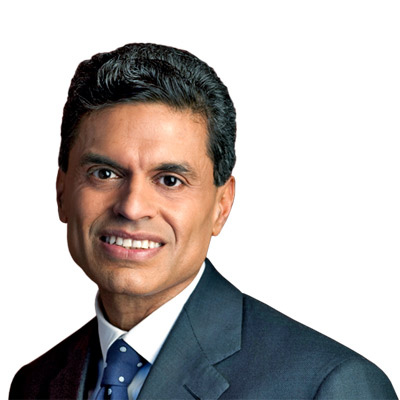
    Make In India week has given media, especially Indian media, enough fodder to make several headlines. From broadcasters allotting dedicated programming on the topic, to publications releasing special editions on the same; it seems media has had a field day since the ‘week’ was launched. And rightly so, thinks popular CNN news anchor Fareed Rafiq Zakaria of the Fareed Zakaria GPS fame.

    “I think that if there are more efforts like this, it does help the media play a more substantial role. What the Indian government is realising is that they have a serious image and brand problem. I have noticed that in Indonesia; the finance minister and trade ministers are much more attentive towards the communication of their reform policies than their Indian counterparts,” Zakaria shares while attending the CNN – Asia Business Forum 2016, which was part of the day two activities at Make In India week in Mumbai.

    He later had a one-on-one with Finance Minister Arun Jaitley to expand on the government’s executive strategy when it comes to reforms aimed at manufacturing.

    “But that is changing now,” Zakaria says adding on the significance of media in propagating the government’s brand building campaign for Make In India. “People are realising they have to sell, and to sell they need to build credibility for which presentation is essential and that is where Indian media will play a role.”

    On the flip side however, one has to ask if Make In India is a marketing effort or a reform effort? Even if there is a marketing element to it, the next question is if it will only scratch the surface with the campaigns, or will Make In India really address the issues that are at the grass root of manufacturing in India? Wherein comes the crucial role of media in connecting the two realities instead of being swept away by the hype.

    Expressing his take on it Zakaria adds, “The problem with manufacturing is that you have significant regulatory, tax and infrastructure problems. Those are the reason that you don’t get manufacturing booming in India. Now, could that change? Yes, but I haven’t seen the big bang reforms. I have noticed some good improvement reforms that the government is undertaking but it still needs that big push. For that the Indian media has to step in and be the mouthpiece of the people who are part of the manufacturing industry. They have to keep putting pressure on the government to see the deliverance of such reforms.”

    Expanding on the role of media in making Make In India successful, Zakaria says, “India has a lot of natural constituencies for natural reforms. There are many who still want the old system because they get patronage from it like subsidies, employment for families. Those are the people you hear from… who you don’t hear from are the unemployed youth, the under employed people in agriculture. We hear a lot from the voices of the past but we need to hear more from the country’s future.  Media can be the voice of the future for India’s aspirations and hopes. They should hold the government’s feet to the fire and keep them there. Right now, frankly the government isn’t facing a serious opposition so the media has to play that role,” Zakaria signs off.

  • “Media should hold the government’s feet to the fire to realise Make In India:” CNN’s Fareed Zakaria

    “Media should hold the government’s feet to the fire to realise Make In India:” CNN’s Fareed Zakaria

    MUMBAI: The Make In India week inaugurated by Prime Minister Narendra Modi on 13 February has made Mumbai a site of several activities. All for a united cause — to spearhead a thriving environment of manufacturing industries in India and invite foreign direct investment (FDI) in several industry sectors.

    While the vision of Make In India has gone from being a popular Twitter hashtag to actual substantial talk about the real issues that need to be addressed about manufacturing in India, there is a long way to go before India establishes credibility among global investors as a nation of producers and innovators. As the pressure on the government to deliver on the already established brand of ‘Make In India’ increases, one can’t go without wondering the role of media in the scheme of things.

    Make In India week has given media, especially Indian media, enough fodder to make several headlines. From broadcasters allotting dedicated programming on the topic, to publications releasing special editions on the same; it seems media has had a field day since the ‘week’ was launched. And rightly so, thinks popular CNN news anchor Fareed Rafiq Zakaria of the Fareed Zakaria GPS fame.

    “I think that if there are more efforts like this, it does help the media play a more substantial role. What the Indian government is realising is that they have a serious image and brand problem. I have noticed that in Indonesia; the finance minister and trade ministers are much more attentive towards the communication of their reform policies than their Indian counterparts,” Zakaria shares while attending the CNN – Asia Business Forum 2016, which was part of the day two activities at Make In India week in Mumbai.

    He later had a one-on-one with Finance Minister Arun Jaitley to expand on the government’s executive strategy when it comes to reforms aimed at manufacturing.

    “But that is changing now,” Zakaria says adding on the significance of media in propagating the government’s brand building campaign for Make In India. “People are realising they have to sell, and to sell they need to build credibility for which presentation is essential and that is where Indian media will play a role.”

    On the flip side however, one has to ask if Make In India is a marketing effort or a reform effort? Even if there is a marketing element to it, the next question is if it will only scratch the surface with the campaigns, or will Make In India really address the issues that are at the grass root of manufacturing in India? Wherein comes the crucial role of media in connecting the two realities instead of being swept away by the hype.

    Expressing his take on it Zakaria adds, “The problem with manufacturing is that you have significant regulatory, tax and infrastructure problems. Those are the reason that you don’t get manufacturing booming in India. Now, could that change? Yes, but I haven’t seen the big bang reforms. I have noticed some good improvement reforms that the government is undertaking but it still needs that big push. For that the Indian media has to step in and be the mouthpiece of the people who are part of the manufacturing industry. They have to keep putting pressure on the government to see the deliverance of such reforms.”

    Expanding on the role of media in making Make In India successful, Zakaria says, “India has a lot of natural constituencies for natural reforms. There are many who still want the old system because they get patronage from it like subsidies, employment for families. Those are the people you hear from… who you don’t hear from are the unemployed youth, the under employed people in agriculture. We hear a lot from the voices of the past but we need to hear more from the country’s future.  Media can be the voice of the future for India’s aspirations and hopes. They should hold the government’s feet to the fire and keep them there. Right now, frankly the government isn’t facing a serious opposition so the media has to play that role,” Zakaria signs off.

  • FM players seek FDI at par with GECs since only AIR news permitted

    FM players seek FDI at par with GECs since only AIR news permitted

    NEW DELHI: The Foreign Direct Investment (FDI) in the radio sector should be increased and the government should consider a 15 per cent national ceiling for future auctions and allow news on private FM radio, private FM players have said.

    A Stakeholders’ Consultation on 22 January on the Phase III e-Auction showed that the players wanted a lock-in period of three years on composition of largest Indian shareholder.

    Information & Broadcasting Ministry Secretary Sunil Arora said that the aim of FM Phase III was to enhance radio density in the country and efforts should be made for supporting FM radio to grow into a viable business model. He wanted all stakeholders to give their suggestions and inputs in writing by 30 January if they so desire considering that some stakeholders have already submitted their suggestions in meeting.

    FM operators felt that the reserve prices recommended by TRAI on 24 March 2015 were very high and unviable. However, Ministry officials said the TRAI recommendations were advisory in nature.

    Similarly, it was stated that the rentals by Prasar Bharati were very high.

    It was also argued that the FDI limit could be increased to 100 per cent to bring it at par with the general entertainment channels as no news other than that from All India Radio was permitted.

    This suggestion from Reliance Broadcasting found favour with many of the participants but some companies like ENIL and DB Corp wanted permission to make news bulletins on their own. The Association of Radio Operators in India (AROI) said news from PTI and ANI could be permitted.

    AROI said if subsequent auction takes place in batches without relaxing the 15 per cent national cap, then this cap should be applied on overall number of channels being put to auction in phase III and not batch wise. 

    ENIL found it unreasonable that Phase II migrant licenses were made to undergo three years’ lock-in restriction under Phase III regime as well when they had already served five years’ lock-in under Phase II. But HT Media said the lock-in requirement was fundamental to FM Phase III policy.

    Representative of Digital Radio Broadcasting also suggested that connected companies of a Group be treated as a single entity for participation in online bidding / auction process.

    Suggestions for future rounds included more clock rounds per day; increase of Auction Activity Requirement (AAR); apart from auction report at the end of the day, and report of each round.

    ENIL referred to delay of security clearance of its directors and key operatives from Home Ministry.

  • FM players seek FDI at par with GECs since only AIR news permitted

    FM players seek FDI at par with GECs since only AIR news permitted

    NEW DELHI: The Foreign Direct Investment (FDI) in the radio sector should be increased and the government should consider a 15 per cent national ceiling for future auctions and allow news on private FM radio, private FM players have said.

    A Stakeholders’ Consultation on 22 January on the Phase III e-Auction showed that the players wanted a lock-in period of three years on composition of largest Indian shareholder.

    Information & Broadcasting Ministry Secretary Sunil Arora said that the aim of FM Phase III was to enhance radio density in the country and efforts should be made for supporting FM radio to grow into a viable business model. He wanted all stakeholders to give their suggestions and inputs in writing by 30 January if they so desire considering that some stakeholders have already submitted their suggestions in meeting.

    FM operators felt that the reserve prices recommended by TRAI on 24 March 2015 were very high and unviable. However, Ministry officials said the TRAI recommendations were advisory in nature.

    Similarly, it was stated that the rentals by Prasar Bharati were very high.

    It was also argued that the FDI limit could be increased to 100 per cent to bring it at par with the general entertainment channels as no news other than that from All India Radio was permitted.

    This suggestion from Reliance Broadcasting found favour with many of the participants but some companies like ENIL and DB Corp wanted permission to make news bulletins on their own. The Association of Radio Operators in India (AROI) said news from PTI and ANI could be permitted.

    AROI said if subsequent auction takes place in batches without relaxing the 15 per cent national cap, then this cap should be applied on overall number of channels being put to auction in phase III and not batch wise. 

    ENIL found it unreasonable that Phase II migrant licenses were made to undergo three years’ lock-in restriction under Phase III regime as well when they had already served five years’ lock-in under Phase II. But HT Media said the lock-in requirement was fundamental to FM Phase III policy.

    Representative of Digital Radio Broadcasting also suggested that connected companies of a Group be treated as a single entity for participation in online bidding / auction process.

    Suggestions for future rounds included more clock rounds per day; increase of Auction Activity Requirement (AAR); apart from auction report at the end of the day, and report of each round.

    ENIL referred to delay of security clearance of its directors and key operatives from Home Ministry.

  • Steps taken to allow level-playing field in FDI for all MSOs and LCOs, rules tightened on ownership

    Steps taken to allow level-playing field in FDI for all MSOs and LCOs, rules tightened on ownership

    MUMBAI: In a major step to create a level-playing field, cable operators or multi-system operators who are not undertaking upgradation of networks towards digitalization and addressability will also be entitled to 100 per cent foreign direct investment.


    However as in other cases where it has increased the FDI to 100 per cent, entry beyond 49 per cent will be through the government route.


    There is also a change in the policy with regard to uplinking and downlinking of channels. The investment will be 49 per cent through the government route with regard to uplink of news and current affairs channels but uplinking of non-news and current affairs channels (GECs) will be 100 per cent through the automatic route. Downlinking of TV channels is also 100 per cent through the automatic route.


    The investment for terrestrial FM radio continues to be 49 per cent through the automatic route, subject to such terms and conditions specified from time to time by the Information and Broadcasting Ministry for grant of permission for setting up of FM Radio stations.


    These changes have come after a re-assessment of the relaxations allowed in fifteen sectors including broadcasting on 10 November.


    It was also clarified that in the I and sector where the sectoral cap is up to 49%, the company would need to be’owned and controlled’ by resident Indian citizens and Indian companies, which are owned and controlled by resident Indian citizens.


    The Department of Industrial Policy and Promotion of the Commerce Ministry said for this purpose, the equity held bythe largest Indian shareholder would have to be at least 51% of the total equity, excluding the equity held by Public Sector Banks and Public Financial Institutions, as defined in Section 4A of the Companies Act 1956 or Section 2 (72) of the Companies Act 2013, as the case may be.


    The term ‘largest Indian shareholder’ will include any or a combination of individual shareholders, or a relative of the shareholder within the meaning of Section 2 (77) of Companies Act 2013; and a company/group of companies in which the individual shareholder/HUF to which he belongs has management and controlling interest; in the case of an Indian company, a group of Indian companies under the same management and ownership control.


    For the purpose of this Clause, “Indian company” will be a company which must have a resident Indian or a relativeas defined under Section 2 (77) of Companies Act 2013/ HUF, either singly or in combination holding at least 51%of the shares.


    This is subject to the provision that in case of a combination of all or any of the entities will have entered into alegally binding agreement to act as a single unit in managing the matters of the applicant company.

  • Will foreigners buy into easing of FDI in cable TV, DTH?

    Will foreigners buy into easing of FDI in cable TV, DTH?

    MUMBAI: The government has earlier this week announced the lifting of Foreign Direct Investment (FDI) barriers for 15 sectors as a Diwali bonus to industry.


    Hereon, the limit for uplinking of news and current affairs for television channels has been increased from 26 per cent to 49 per cent. Foreign majors wanting to look at a long term play in the broadcast distribution space can now pump in 100 per cent in cable TV networks (multi-system operators and local cable operators), DTH, teleport, headend-in-the-sky (HITS) and mobile TV ventures as against the 74 per cent earlier Distribution platforms can raise as much as 49 per cent FDI through the automatic route. If companies want to go beyond that, they will need government approval. The radio sector has got some welcome breathing space in that investment limits have been hoicked to 49 per cent from 26 per cent earlier.


    What does this all mean for the television ecosystem? Will there be a flood of money flowing into cable TV, DTH, teleport, HITS and mobile TV ventures from overseas? Will news channels attract foreign investment by the sackful?


    We, at indiantelevision.com, believe that none of this likely to happen in a hurry in all the segments that have been prised open.


    Distribution is a tough play in India as history has shown. It is relatively unorganized, with low ARPUs, it lacks transparency, is small in scale, and is short on capital, which makes it an unappealing asset to invest in. Digitisation of cable TV has led to some improvement, but it is still a halfway house. The lack of last mile customer ownership, paucity of subscriber information, lack of two way addressability, and business norms and ethics make it a relatively high risk investment.


    Things may change if Reliance Jio makes inroads into cable TV and brings some order into it. However, its management may well discover that distribution is like a slippery soap in a shower, that  it is more complicated than distributing electricity or exploring and drilling for oil.


    It is the MSOs’ broadband businesses that are a lot more transparent,  that have in any case been spun off into separate companies keeping in mind government regulations and restrictions.  And this is what may catch the interest of investors.

     
    In the nineties, Rupert Murdoch partnered with Subhash Chandra in Siticable – only to exit a little later with his knuckles bruised. A few years later he once again took a shot at it when Star India invested in the Rajan Raheja promoted Hathway Cable & Datacom. Once again, he had to exit yelping in pain. Since then, Star has been extremely averse to investing in cable TV.

     Most of the major distribution ventures are listed: Siticable, Hathway Cable & Datacom, Ortel, Hinduja, Den Cable, SunTV, DishTV, Airtel, Reliance Big (the management is currently getting it delisted),  and some even have attracted private equity investments. But the stock market has not really bought into pure play distribution initiatives and the shares have been depressed as compared to the prices they could command. The PEs which have parked funds in them are still waiting for a nice fat return on their investments.

     Where FDI has worked is in the DTH space and the sole exception is DTH operator Tata Sky in which Twenty First Century Corp holds a 30 per cent stake.  Then there is Videocon d2h, which is listed on Nasdaq, following to the support of its lead investment partner Harry Sloan of Silver Eagle. The Essel group owned Dish TV has got the thumbs up from the market and has got a buy recommendation from many research firms.


    DTH operators, unlike their cousins on the ground, are more organized, professional, have transparency of operations and have recently started getting some payback from their upfront and cumulative investments over the past decade or so building scale in their customer base.

     
    Hence, it is quite possible that Dish TV, Airtel, Videocon, and Tata Sky might see some activity following the loosening of FDI.  But even prior to the announcement, not many investor suitors had lined up looking to partner with them.

    At the time of writing this report, the stock markets had reacted positively to the news about the easing of FDI in media, and had pushed up the share prices of Dish, Siticable, DEN Networks by 10 per cent plus before Diwali.

     Sun TV, has so far been happy being a lone player with a stranglehold on its markets, and has desisted from partnerships with local players. One does not know if promoters Kalanithi and Kaveri Maran will change their thinking now.

     As far as news is concerned, major news organisations worldwide have enough on their hands. They are grappling with the changing paradigm of news gathering and dissemination, courtesy the explosion in social media and their live streaming apps which threaten to make individuals  – whether journalists or online stars – with huge followings, a rival to large news networks. For the new millennials, online is the preferred source of news, which they consume on their twitter or facebook timelines.

     India has a surfeit of news channels or ‘views channels’; many of them are run for purposes of influence, and not as commercial initiatives. For the relatively more professional ones, the key question is whether foreign investors – especially those in the news business would be happy with a less- than majority equity position in a news television channel. For that to appear attractive they will look for dividends or a northward movement in the stock price.


    News organizations normally are obsessive about keeping control over the content on a news channel. But you there have had been licensing deals – like in the case of CNN-IBN.  Others have come in on their own, after getting downlinking and uplinking clearances.


    It’s not as if news television in India is a very scalable business opportunity.  At least, so far. The largest news network does revenues of around Rs 500 crore.  This could go up to Rs 1000 crore with the expansion in regional news and distribution internationally. The limited scalability despite, amongst the news players some of whom look alluring figure: NDTV, Times Now, Zee Media, TV9, TV Today, ITV group, and  India TV. Of course some smaller players like BAG Films E24 group might attract FDI.


     What should come as a relief is the allowing of 100 per cent FDI through the automatic route in non-news and current affairs channels. Many new channels and broadcast networks which are looking  to expand their global footprint to include the Indian audience may now do so, either through mass and/or niche channels. Full ownership means they can control their destinies in India.
     
    Now that the government has opened its house on FDI in media, it would do well by making the procedures simpler and faster. TV broadcast players managements have to perforce get ministry of home affairs, ministry of information and broadcasting’s  and RBI’s clearances. The  bureaucrats,  directors and officers in these bodies need to be trained to reflect the Modi government’s approach in being industry enabling, rather than being obstructionist. Maybe a single window clearance approach could help. Otherwise, even this FDI liberalization may end up being another well-intended-but-misplaced initiative.