Tag: FCC

  • Indian-American Ajit Pai reappointed FCC chairman in US Senate split vote

    Indian-American Ajit Pai reappointed FCC chairman in US Senate split vote

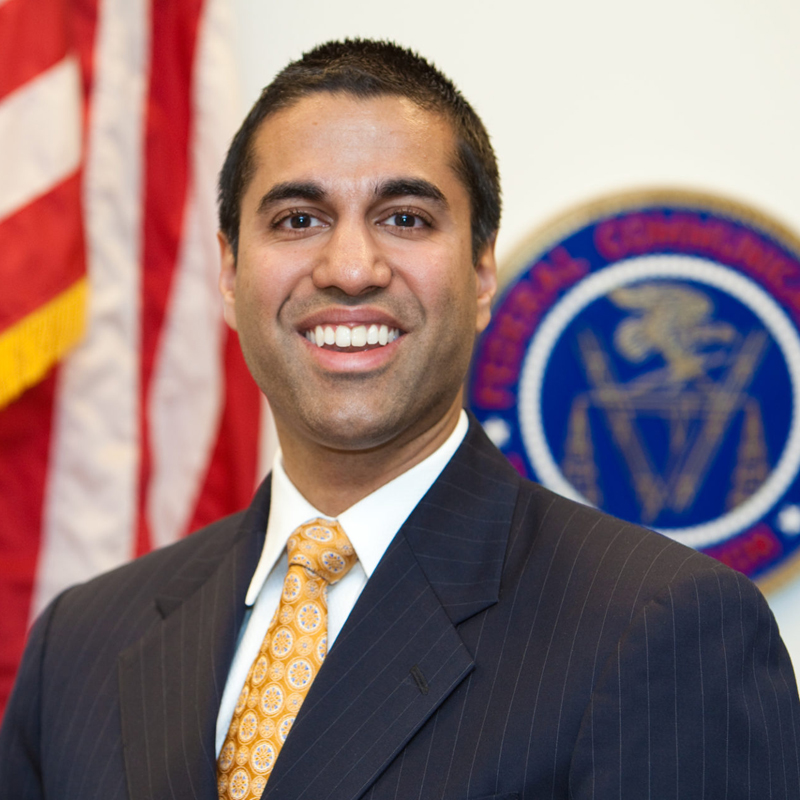
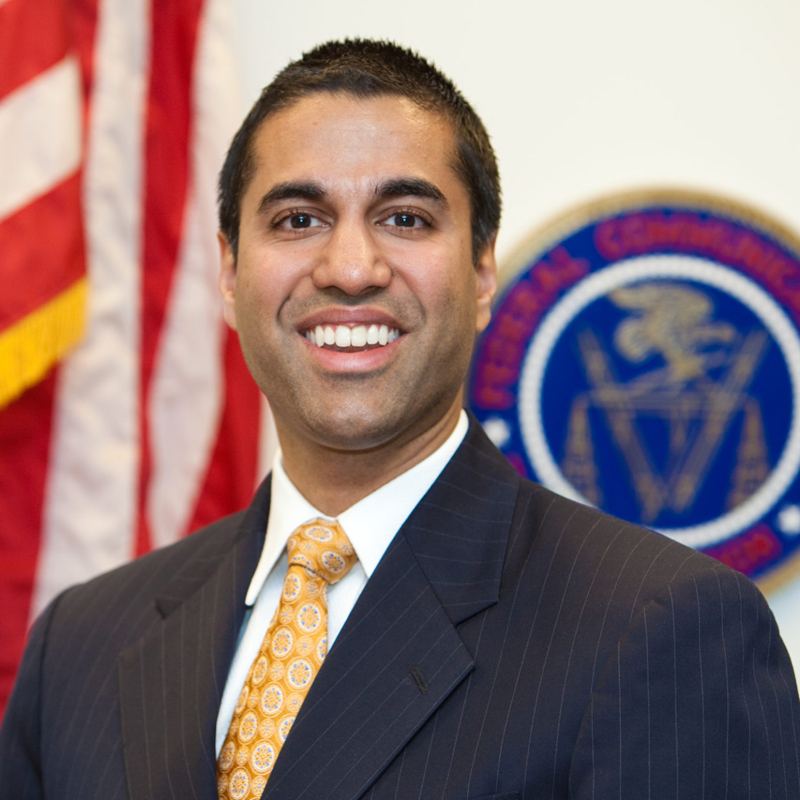
    MUMBAI: The US Senate has confirmed the nomination of Indian-American Ajit Pai as the Federal Communications Commission (FCC) chairman for the second time despite complaints that he will undermine net neutrality. Pai, whose term was to end later this year, was reappointed for a five-year term after getting a majority of 52-41, with most of the Democrats voting against him.

    Pai was designated chairman by the President Donald J. Trump in January 2017. He had previously served as the commissioner at the FCC.

    Pai’s regulatory philosophy is informed by a few simple principles. Rules that reflect these principles will result in more innovation, more investment, better products and services, lower prices, more job creation, and faster economic growth.

    Senate minority leader Chuck Schumer accused Pai of establishing a record of favouring big corporations at the expense of consumers, innovators and small businesses. Pai, he said, supported Congressional attempts to reverse the FCC’s 2016 broadband privacy rule, which would have prevented big cable and internet companies from profiting off of personal internet data.

    He complained that internet service providers no longer have to obtain consumer consent before they sell or share sensitive personal data.

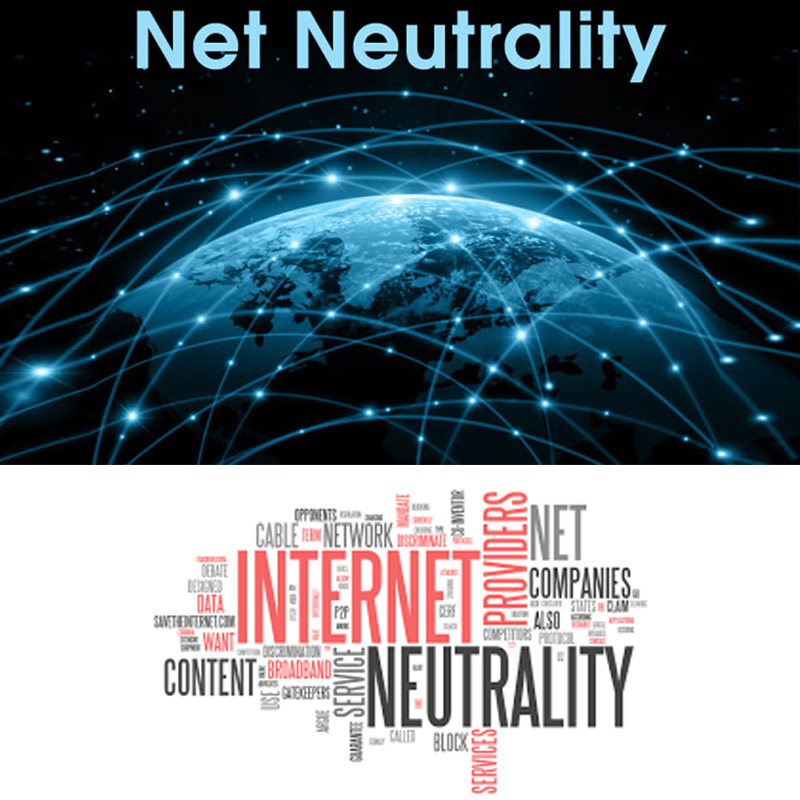
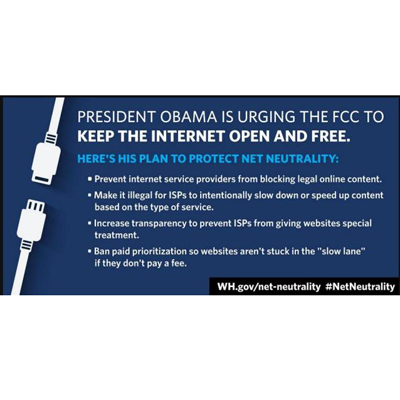
    Pai, he alleged, is now attempting to dismantle the Open Internet Order, the net neutrality rules under which millions of consumers currently have access to a free and open internet.

    Defending his work, Pai said: “Since January (2017), the FCC has focused on bridging the digital divide, promoting innovation, protecting consumers and public safety, and making the FCC more open and transparent.”

  • TRAI’s final recommendations on net neutrality likely by September

    NEW DELHI: India’s telecoms and broadcast regulator Telecom Regulatory Authority of India (TRAI) is expected to come out with its final recommendations on net neutrality next month.

    TRAI chairman R S Sharma told indiantelevision.com  that after detailed discussions were held in Bengaluru last month on the consultation paper on Net Neutrality (NN) issued mid-2016, a similar round has been fixed for 30 August 2017 in Delhi after which TRAI will begin work on its final recommendations to ensure national security and customer privacy.

    However, the issue of NN has different meanings in different parts of the globe and depends on how regulators view the issue in terms of their own markets. For example, the present FCC chairman Ajit Pai is in favour of repealing of a regulatory framework that allowed his predecessor to establish robust rules of the road for the internet and is in the process of dismantling the previous regime’s regulatory framework for NN. In Asia too, NN is defined and regulated differently and there is no uniform approach to the issue.

    One of the chief arguments for Net Neutrality, senior tech journalists have argued, is that without rules in place, the internet could well grow into a system of tiers, akin to cable television, in which large content companies would dominate because of their ability to pay for better access to consumers.

    Asked whether the tariff order — which has been in suspended animation for few months now owing to some stakeholders moving Indian courts against its implementation — will come into effect on 2 September 2017, Sharma refused to commit anything as the matter would be subject to the outcome of court decisions.

    Referring to a paper on data protection, he said the present aim was only to start a discussion on the subject. He denied that the consultation paper had anything to do with the controversy around Apple refusing to cooperate on certain demands of the Indian regulator or had been prompted by it. “In fact, the controversy had been kicked off just over a week earlier whereas the paper had been under preparation earlier,” Sharma said.

    Elaborating on TRAI’s guiding principles, the chairman said that the organisation issues a paper or initiates a public debate or comes out with recommendations  for “transparency, (to) ensure non-discrimination, consumer protection, industry’s growth and encourage positive competition.”

    At a time when online piracy and theft of online data is gaining momentum in India, as also criticism of the country’s lack of a comprehensive legislation to protect data, including those mentioned in Adhaar, Sharma said TRAI has taken all the necessary steps to protect consumer data that it collects via its various apps.

    Though Sharma refused to be drawn into the online piracy issue (largely that falls under the domain of Commerce Ministry), he did say that inter-operable set top boxes, being tested by some government organisations in collaboration with TRAI, had provisions for dealing with pirated software.

    When questioned about the permission granted to Tamil Nadu government owned Arasu to distribute digital TV signals and consequent leanings towards similar set-up in the states of Telangana and Punjab, Sharma said the Authority had thrice given recommendations advising that state governments and political or religious groups should not be permitted to enter the broadcasting sector. “We still stand by those recommendations. But the ministry (MIB) has said the recommendations were under consideration,” he added.  

    He agreed that technologies were converging and said that regulations, attitude and outlook will “soon have to move in that direction.”

    ALSO READ :

    Star & Vijay TV amend plea, TRAI asked by Madras HC to file response

    Tata Sky & Airtel DTH pleas against TRAI tariff in Delhi HC on Friday

    “There would be  a lot on TRAI’s plate in 2017” – RS Sharma


  • NDTV raids not connected with press freedom, says South Asia scribes club

    NEW DELHI: Even as senior mediapersons rallied behind NDTV following raids by the Central Bureau of Investigation and several media bodies held protest meetings, the Foreign Correspondents Club of South Asia pointed out that the Government and CBI have said the raids had nothing to do with freedom of press.

    In a terse statement, the FCC also pointed out that the Press Club of India and other organisations had not invited it to join the protest rallies. However, it said ‘We are for the freedom of the press.”

    Information and broadcasting minister M Venkaiah Naidu had last week denied any political interference in the CBI raids on NDTV’s Prannoy Roy, and said that the law would take its own course.

    The CBI had registered a case against the pioneers of Indian television NDTV founder Roy and Radhika Roy for causing an alleged loss to a bank. Searches were reportedly conducted at the residence of the Roys in New Delhi and three other places including Dehradun.

    Naidu had told reporters: “If somebody does something wrong, but simply because they belong to media, you cannot expect the government to keep quiet.”

    Stressing that the media is free and independent, he said the officials were doing their duty. “The CBI might have received some information. That is why they have taken action,” Naidu said.

    Also read :

    Update: No politics in raids at NDTV offices, CBI must have received some info, says Naidu


  • TRAI to hold discussions on net neutrality, spectrum in Mumbai

    NEW DELHI: Given the complicated issues around net neutrality, an open house discussion is to be held in Mumbai on 26 May, 2017on Telecom Regulatory Authority of India’s consultation paper on the issue NN and free data schemes. Earlier, a similar OHD was held in Hyderabad on 24 October 2016.

    TRAI had issued the paper in May last year. Another OHD will be held at the same venue on the same day on a consultation paper on spectrum, roaming and QoS related requirements in machine-to-machine communications.

    Stretching the discussion on net neutrality, TRAI had wanted to know whether there is a need to have telecom service provider (TSP)-agnostic platform to provide free data or suitable reimbursement to users without violating the principles of differential pricing for data laid down in TRAI regulations.

    It also wants to know if free data or suitable reimbursement to users should be limited to mobile data users only or could it be extended through technical means to subscribers of fixed line broadband or leased lines.

    The paper says that in the recent past, some data services plans of the TSPs came to the notice of TRAI, which amounted to discriminatory tariff through offering zero or discounted tariffs to certain contents of certain websites/applications/platforms. The objective of offering such plans was claimed to be the desire of various service providers/content providers or platform providers to enable people of this country, especially the poor, to access certain content on the internet free of charge.

    While TRAI is still to take a stand on the issue of net neutrality as a whole, American communications regulator FCC, under a new chairman, is dismantling some of the NN regulations put in force by his predecessor under the Obama regime that has ruffled the feathers of a section of the telecoms and broadcast industry in the US.

    Details of the TRAI open house in Mumbai and the related documents could be located at www.trai.gov.in.

  • Tribune: Blackstone may join Fox in purchase race

    MUMBAI: Fox and a New York firm, possibly Blackstone, are planning to form a joint venture to buy Tribune which owns or operates 42 stations, with Fox contributing its 28 owned-and-operated stations and Blackstone providing cash.

    The potential multi-billion-dollar deal would make Fox US’s largest single broadcast station owner.

    Meanwhile, Fox News Channel on Monday said that co-president Bill Shine has left the company, the latest high-level departure at a network troubled with charges of discrimination that already claimed founding CEO Roger Ailes and Bill O’Reilly.

    Fox and Blackstone are together hoping to beat a rival offer from Sinclair Broadcasting, the largest owner of TV stations in the US. Baltimore-based Sinclair, which owns 173 stations, has stations in midsize and small markets.

    Sinclair was also in the running for Tribune, which could give the former significantly more leverage in talks with Fox.

    Under current rules, however, the national TV audience that any single owner can access with its stations is capped at 39 per cent. Since President Trump elevated Pai to lead FCC, the commission has changed rules and made public statements announcing that it intends to scale back limits placed on station ownership. If Sinclair or Fox purchased Tribune, they would go past the current FCC limits.

    Another current FCC regulation that could obstruct Sinclair or Fox purchase of Tribune is the local ownership rule which disallows any owner from running more than two stations in most markets.

  • Restoring Net freedom: FCC seeks public participation

    MUMBAI: With the opening of a new proceeding on Restoring Internet Freedom, the Commission (FCC) anticipates significant public engagement and a high volume of filings. The Consumer and Governmental Affairs Bureau provides this guidance to facilitate public participation and to make commenting easy:

    “Those who wish to file individual comments may submit them electronically via the Electronic Comment Filing System (ECFS) at https://www.fcc.gov/ecfs/. However, we anticipate that some may wish to submit a large number of comments from multiple individuals, each with the same or similar content. We strongly encourage parties who seek to file a large number of comments or “group” comments to do so through the public API or the Commission’s electronic inbox established for this proceeding, called Restoring Internet Freedom Commentsat https://www.fcc.gov/restoring-internet-freedom-comments. We also ask parties who anticipate submitting group comments to contact us in advance so that we can assist with a smooth filing process. You can reach us at ECFSHelp@fcc.gov and (202) 418-0193.

    We expect that filing group comments through the inbox will be simpler than filing through ECFS. We ask commenters to be patient, as there may be some lag time between when filings are made and when they appear in ECFS. We assure all timely filers, though, that their submissions will be part of the record in this proceeding.

    By using the public API or inbox and contacting us in advance of large filings, parties can help us ensure that ECFS functions normally during periods of high volume submissions. Based on past experience, we anticipate that during some periods of the comment cycle, ECFS may experience much higher volumes of traffic, and that some of this traffic may be malicious in nature. Our commercial cloud service is limited in the amount of input it can receive at any one time. Thus, if group filers do not wish to use the inbox above for group filings, we recommend that they use the ECFS function for a single file to be uploaded with the ability to note the number of individuals represented by the filing. This will minimize the possibility that the system will be overwhelmed and unable to take other filings.

    We will continue to monitor ECFS and take steps to minimize any impacts on parties attempting to file and view comments. We appreciate the public’s help, as we want to ensure that all voices are heard in this proceeding.

    We remind the public that the Commission’s ex parte rules apply and that presentations (including comments, filings, and other submissions) are subject to “permit-but-disclose” ex parte rules. See, e.g., 47 CFR §§ 1.1206, 1.1200(a). Participants in this proceeding should familiarize themselves and comply with the Commission’s ex parte rules, including the general prohibition on presentations (written and oral) on matters that are listed on the Commission’s Sunshine Agenda, which is typically released a week prior to a Commission meeting. See 47 CFR §§ 1.1200(a), 1.1203.

    ACCESSIBLE FORMATS: To request materials in accessible formats for people with disabilities (Braille, large print, electronic files, audio format), send an e-mail to fcc504@fcc.gov or call the Consumer and Governmental Affairs Bureau at 202-418-0530 (voice) or 202-418-0432 (TTY).”

  • Ajit Pai to serve second term at FCC

    MUMBAI: US president Donald Trump has nominated Indian-American Ajit Pai for serving another term at Federal Communications Commission.  Trump had designated Pai, who was previously the FCC commissioner, as FCC’s acting chairman soon after becoming the US president. 

    On being nominated, Pai said, “I am deeply honored to have been nominated by President Trump to serve a second term on the Federal Communications Commission.  If I am fortunate to be confirmed by the Senate, I will continue to work with my colleagues to connect all Americans with digital opportunity, foster innovation, protect consumers, promote public safety, and make the FCC more open and transparent to the American people.” 

    Before joining FCC, Pai was a Partner at Jenner & Block, LLP, from 2011 until 2012, and Deputy General Counsel, Associate General Counsel, and Special Advisor to the General Counsel at the FCC from 2007 until 2011. The son of immigrants from India, Pai grew up in Parsons, Kansas. 

    “There is a real and growing digital divide in America. In wealthier, metropolitan areas, 4G LTE is ubiquitous, and gigabit fixed service is expanding. But, many rural areas are being left behind,” Pai said in his testimony before the Senate Commerce, Science and Transportation Committee. 

    Also Read:

    TRAI & FCC sign LoI on accelerating broadband deployment & aligning spectrum policy

  • TRAI & FCC sign LoI on accelerating broadband deployment & aligning spectrum policy

    MUMBAI: The Federal Communications Commission (FCC, U.S.) has taken an important step to strengthen its relationship with one of its foreign regulatory counterparts, the Telecom Regulatory Authority of India (TRAI).

    During a meeting on the sidelines of the GSMA Mobile World Congress in Barcelona, Spain, FCC chairman Pai and TRAI chairman R.S. Sharma signed a Letter of Intent (LoI) for cooperation between the two agencies. The non-binding agreement sets out a framework for the mutually beneficial exchange of ideas through activities such as best practices sharing, bilateral workshops, and digital video conferences.

    To guide these efforts, the FCC and TRAI have determined topics of shared interest, including accelerating broadband deployment and aligning spectrum policy to meet increasing mobile broadband demand.

    FCC chairman Pai said, “I look forward to working with Chairman Sharma and his staff as both of our agencies strive to promote innovation, investment, and growth in communications technologies in order to bring digital opportunity to all of our people.”

    Given the broader bilateral partnership between the United States and India, the FCC has long engaged with Indian counterparts on issues of telecommunication regulatory policy. The new agreement reinforces the ongoing positive working relationship between the FCC and TRAI and identifies opportunities for further collaboration in an increasingly interconnected world.

    Earlier, in a report from the MIB (India), the government admitted that digital cable TV networks were vital infrastructure for penetration of broadband through which e-government services could be deployed.

    According to the latest telecom subscription up to 31 December 2016 released by TRAI, Indian consumers quickly got over the demonetisation hiccup – at least as far as subscribing to mobile broadband, and dongles are concerned. Growth at 8.89 per cent has come back in the December month with the total number of mobile broadband subscribers rising to 217.36 million from 199.61 million subs earlier.

    This increase has come about primarily due to Reliance Jio’s relentless drive to build a user base: it had 72.16 million mobile broadband users, whereas Bharti Airtel (43.56 million), Vodafone (35.02 million), Idea Cellular (27.04 million), and BSNL (20.36 million) followed. The top five Indian service providers constituted 83.93 percent market share of the total broadband subscribers at the end of Dec-16.

    Also Read:

    MIB report: 50% digital STBs seeded during DAS’ first three phases

    TRAI data: Mobile b’band subs get over DeMon in December 2016

    Jio juggernaut rolls on, wired segment wobbles

  • FCC gets Indian origin Ajit Pai as its chairman

    FCC gets Indian origin Ajit Pai as its chairman

    MUMBAI: Indians are familiar with Ajit Pai who addressed Ficci Frames as a keynote speaker just three years ago. But Pai is the point man designated by US president Donald Trump as the 34th chairman of the Federal Communications Commission (FCC) who will be drawing up communications policy in one of the most highly networked and communications heavy nations on earth.

    Pai, a senior republican on the FCC, was appointed as a commissioner in 2012 by the then President Barack Obama and later confirmed by the senate. He replaces outgoing chairman Tom Wheeler.

    “I look forward to working with the new administration, my colleagues at the Commission, members of Congress and the American public to bring the benefits of the digital age to all Americans,” Pai said in a statement.

    Ajit Pai had credited his family for his successful rise as communications regulator during his Ficci Frames speech: Said he: “I was born and brought up in the United States, but my family’s roots are here in India. My mother grew up in Bangalore, and my father was raised in Hyderabad. In 1971, they came to the United States with just a radio and ten dollars in their pockets. Now, forty-three years later, here I am, in the country of my forefathers, speaking to you as the first Indian-American to serve on the FCC. The credit for this goes to my parents, who, like many immigrants, sacrificed to give me opportunities not available to them as children. It goes to my grandparents, who instilled in my parents the value of hard work and the vision to dream big.”

    According to the FCC website Pai’s rules on communication regulations are as follows:

    * Consumers benefit most from competition, not preemptive regulation. Free markets have delivered more value to American consumers than highly regulated ones.

    * No regulatory system should indulge arbitrage; regulators should be skeptical of pleas to regulate rivals, dispense favors, or otherwise afford special treatment.

    * Particularly given how rapidly the communications sector is changing, the FCC should do everything it can to ensure that its rules reflect the realities of the current marketplace and basic principles of economics.

    * As a creature of Congress, the FCC must respect the law as set forth by the legislature.

    * The FCC is at its best when it proceeds on the basis of consensus; good communications policy knows no partisan affiliation.

    Pai as the commissioner had proposed a:

    * Comprehensive plan to promote broadband deployment to all Americans. The federal government must make it easier to for broadband providers to retire increasingly obsolete copper lines in favor of next-generation technologies like fiber.”

    • It must enable rural residents to have the same choice for stand-alone broadband typically found in cities.

    • It must create a roadmap for state and local governments so that companies that want to compete in the broadband market don’t have to jump through unnecessary regulatory hoops in order to lay fiber to consumers.

    • It must promote common-sense policies like “Dig Once” and reform pole attachment rules to reduce the costs of building digital networks.

    • It must streamline the process for deploying wireless infrastructure, from big towers to small cells.

    • It must free up more licensed spectrum for use by wireless carriers and more unlicensed spectrum for things like Wi-Fi.

    • And it must preserve Internet freedom here and abroad, so that the online world can flourish free from heavy-handed government intervention.

    Additionally, Pai ai was the first member of the FCC in over two decades to call for revitalizing the AM radio band; the basic reforms he proposed were adopted in 2015. He also urged the FCC to create a task force to study the “Internet Protocol Transition” and report on obsolete rules that could be repealed; that task force was created.

    He is likely to undo the net neutrality regime that the FCC had been pursuing under outgoing chairman Wheeler.

  • FCC gets Indian origin Ajit Pai as its chairman

    FCC gets Indian origin Ajit Pai as its chairman

    MUMBAI: Indians are familiar with Ajit Pai who addressed Ficci Frames as a keynote speaker just three years ago. But Pai is the point man designated by US president Donald Trump as the 34th chairman of the Federal Communications Commission (FCC) who will be drawing up communications policy in one of the most highly networked and communications heavy nations on earth.

    Pai, a senior republican on the FCC, was appointed as a commissioner in 2012 by the then President Barack Obama and later confirmed by the senate. He replaces outgoing chairman Tom Wheeler.

    “I look forward to working with the new administration, my colleagues at the Commission, members of Congress and the American public to bring the benefits of the digital age to all Americans,” Pai said in a statement.

    Ajit Pai had credited his family for his successful rise as communications regulator during his Ficci Frames speech: Said he: “I was born and brought up in the United States, but my family’s roots are here in India. My mother grew up in Bangalore, and my father was raised in Hyderabad. In 1971, they came to the United States with just a radio and ten dollars in their pockets. Now, forty-three years later, here I am, in the country of my forefathers, speaking to you as the first Indian-American to serve on the FCC. The credit for this goes to my parents, who, like many immigrants, sacrificed to give me opportunities not available to them as children. It goes to my grandparents, who instilled in my parents the value of hard work and the vision to dream big.”

    According to the FCC website Pai’s rules on communication regulations are as follows:

    * Consumers benefit most from competition, not preemptive regulation. Free markets have delivered more value to American consumers than highly regulated ones.

    * No regulatory system should indulge arbitrage; regulators should be skeptical of pleas to regulate rivals, dispense favors, or otherwise afford special treatment.

    * Particularly given how rapidly the communications sector is changing, the FCC should do everything it can to ensure that its rules reflect the realities of the current marketplace and basic principles of economics.

    * As a creature of Congress, the FCC must respect the law as set forth by the legislature.

    * The FCC is at its best when it proceeds on the basis of consensus; good communications policy knows no partisan affiliation.

    Pai as the commissioner had proposed a:

    * Comprehensive plan to promote broadband deployment to all Americans. The federal government must make it easier to for broadband providers to retire increasingly obsolete copper lines in favor of next-generation technologies like fiber.”

    • It must enable rural residents to have the same choice for stand-alone broadband typically found in cities.

    • It must create a roadmap for state and local governments so that companies that want to compete in the broadband market don’t have to jump through unnecessary regulatory hoops in order to lay fiber to consumers.

    • It must promote common-sense policies like “Dig Once” and reform pole attachment rules to reduce the costs of building digital networks.

    • It must streamline the process for deploying wireless infrastructure, from big towers to small cells.

    • It must free up more licensed spectrum for use by wireless carriers and more unlicensed spectrum for things like Wi-Fi.

    • And it must preserve Internet freedom here and abroad, so that the online world can flourish free from heavy-handed government intervention.

    Additionally, Pai ai was the first member of the FCC in over two decades to call for revitalizing the AM radio band; the basic reforms he proposed were adopted in 2015. He also urged the FCC to create a task force to study the “Internet Protocol Transition” and report on obsolete rules that could be repealed; that task force was created.

    He is likely to undo the net neutrality regime that the FCC had been pursuing under outgoing chairman Wheeler.