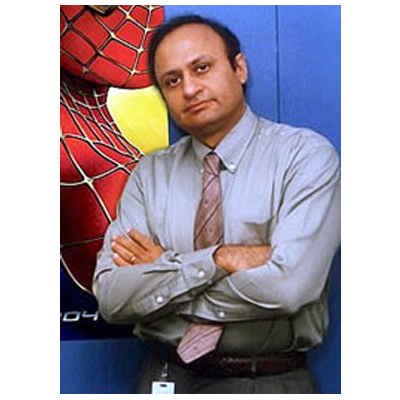
Tag: FCB Ulka

  • L&K Saatchi & Saatchi strengthens planning team

    L&K Saatchi & Saatchi strengthens planning team

    NEW DELHI: L&K Saatchi & Saatchi India has strengthened its core planning team across its offices in India. To begin with, the agency has roped in Anuraag Shrivastav as vice president – planning, North. He will be based out of New Delhi and report to Snehasis Bose, Executive director, L&K Saatchi & Saatchi India. 

    As VP, his mandate would be to contribute significantly to brand strategy, build strong relationships with clients, and also to manage and lead the internal strategy team while also playing an active role in the deployment of strategic plans. 

    Apart from Shrivastav, the agency has also appointed Shalaka Pradhan as brand strategy director. She will be based out of Bangalore and will also report to Snehasis Bose.   

    Anuraag joins L&K Saatchi & Saatchi from FCB Ulka where he was senior brand planning director. He has also been with Enormous Brands and J Walter Thompson in the past and has worked on brands like Pepsi, Mountain Dew, Horlicks, Domino’s, Vistara, National Geographic, OLX, Motorola, Dish TV, Quaker, Aquafina, Hero, among others.

    Pradhan joins L&K Saatchi & Saatchi from Publicis India where she was brand director – strategy. Prior to Publicis, she has also had enriching stints at Creativeland Asia, FCB Ulka, Cogito Consulting and Grey India. Some of the brands that she has been actively involved in include Nivea, Zee Café, Zee Marathi, Lakmé, Havmor, etc.     

    Snehasis Bose said: “Truth is I have been trying to work with Anuraag since 2015! His experience and freshness + understanding of culture and brands + can-do attitude = the strategic-superpowers our clients need and want!! Am really happy that our stars finally aligned!!!”

    As for Pradhan joining in, he added, “Shalaka with her consistent curiosity, her asking of ‘what if?’ is a great fit with the spirit that drives the L&K Saatchi & Saatchi strategic approach. Combined with her solid experience, I believe she will bring the just-right fillip to the Planning team and our clients.”

    Shrivastav said: “L&K Saatchi & Saatchi offers an interesting and wide range of brands that push you to adapt and think in different ways. It also supports a culture that encourages breaking norms and questioning the limits of possibility… where you are not constrained by the conventions of what has worked in the past.” 

    On his plans for the agency, Srivastav added: “The energy of the place is amazing and there’s a constant push to break out and do new things. The culture is collaborative and I look forward to partnering the teams in creating good work.”

    Adding her views, Pradhan said: “Having been a part of the Publicis Groupe in the past, I am excited to come back as a part of the L&K Saatchi & Saatchi team. Over here, there’s a pulsating drive to put out the best work every day. The vibe here is upbeat and I’m looking forward to creating good work and working with some great clients here.”

    Both the appointments play a crucial role in L&K Saatchi & Saatchi stepping up its offerings to its clients and also beefing up its leadership teams in key markets like the North & East, which contribute significantly to the agency’s overall growth. Srivastav joins in the North alongside Atin Wahal, who recently was appointed as EVP & head of north and east markets for L&K Saatchi & Saatchi India. 

  • This pandemic has shown that planning is meaningless: FCB Ulka’s Anindya Banerjee

    This pandemic has shown that planning is meaningless: FCB Ulka’s Anindya Banerjee

    MUMBAI: In these unprecedented times, it is easy to lose focus and develop a sense of anxiety or fear. Hence, people around the globe are utilising their lockdown time to invest in personal growth and learning skills. In a special interaction with indiantelevision.com, FCB Ulka executive creative director Anindya Banerjee shares some of his favourite activities, new skills he learnt during lockdown and more.

    Excerpts:

    What are the few things that you learnt during this lockdown?

    • Learnt that people land up in time for virtual meetings (Microsoft teams or Zoom) while being incorrigibly late for meetings in the real world.
    • Learnt that people usually keep video on while on a zoom call with friends and keep the video off while on zoom call with colleagues.
    • Learnt that physical meetings are a waste of time and resources. I’ve now learnt how to present film scripts online and I am liking it.
    • Learnt how to shoot a film without being actually present. It’s tough, but do-able.
    • Learnt how to change the punctured tyre of a car.  

    Have you tried to learn a new game or have you enjoyed playing a game for hours?

    I am learning how to play poker. Although, I suspect, I am a long way off from being proficient at it. I am also enjoying going back to the good old games of the analogue age: monopoly, chess and scrabble.  

    Have you taken time to reflect what you have accomplished in the past years and what goals you'll be setting for the coming years?

    Most people have said that this is a time for reflection. But frankly, with the work pressure, I have had even less time to think of the future. In any case, the pandemic has shown that planning is meaningless.

    Have you made a list of things which you are grateful for?
     
    I wake up in the morning and mentally thank god. I am grateful to be alive. Secondly, I am grateful to my profession that I have my hands full when it comes to work. How many people can stand up and say that?
     
    What business-related book has inspired you the most?

    I love reading. But if there’s one book that has inspired me, and honed my craft more than any other, it is "The Copy Book". In fact, it is the Bible for any advertising person. In every writer’s life, there are moments of fear and utter blankness. 15 minutes on any page are enough to dispel any self-doubt.  

    If you three wishes, what would you change in the world?

    • I would change people’s mindset about wastage. Wastage is the biggest crime today and it should be punishable by law.
    • I would make comics tax-free. Everyone loves reading comics. They are simple, entertaining and easy to read. A comic book can go a long way in eradicating illiteracy.

    What habits helped you become successful?

    Success is a highly contentious topic. Who’s to decide what is successful and what is not?

    What mindsets have helped you?

    The world is full of super talented people. And I know I am not one of them. So, I try and over-compensate it by working twice as hard.

    If you had the chance to start your career over again, what would you do differently?

    I am in advertising for the love of advertising. We influence society, thoughts and in many ways, I believe we are far ahead of the curve when it comes to changes. It’s an entertaining business and I get paid for it. Why would I want to do things differently?

  • Industry hails eased lockdown restrictions, wants more from economic stimulus

    Industry hails eased lockdown restrictions, wants more from economic stimulus

    NEW DELHI: We are close to completing two months of the ongoing nationwide lockdown, instigated by the fatal global pandemic COVID2019, living through extraordinary times, adjusting to newer ways of working, and dealing with newer ways of living. Many businesses have faced unimaginable loss, with giants like Ola, Uber, Swiggy, amongst others, laying off employees in mass numbers, and brands like Cream Bell shutting down. Small-scale businesses, be it brands running the shop on Instagram, or independent agencies, everyone has faced dire consequences.

    Amidst all this, the Indian government announced the fourth phase of the lockdown a few days back, with a lot of relaxations (depending on a state-to-state basis), and also introduced an economic stimulus package to help the businesses, especially the MSMEs, getting back on their feet, laying a foundation for ‘Aatmnirbhar Bharat’ (self-reliant India).

    The advertising industry’s reaction to these announcements has been lukewarm. While most of them seem to be content with the new lockdown guidelines, they had higher expectations with the economic stimulus than served.

    Reacting to the new lockdown guidelines, Havas Group CEO Rana Barua noted that it is very early to comment “as there are way too many mixed reactions from the industry. So, we will have to wait for a few more weeks to understand the implications.”

    FCB India group chairman and CEO Rohit Ohri said, “India is a densely populated country and it is wiser to remove the lockdown in a phased manner. The government, I feel, is doing a great job at it.”

    Madison Media chief analytics officer Nagaraj Krishnamurthy also lauded the government intervention in the matter. “The new lockdown guidelines try to balance life and livelihood. State governments have been given more power to decide on implementation.  This is a welcome step as local government will be a lot more informed on the ground reality. Ideally, we may have wanted all restrictions removed so that crowd immunity gets developed. However, such a broad stroke easing of restrictions may not be practically possible.”

    Dentsu One president Harjot Singh Narang feels that the current situation is much like watching a cricket match as things are happening in real-time and everyone is reacting according to the evolving situations in ways they think is the best.

    He said, “(The steps) are being subjected to a billion viewers with multibillion views on what is being done and what more could be done differently. I strongly feel that at times of crisis like this, we need to let the frontline response team do its work and do our best to help them in any way possible. There will always be views (personal and public) on what more could be done for the economy, the migrant, the underprivileged, etc…. but for now I feel we are clearly looking to open up slowly and cautiously. Is it “too cautious” or “too early”, that only time will tell.”

    The new economic stimulus, while great for the businesses, doesn’t hold much ground when it comes to helping to deal with the demand-side problems that India has been facing.

    While Barua preferred to reserve his comments on the economic package for the time being, Krishnamurthy noted, “There have been very good announcements with regard to reforms. The government has used a crisis to unleash difficult reforms in holy cow sectors like agriculture and defence. Rural demand which was subdued will now improve. This will lead to lagged uplift in demand. However, in the strict meaning of stimulus which is a capital infusion, it is a tad disappointing. There is no sector-specific monetary stimulus for very badly hit sectors like retail, media, hospitality etc.”

    He added that it is very much possible that the government will come up with one more round of monetary stimulus once the lockdown ends and people get back to work. “A true picture of demand will then emerge and the government can intervene to ease the pain faced by badly impacted sectors.”

    Narang agreed to Krishnamurthy that the stimulus will help the business but there is a 50:50 chance of demands improving early. “If I try to put myself in the decision maker’s shoes – as of now the thinking behind the stimulus package seems to be – over-index and create more liquidity for businesses so they can pass it on to people as wages, profits etc, and that should increase demand overall. Additionally, push in big-ticket reforms to oil the business machinery and enable it to run faster and better thereby attracting large foreign businesses to set up production facilities in our country and keep the wheels of growth turning.”

    “Sounds good in theory but the problem is that any thinking on supply-led growth is bound to take a long time as the economic multiplier kicks in and gets demand grows. Given the suffering around us and the sentiment that has fallen sharply ever since 2019 and now the complete nosedive of 2020, this time span could be even longer. This situation could jeopardise the whole theoretical possibility of it working. However, if the reforms kick in quickly and we do get to become a producer-led economy for large business investments, then even though we will go through a painful period for some time the recovery could be more robust and sustainable than a simple consumption-led growth model that we seem to have until 2018.” he added.

    Both Narang and Ohri said that it would have been better if the government had put money directly in consumer’s hands.

    Ohri suggested relief in taxes to support the dwindling spending power. Narang said, “I would look to put money in people’s hands directly as much as possible through tax reductions and direct transfers to the underprivileged but am not sure on how much the current coffers of the government could support this and how much of it could become just a short-term measure to alleviate pain without a mid- to long-term strategy to kick in long-term restructuring and growth that truly reduces inequality all around.”

  • Horlicks’ new TVC addresses critical need of supporting immunity

    Horlicks’ new TVC addresses critical need of supporting immunity

    MUMBAI: In line with Horlicks’ continuous commitment to nutrition, the brand has launched a new TVC highlighting how Horlicks*, consisting of immunity supporting nutrients like Zinc, Vit C and Vit D, can help support the body's defences.

    With ‘Work from Home’ being the new normal, individuals are stretching themselves every day, balancing work from home and work at home. In these times, it is essential to look after each of the family members. Today, healthcare professionals are putting up a tough fight in the hospitals and their own immunity is critical to continue this battle. The new TVC beautifully captures this aspect with a thoughtful husband, making sure that his wife, a medical practitioner, is getting the immunity nutrients every day, to support her immunity in this fight.

    HUL executive director foods and refreshment Sudhir Sitapati said, “In our battle against this pandemic, it is crucial to understand what each of us can do at an individual level. With this TVC, we aim to highlight the need for stronger immunity which is essential in these trying times. Balanced nutrition is important, especially when the immune system needs to be in optimal condition. Horlicks has Zinc, Vitamin C and Vitamin D – key nutrients known to support immunity. Recently, we also committed to donating packs of Horlicks to all major Covid hospitals in 12 key cities to help support immunity of health care workers and providers as they continue their tireless fight against coronavirus.”

    FCB Ulka CCO Swati Bhattacharya said, “Caregivers are left with little or no bandwidth to care for themselves when it comes to nourishment. Be it the quintessential homemaker or the ones now in front line, battling the pandemic. Making a cup for Horlicks for people we care about, not only provides them with immunity supporting nutrients, but also comforts them."

    Adhering to government’s orders to maintain social distancing, the entire TVC was made indoors by a production team of two. Additionally, the technical team further helped in completion of the TVC while working remotely from their homes.

  • Lockdown blues prompt brands, agencies to rethink strategies

    Lockdown blues prompt brands, agencies to rethink strategies

    MUMBAI: Even in a lockdown, the show must go on, even if it means cutting down your exenses. With cash crunch being a problem across the world, brands and agencies are figuring out how to optimise communication at the lowest cost.

    Indiantelevision.com reached out to a cross section of brands and agencies to get their perspectives on this.

    According to FCB Ulka ECD Anindya Banerjee, this is the period of hand-holding both the client and the consumer. “While the sentiments and the bottom-line have taken a hit, we can’t disappear from the lives of our consumers. Also, some businesses like financial services and banks haven’t stopped. The idea is to tailor-make messages for the consumer.”

    Giving a helping hand to clients, Marcom Avenue director Divanshi Gupta says that it is curating more personal content and strategies such as industry opinions, post-pandemic come-back strategy presentations, blogs, articles, that can help its clientele to establish themselves once Covid2019 is under control.

    Brands have been figuring out how to get through this difficult phase as well. For Liberty Shoes, the months from March to June are key for business. Says its retail executive director Anupam Bansal: “New season’s merchandise was placed in the shops, sales teams were geared up, marketing campaigns for ‘back to school’ or ‘marriage season’ was all set, but unfortunately the pandemic hit at the same time. It was difficult to quickly act on the situation and with social distancing and lockdown, mindsets are cash-conservative.”

    Without demand and revenue, Liberty’s marketing expenses also took a hit. It had to safeguard finances for rainy days, deducting the ad expenses, which, according to Bansal, was an articulated decision. The company is looking at consumer behaviour staying constant for another two quarters.

    The challenge before brands and agencies is to balance their economic losses while staying present among consumers. DigitalKites senior VP Amit Lall says that brands are reluctant to allow their focus to dilute and wish to stay relevant to the consumers. This is where digital comes into the picture with its ability to provide faster reports on investment.

    Barco India head of marketing Vijayant Khattry feels that it is only natural that most of its current campaigns revolve around remote meeting as well as virtual learning products like ClickShare Conference and weConnect as it expects their demand to increase substantially even after people go back to the office post-pandemic.

    The lockdown has seen digital spends shoot up. Banerjee says: “The pandemic has forced all companies to go digital. Fortunately, at FCB, we’ve been aligning ourselves to not work as a traditional agency for quite some time and that has helped us during these times.”

    In order to maintain the balance, Marcom Avenue has shifted its focus to branding and community building rather than sales/lead generation activities. Gupta adds, “Some of our clients have introduced new product lines during the pandemic like masks/hazmat suits/infra-thermometer, etc., looking to make available medical products to the health industry and further requiring us to create end-to-end marketing for these essential products in demand. Further, we took an initiative to analyse and tap into different industries that are booming like e-learning and pharma, so that we can help them increase their revenue and RoI.” 

    Apart from shifting focus from OOH and print to TV and digital, brands are looking at other options as well. Liberty Shoes is improving the UI/UX of its website to give a better customer experience. The company is also improving the website SEO to future-proof itself. It is also looking at strengthening its social media/influencer marketing tools to stay relevant. “Personalised communication with consumers is also taking place using the CRM database,” says Bansal.

    MediaTek marketing and communication deputy director Anuj Sidharth says, “We are also trying to increase our focus on offline public relations activities such as virtual roundtable conferences, webinar sessions, etc. MediaTek is maintaining consumers’ focus on the interesting mix of technologies that we power, especially products like mobile phones, tablets, smart TVs, wi-fi routers and voice assistant devices, which have become even more vital. We are also devising marketing mix strategies for mobile and non-mobile segments.”

    While brand building and marketing is a difficult thing for most brands to undertake simultaneously right now, communication is still essential in some way or the other.

  • Anindya Banerjee thanks essential service providers who are extending their support during COVID-19

    Anindya Banerjee thanks essential service providers who are extending their support during COVID-19

    MUMBAI: COVID-19 pandemic is threatening lives across the globe. It has brought the entire economy and people’s life at a standstill. During this crisis, essential service workers are the ones who are risking their health so that society can function smoothly. FCB Ulka ECD Anindya Banerjee expresses his gratitude towards healthcare providers and other essential services personnel for their support during this crisis.

  • Crisis no bar on creativity: Brands, agencies team up amidst COVID-19 scare

    Crisis no bar on creativity: Brands, agencies team up amidst COVID-19 scare

    MUMBAI/NEW DELHI: The rules of communication had never been so versatile as we are witnessing now. When almost the whole world is under lockdown, business running from homes, probably for the first time in history, and purchase patterns seeing curves deviating from regular,  the communication and marketing industry is functioning in a sort of dystopia no degree could have taught them of.

    As per a recent Kantar Study, despite the disturbing reality people are living in these days, 92 per cent of consumers will prefer brands to continue advertising. The enjoyment percentile for top-quality advertising content has mostly risen for the period. This puts an additional responsibility on brands’ shoulders to not only stay relevant but also educate and entertain consumers in times of distress.

    Muthoot Pappachan Group CMO Sanjeev Shukla tells Indiantelevision.com that it is very important for brands these days to build on the brand value that they have generated over years and make their users their brand advocates in a time when sales are lower than usual. He said his brand is focussing on staying in touch with the consumers and keep their trust intact.

    Asian Paints recently released a shot-at-home video for its Har Ghar Kuch Kehta Hai campaign to spread positivity and cheers. Asian Paints MD and CEO Amit Syngle said, “While all of us are put to this unprecedented test, the campaign aims to take a moment and look at the brighter side of things, cherish the joy of being with our families and create unforgettable memories.”

    The Kantar study also suggests that brands should refrain from advertising too much around the pandemic and try including light humour in their ads. It also suggested that brands can revisit old videos and footages to fit in this “new world of engagement”, something that Amul is doing by showing its old ads during the Ramayana and Mahabharata episodes on Doordarshan.

    Ogilvy India chief creative officers Kainaz  Karmakar and Harshad Rajadhyaksha believe that agencies will have to be wearing their thinking hats tighter than ever now considering the limitations agencies are working in.

    “Currently, we see no dip in work at all. In fact, more and more brands want to help in sending out the right information about Coronavirus, so that is keeping us very busy and rightly so. Restrictions are a reality of life, at least for the next few months. But thanks to technology and the wonderful World Wide Web, we are still able to create work. Writing needs to be sharper than ever because there will be limits on visuals,” they said.

    FCB Ulka ECD Anindya Banerjee shared similar sentiments as he noted, “The best part of the crisis is that it has no precedent. So, clients are looking for out-of-the-box solutions. And we as an agency are beside ourselves at such an opportunity. The creative team is up to their eyebrows with work. While many of them are prior commitments, they have to be recalibrated to the new normal; the complete dependence on the online media.”

    While most of the work has moved online and mobility restricted, neither brands nor agencies are giving up on the idea of creating fresh TVCs. Case in point being ZEEL’s #HumAndarCoronaBahar campaign by Lowe Lintas, Tata Sky’s campaign by Ogilvy, and Sony Pictures unique short film starring biggies across Bollywood and regional industries including Amitabh Bachchan and Rajnikanth.

    Limited resources and restricted movements have brought out the creative best of many brands and agencies.

    Karmarkar and Rajadhyksha shared, “Our video team has rolled up its sleeves and is finding ingenious ways of making work happen. The office is producing some pretty sweet work. The Vodafone stay at home pug, The Fevikwik ‘don’t repair, Asian Paints and UNILEVER; all these and many more pieces have been written, produced and released in the last three weeks. No one can lockdown creativity.”

    Banerjee also noted that their video team is working hard to innovate. “At the risk of sounding immodest, as an agency, we are used to not giving up, no matter what. Our films department is already planning on how does one do a great film and yet make it look like a million bucks.”

  • Tata Trusts shows that change is noble

    Tata Trusts shows that change is noble

    MUMBAI: It’s a heart-moving video of a young boy on stage describing the everyday ordeal his sanitation worker-father goes through. As a spellbound audience watches, the boy sings the poem ‘Mera baba desh chalata hai’, even as the sanitation worker is shown toiling in the ghetto, cleaning the filth. What a compelling way to describe the oppressive conditions in which India’s sanitation workers toil. And it goes on to make the desired result of making a lasting impact on us. That is precisely what Tata Trusts seeks to achieve through his recent campaign ‘Mission Garima’.

    The video stresses the need to provide humane working conditions to sanitation workers who keep our cities clean. The campaign, under the initiative called #TwoBinsLifeWins, urges citizens to segregate biodegradable and non-biodegradable waste to make sanitation workers life much easier.

    On the inspiration behind launching this campaign, Tata Trusts head, brand and marketing communications Deepshikha Surendran says: “Research with both consumers and the sanitation workers showed that there is a realisation that our lives can be better, our behaviour can impact other people’s lives. The inspiration came from the insight that the invisible man – the worker – needs as much respect and dignity as any other.”

    In a multi-agency pitch held by Tata Trust two years ago which included the likes of Lowe Lintas and Mudra, FCB Ulka won the mandate for this campaign. The campaign was initiated a year ago with 15 people working from client servicing, creative’s department and close to 20 people from the production side including the crew, main cast and the DOP. After auditioning 150 people, the main protagonist for the video was finalised.

    “Different creative agencies shared their thinking and approach. FCB Ulka had some sharp, emotional triggers to addressing the issue. Finally, the child’s worldview captured through a poem; it was totally on the brief. Basta films, then, worked with the FCB team to bring it to life,” says Surendran.

    According to Surendran, the recent campaigns that engage citizens to further brand purpose have shown positive results. The mission of segregating waste too can only be successful if the citizens are conscious and sensitive to driving change. Research reaffirmed the belief that consumers want to participate in social good, and that small but powerful nudges of communication can change behaviour. Hence, the campaign ‘kyunki desh ko desh ka har aadmi chalata hai.’

    FCB Ulka national creative director Keegan Pinto believes that there is a need to make people realise that everybody has the right to live with dignity. And when the narrative comes from a kid’s point of view, it makes it even more realistic.

    He says: “I don’t think people in India and the world at large know the effects of this job. This is clearly the worst job on the planet. They also die early because they get infested by waste, filth and a whole galaxy of microorganism. The campaign #TwoBinsLifeWins is about the plight of sanitation workers. When the life expectancy of average Indians is 65, the same for the sanitation workers is around 50 to 52. They die early as compared to the rest of the Indians. We thought it will be more impactful if a child makes a plea and say ‘save my father from dying’. While we are giving the message of doing the right thing, we also have been conscious of not just showing his plight, but telling them that we are ashamed of not doing our share of work. What you do is a matter of pride because you are special. We cannot even think of doing what you do.”

    Basta Films constructed the entire set as it was difficult to shoot in an actual surrounding considering the dangerous gases present in the sewer. The initial part of the film was shot at Mumbai’s Dharavi region. The classroom shot where the young boy is narrating the story of his father is filmed at Xavier’s College.

    Basta Films director Divyansh Ganjoo says: “When you handle such a sensitive issue, conceptualisation is the biggest challenge because you have a huge responsibility while making such content. It required a lot of research because you cannot go and shoot just like that. Taking permission from BMC was difficult at times. We met sanitation workers to understand what they go through in their daily lives. This is the first visual imagery of what actually happens inside it. There were no references to it; we have to actually research to know how to make it more realistic.”

    The campaign is promoted by Ratan Tata himself on his official social media handles. Under this initiation, Tata Trusts will provide free personal protective equipment or PPE set up at Kurla in Mumbai.

    Surendran adds, “Tata Trusts, with support from the Municipal Corporation of Greater Mumbai (MCGM), has developed a model ‘Garima Chowki’ at L-ward, Kurla, to provide suitable workplace amenities to the sanitation workers. The first-of-its-kind Chowki was launched in Kurla, on the same day as the campaign, in the presence of the Joint Municipal Commissioner Ashok Marathe. Chowkis are facilities in every ward where sanitation workers assemble to begin their day and come back to change and rest. The model Chowki at Kurla will serve 70 to 100 workers on a day-to-day basis and comprises office space, separate rooms for men and women staff with improved water and sanitation services, storage, and a functional open space. It is equipped with amenities like a water purification system, microwave oven and a gym, among other, recreational activities.”

    Tata Trusts is also working with NGO partners and corporate houses to address health issues of the workers. This multi-pronged strategy will hopefully provide a holistic solution in the years to come.

    On the upcoming marketing campaigns for Mission Garima, Surendran mentions: “The campaign has just begun and has already gone viral. Organic reach of this film is already in excess of 2 million views only from our platforms. We intend to boost the campaign with radio and cinema and complement the awareness drive with special housing society activation to help the adoption of waste segregation on a large scale. The teams are also extending the campaign to certain under-serviced pockets of the city where segregation is a challenge both from the perspective of a citizen and the worker. Below- the-line communication strategy with partners like Dialogue Factory has been piloted, and will soon be rolled out.”

    Tata Trust believes the campaign and message is a critical pillar of ‘Mission Garima’ programme, and the role the citizen’s play in bringing dignity and eradicating the practice is huge.

  • Carmesi launches its latest campaign ‘The Period Girl’

    Carmesi launches its latest campaign ‘The Period Girl’

    MUMBAI: Carmesi – India’s first premium biodegradable sanitary napkin launched their awareness campaign, The Period Girl this week. The campaign conceptualised by FCB Ulka is an innovative depiction of underprivileged girls on periods, frame by frame. The beautiful storytelling behind the frames conveys the message that for women, life shouldn’t stop, when periods start! Instagram Stories are massive. Everyone who’s anyone loves them. Top brands use Stories on a regular basis. It is said that on an average an Instagrammer spends 25 to 30 minutes tapping on Stories. What better reason for a brand that was built on Instagram to do their first CSR campaign – using Stories as a medium.

    Carmesi works closely with a group of NGOs together they have a social initiative called Unified In Red. They organise workshops on Menstrual Health for underprivileged girls. They donate pads to girls in need, educate them about their bodies, teach them good hygiene practices and encourage open conversations around menstruation. Every pack of Carmesi bought goes into funding these activities.

    Speaking on the occasion, Carmesi founder Tanvi Johri says, “This campaign is very close to our hearts because it’s a beautiful depiction of a rather painful reality. To see the period girl in all her childhood innocence, being crippled by something as basic as Periods touches a chord in people. It forms an instant connect with the viewer. And it doesn’t just end there; it gives the viewer an opportunity to help keep her going by directing them to our social initiative – Unified In Red, by educating them about the efforts we have undertaken to make period positivity a reality.”

    FCB Ulka national creative director Surjo Dutt says, “It’s a great way to start an Instagram only CSR awareness campaign. First for FCB Ulka and rare for Indian brands.”

    Spearheading the campaign, FCB Ulka group creative director Anusheela Saha says, “We felt the Instagram Stories tapping action could be put to a good use. So we created Story frames like stop-motion animation frames. Tapping on could make the period girl keep moving on, so that she doesn’t stop when her periods start. It’s engaging and yet cause centric.”

  • Tata AIA Life Insurance launches media campaign ‘Rakshakaran Heroes’

    Tata AIA Life Insurance launches media campaign ‘Rakshakaran Heroes’

    MUMBAI: Tata AIA Life Insurance has launched the media campaign Rakshakaran Hero that addresses the major concern of green cover depletion and lack of Life Insurance penetration in the country. The campaign breaks with a new brand film that inspires the consumers to protect the future of their families as well as that of the planet.

    The campaign highlights the pledge that the company has made towards planting a tree for every Tata AIA term policy bought.

    An extension of the brand promise of Tata AIA, Rakshakaran Ki Reet, the TVC highlights the larger purpose that buying a term policy serves. The Rakshakaran Hero campaign establishes the idea that by protecting the family’s financial future, the consumer is also participating in the larger good of protecting the planet, by making it greener, thus making him a Rakshakaran Hero.

    The commercial, conceived by FCB Ulka, opens inside a modern Indian house where the father has just bought a life insurance plan from Tata AIA Life as the wife looks on. Their children start hugging the father with joy and love, for ensuring a financially secure future for the family. Suddenly, something delightfully unexpected happens. Kids from diverse backgrounds, from across the country, emerge from all around and start entering the house and begin giving the father a hug. It is a ‘thank you’ hug, for protecting their collective future by protecting the planet. The film ends with the message – Tata AIA Life Insurance ke term Plan se aap sirf apni family ki hi nahi, planet ki bhi raksha karne ki reet nibhaate hai (With Tata AIA Life Term plan, you not only practice the ritual of securing your family’s future, but also embrace the ritual of protecting the planet). The new campaign on Rakshakarn Hero by Tata AIA Life Insurance expresses the pride and joy of being responsible for the planet.

    Speaking on the Rakshakaran Hero campaign, Tata AIA Life Insurance MD & CEO Rishi Srivastava said, “Financially securing families while protecting the environment blends our purpose with a larger societal goal. We celebrate our policyholders for championing this cause and taking the firm step of protecting their families and everyone’s collective future by protecting the environment. The Rakshakaran Hero campaign film celebrates our policy holders as the real Rakshakaran Heroes who earn the love and adulation of many, especially children, whose future they protect.”

    “With mounting concerns over fast-degrading quality of air and waning green cover, we feel we must play a proactive role in countering the ill-effects. I am proud that our campaign has hit the right chord with the consumer as they promise a cleaner, brighter future to our coming generations,” he added.

    The campaign has been designed by a creative agency, FCB Ulka. The TVC will run for the period of one month during entire India – Australia Cricket Series. It will be seen via TV, Digital and Outdoor platforms.

    Speaking about the film and the campaign, FCB Ulka national creative director Keigan Pinto shared, “It is a moment of immense pride for us to have our partners, Tata AIA Life Insurance, do their bit to make the planet greener, healthier and more sustainable. But it is no surprise when it’s a Tata group company. Creatively, we wrote a story about our protagonist getting appreciated, thanked and hugged not just by his own kids, whose future he just protected by buying life insurance, but by a bunch of over 30 happy kids from diverse backgrounds, who eventually create the really big, warm hug. What an experience it was. Kids, who represent our future, showing affection for a Rakshakaran Hero who just protected their collective future. We are grateful, once again, to our partners Tata AIA Life Insurance for supporting what we believe is a good creative for a noble cause.”

    Rakshakaran Hero initiative was started in Sept 2019, whereina sapling is planted in the name of the policy-holder for every term policy that is bought. These saplings are planted in designated regions across India to enhance the much-required green cover in country. Under the unique Rakshakarn Hero initiative, the organization has already planted over 60,000 trees.