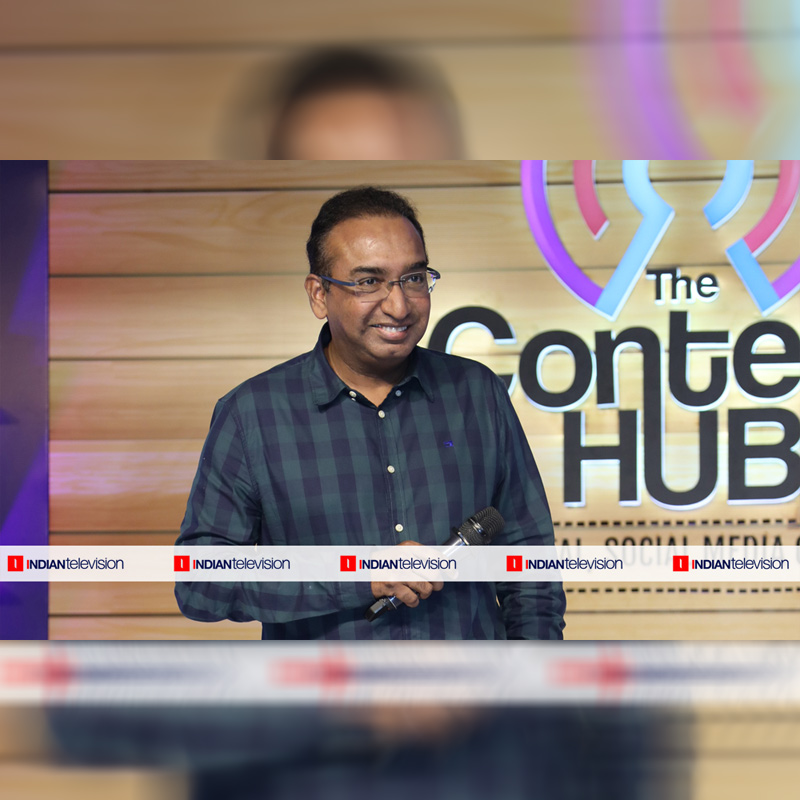
MUMBAI: Creativity, freedom of expression, self-regulation and content quality are some of the factors that come into play for digital platforms. These topics were addressed in a fireside chat between House of Cheer founder and CEO Raj Nayak and Applause Entertainment CEO Sameer Nair, at Indiantelevision.com’s The Content Hub 2020.
Nayak started off by stating that even though just 30 per cent of Indians have access to the theatre, films like Thappad and Badhaai Ho are growing in production and acceptance. Does this signal a diamond era for content creators? Nair agreed that the screen density in India is less in comparison to the US or China. However, he feels that television has played a big role in the distribution and dissemination of cinema. Even if just 30 per cent watch movies in the theatre, eventually more people watch it on TV.
“From a consumption point of view, everyone is seeing. The big challenge is the lack of screens. Of late, there seems to be a push that all content needs to go to digital which, in my opinion, is not the best thing. The US has figured out this window where they first go to theatres and then to TV and DVD. So, there’s more monetisation. It’s a pity when they go directly to digital because you can’t extract revenue out of it when people are willing to go to theatres and buy tickers. Theatre screens need to be an opportunity taken. It’s a good time where different kinds of stories are being told. Smaller movies have also done well. But it’s always been in the history of Indian cinema where we have space for all kinds of things. In the year when Naseeb launched, we also had something like Jaane Bhi Do Yaaron,” he said.
Nair has delved in various types of content creation from production houses to TV to digital, making him one of the most prominent faces of the industry. With Applause, his aim is on producing content for digital. “The digital medium makes consumers behave in a particular way and that creates a difference in the content,” he said. “TV has always been a one-way talk. You program a channel and give it to the consumer. The consumer can’t control the schedule. OTT and digital have given the consumer the power to choose what they want to see or read – when, where and how they like it.”
Even though TV is dictatorial and one-way, it has been and is still successful, according to Nair. But the choice that digital provides is creating niches. “That’s why so much of international content is being consumed with subtitles. That wouldn’t have been possible in the pre-OTT era.”
Nayak questioned Nair on the differentiation between the content found on digital and TV. Nair replied, “We missed a revolutionary step of doing premium subscription television. For digital series, we’re talking of what the US has done successfully for 25 years with shows like The Sopranos. That’s what we are doing now with OTT. All broadcasters have found one more place to show their content.”
With his experience, Nair highlighted that TV is driven by ratings and that limits the kind of stories that can be told. But on OTT, you can tell those stories that are restricted by TV and this is driving the change in content.
Nayak brought up the topic of creative freedom in times of growing censorship. Nair said, “If you’re a genuinely creative person, you will look to be subversive in any environment. There’s no such thing as freedom. You have to tell your story and get it out. During the Emergency, the government banned Aandhi which returned after the government changed. But because of the new medium, we can tell stories. TV didn’t allow it, not because there wasn’t any freedom but rather because the medium wasn’t conducive. The medium requires ratings and ratings require the lowest common denominator. Stories on mothers-in-law and daughters-in-law worked very well as a formula for TV.” However, even in this new freedom, Nair said, there are bad shows.
Even though India is only just warming up to the series format, Nair feels we are already late. With India’s propensity to leapfrog technology, it is likely we may do so in content too. “Will India watch 60-minute episodes on 4G connection? There is a lot of talk about short-form content and other disruptors but right now, we have to look at making money. Going forward, we are looking at series and short-form content.”
Nayak, who has decades of experience in the TV industry, quizzed Nair on the need for self-regulation. “On TV, since it was family viewing, we had restrictions. But, now with digital, we have great creative freedom. Both international and local are pushing the envelope. So do you think self-regulation is necessary and does it kill creative freedom?” he asked.
“Self-regulation is a slippery slope. It puts you in a place where you accept that if you don’t regulate in that manner there will be repercussions,” Nair pointed out. “If you want to speak, there will always be someone who will be unhappy. Someone will protest to your freedom of speech. Different countries operate differently. The US is the freest. They are also a 200-year-old democracy and they have been at freedom longer. But people are pushing boundaries and finding new ways of expression and getting away with things. Most often the establishment finds it hard to figure out what you’re saying. That’s the sort of thing to do.”
It’s a fact that known faces work well in promoting films and shows but a show like Jamtara performed well on Netflix with new faces too. “It always starts with the story and writing. We’ve done shows with stars and without. I don’t think you can knock down faces. They are faces for a reason, for marketing and have value. There are audiences out there who like them and want to see their work. The series format does allow us to take different stars and these tend to be an ensemble cast and not focussed on a single hero. So, the script is the hero,” explained Nair.
The area to be cautious is that since the power lies with the viewer, they can choose to skip or stop watching. That’s where the story must be interesting. “Faces will get an audience but not keep them there,” he said.
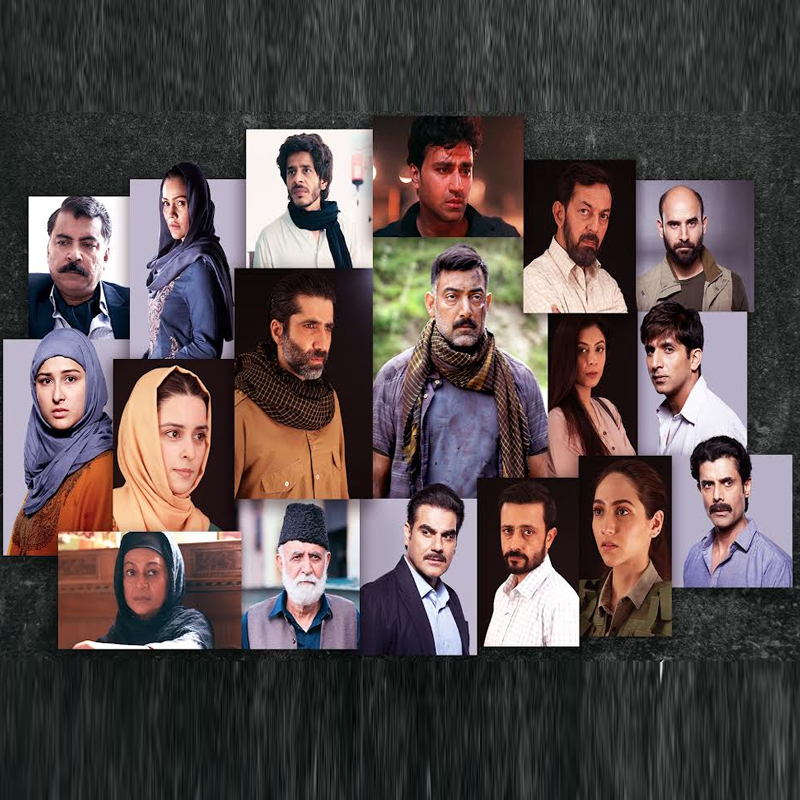
Applause Entertainment is in the process of creating the Indian adaptation of the popular Israeli series Fauda. Giving insights into its creation, Nair said, “From an adaptation point of view, it operates at two levels. One level is the socio-political issue of the place being set in Israel and Palestine. The other one is the thriller. We’ve separated the two. With what’s going on in India, we’re using that as fodder for dialogue and context. This environment lends itself to that.”
Comparing filmmaking and writing in the US with India, Nair mentioned, “The US takes greater care to mitigate failure. They are more disciplined in their writing and production process. They tick a lot more boxes and we have also been doing that, even if not at the same level. Even in the series business, we are looking at international businesses and learning.”
On his prediction for content creators in 2020, Nair said that there can’t be anything truer than stories being well-written. “Everyone feels not everyone gets an opportunity. But there’s a lot of work happening out there. It’s the nature of the business that not everything gets made and even great ideas get left behind. It’s nothing to be despondent about. You’ve got to keep at it and keep trying to tell your story,” he concluded.