Tag: Fastrack

  • Hari Krishnan is new Lowe Lintas president – South

    Hari Krishnan is new Lowe Lintas president – South

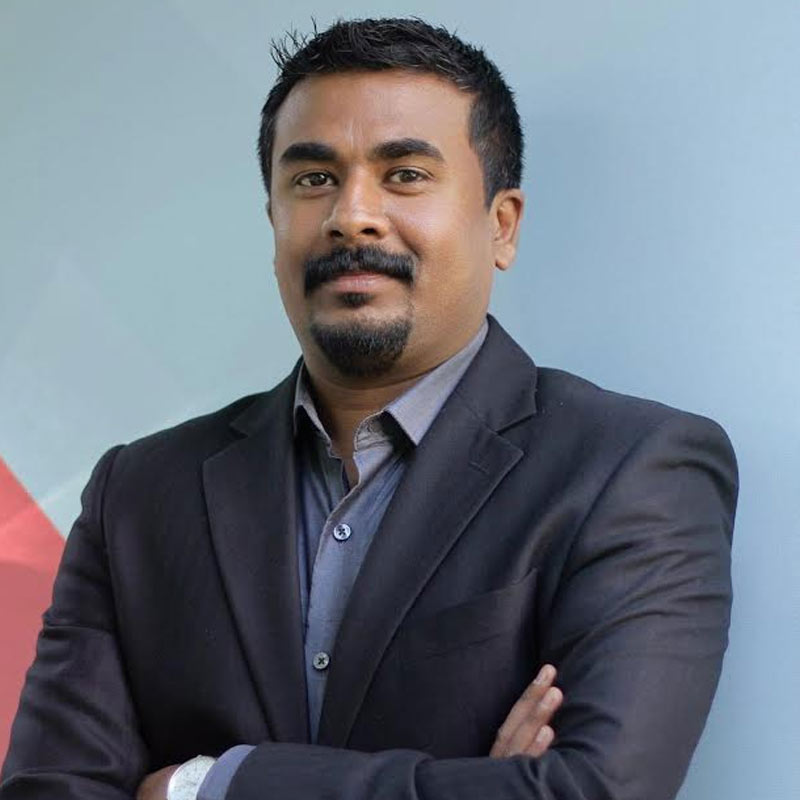
    MUMBAI: Lowe Lintas has announced that Hari Krishnan is the new president of its South operations. This appointment comes on the back of GV Krishnan’s recent exit.

    To be based out of Bengaluru, his remit includes the agency’s offices in Bengaluru, Chennai and Hyderabad. As the largest creative agency in South region, the portfolio includes over a 100 clients and brands such as Arvind, Britannia, Fastrack, Flipkart, Gold Drop, Hike, ITC Foods, MRF, Mobizz, Paperboat, Sonata, Tanishq, TI Cycles, TVS Motors and many other companies and brands.

    Krishnan, currently CEO of MullenLowe’s operations in Sri Lanka is in the process of transitioning into his new role.

    He had joined MullenLowe early 2015 from Grey India where he was heading their South operations.

    Hari has about 20 years of experience in the advertising and media industry; having spent most of it between Lowe Lintas, JWT, Star TV and Grey.

    Commenting on his move, MullenLowe Lintas Group, India Group CEO Joseph George said:“Hari has done an incredible job in Sri Lanka almost transforming our operations there overnight. Going by his track record across the agencies he has worked in, he is just the right person we need to build on the fantastic momentum that the South operations of Lowe Lintas have achieved over the past 3-4 years in terms of creative product and new business acquisition. Both of which, Hari is rabidly passionate about.”

    Hari Krishnan too added, “This is a homecoming of sorts for me since my association with Lowe Lintas almost 18 years ago started in the Bengaluru office. The India operations of Lowe Lintas has been on an unbelievable roll the past few years and my mandate is clear. The talent in our 3 offices in the South, especially the creative fire-power under Rajesh Ramaswamy’s leadership is just reassuringly and intimidatingly brilliant. Can’t wait to get started!”

    Speaking of succession for MullenLowe Sri Lanka, Joseph George said, “Our Sri Lanka operations are in a sweet spot thanks to all the efforts made in the past 18 months under Hari’s leadership and some fantastic clients. And we are perfectly poised to build on from here; which is why Hari’s replacement for the Sri Lanka CEO’s role is crucial; and so I am very pleased with whom we have found. The announcement will take place in a few days.”

  • Fastrack’s new ‘Never Have I Ever Shoplifted’ campaign

    Fastrack’s new ‘Never Have I Ever Shoplifted’ campaign

    MUMBAI: Fastrack had undertaken a new campaign called Never Have I Ever Shoplifted in Mumbai inviting its fans to try their luck at shoplifting from its Viviana mall and Gokhale Road stores. This ground extension of the brand’s ‘Never Have A Never Have I Ever’ campaign urges the youth to embrace the lighter side of life. The activity in Mumbai is a part of a national drive which saw the campaign successfully rolling out in over 10 stores across the nation in the past month.

    The activity held at Mumbai saw a total footfall of over 230 customers. The participants were given an exciting 20 seconds to shoplift tagged products, with lucky winners walking away with priced Fastrack watches. 

    The campaign first went live on television on 20 February 2016 with three cheeky ad films and was complimented by a microsite.

    The microsite allows users to choose from a variety of causes and share personalized GIFs, making for free expression and fun conversations using the hashtag #NeverHaveANeverHaveIEver.

  • Fastrack’s new ‘Never Have I Ever Shoplifted’ campaign

    Fastrack’s new ‘Never Have I Ever Shoplifted’ campaign

    MUMBAI: Fastrack had undertaken a new campaign called Never Have I Ever Shoplifted in Mumbai inviting its fans to try their luck at shoplifting from its Viviana mall and Gokhale Road stores. This ground extension of the brand’s ‘Never Have A Never Have I Ever’ campaign urges the youth to embrace the lighter side of life. The activity in Mumbai is a part of a national drive which saw the campaign successfully rolling out in over 10 stores across the nation in the past month.

    The activity held at Mumbai saw a total footfall of over 230 customers. The participants were given an exciting 20 seconds to shoplift tagged products, with lucky winners walking away with priced Fastrack watches. 

    The campaign first went live on television on 20 February 2016 with three cheeky ad films and was complimented by a microsite.

    The microsite allows users to choose from a variety of causes and share personalized GIFs, making for free expression and fun conversations using the hashtag #NeverHaveANeverHaveIEver.

  • Q2-2016: Ad exp down 30.5 percent; watches sales grow, jewellery pulls down Titan’s numbers

    Q2-2016: Ad exp down 30.5 percent; watches sales grow, jewellery pulls down Titan’s numbers

    BENGALURU: Last quarter (Q1-2016) Titan Company Limited (Titan) spent the highest amount towards advertisement (Ad spend) both in terms of absolute rupees and percentage of Total Income from Operations (TIO) at Rs 128.84 crore and 4.8 percent of TIO.  This quarter (quarter ended September 30, 2015, Q2-2016, current quarter), Titan reduced its Ad Exp by 15.4 percent YoY to Rs 89.52 crore (3.3 percent of TIO as compared to Rs 105.83 crore (2.9 percent of TIO) and reduced Ad exp QoQ by 30.5 percent from the figures mentioned above for Q1-2016.

    Note: 100,00,000 = 100 lakh = 10 million = 1 crore

    Segment Performance

    Titan has 4 revenue segments – watches having the brands –Titan, Xylus, Nebula, Sonata, Fastrack and Zoop; Jewellery with Tanishq, Zoya, Gold Plus from Tata, Mia and Fq teen diamonds; Eyewear under the Titan EYE+ brand and ‘Other’ such as precision engineering among others.

    Titan’s Jewellery business is its major revenue generating stream that contributes more than 70 percent to the company’s revenue.  In the current quarter, jewellery business revenue reduced 32.9 percent (declined by Rs 1,000 crore) YoY to Rs 1,929 crore (72.7 percent net sales) from Rs 2,929 crore (82.2 percent of net sales). The company’s Watches division is the next major division in terms of revenue contribution. Revenues from watches grew 4.4 percent (increased by Rs 23 crore) YoY to Rs 546 crore (20.6 percent net sales) from Rs 523 crore (14.7 percent net sales).  Titan explains the reason for the decline in a release that says that retail sentiment has been extremely poor in this quarter and that the watches division, backed by activations for both Titan and Fastrack brands grew in income by 4.4 percent. A new sub-brand ‘SF’ by Sonata in the adventure sports segment was launched during the current quarter.

    Titan’s Eyewear business which contributes just 2 to 3 percent to the company’s revenue, reported 14.3 percent (increased by Rs 11 crore) YoY growth in revenue to Rs 88 crore (3.3 percent of TIO) from Rs 77 crore (2.2 percent of TIO). On a YTD basis, (6 months of the current fiscal), Titan says that the decline in profits from this segment is due to higher Sales promotion and Advertising costs in the first quarter.

    As a consequence of the huge decline in revenue from Jewellery sales, Titan’s TIO in the current quarter fell 25.6 percent (reduced by Rs 919.59 crore) YoY to Rs 2,673.48 crore from Rs 3,593.07 crore. Net Sales fell 25.5 percent (reduced by Rs 910 crore) YoY to Rs 2655 crore from Rs 3565 crore. Qoq, the TIO decline was much lower at 1.3 percent from Rs 2708.59 crore. QoQ, net sales in the current quarter reduced by 1.2 percent (reduced by Rs 32 crore) as compared to Rs 2,687 crore.

    Advertisement spend trends

    Please refer to fig A below for Titan’s Ad expenses over a fifteen month period starting Q4-2012 (quarter ended March 31, 2012) until the current quarter.

    As mentioned above, during the fifteen quarter period under consideration in this report, Titan’s Ad spends were the highest in the previous quarter (Q1-2016), both in absolute rupees and in terms of percentage of TIO. Lowest Ad spends  during the same period in absolute rupees and in terms of percentage of TIO were in Q4-2103 at Rs 66.63 crore and 2.5 percent of TIO respectively.

    During the fifteen quarter period under consideration in this report, Titan’s ad spends show a linear increasing trend in terms of absolute rupees as indicated by the broken blue trend line, while ad spends in terms of percentage of TIO show a slow linear decline as indicated by the broken maroon line in Fig A.

    Please refer to Figure B below. As mentioned above, the company’s TIO in Q2-2016 fell 25.2 percent YoY and reduced 1.3 percent QoQ. During the fifteen quarter period under consideration in this report, TIO shows a linear increasing trend as indicated by the broken orange trend line in the figure below.

    PAT in Q2-2016 at Rs 145.39 crore (5.8 percent margin) reduced 39.4 percent YoY from Rs 239.98 crore (7.3 percent margin) and reduced 3.8 percent QoQ from Rs 151.06 crore (6 percent margin). PAT in absolute rupees and in terms of percentage of TIO (margin) show a linear increasing trend as indicated by the broken military green and broken grey trend lines in the figure below during the fifteen month period under consideration in this report.

    Company Speak

    Titan Managing Director Bhaskar Bhat said, “This was an extremely challenging quarter for the company and we witnessed an income decline of 25 percent. While our watches business witnessed a growth of low single digit at 4.4 percent the jewellery business had a difficult quarter with a decline over last year. The industry saw a tough period with gold imports declining significantly. The decline in jewellery sales was also on account of discontinuation of our Golden Harvest Scheme. The Eyewear business continues to register double digit growth. All our brands are working on new product and marketing campaigns for the festive season ahead.”

  • Q1-2016: Titan ad spends up 30% at Rs 128.84 crore

    Q1-2016: Titan ad spends up 30% at Rs 128.84 crore

    BENGALURU: Titan Company Limited (Titan) spent the highest amount in absolute rupees and in terms of per centage of Total Income from operations (TIO) towards advertisements in the quarter ended 30 June, 2015 (Q1-2016), during a 14 quarter period that has been considered in this report. The company‘s ad spend in the current quarter at Rs 128.84 crore (4.8 per cent of TIO) was 29.8 per cent more than the Rs 99.25 crore (3.4 per cent of TIO) in Q1-2015 and 60.4 per cent more than the Rs 80.30 crore (3.2 per cent of TIO) in the immediate trailing quarter.

    Note: 100,00,000 = 100 lakh = 10 million = 1 crore

    Businesses and Brands

    Titan has three revenue segments – watches comprising the brands –Titan, Xylus, Nebula, Sonata, Fastrack and Zoop; Jewellery with Tanishq, Zoya, Gold Plus from Tata, Mia and Fq teen diamonds; and ‘Other’ such as eyewear under the Titan EYE+ brand, apparel and eyewear also under Fastrack brand and precision engineering among others.

    Segment Performance

    Titan’s watches business in Q1-2016 recorded a growth of 9.1 per cent with income of watches business growing from Rs 444.19 crores to Rs 484.54 crores. The Jewellery income in Q1-2016 was Rs 2072.03 crores as against Rs 2325.27 crores, a decline of 10.9 per cent. The company says that jewellery business continues to face regulatory pressures that have an adverse impact on sales. Titan’s Eyewear business grew by 19.7 per cent from Rs 89.21 crores last year to Rs 106.77 crores in Q1-2016. The company’s other businesses including Precision Engineering grew by 36.3 per cent, to Rs 46.85 crores in the current quarter.

    The companys says that it has put together plans to stimulate demand for all its product categories through innovative advertising campaigns and new product launches in the coming quarters.

    Retail expansion continued with a net addition of 22 stores across all its businesses in Q1-2016, ending the period with a retail area of over 16.2 lakh square feet nationally. Titan’s retail chain is now 1223 stores strong, as on 30 June, 2015 and is expanding with growth plans in place for all its retail businesses – watches, jewellery and eyewear.

    Advertisement spend trends

    Please refer to Fig A below. As mentioned above, during the fourteen quarter period starting Q4-2014 until Q1-2016, Titan’s ad spends were the highest in the current quarter, both in absolute rupees and in terms of percentage of TIO. Lowest ad spends in absolute rupees and in terms of percentage of TIO was in Q4-2103 at Rs 66.63 crore and 2.5 per cent of TIO respectively during the same period.

    During the fourteen quarter period under consideration in this report, Titan’s ad spends show a linear increasing trend in terms of absolute rupees as indicated by the broken blue trend line, while ad spends in terms of percentage of TIO show a slow linear decline as indicated by the broken maroon line in Fig A.

    Please refer to Figure B below. The company’s TIO in Q1-2016 fell 6.3 per cent to Rs 2708.59 crore as compared to the Rs 2891.44 crore in Q1-2015 but was 8.5 per cent more than the Rs 2496.19 crore in Q4-2015. During the fourteen quarter period under consideration in this report, TIO shows a linear increasing trend a indicated by the broken orange trend line in the figure below.

    PAT in Q1-2016 at Rs 151.06 crore (six per cent margin) declined 14.8 per cent as compared to the Rs 177.27 crore (6.1 per cent margin) and was 29.8 per cent lower than the Rs 215.09 crore (9.6 per cent of TIO) in Q4-2015. PAT in absolute rupees and in terms of percentage of TIO (margin) show a linear increasing trend as indicated by the broken military green and broken grey trend lines in the figure below.

    Company speak

    Titan managing director Bhaskar Bhat said, “The first quarter this year has been an extremely challenging one. Retail sales for both our core businesses watches & jewellery, have been below expectations due to reduced walk-ins. May and June, in particular were poor months. Rural demand too was affected due to lower realizations and monsoon conditions. With good monsoon in sight and festive season ahead, we look forward to a better year ahead. ”

  • Titan’s Q4-2014 q-o-q Ad expenses down 26 per cent

    Titan’s Q4-2014 q-o-q Ad expenses down 26 per cent

    BENGALURU:  Titan Company (Titan), formerly known as Titan Industries, reported a (-25.98) per cent drop in advertisement expenses (Advt Exp) in Q4-2014 at Rs 87.37 crore (3.12 per cent of Income from Operations or Op Inc) as compared to the Rs 118.04 crore (4.18 per cent on Op Inc) in the immediate trailing quarter Q3-2014, but 31.13 per cent more than the Rs 66.663 crore (2.55 per cent of Op Inc) spent in the year ago quarter of Q4-2013.

    Note: Rs 100 lakh = Rs100,00,000 = Rs 1 crore = Rs 10 million

    Titan has three revenue segments – watches with five major brands – Titan, Xylus, Nebula, Sonata and Fastrack; Jewellery (the largest segment in terms of revenue and consequently profits) with Tanishq, Zoya, Gold Plus from Tata, Mia and Fq teen diamonds; and ‘Others’ that include eyewear under the Titan EYE+ brand, apparel and eyewear also under Fastrack brand and precision engineering among others.

    Over nine quarters staring from Q4-2012 until Q4-2014, Titan’s Advt Exp shows an upward trend in terms of absolute rupee value, but a drop in terms of Advt Exp as percentage of Op Inc.

    During FY-2014, Titan spent 7.25 per cent more towards Advt Exp at Rs 404.43 crore (3.7 per cent of Op Inc) as compared to the Rs 377.09 crore ((3.73 per cent of Op Inc). Though the Advt Exp in terms of absolute rupees in FY-2014 was higher, in terms of percentage of Op Inc, the drop in Advt Exp was 0.03 per cent.

    Please refer to Fig 1 and Fig 1A below for Titan’s Advt Exp trends.

    Titan’s Op Inc for Q4-2014 at Rs 2803.38 crore was 4.77 per cent more than the Rs 2675.77 crore in Q3-2014 and was 7.28 per cent more than the Rs 2613.24 crore in Q4-2013. In FY-2014, Titan’s Op Inc at Rs 10915.79 crore was 7.94 per cent more than the Rs 10112.67 crore in FY-2013.

    PAT for Q4-2014 at Rs 206.44 crore  (7.36 per cent of Op Inc) was 24.68 per cent more than the Rs 165.57 crore  (6.19 per cent of Op Inc) in Q3-2014 and 11.61 per cent more y-o-y than the Rs 184.97 crore (7.08 per cent of Op Inc). PAT for FY-2014 at Rs 741.14 crore (6.79 per cent of Op Inc) was 2.2 per cent more than the Rs 725.18 crore (7.17 per cent of Op Inc) in FY-2013. Please refer to Fig 2 and Fig 2A for Op Inc and PAT details.

    The company says that weak consumer demand continues and this is affecting growth in both watches and jewellery. It claims that Reserve Bank of India (RBI) has given approval to it for hedging of its gold inventory on international commodity exchanges – brings back efficiency to hedging.

    Titan says further that issues with gold supply in the market persist – high premium on gold continues encouraging smuggling and though the sale of gold coins has resumed the uptake has been very lukewarm.

    It avers that Titan’s focus on retail network expansion continues – 39 stores (44000 sq. ft.) were added during

    Q4-2014 across divisions. Year-to-date there has been an addition of 125 stores (180,000 sq. ft), including 30 TitanOne conversions.

    Titan informs that it has entered into a JV agreement with Montblanc for single brand retail trade in India

  • Adversioning advertising gains currency

    Adversioning advertising gains currency

    MUMBAI: A national jewellery brand had to reach out to the diverse markets in south India. It needed a solution that would allow it to simultaneously beam on a national television channel different creatives for the diverse markets in the region, each featuring a regional celebrity.


    Thanks to technology solutions, the jewellery company could get its different creatives beamed to relevant demographics at the same time on the same channel.


    The concept is called adversioning or geo-targeted advertising in the media world.


    Technology for such simultaneous telecast of different advertisements on the same channel has been available for a few years now but advertisers have begun to use it on a significant scale only recently.


    Advertisers are increasingly making use of geo-targeting. These include fast moving consumer goods major Hindustan Unilever.


    The geo-targeted advertisements in value terms now account for about 20 per cent of total ads on television. In the US, the proportion of such ads is almost 40 per cent. According to GroupM, total advertising spend on television in 2013 was Rs 16,860 crore.


    But the potential for geo-targeted ads in India is seen to be much, much higher considering the extent of diversity in the country, says SureWaves founder Rajendra Khare. SureWaves is a technology solution provider for geo-targeted advertising and had provided its service to the national jewellery brand but decline to disclose the name of the brand.


    Khare says it makes sense for any advertiser to opt for geo-targeted advertising to not only break the language barrier but also to target differently the different the socio-cultural groups across the country with a sharp and direct emotional connect.


    So, the next time when you are on a trip to Chennai, don’t be surprised if you come across an ad by Fastrack Cabs on a national channel.


    The Indian market is a complicated one. From regional differences to numerous brands, one needs to stand out in a clutter to catch the attention of as many consumers as possible.


    Apart from SureWaves, there is amagi Media Labs that offers advertisers and broadcasters solutions for geo-targeted advertising.


    Geo-targeting or adversioning is done with the help of a barcode system and cloud-based infrastructure on which TVCs are stored. The technologies solutions then enable playing of different ads in different regions on the same air-time band on a particular channel.


    There’s a possibility of making available different solutions to meet different needs. For instance, Carat Media which handles baby products maker Libero’s account, wanted to reach out to non-Marathi female audience in Maharashtra. Amagi’s technology enabled Libero to use channels with a national footprint for the launch campaign of Libero in a specific market like Maharashtra.


    Amagi which had to answer a lot of questions when it started out in 2008 feels that those doubts have now been put to rest.


    “Today, largest national players like HUL, GSK too want to follow a regional plan and have different communication depending on the region,” says Amagi’s co-founder KA Srinivasan.


    Geo-targeting or adverisioning implies customised broadcast of creative communication to different markets in the same ad slot. In other words, it means splitting up of the national beam of a broadcaster into local beams akin to what national newspapers do for their local editions.


    ‘How can we sell a standardised product to local and different consumers?’ has been a dilemma for most marketers. However, with the adversioning concept, things are supposed to change.


    According to GroupM Trading (CTG) south Asia Managing Partner Prasanth Kumar, who is a big votary of adversioning, says, “clients can benefit in multiple ways as spill-over reduces, national channels can be used to run local promotions, the same 30 second slot can be used for multiple creatives (different brands in different markets, different language versions in specific markets). Majority of the clients who have used this availability are local clients.”


    There might be companies which don’t feel the need to make an ad locally oriented, but there are a few which opt to geo-target ads. One of the main reasons a brand may geo-target ads is because it only offers services/products within specific areas. There is a huge and compelling demographic component involved with geography that can influence click-through-rate (CTR) and conversion rates as well.


    Recalling how cable operators’ years ago would show local advertisements, Havas Media India managing director Mohit Joshi says if we take a look at the southern market, one can see a lot of local players which isn’t the case in the northern part of the country. “The concept makes sense for local clients/marketers a lot as it gives them a chance to target their TG.”


    But will the local marketers be able to find their place and compete with national players? Answers Kumar, “Yes. Local advertisers form a large part of the 2,000 plus clients who have tried this concept. They see value in placing their ads on national channels as these channels were earlier much more difficult to afford and local players have specific market requirements.”


    On the same lines, Pipal Majik CEO CD Mitra highlights how brands too have been emphasizing on “localisation” and if adversioning helps them achieve it then many will opt for it.


    “For example, if a particular tea brand wants to sell its particular blends in certain regions then this is the perfect solution for them to advertise in a certain regional beam of a national channel.”


    Talking about the cost of geo-targeted ads, experts say creative production cost is just a small segment of the overall marketing budget a brand allocates.


    The credit for the growth of the format and news, movies and GEC channels experimenting with it goes to the fact that vernacular media has been growing at a much quicker pace than the national media, Kumar elaborates.


    “The reason for the growing importance of Class B and Class C towns for advertisers, the growing education levels, expansion of vernacular publications into new markets with categories like retail, real estate along with FMCG is fuelling the growth,” he adds.


    Khare adds that a marketer needs to utilize both national as well as regional channels to reach out to as many people as possible. “It is not national vs. regional, but how one can utilize both for its benefit. We have to also understand the importance of spot TV which is the most cost effective way for advertisers to market.”


    Technology plays an important part of the concept to become a part of life, soon. Joshi says, “If the technology is not there to support the concept then it will surely fall flat in its face. We as an industry will have to invest in it to see it grow and become an integral part of advertising soon.”


    Apart from this, industry professionals feel that pricing too plays an important role here. The competition between national and local players will vary and also depend on it. “Broadcasters in the end need money. If they get it from local players or national ones, it doesn’t matter. Hence, stakeholders have to come up with attractive pricing and strategies to make it real,” says Mitra when asked if broadcasters would opt for local marketers over national ones.


    Zee TV has been selling ad spots split into regional beams since late last year and has had a good experience with it. Zeel chief sales officer Ashish Sehgal says, “The concept has helped us  increase number of clients if we offer them a strategic plan which will help them reach out to their TG better.”


    He further says the sum of revenues from a divided ad spot has been higher than the revenue it would have got having sold it as one national beam.


    Sehgal says Zee TV has seen an increase in local marketers through geo-targeting. “In the past few months, around 25-30 SMEs have come to us to use the platform.”


    Bennett Coleman & Co president corporate development Sunil Lulla says adversionsing is very much a reality now with many brands and broadcasters using it.


    However, he says that a broadcaster has to be clear about this with the clients otherwise it can hurt some advertisers who pay for a national beam but sometimes local/regional beams could be sold to another client. “We (broadcasters) have to understand that there is a big (regional) market which can be tapped through this and it will benefit everyone.”

  • DDB announces acquisition of 22feet in India

    DDB announces acquisition of 22feet in India

    In a move to lead the development of the digital marketing solutions space in India,DDB Group Asia Pacific and Omnicom Group Inc. (NYSE:OMC),today announced it has acquired 22feet.

    One of the most dynamic and leading digital marketing firms in India, 22feet will merge with Tribal Worldwide India creating a new entity known as 22feet Tribal Worldwide, and part of theDDB Mudra Group.

    Effective immediately, 22feet Tribal Worldwide will be spearheaded by Vineet Gupta, Managing Director,Brijesh Jacob, Joint Managing Director, and Deepak Nair, Chief Operating Officer. All three, originally from 22feet, will report directly to MadhukarKamath, Group CEO & Managing Director, DDB Mudra Group. They will alsowork closely withPatrick Rona, President, Chief Digital Officer, DDB APAC & President, Tribal Worldwide APAC Tribal Worldwide,and the rest of the Tribal World Wide network across 42 countries to deliver relevant International learnings to the local market

    John Zeigler, Chairman & CEO, DDB Group Asia Pacific, India and Japan, said, “We see this as a strategic move to continue evolving our capabilities in the fast-moving Indian market. DDB Group has accelerated its capabilities to offer clients the best-in-class local digital expertise at 22feet, coupled with best-in-class global knowledge of the Tribal Worldwide network. I believe this is a game-changing event for DDB Mudra Group in India.”

    22feet has become India’s benchmark company working with iconic brands such as Café Coffee Day, Fastrack, Lenovo, Heineken, Kingfisher, Red Bull and Axe.

    22feet Tribal Worldwide will offer its clients end-to-end digital and mobile branding and marketing solutions including strategy and consulting, web designing, web development, media planning, search engine marketing, social media marketing, mobile marketing solutions, mobile application development, mobile couponing and mobile UI.

    MadhukarKamath, Group CEO & Managing Director, DDB Mudra Group, said, “With digital at the heart of DDB Mudra Group’s agenda, we are extremely happy about joining forces with 22feet. I have tremendous respect for Vineet, Brijesh and Deepak, who are focused and determined in what they do. This energy flows into the organization’stalent pool and their work. Under their leadership, in just five years, 22feet has grown leaps and bounds. With this energy and Tribal Worldwide’s global reputation and reach, I’m excited to see what this magic of mergers can create.”

    Vineet Gupta, Managing Director, 22feet Tribal Worldwide said,“We are extremely excited to be a part of the DDB Group family. At 22feet, we share DDB’s passion for innovation and technology and look forward to delivering best in class digital solutions to our clients across markets, as 22feet Tribal Worldwide.”

    Brijesh Jacob, Joint Managing Director, 22feet Tribal Worldwide said, “The agencies I have often been in awe of are generally not part of the network(s) I admire. In this case both the agency and the network get double thumbs up from me. Tribal, purely as a name along with its body of work, over the years and across the globe, is truly inspirational. The mix of technology and creativity, which they practice is in line with the thinking we have at 22feet and therefore I think exciting times are in store in terms of the work, the learning and the exposure.”

    Deepak Nair, COO, 22feet Tribal Worldwide said, “22feet with its immense talent pool and client base is today at an inflection point and strategically very well positioned to leverage the shift towards digital. We are extremely happy with this opportunity to operate on a global canvas, and we look forward to very exciting times ahead, as 22feet Tribal Worldwide.”