|
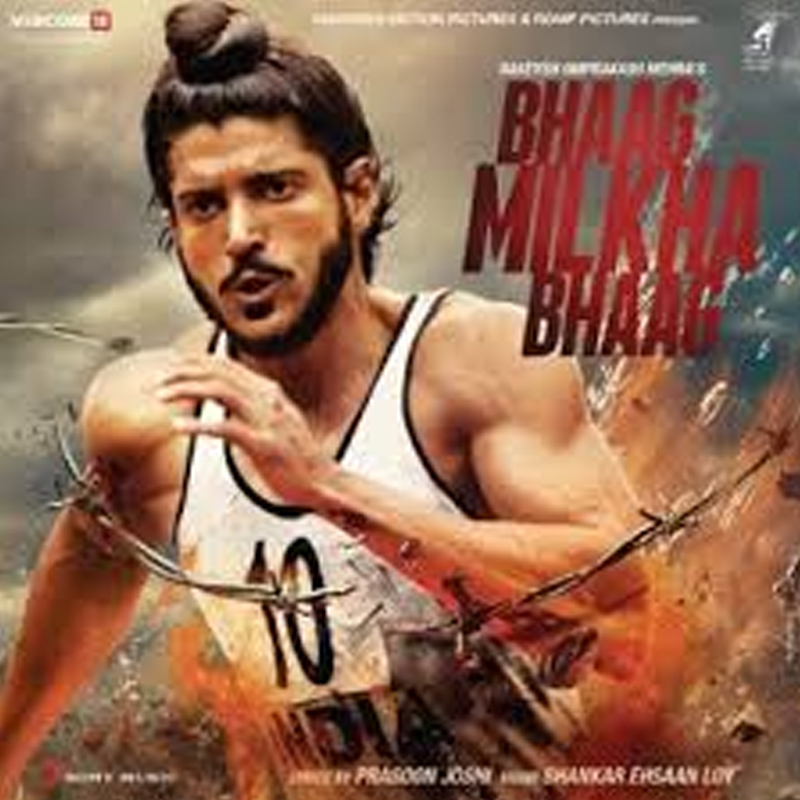
MUMBAI: Bhaag Milkha Bhaag is a marathon account of an Indian sprint runner, Milkha Singh, also known as the Flying Sikh, who failed to win the 1960 Olympic Bronze Medal by a whisker. It is a marathon because the film has a running time of three hours seven minutes and 48 seconds. They make two films in this kind of duration nowadays. This is bound to happen when the editor is also the director; utterly in love with all the footage he has shot.
Milkha is a young Sikh child in united India enjoying the love and affection of his family elders. Along with a friend, he travels miles and crosses a river to go to school. They are handed punishments when late. The happiness comes to an end as India is partitioned and people are slaughtered on both sides. Milkha watches his family members being killed while he manages to run. He arrives in Delhi at a refugee camp where after a few days he finds his sister, Divya Dutta, and her husband.
Milkha soon learns that to survive in this camp, he will have to become tough. There are hooligans around, ready to use muscle power and push people around. Milkha is welcomed to a gang and soon becomes a full time criminal, wielding a knife and stealing coal from train engines. His aimless life finds a purpose when he comes across Sonam Kapoor. Chasing her becomes part of his daily routine until one day he proposes to her and she taunts him about his illegal ways. Milkha promises her that he will mend his ways and requests her to wait for him till he becomes worthy of her.
Milkha succeeds in joining an army training centre in Secunderabad and qualifies for the Services. Thanks to the lure of an extra ration of milk and two eggs as well as exemption from fatigue drill, Milkha volunteers for athletic qualification. This is where his potential is gradually realised by the Services coach Pawan Malhotra and honed to perfection. Milkha has a dream of wearing the blazer with the Ashok Chakra emblem and for that he needs to qualify for the national team. As Milkha gets better with each passing day, his rivals in the field attack him and hurt him so as to end his running career. The attack only makes Milkha more determined; Milkha breaks the national record even while he is running heats with injured legs.
Milkha‘s training is now passed over to the athletics national coach, Yograj Singh, and the training becomes more rigorous. Milkha finally earns his national blazer. He is now ready to surprise his sister and Sonam; instead he is the one who is surprised. Sonam has long been married off with no forwarding address.
Milkha is on his way to Melbourne as part of the Indian contingent to participate in the 1956 Olympics. Here, he indulges in a fling which, coupled with his inexperience, costs him the race. He loses the race as well as face. He swears to shatter the world record and again the tougher routine of training starts. Milkha does manage to break the record and wins Asian Games and Commonwealth Games medals in 1958 and 1962. But when it comes to the crunch, in the 1960 Rome Olympics, Milkha disappoints.
Despite winning all heats and starting off very well, he loses out on the bronze medal in a photo finish, coming in fourth. Dramatically, in the film this is equated with his escape run from killers chasing him during the partition massacre which plays in his mind as he runs and he makes the mistake of looking behind which costs him a medal.
The film begins with Milkha losing the Rome Olympics and goes into flashback, emerging into the current event of sending a team to Pakistan on a goodwill gesture. The Pakistan part is the masterstroke of the maker as to an Indian mindset, it does not matter if Milkha has lost to anybody as long as he wins over a Pakistani rival. He outruns the Pakistani champion by lengths and earns the title ‘The Flying Sikh‘ from the then Pakistani President, Ayub Khan.
Biopics are a format that does not go well with Indian film lovers. Best of our leaders‘ stories have failed at the box office and Milkha Singh was a sports hero from the distant past with whom few can identify today. The problem with Bhaag Milkha Bhaag is that Rakeysh Omprakash Mehra has turned this biopic into a documentary; it stops being the story of his life and gets into the rigours of training, which is never-ending and tedious for the viewer. There is little of human interest (as in Paan Singh Tomar) and romance is just namesake. Richard Attenborough‘s Gandhi should be an example to follow for anyone wishing to make a biopic. It could have been a film about Milkha‘s sports life with a sprinkling of personal life that is relevant to sports. After all, sport is what he is known for.
Mehra has gone into details of the period painstakingly, no doubt. If only he knew when to stop, as a lot of stuff feels exaggerated. The space for songs has been forced in most cases as the story offers little scope. Dialogue is effective. Editing is missing. Camerawork is impressive. The film, to whatever degree it is watchable, is thanks to an outstanding performance by Farhan Akhtar. His dedication and honesty brings Milkha alive on screen. Equally impressive is Jabtej Singh as the young Milkha. Pawan Arora is excellent. Yograj Singh is good. Prakash Raj is a bit too paunchy for the army instructor. Sonam Kapoor has nothing to do and has a very brief role. Divya Dutta is cut out for the role she plays and is good as usual.
Bhaag Milkha Bhaag is a slow moving account of Milkha Singh, a sprinter, which will have limited box office as all sports and biopic films have a limited range. While the appreciation will be ample along with awards, it won‘t translate into rewards.
|