Tag: Fanaa

  • Aamir Vs Aamir

    Aamir Vs Aamir

    Let me begin with a disclaimer. This is not a piece about how celebrities should conduct themselves in public or in media. It is not about whether or not they should get involved with or voice their opinions on politically or socially sensitive matters. It is not about whether they should do research on a controversial subject, acquaint themselves with ‘facts’ from both sides, and only then form an opinion instead of forming lazy opinions.

    Enough and more has been written or spoken on these subjects. We have heard Aamir and his supporters from the ‘industry’ and elsewhere. We have seen other celebrities such as Arundhati Roy and Rahul Bose share their opinion with us on several news TV stations. In fact, only recently, I read a beautifully written piece by Rahul Bose on intentblog, one of the best open blogs I have seen.

    It’s Aamir the actor who acts for a living versus Aamir the brand whose equity must be protected, grown and leveraged
    _____****_____

    My goal here is a little different. A little less selfless and more commercial, if you may. As a practitioner of marketing and communication, I am intrigued by the issues the Aamir-Narmada-Fanaa episode raises, even after the episode itself seems to have blown over.

    If you try to simplify an otherwise multi-textural issue, it’s Aamir the celebrity that endorses half a dozen high profile brands versus Aamir the concerned citizen who is compelled to raise his voice against seeming injustice. In fact, even more importantly, it’s Aamir the actor who acts for a living versus Aamir the brand whose equity must be protected, grown and leveraged.

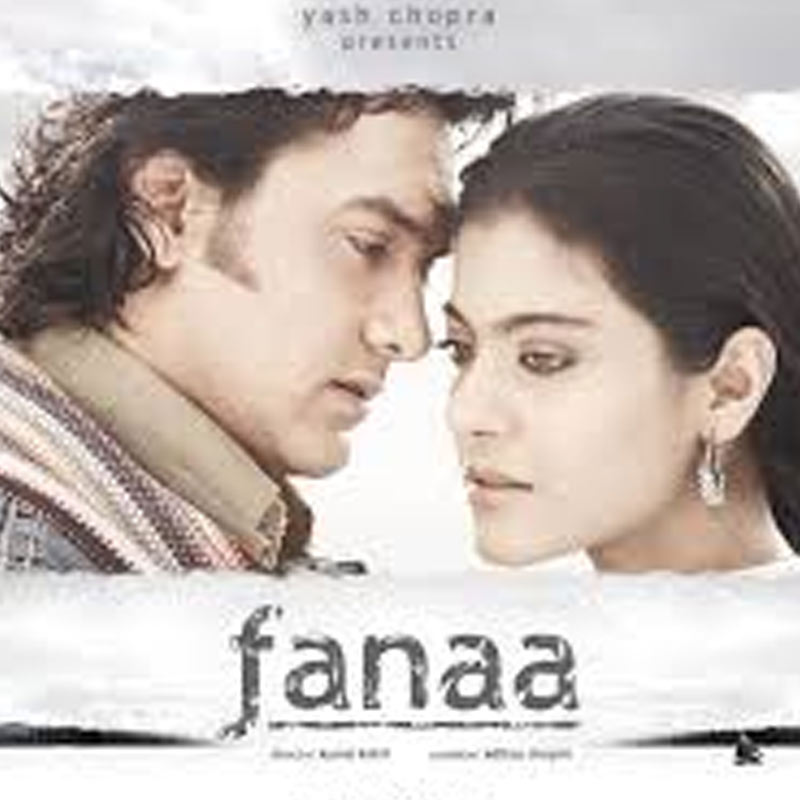
    Now look at what the brand did. It [doesn’t sound right to refer to Aamir, as ‘it’, does it?] jumped out of its popularly accepted, rather linear domain of acting-to-entertain, into uncharted territory. Out of the larger-than-life fantasy world of the big screen, Dolby sound, and carefully directed retakes, into the grimy and sweaty world that millions live in every day. It could not have been an easy choice. Particularly when a brand extension [Fanaa] was weeks away from its launch. I know there are people out there who believe Aamir’s Narmada outburst and rather ‘suddenly’ found social conscience were part of a carefully orchestrated bridge strategy between Rang De Basanti and Fanaa. If that is true, I wonder how many product or service marketing managers would take such a risk before a launch. In fact, whether Aamir’s Narmada voice was a marketing tactic is not the real issue here.

    To me, the issue is whether brands need to learn a new lesson on how to communicate with their customers. Ever since brand management started as a discipline, most brands have tried to create and maintain a squeaky clean image, polished regularly by advertising. They have lived in a fantasy world where problems always disappear at the end of 30 seconds, ‘ordinary’ names always fail, rivals draw blood on an imaginary street. They have stood on pedestals and delivered sermons about the good and the evil, while obedient disciples listened with patience. Not unlike how Aamir and others in his profession talk to us in a theatre, if you think about it.

    But the truth is, brands live in our minds and hearts and we live in a society. The society isn’t a fantasy world; it’s where we return when the three hours of fantasy are over. It’s where parents take interviews, so that kids can get admission into a school, where neighbors fight over relatively trivial issues, where corruption is something we practice in day time and watch on TV at night.

    Do brands live in our society? With us? Should they?

    If we want to move from an era where consumers move from just knowing our brand to liking it, a thought that is finding increasing acceptance amongst seasoned brand marketers, we should perhaps think of brands as social beings.

    Should brands take a social stance? Or should they avoid any kind of controversy and stay sanitized and clean?
    _____****_____

    Not everyone in our society is our friend. Some people whose ideas and opinions are similar to ours, who have interests and hobbies common to ours, who help us face a challenge or leverage an opportunity, become our friends. Others become someone else’s friends. People fight normal fights, but we are most often loyal to our friends regardless of who is fighting against them. And while we might have many types of friends and sometimes we lose touch with some of them, we don’t change with friends very frequently.

    Do we see our brand as a friend like this?

    Here comes the provocation. In a world where people [consumers?] are getting increasingly cynical of marketing, advertising and brands, should we start breaking down some of the practices that built our powerful brands yesterday? Should we attempt to make the simple principles of friendship and social relationship work to create a relationship between our brand and attention challenged consumers?

    Should our brands step down from the hallowed pedestal and mingle with the masses? Should they take stances on issues of social importance and urgency, even if some of them might be controversial and ‘politically’ sensitive?

    Net, should brands take a social stance? Or should they avoid any kind of controversy and stay sanitized and clean?

    How come Aamir thought of doing something that Shah Rukh, Amitabh, Aishwarya, Lataji and Hritik haven’t done? Is Aamir the only one? How about Shabana? How about Gere?

    How come we regard Benetton, Bullet, MTV, Diesel, Harley, Zippo, Apple, Red Bull differently from countless others?

    If we think of brands broadly as mainstream and leading-edge, how they have built themselves, what chances they have taken, who owns them and how they behave, we might find some directions and explanations. But, then, that’s a broader subject, isn’t it?

    Do you have an opinion on brands taking a social stance. Help Ravi Kiran write the next chapter. Post your thoughts to editor@indiantelevision.com

    (The author is South Asia CEO Starcom MediaVest Group)

  • ‘Fanaa’ no show: Fun Cinemas deny rift with Yash Raj

    ‘Fanaa’ no show: Fun Cinemas deny rift with Yash Raj

    MUMBAI: Subhash Chandra promoted Fun Cinemas (the multiplex brand of Fun Multiplex Pvt Ltd), which along with Inox are the only two cinema chains not screening the Aamir Khan blockbuster Fanaa, has categorically denied any differences with producer Yash Raj Films.

    A statement issued today by E-City Ventures (the corporate brand representing the Essel Group’s out-of-home leisure interests) made the following clarifications:

    a. There exist no differences between The Essel Group or E-City Ventures and Yash Raj Films (the producers and distributors of Fanaa). All such indications prevailing in the entertainment industry are being spread out of malafide intent, through parties that could have vested interests in this matter.

    b. The revenue model of film exhibition works in a way that films with assured commercial success pay for films that do not justify the exhibitor’s overheads. It is therefore necessary for the exhibitor to price both of them in a way that is acceptable to the audience. This assures a longer shelf life for the given film and ultimately benefits the producer and distributor.

    All the points that The Essel Group and E-City Ventures brought to the table while negotiating terms with Yash Raj Films, were motivated by this strong belief.

    c. The Essel Group and E-City Ventures currently have exhibitory control over 70 single screen cinemas and 40 movie multiplexes. The repercussions of the terms negotiated between Fun Cinemas and Yash Raj Films were to affect all these cinemas. It is not that the exhibitors respect the premium value offered by the producer any less – but they care more for the purchasing power of their audience.

    Thus, the fact that both the parties could not agree on common terms, is a pure business deadlock and not a confrontation of any kind.

    The statement concludes by saying that any subsequent releases from India’s most powerful studio would be “negotiated as an independent premise”. This is a significant point because for the remainder of 2006, Yash Raj Films has a virtual lock on all the big Hindi blockbusters that are slated for release. The A-list movies in its kitty include home productions Dhoom 2 and Kabul Express, as well as the year’s other two biggies – Rakesh Roshan’s Krrish and Dharma Productions’ Kabhie Alvida Na Kehna.