Tag: Family No.1

  • ‘Not many writers venture into comedy and horror’ : Raghuveer Shekhavat

    ‘Not many writers venture into comedy and horror’ : Raghuveer Shekhavat

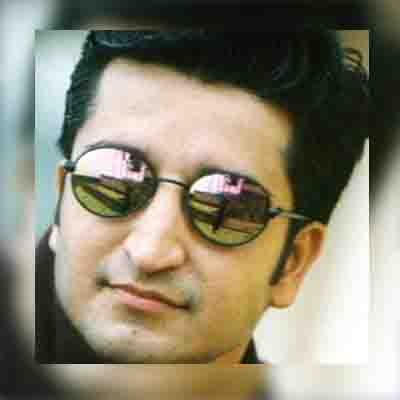
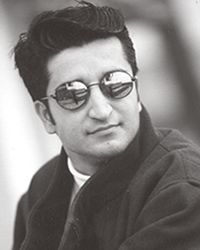
    Raghuveer Shekhawat's tryst with television started when he came to Mumbai in 1992 with vague notions of making it big in the entertainment industry.

    Almost a decade later, he has carved a niche for himself as a writer of hugely successful comedy serials. Family No.1, Mr. & Mrs. Chanchala, Apun To Bas Vaise Hai, Yeh Hai Mere Apne and many other slapstick and subtly satirical serials figure in his portfolio. 29 year old Shekhavat is however, modesty personified. As against many disgruntled writers, he is honest to admit that he would have been struggling for a livelihood, had he not been a TV writer. Indiantelevision.com's correspondent Amar met Shekhavat to find out what makes the man tick. Excerpts:

    How did you become a writer?
    Actually, it was not planned. When I came to Mumbai, I just knew that I wanted to do something in the world of cinema and be associated with the medium. I liked writing poetry and happened to be under the tutelage of a poet, Harshad Shivsharan, for a week. At the end of the week, I knew that all I wanted to do in life was be a writer. Since TV was really happening in those days – the early nineties – with so many private channels coming up, I could easily break into TV writing.

    What are the natural instincts required of a successful writer?
    A writer needs to be a good observer. Besides, he needs to have the right understanding and feel of emotions.

    Why did you specialize in comedy?
    It's an inherent tendency with me to contribute some humour to an environment overshadowed by tension and pressure. The orientation to comedy has been a natural one for me and I have immensely enjoyed writing comedies.

    Where do you draw your inspiration from while creating comic characters?
    The inspiration comes from people around me. I basically have to improvise on the characters I see all around, because almost everybody has a funny side to him/her. Also, one has to be observant of the way people around walk, talk and their peculiar gestures.

    How important is effective narration in selling a story?
    Very important. The characters come out much better in a narration vis-?-vis on paper, because the innate traits of the character can be explained that much better in a narration. But having said that, let me also add that in the initial stages people seldom give freshers the opportunity for a narration.

    Do you write in English or Hindi?
    I write in Hindi.
    Comedy is the toughest to write, because human nature is such that it cries or cribs more easily than laughing.

    __________

    What is your writing schedule?
    It's a little odd. I start writing at nine in the evening and go upto four in the morning. During the day, I'm normally engaged in meetings. Of course, its tough on my family life but then my wife has adapted well to it.

    How much time does it take you to write one episode?
    On an average, it takes me a day to complete the entire story, screenplay and dialogues of one episode. At most, it takes me two days.

    How many serials can you work on simultaneously?
    I feel I can work on four projects that are on air simultaneously and do justice to all of them. Beyond that, the thought process sags.

    Does TV writing pay well?
    I should like to think so (laughs). Otherwise, a person like me would be struggling for a livelihood.

    Is writing a comedy easy or difficult vis-?-vis writing drama?
    Comedy is the toughest, because human nature is such that it cries or cribs more easily compared to laugh. To create intelligent yet funny situations actually requires a lot of brainstorming. A slight slip in focus can make the comedy appear imposed or convoluted. You will see that even among writers, comedy and horror are specialized genres which not many writers venture into.

    The wide variety of subjects that you can explore on TV is something you cannot do in cinema.
    __________

    A still from Family No. 1

    Have you ever felt saturated or exhausted in your thought process when writing?
    It's happened at times to me. Mostly, it's been temporary and mainly this has happened on account of a particular direction the director has insisted that the story move in. Then there are times when a certain artiste's dates have not been available and the story has had to be reworked because of this. But these are sporadic incidences. Where my career is concerned, I have never been exhausted of ideas.

    Have you felt hassled by the channel EPs over the storyline?
    People complain a lot about channel interference, but frankly I feel no other medium can provide you the kind of freedom TV does. The wide variety of subjects that you can explore on TV is something you cannot do in cinema. There have been times when the channel has overruled me, but I've taken it in my stride. Besides, I've also realized that most of the times, channels interfere because they don't feel secure with a new or inexperienced writer. Once the writer has gained in stature and credibility, the channels start approving his work without hassles.

    Is there a particular genre you would not like to venture into?
    No. Though I love writing comedy, at the end of my career, I would like to be seen as having excelled in all genres.

    Which has been the most challenging assignment of your career?
    It's a comedy film I'm writing for a new director, Sameer Kale. Writing a film is a new experience for me and that puts me under pressure to do a great job of it.

    Which has been the happiest moment of your career?
    It was last year when Family No.1 written by me was adjudged the third best sitcom at the Asian TV awards.
  • “Actors have their individual creativity, the essence of which should be absorbed in the shoot” : Sameer Kulkarni

    “Actors have their individual creativity, the essence of which should be absorbed in the shoot” : Sameer Kulkarni

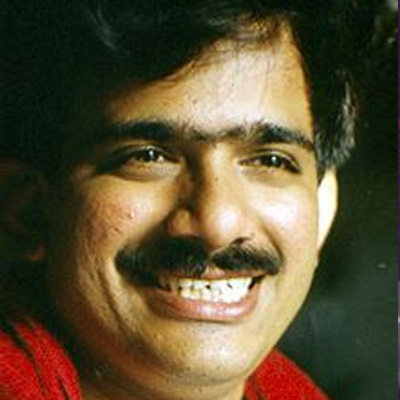
    The tag of a comedy serial director is hard to shrug off. Sameer Kulkarni should know. Successes like Family No. 1, Shakalaka Boom Boom, Hip Hip Hurray, Shriman Shreemati and All The Best have kept the young director on his toes, churning out slapstick after farce.

    Sameer now wants to break out of the genre and explore newer pastures. UTV’s Shakalaka Boom Boom on Doordarshan got short-listed in the children’s programme category for the Asian Television Awards this year and Sameer has been approached to make a daily out of the series by a private satellite channel. His current assignments also include a Hindi feature film.

    His career in television however, was not a planned progress. Family circumstances forced him to suppress his creative instincts and study commerce in college. But it was at the N M College in suburban Mumbai that he got involved in theatre and later graduated to television. Indiantelevision.com’s correspondent Harsha Khot met up with the director who is now keen to put behind sour memories of Deewane To Deewane Hai that was knocked off air, and is looking forward to his first 70mm directorial experience.

    Excerpts from the interview:

    What brought you to the entertainment industry?
    The decision to join the entertainment industry wasn’t a conscious one. In college, I belonged to an amateur drama group called ‘Mancch Goregoan’, which came up with an idea of doing a Marathi serial called Ghar. I was assigned to assist the director, but I was in the first year of college and had no clue about how things functioned. The serial’s director did not have much faith in me, but Rajan Waghdhare who was the editor, was confident that I would deliver.

    I was completely engrossed in the making of the serial, doing everything from putting up the sets to acting in the episodes. After that venture, I approached Waghdhare who was just venturing into independent production. He took me on and I ended up working for a lot of Marathi serials. Philips Top 10 was the first series I directed independently. It was initially aired on Zee TV in 1995 and later moved to DD Metro as All The Best.

    How did you hone your directorial skills?
    I worked with Waghdhare for nearly four years, helping in direction and editing. I learned a lot under him. At that time, we used hi-band editing – this combination of editing and directing formed a base for polishing my directorial skills. While editing, I began understanding terms like wasted footage and okayed footage. My acting experience helped too. Whenever my actors can’t absorb my ideas, I can always act out the scene for them.


    Family No. 1 is my favourite, because it had variations of loud and subtle comedy, included all the moods and range of comedy, blended with emotions and relationship.
    The cast of Zee’s hit series Family No. 1


    Which serial did you enjoy directing the most?
    Family No. 1 is my favourite, because it had variations of loud and subtle comedy, included all the moods and range of comedy, blended with emotions and relationship. I enjoy this treatment because it allows you to explore without getting tired of the subject or getting out of focus. The series is basically about what happens when two families from different cultures live together under one roof, the questions that are thrown up and the possible answers.

    Which factors do you consider while taking up a project?
    I usually look at the potential of the serial in terms of its theme, its supporting track, the duration of its telecast and the approach it requires. The team is of utmost importance to me, for I have to constantly interact with it for a year or two. Over the years, I have developed such a rapport with my team that often merely a look is enough for my cameraman or light man to understand what I am trying to convey.

    How do you schedule your shoots?
    I draw up a rough sketch for the number of episodes that have to be covered over a period of around five days. Planning each day’s schedule is not feasible, since the most unpredictable things can happen on the sets. It’s best to go with an open mind and tackle situations as they arise. It is a question of tackling unforeseen situations and doing your best with the available resources during the shoots.


    I believe that every serial and subject has its own approach; me having a particular way of approaching every subject with my own style will not help.
    __________________

    How do you convey your ideas to the team, especially to your actors?
    I usually just explain the situation and what needs to be conveyed to the viewers. I believe actors have their individual creativity, the essence of which should be absorbed in the shoot. However, I don’t let them change the dialogues given in the script as per their convenience. The scriptwriters have obviously put some thought into the dialogues, so unless there are some logical reasons for an actor to have the script altered, I don’t do it.

    What does direction mean to you?
    Direction to me means getting a project done well from the entire crew, in a way viewers would like to watch.

    (smiles) I just reflected and realised that almost everything is given in the script, and that the whole team does the job together. I just see to it that things translate on screen as per the script. I even joke at times that my only job is to say the two words ‘camera roll’ and ‘cut’ on the set.

    Actually I let my crew do what they feel is appropriate. I keep a close eye only on things that stray from the script. I intervene only if things go awry. Every person on the set has his or her own creative approach and I believe it should be applied and used, so long as it doesn’t digress from what is essential. To me, a cameraman is not just an operative cameraman, he is also a bit of a cinematographer. I also believe that every serial and subject has its own approach; me having a particular way of approaching every subject with my own style will not help.

    What approach did you adopt for Shakalaka Boom Boom?
    Shakalaka Boom Boom was shot keeping the masses in mind, as it was being shown on DD1. The boy who plays Vishal was a good horse rider, so we incorporated his talent in the serial. Also, viewer interests dictated that we include the element of a ‘Zorro’ like image for the protagonist. The serial was taken off air in June 2001, because the producer found the national broadcaster’s policies unviable.

    Sameer Kulkarni on the set of Shakalaka Boom Boom
    It’s best to go with an open mind and tackle situations as they arise. It is a question of tackling unforeseen situations and doing your best with the available resources during the shoots.

    Have you ever compromised on your principles in direction?
    I did compromise once, when the producer asked me to hire a different cameraman, who would understand the feel of the channel. I gave in after resisting for a while, but later realised that my instincts had been right.

    In another case, I was told to shoot an episode with the protagonist interviewing a television director. I made it clear that I was uncomfortable shooting another director from television and asked that someone else direct that particular episode. Sometimes, one has to draw a limit somewhere.

    Why was Deewane To Deewane Hai on Zee pulled off air?
    Things did not fall into place right from its inception. Beside the 7:30 pm slot is hardly one where you find teenagers at home glued to the TV. That naturally took a toll on ratings.

    Who are your favourite directors?
    Rakesh Sarang and Sachin Pilgaonkar. I like their approach, and specially admired Sachin’s Tu Tu Main Main.

    What are your forthcoming projects?
    I am eager to work on a project that’s humour based but high on emotions and relations. I have this tag of doing only comedies, but I think I am going to be good on serials that are high on emotions. I am to direct a Hindi movie tentatively titled Kehni Thi Tumse Batein Pyar Ki. The script is nearly complete and shooting should begin by mid December.

    Sameer Kulkarni with the All The Best cast – Satish Shah (left), Swaroop Sampat and Laxmikant Berde
    Every person on the set has his or her own creative approach and I believe it should be applied and used, so long as it doesn’t digress from what is essential.