Tag: Fake News

  • I&B Ministry plans regulations for OTT platforms

    I&B Ministry plans regulations for OTT platforms

    MUMBAI: The Information and Broadcasting Ministry (MIB) is contemplating a regulation for OTT platforms on the lines of print and electronic media, according to a news article by the Press Trust of India. Minister Prakash Javadekar, however, said that the government will not be taking any step that will curb freedom of media. Some mainstream media outlets had relayed their concern to the government that OTT platforms are unregulated and so there can be no level-playing ground.

    He said, "I have sought suggestions on how to deal with this because there are regular feature films coming on OTT — good, bad and ugly. So how to deal with this, who should monitor, who should regulate. There is no certification body for OTT platforms and likewise news portals also.”

    All other media have a body that regulates their work but OTT is free.

    Regarding paid news, Javadekar said that the media should approach the government with suggestions on how to penalise those who indulge in the ‘unethical’ practice. He said that this was necessary to combat rising instances of fake news, which he claimed as ‘more dangerous’ than paid news. He also added that it wasn’t just the government’s job to tackle it but everyone’s.

  • Paying tribute to Gandhi Logically AI launches #SwachhPhoneCampaign to curb the growing menace of ‘fake news’

    Paying tribute to Gandhi Logically AI launches #SwachhPhoneCampaign to curb the growing menace of ‘fake news’

    October 2, 2019: Going the Gandhian way, Logically, the artificial intelligence (AI) powered Technology Company that detects ‘fake news’, logical fallacy, inaccuracies, and bias recently launched the #SwacchPhone campaign. The campaign encourages Netizens to #ThinkLogically, clear the 'fake news' on their phones, which pollutes their minds and leads to a divisive society.

    The company does not only aim to create awareness about rising ‘fake news’ but will also layout specific proven techniques to mitigate the risks of misinformation and disinformation campaigns. 
    As a result, Logically AI is organizing workshops for journalists and mass media students across the country.In just three days the company has already trained circa 300 students in St Xaviers College, Wilson College and School of Broadcast and Communication Mumbai. The company aims to vaccinate people against “fake news” by empowering them with tools to combat “fake news”.

    Speaking on the occasion, Lyric Jain, Founder, and CEO of Logically said “While there are risks of using technology and AI to combat misinformation, there are greater risks in not doing so. It is equivalent of bringing a knife to a gunfight because bad actors in the current fake information warfare are equipped with extremely sophisticated technologies”

    He further added, “Today, fake news on social media platforms is killing hundreds. The same technology that created the problem also has the potential to solve the problem. So Logically believes the most sensible option is to use Extended Intelligence – a combination of HI (Human Interference) and AI (Artificial Intelligence) to solve this issue. By following the human in loop methodology also means building defense teams across the country, who are equipped with the know-how of combatting fake news”.

    The on ground campaign gives a digital twist to the Gandhian principle of cleanliness and is encouraging netizens to clean up their phones of the “fake news” junk in order to have a clean and healthy mind. 

    The company with offices in UK and India recently launched its flagship product, the Logically app. A destination for news consumption, discussion, and verification. The company is also actively expanding its operations in India.

    After witnessing the breakdown in civic and political discourse during the Brexit debate and the 2016 presidential election in the US, Logically was conceived by 22-year old Cambridge and MIT graduate Lyric Jain. 

    Adding a layer of credibility to the internet to battle misinformation, the Logically platform acts as a real-time, user-friendly filter ensuring users can quickly consume information that is fair, authentic, credible and trusted (FACT). For the next few years, Logically aims to generalize AI models and continue to grow its fact-checking team to make sure they’re valid and impactful in broad use cases across geographies such as India, US, and UK.  
    This will enable Logically, to continue and build on its work to support democracies, build partnerships with government, media and content platforms
     

  • Axis Mutual Funds and The Womb take on Fake News in India!

    Axis Mutual Funds and The Womb take on Fake News in India!

    MUMBAI: In the context of fake news getting forwarded and investors getting unnecessarily influenced by it, Axis Mutual Fund, one of India’s premier asset management companies has launched an investor awareness campaign with the message for investors to act responsibly when it comes to such messages on money/investments, and not act upon or spread news which they are not sure of in terms of its veracity. The underlying message is to consult a financial advisor and in this lies an act of responsibility.

    As a responsible mutual fund, our objective is to create awareness about responsible investing practices and how one can become a responsible investor. While this endeavour is on, we felt it is equally important to also dwell upon the behavioural aspect of investors in the context of what is happening in the society – people sharing and acting upon news without checking the veracity which results in investors getting panicky and taking irrational decisions.

    Most of us get heavily influenced by news that is shared by our acquaintances on social media and messaging apps. And when the news is about money and investments, it tends to create worried investors. We are urging people to be responsible and not forward or act upon such messages thereby acting responsibly towards one self and others as spreading rumours creates an unnecessary chain of events feeding to chaos.

    The industry has done a good job in getting new investors warmed up to mutual funds. It is imperative to keep guiding such investors on various aspects of investing which the financial advisors are doing. However, it is equally important to address the behavioural aspect of investors as any kind of bad news can work negatively on the investors’ minds.

    Axis Mutual Fund’s latest campaign shows people randomly forwarding and reacting dramatically in different situations after reading a red alert message on markets. The film shows how a random message on markets and mutual fund investments has a negative impact on people. The film ends with a message urging investors to be responsible and not spread any fake news when it comes to investments, instead consult a financial advisor.

  • WhatsApp gets grievance officer under pressure from India

    WhatsApp gets grievance officer under pressure from India

    NEW DELHI: Under pressure to clamp down on sinister messages, WhatsApp has appointed a grievance officer for India and detailed out the process for users to flag concerns and complaints, including those around fake news.

    Meeting one of the key demands that India had put on WhatsApp to curb fake messages that triggered mob killings, the Facebook-owned company has updated its website to reflect the appointment of a 'Grievance Officer for India'. The update mentions that users can seek help through the mobile app, send an email or write in to 'Komal Lahiri', who is based out of the US, reports the Press Trust of India.

    According to Lahiri's LinkedIn profile, she is senior director, global customer operations and localisation at WhatsApp. When contacted, a WhatsApp spokesperson declined to comment on the matter but pointed to the public FAQ on the company's website that contains these details.

    According to sources, the appointment of the grievance officer was made at the end of August. They added that the officer for India being based in the US is in tune with similar practices by other American tech giants. Users can reach out to the company's support team directly from the app under 'settings' and in case they wish to escalate the complaint, they can contact the grievance officer directly.

    A section within FAQs read: "You (users) can contact the Grievance Officer with complaints or concerns, including the following: WhatsApp's Terms of Service; and Questions about your account". The updated FAQs also detailed out the mechanism for law enforcement officials to reach out to WhatsApp.

    The government has been pressing WhatsApp to develop tools to combat fake or false messages. One of the demands was to name a grievance officer to deal with issues in India.

    India is WhatsApp's biggest market with more than 200 million users. It, in July, limited message forwards to five chats at a time and had also removed the quick forward button placed next to media messages to discourage mass forwarding. It has also introduced a 'forward' label to help users identify such messages.

    The latest appointment is also significant as the Supreme Court, last month, had agreed to examine a petition alleging that WhatsApp does not comply with Indian laws, including the provision for appointing a grievance officer. The apex court had sought a reply on the matter within four weeks.

    With general elections slated for next year in India, the government is taking a tough stance on the use of social media platforms like Facebook, Twitter, and WhatsApp for the spread of misinformation.

    The government had warned WhatsApp that it will treat the messaging platform as an abettor of rumour propagation and legal consequences will follow if adequate checks are not put in place.

    In a meeting held with WhatsApp head Chris Daniels last month, IT Minister Ravi Shankar Prasad had asserted that the company will have to find a solution to track origin of messages on its platform, set up a local corporate entity that is subject to Indian laws within a defined time-frame as well as appoint a grievance officer.

    WhatsApp, which has been slapped with two notices and a third one under consideration, has said it is in the process of establishing a local corporate entity. It has, however, not accepted the government's demand for traceability of messages saying creating such a software will go against the idea of user privacy.

  • Fake News, filter bubbles, post truth afflict others: Ipsos Survey

    Fake News, filter bubbles, post truth afflict others: Ipsos Survey

    MUMBAI: According to a new survey by Ipsos and as a part of the long running series on misperceptions of social realities – The Perils of Perception –more number of Indians think that fake news, filter bubbles and post truth are something that affect all people in general.

    The study of over 19000 people in 27 countries shows that the majority of Indians say that they regularly see fake news and half of them said that they believed a fake story, only to discover later that it was fake. 

    Notably, the survey further shows our trust in politicians and media declining. 

    People live in a filter bubble

    The survey shows that 74% Indians think that the average person in India lives in a bubble on the internet, mostly connecting with people like themselves and looking for opinions they already agree with. Only 55% Indians think that they themselves have the same tendency of living in the bubble.

    Unlocking Fake News

    70 per cent of Indians believe that they can tell real news from fake news, and less number of Indians think (56%) that the average Indian can tell the difference between the two – having less faith in the average person.  

    When it comes to Fake News, 72% Indians profess to have seennews stories bymedia organizations deliberately saying something that wasn’t true. And 55% Indians say that they had falsely believed a news storyas real until they found out that it was fake. 

    Interestingly, Indians interpret Fake News in different ways: 55 per cent Indians say Fake News are stories where the news outlets or politicians only pick up facts that support their side of the argument; 53 per cent say Fake News are stories where the facts are wrong; 36 per cent Indians feel it (fake news) is a term politicians and the media use to discredit news they don’t agree with.

  • Fake news on social media: Law & IT Minister favours evolving a policy

    Fake news on social media: Law & IT Minister favours evolving a policy

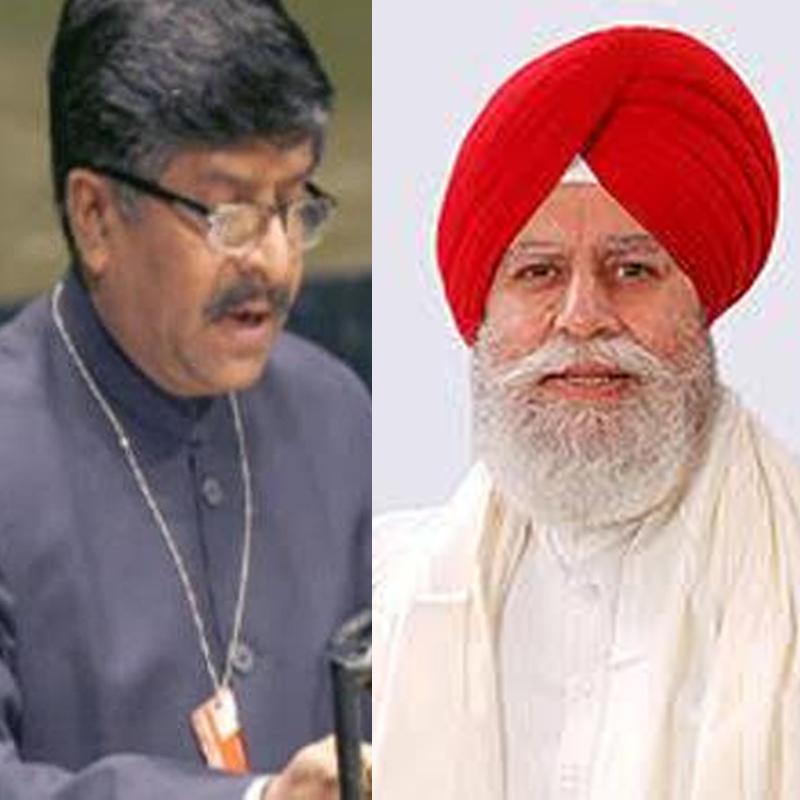
    NEW DELHI: The Indian government seems to be speaking in two voices over the menace of fake news. While law and IT Minister Ravi Shankar Prasad today said he would hold talks with stakeholders to evolve a policy, his junior SS Ahluwalia on Wednesday had told Parliament that the government doesn't propose to bring in regulations for social media.

    Law and IT Minister Ravi Shankar Prasad informed the Rajya Sabha (Upper House) yesterday that he will hold discussion with stakeholders, including political parties, to evolve a policy to deal with the misuse of social media, according to a PTI report, which also quoted a government statement saying it has been conveyed to WhatsApp in "unmistakable terms" that it was a very serious issue that "deserves a more sensitive response".

    The government yesterday also  shot off another notice to WhatsApp asking it to come out with effective solutions to curb the menace of fake news beyond just labelling forwards. It also warned the company that mediums used for propagation of rumours are liable to be treated as 'abettors' and can face legal consequences if they remain "mute spectators", the PTI report said.

    Facebook-owned WhatsApp has been under fire from the Indian government over fake news and false information being circulated on its messaging platform. The government had in the past too issued a stern warning to the company to clamp down on hoax messages designed to "provoke" and "instigate" people.

    "When rumours and fake news get propagated by mischief mongers, the medium used for such propagation cannot evade responsibility and accountability. If they remain mute spectators they are liable to be treated as abettors and thereafter face consequent legal action," a PTI report quoted an IT Ministry statement as saying. The ministry said it has approached WhatsApp to bring more effective solutions to the table, to ensure greater "accountability and facilitate enforcement of law" beyond the existing efforts towards labelling forwards and identifying fake news.

    The Supreme Court, earlier this week, asked Parliament to consider enacting a new law to effectively deal with incidents of mob lynching, saying "horrendous acts of mobocracy" cannot be allowed to become a new norm. 

    “Government doesn't regulate content on social media sites": IT Ministry's SS Ahluwalia,  

    On Wednesday, the Indian government admitted it doesn’t plan to regulate content on social media, as of now, despite the menace of fake news affecting the societal fabric. However, the government is quiet on the future of a committee set up under the Ministry of Information and Broadcasting (MIB) that has the mandate to explore regulation for online content, including those on OTT platforms.

    “Government does not regulate content appearing on social media sites, and law enforcement and security agencies may take action on specific case to case basis as per law in force,” junior Minister for Electronics & Information Technology (MEITY) SS Ahluwalia informed Parliament on Wednesday, emphasizing that the government was fully “committed to freedom of speech and expression” and “privacy” of its citizens as enshrined in the Indian Constitution.

    Ahluwalia was asked about the steps being taken by the federal government to address the problem of fake news and whether there were any plans to monitor and regulate social media content.

    According to the Minister, the Information Technology (IT) Act, 2000 has provisions for removal of objectionable online content that was “harmful, defamatory, hateful, libelous, objectionable” and affected minors, apart from the national security.

    However, as the Minister was not asked, he did not dwell on the future of  a committee —comprising representatives of various government organisations and few industry bodies too — set up under the MIB to explore online content regulations. The setting up of the panel was criticized as it was outside the remit of the MIB as the issue concerned came under the jurisdiction of MEITY.

    The said committee, helmed by MIB Secretary, is reported to have met a few times since its formation, but the details of those meetings are not public yet. Nor is the fact whether it would be disbanded or taken out MIB’s jurisdiction in favour of MEITY.

    MIB Stresses on Self-Regulation To Fight Fake News Menace On TV

    On Thursday, MIB Minister Rajyavardhan Rathore stressed on existing safeguards in laws and self-regulation to say that there was also no proposal to indulge in pre-censorship of TV channels to stop them from allegedly spreading fake news.

    “The [Cable Television Networks Regulation] Act [1995] does not provide for pre-censorship of any programmes and advertisements telecast on TV channels. However, it prescribes that all programmes and advertisements telecast on such TV channels should be in conformity with the prescribed Programme Code and Advertising Code enshrined in the aforesaid Act and the rules framed thereunder,” Rathore informed fellow parliamentarians who were concerned about some TV channels spreading fake news.

    Earlier, MIB, under minister Smriti Irani, had attempted to bring in regulations to control fake news, which had to be aborted as the Prime Minister's Office intervened in the aftermath of nation-wide criticism. Still, some critics feel that the botched attempt to bring in rules to rein in media critical of the government was testing of waters for future norms.

  • Comment: MIB’s botched whip on fake news akin to testing waters

    Comment: MIB’s botched whip on fake news akin to testing waters

    With the scourge of fake news rampant globally, any attempt to counter it is always a welcome move. And just for that India’s Minister of Information and Broadcasting Smriti Irani cannot be faulted even if such a view is radical and would be open to severe criticism-as it was in India over the last few days with a large section of civil society coming down like a ton of bricks on the minister’s assertions on guidelines for TV and print media journalists that proposed punitive penalties for breaching some undefined norms.

    However, the wording of the press statement put out by the government’s PR arm, Press Information Bureau, on behalf of MIB is what raises questions.

    First, the government statements were aimed at “regulating” fake news and not look at avenues to arrest their spread or, as the homoeopathy strand of medicine would do, go to the root cause of the ailment. The intent becomes clear: the aim was not really to find a solution to fake news in the true sense.

    Second, the timing of the guidelines, which were aimed at handing out harsh penalties to government accredited journalists from the print and electronic media, rings some more alarm bells. Though the present BJP-led government’s official five-year tenure ends mid-2019, it is widely expected that the general elections would be held before the tenure comes to an end officially—as is mostly done, but then this government has been known to break many times tested norms-if not as early as late 2018.

    On both these counts, the honourable MIB minister was found wanting and her move was widely dubbed as nothing but an initiative to gag the news media critical of the present government. That the prime minister himself had to step in to order a rollback of the MIB diktat a day later, as officially being stated, is a story in itself.

    Let’s forget for once what some of the journalistic organisations had to say in criticism of the MIB move to cancel accreditation of journalists found peddling fake news, though the definition of fake news was not elaborated, nor was the fact as to why just on a complaint from practically anybody a journalist, whose antecedents are verified by the government annually for security reasons, will be put in the hall of shame even if it’s for varied period of time.

    Two organisations, the Press Council of India (PCI) and the News Broadcasters Association of India (NBA), made responsible to decide whether the complaint on fake news was genuine or not (according to the government statement) have not much legal standing or bandwidth to do so. While the PCI is a (toothless) watchdog for the print medium, the NBA’s self-regulatory mechanism for member-TV news channels hasn’t always worked.

    Now let’s try analysing what could have prompted such a move by MIB-a move that was unveiled seemingly without taking into confidence the PM and his office.

    It’s a known fact in India, in sharp contrast to other global markets, that a TV news channel here is started, more often than not, to flaunt one’s status symbol and increase the owner’s powers (both politically and financially) rather than being a pure journalistic means. That is not saying there are no exceptions to the rule and India has some very fine and professional news channels, which daily go through the grind of living up to the high standards of journalism. But, what explains the fact that 25-30 per cent of the total 900-odd permitted TV channels in India would fall in the news and current affairs genre? And they come in all shapes, sizes and languages. If the big guns of the news and current affairs genre mostly have scarlet bottom lines, it goes without saying that the smaller news channels are barely churning out revenue. No other country in the world has so many TV news channels.

    In a year that will lead to general elections-a period after the elections are announced is when cacophony on TV news channels start peaking-clamping down on news outlets cannot be considered a bad strategy; especially when one is not used to hear criticism. Artificial barriers become natural armours. Putting on hold future permission to TV channels by the MIB till a new policy on uplink/downlink is put in place after regulator TRAI’s recommendations is one such clampdown. But then trying to gag the news media as a whole need to be thought out and well orchestrated instead of merely announcing one evening some guidelines under the garb of attempting to regulate fake news.

    And why regulate fake news? Does that mean some fake news could have been allowed, while filtering out the more damaging ones? More importantly, why target those journalists for fake news who are accredited by the government? Did that mean that non-accredited journalists, which are in huge numbers, would have been allowed to dabble in fake news? Considering most news websites and many online ventures that pretend to deal in news but hand out mostly tainted views are not accredited with the government, either at the federal or State level, the question arises whether they would have been allowed to peddle fake news? In India, fake news is more rampant on social media platforms and little known online ventures than in mainstream media.

    But Ms. Irani and her set of advisors again cannot be faulted to try regulating the news media. From the days of the infamous Emergency unleashed by then Prime Minister Indira Gandhi in the mid-70s to her son Rajiv Gandhi in the late 1980s and few other successive governments of post-independent, India has tried to muzzle at some time or other the not-so-perfect-yet-a-vibrant media of the country. Not only such moves have backfired, including the dark days of the Emergency, but in many cases the then governments had to beat a retreat in the face of stiff opposition to any such move. So much so, folklore in the complex realm of Indian politics says that all governments that tried to regulate media in any form bit the dust and were booted out of power.

    In the mid to late 1990s, just before the first NDA government came to power under Prime Minister A B Vajpayee, the then government had tried to bring in Parliament a Broadcasting Bill, envisaging wide-ranging limits to media businesses, including cross-media restrictions of ownerships. That government didn’t remain in power to see through the proposed legislation. However, that didn’t stop other governments, including the Congress-led coalitions that ruled for 10 years after 2004, to attempt limiting media independence. Manish Tiwari, a former MIB minister in 2013, had famously proposed a common examination for journalists as the minister thought media personnel were not qualified enough.

    Cut to 2018. The storm may have blown over for the time being, but for the media to sit back and relax could be dangerous. Simply because the present government is unlike any those in the past. To take satisfaction from an explanation that the PM was totally unaware of one of his minister’s moves to gag the media could be a bad strategy for the media industry. The government was just testing the waters.

    Also Read :

    PMO directs MIB to withdraw guidelines on fake news

    MIB nod to TV channels on hold till TRAI uplink, downlink suggestions

    Smriti Irani tweets industry body advisory urging restraint by TV news channels
  • BBC takes ‘fake news’ battle global

    BBC takes ‘fake news’ battle global

    MUMBAI: The BBC today sets out its ambition to be a global leader in the fight against fake news, which is creating a huge decline in global audiences’ trust in media.

    The BBC’s World Service Group will spearhead this work, putting a major focus on Global Media Literacy, and culminating in a major live global broadcast bringing together young people from around the world to discuss how trust can be restored. Plans include:

    · Extending the BBC’s Reality Check service to more parts of the world.

    · Bringing together fact checking stories from different countries on a Global Fake News page, giving them wider circulation and bigger impact.

    · Rolling out materials educating about fake news to schools and audiences around the world.

    · Organising a major full-day fake news event where teenagers from around the world will be brought together in a live broadcast to talk about the challenges they face in their home countries in assessing news, sharing ideas about solutions for the future. It will feature on the World Service, World News as well as the Victoria Derbyshire Show and Newsround in the UK.

    BBC News and Current Affairs, Director, Fran Unsworth said: “The BBC has already been doing a lot to tackle the scourge of fake news through Reality Check fact-checking claims and coming to a judgment, or our journalists going into schools in the UK to educate youngsters.

    “But this is a global problem. It’s vital people have access to news they can trust – and know how to distinguish between fact and fiction. Broadcasters and the rest of the news industry have a responsibility to tackle fake news, and I want to use the BBC’s global reach to lead the way.”

    Fake news is a huge global issue. During the Italian election, there were social media claims that a government minister attended the funeral of a mafia boss when in fact it was a photo of her at the funeral of the victim of a racist attack. In Macedonia teenagers have made money from advertising by setting up sensationalist fake news sites. And a young girl believed to be trapped in the ruins after the Mexico earthquake last year never actually existed.

    Around the world too there is already work underway to hold power to account. BBC Persian has a journalist dedicated to checking claims made by Iranian authorities, as well as responding to audience queries; BBC Russian does rapid fact-checking of government speeches; BBC Monitoring does all of this as its daily bread and butter.

    Now the aim is to turbo charge this and make a much bigger impact globally.

    The single day live broadcast will be co-ordinated from London and include broadcasts from Beirut, Nairobi and Mumbai or Delhi. It will see teenagers talking about the challenges they face in their home countries in assessing news. They will share their thinking about solutions for the future.  It will have the flavour of a global School Report, with young people leading the debate and the journalism, supported by BBC journalists and in house experts in their region.

    It will include the findings of a global survey on media trust issues, and we will produce a clickable map of fake news stories allowing audiences to see a heatmap of disinformation around the world.

    Building on the work that has already been done by School Report, and BBC Hindi, through the year we will also be developing materials that can be rolled out globally to help young people combat fake and false news and information. They will guide our audiences through questions such as: “What is Fake News?” “Who do you Trust?” “How to assess content?” It will include online videos and workshop materials.

  • 46% say social media easiest to spread fake news:Chrome Study

    46% say social media easiest to spread fake news:Chrome Study

    BENGALURU: It is easiest to spread fake news through social media says a Chrome Data Analytics & Media (Chrome) study – on the query ‘platform versus trust’.Moreover, 46 percent of 389 respondents felt that social media platforms were the easiest way to spread fake news against four percent that felt social media could be a trusted platform. However, the platform that earned the lowest trust quotient – just three percent, was magazines, as opposed to 6 percent that felt that fake news was easy to spread through magazines. Newsprint with a 27 percent trust quotient was the most trusted medium, but, thirteen percent of the respondents felt that it was a medium through which fake news could be spread. The medium least likely to be used for spread of fake news was said to be radio – just 5 percent of the respondents felt that it could be a medium that was easiest to spread fake news through. At the same time, just 7 percent voted for radio as a trusted source.

    Please refer to the figure below:

    public://F1_22.jpg

    Chrome undertook a study on fake news by interviewing 847 respondents comprising 46 percent females and 54 percent males. The age groups of the respondents were 18 to 24 years – 21 percent; 25 to 34 years – 24 percent; 35 to 44 years – 28 percent; 45 to 54 years – 15 percent and 55+ years 12 percent.

    Television was the most preferred platform for news consumption with 84 percent of the respondents using it. 61 percent used social media as a source of news, 58 percent used mobile apps; 47 percent newsprint and 13 percent radio for news.

    public://F2_13.jpg

    How do you identify fake news:Less than half the respondents – just 46 percent or 389 were aware of the term ‘fake news’. Of these 389 respondents,34 percent checked the source of the information to identify fake news; 26 percent decided on the basis of her/his knowledge; 21 percent searched for the related topic or headlines; 14 percent asked family members or friends; while just 10 percent asked experts/individuals who had knowledge of that domain.

    23 percent of the 389 respondents felt that Bollywood category contained the maximum fake news, while 10 percent felt that it was the spiritual category.

    public://F3_4.jpg

    59 percent of the 389 respondents said that they stopped following the page or any such groups where they encountered fake news, while 3 percent said that they drafted a complaint directly to the editor or the publisher.

    public://F4_0.jpg

    The top recall fake news, recalled by 44 percent of the 389 respondents was about the GPS chip in the new Rs 500 and Rs 2000 currency notes. Only 8 percent had a recall of the fake news claims about the real GurmeetRam Rahim being abroad and the fake one being inside the Rohtak jail.

    public://F5_0.jpg

    Chrome founder and CEO Pankaj Krishna said through a presentation, “Fake news, a type of yellow journalism, is like a plague and immunisation through education can help. The main challenge for consumers is to understand that fake and biased news are ubiquitous and further to be vigilant in detecting and then avoiding them. My advice is to consume news from multiple sources especially from those having a good track record of credibility and reliable reporting.”

  • How FB is helping brands to grow their biz in India

    How FB is helping brands to grow their biz in India

    GURUGRAM: Between dealing and refining its ad-targeting technology, coming clean about overestimating its video metrics to clients, failing to successfully launch Free Basics in India following ban by TRAI, its most recent tussle with Fake News, and, still doubling its revenues to USD 7.01 billion in its last quarter earnings (Q3) – Facebook has had an eventful year so far – be it globally or in India. How do these ups and down score with its partners and clients in India, Facebook’’s second largest market?

    Acknowledging India’s strategic importance to Facebook’ s overall business, Facebook India and South Asia managing director Umang Bedi reassured that advertisers’ faith in Facebook is going strong, and not without reason.

    Since joining the social media giant’s India team from Adobe Systems in July, the last 100 days have kept Bedi busy, hopping between cities catching up with partners across India.

    In line with its motto of ‘moving businesses’, Bedi cited several examples where Indian brands engaging with consumers on Facebook have seen a measurable difference to its brand outcome as well as sales.

    For example, Mondelez International gained over five points in brand consideration through Facebook’s Reach and Frequency tool, Durex saw a 29 per cent increase in sales during a running campaign on Mark Zuckerberg-led Facebook (along with TV), and Garnier saw a 19 per cent increase in sales in a weak market cluster using Facebook Carousel Ads.

    Snapdeal, Tanishq, Adidas, Ola, Yatra.com, were a few other brands of which Facebook helped move business, Bedi cited.

    As to how sales made by these brands could be attributed to ads placed on Facebook, Bedi clarified, “When there is a lift in sales done for a client online, we can easily track whether a consumer who saw its ad on our platform made a purchase or downloaded a certain app. It is a straightforward way keep track of a user across platforms through Software Development Kit (SDK) or pixels. For example, an Ola App will have a FB SDK embedded in its code. When you go offline, or cross media, we depend on our partners like Millward Brown who are known for meta cross-media studies, albeit through a sample-sized user base and campaigns.”

    Based on cross-media meta content measured and studied by Millward Brown in 26 of its campaigns across categories, Facebook managed to add five points to television in audience outcome at one-seventh the cost if same numbers were chased through television. Other measurement services that Facebook uses to procure data and measurement studies for its clients include Nielsen and BARC.

    The company’s impressive Q3 earnings, with a Y-O-Y increase of 16 per cent in revenue speaks volumes of its enormous reach that currently stands at 1.79 billion, off 1.18 billion are daily active users.

    Speaking strictly of the Indian market, Facebook has 166 million monthly active users as of its last quarter reports, of which 159 million access the site through mobile. Similarly, 85 million Indian users access Facebook daily, of which 81 million do it through mobile.

    Do these figures translate into revenues as well for the market? “Facebook India leads the charter among emerging markets when it comes to revenues. We are at par with Asia Pacific earnings, and Asia Pacific is the fastest growing markets for us, and India is a significant contributor to that,” Bedi shared, without putting a figure to its India earnings.

    According to its filings with the Registrar of Companies that was reported earlier this year, Facebook reported a 27 per cent increase in its revenues in India.

    On the flipside, Bedi also made a strong case of Facebook’s contribution to the Indian market to reinforce its positioning as a loved and trusted brand. Citing a Deloitte 2015 report, Bedi shared that Facebook contributes USD 4 billion to the Indan economy and supports 335,000 jobs through its marketing platforms and connectivity efforts.

    “We have generated 2.4 billion interactions between businesses and people in India through two billion small and medium business pages in India. Not to mention, 59 per cent people in India are connected to SMEs through FB.”

    While Facebook is focused on growing the base to reach the next billion new users in India and driving engagement, “everything we do around Facebook in the next five years is all about moving the real world business for our advertisers and partners,” Bedi makes it clear.

    Bedi’s strategy for that is quite simple – grow numbers by driving deep engagement that is augmented by partnerships valued by measured returns.