Tag: Facebook

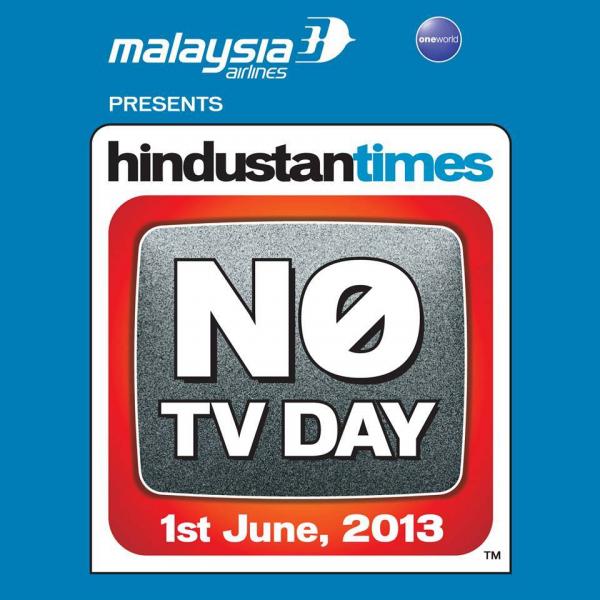
  • HT Media needs to rethink ‘No TV Day’

    HT Media needs to rethink ‘No TV Day’

    MUMBAI: Hindustan Times is back with its ‘NO TV Day’ initiative. The campaign in its third year, now invites Mumbaikars (who, according to them, are the only ones owning a TV set) to switch off their TVs and celebrate quality time with family and friends through a wide range of activities specially put together by HT Mumbai (Does that mean Mumbaikars also do not know how to organize activities for friends and family and need an HT Media to do it for them?).


    The Facebook page of the campaign has many ads put together to promote the “Apna TV Band Karo Campaign.”  Bollywood actor Imran Khan is seen saying he enjoys cooking on ‘NO TV Day’ – not surprising considering the number of films he has been doing (or he rather did). 
     

    Another activity suggested is the ‘Get Fitter Mini Marathon’ at Carter Road, Bandra. Located in the western suburbs of Mumbai, it seems to insinuate that Mumbai can get fitter only at Bandra man (Read: the common Bandra lingo). 
     

    The ‘Head to Adlabs Imagica and Get Amazed’ has a number of postings on the page because maybe Essel World is now passé and not so amazing anymore. 
     

    Jokes apart, the campaign is being planned at a time when IPL mania has gripped the country. Why is the HT Media management trying to spike the viewership of Sony Entertainment’s most expensive and revenue generating product in the city of cricket lovers? 
     

    Is it a case of sour grapes with HT Media? Publication houses like India Today, DNA and the Times of India have their own channels but HT doesn’t. Maybe not now! But it surprisingly did so once in the late nineties. The Hindustan Times had started a Hindi entertainment channel, Home TV in collaboration with Pearson group of London which soon shut shop. And now with its ‘switch off your TV’ HT is behaving like a kid throwing tantrums.


    What’s also concerning is that HT Media’s No TV Day coincides with No Tobacco Day this time. Are they not really very different products? TV definitely is not equal to tobacco.

    The dynamic audio visual element of the TV medium allows its viewers to consume content as it comes alive on a screen immediately and live. It informs, it entertains, it engages, it educates, it connects and it is an integral part of our lives.

    As compared to this, newspapers take an entire day to publish information that has probably expired and has been dust binned. May be some of their analyses are pertinent and different, but in the era of paid content that’s something you have to really seek out. The world over newspapers are being given a decent or indecent burial. And TV and the digital medium are continuing to grow and thrive. In India, however, that’s not the case and newspapers are showing that they have a lot of legs. 
     

    Yes, the intent behind the HT Media initiative – get families and each one of us out together doing things they and we normally don’t – is laudible.  But why hit out at the medium of TV? Why call it ‘No TV Day’ when calling it “HT Media’s Family Day out” would do just as well.  Then do we really need a special day to spend time with our families?  And will HT Media decide what we should do with ours?

    The campaign also suggests that one can help a great deal in protecting the environment by turning off the TV for a day. HT has also organised ‘Nature Trails’ on ‘NO TV Day’ in Goregaon, in the western part of Mumbai. Can it ensure that the participants will not leave behind a trail of plastic bags, bottles and other wastes as they trudge along?  


    At indiantelevision.com we believe it makes more sense to watch TV in order to protect the environment. After all no trees are cut to make newsprint when you watch TV.


    HT Media managers would do well to take their communications seriously. Imagine what could happen if the channels were to take the anti-TV messaging to heart and were to organise a No Newspaper Day nationally? It could lead to a loss of crores for the whole newspaper industry.  Imagine what would happen if TV channels were to go online alone to promote their shows and for their TV guides? Again a loss of crores would hit the industry. Imagine if TV manufacturers were to cancel advertising in newspapers for a day? Again the impact would run into crores. 


    It’s possible that HT Media’s campaign may also be costing the TV industry some viewership (though many doubt that). Hypothetically let’s say it is, that means the ‘No TV day’ would be impacting TV channels’ revenues. The question is why are TV channels taking all this lying down? When probably they are among the bigger spenders in the newspaper’s pages.


    The appeal from all of us at indiantelevision.com to HT Media is that its managers should avoid using the term ‘No TV Day’ and coin something more positive and family oriented instead. It will be just as fun for its readers in Mumbai. 


    (We at the Indiantelevision.com group live and breathe audiovisual content – both on TV and online. But we also love newspapers. We believe they are relevant. At least for a few years. We also believe that HT Media’s ‘No TV Day’ campaign is a case of misdirected and wrongful communication, though it has been organised in good faith and with a good intent to bring families together.)
  • On social be realistic, says Facebook’s Riley Peter

    On social be realistic, says Facebook’s Riley Peter

    GOA: Facebook has changed the nature of personal and business communication. While people are looking at connecting with other set of people on Facebook, brands too need to take a good note on how to create great connections with consumers.


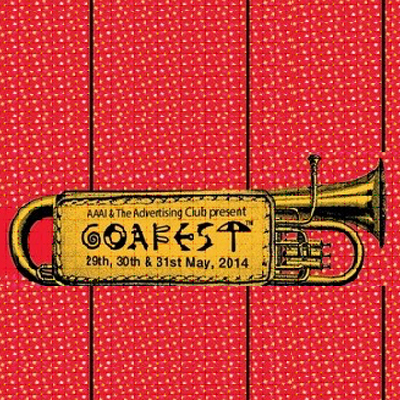
    Facebook –APAC head of creative shop Riley Peter on Day 1 of GoaFest went ahead to talk about what creativity meant to the social media network giant. Today, as people have access to multi screens, creativity needs to shape up accordingly, believes Peter.


    It is time for brands to partner with social networking sites for creating impressive work. Social has the power to identify niche as well as the mass audiences. Brands can thereby analyse what idea works for it best. According to Peter, “Brands don’t have the right to be in your newsfeed.” He is of the opinion that it is time for brands to move away from just creating disruptive communication. At the end of the day a consumer when on social platform, needs to take away much more than product details and offers.


    Brand communications should never look like an intruding one. Today, consumers have infinite choices and also have a total control over it. The challenge for brands thereby increases. “Only smart creative ideas can bring that difference in a consumer’s outlook towards brands,” said Peter. He also thinks that brands should change their perception of getting more likes just for the sake of it. 


    Peter is of the opinion that India has a great potential to create remarkable creative work on social. Main reason being that today Facebook has over one billion users in India. The number in itself speaks. What Indian brands need to do is bring the art of storytelling on social as well.  Peter is highly impressed with what Indian brands are doing on main stream advertising. According to him, in India celebrity endorsements have created some successful brand campaigns. “It is time to be more realistic and rope them effectively on social too,” said Peter.


    The creative canvas on social has the power to give real experiences to consumers in the near future. Peter is highly optimistic about India and thinks in the coming years there will be great storytelling happening on social by brands!

  • MTV breaks taboos and makes every voice count with MTV Unmasked

    MTV breaks taboos and makes every voice count with MTV Unmasked

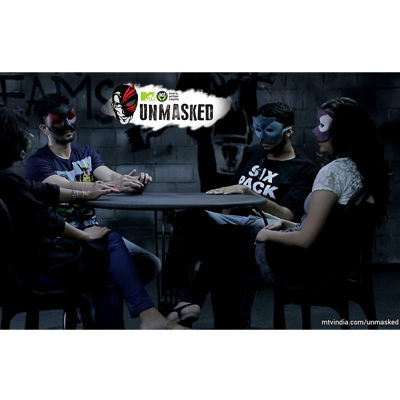
    MUMBAI: ‘Freedom of expression’ may be the most used and least valued phrase in these times. When the term ‘political correctness’ is thrown around with reckless abandon, MTV helps the youth by giving them a unique platform to make their voice heard with MTV Unmasked, a web exclusive series for the Gen Y. The leading youth entertainment brand has always believed in the power of the youth. Through MTV Unmasked, it aims to encourage the youth to believein their thoughts and be tolerant of varying opinions because every voice counts.

    Launched at a time when freedom of expression is imperative to the people, MTV Unmasked is a 16 part web exclusive series that reflects the opinions of four different and rebellious youngsters who discuss topics that are relevant and pressing for the youth of today, while wearing a mask. The youngsters discussissues that plague them but which are never spoken about openly. The masks givethem the freedom to be unhesitatingly share their opinions without fearing any societal backlash or criticism. Belonging to different professional and social backgrounds, each one of the youngsters gives their unique opinions about issues while withholding their identity.

    Speaking about the series, Ekalavya Bhattacharya, Head – MTV Digitalsays, “India is the biggest democracy in the world and by 2020 it will be the youngest as well. We are 500 crore voices, each one with a unique opinion about current issues. We at MTV believe that these voices have a right to be heard. Through MTV Unmasked, we wish to provide a platform for the youngsters where they can make their voice heard.While we don’t endorse the opinions but the fact remains that some of these issues need public opinion and open discussion.”

    A weekly series, each episode of MTV Unmasked touches upon a different topic relevant to the youth, many of which are considered taboo. The episodes are featured on mtvindia.com/unmasked and the videos are shared across MTV India’s social media assets like Facebook, Twitter, Instagram and YouTube.

    The show is presented by MTV ACT, MTV’s own pro social platform for the youth. Join the debate by logging on to mtvindia.com/unmasked now.

  • Unilever’s Rahul Welde: Consumer communication in a digital world

    Unilever’s Rahul Welde: Consumer communication in a digital world

    SINGAPORE: “Advertising and campaigns are not dead,” said the red-frame bespectacled executive on stage. “Whosoever says that is foolish. The TV commercial is changing from three seconds to as much as three minutes or six minutes. Its form may change but advertising and campaigns are here to stay.”


    Most professionals in India are familiar with this gent. Rahul Welde is Unilever vice-president Media for Asia, Africa, Middle east, Turkey and Russia, and he is seen as a media tour de force in the world as he controls ad spends running into billions of dollars for a large part of the emerging markets for the consumer giant.


    Welde was speaking at the closing session of Social Matters in Singapore. He said he welcomes the explosion; the fragmentation in media. “I believe it has brought with it tremendous opportunity.  It allows to not go by classical reach and frequency approach that we have to do with mass media where we do a shot gun spray gun approach. It allows us to specifically target specific audiences. But we need to ride all the platforms – TV, print, outdoors, radio, online, social and what have you.”


     He pointed out that Unilever is constantly listening to whispers in the digital social universe. “We are constantly on the alert. We are listening. We are reacting to what consumers are saying. It helps us tweak products; attributes and helps build brand love amongst consumers,” he stated.


    He spoke about a campaign that Unilever ran in India on the day of the election results on 16 May on Facebook. “We knew everyone was going to be on Facebook to comment, give their views on the election results. The reach block we resorted to asked engaged Facebook users to embrace the change that is coming. We got 35 million impressions; 165,000 reacted and interacted. It was very effective,” he explained.


    Welde said that digital is also permitting Unilever to deliver on “target moments.”


    For instance, he said that if the weather prediction is that the temperature is going to rise four days from a specific date, then he can choose to flood the various social and digital sites with advertising or messaging pushing ice-creams.


    “Let’s take this further,” he said. “This month is Magnum ice cream’s 25th birthday in Singapore. I can reach out to all those who are celebrating their birthday this week or this entire month individually and help create a personal touching moment for each of them with their brand which is Magnum. In the old world of print and television, I could have never done this. “


    He also spoke about the Dove Real beauty sketches campaign which was conceived in Latin America but broke in Australia. The idea of the campaign was to convince 96 per cent of women who think they are not beautiful that their beliefs about themselves are untrue.


    As part of the campaign, a forensic artist asked women to describe themselves and he drew them without ever taking a look at their faces. The next day a stranger – who had met the women – then described the women sketched the day before to the artist who once again drew them. In almost all’ the cases, the women’s description of themselves and their beauty was not as charitable as the strangers and it showed in the two version sketches.


    “The video which was produced by our agency Ogilvy went viral wildly,” says Welde. “We wanted every woman to know and believe you are more beautiful than you think and I think it worked very well.”


    Welde and the Unilever team are obviously pressing the right levers.

  • Kapil Sharma creates a laugh riot on FB

    Kapil Sharma creates a laugh riot on FB

    MUMBAI: The hugely popular laugh riot has now gone beyond making a mark on television. We’re talking of Colors’ top-rated non-fiction show Comedy Nights with Kapil (CNWK) which on the eve of 22 May registered a record 10 million fans on facebook.

    Launched soon after CNWK’s on-air launch in July 2013, the show’s facebook page has seen phenomenal growth with over 80,000 fans getting added every 24 hours.

     In the words of Kapil Sharma, creator-producer-host of CNWK, his hobby of making people laugh has grown into flourishing content on TV and social media. “Though we keep hearing people saying how much they love our show but to see it in a number as big as 10 million sends out a loud message to us. In successful collaboration with the Colors team and with continued support from our fans, my little hobby of making people laugh has grown into a flourishing content on television, one that I will strive harder to better even further,” says an elated Sharma.

    The show has a strong male skew with 70 per cent of fans being men and 41 per cent of overall fans being men aged 18 to 24 years. Be it posters of Sharma or other characters like Palak and Didi or typical Sharma jokes or wisecracks by his wacky on-screen family, these get shared about 10,000 times and generate more than 1.5 lakh likes.

    Ask him about the show’s digital strategy and Colors digital head Vivek Srivastava says: “The strategy has largely evolved around engagement. We used jokes and contests for creating engagement with digital audiences. It’s a tough battle because the show comes twice a week and the page has to be decked up every day. So therefore, even if you have to update the page once a day, it must be relevant and engaging every day and make sense day after day.”

    Social media is handled by an in-house team of four members, he informs.

     Replying to a question about what has clicked with Facebook followers, Srivastava answers: “From a content stand point, we have really tried to explore relationships and get humor out of different situations. So whether it was a mother and son relationship, husband and wife relationship or servant and master relationship, we have taken humour to a completely new level.”

    To mark the occasion and ensure even greater participation, the channel had started a contest which starts with the question, ‘Want to be a part of the ’10 Million Likes’ celebration on Comedy Nights with Kapil?, egging on fans to mail their best photographs to colorstv.fans@gmail.com to see themselves on the cover picture of the CNWK facebook page.

    Colors had also created a countdown app which got activated the moment the facebook page hit 9900,000 fans. Upon crossing the 10 million mark, video messages by Kapil, Palak, Daadi, Sumona and Navjyot Singh Sidhu were posted to acknowledge the undying love of CNWK fans across the globe which made this achievement possible.

    “Our heartfelt thanks to everyone who ‘likes’ our page and shares our content with their friends. It’s a signal of approval from the viewers on social media all across the globe that we are creating a product which people love to watch not only on TV but also consume it on other digital platforms like Facebook, Twitter, YouTube and mobile apps,” says Sharma.

    While on other digital platforms, on YouTube, CNWK is the most popular show on Colors since it was first launched with a single episode of the show posted on YouTube receiving about 1.8 million views on an average. On Twitter, most key characters like Sharma, Kiku Sharda (Palak) and Sidhu have witnessed a phenomenal increase in number of followers since the launch of the show. CNWK itself has 1 lakh followers on Twitter. The CNWK mobile application witnesses an average of 1.5 lakh downloads every month, enabling consumption of not only full episodes but also episodic mini-clips.

    While 10 million fans implies that CNWK is popular not only across the Indian subcontinent but also around the world, what is next on the cards?

     “The special thing would be to keep the momentum on and obviously goals will differ. Today, we are at 10 million; hopefully, we will aim for 20 million. So it is not really about the number of fans but engagement. As long as engagement levels are high, we think we would have done the job. As long as we keep entertaining the viewers, these milestones will automatically come through,” concludes Srivastava.

  • RAPP India launches McDonalds Royale Burger through McDElections campaign

    RAPP India launches McDonalds Royale Burger through McDElections campaign

    MUMBAI: McDonald’s and RAPP India have recently launched the #McDElections campaign for the launch of two premium burgers – the Grilled Chicken Royale and the McPaneer Royale, in their menu.


    Phase 1 of the campaign kicked off with all the McDonald’s foods seemingly electing the leader amongst their candidates. The cast included a number of participating candidate burgers each with an interesting personification and McDonald’s foods that play their supporters. With the just to be launched Royale Burger duo threatening to sweep the polls.


    Each of the candidates had a manifesto (on www.mcdelections.in) that was designed to help them win the McDElections in the light of the threat from the new Royale Burger Duo. The prelaunch viral video, done for Phase 1, mimics a classic TV interview of two of the candidates McSpicy Paneer and Chicken Maharaja Mac.


    Facebook posts and banners set up the context of the McDElections with the candidates and their supporter foods all campaigning for victory.
    But the inevitable happens, and the Royale Burger Duo wins the McDElections and forms the McDSenate. And the campaign moves to phase 2.


    The Phase 2 Viral video (https://www.youtube.com/watch?v=MoJMVxrH8wI) had the first interview of the Royal Burger Duo after they swept into power. The Royale Duo talk about their manifesto and the many “Right to Taste” bills that they intend to pass like ‘Burgers must be eaten with two hands’ and how one should enjoy eating a burger like a king, and savour each bite. But even as they have come into power the voices of dissent can be heard and the Chicken Maharajah Mac and the Spicy Front are quite vocal about the fact that they will either give the Royale Duo a tough time from the opposition or skeptical about how long the Royale Duo will last in Power.

    Two interesting aspects of this campaign are the Breaking News section and the Twitter campaign.


    The Breaking News section which constantly refreshed captured the action in the McDElections eg – ‘McVeggie Burger calls for all Veggies to unite in a bid to fend off the Royale Challenge’ or ‘Royale Duo mobbed in Mumbai’. It also got featured on Facebook and on www.mcdelections.in
    The twitter campaign drew inspiration from the action in the Lok Sabha Elections using #mcdelections tweets crafted around real life stories of the current elections.


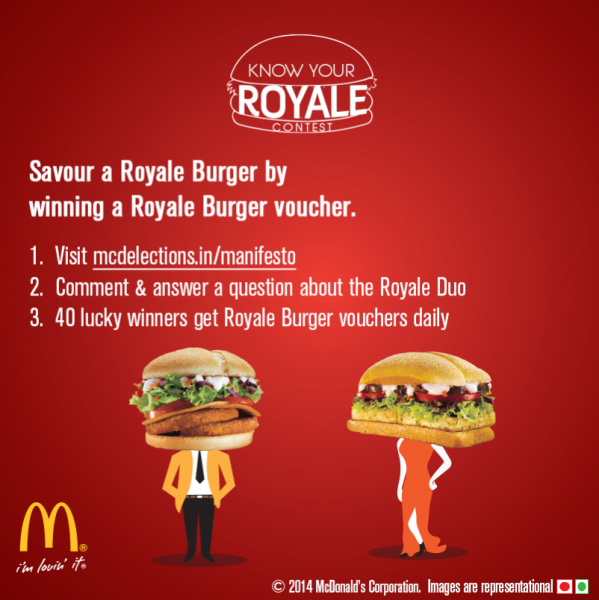
    The latest from McDonald’s India is the ‘Know Your Royale Burger’ contest to check how well the people know their Royale Burgers. There will be 40 lucky winners announced everyday, who can win their Royale burger vouchers.


    The McDonald’s India Twitter handle (@mcdonaldsindia) will also launch the ‘Right To Taste (RTT)’ and many more exciting competitions shortly.
    Says Rameet Arora, Senior Director Marketing & Menu Management, McDonalds India “Capturing the mood of the customer and the buzz in the air is always a trick that elevates campaigns and gives them life. The McDelection campaign did just that! The Royale burgers launch got a fitting launch platform through this highly engaging and interactive digital campaign”.


    Says Venkat Mallik, President RAPP India, “The McDElections campaign has provided us with a fantastic platform that helps us set up the food value of current and new Royale Burgers from McDonald’s mixed in with the spice that the election brings in. The wide cast of characters with 7 candidates and many supporters has helped us build a property which can potentially go on for a really long time ahead. The campaign lends itself extremely well to all parts of the digital landscape and we have used Facebook, Viral Videos, Youtube, a Microsite, Twitter and Banners”

  • Indian brands are still discovering the true power of digital video

    Indian brands are still discovering the true power of digital video

    MUMBAI: While social media is an important ingredient of the digital mix of most Indian brands today, many aspects like video are nowhere close to realising their fullest potential.

    Indiantelevision.com speaks to Famebox Network director Dhruvank Vaidya about this, the increasing popularity of original web content, and the latest reality show ‘Beauty and the Blogger’ that the company is working on.

    How far has video on social media evolved?

    It started with professional content (film and TV) being edited and uploaded on YouTube.  Lately, we are seeing high quality ‘made for the web’ content that is garnering a lot of viewership. More recently, Famebox is breaking new ground with its web reality shows. Thus, innovations in programming formats are drawing newer audiences and advertisers to this medium.

    What are the key elements in making videos shareable on social media?

    The most important is element of surprise.  If you see something unexpected in the video, you are more likely to share it.  Of course, what gets shared on Facebook is very different from what users on WhatsApp choose to share.

    In your opinion, how are Indian brands using video in their digital media mix?

    Indian brands are still discovering the true power of digital video. Most have been using their existing TVCs and uploading them.  Some create a video series (which again looks like a set of TV commercials) and upload it on their YouTube channel but that’s it.  What digital needs is engaging content and constant interactions with your target group. So, it is a lot more than just making videos and uploading them on your YouTube channel.  Having said this, some brands, especially in the fashion category, are using the medium very well.

    Which are the brand categories that are betting high on videos on social media?

    The categories which will benefit the most from digital videos are the ones whose target audience is not very easily available on TV.  Youth is a great example.  They are always on the web, checking social media, watching videos etc.  And brands need to create highly entertaining content to engage with them.  Fashion, lifestyle, consumer goods, phones/ telecom/ technology etc. are all doing a lot on this medium.

    Are broadcasters (channels) collaborating with your network?

    The biggest testimonial to the value that broadcasters see in networks like ours is the recent acquisition of Maker Studios by Disney for US$ 500 million.  Maker, as you know, is a digital video driven multi-channel network.

    ‘Virality’ is a term associated with videos on social media. What according to you makes a video go viral?

    While there are several elements which contribute to making a video popular – content type, editing, how well it is distributed, how many likes/ comments/ shares it gets etc. there is no way to tell which of these will make the video go viral.

    Which are the most popular video topics on web these days?

    While comedy has been getting a lot of press, there is a lot of user-generated content on cooking, fashion, lifestyle, education etc.  Famebox is a pioneer in web reality shows and we have seen a lot of viewership for our show, WebChef.

    Please tell us more about your latest web show ‘Beauty and the Blogger’.

    Fashion and beauty is a highly engaging category and has made a major impact on social media. ‘Beauty and the Blogger’ is built to leverage the high interactivity provided by social media and the excitement provided by a reality show.  The models bring in the glamour while the bloggers provide social media buzz.  This format truly leverages the power of the web and its ability to entertain as well as engage its audiences in real time.

    The reality show will feature eight shortlisted fashion models and the country’s top bloggers who team up for a unique multi-round contest. The show will be initiated through a three-day ground event at an exclusive resort. While the teams will compete against each other, they will also be buzzing on social media in real time.  This is a first for Indian audiences where the on-ground action of a reality show is brought live to audiences via social media.  The event will then be uploaded on the FameBox fashion channel on YouTube and will be available to viewers at large to watch. The winners will be chosen basis their performance in the on-ground event and the social media buzz and influence that they generate.

  • “Use of social media is good when it adds value to communication strategy”

    “Use of social media is good when it adds value to communication strategy”

    MUMBAI: Social-mobile-video marketing is an area waiting to be explored, at least in the Indian context. However, players like Digital Quotient – which already has a presence in the field with over 70 staff across key locations in India – will continue to enjoy a first movers’ advantage over those who come after them.


    Indiantelevision.com’s Priyanka Nair got Digital Quotient COO Vinish Kathuria to speak at length about the changing digital ecosystem, social media and everything in between…


    How have the demands of marketers from the digital platform changed in recent years?


    The Indian digital ecosystem is changing positively over the last decade. Marketers are trying their level best to catch up with consumers’ needs in the digital world. Today, digital is a must-have media vehicle. Gone are the days when we were asked, “What can be done on digital?” The need of the hour is how to take communication to the next level on digital. Tangible and controlled experiments are what brands expect from digital agencies today.


    With changing consumer demographics, it is necessary for digital agencies to have a clear idea of the business objectives of various brands. At Digital Quotient, we look at campaigning for a brand from a very strategic point of view. I think that should be the approach taken by agencies today.


    How is social media gaining importance in a marketer’s communication plans? Are the brands getting it right in terms of social media?


    It can be noted that every brand wants to have a social media presence. While some brands are getting it right in terms of social media, many others need to revise their approach. The first thing that brands should stop doing is racing towards fetching more likes. The question that brands which are looking for business should ask themselves more often is: “Does it add any value to the communication strategy?”


    Brands should understand that on social media, timeliness is of the utmost importance. A social media user has a different mindset. Brands should ensure a strategy whereby consumers are not left with stale or outdated content. Engagement mechanism is a must for social media branding. On the other hand, there are many brands which are using social media purely for post consumer service. This is an interesting move. Social media is now definitely a medium that cannot be ignored but it is up to brands how they shape up strategies that are worthy of attention.


    What are the key things that brands should keep in mind to build a healthy social media conversation? 


    It is just like any other marketing medium that needs to be accepted first. Though social media is largely technology-driven, it is emotional connect and remembrance that matters for consumers. It can be observed that content is taking different shifts over the years. From text-heavy content, brands are today looking at making a splash on social media through videos and pictures. Humanising content is what makes any social media conversation healthy.


    Mobile has still not been leveraged to the best of its capabilities by Indian brands. What is your observation on this?


    Earlier, conversations were very telephone-led but today, marketers are jumping into the mobile fray. It is for reach that marketers are looking at mobile as a communication platform. Brands need to take a cue from how global marketers are looking at social and mobile integration. There is much learning that comes from there, which is noteworthy. One thing is clear with the current numbers: India will soon lead the charts when it comes to mobile reach.


    Brands are betting big on video in digital campaigning. How can brands further optimise the use of video?


    There are many brands that roll out TVCs on social media. TVC is the easiest replication that a brand can do but clearly, it is not an ideal one. That is what brands are getting wrong when it comes to video. It is very important that brands create videos that are shareable. Brands need to start using different formats such as Vine or Instagram. Content curation is something that brands are leveraging on while creating videos.


    Do brands understand the power of big data?


    Understanding big data needs different skill sets. It is relatively new to decode for many professionals. Numbers driven from big data are fascinating and are like an asset that marketers can put to use. Time will help marketers discover the power of big data. 

  • KV Sridhar joins SapientNitro

    KV Sridhar joins SapientNitro

    MUMBAI: World is surely moving towards digital, maybe that’s why KV Sridhar (Pops) decided to join digital agency SapientNitro.


    Very excited to join this new breed of agency which is redefining storytelling, he wrote on his facebook page. He will join the agency as chief creative officer in India, starting 1 July.


    After spending 17 years in Leo Burnett, his exit left everyone shocked. A t the time of leaving the agency Pops had said, “It has been a purposeful journey for me at Leo Burnett, growing with and having a chance to play a key role in shaping the agency’s creative prowess. I have had the opportunity to work with and get to be friends with some of the brightest creative minds in the world, work on some of the most exciting campaigns, with some of the most amazing clients. I wish Saurabh Varma (CEO of the agency in India) and Leo Burnett great success.”


    His current move has left everyone surprised as well. On his appointment, he said, “I am excited about joining SapientNitro, it allows me to connect with the new generation. This is something completely future facing, there are very few senior guys actually embracing new media today.”


    Leo Burnett recently replaced Pops with BBDO’s RajDeepak Das, who will head the agency’s creative function across India.


    SapientNitro, part of Sapient, is a USA-based agency with interests in what it calls integrated, omni-channel commerce. The agency has offices in 31 cities spread across The Americas, Europe and Asia-Pacific.


    Globally, the agency has over 1,000 clients including names such as Chrysler, Citi, The Coca-Cola Company, Lufthansa, Target and Vodafone.

  • Times Now launches Election Mobile App

    Times Now launches Election Mobile App

    MUMBAI: In order to enhance viewers’ access of the ongoing general election, Times Now has come up with its election mobile application. In partnership with Nokia, the app has been developed to provide real time information through video, image and text feeds on the general election.


    Users can download it on Android, iOS, Nokia X and Windows phone. People can watch feeds in the form of YouTube videos and it also provides options to like, reply or share feeds and plug in Times Now’s social feeds from Twitter and Facebook.


    Users can chat with each other while shows are on air. Apart from this, they can also watch live telecast of the channel from the Indiatimes website link that is given in the app.


    Speaking on the launch of the app Times TV Network MD and CEO MK Anand said, “We have launched an exclusive app for all the people on the move so that we can keep them informed regarding all news, updates and the entire coverage on election news. We have created this app to empower them to make the right decision as to who they want to see as their next leader.”