Tag: Facebook

  • Missed call from FB will accelerate digital engagement: Valerie R Wagoner

    Missed call from FB will accelerate digital engagement: Valerie R Wagoner

    It was in April that Facebook announced that it had 100 million active users in India, and was aiming at touching the one billion landmark. The social networking site which now has an established subscriber base, is looking at launching more ad inventories. The latest from its kitty is the missed call ad product, which according to Facebook has already started generating some buzz.  


    The announcement of this new ad format had come at a time when Facebook COO Sheryl Sandberg was visiting India hobnobbing with government officials, and small and medium business owners.


    Facebook has partnered with ZipDial, a Bangalore based mobile agency for this. Indiantelevision.com’s Priyanka Nair speaks to ZipDial founder and CEO Valerie R Wagoner at length to understand the mobile marketing ecosystem in India, partnership with Facebook, the agency’s journey and much more.


    How has marketers’ demand from mobile marketing changed in recent years? 


    In emerging markets where the vast majority of consumers are still not online and still pay for things in cash, there is exceptionally little data on consumers and their preferences and behaviours. However, only this year, marketers we work with, are ready to embrace a comprehensive data strategy.


    Four years ago at the end of 2009 when we started ZipDial, marketers were barely getting comfortable with using the mobile at all, and it was an era of small experiments. By around two-three years ago in early 2012, using the mobile for media activations had become an industry standard. By now, marketers are truly embracing both, bridging offline-to-online consumer experience over the long-term, and driving a real business impact from data and analytics.


    You have been in the business for four years. How were the initial days?


    The idea for ZipDial was born from a brainstorming session between Sanjay Swamy (now chairman of ZipDial) and me on a late night flight back to Bangalore from New Delhi. Over next couple months, we fine tuned the idea further with as many as 600 varied user cases.


    The idea just stuck, and within a few more weeks, we had launched a minimum viable product. I think the ideation and execution happened within a short time. But ideas are cheap. Anyone can have an idea. To be really successful, an entrepreneur has to be great at execution, to think strategically about how to drive real inflection points in the business, and have the stamina to see through. What was launched as a mere polling product, over time transformed into a full-fledged mobile marketing and analytics platform.


    ZipDial founder and COO Amiya Pathak and the tech brain created a prototype during IPL 2010 wherein users could give a missed call and get live cricket scores. With zero marketing, within a couple of months, millions of users were zipdialing millions of times a day. It took off completely word-of-mouth. That was the first sign of success. Shortly thereafter we cracked P&G Gillette as our first big client, and we never looked back.


    How did you partner with Facebook? Can you elaborate on how the partnership will work?


    We launched the Facebook-ZipDial missed call ad product with Facebook as its partner for emerging markets (only company in the world). We collaborated and drove conception, design, development, sales, and analytics. In fact, given that the vast majority of the engagement happens on ZipDial after the user clicks on the Facebook ad, we have a lot of interesting data comparing performance across different media as well as performance between Android and feature phones.


    The purpose of the Facebook-ZipDial ad product is to create online-to-offline engagement and driving results. Facebook can track to the level of a click and online engagement. Upon user dialing, ZipDial takes over the consumer experience to drive actual outcomes in the offline world via retargeting, for example reminders to the user encouraging them to buy a product, visit an outlet, watch a particular TV channel, download particular content or an app, etc. Everything is 100 per cent permission-driven by the user and is targeted to them.


    We also need to track performance of Facebook v/s other media channels because ZipDial integrates across all media channels, including print, TV, OOH, and non-Facebook digital ads. We can track which media drives higher RoI for the advertiser.


    To put this in simple words, Facebook is the media where the ad is displayed. The user clicks on the ad. As soon as the user responds to the ad, it bridges from Facebook into a 100 per cent ZipDial experience.

    Coca-Cola (Coke Studio), L’Oreal (Garnier Men), P&G (Gillette), Mondelez (Cadbury Dairy Milk), Disney Channel and Nestle are a few campaigns that have used the inventory so far.


    We also need to give a performance analysis across media. This includes results from analysing the cost effectiveness of each media in terms of driving unique user acquisition. The metric used is user acquisition cost = spend on media / number of unique users who engaged from that media, averaged across all client campaigns.


    It can be noted that digital (including Facebook and non-Facebook digital) performed 10.40 times better than print and Facebook performed 3.02 times better than non-Facebook digital ads.


    How does the Garnier Men campaign for which Facebook has partnered with you work?


    Garnier Men had been for long planning to run a campaign with ZipDial for print and digital media. ZipDial designed and implemented the campaign on the platform in order to drive engagement with brand content around IPL 2014. The ZipDial campaign for Garnier Men was planned well in advance.


    Luckily the Facebook-ZipDial product was launched in time such that Facebook could also become part of L’Oreal’s marketing plan for the Garnier Men campaign. The results have been phenomenal with the Facebook-ZipDial ad performing 16 times better in terms of RoI than the same ZipDial integration with Garnier’s Print Ads.


    What according to you makes a campaign hit on mobile?


    There are many reasons. But, one of the major reasons is that today almost 100 per cent of all emerging market consumers have mobile phones. There is an ease of use in the design format that makes it a single click transition from online to offline in a seamless and user-friendly manner.


    Mobile is the unique ID for the customer. Even when consumers bridge from the on-Facebook experience to an offline experience such as watching a TV show or purchasing a product, there can be an offline-engagement in a targeted way.


    What are the key things that brands should keep in mind to build a healthy social conversation? 


    We strongly believe in the six best practices for social and mobile activations. One, know your customer; a visit from an anonymous user is not enough. All engagement should be verified and known-user engagement so that the brand can personalise the experience later.


    Two, don’t lose your customer, use re-targeting and follow-up engagement, don’t just make it a one-off transactional experience. However, never ever spam your consumers, and always make the experience permission-driven and privacy protected. Three, there is simplicity in the call-to-action, do not overwhelm consumers with too many options. Give them one single compelling message and way to engage.


    Four, there is multiplicity after the call-to-action. Target your response to users on a personalised basis in terms of content and interface. No two users with different profiles should receive the same content/interface. Five, it allows to measure your media. Never run a campaign without the ability to track and measure response rates and RoI. This applies across all digital and traditional channels, including print, television, etc.


    Six, every media can go viral, including offline. Never miss an opportunity for a viral campaign. ZipDial achieves between 60-400 per cent increase in reach of media through viral campaigns even when the only media used is offline traditional media. This improves RoI immensely.


    Mobile being a personal medium, there is a lot that a brand needs to keep in mind before making that one missed call. How do you make sure that a user doesn’t hang up?


    The ZipDial platform does all the hard work automatically for the brand. Marketers only need to think about what their brand benefits and the message they want to get. The ZipDial platform does all of the hard work in analysing data and results, profiling users based on preferences and behaviours, and automatically delivering the right personalised message to the right user at the right time, and even through the right user interface (i.e. voice, text, WAP, Apps).


    ZipDial always puts the consumer’s interests and the consumer’s privacy first. If this is broken, then ultimately it reflects poorly on the brand. Conversion rates on ZipDial campaigns are between 9-45 per cent compared to industry standard conversion rates of less than 0.5 per cent. Users trust the privacy-protected and personalised ZipDial experience and therefore stay more engaged.


    Typically how does ZipDial help a brand to roll out its mobile campaign?


    ZipDial keeps a close watch on the needs and trends in the market before advertisers even realise it themselves. We invest in developing our engagement, retargeting and analytics to keep the industry move forward.


    We also work closely with all for brand marketing as well as for trade marketing. Our focus is also to integrate our advanced platform into their overall consumer loyalty, data and marketing strategies. We work hand-in-hand with our most forward thinking marketers and then replicate and scale the solutions across the industry.


    How has H1 of 2014 been for Digital ZipDial?


    ZipDial has already more than doubled its revenue run rate in the first quarter of the financial year. We look forward to working further with clients about their comprehensive mobile, data and loyalty strategies.


    What is at top of your wish list for 2014? 


    Taking ZipDial’s innovative platform global is one of our main priorities for this year. We have already started to expand into the rest of Asia, but we are even more excited to take our expansion further into Africa very soon.


  • Facebook for every phone rolls out feelings for status updates

    Facebook for every phone rolls out feelings for status updates

    NEW DELHI: Facebook is commencing the rollout of adding feelings to status updates on ‘Facebook for Every Phone,’ which will allow users to share what they are doing or how they are feeling in a structured and visual way.


    This new feature allows one to easily add a user’s current mood, or activity to the status update right from the new smiley face icon in the composer. Share what one is listening to, reading, watching, or eating, and the post will include an icon and links to other relevant info. The feature will be working exactly the same way as it currently does on the other interfaces.


    To share one’s feelings through status updates, the user just needs to click update status, click and choose feeling or what he or she is doing in the dropdown. One can choose suggestions from the drop down or type in the whole word. Once the feeling or activity has been added, finish filling in the status update and click post. If one chooses an activity that involves an authentic page — like a brand, sports team or movie—that page will appear in the status update.


     If one describes activities like watching a TV show or reading a book, the TV show or book will also appear in the related sections on the about page where one lists things one cares about. If one does not have this feature on the about page yet, the activities one shares now will appear there when the feature is available.


     This feature was earlier available only on smartphones and now it is open for all the mobile users.

  • Advertising on mobiles in US shows marked increase

    Advertising on mobiles in US shows marked increase

    NEW DELHI: The mobile appears to be leading the increase in media ad spending this year, at least in the United States.


    Total ad investments will jump 5.3 per cent from last year to reach $180.12 billion in 2014, according to eMarketer, which tracks such spending. 

    Mobile will lead this year’s rise in total U.S. media ad spending, and advertisers will spend 83 per cent more on tablets and smartphones than they did in 2013 — an increase of just over $8 billion.


    By the end of this year, mobile will represent nearly 10 per cent of all media ad spending, surpassing newspapers, magazines and radio for the first time to become the third-largest individual advertising venue, only trailing TV and desktops/laptops, projects the company. 

    Though investments in TV advertising will rise just 3.3 per cent, advertisers will spend $2.19 billion more on the medium than they did in 2013, making it the second-leading category in terms of year-over-year dollar growth, according to eMarketer. 

    The surge on mobile advertising is attributed to the fact that consumers are spending more time with their devices, an average of two hours 51 minutes per day this year, compared to two hours 19 minutes the year before. 

    Google and Facebook lead the top American digital ad-selling companies. The category will represent 18.2 per cent of total media ad spending this year, eMarketer projects.


    Google alone accounts for more than 10 per cent of all advertising spending in the U.S, and in 2016, together Google and Facebook will take a 15 per cent share of the $200 billion total media advertising market.

  • Narendra Modi meets Facebook’s Sheryl Sandberg

    Narendra Modi meets Facebook’s Sheryl Sandberg

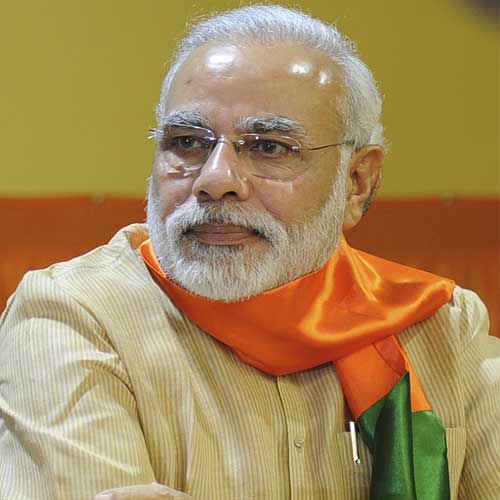
    NEW DELHI: Facebook chief operating officer Sheryl Sandberg today told Prime Minister Narendra Modi that India is a very important country for Facebook, considering the high number of active Facebook users here.


    The Prime Minister discussed with Sandberg ways through which a platform such as Facebook could be used for governance and better interaction between the people and government.


    He also spoke about how Facebook could be used to bring more tourists to India. During the meet, Modi expressed his wish of getting the social networking site’s assistance in commemorating Mahatma Gandhi’s 150th birth anniversary year with a special focus on cleanliness.

    Later, the Prime Minister wrote on his Facebook page: “Had a very fruitful meeting with Sheryl Sandberg. She pointed out that India is a very important country for Facebook, considering the high number of active Facebook users in India.”

    “Being an avid user of social media myself, I talked about ways through which a platform such as Facebook could be used for governance and better interaction between the people and governments. I also talked about how Facebook can be used to bring more tourists to India.”


    Click here to view the event pictures

  • Facebook adds LiveRail to its kitty

    Facebook adds LiveRail to its kitty

    MUMBAI: The news of Facebook acquiring video advertising company, LiveRail didn’t really come as a surprise.


    It was in March when Facebook first began offering 15-second video ads for a limited number of companies on its website. The company has moved cautiously in introducing video ads on its social network to prevent a backlash from users who might find the ads annoying.


    This acquisition is the social media company’s latest step to make video ads a bigger part of its business.


    According to Reuters, Facebook has not disclosed the price for the San Francisco-based company, which was founded in 2007 and has offices in several countries.


    It can be noted that LiveRail’s technology automatically pairs video ads with the videos that appear on many websites, such as Major League Baseball, ABC and A&E Networks website.


    The report on Reuters also states that video ads command higher prices than other forms of online advertising such as banner ads. Facebook and other internet rivals like Google are increasingly trying to grab a slice of lucrative TV-marketing budgets as they try to sustain rapid growth.


    For records, it was early last year that Facebook bought Whatsapp for US$19.5 billon.


    It will be interesting to see how Facebook ropes in brands to scale its video advertising inventory in the coming days.

  • Missed call? It might be Facebook calling India

    Missed call? It might be Facebook calling India

    MUMBAI: Missed call: most of us have used it at some time or the other to connect with our friends when we are low on our mobile phone balance on our low end feature phones. Now Facebook is hoping to rake in the moolah courtesy this quirky habit amongst India’s light walleted mobile users.

    It announced a new ad format based on the missed call habit this morning through a post by its emerging markets ad products specialist Kelly MacLean.

    Describing it she writes:   “When a person sees an ad on Facebook they can place a “missed call” by clicking the ad from their mobile device. In the return call, the person will receive valuable content, such as music, cricket scores or celebrity messages, alongside a brand message from the advertiser — all without using airtime or data.”

    Facebook says 66 per cent of the 100 million or so of its users in India access the social networking site on their low-end feature phones using 2G services. Despite India being its second largest market, it contributed only Rs 75 crore to its top line last year, according to online site Quartz.

    “That’s a teeny-weeny fraction of its total global revenues of $5.49 billion (around Rs 33,000 crore),” says a media observer. “And it clearly needs to get India to generate more greenbacks.”

    Facebook says it has been testing the missed call ad product in India for sometime now and it has generated some success. It expects to give it a further push in the next few months as it rolls it out to advertisers.

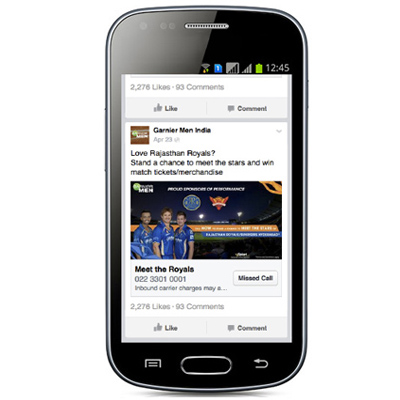
    Among the advertisers which have used it is Garnier Men- a L’Oreal brand –  during the recently concluded cricket mega success, the IPL, from April to May 2014, says Facebook in  a case study it has published online.

    As part of the campaign, photo ads were placed on News Feed, targeting men between15-35, asking them to click to call for a chance to meet players from the Rajasthan Royals and win match tickets or official merchandise.

    “When someone clicked on the ad unit, a number was auto-populated in their phone dialer and a number was called. The call then dropped after a couple rings and the caller received an SMS with trivia questions to answer to enter the contest. The caller was also presented with a Flipkart link to purchase products,” Facebook says in the Garnier case study. It had partnered with Bengaluru based missed call services provider ZipDial for the promotion. 

    The social networking platform says the campaign saw Garnier achieve its goal of reaching 15 million of the target audience. 16 times more calls were generated from the Facebook missed call ad unit  than all other digital and print media combined, and its sales rose a claimed two and a half times year on year.

    Garnier general manager Rupika Raman had this say about the test: “When we were approached by Facebook to become the first brand globally to take part in the click to missed call innovation, we were excited to try it out. It has reaped rich dividends and has been highly impactful.”

    Facebook has partnered with India’s largest mobile phone service provider Airtel, and missed call platform provider ZipDial, as it begins rolling out the new ad unit in India.

    The site says that it will soon start offering features such as life-stage targeting (new moms and dads, graduation moments) to advertisers, while it has already started offering geo-targeting options wherein advertisers can target people by state or even multiple states in India without having to list multiple cities.

    And to get around the doubting Thomases about its efficacy as an ad medium it has partnered with Nielsen to serve polls to people on feature phones. “Our new measurement solution provides advertisers with greater tools to measure brand sentiment, purchase intent and ad recall for the first time on mobile as well as desktop,” Facebook has highlighted in the post.

    The announcement of the new ad format has come at a time when Facebook COO Sheryl Sandberg is visiting India hobnobbing with government officials, and small and medium business owners.

    (Pix courtesy: Facebook)

  • Discussion around FIFA should not be just about viewership: Mallikarjun Das

    Discussion around FIFA should not be just about viewership: Mallikarjun Das

    MUMBAI:  With ever changing media dynamics, consumption patterns have been fluctuating too. Media fragmentation is a concern that media planners need to deal with more care.  Thereby, what comes as a challenge to a planner is when brands want to collaborate with large scale properties such as an IPL or FIFA World Cup.


    As second screens play an integral role in a viewer’s life, catering to them uniquely also comes as a strategic challenge to media planners.


    In conversation with indiantelevisiom.com, Starcom Media Vest Group (SVG) India CEO Mallikarjun Das elaborates his views on evolving aspects in media planning, changing viewership patterns of a large scale property like FIFA World Cup, SVG’s away ahead and much more.


    Excerpts…


    Understanding that there is media fragmentation in India what are the key challenges that come on the way of media planning?


    Media fragmentation has been around for sometime. It is nothing new. The challenge is integrating multiple sources of data and using a judicious mix of rationality and intuition in making choices. Increasingly one sees that media planning in the traditional media has become a gut-feel driven game. There has been measurement currency devaluation. Too many voices have jumped in to put down the currency be it TV or print, instead of working around the limitations.


    On the digital side, we know that reach is increasing but there are challenges of measurement and proof of performance to surmount. All in all, these are great challenges, and we would rather have these problems to surmount than otherwise!


    Do you think that clients in India are taking steps when it comes to experimenting with innovations and new media tools? 


    Experimenting has always been there but sometimes experimentation can be an enemy and a limitation. For instance, take digital. For too long, FMCG clients have treated it as a medium for experimentation and innovation instead of it being ‘business as usual’. This itself is one of the reasons for the slow digital transition amongst TV heavy clients. Yes, experimentation is important but unless one builds proof-points in the organisation and scales up, it remains in the cute realm.


    What are the best practices in India that the rest of the world could benefit from?


    India has vibrant media market place. Look at the choices that exist for a media planner to optimise – both within a medium and across media. In fact, a problem-seeking mind should treat this as the best possible epoch to be a media planner. However, I would rather talk about what India should learn from rest of the world.


    The media planning community needs to optimise – cut and trim the fat that often rests in traditional, habit driven choices we make in media plans. Data has to be at the heart of decision-making. I do not think this is the case. Too much of money is wasted in low leverage gut-based decisions. Specifically, we need to be accelerating the digital transition – a focus on TV and print optimisation, video neutral planning, and measurement metrics are what we need to learn from rest of the world. See China for instance – Starcom Media Vest has seen several FMCG clients there who have transitioned from less than 5 per cent to 25 per cent of their ad spending going to digital on the back of those three things.


    Since the FIFA fever has hit the world, how do you think the viewership patterns will look for a property of this scale?


    FIFA will garner substantial viewership in SEC AB as well as amongst the 15- 34 age groups. There will be certain pockets of the country where the viewership will be universal. There is no doubt that the millennial would be on FIFA.


    An index that could give one a sense of the popularity is the ‘Share of Voice’ that FIFA related content has on Facebook. Given that the reach of Facebook in India is in excess of 100 million, the volume of conversation around football would give a pretty good indication of its popularity. My hunch is that the number will be very high.


    As far as ratings are concerned that number might not be very high – driven by the fact that niche phenomenon will not be captured precisely and the timing of the matches. Hence a discussion around FIFA should not be just about viewership. For a brand to maximise mileage from a property like this, going on multiple media platforms is critical.


    Which brands according to you have collaborated with FIFA?


    In fact, I find this a bit disappointing. FIFA is an awesome platform for many Indian brands to build on their equities of youthfulness and being international. Barring a few conventional associations, I have not seen anything that is mind-boggling.


    How has the business been in the H1 of 2014 for SVG?


    Business has been good in a slow, cautious environment. H1 2014 has been sluggish in terms of ad-spends. The economy had slowed down to a GDP growth of 4.7 per cent. The rate of growth consumption demand too had slowed down. This has reflected in a cautious worldview amongst marketers toward ad-spends. But with every challenge there is an opportunity – we have seen a faster uptake of digital amongst our clients. SMG India is the Global Centre of Excellence for Analytics.


    We have seen this contribute substantially to our topline and bottom-line growth in H1. In the last six months, we have executed revenue generating analytics projects for SMG from US, UK, Italy, Australia and Middle-East. Starcom Media Vest India’s analytics team has won international awards and presented papers in prestigious forums such as ESOMAR in Jakarta, Advertising Research Foundation’s Seminar in NY and at the Predictive Analytics World Conference in Chicago. We have built world-class capability on this front and are well placed as an organisation for the data driven, precision marketing transition that will take place in media planning over the next 12 to 24 months.


    What are plans lined up by SVM for the coming months?


    Our focus will be client–delight, product, growth and training. SMG sees itself as a strategic partner to its clients with its product predicated on the principles of brilliant basics, digital, data and analytics. We will look at building new paradigms of planning that would help optimise the TV and print investments of our clients.


    We are already ahead of the market in terms of being one of the few agencies with a capability to do video neutral planning. Digital transition, for the right reasons, will be a spotlight for the agency. Also, we strongly believe that real-time data driven marketing and media planning is the future. This will continue to be an area of thrust. Training is another area for us in which we plan to make substantial investments in 2014.

  • Pinterest’s new pitch to advertisers; impressive or run of the mill?

    Pinterest’s new pitch to advertisers; impressive or run of the mill?

    MUMBAI: Today, disruption is the operative word and brands of all hues are harnessing the digital medium to create cutting-edge communication. However, online audiences are very impatient and want things instantly – things that can sustain their interest, considering they have a short attention span to boot.


    An online platform that has endeavoured to help consumers curate and share things they love is Pinterest. Founded four years ago by Ben Silbermann and Evan Sharp, Pinterest has caught the attention of marketers with the launch of its various ad inventories over the past six months.


    According to a report published in Reuters last month, Pinterest has raised a new $200 million round of funding that gives it a valuation of $5 billion. The company last raised money in October 2013 at $3.8 billion valuation in a round led by Fidelity Investments.


    The social media platform stated in the report that it would use the capital to invest in technology, develop its advertising program further, and expand internationally. Pinterest said it has raised a total of $764 million so far from the time of its inception.


    Pinterest also introduced a new advertising tool called ‘Promoted Pins’, in January this year. According to digital experts in India, the social media platform tested the inventory in multiple phases. It was just last month that the platform made a small roll out with a group of brands in the U.S. This comprised ABC Family, Banana Republic, Expedia.com, GAP, General Mills, Kraft, lululemon athletica, Nestle’s few products, Old Navy, Target, Walt Disney Parks and Resorts and Ziploc.


    While on an average it takes around $30 to $40 to advertise on Pinterest, according to experts, with ‘Promoted Pins’, Pinterest aims to improve functionality, generate revenue and serve additional content around the pin. The company also aims at generating between $1 million and $2 million per campaign from its big advertising partners.


    To address the large chunk of small and medium-sized businesses Pinterest is going to take a different route and opening up ‘Promoted Pins’ to more businesses in a very Facebook-like advertising model. Instead of paying by impressions, like on Facebook, with Pinterest’s this inventory, brands only pay when people click through to their brand website.


    It is learnt that Pinterest is also prepping up to open a data firehose by the name Business Insights API. With this, companies will be able to customize their online campaigns based on user insights.


    Pinterest’s move is being likened to what Facebook initiated only to be taken over by Twitter later. Indiantelevision.com spoke to social media experts to understand what this means to an emerging market like India.


    Digital Quotient strategy and planning head Girish Mahajan opines that though Pinterest has gained a lot of momentum worldwide, in India, its power is yet to be fully realized. “This is mainly because Indians constitute only eight per cent of the entire Pinterest user base. But if your business is fashion, interiors, arts or F&B, Pinterest could be an interesting tool to make shopping easier and fun,” he says.


    “If a brand wants greater engagement of a particular target audience say women, in that case, Pinterest can prove to be tremendously influential. Visual is Pinterest’s strength, a very important factor for retailers. Also when compared to other social media tools, the amount of time required to run digital campaigns on Pinterest in less. Promoted Pins are available on an invite-only basis; it is essentially a CPM-based model. Pinterest is aiming for e-commerce bucks unlike Facebook and Twitter. The platform will evolve more into a second base for e-commerce sites other than FB or Twitter. At present in India, advertising options are not fully available but in the near future, we will witness people leveraging this tool better,” Mahajan added.


    According to RAPP India president Venkat Mallik ‘Promoted Pins’ will work well but only if brands handle them well. “If the promoted pins are overly ‘salesly’ they are likely to get rejected. The visual of promoted pins needs to look like content that is generally interesting to people with related interests and then have a sales message may be one layer down. There are a number of theories about the kind of pictures that get the largest amount of likes and repins and some of those could potentially serve as guidelines on how to make promoted pins work better as well,” mentioned Mallik.


    Facebook’s buying of Instagram last year added a lot of value especially in a market like India.  According to social baker Nike, MTV and Starbuck are the top brands in Indian on Instagram.  Ignitee social media head Nikhil Kharbanda says that many Indian brands prefer Instagram to Pinterest because of the former’s reach and subtle advertising option such as sponsored post/video. Though Instagram doesn’t release numbers according to many international news reports, the application has doubled its user base in the last one year.


    “The way ahead in creating effective communication on social media is to bet high on image marketing. It can be noted that currently, Indian brands are interestingly using Instagram in their digital media mix but I am positive that with platforms such as Pinterest introducing affordable advertising options, there will be much more action seen from brands in this space,” adds Kharbanda.


    Whether Pinterest will be able to make a dent on Instagram’s popularity with Indian brands, only time will tell…

  • Facebook provides facilities for watching and sharing FIFA details

    Facebook provides facilities for watching and sharing FIFA details

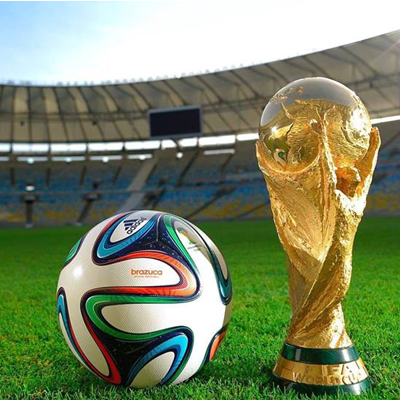
    NEW DELHI: Even as millions of soccer fans from around the world will be glued to their television sets to watch the 2014 FIFA World Cup, many will join the conversation about the Cup on Facebook.


    People come to Facebook during sporting events to connect and engage with friends who are following the action, to cheer their favourite teams and players, and to find out the latest scores and highlights.


    For this year’s World Cup, Facebook is giving users one great place to experience the action in real time.


    The social networking site has launched Trending World Cupa dedicated hub for fans to follow the tournament as it unfolds. This includes the latest scores and highlights from the matches, a special feed with real-time posts from friends and updates from relevant players and teams, and an interactive map that shows where fans of some of the top players are located around the world.


    In addition, users can share the specific matches they are watching during the World Cup — by simply tapping the smiley icon before sharing a post and selecting “watching.”


    Over the course of the tournament, Trending World Cup can be found on Facebook by visiting www.facebook.com/worldcup. One can also get there by clicking on “World Cup” in the Trending section on the right-hand side of the news feed. If friends share that they are watching a specific match, a user can also get to Trending World Cup by clicking on their post.

  • KRDS social media agency launches the world cup of hashtags with “second world cup”!

    KRDS social media agency launches the world cup of hashtags with “second world cup”!

    MUMBAI: While the World Cup starts in Brazil’s football stadiums, another competition has already kickstarted on social networks: the one that opposes players and participating countries through hashtags, followers and Twitter mentions.


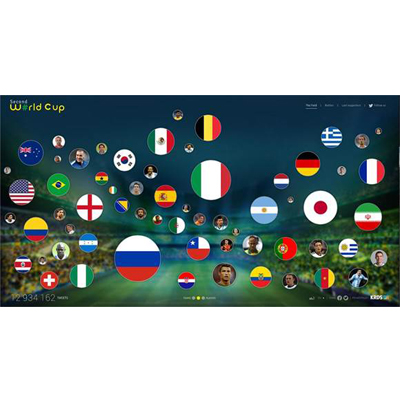
    On this occasion, Social Media Agency KRDS launches, “Second World Cup”, an immersive website available both on desktop and mobile, allowing users to discover what players and teams are the most talked about on Twitter during the event.


    Users are invited to take part in the “Second World Cup” by participating to virtual confrontations which oppose teams on the social network. Which means, participants have to tweet to help their team win and improve its position in the final ranking of the Hashtags’ World Cup.


    “Second World Cup” does not just reveal the number of tweets which are related to the event on Twitter, but also gives users the opportunity to follow the evolution of tweets mentioning a team or a player in real time. The more the team / player are mentioned on the social network, the bigger the bubble which represents them becomes, as the number of sent tweets directly affects the size of the picture, and thus the final ranking.


    A “battle” section contains a calendar of each of the games and will allow users to take part to tweet matches happening between two teams in real time. The winner of the virtual game (the one who will have received the most mentions on Twitter) will be unveiled after each “battle”.


    Finally, the website also gives access to the teams’ and the players’ cloakrooms. This includes a social hub showcasing mentions on all social networks, along with the Twitter stats of the day, a ranking of the top 40 Twitter users who are the most assiduous for each team, a detailed information sheet on each player/participating country as well as the most important historical World Cup facts.