Tag: Facebook

  • Leo Burnett partners with Bajaj Auto to create ‘V’

    Leo Burnett partners with Bajaj Auto to create ‘V’

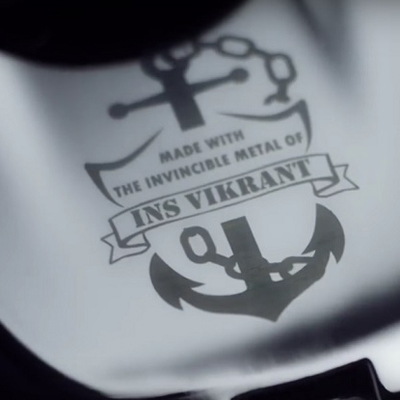
    MUMBAI: It was a leap of faith of sorts when Bajaj Auto took to Leo Burnett’s idea of carving a bike out INS Vikrant’s metal scraps, and from a mere prototype gave shape to Bajaj V, whose launch has  set social media ablaze .

    Amidst tweets, photos, Facebook status updates and insta-shares,  the latest commuter segment bike offering from Bajaj Auto  titled ‘V’ launched with much pomp and show in Delhi today.

    The bike was already making headlines since a video with a preview of it went viral online almost a week ago. Conceptualised by Leo Burnett India, the video shows documented footage of the aircraft carrier in all its glory and its subsequent dismantling in 2012 which is sure to set pangs across several patriots in the country who grew up with the name Vikrant.

    And the subsequent shot of the new bike born from the ashes of the war ship’s scrap sends across a sense of awe.

    While it is of common knowledge that Leo Burnett India are behind the creative campaign for the new bike, very few are aware that the original idea for the bike actually came from the agency as well.

    The idea for  Bajaj V, came from a prototype that Leo Burnett had conceptualised for their long term client.

    “We had to come up with a way to deliver on the idea if ‘Hamara Bajaj’. We didn’t want to go with the old song and dance formula and deliver something more participative. It was around the time Vikrant was going through its decommissioning and was being scrapped. Seeing the unanimous dismay over the scrapping, the team felt what if there was an iconic bike that carried the symbol of vikrant and every Indian could own it ? What better way to communicate hamara Bajaj?” asks Leo Burnett CEO Saurabh Verma.

    “Even in its nascent stage we only had a limited edition launch in mind and built the entire prototype on the back of that. It elaborated on how people will connect to it and engagement and campaign ideas for it.” Verma adds. Little did he know that automobile brand will take the idea to the next level. Bajaj Auto bought away the Vikrant metal; enough to process it to be a part of gas tanks of a lac of V motorcycles.

    This is not the first time the agency had lend their creative mettle in experimenting  with new ways to engage with brands they cater to. Their consumer engagement activity they built around OLX Mad ads was well loved and appreciated by the industry. What does it say about the  changing role of agencies and their significance to the clients?

    “Bajaj V is not just a campaign mandate for us, it’s much much more. Bajaj team and Leo Burnett team are partners increating this iconic bike, therefore there is more accountability involved. With this unique partners we handle campaigns for Bajaj, we handle activation and shopper marketing for them as well. Not to mention their internal communication and Pr as well,. From conceptualising an  from its very production to rolling it across every medium –  there is definitely a lot more involvement and ownership that leads to accountability for the brand,” responds Verma, adding that they have several other projects in the pipeline where they have experimented with brands on different levels.

    Expanding on the concept of building a bike’s gas tank from the scraps of a warship, the brains behind the idea Leo Burnett CCO Raj Deepak Das adds, “ Growing up, the biggest warship that comes to our mind is INS Vikrant. Therefore when they decided to scrap it, it didn’t sit well with many, me included. So when someone from the team suggested if we could use those scraps, we decided what better way than a bike through which we can own a bit of history?”

    It’s been over a decade since India’s popular locomotor brand Bajaj has churned out a motorbike. Their last, Bajaj Pulsar was a huge hit, and now is almost a household name.

    “The Bajaj V shall usher a new era in commuter motorcycling. We believe the Indian customer buying a commuter motorcycle deserves something that is substantial, solid, and which moves with a sense of purpose,”said Bajaj Auto president–motorcycle Business,Eric Vas

    Expected to be priced between Rs 60000  to Rs 70,000, the bike will hit the roads by this March.

    “We will start with a capacity of 20,000 units month and should demand exceed that, there is no problem in enhancing the capacity further,” adds a confident Bajaj Auto managing director Rajiv Bajaj while signing off.

  • FY-15: Facebook revenue grows 43.8%, net income up 25.4%

    FY-15: Facebook revenue grows 43.8%, net income up 25.4%

    BENGALURU: Facebook reported 43.8 per cent growth in revenue for the year ended 31 December, 2015 (FY-2015, current year) at $17,928 million as compared to $12,466 million in FY-2014. The company’s net income attributable to common Class A and Class B stockholders increased 25.4 per cent to $3,669 million (20.5 per cent margin) as compared to $2,925 million (23.5 per cent margin). For the quarter ended 31 December, 2015 (Q4-2105, current quarter), revenue increased 51.7 per cent YoY to $5,841 million as compared to $3,851 million, while net income attributable to common Class A and Class B stockholders more than doubled (up 2.23 times) YoY to $1,555 million (26.6 per cent margin) as compared to $696 million (18.1 per cent margin).

    “2015 was a great year for Facebook. Our community continued to grow and our business is thriving,” said Facebook founder and CEO Mark Zuckerberg. “We continue to invest in better serving our community, building our business, and connecting the world.”

    Approximately 95.3 per cent of Facebook’s revenue came from advertising in the current year as compared to 92.2 per cent in FY-2014, while the rest came from Payments and Other Fees. Please refer to Fig A below for revenue breakup in Advertising and Payments & Other Fees.

    A major portion of Facebook’s advertising revenue (almost 50 per cent) comes from the US and Canada (US-Can), followed by Europe (Eur, about 25 per cent). The Asia-Pacific (APAC) region contributes about 15 per cent, while the Rest of the World (ROW) about 10 per cent. Please refer to Fig 2 below for advertising revenue break-up by user geography.

    Facebook’s Daily Active Users (DAU) in Q4-2015 increased 16.6 per cent YoY to 1038 million from 890 million and increased 3.1 per cent QoQ from 1007 million. The number of Mobile DAUs in the current quarter increased 25.4 per cent YoY to 934 million from 745 million and increased 4.5 per cent QoQ from 894 million.

    Please refer to Fig 3 below. Facebook has the highest number of Daily Active Users (DAU) from ROW followed by APAC , Eur and US-Can respectively in terms of DAU. In other words, US-Canada and Europe’s DAUs, which amount to about 26 per cent, contribute about 75 per cent of Facebook’s advertising revenue, and the ROW and APac’s DAUs contribute about 25 per cent, reflecting higher ARPUs from US-Can, followed by Eur, APac and ROW in descending order.

    The curve B in Fig 3 below signifies the ratio of DAUs to Monthly Average Users (MAU), while curve A indicates the percentage of Mobile DAUs to DAUs.

    >

  • FY-15: Facebook revenue grows 43.8%, net income up 25.4%

    FY-15: Facebook revenue grows 43.8%, net income up 25.4%

    BENGALURU: Facebook reported 43.8 per cent growth in revenue for the year ended 31 December, 2015 (FY-2015, current year) at $17,928 million as compared to $12,466 million in FY-2014. The company’s net income attributable to common Class A and Class B stockholders increased 25.4 per cent to $3,669 million (20.5 per cent margin) as compared to $2,925 million (23.5 per cent margin). For the quarter ended 31 December, 2015 (Q4-2105, current quarter), revenue increased 51.7 per cent YoY to $5,841 million as compared to $3,851 million, while net income attributable to common Class A and Class B stockholders more than doubled (up 2.23 times) YoY to $1,555 million (26.6 per cent margin) as compared to $696 million (18.1 per cent margin).

    “2015 was a great year for Facebook. Our community continued to grow and our business is thriving,” said Facebook founder and CEO Mark Zuckerberg. “We continue to invest in better serving our community, building our business, and connecting the world.”

    Approximately 95.3 per cent of Facebook’s revenue came from advertising in the current year as compared to 92.2 per cent in FY-2014, while the rest came from Payments and Other Fees. Please refer to Fig A below for revenue breakup in Advertising and Payments & Other Fees.

    A major portion of Facebook’s advertising revenue (almost 50 per cent) comes from the US and Canada (US-Can), followed by Europe (Eur, about 25 per cent). The Asia-Pacific (APAC) region contributes about 15 per cent, while the Rest of the World (ROW) about 10 per cent. Please refer to Fig 2 below for advertising revenue break-up by user geography.

    Facebook’s Daily Active Users (DAU) in Q4-2015 increased 16.6 per cent YoY to 1038 million from 890 million and increased 3.1 per cent QoQ from 1007 million. The number of Mobile DAUs in the current quarter increased 25.4 per cent YoY to 934 million from 745 million and increased 4.5 per cent QoQ from 894 million.

    Please refer to Fig 3 below. Facebook has the highest number of Daily Active Users (DAU) from ROW followed by APAC , Eur and US-Can respectively in terms of DAU. In other words, US-Canada and Europe’s DAUs, which amount to about 26 per cent, contribute about 75 per cent of Facebook’s advertising revenue, and the ROW and APac’s DAUs contribute about 25 per cent, reflecting higher ARPUs from US-Can, followed by Eur, APac and ROW in descending order.

    The curve B in Fig 3 below signifies the ratio of DAUs to Monthly Average Users (MAU), while curve A indicates the percentage of Mobile DAUs to DAUs.

    >

  • Differential pricing can throttle India’s fledgling digital space: Zee

    Differential pricing can throttle India’s fledgling digital space: Zee

    MUMBAI: The fight for net neutrality in India continues with major players submitting their comments to the Telecom Regulatory Authority of India (TRAI). After broadcasters like Star India and Sony Pictures Networks India sent in their comments to TRAI, now putting forth its views in favour of net neutrality, the Subhash Chandra led Zee Entertainment Enterprises Ltd (Zeel) has voiced that differential pricing is completely contrary to the concept of net neutrality and competition, and can have the impact of throttling the fledgling digital space in the country. 

    The broadcaster said that differential pricing cannot be on the basis of type of services consumed, rather the basis of pricing ought to be only on the amount of data consumed. “It is akin to electricity consumption – consumers are charged the same per unit consumed. The more you consume the more you pay – you either pay for time used (as in cyber cafes) or data consumed (as in our personal plans),” Zee said.

    Further presenting its case, the broadcaster said that differential pricing was already built in by pricing the bandwidth by volume slabs. For example, if a streaming Content Delivery Network (CDN) uses 1000 GB of data usage a day, it can have a different pricing slab vis-a-vis another customer who uses 1GB per day. The end customers, when they access such websites (say Youtube or Facebook) however pay the same price per GB of usage as per their own data plan without discriminating which website they are accessing/visiting. 

    “However, the current question is whether for the same volume, customers can be offered differential tariffs, and the difference be bartered from the content provider or application provider website,” Zee said.

    This would in turn lead to violation of net-neutrality as bigger content or application providers can make their access free, and thereby causing severe disadvantage to the newer startups, which may not necessarily have the muscle to pay charges to TSPs on behalf of customers.

    Major telecom providers have proposed a new ‘Zero Rating’ scheme also known as toll-free data or sponsored data, wherein TSPs don’t charge end customers for a well defined volume of data by specific applications or internet services via the TSP’s mobile network in limited or metered data plans and tariffs. The most prevalent zero-rated programmes involve giants like Facebook, Google and Twitter, which makes the issue more contentious as it also poses a threat to local content development.

    Zee Network said that in countries like India, net neutrality is more about cost of access than speed of access as Internet speeds in India have not yet caught up with the developed world. 

    “Zero-rated mobile traffic is blatantly anti-competitive price discrimination designed to favour TSPs own or their partners’ apps while placing competing apps at a disadvantage,” the broadcaster said.

    Citing that TSPs like Airtel, Idea, Reliance and Vodafone may offer Zero Rated plans as was done by T-Mobile in the US as a major strategy to win over customers by providing Zero priced access to all streaming websites such as Hulu, Netflix, YouTube etc. The customers of all these websites did not have to make any additional payment over and above their regular data plan for unlimited access to streaming, and such data usage was not debited from their internet pack and was free.

    “As TRAI is aware, Zero Rated plans are in fact permitted by some regulators specifically in developed countries, these are in fact not favoured in developing countries. However selective Zero Rating is not permitted,” Zee opined.

    Opposing any selective Zero rating or differential rating plan, Zee pointed out that the network cannot differentiate between different types of data (the fundamental principle of net neutrality).

    Putting forth the reasons for opposing the same, Zee said:

    (i) Internet is dominated by some large international players in all fields (Search: Google, Apps: Facebook, WhatsApp, Social sites, Streaming: Netflix, Hulu etc). Because of their scale and valuations they can completely dominate and smother any small startups if zero rated plans are permitted.

    (ii) Non-discriminatory internet access Internet is key to India’s startups and innovative service providers. We need them to grow to global levels, rather than allow the Indian landscape to be dominated by selective international players who are able to pay for content.

    “Differential pricing is undesirable at this stage, and in no case there should be differential pricing, which is not equally applicable to all sites that provide the same application or service,” the company said.

    In response to TRAI’s questions as to if there were alternative methods, technologies or business models, other than differentiated tariff plans, available to achieve the objective of providing free internet access to the consumers, Zee said that if differential pricing is offered, it would nominally follow one of the following models:

    1) TSPs providers cover the costs to users of accessing certain hand-picked sites and apps, which are their own. (This is a TSP and Content Owner combination) and should under no circumstances be permitted.

    2) A company pays to provide access to a suite of different services; – Zee Network’s view is that this should not be permitted as the data charges are very high in India and only very large well established International players can afford the same killing competition.

    Hence, coining the term ‘Equal rating’ for similar services and products, Zee said that the “principle of Cross ownership between TSPs and their own sites for Application or content needs specific attention and should be specifically prohibited. In some cases, TRAI may need to lift the “Corporate Veil” and ensure that the rules are not being violated by restructuring entities.”

    Voicing its opinion on other issues to be considered in the present consultation on differential pricing for data services, Zee said, “We need to understand that while India is still developing its technologies and has a vibrant start up market, there are well established companies, which would easily pay for user access for access to their own websites or content. Hence: (i) Net Neutrality should in no case be violated; (ii) Creation of network owning companies where they own their network and also create content repositories should be entirely prohibited; and (iii) Zee Network would also like to strongly advise against device specific discriminated tariffs.”

  • Differential pricing can throttle India’s fledgling digital space: Zee

    Differential pricing can throttle India’s fledgling digital space: Zee

    MUMBAI: The fight for net neutrality in India continues with major players submitting their comments to the Telecom Regulatory Authority of India (TRAI). After broadcasters like Star India and Sony Pictures Networks India sent in their comments to TRAI, now putting forth its views in favour of net neutrality, the Subhash Chandra led Zee Entertainment Enterprises Ltd (Zeel) has voiced that differential pricing is completely contrary to the concept of net neutrality and competition, and can have the impact of throttling the fledgling digital space in the country. 

    The broadcaster said that differential pricing cannot be on the basis of type of services consumed, rather the basis of pricing ought to be only on the amount of data consumed. “It is akin to electricity consumption – consumers are charged the same per unit consumed. The more you consume the more you pay – you either pay for time used (as in cyber cafes) or data consumed (as in our personal plans),” Zee said.

    Further presenting its case, the broadcaster said that differential pricing was already built in by pricing the bandwidth by volume slabs. For example, if a streaming Content Delivery Network (CDN) uses 1000 GB of data usage a day, it can have a different pricing slab vis-a-vis another customer who uses 1GB per day. The end customers, when they access such websites (say Youtube or Facebook) however pay the same price per GB of usage as per their own data plan without discriminating which website they are accessing/visiting. 

    “However, the current question is whether for the same volume, customers can be offered differential tariffs, and the difference be bartered from the content provider or application provider website,” Zee said.

    This would in turn lead to violation of net-neutrality as bigger content or application providers can make their access free, and thereby causing severe disadvantage to the newer startups, which may not necessarily have the muscle to pay charges to TSPs on behalf of customers.

    Major telecom providers have proposed a new ‘Zero Rating’ scheme also known as toll-free data or sponsored data, wherein TSPs don’t charge end customers for a well defined volume of data by specific applications or internet services via the TSP’s mobile network in limited or metered data plans and tariffs. The most prevalent zero-rated programmes involve giants like Facebook, Google and Twitter, which makes the issue more contentious as it also poses a threat to local content development.

    Zee Network said that in countries like India, net neutrality is more about cost of access than speed of access as Internet speeds in India have not yet caught up with the developed world. 

    “Zero-rated mobile traffic is blatantly anti-competitive price discrimination designed to favour TSPs own or their partners’ apps while placing competing apps at a disadvantage,” the broadcaster said.

    Citing that TSPs like Airtel, Idea, Reliance and Vodafone may offer Zero Rated plans as was done by T-Mobile in the US as a major strategy to win over customers by providing Zero priced access to all streaming websites such as Hulu, Netflix, YouTube etc. The customers of all these websites did not have to make any additional payment over and above their regular data plan for unlimited access to streaming, and such data usage was not debited from their internet pack and was free.

    “As TRAI is aware, Zero Rated plans are in fact permitted by some regulators specifically in developed countries, these are in fact not favoured in developing countries. However selective Zero Rating is not permitted,” Zee opined.

    Opposing any selective Zero rating or differential rating plan, Zee pointed out that the network cannot differentiate between different types of data (the fundamental principle of net neutrality).

    Putting forth the reasons for opposing the same, Zee said:

    (i) Internet is dominated by some large international players in all fields (Search: Google, Apps: Facebook, WhatsApp, Social sites, Streaming: Netflix, Hulu etc). Because of their scale and valuations they can completely dominate and smother any small startups if zero rated plans are permitted.

    (ii) Non-discriminatory internet access Internet is key to India’s startups and innovative service providers. We need them to grow to global levels, rather than allow the Indian landscape to be dominated by selective international players who are able to pay for content.

    “Differential pricing is undesirable at this stage, and in no case there should be differential pricing, which is not equally applicable to all sites that provide the same application or service,” the company said.

    In response to TRAI’s questions as to if there were alternative methods, technologies or business models, other than differentiated tariff plans, available to achieve the objective of providing free internet access to the consumers, Zee said that if differential pricing is offered, it would nominally follow one of the following models:

    1) TSPs providers cover the costs to users of accessing certain hand-picked sites and apps, which are their own. (This is a TSP and Content Owner combination) and should under no circumstances be permitted.

    2) A company pays to provide access to a suite of different services; – Zee Network’s view is that this should not be permitted as the data charges are very high in India and only very large well established International players can afford the same killing competition.

    Hence, coining the term ‘Equal rating’ for similar services and products, Zee said that the “principle of Cross ownership between TSPs and their own sites for Application or content needs specific attention and should be specifically prohibited. In some cases, TRAI may need to lift the “Corporate Veil” and ensure that the rules are not being violated by restructuring entities.”

    Voicing its opinion on other issues to be considered in the present consultation on differential pricing for data services, Zee said, “We need to understand that while India is still developing its technologies and has a vibrant start up market, there are well established companies, which would easily pay for user access for access to their own websites or content. Hence: (i) Net Neutrality should in no case be violated; (ii) Creation of network owning companies where they own their network and also create content repositories should be entirely prohibited; and (iii) Zee Network would also like to strongly advise against device specific discriminated tariffs.”

  • Nissan’s Datsun bets on experiential marketing with ‘ISayYes’ campaign

    Nissan’s Datsun bets on experiential marketing with ‘ISayYes’ campaign

    MUMBAI: Eighty year heritage car brand Datsun from Nissan has launched a new brand campaign in India called #ISayYes. The 360 degree campaign kicked off with a teaser video online, which is the first of many initiatives. This one-of-a-kind “crowd sourcing of dreams” activity will be launched on 25 January.


    Under the #ISayYes campaign, this activity will give Datsun fans a chance to share their dreams online. Platforms like Twitter, YouTube and Facebook will be used to reach out to fans.


    Nissan Motor India managing director Arun Malhotra said, “Young Indians want to have a voice in society as they strive to achieve their dreams. They want to be heard, and Datsun understands this. We’ve been engaging with young people for four years since Datsun came to India. Our new #ISayYes campaign is designed to connect with the energy of these young dreamers, further strengthen our bond with them, and encourage them to never give up.”


    The six-week-long campaign will consist of above-the-line (ATL) activations such as television commercials, as well as a social activation phase, which will include sharing of stories, opportunities to participate in unique experiences and win prizes.


    The campaign will culminate with Datsun fans vying for one grand experiential gratification and five tangible gratifications related to their dreams.

  • Nissan’s Datsun bets on experiential marketing with ‘ISayYes’ campaign

    Nissan’s Datsun bets on experiential marketing with ‘ISayYes’ campaign

    MUMBAI: Eighty year heritage car brand Datsun from Nissan has launched a new brand campaign in India called #ISayYes. The 360 degree campaign kicked off with a teaser video online, which is the first of many initiatives. This one-of-a-kind “crowd sourcing of dreams” activity will be launched on 25 January.


    Under the #ISayYes campaign, this activity will give Datsun fans a chance to share their dreams online. Platforms like Twitter, YouTube and Facebook will be used to reach out to fans.


    Nissan Motor India managing director Arun Malhotra said, “Young Indians want to have a voice in society as they strive to achieve their dreams. They want to be heard, and Datsun understands this. We’ve been engaging with young people for four years since Datsun came to India. Our new #ISayYes campaign is designed to connect with the energy of these young dreamers, further strengthen our bond with them, and encourage them to never give up.”


    The six-week-long campaign will consist of above-the-line (ATL) activations such as television commercials, as well as a social activation phase, which will include sharing of stories, opportunities to participate in unique experiences and win prizes.


    The campaign will culminate with Datsun fans vying for one grand experiential gratification and five tangible gratifications related to their dreams.

  • IndiaMART bags 1 lakh customers, launches digital campaign to elevate SMEs

    IndiaMART bags 1 lakh customers, launches digital campaign to elevate SMEs

    NEW DELHI: Online marketplace IndiaMART has launched a digital video campaign that brings these emerging entrepreneurs to the limelight in a concise montage.


    Acknowledged as the true heroes of India’s growth story, these entrepreneurs share their journey to success while on how IndiaMART helped them scale their business effectively with the reiteration of ‘#IBelieveInIM.’


    A mammoth 1,00,000 premium customers have enrolled on the platform. IndiaMART has always endeavoured to give speed to its mission to ‘make doing business, easy.’


    The campaign brings to the fore these individuals who have gone on to not only survive but sustain and scale their businesses pushing the boundaries of how they trade today and achieving full-fledged sustainability for their venture. The campaign kick starts the new year on a note of promise and positivity and will run for 21 days across digital platforms including Facebook, Twitter and YouTube among others.


    Highlighting IndiaMART’s crucial role in the Small and Medium Enterprises sector, the campaign will showcase how small enterprises grew with increased profitability and size through the business matchmaker. The campaign videos showcase how sellers from various segments of enterprises have achieved real time growth and productivity. The videos focus on sellers who have built their brands and expanded their businesses on IndiaMART. They also talk about how coming on to the online platform has helped them to acquire new businesses, higher lead generation and also export their products.


    IndiaMART director Dinesh Gulati said, “By coming on board with IndiaMART, we have enabled the MSMEs of India with an Opportunity to Innovate. Through the launch of this digital campaign, we want to showcase the pride our customers take in associating with IndiaMART. As their business growth has multiplied over the years, their belief and trust in us has grown even stronger. SMBs see the highest Return on Investment with IndiaMART with an increased profitability and wider geographic reach. We aspired to put a face to the millions of stories we have experienced in our journey so far and what better way to do so than through social media. People will be able to easily relate to these stories as the campaign encompasses real people talking about how they achieved real growth in real businesses!”

  • IndiaMART bags 1 lakh customers, launches digital campaign to elevate SMEs

    IndiaMART bags 1 lakh customers, launches digital campaign to elevate SMEs

    NEW DELHI: Online marketplace IndiaMART has launched a digital video campaign that brings these emerging entrepreneurs to the limelight in a concise montage.


    Acknowledged as the true heroes of India’s growth story, these entrepreneurs share their journey to success while on how IndiaMART helped them scale their business effectively with the reiteration of ‘#IBelieveInIM.’


    A mammoth 1,00,000 premium customers have enrolled on the platform. IndiaMART has always endeavoured to give speed to its mission to ‘make doing business, easy.’


    The campaign brings to the fore these individuals who have gone on to not only survive but sustain and scale their businesses pushing the boundaries of how they trade today and achieving full-fledged sustainability for their venture. The campaign kick starts the new year on a note of promise and positivity and will run for 21 days across digital platforms including Facebook, Twitter and YouTube among others.


    Highlighting IndiaMART’s crucial role in the Small and Medium Enterprises sector, the campaign will showcase how small enterprises grew with increased profitability and size through the business matchmaker. The campaign videos showcase how sellers from various segments of enterprises have achieved real time growth and productivity. The videos focus on sellers who have built their brands and expanded their businesses on IndiaMART. They also talk about how coming on to the online platform has helped them to acquire new businesses, higher lead generation and also export their products.


    IndiaMART director Dinesh Gulati said, “By coming on board with IndiaMART, we have enabled the MSMEs of India with an Opportunity to Innovate. Through the launch of this digital campaign, we want to showcase the pride our customers take in associating with IndiaMART. As their business growth has multiplied over the years, their belief and trust in us has grown even stronger. SMBs see the highest Return on Investment with IndiaMART with an increased profitability and wider geographic reach. We aspired to put a face to the millions of stories we have experienced in our journey so far and what better way to do so than through social media. People will be able to easily relate to these stories as the campaign encompasses real people talking about how they achieved real growth in real businesses!”

  • Convergence India opens on Digital India theme with 434 exhibitors from 29 countries

    Convergence India opens on Digital India theme with 434 exhibitors from 29 countries

    NEW DELHI: India has emerged as one of the most promising markets for IT and Telecommunications companies with government initiatives such as Digital India and Make in India propelling growth and encouraging major tech companies like Facebook, Microsoft and Google, who are preparing to serve the Indian rural market.


    This was the general view of speakers at the inauguration of the 24th Convergence India Expo, which opened in the capital today with 434 exhibitors from 29 countries.


    Speakers said India is in the midst of a digital revolution, and the government has unveiled new policies and regulations to accelerate the adoption of ICT in key economic and strategic sectors to increase India’s competitiveness and productivity.


    Bharti Enterprises vice chairman Akhil Gupta said, “The Indian ICT sector has entered an exciting growth phase led by the proliferation of digital media and technologies. With over one billion mobile connections, the country’s transformation into a digital economy will be driven by mobile broadband, which will help hundreds of millions of Indians benefit by connecting to the internet. The industry remains committed to the Government’s Digital India vision.”


    CII National Committee on Telecom & Broadband chairman Kiran Karnik, who was moderating the inaugural conference session on Digital India, added, “The panellists comprised eminent names who bought a unique and different perspective on the various issues involved. The result was an excellent session, which provided many insights and useful suggestions.”


    Keynote speaker at the Convergence India forum, former Secretary in the Government and former Telecom Regulatory Authority of India (TRAI) chairman Pradip Baijal said, “Today’s India and Indians want to be informed and connected 24×7, hence mobile broadband. India has very poor fixed-line tele-density and fixed broadband density. Of seven billion mobiles in the world, 3.5 billion have been converted to mobile broadband. In India, less than 10 per cent of mobiles have been converted to mobile broadband. This needs correction, and I hope the conference will deliberate on this.”


    Exhibitions India Group chairman Prem Behl, who conceived the Convergence India Expo, said, “Our endeavour is to bring to the forefront an extraordinary platform, which is informative, thought provoking and empowers both government and industry stakeholders to meet the challenges of the future.”


    Participating exhibitors include: Appear TV, Cisco Systems, Elemental Technologies, Ericsson, NAGRA, RiverSilica, SanDisk India and Telenor, among others, who are using the Convergence India platform to showcase cutting-edge technologies and innovations.


    Apart from the exhibition arena, concurrent conference sessions are being held in two separate halls with prominent government officials, industry leaders, technocrats, academia, media, etc.


    Eminent speakers included TRAI chairman R S Sharma; Kiran Karnik; Broadcom India MD Rajiv Kapur; Cisco India and SAARC managing director – service provider business Sanjay Kaul; Telenor India CEO Sharad Mehrotra; ICA National president Pankaj Mohindroo; Bharti Infratel MD and CEO Devender Singh Rawat; and Viom Networks CEO Syed Safawi, amongst others.


    Organised by the Exhibitions India Group, the Expo is supported by the Department of Electronics and Information Technology, Ministry of Communications & Information Technology and Ministry of Information and Broadcasting.