MUMBAI: Facebook has launched a new product called Canvas for advertisers, which allows them to combine video, photographs and copy in an ad.
Canvas was originally announced in September last year. These immersive advertisements aim to draw more attention of the user into their ads, by blocking out all other content. When users click a Facebook News Feed ad connected to Canvas, it opens a full-screen, rich media page inside of Facebook rather than forcing users to wait for a mobile website to load.
In a blog post, Facebook said, “We’re committed to building great mobile experiences for people and doing so also opens up new creative possibilities for advertisers. We’ve invested in engaging experiences like video and the carousel format to empower advertisers with more creative space to share their brand and products on mobile.”
Said to load 10 times faster than other ads would otherwise, Facebook also stated that in their research 53 per cent of people viewed more than half of the ad and average view time was 31 seconds. Currently, these ads are available for Android and iOS, while the social media giant evaluates how to expand this option to other versions and apps such as Instagram.
“This space was designed and invented and inspired by our relationship with the creative community,” Facebook CCO Mark D’Arcy said at a press event.
Canvas is an evolution of the earlier Carousel ads, which allowed users to swipe through multiple product or brand photos if they were interested in more information.
MUMBAI: It’s been seven years since Facebook introduced us to the “Like” button on the social media platform and ever since then it has become an integral part of our daily lives. In order to improve the experience, Facebook recently was on a testing spree to find alternatives to the existing button. After a demand for the “dislike” button and an intensive research, Facebook recently launched “Reactions,” an extension of the Like button, which gives users more ways to share their reaction to a Facebook post in a quick and easy way.
Talking about the release and the new update, Facebook founder and CEO Mark Zuckerberg said, “Not every moment you want to share is happy. Sometimes you want to share something sad or frustrating. Our community has been asking for a dislike button for years, but not because people want to tell friends they don’t like their posts. People wanted to express empathy and make it comfortable to share a wider range of emotions. I’ve spent a lot of time thinking about the right way to do this with our team. One of my goals was to make it as simple as pressing and holding the Like button. The result is Reactions, which allow you to express love, laughter, surprise, sadness or anger.”
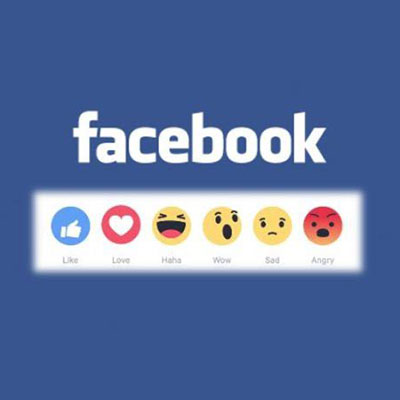
The ever-so-famous “Like” button has not been replaced, but has now got exciting new additions, which include the expressions such as ‘love,’ ‘haha,’ ‘yay,’ ‘sad,’ ‘angry’ and ‘wow.’ Facebook has ensured that the recent additions do not clutter on the screen and confuse the users; hence the “like” button will look just as it always has. Users will have to hold the mouse over the “like” options for the ‘reactions’ to show up.
Speaking about the aim on improving the news feed for the users, Facebook product manager Sammi Krug said, “Our goal with News Feed is to show you the stories that matter most to you. Initially, just as we do when someone likes a post, if someone uses a Reaction, we will infer they want to see more of that type of post. In the beginning, it won’t matter if someone likes, “wows” or “sad” a post — we will initially use any Reaction similar to a Like to infer that you want to see more of that type of content. Over time we hope to learn how the different Reactions should be weighted differently by News Feed to do a better job of showing everyone the stories they most want to see.”
While this interesting update will bring in a new experience immediately for the users, advertisers on Facebook will have to wait for few more months to understand the user reactions on their respective ads. It is expected that the idea of using the Facebook’s new emoticons – anger, humour and others will be useful to improve the target audiences. But how much impact would that have? Only time will tell.
For now, it’s time to experience and observe how fans respond to the new feature, and Zuckerberg and team spend time learning from this addition and use “our reactions” to improve.
MUMBAI: It’s been seven years since Facebook introduced us to the “Like” button on the social media platform and ever since then it has become an integral part of our daily lives. In order to improve the experience, Facebook recently was on a testing spree to find alternatives to the existing button. After a demand for the “dislike” button and an intensive research, Facebook recently launched “Reactions,” an extension of the Like button, which gives users more ways to share their reaction to a Facebook post in a quick and easy way.
Talking about the release and the new update, Facebook founder and CEO Mark Zuckerberg said, “Not every moment you want to share is happy. Sometimes you want to share something sad or frustrating. Our community has been asking for a dislike button for years, but not because people want to tell friends they don’t like their posts. People wanted to express empathy and make it comfortable to share a wider range of emotions. I’ve spent a lot of time thinking about the right way to do this with our team. One of my goals was to make it as simple as pressing and holding the Like button. The result is Reactions, which allow you to express love, laughter, surprise, sadness or anger.”
The ever-so-famous “Like” button has not been replaced, but has now got exciting new additions, which include the expressions such as ‘love,’ ‘haha,’ ‘yay,’ ‘sad,’ ‘angry’ and ‘wow.’ Facebook has ensured that the recent additions do not clutter on the screen and confuse the users; hence the “like” button will look just as it always has. Users will have to hold the mouse over the “like” options for the ‘reactions’ to show up.
Speaking about the aim on improving the news feed for the users, Facebook product manager Sammi Krug said, “Our goal with News Feed is to show you the stories that matter most to you. Initially, just as we do when someone likes a post, if someone uses a Reaction, we will infer they want to see more of that type of post. In the beginning, it won’t matter if someone likes, “wows” or “sad” a post — we will initially use any Reaction similar to a Like to infer that you want to see more of that type of content. Over time we hope to learn how the different Reactions should be weighted differently by News Feed to do a better job of showing everyone the stories they most want to see.”
While this interesting update will bring in a new experience immediately for the users, advertisers on Facebook will have to wait for few more months to understand the user reactions on their respective ads. It is expected that the idea of using the Facebook’s new emoticons – anger, humour and others will be useful to improve the target audiences. But how much impact would that have? Only time will tell.
For now, it’s time to experience and observe how fans respond to the new feature, and Zuckerberg and team spend time learning from this addition and use “our reactions” to improve.
MUMBAI: Amidst the blazing presence of several social media and networking platforms like Twitter, Facebook, Whatsapp, Instagram and Pinterest, it is hard to imagine a way to socialise and network without needing to share, like, tweet, tag and hashtag others. However, the fact remains that people did network, hangout and have vibrant discussions even before social media existed; be it over hot steaming mugs of coffee, at the dinner table at home or over clinking bottles of beers at parties. Kingfisher strikes this note with a new cleverly crafted campaign that declares the popular alco-beverage brand from United Beverage Limited as the Original Social Network.
Through a series of seven short and snappy videos titled Channel, Follow, Check In, Whatsapp Tick, Sharing, Trending and Tinder, the brand establishes Kingfisher beer as an essential element of socialising while using modern social media jargon like ‘#TheRightSwipe’ for Tinder, ‘share’, ‘like’ and the concept of double ticks on Whatsapp.
While JWT is the creative agency for the campaign, Kingfisher has given the digital mandate for the same to 22feet Tribal Worldwide
“Until recently before the advent of social media, networking was around beer. Now, after seeing the new way youngsters socialise we thought of giving a new spin to the old idea of networking over beers, yet giving the modern terminology that the youth is familiar with,” United Breweries marketing senior vice president Samar Singh Sheikhawat tells Indiantelevision.com.
Taking the digital first route, the brand plans to release the campaign on digital platforms a week before its scheduled release on television and other traditional media, which is slotted for the beginning of April, followed by a 360 degree marketing campaign for the same.
“Keeping in mind that partnerships is the way forward, we are engaging with Google, Facebook and Twitter and plan to sign annual agreements with such platforms across all our campaigns. We are currently in dialogue with Google, Adobe and Twitter with whom we will be signing partnership contracts with an aim to become the most salient alco-bev brands across these platforms over the next few years. Given the nature, magnitude and aim of the campaign, the brand is heavily investing into The Original Social Network,” says Sheikhawat.
“Between television and digital it’s a very large component of our spends. In the financial year 2015 – 2016, almost 15 per cent of our spends on marketing for brand Kingfisher will go into The Original Social Network. For the next year (2016 – 2017), we will be increasing the spends to 20 per cent,” reveals Sheikhawat revealing that the brand intends to shoot an original film to take the campaign to the next phase.
“If one were to consider the peripheral promotional videos, the budget for the campaign may go up to 25 per cent,” asserts Sheikhawat.
Alcoholic beverage brands have long mastered the art of surrogate advertising without making direct reference or showcasing the same in traditional media. Some use music cassettes and CDs, while others use websites as references. It is no doubt a creative challenge for marketers of alcoholic beverages to come up with new innovative ways to make a brand statement.
“I think the industry has found a way around it. We, at Kingfisher have a viable alternative, which is the Rs 200 crore packaged drinking water brand from Kingfisher. Unlike other brands, we use this legitimate viable product to our advantage,” Sheikhawat shares.
Keeping the constraints in mind the new campaign becomes all the more important for it highlights the moments around the product rather than the product itself.
“If we connote the micro moments around beer, we can find nomenclature for the same in social media that we are used to. So we thought it would be a good idea if we could build a campaign on this sentiment that marries both worlds of networking,” he adds.
On the digital front, since YouTube doesn’t allow alcohol advertising, Kingfisher will go for a non product communication of the brand on the platform. The same goes for the open page that the brand has on Facebook. On the other hand, on its age-gated page, the brand will go for product advertising.
MUMBAI: Amidst the blazing presence of several social media and networking platforms like Twitter, Facebook, Whatsapp, Instagram and Pinterest, it is hard to imagine a way to socialise and network without needing to share, like, tweet, tag and hashtag others. However, the fact remains that people did network, hangout and have vibrant discussions even before social media existed; be it over hot steaming mugs of coffee, at the dinner table at home or over clinking bottles of beers at parties. Kingfisher strikes this note with a new cleverly crafted campaign that declares the popular alco-beverage brand from United Beverage Limited as the Original Social Network.
Through a series of seven short and snappy videos titled Channel, Follow, Check In, Whatsapp Tick, Sharing, Trending and Tinder, the brand establishes Kingfisher beer as an essential element of socialising while using modern social media jargon like ‘#TheRightSwipe’ for Tinder, ‘share’, ‘like’ and the concept of double ticks on Whatsapp.
While JWT is the creative agency for the campaign, Kingfisher has given the digital mandate for the same to 22feet Tribal Worldwide
“Until recently before the advent of social media, networking was around beer. Now, after seeing the new way youngsters socialise we thought of giving a new spin to the old idea of networking over beers, yet giving the modern terminology that the youth is familiar with,” United Breweries marketing senior vice president Samar Singh Sheikhawat tells Indiantelevision.com.
Taking the digital first route, the brand plans to release the campaign on digital platforms a week before its scheduled release on television and other traditional media, which is slotted for the beginning of April, followed by a 360 degree marketing campaign for the same.
“Keeping in mind that partnerships is the way forward, we are engaging with Google, Facebook and Twitter and plan to sign annual agreements with such platforms across all our campaigns. We are currently in dialogue with Google, Adobe and Twitter with whom we will be signing partnership contracts with an aim to become the most salient alco-bev brands across these platforms over the next few years. Given the nature, magnitude and aim of the campaign, the brand is heavily investing into The Original Social Network,” says Sheikhawat.
“Between television and digital it’s a very large component of our spends. In the financial year 2015 – 2016, almost 15 per cent of our spends on marketing for brand Kingfisher will go into The Original Social Network. For the next year (2016 – 2017), we will be increasing the spends to 20 per cent,” reveals Sheikhawat revealing that the brand intends to shoot an original film to take the campaign to the next phase.
“If one were to consider the peripheral promotional videos, the budget for the campaign may go up to 25 per cent,” asserts Sheikhawat.
Alcoholic beverage brands have long mastered the art of surrogate advertising without making direct reference or showcasing the same in traditional media. Some use music cassettes and CDs, while others use websites as references. It is no doubt a creative challenge for marketers of alcoholic beverages to come up with new innovative ways to make a brand statement.
“I think the industry has found a way around it. We, at Kingfisher have a viable alternative, which is the Rs 200 crore packaged drinking water brand from Kingfisher. Unlike other brands, we use this legitimate viable product to our advantage,” Sheikhawat shares.
Keeping the constraints in mind the new campaign becomes all the more important for it highlights the moments around the product rather than the product itself.
“If we connote the micro moments around beer, we can find nomenclature for the same in social media that we are used to. So we thought it would be a good idea if we could build a campaign on this sentiment that marries both worlds of networking,” he adds.
On the digital front, since YouTube doesn’t allow alcohol advertising, Kingfisher will go for a non product communication of the brand on the platform. The same goes for the open page that the brand has on Facebook. On the other hand, on its age-gated page, the brand will go for product advertising.
MUMBAI: This month, with love and romance in the air, brands bring out innovative campaigns to make emotional connect with their consumers.
Breaking away from the cliché of roses and chocolates, this Valentine’s Day, Animal Planet celebrated the most pristine form of love and together in the wilderness. Building its new digital campaign, Animal Planet connected its fans with the animal kingdom on Facebook. The channel, through its most wonderful collection of wildlife photographs invited fans to express their love.
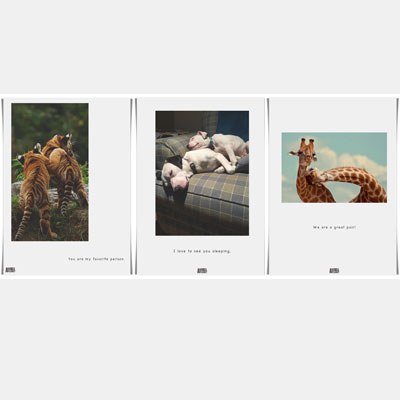
Animal Planet admirers could pick their favourite valentine card and dedicate it to their loved ones by tagging them in the comments or by sharing it on their wall heart emoticon ?#?AnimalValentineCard.
Commenting on the digital initiative, Discovery Networks EVP and GM Asia-Pacific Rahul Johri said, “Animal Planet celebrates the bond between animals and humans through it gripping content. Valentine’s Day is a great occasion to communicate this relationship and rejoice with its viewers. #AnimalValentineCard is a unique digital initiative and viewers have responded to it with supreme response.”
MUMBAI: This month, with love and romance in the air, brands bring out innovative campaigns to make emotional connect with their consumers.
Breaking away from the cliché of roses and chocolates, this Valentine’s Day, Animal Planet celebrated the most pristine form of love and together in the wilderness. Building its new digital campaign, Animal Planet connected its fans with the animal kingdom on Facebook. The channel, through its most wonderful collection of wildlife photographs invited fans to express their love.
Animal Planet admirers could pick their favourite valentine card and dedicate it to their loved ones by tagging them in the comments or by sharing it on their wall heart emoticon ?#?AnimalValentineCard.
Commenting on the digital initiative, Discovery Networks EVP and GM Asia-Pacific Rahul Johri said, “Animal Planet celebrates the bond between animals and humans through it gripping content. Valentine’s Day is a great occasion to communicate this relationship and rejoice with its viewers. #AnimalValentineCard is a unique digital initiative and viewers have responded to it with supreme response.”
NEW DELHI: Even as Facebook founder and CEO Mark Zuckerberg voiced his disappointment on the ruling by the Telecom Regulatory Authority of India (TRAI) against differential pricing and in favour of net neutrality, the social media giant has pulled the plug on its Free Basics offering in India.
Meanwhile, a recent tweet by Silicon Valley investor and a member of the Facebook Board Marc Andreessen, which was later deleted, had created controversy as he criticised India’s opposition to Free Basics.
Indian users of the net protested against the tweet comparing the opposition to Free Basics in India to anti-colonialism, which did not go well with them.
Later Zuckerberg had attempted to do some damage control when he put a post on his Facebook page disassociating from Andreessen’s views. He said the comment was “deeply upsetting and doesn’t represent the way Facebook or I think.”
Facebook has clearly been hit by the decision as it is a popular social media site in the country and was hoping to increase its presence by offering free access to services to the joining user.
In its ruling on differential pricing for data services, TRAI had said that it would impose a fine of Rs 50,000 per day for anyone violating the same with immediate effect.
NEW DELHI: Even as Facebook founder and CEO Mark Zuckerberg voiced his disappointment on the ruling by the Telecom Regulatory Authority of India (TRAI) against differential pricing and in favour of net neutrality, the social media giant has pulled the plug on its Free Basics offering in India.
Meanwhile, a recent tweet by Silicon Valley investor and a member of the Facebook Board Marc Andreessen, which was later deleted, had created controversy as he criticised India’s opposition to Free Basics.
Indian users of the net protested against the tweet comparing the opposition to Free Basics in India to anti-colonialism, which did not go well with them.
Later Zuckerberg had attempted to do some damage control when he put a post on his Facebook page disassociating from Andreessen’s views. He said the comment was “deeply upsetting and doesn’t represent the way Facebook or I think.”
Facebook has clearly been hit by the decision as it is a popular social media site in the country and was hoping to increase its presence by offering free access to services to the joining user.
In its ruling on differential pricing for data services, TRAI had said that it would impose a fine of Rs 50,000 per day for anyone violating the same with immediate effect.
MUMBAI: Retail e-commerce giant Myntra’s outdoor apparel brand The Roadster Life Co’s new TV commercial hit the airwaves recently after it went viral on social media over the last week.
This film has been conceptualised, produced and shot by Brave New World Communications – a Bangalore based integrated communications agency, which had been tasked with carving out a niche for The Roadster Life Co.
The film was released on Facebook & YouTube on 27 January and has been received very positively so far. At the time of filing this story, the video was viewed more than 15 million times and shared more than 8100 times. The film was released on TV on 5 February.
The goal was to appeal to a younger audience who value experiences and are tired of the usual tourist spots. The agency’s strategic approach was single-minded: to own roads as a brand platform by positioning them as the most diverse of destinations. The claim is subtly supported by the product’s deep-design interpretation of archetypal roads, from driveable coastlines and broken paths to desert trails and forest paths.
“The challenge was to make Roadster relevant in an increasingly crowded category,” said Brave New World CEO and CCO Joono Simon. “Roadster is a young brand and social media has a powerful part to play – it was important for the commercial to establish a context for sustainable two-way conversation. Creating a sense of scale was also vital – because the backdrop of the great outdoors is our real invitation. Once you accept it, Roadster has an enabling role to play in your life.”
The film is a tip of the hat to those who follow the road to pursue unusual passions. A non-linear narrative stitches together three unique instances: a free spirit collecting his own brand of experiences along rocky coastlines, a ranger on a tiger census making her own trail through the forest, and an intrepid duo braving a desert storm to deliver relief supplies.
The underlying message is a simple one –the road is both journey and destination for those in search of unique experiences. The recently released film is the first salvo of an integrated interactive campaign for the brand.