Tag: Facebook

  • Times Now tops the chart with 116 mn views on YouTube & Facebook in October

    Times Now tops the chart with 116 mn views on YouTube & Facebook in October

    Mumbai:  Times Now has emerged as India’s most-watched English news channel on digital platforms in the news genre.

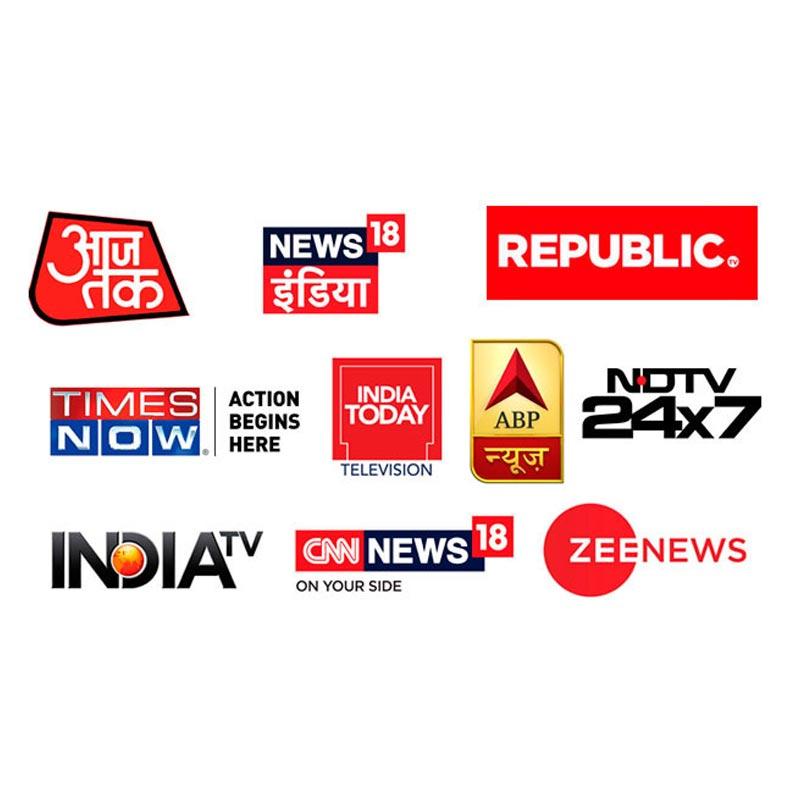
    According to a data released by Crowdtangle & Vidooly, Times Now clocked a staggering viewership of 116 million on YouTube and Facebook in October surpassing CNN-News18 (105 million), India Today (104 million), NDTV (82 million), and Republic TV (18 million). On the back of the fastest news, exclusive news breaks and most viewed prime-time shows – India Upfront and Newshour, the channel registered a phenomenal reach of over 1 billion on digital.

    Times Now claims to be a leader in the digital space with innovative content formats that seamlessly adapt to the preferences of viewers who are tech savvy, setting industry benchmarks with its distinct brand of action-oriented journalism that is firmly based on reliable, accurate, and decisive news reporting.

    According to Facebook Data, as informed by the media conglomerate, Times Now attracted over 210 million views on its digital films across Facebook, YouTube, Instagram, and Timesnownews.com with a series of digital-first videos that include comprehensive insights on every significant news topic of the day. With 2.35 million interactions, the highest number in the cohort, and a total reach of 125 million for the month of October on the platform, Facebook saw a channel with a high level of engagement.

    Times Network president & COO of digital business Rohit Chadda said, “We are overwhelmed with the viewer’s response as their preferred news destination on digital platforms. The growing reach and engagement on digital are a testament to the viewers’ trust in Times Now. Video has now become the preferred format of news consumption and will only grow further with the launch of 5G. We are committed to expanding our video coverage to cater to all cohorts of users consuming content online.”

    With a focus on in-depth, well-researched content, coupled with coverage of big-ticket events, Times Now has been expanding its digital footprint globally with over 50 per cent of views on YouTube from International markets including US, Europe and APAC regions.

  • How Influencing NFTs Are Modern Business

    How Influencing NFTs Are Modern Business

    Non-fungible tokens (NFTs) have opened up many business opportunities, allowing them to create new markets and sell previously unavailable products. That’s why businessmen and crypto traders visit this website to learn more about the status of NFTs.

    For this blog post, we’ll explore how NFTs influence modern business and how you can take advantage of their unique properties. We’ll also take a look at how NFTs can be used in various businesses and show you some of their benefits. So, if you want to stay ahead of the curve in today’s business world, read on!

    What are NFTs?

    NFTs, or “non-fungible tokens,” are a new type of cryptocurrency that allows for more complex and customizable transactions than traditional coins. They represent digital assets that can be traded, used in smart contracts, stored on a blockchain, or minted.

    Non-fungible tokens have the potential to revolutionize modern business by making it easier to create and trade custom assets. For example, a company might create a tokenized version of its equity (an NFT) that allows investors to buy and sell shares without worrying about transfers between different currencies. This could make it easier for companies to raise money through Initial Coin Offerings (ICOs) and trade their tokens on secondary markets.

    NFTs could also be used in more innovative ways beyond finance. For example, a video game developer might create an NFT called “collectible” that allows players to collect unique items within the game. This could enable gamers to share data across different games using blockchain technology, increasing the incentive for players to engage with the ecosystem as a whole.

    While some development is still required before NFTs become mainstream, their potential marks a significant shift in how cryptocurrencies are used today.

    How NFTs are being Used in Modern Business

    NFTs are quickly becoming a popular way to store and exchange data. They allow for more efficient and secure transactions than traditional methods, such as email and file sharing.

    Today, they are being used in a variety of ways by businesses around the world. For example, Airbnb uses NFTs to manage bookings and payments. Meanwhile, Facebook users may share tokens by linking their cryptocurrency wallets to their accounts.

    These applications demonstrate the many potential uses for NFTs. They can help businesses streamline their operations and make transactions more secure.

    The Benefits of Using NFTs

    NFTs have become increasingly popular in the modern business world to store and manage digital assets safely. Here are some of the benefits of using NFTs:
    ●They provide a secure way to store and manage digital assets.
    ●They allow for easy transactions between parties.
    ●They can be used to track ownership and activity over digital assets.
    ●They can help reduce costs associated with managing digital assets.

    The Challenges of Using NFTs in Modern Business

    Since the advent of blockchain technology, NFTs have been unique in representing any property, including physical items, securities, and intellectual property. Because these assets can be stored on a distributed ledger, they offer several advantages over traditional forms of business ownership.

    Because they are rare, the value of NFT is hugely higher than most tokens. Its price is affected by its utility, link with renowned or famous figures, and optimistic price forecasts.

    Despite that, NFTs have already begun to impact modern business practices. For example, one company is using them to create a decentralized marketplace for art. By creating a platform where artists can sell their work directly to buyers, this company is lowering the barriers to entry and eliminating intermediaries.

    Another use case is insurance. A company is using NFTs to provide Proof-of-Existence for insurance contracts. This provides assurance that the agreement was executed and reduces the chances it will be disputed.

    While there are many benefits to using NFTs in business, some challenges must be addressed. For example, how will companies implement trust mechanisms when dealing with assets that cannot be physically possessed? How will transactions be verified? And what legal issues will arise when using NFTs in commercial settings?

    Despite these challenges, there is no doubt that NFTs significantly impact modern business practices. As companies begin to adopt them more widely, we may see even more innovative ways in which they are used to improve efficiency and transparency across industries.

    Conclusion

    NFTs are quickly becoming an essential part of modern business. They provide a secure way for companies to transfer and manage assets and offer the potential for new revenue streams. This article has explored how NFTs are used in industry today and discusses some potential benefits. So whether you’re looking to increase security and transparency within your business or tap into new revenue opportunities, learning about NFTs is essential.

  • Whatsapp India’s Abhijit Bose and Meta India’s Rajiv Aggarwal step down

    Whatsapp India’s Abhijit Bose and Meta India’s Rajiv Aggarwal step down

    Mumbai: As part of the workforce churn that Meta is undergoing, Whatsapp India head Abhijit Bose and Meta India’s head of public policy Rajiv Aggarwal have called it a day. Noticeably, this piece of news comes close on the heels of the social media conglomerate dismissing 11,000 employees and also the move of Meta India chief Ajit Mohan to Snap.

    Furthermore, WhatsApp India’s director of public policy, Shivnath Thukral, has been appointed director of public policy for Meta India, which includes Facebook, Instagram, and WhatsApp.

    As per media reports, Meta India director of partnerships Manish Chopra said in a statement, “Thukral has been an integral part of our public policy team since 2017. In his new role, Thukral will define and lead important policy development initiatives across our apps – Facebook, Instagram, and WhatsApp – in India. We remain committed to our users in India and will continue to contribute meaningfully to the regulatory process that will enable everyone to harness the full potential of India’s digital economy.” 

    Bose took up his role at WhatsApp India in 2019. Aggarwal joined Meta India in September 2021; prior to that, he was head of public policy for Uber in India & South Asia.

    Bose announced his exit on LinkedIn, “It has been a tough week for all of our team at WhatsApp as we had to say goodbye to many amazing teammates last week. Amidst all of this, I just shared some news with our WhatsApp and India teams. It has been planned for a while.”

     “After four amazing years at WhatsApp, I have taken the call to move on from Meta. After a small break, I plan to rejoin the entrepreneurial world,” he goes on.

    Whatsapp head Will Cathcart said in a statement, as per the media, “I want to thank Bose for his tremendous contributions as our first Head of WhatsApp in India. His entrepreneurial drive helped our team deliver new services that have benefited millions of people and businesses. There is so much more WhatsApp can do for India and we’re excited to continue helping advance India’s digital transformation.”

    “Aggarwal has decided to step down from his role at Meta to pursue another opportunity. Over the last year, he has played an important role in leading our policy-led initiatives in areas such as user safety, privacy, and scaling up programmes like Goal to drive digital inclusion in the country. He has also been leading proactive engagement with critical policy and regulatory stakeholders. We are grateful for his contributions and wish him the very best for the future,” said Chopra.

  • Navi onboards MS Dhoni as its brand ambassador

    Navi onboards MS Dhoni as its brand ambassador

    Mumbai: Sachin Bansal-backed Navi has appointed cricketer MS Dhoni as its brand ambassador. MS Dhoni will be the face of Navi’s branding initiatives. The association with the iconic former team India captain strengthens the brand’s trustworthiness as it works to fulfil customer goals by providing simple, affordable, and easily accessible financial services across India.

    Navi has launched its first ad with Dhoni on Hotstar during Thursday’s India vs. England T20 semi-final match. The goal of this campaign is to promote Navi’s prompt and accessible financial services by dismantling the old and conventional ways of doing business in this sector. The campaign will initially run on social media platforms like Facebook, Instagram, and YouTube before moving on to print and out-of-home (OOH) advertising in the second phase.

    Dhoni said, “Today’s India is intelligent, aspirational, and always working toward its goal. It is crucial for billions of Indians to achieve and surpass their life goals, which is why Navi and I have teamed up to make this vision a reality. Navi’s mission is to make financial services easily accessible whenever they are needed. I am very excited about this new journey with Navi.”

    Navi Group co-founder Sachin Bansal said, “We are thrilled to introduce MS Dhoni as our brand ambassador and the newest member of the Navi family. He personifies trust, ambition, and dedication—qualities that resonate powerfully with Navi and all we stand for, making him the ideal brand ambassador. Associating with him, in my opinion, would greatly enhance the value of our brand and further our mission to provide every Indian with simple, affordable, and reliable financial services.”

  • Twitter needs to be more user friendly, improve its ad targeting, boost content curation efforts

    Twitter needs to be more user friendly, improve its ad targeting, boost content curation efforts

    Mumbai: On 27 October, Elon Musk agreed to buy micro-blogging platform Twitter. In a message to advertisers he wrote, “Twitter aspires to be the most respected advertising platform in the world that strengthens your brand and grows your enterprise.” For advertisers and agencies it is a wait and watch mode. Some feel that things should improve given that Musk is a businessperson. At the same time, who owns it is not as important as making the right moves like ensuring a brand safe environment. It also needs to be more user friendly, improve its ad targeting. There is also room for improvement in the content curation area.

    Talking to Indiantelevision.com RD&X Network co-founder & chairman Ashish Bhasin said that who owns the majority stake in Twitter does not matter. “What matters is the policies and principles that Twitter is going to follow. Who owns it does not mean much to advertisers. What they will watch to see is the policy decisions being taken, the ROI, is the editorial environment conducive to them? Are their ads appearing in the right context? That is going to be far more important than ownership.”

    He goes on to tell that there are some changes proposed and some of them look positive as well. “The proof of the pudding will rest in what happens on the ground and not in statements that are made. Hopefully the changes will keep in mind the interests of brands and advertisers.” He noted that Twitter, if used properly, can lead to superb ROI. He, however, added that the lion’s share of digital advertising goes to Google and Facebook. Twitter is not in that league. “But it is an important medium for certain types of brands or certain objectives that brands may have. It can be a very powerful tool if used properly.

    “But from an advertisers point of view once the noise dies down one has to see the long run ROI as well as brand safety issues around editorial and freedom of speech. This is what brands are waiting to see before taking further long term decisions. But it can be pretty effective if used properly. With a relatively small sum of money you can get very powerful returns. You can reach a certain consumer base very quickly by using top of the mind issues,” Bhasin added.

    He points out that brand safety issues affect other digital platforms also, besides Twitter. Tech, in his opinion, can solve issues like fake news, inappropriate content, trumped up figures pertaining to viewership visibility. “This is an industry wide issue that needs to be tackled. Tech giants have the best of brains, sufficient resources and are cash rich to figure out a way to tackle this in the long run. Only the use of technology will be the solution. It cannot be done manually. The problem is too big and widespread.”

    Bhasin explains that the area of balancing free speech with content moderation has to be navigated very carefully. “You do not want to go too much to one side. Content that is obviously inflammatory or is promoting something illegal is about misuse of media, not about free speech.” He added that recognising diversity of India will be important for platforms like Twitter. It is a matter of how much a priority regional languages will be for Twitter. Mediums that want to exploit the full potential of India cannot restrict themselves to only English. “If they do then they will play only in a niche. Some platforms have adapted better than others to regionalisation,” he notes.

    Since Twitter is instantaneous it will have to be careful to follow all the rules, regulations and laws of the land. “It can go viral in a very short period of time. Therefore it is the responsibility of the platform to make sure that it is not being unfairly exploited by certain people. The government is coming out with more laws for social media platforms and following them will be key,” he brings out.

    Kurate Digital Consulting senior partner Uday Sodhi said that Twitter needs to scale and get in young audiences. It also needs to work on reducing fake profiles. “I’m sure it works as a good platform for brands but in India it is small compared to other social media platforms/ Facebook and Google.” He also noted that with all the politics and hatred in the country, brand safety could be an issue. “Also consumer information is very limited to run anything targeted at a group of consumers.” On whether Elon Musk can bring in Gen Z audiences he said that it is a wait and watch situation.

    Musk had also tweeted, “Twitter obviously cannot become a free-for-all hell-scape, where anything can be said with no consequences!” NOFILTR.Group partner chief marketing officer Hitarth Dadia meanwhile said that he is very excited about Musk owning it. “There are not a lot of billionaires who are relatable. Musk is extremely relatable. Platforms need a good shakeup every now and then for people to care about them. More people will take Twitter seriously.”

    Meanwhile dentsuMB India managing partner Indrajeet Mookerjee said that with the transition of Twitter moving to its new owner, it is certain for the platform to evolve in terms of technology and functionality. “Apart from dismissing key executives, a couple of changes we can expect from this transition are – monetisation, gaming, and a window to innovative advertising avenues. It would be interesting to see how brands leverage these changes innovatively to play it to their advantage.”

    In terms of Twitter’s goal to be the most respected ad platform, he noted that it surely isn’t easy to be so overnight and it would be a long journey for the platform to achieve it. “It is apparent that the platform is currently focusing on preventing the outflow of power users.”

    Shedding light on the role it plays in a digital marketing mix Mookerjee said that an effective way to incorporate this medium into the brand’s marketing plan is by using it as a top of funnel approach.” As a social platform, Twitter lends itself excellently to achieving the first two phases of the funnel that is awareness and consideration for B2B and B2C campaigns.

    “With a whopping 450 million monthly active Twitter users, the platform gives large and small businesses direct reach and avenues to engage with their target audience at their fingertips. Today, brands have capitalized on this by using Twitter as a tool to create interesting content that not only captures the audience’s attention but also draws them into having a conversation,” he states.

    He added that with over 500 million tweets daily, the platform is cluttered with micro-content that’s shared every minute. “However, it is this real-time engagement that continues to keep brands relevant and interact with their online community.”

    Social network for Web 3.0 influencers, educators, and artists Soclly co-founder Prayag Singh noted that some changes in Twitter are already being seen. The first is the cutting down on the workforce. “Sometimes you do not want to do it but it is mandatory for a long term goal. A lot of tech companies are cutting back.” Secondly is the platform’s move to diversify revenue streams beyond advertising. Hence the subscription fee of eight dollars a month for the blue tick verification. Thus there will also be more web 3 adoption. Musk supports Dogecoin.”

    So in the future there could be integration of this cryptocurrency into Twitter. Another move he feels will happen will be a more thorough investigation before an account is suspended. “You will see a more in-depth analysis of things.” He also expects Gen Z and millenials to have a more active presence on Twitter and share their thoughts. He expects challenges and changes to happen in terms of how brands showcase their presence on Twitter moving forward. He also thinks that Twitter Vines may return. This is short form video like Instagram Reels.

    Meanwhile Wing Communications CEO & founder Shiva Bhavani is very clear on what Twitter needs to do to be the most respected digital ad platform. “Twitter needs to provide more value to advertisers than any other platform. This means offering the best targeting options, the most effective ad formats, and the most insightful data. Twitter also needs to continue to invest in its ad product so that it remains at the cutting edge of digital advertising.”

    According to him, Twitter needs to be more user-friendly. “Twitter is notoriously difficult to use for beginners, and even experienced users can find the interface confusing and overwhelming. The platform needs to streamline its design and make it more intuitive to use.”

    Bhavani also feels that the social media company needs to improve its ad targeting: “Twitter’s ad targeting options are currently very basic, which makes it difficult for advertisers to reach their target audience. The platform needs to offer more detailed targeting options so that advertisers can better target their ads.”

    He is of the view that Twitter needs to do a better job of curating content. “Twitter is full of spammy and low-quality content, which can make it hard for users to find the good stuff. The platform needs to do a better job of curating its content so that users can easily find the best tweets.”

    When asked about the impact of a new owner Bhavani noted that one could see a lot of changes happening on Twitter under Musk. “For one, he could bring some much-needed innovation to the platform. He might also make some major changes to the way the content and things are displayed, or even get rid of them altogether”. 

    “And, of course, he could also add some new features that we can’t even imagine right now. Whatever happens, it’s sure to be interesting – and we can’t wait to see what Twitter looks like under Musk’s ownership,” he says further.

    At the same time, though, Bhavani noted that Twitter is a challenging platform for brands due to the amount of noise. The average person is exposed to over 34 GB of data per day, and that number is only increasing. In order to stand out, brands need to be strategic about their content and how they engage with their audience. 

    He suggests a few ways to cut through the noise on Twitter:

    1.      Use hashtags strategically: Hashtags are a great way to help your tweets get seen by more people. But don’t just use any old hashtag – make sure it’s relevant to your brand and your message.

    2.      Engage with influencers: Twitter is all about relationships. If you can build relationships with influencers in your industry, they can help amplify your message and reach a larger audience.

    3.      Be timely: Timing is everything on Twitter. Make sure you’re tweeting when your audience is most active, and you’re more likely to get seen.

    Bhavani pointed out that as more and more brands join Twitter, the question of how effective the platform is for them becomes increasingly relevant. “While there are many potential benefits to using Twitter as a marketing tool, including increased visibility and reach, it’s important to consider how well the platform aligns with your goals and objectives.”

    “For example, if you’re looking to use Twitter to drive website traffic or generate leads, you’ll need to make sure your content is optimised for these goals. The same goes for if you’re hoping to build brand awareness or create a strong connection with your audience – your tweets should be tailored accordingly,” he reveals.

    “Of course, no matter what your goal is, it’s essential to tweet regularly and interact with other users on the platform. The more active you are, the more likely you are to achieve success with Twitter,” he says.

    So, how effective is Twitter as a tool for brands? Bhavani elucidates, “It depends on what your goals are and how well you utilize the platform. With that said, there’s no doubt that Twitter can be a powerful marketing tool – it just takes some strategic planning and execution.”

    He goes on to add that Twitter has become an increasingly popular platform for businesses and individuals alike. As a result, many companies are now using Twitter as part of their digital marketing mix.

    So what role does Twitter play in the digital marketing mix? Bhavani mentions a few key ways that Twitter can be used to help achieve marketing objectives:

    1. Increasing brand awareness and reach: With over 500 million active users, Twitter provides businesses with a massive potential audience. By regularly tweeting interesting and relevant content, businesses can quickly grow their follower base and increase their brand visibility, he explains.

    2  Generating leads and sales: Twitter can also be used as a powerful lead generation tool. By sharing offers, coupons, or other incentives, businesses can encourage users to click through to their website or make a purchase, he noted.

    3. Building relationships and engaging with customers: In today’s digital world, customers expect brands to be responsive and engaged on social media. By actively listening to and responding to customers on Twitter, businesses can build strong relationships with their target audience.

    4. Providing customer service: Customers also increasingly expect brands to provide customer service via social media platforms such as Twitter. “By monitoring mentions of your business, you can quickly respond to any customer queries or concerns, helping in better customer satisfaction and engagement,” he says.

  • Meta India head Ajit Mohan calls it quits

    Meta India head Ajit Mohan calls it quits

    Mumbai: Meta India country leader Ajit Mohan has decided to move on. His resignation comes into immediate effect. Reports suggest that he is all set to join Snap, the social media company.

    Mohan had joined Meta (the erstwhile Facebook) as the managing director for the India market in January 2019. He was preceded by Umang Bedi who quit in October 2017.

    Prior to Meta, Mohan was chief executive officer of Star India’s (now Disney Star’s) video streaming service Hotstar for four years.

    As per reports, Meta vice president of global business group Nicola Mendelsohn said in a statement, “Mohan has decided to step down from his role at Meta to pursue another opportunity outside of the company.”

    “Over the last four years, he has played an important role in shaping and scaling our India operations so they can serve many millions of Indian businesses, partners and people. We remain deeply committed to India and have a strong leadership team in place to carry on all our work and partnerships. We are grateful for Mohan’s leadership and contribution and wish him the very best for the future.” he added.

  • Tourism Australia’s new ad campaign invites India, the world to come and say G’day

    Tourism Australia’s new ad campaign invites India, the world to come and say G’day

    Mumbai: With the Twenty20 World Cup currently taking place in Australia, the eyes of cricket fans in India are down under. Looking to capitalise on this momentum, Tourism Australia has created a live-action short film with CGI animated characters. The short film, G’day, is part of a new global tourism campaign inviting international travellers, including those in India, to come and say G’day, and plan and book an Australian adventure of their own. Directed by Australian director Michael Gracey (The Greatest Showman) and produced by Finch, G’day, the short film shows the unlikely adventure of a plush souvenir kangaroo named Ruby, voiced by Australian actor Rose Byrne, and a toy unicorn, Louie, voiced by actor Will Arnett.

    The short film follows Ruby and Louie as they ‘break out’ of a gift shop on the Great Barrier Reef and take an incredible adventure around Australia, visiting iconic sites including Sydney Harbour, Melbourne’s laneways, and stunning natural landscapes like Uluṟu and Nitmiluk Gorge. Along the way, they explore the magnitude of travel experiences Australia has to offer, connect with Australia’s Indigenous cultures, and learn why every great adventure starts with the unmistakably Aussie greeting, “G’day!”

    The campaign can be seen on YouTube, Meta’s properties Facebook and Instagram, and on other programmatic video platforms. The goal is to target high-yield travellers.  On 9 November, the campaign will launch on the OTT platform Disney+Hotstar for a one-month period. This deal could be extended. OOH and in-cinema advertising will also be used. Billboards across Mumbai, Delhi, and Bengaluru are being used. Print is also being used. For now, television is not being used.

    The campaign video is the first iteration of a campaign that will run for three years. In terms of marketing, 10 influencers from India have been taken down. They will see the India versus Pakistan clash on Sunday at the MCG and will partake in a variety of activities. They will create content around it for their followers to consume and promote Melbourne and Australia as a destination. Tourism Australia has also taken 20 travel agents to the country for the T20 World Cup. On the ground, there will be Ruby On Tour roadshows across seven cities in India next month and in December.

    The campaign video will be edited into nine minutes, one minute thirty seconds, and fifteen seconds. In some markets, like Japan, the campaign is being fine tuned through the use of local talent. Tourism Australia added that visitor arrivals from India have reached 86 per cent of pre-covid in the April-August 2022 period compared to the same period in 2019. The aim is to go to 100 per cent in the coming few months. Earlier, Tourism Australia had set a target of 18,000–20,000 visitor arrivals from the country to see the T20 World Cup. While the International Cricket Council (ICC) will officially reveal visitor figures at a later date, Tourism Australia is confident that its target will be achieved. The marketing programme is pretty robust, it added.

    In fact, visa processing is still going on for Indians who want to travel to see Sunday’s clash between archrivals India and Pakistan. In the long run, the goal is for one million Indians to visit Australia each year by 2030. For that to happen, direct aviation capacity will have to rise fourfold at least. In 2019, the number was 4,00,000. Moreover, since Australia re-opened its borders and commercial flights restarted, India has been the number two market. Earlier, it was number seven. Australia’s neighbouring country, New Zealand, is the number one market. Singapore, the UK, and the US round out the top five markets. China was earlier number one in terms of visitors to Australia, but it has been badly affected by the pandemic.

    Tourism Australia MD Phillipa Harrison said, “Come and Say G’day is unashamedly and unmistakably Australian. After a challenging time around the world, our uplifting and joyful campaign will stand out in what is a highly competitive international tourism market.”

    The campaign activity will be further amplified by partnership activity with airlines, state tourism organisations, and key distribution partners, including Thomas Cook, SOTC, PickYourTrail, and Kesari Tours, among others.

    G’day, Indigenous cultures and peoples are at the heart of the story, and their warmth can be felt throughout, explains tourism in Australia. The musical score, written by Australian composers Jonathan Dreyfus and Amy Andersen, features Indigenous Australian musicians including William Barton, Frank Yamma, the Marliya Gondwana Indigenous Girls Choir, and the Iwiri Choir. Notably, the film features a fresh new cover of the classic Aussie song Down Under, which was produced in collaboration with Men At Work’s Colin Hay for the campaign and film.

    Harrison concluded, “Another hero of the campaign is the remake of the Australian classic song Down Under by up-and-coming Australian band King Stingray, who sing in both English and Yolŋu Matha, an Indigenous language from northeast Arnhem Land in the Northern Territory.”

    Tourism Australia regional GM South, South East Asia Brent Anderson said, “ The campaign is a genuine, warm Aussie welcome. It is about how the world sees us. What is appealing about us? We did a huge amount of research during COVID. Ruby is an absolute icon that cannot be used by any other country in the world. She comes through really quickly in the advertising. India, among other South and Southeast Asian (SSEA) markets have been critical in Australia’s recovery and I’m really excited to reveal our new campaign to inspire even more Indian travellers to explore Australia. Through Ruby and Louie’s adventures, we are inviting travellers to Come and Say G’day – where they can build new authentic connections with friendly Australian locals and communities, our incredible nature, wildlife, islands and beaches, and enjoy our delicious food and drink. We are ready and can’t wait to welcome back our valued travellers from India. We are excited to announce that we have Qantas as our major airline partner across multiple markets, including here in India. You might see Ruby hopping on a Qantas plane in the near future.”

    With issues like stagflation, inflation, the Russia-Ukraine crisis, and interest rates going through the roof, the world is a bit messed up. The world is a strange place. It needs a bit of laughter, lightness, beautiful scenery, and wide open spaces. That is the result of research conducted. Tourism Australia, he explained, studied what people look for in a vacation. Therefore, in the campaign, one sees things like wide open spaces. He said the campaign also focuses on the indigeneous experience. He added that the reason why India is the fastest growing market for Tourism Australia is that the Indian team pushes hard. There is also healthy competition from the Singapore team.

    He also noted that the department of home affairs’ personalised and streamlined visa services offered for corporate incentive travel and the ICC’s official travel and hospitality agents will ensure sustained growth when it comes to MICE arrivals as well as for the on-going T20 World Cup. There has also been a tripling of direct aviation capacity. Besides India the other markets that Tourism Australia invests money in include Singapore, Malaysia, Indonesia, Japan, South Korea, Hong Kong, Germany, France, Italy, the UK, the US and New Zealand.

  • Devdatta Potnis parts ways with Cosmos-Maya

    Devdatta Potnis parts ways with Cosmos-Maya

    Mumbai: After a ten-year partnership during which time the company grew steadily, Devdatta Potnis, the current chief growth officer, has announced his decision to leave Cosmos-Maya.

    Dev joined the studio as head of sales in 2011 and was instrumental in getting the animation studio’s first domestic IP, Motu Patlu, off the ground. The show is celebrating its ten-year milestone this year. In 2015, he planned another strategic move, diversifying the studio’s revenue streams by establishing one of the biggest digital kids’ networks globally, WowKidz, which has over 90 million subscribers worldwide across YouTube and Facebook. With Dev at the helm, the studio went on to produce a multitude of shows with leading kids’ broadcasters in India including Nickelodeon, Disney, Cartoon Network, Sony, Discovery and also cemented bonds with all the key OTT players like Amazon Prime Video, Netflix, Voot, Zee5 and Disney+ Hotstar among others.

    After this domestic success, the studio set its sights on international markets overseen by Dev. He placed Cosmos-Maya on a structured growth path across the European, Asian, and North American markets, and became the face of the animation studio globally. It was thanks to these consistent efforts, that the studio grew from 30 people to 1200+ artists & the coveted private equity investment came into the animation business, first with KKR backed Emerald Media in 2018 and then with TPG affiliate NewQuest Capital Partners in 2021. According to media reports, the company has grown phenomenally in the last decade, from one Indian series in 2012 to a market leadership position in India with a valuation of more than 90 million USD. Dev was a key architect in these endeavours.

    “It has been a pleasure working with this incredible company, Cosmos-Maya, and I thank the founders, Ketan Mehta, Deepa Sahi and Anish Mehta, who gave me the opportunity to grow this company, plan its strategic direction, and take it to the stage where it is now India’s #1 animation studio. I owe a lot of my professional expertise and development to Cosmos-Maya and the team, who will always be special to me, personally and professionally. I wish them all the best for the future,” said Potnis.

    Dev’s next move will be announced soon.

  • Comscore ranks India Today Group at No.1 in video news streaming

    Comscore ranks India Today Group at No.1 in video news streaming

    Mumbai: As the nation’s top multi-platform news outlet and the provider with the highest digital viewing reach for streaming news platforms according to Comscore, India Today Group has persevered in outshining the competition on its relentless journey.

    As per the Comscore Videometrix MultiPlatform Report for July 2022, the media giant tops the rankings list with a digital viewership of 98,600 in the streaming video attribute of the news/information streaming ranked category.

    This development showcases the group’s focus on constantly innovating and servicing its trusted viewership base in the digital ecosystem.

    The India Today Group’s enormous success can be attributed to its strategy of emphasising video, being strong on mobile, and making sure it has a strong social media presence and ranks at the top of YouTube, Facebook, Instagram, and Twitter.

    In the Comscore Videometrix MultiPlatform Report for July 2022, the India Today Group tops the charts by over 15,000 points, beating Times Internet (83,000), Network18 (79,000), and ABP News on YouTube (73,000) by a distance.

    The group’s multiplatform products have had enormous success, which can be credited to its strengths in mobile, video, and social media, and to being the most popular brand on YouTube, Facebook, Instagram, and Twitter.

  • Panasonic launches #India’sTrulySmartWashingMachine with digital campaign

    Panasonic launches #India’sTrulySmartWashingMachine with digital campaign

    Mumbai: Panasonic Life Solutions India (PLSIND), a leading diversified technology company launched a new line-up of India’s truly smart washing machines this festive season. Powered by Panasonic’s connected living platform – Miraie, the new range of top-load smart washing machines come with unique smart features along with premium design.

    To create awareness about the new range of Miraie top load washing machines, Panasonic has launched a holistic digital marketing campaign #India’sTrulySmartWashingMachine, bringing back the iconic Gupta Ji, across all Panasonic India handles on Instagram, Youtube, Facebook, Twitter, and LinkedIn to engage consumers. With the entire world switching to smarter technologies, it’s time washing clothes get smarter too. Panasonic Washing Machines loaded with a host of interesting features like Built-in Heater, Wash Wizard & Stain Genius, powered by Miraie, are making the chore of washing clothes truly smart and effortless.

    Conceptualized and executed by Dentsu Creative, the digital campaign is a series of short films where the protagonist Naveen introduces Gupta Ji to a smarter way of washing clothes. A quirky banter between the protagonists highlights the features of the washing machine in a fun and interesting manner. Panasonic’s truly smart washing machines not only remove the toughest of stains with Stain Genius and Wash Wizard feature but also keeps one’s clothes germ-free with its in-built heater technology. 

    The new models of this range of washing machines come in multiple capacities ranging from 6.5 kg, 7kg to 8 kg starting at Rs 19,690, and are available at all Panasonic brand shops, large format retail outlets across the country, and online platform Amazon. 

    Commenting on the launch, Panasonic Life Solutions India business head – home appliances Sandeep Sehgal said, “Our exclusive consumer insight study tells us that Indian consumers seek enhanced product experience that can make daily life chores easier and efficient, and 81 per cent are willing to pay a bit extra for connected features. The insight study further tells us that over 50 per cent of consumers aspire to the idea of connected living with comfort, convenience, and safety being the top reasons. Our latest range of Miraie-enabled top-load washing machines offers smart features such as customized wash cycles, scheduled wash programs, and built-in heater technology for a sanitized washing experience. We are aiming for a 30 per cent growth in the washing machine segment in FY 2022-23.”

    Talking about the campaign, Panasonic Life Solutions India head- brand & marketing communications Shirish Agarwal said,“Panasonic as a brand is committed towards helping consumers live their best by aiding them with the right choices customised as per their lifestyle. The digital campaign is an extension of this. It depicts the true, slice of life moments of an Indian household, on how we struggle to remove stubborn stains using various home remedies. It goes on to highlight how technology can be the key enabler for a clean and fresh laundry. Panasonic’s latest range of smart washing machines are designed with advanced technologies that offer a value proposition of comfort, convenience and connectivity.”