Tag: Facebook

  • Dice Media unveils Little Things’ third episode

    Dice Media unveils Little Things’ third episode

    MUMBAI: Dice Media has released its third episode titled ‘Good Night’ of its new original web series, Little Things. The 5-episode romantic comedy web series beautifully portrays the little things in the life of an everyday couple starring Mithila Palkar, one of the most popular digital stars in India today, and the talented writer-actor Dhruv Sehgal. 

    Good Night unfolds the incident of a sleepless night of the duo. Thanks to the mosquitoes, this night turns into a discovery of Kavya’s ex-boyfriend getting married and a long conversation about exes follows. Every relationship has some sort of power struggle in it, and Dhruv and Kavya’s is no different.  Will Dhruv realize the importance of Kavya in his life? Watch the episode to find out how Dhruv and Kavya value each other’s existence in their lives.

    The 5-part series is directed by Ajay Bhuyan, written by Dhruv Sehgal, with music by Neel Adhikari. Little Things will release every Wednesday on Dice Media’s Facebook and YouTube pages. All the episodes can be watched at 

    Released on Oct 26, following is the stunning response received for the series so far: 

    · Episode 1 has already crossed 2.2 million views (>1.2 million on YT, >1 million on FB) with over 19k shares and 4,700 comments.

    · Episode 2, which released five days back, has already received 2 million views (~1 million on YT, >1 million on FB) with over 13k shares and 3,500 comments.

    Pocket Aces conceptualizes, creates, and distributes engaging original content for millennial audiences through its channels Dice Media (sketches and web-series), FilterCopy (sharable and snackable short-form content), and Gobble (everything food). 

    Dice has created several experimental and edgy pieces of content such as the satirical sketch, Ban Ban, India’s first mockumentary series Not Fit, and most recently, an absurd-humour sketch titled Offline.

  • FB, Google’s biz approach that of a media content company: GroupM chief

    FB, Google’s biz approach that of a media content company: GroupM chief

    MACAO: When the hundred billion dollar man, GroupM Global Chairman Irwin Gotlieb, says that the role of the media is to create content, it’s time to take notes. When he opines that Facebook and Google are tech companies whose “business approach is that of a media company” that relies on content, it’s more the reason that one should seriously relook at content creators and business strategies.

    It’s inevitable that Facebook and Google will get more seriously into content creation, Gotlieb said here, adding that it may not be a very healthy trend considering the power that such companies wield in the digital realm today.

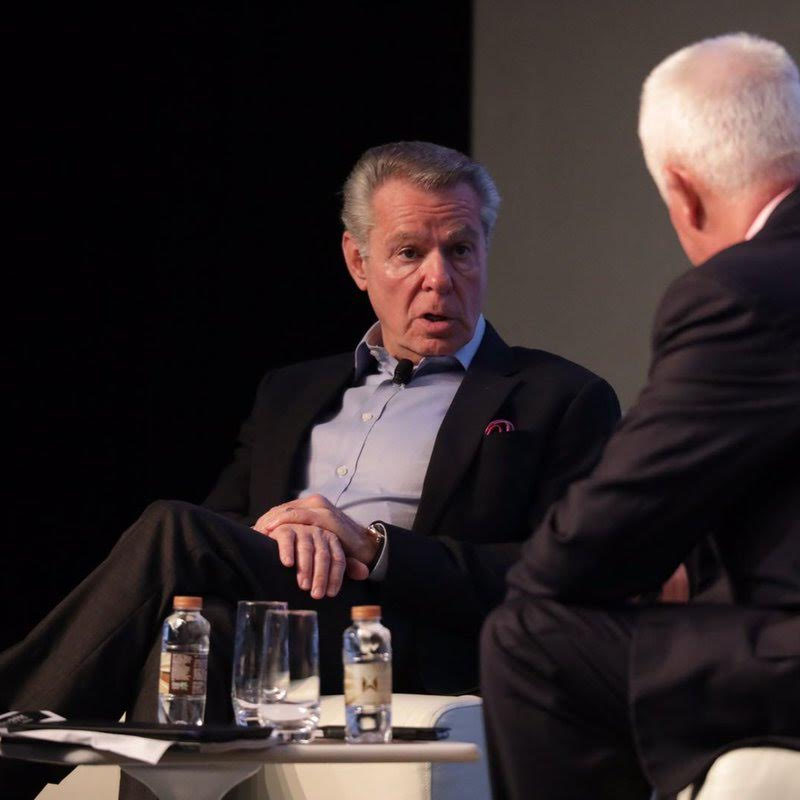
    Speaking to former CASBAA Chairman Marcel Fenez during the Opening Keynote at CASBAA Convention 2016 here on Tuesday, Gotlieb held forth on varied media industry trends, including holding the view that the AT&T-Time Warner type of mergers (yet to be ratified by US regulator) are “just tip of the iceberg” in vertical integration, which can take interesting turn as FB and Google seriously get down to such M&A activities.

    To buttress his argument Gotlieb said that Google had already started a division to create content to target consumers, while it may be a matter of time before FB also follows the same path. It’s “kind of “inevitable” that both these companies move into content creation too, which may pose a challenge to other industry stakeholders, the GroupM chief said.

    Pointing out that both these tech giants were “walled gardens and very protective of the data they have”, Gotlieb, who as the GroupM chief is responsible for generating approximately US$ 100 billion in annual global ad sales, said it may not be a very healthy trend as people need to “see across them to target properly (consumers) to maximise client investments.”

    “In the absence of big ideas…it (data) allows us to reach and understand the consumer better,” Gotlieb said, adding, while replying to another question, the measurement of TV as “we understand today is understated as there are alternate devices (to consume media)” available with consumers.

    Holding forth on the changing nature and measurement of viewing behaviors, Gotlieb also touched upon how ways to reach audiences via the marketing funnel is the same but a granularity of data can help decision-making for each stage of the funnel.

    He underscored how media will continue to play a role and become more targetable, addressable and, eventually, part of the transaction process.

    Meanwhile, after Gotlieb had set the trend for the opening day of the CASBAA Convention here, Pricewaterhouse Coopers MD Oliver Wilkinson provided statistics to illustrate that pay TV was not dead despite what the headlines screamed and that it remained a primary form of entertainment.

    Still, with digital players increasingly encroaching on the turf of pay TV, content and channel providers should look to diverse their business models and offerings, Wilkinson said.

    Doing deals in China was the topic for Bennett Pozil, EVP of East West Bank. He discussed the migration of content both ways as well as some of the pros and cons of doing business in China.

    Vivek Couto, Executive Director at Singapore-based market research company Media Partners Asia, flagged the rise of digital players with the forecast that pay TV growth would slow to about 3 per cent as content providers were looking to establish more direct to consumer offerings. However, he admitted that in some markets in Asia like India players had invested heavily in traditional TV infrastructure.

    Reaching a vast audience through tailored video and gaming content was the topic for Chad Gutstein, CEO of Machinima, who highlighted that their most valued content was when viewers felt they had a connection to the creation of it.

    James Schwab, Co-President of VICE, discussed how their local content policy over digital channels has helped the company grow exponentially over the last few years. The recent move into TV was important for the company as it gave them the ability to invest more in content.

    Localized and Asian content was flagged by Henry Tan, COO of Astro, for being one of the main drivers that has seen the provider defy the trend of decline in time spent on TV and reporting healthy growth in this respect. A true understanding of the complexities of the Malaysian audience demographic was key to content that worked for Astro’s market, he said.

    Piracy, online or otherwise, cropped up in conversations throughout the day with opinions polarized on whether this would continue to be an issue.

    In a session devoted to the subject of content piracy, Avigail Gutman, Programme Director, Operational Security, Cisco, advised that the industry needed to “follow the money” in combating piracy. Lucia Rangel, VP Latin America, Asia Pacific & Worldwide, Game Strategy and Operations, Warner Bros. agreed the problem was global and that `ISD boxes’ formed a critical part of the problem as many consumers were not even aware of the illegality of these and other streaming mechanics. A global effort was needed to fight the pirates, Rangel commented.

    Desmond Chan, Deputy GM, Legal and International Operations, TVB, highlighted the tangible impact piracy had already made to their business, while Nickhil Jakatdar of Vuclip talked about how the content provider’s strategy was to provide a better experience than that available from pirate outfits.

  • FB, Google’s biz approach that of a media content company: GroupM chief

    FB, Google’s biz approach that of a media content company: GroupM chief

    MACAO: When the hundred billion dollar man, GroupM Global Chairman Irwin Gotlieb, says that the role of the media is to create content, it’s time to take notes. When he opines that Facebook and Google are tech companies whose “business approach is that of a media company” that relies on content, it’s more the reason that one should seriously relook at content creators and business strategies.

    It’s inevitable that Facebook and Google will get more seriously into content creation, Gotlieb said here, adding that it may not be a very healthy trend considering the power that such companies wield in the digital realm today.

    Speaking to former CASBAA Chairman Marcel Fenez during the Opening Keynote at CASBAA Convention 2016 here on Tuesday, Gotlieb held forth on varied media industry trends, including holding the view that the AT&T-Time Warner type of mergers (yet to be ratified by US regulator) are “just tip of the iceberg” in vertical integration, which can take interesting turn as FB and Google seriously get down to such M&A activities.

    To buttress his argument Gotlieb said that Google had already started a division to create content to target consumers, while it may be a matter of time before FB also follows the same path. It’s “kind of “inevitable” that both these companies move into content creation too, which may pose a challenge to other industry stakeholders, the GroupM chief said.

    Pointing out that both these tech giants were “walled gardens and very protective of the data they have”, Gotlieb, who as the GroupM chief is responsible for generating approximately US$ 100 billion in annual global ad sales, said it may not be a very healthy trend as people need to “see across them to target properly (consumers) to maximise client investments.”

    “In the absence of big ideas…it (data) allows us to reach and understand the consumer better,” Gotlieb said, adding, while replying to another question, the measurement of TV as “we understand today is understated as there are alternate devices (to consume media)” available with consumers.

    Holding forth on the changing nature and measurement of viewing behaviors, Gotlieb also touched upon how ways to reach audiences via the marketing funnel is the same but a granularity of data can help decision-making for each stage of the funnel.

    He underscored how media will continue to play a role and become more targetable, addressable and, eventually, part of the transaction process.

    Meanwhile, after Gotlieb had set the trend for the opening day of the CASBAA Convention here, Pricewaterhouse Coopers MD Oliver Wilkinson provided statistics to illustrate that pay TV was not dead despite what the headlines screamed and that it remained a primary form of entertainment.

    Still, with digital players increasingly encroaching on the turf of pay TV, content and channel providers should look to diverse their business models and offerings, Wilkinson said.

    Doing deals in China was the topic for Bennett Pozil, EVP of East West Bank. He discussed the migration of content both ways as well as some of the pros and cons of doing business in China.

    Vivek Couto, Executive Director at Singapore-based market research company Media Partners Asia, flagged the rise of digital players with the forecast that pay TV growth would slow to about 3 per cent as content providers were looking to establish more direct to consumer offerings. However, he admitted that in some markets in Asia like India players had invested heavily in traditional TV infrastructure.

    Reaching a vast audience through tailored video and gaming content was the topic for Chad Gutstein, CEO of Machinima, who highlighted that their most valued content was when viewers felt they had a connection to the creation of it.

    James Schwab, Co-President of VICE, discussed how their local content policy over digital channels has helped the company grow exponentially over the last few years. The recent move into TV was important for the company as it gave them the ability to invest more in content.

    Localized and Asian content was flagged by Henry Tan, COO of Astro, for being one of the main drivers that has seen the provider defy the trend of decline in time spent on TV and reporting healthy growth in this respect. A true understanding of the complexities of the Malaysian audience demographic was key to content that worked for Astro’s market, he said.

    Piracy, online or otherwise, cropped up in conversations throughout the day with opinions polarized on whether this would continue to be an issue.

    In a session devoted to the subject of content piracy, Avigail Gutman, Programme Director, Operational Security, Cisco, advised that the industry needed to “follow the money” in combating piracy. Lucia Rangel, VP Latin America, Asia Pacific & Worldwide, Game Strategy and Operations, Warner Bros. agreed the problem was global and that `ISD boxes’ formed a critical part of the problem as many consumers were not even aware of the illegality of these and other streaming mechanics. A global effort was needed to fight the pirates, Rangel commented.

    Desmond Chan, Deputy GM, Legal and International Operations, TVB, highlighted the tangible impact piracy had already made to their business, while Nickhil Jakatdar of Vuclip talked about how the content provider’s strategy was to provide a better experience than that available from pirate outfits.
  • A-Pac region leads in ad revenue growth for FB in Q3-16

    A-Pac region leads in ad revenue growth for FB in Q3-16

    BENGALURU: Facebook Inc., (Facebook) advertisement revenue increased 58.5 percent year-on year (y-o-y) for the third quarter ended 30 September 2016 (Q3-16, current quarter) at $6,816 million as compared to $4,299 million in Q3-15. Like the previous quarter, Advertisement revenue growth in percentage terms was led by the A-Pac (63.8 percent growth) and US and Canada (61.8 percent growth) regions. Ad revenue share by geography in Q3-16 was: US and Canada –50.3 percent; Europe – 22.9 percent, A-Pac 16.7 percent and Rest of the world (ROW) 10 percent.

    Facebook reported 55.8 percent growth in total revenue at $7,011 million as compared to $4,501 million in the corresponding quarter of the previous year.The social media giant’s net income in Q3-16 almost tripled (by 2.86 times) year-on-year (y-o-y) to $2,055 million, as compared to $719 million in Q2-15.

    Growth in revenue in percentage terms was also led by growth from the the A-Pac (63.8 percenty-o-y growth) US and Canada (61.8 percent y-o-y growth) geographical regions. A major share of Facebook’s revenue (50.8 percent) came from the US and Canada region, while the A-Pac region contributed 16.5 percentto revenue in Q3-16. Europe’s contribution to Facebook revenue was 22.9 percent and ROW contributed 9.9 percent during the same period.

    “We had another good quarter,” said Facebook founder and CEOMark Zuckerberg. “We’re making progress puttingvideo first across our apps and executing our 10 year technology roadmap.”

    Please refer to Fig 1 for Facebook’s revenue and Fig 2 for Facebook’s advertisement revenue breakup by geography below.

    It is evident from Fig 2 below that the share of advertising revenue from US and Canada, and A-Pac regions has been increasing, while share of revenue from Europe and ROW has been declining, though since Q2-16, revenue share from the ROW has shown a slight resurgence.

    Facebook’s daily average users (DAU) increased 17.5 percenty-o-yin the current quarter to 1,179 million as compared to 1,007 million in Q3-15. For the current quarter, A-Pac (22.7 percenty-o-y growth) and the ROW (22.4 percenty-o-ygrowth) regions lead DAU growth in percentage terms. In Q3-16 DAU from US and Canada grew by 6.6 percenty-o-y, while Europe DAU grew 9.9 percenty-o-y. Please refer to Fig 3 below.

    The proportion of people logging on to Facebook on their mobiles has grown to 92.5 percent in the current quarter as compared to 88.2 percent in Q3-15 and 91.6 percent in the immediate trailing quarter (Q2-16).

    Mobile DAU’s in Q3-16 have increased 22 percent y-o-y to 1,091 million as compared to 894 million in Q3-15. Please refer to Fig 3 below.

    ARPU

    Facebook’s worldwide average revenue per user (ARPU) in the current quarter was $4.01 as compared to $2.97 in Q3-15 and $3.82. in Q2-16. The US and Canada regions lead in terms of ARPU by far. ARPU for the US and Canada region was $15.65, $10.65 in Q3-15 and $14.34 in Q2-16. Corresponding numbers for other regions for Q3-16 were Europe $4.72; A-Pac $1.89; ROW $1.21. Please refer to Fig 4 for ARPU details.

  • A-Pac region leads in ad revenue growth for FB in Q3-16

    A-Pac region leads in ad revenue growth for FB in Q3-16

    BENGALURU: Facebook Inc., (Facebook) advertisement revenue increased 58.5 percent year-on year (y-o-y) for the third quarter ended 30 September 2016 (Q3-16, current quarter) at $6,816 million as compared to $4,299 million in Q3-15. Like the previous quarter, Advertisement revenue growth in percentage terms was led by the A-Pac (63.8 percent growth) and US and Canada (61.8 percent growth) regions. Ad revenue share by geography in Q3-16 was: US and Canada –50.3 percent; Europe – 22.9 percent, A-Pac 16.7 percent and Rest of the world (ROW) 10 percent.

    Facebook reported 55.8 percent growth in total revenue at $7,011 million as compared to $4,501 million in the corresponding quarter of the previous year.The social media giant’s net income in Q3-16 almost tripled (by 2.86 times) year-on-year (y-o-y) to $2,055 million, as compared to $719 million in Q2-15.

    Growth in revenue in percentage terms was also led by growth from the the A-Pac (63.8 percenty-o-y growth) US and Canada (61.8 percent y-o-y growth) geographical regions. A major share of Facebook’s revenue (50.8 percent) came from the US and Canada region, while the A-Pac region contributed 16.5 percentto revenue in Q3-16. Europe’s contribution to Facebook revenue was 22.9 percent and ROW contributed 9.9 percent during the same period.

    “We had another good quarter,” said Facebook founder and CEOMark Zuckerberg. “We’re making progress puttingvideo first across our apps and executing our 10 year technology roadmap.”

    Please refer to Fig 1 for Facebook’s revenue and Fig 2 for Facebook’s advertisement revenue breakup by geography below.

    It is evident from Fig 2 below that the share of advertising revenue from US and Canada, and A-Pac regions has been increasing, while share of revenue from Europe and ROW has been declining, though since Q2-16, revenue share from the ROW has shown a slight resurgence.

    Facebook’s daily average users (DAU) increased 17.5 percenty-o-yin the current quarter to 1,179 million as compared to 1,007 million in Q3-15. For the current quarter, A-Pac (22.7 percenty-o-y growth) and the ROW (22.4 percenty-o-ygrowth) regions lead DAU growth in percentage terms. In Q3-16 DAU from US and Canada grew by 6.6 percenty-o-y, while Europe DAU grew 9.9 percenty-o-y. Please refer to Fig 3 below.

    The proportion of people logging on to Facebook on their mobiles has grown to 92.5 percent in the current quarter as compared to 88.2 percent in Q3-15 and 91.6 percent in the immediate trailing quarter (Q2-16).

    Mobile DAU’s in Q3-16 have increased 22 percent y-o-y to 1,091 million as compared to 894 million in Q3-15. Please refer to Fig 3 below.

    ARPU

    Facebook’s worldwide average revenue per user (ARPU) in the current quarter was $4.01 as compared to $2.97 in Q3-15 and $3.82. in Q2-16. The US and Canada regions lead in terms of ARPU by far. ARPU for the US and Canada region was $15.65, $10.65 in Q3-15 and $14.34 in Q2-16. Corresponding numbers for other regions for Q3-16 were Europe $4.72; A-Pac $1.89; ROW $1.21. Please refer to Fig 4 for ARPU details.

  • Nat Geo to showcase ‘Before The Flood’ TVC-free

    Nat Geo to showcase ‘Before The Flood’ TVC-free

    MUMBAI On the heels of last Friday’s theatrical release of the critically acclaimed film ‘Before the Flood’ in New York and Los Angeles, National Geographic Global Networks CEO, Courteney Monroe, shared the network’s plans to premier the show commercial free across digital and streaming platforms around the world as part of the network’s continued commitment to covering climate change.

    This climate-change feature documentary produced and directed by Academy Award-winning filmmaker Fisher Stevens alongside producer, Academy Award-winning actor, environmental activist and U.N. Messenger of Peace Leonardo DiCaprio will be made widely available beginning the same day as its global television premiere on Sunday, Oct. 30, at 9 p.m. ET/8 p.m. CT on National Geographic Channels in 171 countries and 45 languages.

    “In our minds, there is no more important story to tell, no more important issue facing our planet than that of climate change,” said Monroe. “At National Geographic, we believe in the power of storytelling to change the world, and this unprecedented release across digital and streaming platforms is not only a first for our network but also in our industry, underscoring how exceptional we think this film is and how passionate we are about it. We are committed to ensuring as many people as possible see this film as we head into U.S. elections.”

    The documentary will be made available for free across a record number of digital and social platforms for seven days, from Oct. 30 through Nov. 6. This includes Natgeotv.com, VOD/Video On Demand (through MVPD set-top boxes), MVPD Sites and Apps, Nat Geo TV Apps (iPhone, iPad and Apple TV, Roku, Android phones, Xbox One and 360, Samsung Connected TVs), iTunes, Hulu, YouTube, Facebook, Twitter, Amazon, Sony PlayStation, GooglePlay and more. Globally, the distribution plan is also unprecedented in every market (outlined in the chart at the end of the release).

    In addition, at the end of the film, viewers will get a five-minute sneak peek at MARS, from executive producers Brian Grazer and Ron Howard, a global-event series that tells the epic story of mankind’s thrilling quest to colonize Mars, premiering 14 November in the US (13 November globally).

  • Nat Geo to showcase ‘Before The Flood’ TVC-free

    Nat Geo to showcase ‘Before The Flood’ TVC-free

    MUMBAI On the heels of last Friday’s theatrical release of the critically acclaimed film ‘Before the Flood’ in New York and Los Angeles, National Geographic Global Networks CEO, Courteney Monroe, shared the network’s plans to premier the show commercial free across digital and streaming platforms around the world as part of the network’s continued commitment to covering climate change.

    This climate-change feature documentary produced and directed by Academy Award-winning filmmaker Fisher Stevens alongside producer, Academy Award-winning actor, environmental activist and U.N. Messenger of Peace Leonardo DiCaprio will be made widely available beginning the same day as its global television premiere on Sunday, Oct. 30, at 9 p.m. ET/8 p.m. CT on National Geographic Channels in 171 countries and 45 languages.

    “In our minds, there is no more important story to tell, no more important issue facing our planet than that of climate change,” said Monroe. “At National Geographic, we believe in the power of storytelling to change the world, and this unprecedented release across digital and streaming platforms is not only a first for our network but also in our industry, underscoring how exceptional we think this film is and how passionate we are about it. We are committed to ensuring as many people as possible see this film as we head into U.S. elections.”

    The documentary will be made available for free across a record number of digital and social platforms for seven days, from Oct. 30 through Nov. 6. This includes Natgeotv.com, VOD/Video On Demand (through MVPD set-top boxes), MVPD Sites and Apps, Nat Geo TV Apps (iPhone, iPad and Apple TV, Roku, Android phones, Xbox One and 360, Samsung Connected TVs), iTunes, Hulu, YouTube, Facebook, Twitter, Amazon, Sony PlayStation, GooglePlay and more. Globally, the distribution plan is also unprecedented in every market (outlined in the chart at the end of the release).

    In addition, at the end of the film, viewers will get a five-minute sneak peek at MARS, from executive producers Brian Grazer and Ron Howard, a global-event series that tells the epic story of mankind’s thrilling quest to colonize Mars, premiering 14 November in the US (13 November globally).

  • Barbie’s ‘Power Of Play’: Mattel, BBDO remind parents

    Barbie’s ‘Power Of Play’: Mattel, BBDO remind parents

    MUMBAI: Mattel Asia has launched a new video for its Barbie® brand as part of its broader initiative to empower girls. Mattel Asia, takes on the widely held belief in Asia that imaginative play is not important to a child’s development, with the release of, “The Power of Play with Barbie,” a part of the You Can Be Anything brand campaign.

    “Barbie is the only brand that allows girls to imagine anything they can be. With this campaign we wanted to build an emotional connection with Asian parents by introducing them to the wonderful benefits of imaginative play and storytelling with Barbie to promote confidence and curiosity, said APAC Marketing director Andrea Vitali.

    Unlike in the western markets where Barbie has had decades of heritage, in Asia the campaign needed to show, not tell, millennial Asian moms the positive benefits of imaginative play that their daughters could develop when the play with Barbie. The centrepiece of the campaign is an online video structured as a social experiment. In part one of the experiment, five girls from Asia and Australia were asked to tell an imaginative story on the spot: the girls stalled, hesitated, and eventually gave up. In part two, the girls unboxed one of four Barbie products and were asked to tell a story again: this time, the girls naturally expressed inspired stories using Barbie to role-play and connect with others, demonstrating creativity, improvisation and emotional intelligence.

    “Building on the global success of the Cannes Lion awarded global campaign ‘Imagine the Possibilities’ we worked with BBDO Asia to develop an engaging video that we hope will connect with moms while communicating the values of our brand,” Vitali added.

    The campaign will launch across social and video platforms across Asia, including Facebook, WeChat, YouTube, and Weibo. In addition to the core video, the campaign will be supported by social-by-design content including snackable video, animated gifs and additional images to drive to e-Commerce. The campaign goes live on 25 October 2016.

  • Barbie’s ‘Power Of Play’: Mattel, BBDO remind parents

    Barbie’s ‘Power Of Play’: Mattel, BBDO remind parents

    MUMBAI: Mattel Asia has launched a new video for its Barbie® brand as part of its broader initiative to empower girls. Mattel Asia, takes on the widely held belief in Asia that imaginative play is not important to a child’s development, with the release of, “The Power of Play with Barbie,” a part of the You Can Be Anything brand campaign.

    “Barbie is the only brand that allows girls to imagine anything they can be. With this campaign we wanted to build an emotional connection with Asian parents by introducing them to the wonderful benefits of imaginative play and storytelling with Barbie to promote confidence and curiosity, said APAC Marketing director Andrea Vitali.

    Unlike in the western markets where Barbie has had decades of heritage, in Asia the campaign needed to show, not tell, millennial Asian moms the positive benefits of imaginative play that their daughters could develop when the play with Barbie. The centrepiece of the campaign is an online video structured as a social experiment. In part one of the experiment, five girls from Asia and Australia were asked to tell an imaginative story on the spot: the girls stalled, hesitated, and eventually gave up. In part two, the girls unboxed one of four Barbie products and were asked to tell a story again: this time, the girls naturally expressed inspired stories using Barbie to role-play and connect with others, demonstrating creativity, improvisation and emotional intelligence.

    “Building on the global success of the Cannes Lion awarded global campaign ‘Imagine the Possibilities’ we worked with BBDO Asia to develop an engaging video that we hope will connect with moms while communicating the values of our brand,” Vitali added.

    The campaign will launch across social and video platforms across Asia, including Facebook, WeChat, YouTube, and Weibo. In addition to the core video, the campaign will be supported by social-by-design content including snackable video, animated gifs and additional images to drive to e-Commerce. The campaign goes live on 25 October 2016.

  • How broadcasters can use Facebook better?

    How broadcasters can use Facebook better?

    MUMBAI: Facebook’s daily active user base in India clocked a whopping 22 per cent growth rate by the second quarter of 2016, which is much higher than the 17 per cent growth rate the social media giant enjoys globally. Naturally, addressing its India-only usage and the issues concerning it is of key to Mark Zuckerberg. From improvement in quality perspective, Facebook is addressing these issues on several frontiers, including guiding television networks on how to grow on FB organically.

    “When we speak of partnerships with television networks, it has nothing to do with how they interact with the platform as an advertiser. If networks are able to strategize and track a good campaign on Facebook, then it can grow organically. If networks crack the content code that triggers shareability of a Facebook post, then it doesn’t need any artificial push,”
    shared Facebook India’s head of television partnerships, Vishu Ray.

    This guidance often includes educating networks on the best practices to increase the shareability of the posts, using all the Facebook tools such as FB 360 degree, instant articles and Facebook Live to the optimal use, and creating engaging content on FB.

    While ‘how to use FB’ might sound like a simple thing to explain to television networks, given the fact that the social network is constantly adding new features, some specially meant for this market, the task at hand isn’t that simple.

    “We added Facebook live as a feature six to seven months back, but within Facebook Live several new changes are being made. For example, now users can not only go live from their smart phones etc, they can go live through multi-camera setups as well, which also allows one to switch between multiple cameras,” Ray added.

    Some eight to 10 news networks have also adopted Facebook chatbots that directly interact with FB users through the messenger to bring them their choice of news.

    Ray made it clear that currently Facebook partnerships with television networks isn’t a monetised association. “As of now, we aren’t thinking of making money from these partnerships. The focus is to share best practices, which, by the way, are also available to all networks and publishers through our news blog that anyone can access. We understand that networks have many mediums to consider. May be the other platforms, specially in the video category has been consistently performing over the last few years.

    Facebook’s video options being a late entrant means that those coming on board have a higher jump to make in a much shorter time, thus requiring an external hand-holding,” Ray explained.

    When it came to paid campaigns on Facebook, Ray pointed out that most of the flow of advertising on Facebook is very self-served and flexible. If the content is compelling enough, media brands especially don’t need to spend too much. The occasional spends that they do, can be carried out through their media agencies.

    Facebook is beginning to give special focus on the regional networks as well, said Ray. “The first focus is the southern market as the users are heavy media consumers. Bengali and Punjabi regional channels are another point of focus for the television partnerships wing at Facebook India,” he said, adding that Facebook’s multi-language feature that supports up to 12 Indian languages is a good tool for regional networks to use and generate more engagement.

    Having observed how networks are using Facebook in the last couple of years, Ray used a couple of pointers on how networks are going wrong in their Facebook usage.

    “Broadcasters so far have been paying close attention to how Facebook has been working for brands, and thinking in terms of like numbers and share numbers. That may not be the best way to look at it from a media brand’s (big or small) perspective who need to ask themselves if a certain post will get people excited,” Ray shared.

    “We have also begun to understand that audience are generally put -off by content with a promotional tone to them. Usually, the audience reacts better to informal language, and a more native and conversational posts,” Ray added in parting.