Tag: Facebook

  • Google most influential brand: Ipsos study

    Google most influential brand: Ipsos study

    MUMBAI: Ipsos, an independent market research company controlled and managed by research professionals, has released a study on Most Influential Brands (MIB) in India. Affluent Indians have chosen their winners. Google has emerged as the MIB of circa 2017.

    Technology and e-tailing brands have taken up other places in the top five positions, as per Ipsos study. Amazon is at the number two spot, followed by the mobile service provider Jio at the third spot, social engagement site Facebook is ranked fourth, followed by e-marketplace Flipkart, at the fifth position.  

    Ipsos executive director brand health tracking Jyoti Malladi said, “Influential brands provide a sense of purpose by reflecting our personal values. They are an extension of us. They help consumers engage with them long after the purchase. Further, consumers make deep emotional connections with these brands as they are surrounded by them for the most part, occupying a meaningful place in their lives.”

    Barring one FMCG player, the rest are all technology and telecom brands – Samsung (ranked sixth), Patanjali (ranked seventh), Microsoft (ranked eighth), iPhone (ranked ninth) and Apple (ranked tenth).

    The MIB study ranks 100 brands across categories, shortlisted as per advertising spends. The key parameters of evaluation were – trustworthy, engagement, leading edge, corporate citizenship and presence.

    The study was conducted online, among 1000 nationally representative affluent audiences from the top metros.

  • Facebook hunts for CMO

    Facebook hunts for CMO

    MUMBAI: Even Facebook is finding it hard to fill vacancies. The company has posted a job notice on LinkedIn looking for a CMO. It has been without a CMO all year, since Gary Briggs exited, leaving the company without a top marketing strategist just as it was hit with some of its most difficult challenges.

    At minimum, the right person will know how to “guide a brand’s reputation and experience in crisis management,” says the job description. That might undersell the talents this person will need. Today’s CMO needs to be able to show real business results and infuse the whole operation with a consistent brand identity and focus on the message. On Facebook, that message needs to be about feeling safe and connected. “What they need is a PR master, someone that can build back the public trust,” Pattisall says. “Not just a marketer, but someone connected to leadership answering directly to Sheryl and working pretty closely with Mark to carry their vision forward.”

    In 2017, Facebook spent $325 million on marketing, and it is looking for a person with experience of managing marketing budgets of at least $500 million. That would mean a likely candidate has to be from the top 100 largest advertisers in the US In the past, the CMO would only need to handle ad campaigns and traditional communications, but the role is evolving, Pattisall says.

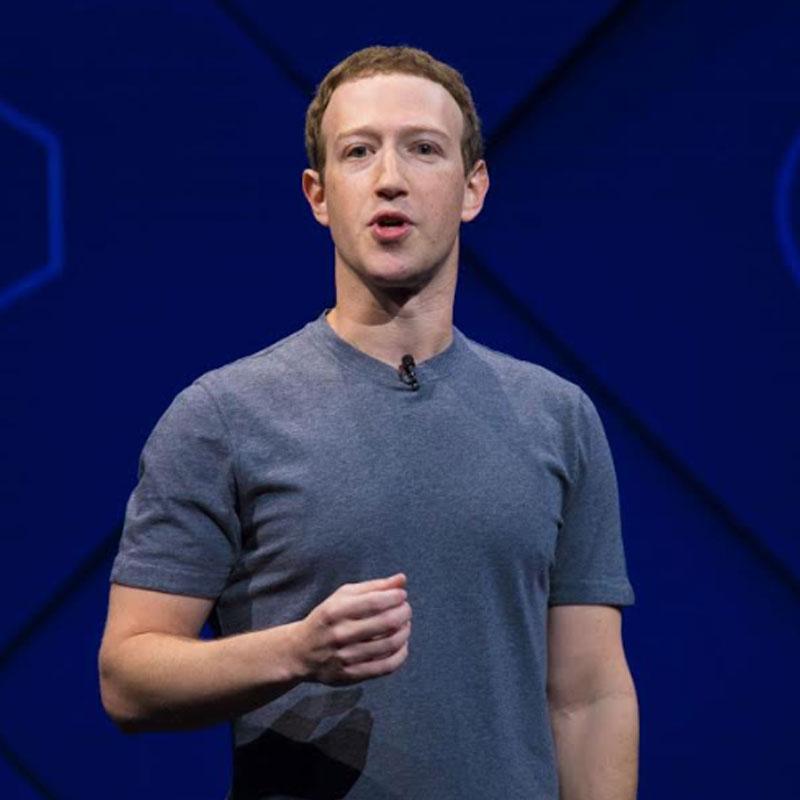
    CEO Mark Zuckerberg was pressured to testify before Congress to answer for mishandled consumer data, which came to light in the Cambridge Analytica affair.

    In July, Facebook was threatened with the largest fine possible from UK regulators over its flimsy data policies that exposed consumers to malicious developers for years.

    According to reports, data is not Facebook’s only problem. It has been blamed for everything from helping to destroy democracy in America to enabling genocide in Myanmar. Both of those charges stem from bad actors who have been able to warp Facebook for their nefarious purposes—in Myanmar, hate-filled posts have stirred real world violence against a minority group.

    “This is a challenging job,” says Pivotal senior analyst Brian Wieser. “Facebook is not quite the prestige brand it once was, and there is so much worse to come.”

    This year, Zuckerberg has focused the company on a multi-year project to clean up the platform, rid it of the most offensive content, and improve people’s experience. Those efforts could ultimately reduce the amount of time people spend on Facebook, as the company has promised to prioritise people’s well-being over profits.

    Facebook recently rolled out an ad campaign meant to remind people of all the good times they’ve had on the social network with promises to do better to fight fake news and spam. Those attempts to rejuvenate the brand have not gone well. This week, satirist John Oliver mocked Facebook’s marketing campaign on his HBO show, calling the company “history’s most profitable data-harvesting machine.”

  • Vodafone U launches new digital campaign #SortedHai

    Vodafone U launches new digital campaign #SortedHai

    MUMBAI: Digital platform Vodafone U has launched a new marketing campaign to welcome college students to the new academic year with some exciting propositions. The campaign features social media sensation, Mithila Palkar, in a web series ‘Mithila’s SortCuts’. Connecting with the young folks, Mithila shares some interesting tips to make college life #SortedHai.

    #SortedHai is conceptualised on a commonly used hook phrase amongst the youth. With Vodafone’s latest proposition of 50 per cent off on Amazon Prime subscription, Mithila shares tips on having movie nights #SortedHai with Vodafone U, apart from this offer, there are also many other exciting offers available to young consumers every Wednesday, Thursday and Friday in both the phone recharges as well as deals in F&B, fashion and other youth-centric spaces.

    Taliking about first digital campaign, Vodafone India Marketing EVP Siddharth Banerjee  said, “As youngsters most of us have faced challenges of coping with a new academic year and looked for some resourceful hacks. Taking this insight,#SortedHai campaign aims to engage with youngsters to help them make the most of their campus life with some exciting propositions under the Vodafone U umbrella. Mithila Palkar represents the mobile-savvy youth and help us engage with the college students digitally.”

    Ogilvy and Mather ECD Kiran Antony added, “The youth today have limited pocket money and plenty of wishes. Vodafone U enables them through relevant offers, to experience most of it. We tapped into the social currency of today’s youth, our campaign idea #SortedHai is based on this understanding.”

    To ensure maximum connect with youngsters, the campaign is live on digital platforms like Facebook and Instagram. Vodafone U will also engage with college students at their campuses to further amplify the #SortedHai messaging.

  • TV tops news consumption in the UK

    TV tops news consumption in the UK

    MUMBAI: In the UK, TV is the most used platform for news (79 per cent) according to the 2018 News Consumption in the UK research report published by communications regulator Ofcom.

    TV is followed by internet (64 per cent), radio (44 per cent) and newspapers (40 per cent) among adults. However, internet is the most popular platform among 16-24s (82 per cent) and ethnic minority groups (EMGs) (73 per cent).

    Television being the most-used platform, BBC One is the most important news source and is used by 62 per cent adults in UK followed by ITV (41 per cent) and Facebook (33 per cent). When it comes to online news, social media is used by 44 per cent adults.

    BBC One is the most used source for news in Wales, Scotland and England, while UTV is most popular in Northern Ireland (NI). Facebook is the third most popular source across all nations. Welsh respondents are most likely to say they’re interested in news about their nation (55 per cent vs 49 per cent in Scotland, 37 per cent in NI and 32 per cent in England).

    One in seven adults (14 per cent) use all four main platforms for news (i.e. TV, radio, newspapers and the internet).

    Eighty two per cent of 12-15 year olds said that the news they heard from family was either ‘always’ or ‘mostly’ true, compared to 77 per cent for radio and 73 per cent for TV. Only one in three (34 per cent) think news stories on social media are reported truthfully.

  • Mark Zuckerberg, Facebook boss, loses $16.8 bn in just 2 hours

    Mark Zuckerberg, Facebook boss, loses $16.8 bn in just 2 hours

    MUMBAI: After a trembling quarter which was full of controversies regarding data security, Facebook faced the hit on stocks too. Following the Cambridge Analytica scandal, the social media giant lost the faith of users and faced backlash from policymakers. Now, after a poor Q2 result with a weaker-than-expected revenue growth, the company lost about $130 billion in market value in just two hours. CEO Mark Zuckerberg, the third richest man according to the Bloomberg Billionaires Index, lost $16.8 billion in extended trading.

    If Zuckerberg’s loss holds through Thursday, he will slide to sixth place in the Bloomberg Billionaires Index.

    In Q2, Facebook could not reach the Wall Street-projections for growth in revenue as well as daily users. Moreover, the company also told the numbers won’t get better this year. The stock slide started right after Facebook posted the result which was later triggered by chief financial officer David Wehner’s comment on slow growth throughout the year. Shares plunged as much as 24 per cent afterwards.

    Facebook had 1.47 billion daily active users in June, compared with the 1.48 billion average of analysts’ estimation. In Europe, the implementation of strict new data regulations led to 1 per cent decline in daily visitors. Even in its biggest markets, the US and Canada, the user base did not grow. The company added 22 million daily active users, lower than the 41 million it added in the same quarter a year earlier. While analysts projected $13.3 billion, the revenue increased 42 per cent to $13.2 billion in the quarter.

    “I think many investors are having a hard time reconciling that deceleration,” an analyst at Jefferies LLC Brent Thill told Facebook executives. “It just seems like the magnitude is beyond anything we’ve seen, especially across a number of the tech (companies) we cover,” he added. However, some analysts think the harsh truth is that the platform can’t grow forever. “The core Facebook platform is declining,” an analyst at Pivotal Research Group Brian Wieser said.

    Facebook will increase spending to make investments in video content, artificial intelligence, and virtual reality. The company is growing its video play with new sports broadcasting rights and content deal for news. However amid all new plans also, it could not live up to expectation. Since 2015 Q1, this is the first time it could not meet revenue growth.

  • Facebook to end discriminatory ad targeting

    Facebook to end discriminatory ad targeting

    MUMBAI: Facebook has signed an agreement with the state of Washington to stop third-party advertisers from excluding protected groups and minorities from seeing their ads.

    The social media platform has announced that the move is part of a long process to make sure that the tools and filters used to target ads on Facebook are fair, civil and safe, according to Reuters. 

    “We’ve removed thousands of categories related to potentially sensitive personal attributes — like race, ethnicity, sexual orientation and religion — from our exclusion targeting tools,” the company said in a statement. 

    Washington attorney general Bob Ferguson said, “Facebook’s advertising platform allowed unlawful discrimination on the basis of race, sexual orientation, disability and religion.”

    Now, Facebook will have to make the necessary changes on the platform nationwide within 90 days.

    The agreement will also include a 20-month investigation by Washington State’s office that began after non-profit ProPublica published an article on Facebook’s advertisement targeting alleging advertisers could exclude users by race.

    Facebook vice president of state and local policy Will Castleberry said in a statement: “Discriminatory advertising has no place on our platform, and we’ll continue to improve our ad products so they’re relevant, effective, and safe for everyone.”

    Facebook has faced several legal actions over its advertising policies. In March this year, National Fair Housing Alliance sued the social media giant for excluding groups of people based on characteristics such as family status or sex from receiving ads about housing.

  • WhatsApp to limit forwarding to five chats in India

    WhatsApp to limit forwarding to five chats in India

    MUMBAI: WhatsApp, the world’s most popular messaging app, is now firmly embedded into our social fabric. The simplicity and utility of the app has enabled it to breach several divides. The emergence of WhastApp as a dominant communication tool has also brought into focus the menace of fake news, false videos and rumour mongering.

    False propaganda on WhastApp has been the source of several unfortunate incidents, including mob lynching, in India of late. The recent developments have compelled the Indian government to push the Facebook-owned messaging app into adopting more stringent measures.

    Taking note of all concerns, WhatsApp is now testing a new policy for its chat forwarding feature.

    ‘Today, we’re launching a test to limit forwarding that will apply to everyone using WhatsApp. In India – where people forward more messages, photos, and videos than any other country in the world – we’ll also test a lower limit of 5 chats at once and we’ll remove the quick forward button next to media messages,” WhatsApp said in its blog on Friday.

    The company has over one billion users globally, of which over 200 million are in India. The option of forwarding multiple chats at once was added a few years ago.

    On Thursday, Indian government sent out a second letter to WhatsApp asking the company to come up with more effective solutions to tackle the existing problem.

    On 3 July, the IT Ministry had sent a letter to WhatsApp to address the issue of provocative messages.

    In response to the first notice, WhatsApp emphasised on collaborative effort from government, civil society and technology companies to check fake news, misinformation and hoaxes.

    While outlining planned measures in its reply, WhatsApp said it has the ability but since it cannot see the content of private messages, blocking can be done only based on user reports.

    “We are deeply committed to your safety and privacy which is why WhatsApp is end-to-end encrypted, and we’ll continue to improve our app with features like this one,” the new blog reads.

  • Facebook acquires EPL rights for 2019-22

    Facebook acquires EPL rights for 2019-22

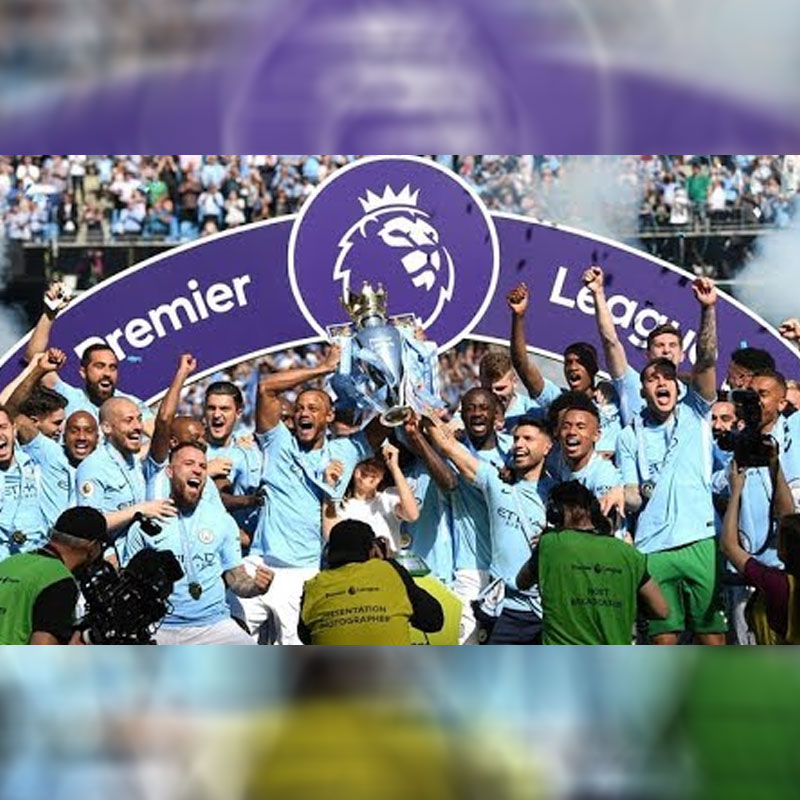
    MUMBAI: Broadcasters need to be careful of their turf as digital players are swooping in to pick sporting rights. Facebook has acquired the English Premier League rights for the Southeast Asia territory by paying £200 million.

    Facebook made its intentions clear to move into sports by bidding around Rs 3000 crore for the digital rights of Indian Premier League in September last year and hiring Eurosport CEO Peter Hutton earlier this year.

    According to Thedrum.com, Facebook has powered ahead of BeIN Sports and Fox Sports Asia to secure the exclusive rights to broadcast live Premier League matches in Southeast Asia from 2019. The coverage of English soccer’s top flight in Thailand, Vietnam, Cambodia and Laos is for a three-year period covering 2019 to 2022.

    The rights package includes all 380 Premier League matches each season in what is Facebook’s biggest move into the live sports market to date.

    Along with Amazon, Facebook was also widely tipped to make a bid for the Premier League’s domestic rights this year, with the league specifically structuring two packages to make it more attractive to the tech giants. As Facebook stayed away, it was ultimately Amazon who secured the package of 20 live matches each season for three years from 2019.

  • Airtel, Saavn got special access to users’ data even after 2015: Facebook

    Airtel, Saavn got special access to users’ data even after 2015: Facebook

    MUMBAI: Facebook’s data controversy is engulfing numerous companies including many renowned ones in India. India’s largest telecom Bharti Airtel and music streaming app Saavn were among the firms that could have accessed data of Facebook even after 2015. This revelation has come to light based on submissions made by Facebook to the US Congress.

    In the submission, Facebook named Airtel and 51 other companies for having an “integration partnership”. Facebook authorised those companies to access its user data in order to “recreate Facebook-like experiences”. However, Airtel has claimed the deal ended in 2013.

    “Integration partners were not permitted to use data received through Facebook APIs for independent purposes unrelated to the approved integration without user consent,” Facebook said in the reported submission.

    Saavn was also among the companies which could access details of Facebook users’ friends. While the social media platform announced that data access would be blocked from May 2015, Saavn along with some other app developers were given extra time to become compliant with Facebook’s more restrictive platform API (application programming interface) policy.

    “Such access to information about an app user’s friends required not only the consent of the app user, but also required that the friends whose data would be accessed have their own privacy settings set to permit such access by third-party apps,” Facebook said.

    Since the Cambridge Analytica data scandal, Facebook has been facing tough times regarding data security.

    Also Read:

    FB reveals CA harvested data of up to 87 mn people

    Mark Zuckerberg says ‘sorry’ for Facebook’s privacy crisis

  • Instagram introduces a new feature- ‘You’re All Caught Up’

    Instagram introduces a new feature- ‘You’re All Caught Up’

    MUMBAI: Instagram has come up with a new feature named ‘You’re All Caught Up’ that informs the user when they have seen every posts on their feeds in the last 48 hours. A green tick appears on the screen along with the message ‘You’re All Caught Up’ helping the user to have a better understanding of their feed and to inform them that they haven’t missed recent photos or videos.

    This update is a supposed antidote to Instagram’s algorithmic which shows posts in a non-chronological order which was launched about two years back and was widely criticised. People objected that the feature will use information based on user’s interaction in the app to plan its feed which will spoil the usual way of scrolling through the app.

    This feature is also supposed to help users to manage the time that is spent on the app and stop them from ‘over programming’. Not just this, Instagram also might be working on a ‘Do Not Disturb’ feature to help the users.

    Facebook  CEO Mark Zuckerberg  has been vocal about prioritizing well-being over profits, to the point that the network reduced the prevalence of viral videos in the feed so much that that app lost 1 million users in the U.S. and Canada in Q4 2017. “I expect the time people spend on Facebook and some measures of engagement will go down. If we do the right thing, I believe that will be good for our community and our business over the long term too,” said Zuckerberg as quoted by Techcrunch.

    Apple is going to introduce Screen Time in iOS 12. Google’s Dashboard, which is going to be a part of Android P. These features are going to let the user track their usage patterns and understand which apps are taking up most of their time.

    Also readsInstagram valued at $1000 billion

    Instagram crosses 500 million members