Tag: Facebook

  • MIB proposes to change mandatory sports feed sharing norms

    MIB proposes to change mandatory sports feed sharing norms

     NEW DELHI: In what could have far reaching effects on the financial viability of sports TV channels or streaming platforms, which acquire exlcusive rights for sporting events for the India region spending billions of dollars, the government proposes to amend rules relating to mandatory sharing of feeds of sports of national importance with not only the pubcaster, but with other distribution platforms. Reason for proposed changes: people with less purchasing power should not lose out on the sporting excitement.

    “…viewers, who do not have DD FreeDish [pubcaster Doordarshan’s FTA DTH platform] or Doordarshan’s terrestrial network, are either unable to watch these sporting events of national importance or are compelled to watch these sporting events on highly priced sports channels and, thus, the very objective with which the Parliament had enacted the Sports Act has been defeated,” Ministry of Information and Broadcasting (MIB) said in a notice issued on 17 October 2018, adding that public comments were invited within a month on the changes proposed in the relevant regulation relating to sharing by rights holding private TV channels of broadcasting feed with the pubcaster.

    As per provisions of the Sports Act, the live feed received by Prasar Bharati from the content rights owners or holders is only for the purpose of re-transmission of the said signals on Doordarshan’s own terrestrial and DTH network (DD FreeDish) and not for
    cable operators or other distribution networks. The ad sales is also done by private companies after taking the pubcaster into confidence with the additional ad revenue shared between the rights holding TV channel and DD.

    Though the sports rule was legislated in 2007, the shared signals on DD were sometimes donloaded by distribution platforms from satellite-delivered channels and re-transmitted not only in India but also in some neighbouring countries. Seeing this trend, Star India, which was investing heavily in sports, had moved the courts and in August 2017 got a favourable ruling from the Supreme Court that ruled the shared feed of sporting events of national importance, as mandated by the government, can only be re-transmitted on DD terrestrial network and DD FreeDish to avoid piracy and possible loss of revenue for the rights holder.

    Additonally, private DTH platforms and MSOs/LCOs were barred from showing DD's non-terrestrial channels that re-transmitted the shared feeds after the August 2017 Supreme Court ruling for the duration of the that particular event and it was stressed on also by Prasar Bharati fearing adverse reaction from the apex court.

    Within few  days of the SC ruling favouring the rights holding TV channel or broadcaster and few days before the lucrative IPL cricket rights bids were opened last year, Jawahar Goel, chairman and MD of Dish TV, India's first DTH platform started by the Zee group, raised an alarm on Star's emerging cricket monopoly.
    In a hard-hitting letter, addressed to various Indian government organisations, including MIB, regulator TRAI and the anti-monopoly authority, Goel had alleged that combined with the financial muscle and near-monpoly over cricket for India region, Star's acquistions will impact "every stakeholder in the broadcasting industry, starting from the distributors of  TV channels". Star India finally outplayed other bidders for the IPL rights for the next five years in 2017 by coughing up a whopping $2.4 billion.

    In the light of recent developments in the distribution segment of the Indian broadcast system, MIB's latest move gains importance. So, what's the proposed amendment being sought to be inserted in the 

    Sports Broadcasting Signals (Mandatory Sharing with Prasar Bharti) (Amendment) Bill, 2018?

    The relevant portion of the amendment being proposed for which stakeholders' comments have been invited reads: “No content rights owner or holder and no television or radio broadcasting service provider shall carry a live television broadcast on any cable and/or Direct-to-Home network and/or IPTV and/or terrestrial network or radio commentary broadcast in India of sporting events of national importance, unless it simultaneously shares the live broadcasting signal, without its advertisements, with the Prasar Bharati to enable them to re-transmit the same on its own terrestrial network and Direct-to-Home network and on other television distribution platforms/networks where is it mandatory to broadcast mandatory channels notified by the Union Government under Section 8 of the Cable Television Networks (Regulation) Act, 1995 in such manner and on such terms and conditions as may be specified.”

    At present, Star India and Sony Pictures Networks India — the latter has a partnership with ESPN that got a divorce from Star for sports channels in 2012 — are two networks that own and manage sports channels in India. However, in recent times digital players like Facebook, Reliance Jio, Amazon and Alibaba-controlled Indian digital wallet company PayTM have shown interest and bid for cricket properties in India. Facebook also won the India rights for La Liga football that was streamed free on the digital platform, while being sub-licensed to Sony for normal TV broadcast.

    However, an industry observor pointed out that apart from the fact that the pubcaster's DD FreeDish platform could get further hit financially if the proposed changes are legislated, it was also highlighted  that what could have further spurred the government into action is that after TRAI's new tariff regime kicked in last month, most broadcast companies and TV channel managers converted FTA TV channels into pay channels  depleting further the basic FTA bouquet aimed at people with low purchasing power.

    It would be interesting to watch how this proposed change plays out with stakeholders.

  • Netflix Q3 app revenue up 90% y-o-y

    Netflix Q3 app revenue up 90% y-o-y

    MUMBAI: Netflix's financials show it had a strong Q3 on mobile. The app dramatically observed an upswing by generating gross $243.7 million which represented a 90 per cent year-on-year increase as compared to Q3 2017. The popular streaming app has surpassed an estimated $1.4 billion in total gross revenue to date worldwide on the App Store and Google Play.

    According to the Sensor Tower, during Q3, Netflix’s app gained the most new users from the US, Brazil and India accounted for 19, 13, and 10 per cent of all downloads, respectively. Each of these regions saw growth in installs compared to Q2, but none as large as India, which experienced an increase in downloads of more than 100 per cent.

    Overall global consumer spending on the App Store and Google Play totalled $18.2 billion during the third quarter. Apple’s App store widened its lead over Google Play, as the App Store earned $12 billion during Q3 — nearly 93 per cent more than Google Play, and representing the biggest revenue disparity since at least 2014 between the two platforms.

    According to reports, Netflix also saw solid growth in downloads over the course of Q3, adding more than 50 million installs. This estimate marks a 16 per cent increase in downloads compared to Q2, and represents an even larger year-over-year growth of 36 per cent. The more than 50 million new users helped push Netflix past 600 million worldwide installs to date. In terms of number of downloads, Facebook again topped the global chart with four of the top five apps for Q3 — WhatsApp at number one, Messenger at number two, Facebook at number three and Instagram at number five. Bytedance’s social-video app TikTok, which the company merged with Musical.ly in August, took the number fourth spot worldwide, marking 15 per cent growth quarter-over-quarter and 440 per cent year-over-year.

    Downloads of mobile games grew 2.2 per cent year-over-year last quarter to total 9.5 billion on the two platforms. Google Play saw 76 per cent of those, with 7.2 billion download in the period, according to Sensor Tower. 

  • Data of 29 mn users hacked says Facebook

    Data of 29 mn users hacked says Facebook

    MUMBAI: Social media company, Facebook, on Friday stated that hackers had accessed 29 million user data in the breach which was disclosed late last month. Facebook previously had said that 50 million users were affected due to the data breach.

    In a recent conference call regarding the investigation, Facebook vice president of product management, Guy Rosen said, “We now know that fewer people were impacted than we originally thought.”

    The hackers had accessed the names, phone numbers and email addresses of 15 million users and for the other remaining 14 million users, the attack came to be more damaging as along with that data the hackers accessed additional information including gender, religion, hometown, birth date and places they had recently “checked in” to as visiting.

    Also one million people remain unaffected as no data was accessed, although their ‘access tokens’ were stolen, said Rosen.

    Facebook reassured that the attack did not affect Facebook-owned Messenger, Messenger Kids, Instagram, WhatsApp, Oculus, Workplace, Pages, payments, third-party apps or advertising or developer account.

    On the account of recent happenings, Zee Entertainment Enterprises chief executive officer Punit Goenka appeared cautious on Twitter.

  • Apple, Google & Amazon are world’s most valuable brands: Interbrand report

    Apple, Google & Amazon are world’s most valuable brands: Interbrand report

    MUMBAI: Apple, Google, and Amazon are the three most valuable brands of 2018, according to Interbrand's Best 100 Global Brands 2018 report.

    Facebook, mired in data breach controversies, fell to ninth place. 

    For six consecutive years, Apple and Google hold the top positions. Apple’s brand value grew by 16 percent to USD $214,480m, and Google’s by 10 percent to USD $155,506m. Amazon achieved 56 per cent growth and is the third brand to reach a 100-billion-dollar brand valuation (USD $100,764m), and is the top performer among 28 brands with double-digit percent growth. 

    Microsoft valued at $92.7 billion was fourth while Coca Cola valued at $66.3 billion came fifth followed by Samsung on sixth spot. Facebook's brand value has declined 6 per cent this year in the wake of the Cambridge Analytica data scandal.

    Interbrand global chief executive Charles Trevail says, “A decade after the global financial crisis, the brands that are growing fastest are those that intuitively understand their customers and make brave iconic moves that delight and deliver in new ways.”

    Spotify and Subaru made it to the global top 100 brand list for the first time. Elon Musk's Tesla made into the top 100 in 2017 but lost the race this time owing to several controversies around the brand and its future.

    When it comes to Apple, it has proved highly adept at maximising the value from its hero product, the iPhone, exemplified by its recent launches of the iPhone XS, XS Max and XR.

    "At the same time, it is tapping into the desire for useful apps and services, with sales from its services division growing by 23 per cent to $30 billion in the 2017 fiscal year," said Interbrand economics global managing director Mike Rocha.

    The Interbrand report values a company on the basis of the financial performance of the branded products or services, the role the brand plays in purchase decisions, and the brand's competitive strength and its ability to create loyalty.

  • Facebook to provide more video ad options for advertisers

    Facebook to provide more video ad options for advertisers

    For advertisers, social media giant Facebook has decided to come up with some more advertising options.
    Through a blog post, Facebook stated how they will now allow companies to advertise on premium video content through the In-Stream Reserve program.
    As per Facebook, the selected-content includes “the most engaging, highest quality publishers and creators”. This content will be shown to specific target groups verified by global information and measurement company Nielsen.

    Facebook explained how the In-Stream Reserve is a great option for premium online video and TV buyers, particularly those targeting younger, compact demographics and irregular TV viewers.
    As per Facebook, the in-stream video ads are fully watched 70 per cent of the time. The In-stream reserve categories allow an advertiser to select which topics they want their ads to run on, including sports, fashion/beauty and entertainment.
    The social media company will also let the advertisers to advertise on specific shows or for an exclusive advertiser for a single show. “These types of ads are being tested on,” said Facebook.
    “The ThruPlay program will only charge advertisers if their ad is watched to the end, or viewed for at least 15 seconds,” Facebook added.

  • Instagram co-founders resign from Facebook

    Instagram co-founders resign from Facebook

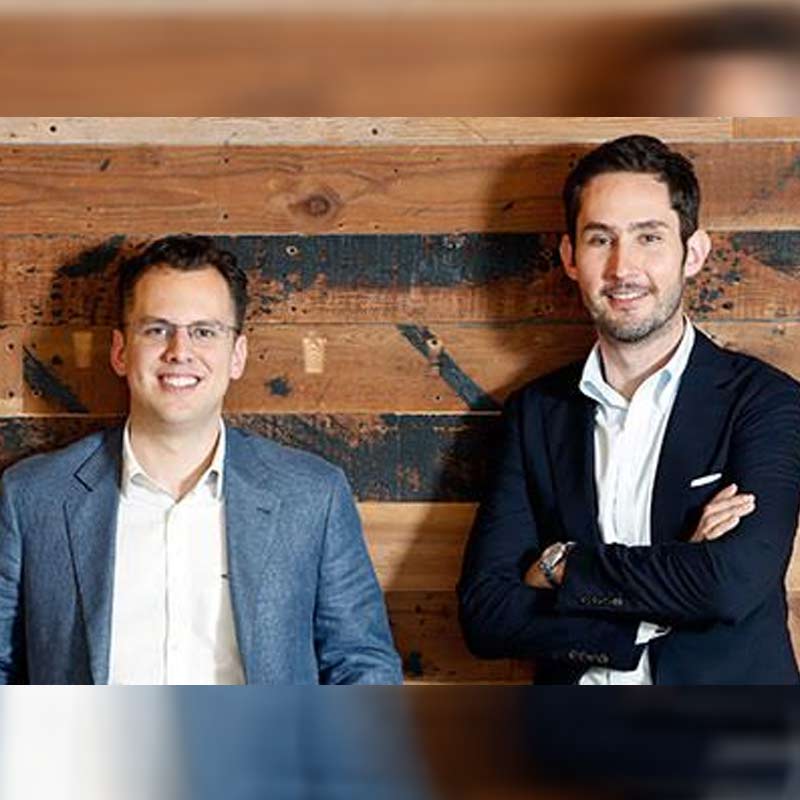
    MUMBAI: There’s trouble brewing at the Facebook group. Mike Krieger and Kevin Systrom, the co-founders of the photo-sharing app Instagram which was acquired by the social media site in 2012, have decided to leave the company. The duo have put down their papers and will leave the company in a few weeks, adding to the challenges facing Instagram’s parent company, Facebook.
    In a statement issued by Krieger, he informed Instagram’s team about their decision to leave the company. While he did not give a reason for stepping down, he said: “We’re planning on taking some time off to explore our curiosity and creativity again. Building new things requires that we step back, understand what inspires us and match that with what the world needs; that’s what we plan to do.”
    Their departure adds to questions about Instagram’s future as concerns about Facebook’s approach to user data and foreign interference begin to take a toll on business.
    The resignation of Instagram founders is an echo of the exit of Whatsapp founder Jan Koum who resigned from the company in April after his rising concern about Facebook’s approach to user data.
    Facebook acquired Instagram in April 2012 for $1 billion and WhatsApp in 2014 for a steep $19 billion.

  • Facebook appoints Hotstar’s Ajit Mohan as India MD & VP in major coup

    Facebook appoints Hotstar’s Ajit Mohan as India MD & VP in major coup

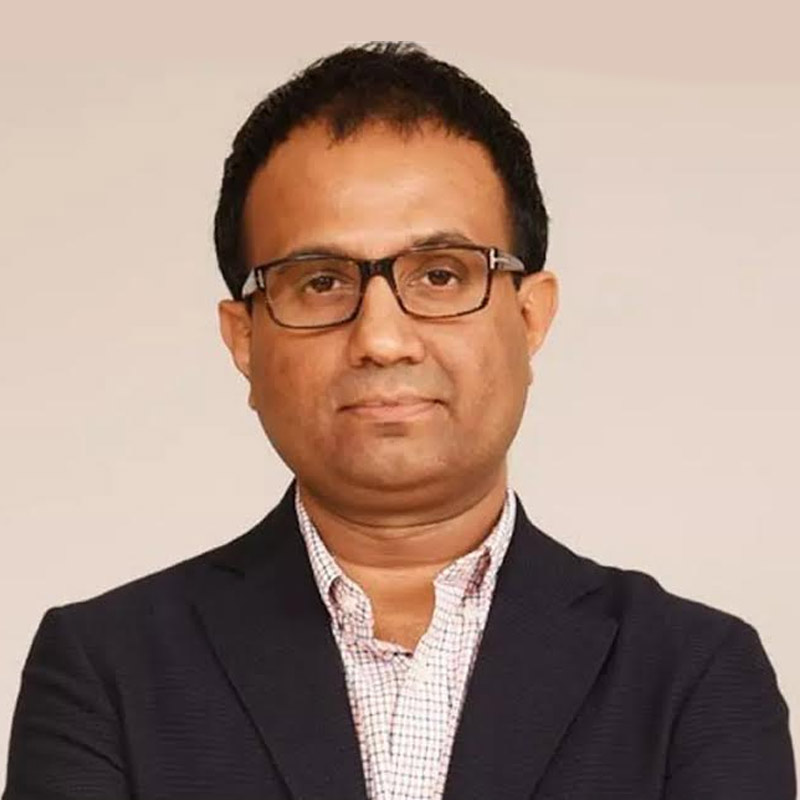
    MUMBAI: The social media giant Facebook finally ends its hunt to find a head for India operations. Facebook has appointed Ajit Mohan as Managing Director and Vice-President of Facebook India. He will join Facebook early next year.
    In this newly created role of Managing Director for India, a VP-level role, one of the most important responsibilities for this person will be aligning teams and driving Facebook’s overall strategy in India. This is a new structure for Facebook India of having a senior leader reporting into Menlo Park and not Asia Pacific.
    “India is one of the largest and most strategically important countries for Facebook. As we think about what it will take to achieve our mission of bringing people together and building community, we know that investment in India is critical. Ajit’s depth of experience will help us to continue to have a positive impact in India across communities, organizations, businesses and with policy makers”, Facebook Inc vice-president of business and marketing partnerships said David Fischer.
    “I am delighted to take on the mantle of shaping Facebook’s charter in India. It is a unique opportunity to shape the agenda of a company that has brought the world closer together in one of the most exciting markets in the world. I look forward to championing India in Facebook and working with stakeholders across the spectrum to help build deep and meaningful communities across the country” Ajit Mohan commented.
    He joins Facebook from Hotstar, the streaming platform launched by Star India, where he was Chief Executive Officer. He launched and built Hotstar into India’s leading premium video streaming platform. Ajit is an alumnus of McKinsey and Company’s New York office where he worked with media companies around the globe as well as served as a Fellow at the McKinsey Global Institute, where he focused on India’s rapid urbanization. He is a graduate of the School of Advanced International Studies (SAIS) at Johns Hopkins University and the Wharton School at the University of Pennsylvania.

  • WhatsApp gets grievance officer under pressure from India

    WhatsApp gets grievance officer under pressure from India

    NEW DELHI: Under pressure to clamp down on sinister messages, WhatsApp has appointed a grievance officer for India and detailed out the process for users to flag concerns and complaints, including those around fake news.

    Meeting one of the key demands that India had put on WhatsApp to curb fake messages that triggered mob killings, the Facebook-owned company has updated its website to reflect the appointment of a 'Grievance Officer for India'. The update mentions that users can seek help through the mobile app, send an email or write in to 'Komal Lahiri', who is based out of the US, reports the Press Trust of India.

    According to Lahiri's LinkedIn profile, she is senior director, global customer operations and localisation at WhatsApp. When contacted, a WhatsApp spokesperson declined to comment on the matter but pointed to the public FAQ on the company's website that contains these details.

    According to sources, the appointment of the grievance officer was made at the end of August. They added that the officer for India being based in the US is in tune with similar practices by other American tech giants. Users can reach out to the company's support team directly from the app under 'settings' and in case they wish to escalate the complaint, they can contact the grievance officer directly.

    A section within FAQs read: "You (users) can contact the Grievance Officer with complaints or concerns, including the following: WhatsApp's Terms of Service; and Questions about your account". The updated FAQs also detailed out the mechanism for law enforcement officials to reach out to WhatsApp.

    The government has been pressing WhatsApp to develop tools to combat fake or false messages. One of the demands was to name a grievance officer to deal with issues in India.

    India is WhatsApp's biggest market with more than 200 million users. It, in July, limited message forwards to five chats at a time and had also removed the quick forward button placed next to media messages to discourage mass forwarding. It has also introduced a 'forward' label to help users identify such messages.

    The latest appointment is also significant as the Supreme Court, last month, had agreed to examine a petition alleging that WhatsApp does not comply with Indian laws, including the provision for appointing a grievance officer. The apex court had sought a reply on the matter within four weeks.

    With general elections slated for next year in India, the government is taking a tough stance on the use of social media platforms like Facebook, Twitter, and WhatsApp for the spread of misinformation.

    The government had warned WhatsApp that it will treat the messaging platform as an abettor of rumour propagation and legal consequences will follow if adequate checks are not put in place.

    In a meeting held with WhatsApp head Chris Daniels last month, IT Minister Ravi Shankar Prasad had asserted that the company will have to find a solution to track origin of messages on its platform, set up a local corporate entity that is subject to Indian laws within a defined time-frame as well as appoint a grievance officer.

    WhatsApp, which has been slapped with two notices and a third one under consideration, has said it is in the process of establishing a local corporate entity. It has, however, not accepted the government's demand for traceability of messages saying creating such a software will go against the idea of user privacy.

  • Comment: DNPA formation raises key questions & upsets independent publishers

    Comment: DNPA formation raises key questions & upsets independent publishers

    “When it comes to rain making, not all followers are equally valuable. Some people have a lot more influence than others,” said Areva Martin, author and autism expert, in `Make It Rain!: How to Use the Media to Revolutionize Your Business & Brand’.

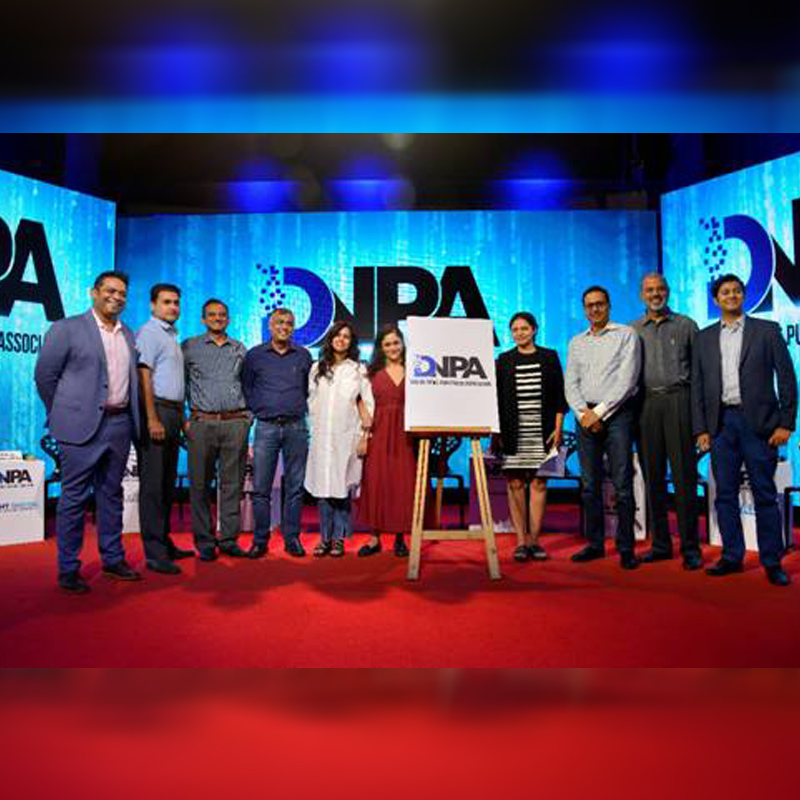
    A hurriedly called press conference, which was delayed because of last-minute deliberations in the India Today office on the outskirts of New Delhi on 21 September 2018, made public a development that resulted in more gasps on social media and WhatsApp groups than surprise from the attendant journalists at the conference to cover the event.

    And since then, the announcement of the formation of a Digital News Publishers Association (DNPA) has continued to keep various WhatsApp groups and social media users busy discussing the pros and cons of the newest entrant in the field of media industry advocacy in India. Especially because DNPA claims to be one more voice of the stakeholders amidst a plethora of already-existing industry bodies and sectoral alliances in the approximate Rs 1.5 trillion Indian media and entertainment sector.

    According to the most updated data from the India Brand Equity Foundation (IBEF), an organisation established by India’s Ministry of Commerce and Industry, the Indian digital advertising industry is expected to grow at a CAGR of 32 per cent to reach Rs 18,986 crore or $ 2.93 billion by 2020, backed by affordable data and rising smartphone penetration. FICCI-E&Y 2018 report on India’s media and entertainment sector stated 84 per cent of India's total digital population consumed news digitally in April 2017.

    Juxtaposed against the present political set-up in the country, the aforementioned data gets perspective, which was visible in the press release issued. “Ten of India’s biggest media companies who collectively serve 70 per cent of India’s online audience have today announced a new collective, Digital News Publishers Association,” the official statement read. Upfront it has been made clear that the 10 founding members of the new organisation hold sway over online audience. What was left unsaid was that such high coverage of online population also makes them important influencers.    

    The official statement also leaves another clue behind its formation: “The organisation is committed to…self-regulation and to promoting the business and editorial interests of all members.” The 10 founding members are Dainik Bhaskar, India Today Group, NDTV, Hindustan Times, Indian Express, Times of India, Amar Ujala, Dainik Jagran, Eenadu and Malayala Manorama — all traditional media houses with digital extensions to keep pace with the march of technology. Many of these organisations also own several other media ventures like TV and FM radio channels.

    With the India government, still grappling with ways to rein in rampant fake news being spread more via social media platforms and dodgy websites, has also come up with a framework for regulations — self or government mandated — for digital and online publishers of content, formation of DNPA, consisting of legacy media houses, raises important questions and has the potential of opening up of a can of worms leading to further making the country a regulatory challenge. Add to the fact that the government has mandated a committee to explore regulations for all genres of online content and that, reportedly, the committee is finding it difficult to suggest solutions that are a win-win for both stakeholders and the government making the regulatory landscape very tricky.

    Now, DNPA’s formations raises three crucial questions.

    Question No. 1: Why form another industry advocacy group when several such bodies already exist?

    For the overall development of the digital news segment and the publishers, is the official explanation. Does that mean organisations like the Indian Broadcasting Foundation, News Broadcasters Association (both these bodies have self-regulatory set-up for its members), Internet & Mobile Association of India (IMAI), Broadband India Forum (BIF), Editors’ Guild of India, Producers Guild of India, which consists of digital players too, and a host of smaller versions of these organisations are unable to deliver for the founding members of DNPA?

    It’s imperative to remember a majority of the DNPA’s 10 present members are also members of various other bodies too like the IBF, NBA and IMAI. NBA itself was formed several years back when the TV news players thought the IBF was not representing their viewpoints properly.

    An independent observer quipped after DNPA came into existence: “If the industry body is serious about its avowed goals, the members should stop giving free content to the likes of Facebook and Twitter.”

    Question No. 2: Though DNPA has admitted it’s open to other digital companies as members, why weren’t the independent and other comparatively smaller publishers of digital news initially contacted?

    Technology certainly has made innovations and entrepreneurship in digital publishing more competitive. And, this initial cold-shouldering of smaller competitors has made them question the claimed goals of the Big 10, as the DNPA founders are being labelled as.

    “Yet another big daddies club. Formed by big media companies discreetly, without the ones who spent blood & sweat to create independent internet news publishing platforms without a muscle. Despicable. I would call upon all the independent digital news publishing platforms with sizable reach to express their protest and tweet about it to I&B Minister. This [Digital News Publishers] Association should not be recognised,” rued Alok Verma in a two-part tweet last Friday. A veteran journalist who has worked in senior positions in both the print and electronic news media segments earlier, Verma is founder and chief editor of NYOOOZ.com, an online video-first platform delivering news from over 62 small and medium scale cities.

    Question No. 3: Will DNPA’s birth lead to the formation of another organisation comprising the independent digital news players?

    This is a very possible scenario and, if such an advocacy group or alliance does come into effect, it should get off the block like Usain Bolt. If it manages the inherent content and business contradictions of its members efficiently, it also has the potential to be a strong industry voice having good fire (and leveraging) power. But it’s a big IF.

    However, some of the `bigger’ independent digital publishers of news have not articulated their views — at least publicly. Owners and managers of The Wire, BloombergQuint, VICE India, Scroll.in, HuffPost India, The Print, etc. who otherwise opine on almost all industry and regulatory issues, apart from being very active on social media, have been quiet. Industry gossip says — though to be taken with a pinch of salt — feelers sent by some independent players to the likes of The Print, The Wire, BOOM, which is a part of Ping Digital Network, have elicited lukewarm response on the issue of an independent digital publishers alliance so that DNPA and its legacy members cannot start influencing the regulatory environment.

    With general elections in India lurking around the corner, the hordes of independent digital news venture gain importance as providers of news and being influencers of the hoi-polloi that may not be so exposed to the national media.

    Trying to summarise the DNPA development and its possible fallouts, Pankaj Pachauri founder and editor of mobile app based and online GoNews rued the fact that legacy players kept the DNPA formation hush-hush despite some of them being members of NBA too, just like his venture. Incidentally, NBA’s annual meeting was held earlier last week.

    “Why did India become a powerhouse in technology and software? Because at a time when the sector was in its infancy and growing, there was just one organisation, Nasscom, that championed the sector’s cause with policy-makers and did it effectively. In the media industry, especially so in the fledgeling digital space, all the players must remember that unless we present a united front, regulators can try hemming us in with restrictive legislations,” said Pachauri, who was also a media advisor to former Indian PM Manmohan Singh.

  • Govt to make social media accountable

    Govt to make social media accountable

    MUMBAI: In a bid to ensure that social media is free from harmful content the government is looking at shifting the accountability from users to platforms such as WhatsApp, Facebook and Telegram.

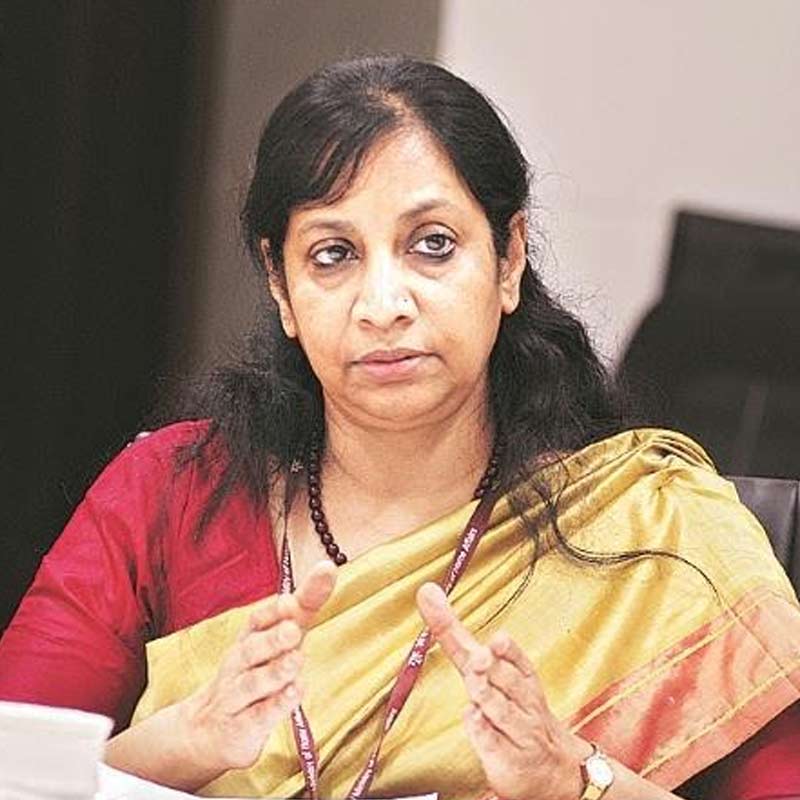
    According to the reports, Telecom secretary Aruna Sundararajan said, “The committee which I’m part of is primarily looking into a few key aspects, including shift of accountability from a user to a social platform, as users are sometimes unaware and innocently retweet or forward content, so much higher standards of accountability for platforms are needed.”

    Every major platform that has a significant presence in India must be accountable to Indian authorities. “There must be a full-fledged management team present in the country accountable to Indian laws,” she said. “It should not be, as such, one compliance officer is here only.”

    The government is preparing to repeat its demand that WhatsApp put in place a technical solution to trace the origins of incendiary messages spread on its platform, something the Facebook-owned platform has resisted, maintaining that it goes against its privacy policy.

    The centre has been dissatisfied with the steps taken by WhatsApp to restrain fake news. The Ministry of Electronics and IT (MeitY) is drafting a letter—its third since July to the platform—asking it to design a technology-led solution to the viral messages that in the past have led to lynching and riots.

    In a report, experts said that any decision that makes a company such as Whatsapp responsible for the content on its platform, will force the messaging app to devise ways to ensure it is not misused instead of merely passing on the blame to the user, who will be difficult to trace given the encryption.

    Sundararajan said, “There are algorithms and artificial intelligence (AI), which these platforms already use, that can also be deployed to curb such content. While regulation of social media apps rests with MeitY, the Department of Telecommunications (DoT) ensures security of the content being transmitted through the network.”

    She added that DoT can make lawful interceptions in the interests of public safety but does not propose to block social apps. It’s up to the companies to have adequate precautionary measures.

    The government had earlier raised its concerns after which WhatsApp limited forwards to five users or groups, when it used to be 250, while identifying forwarded messages, and a publicity campaign against fake news.

    The government has also told WhatsApp that it won’t be allowed to set up a payment service until it establishes an office and recruits a team in India.

    Sundararajan said the government wants Facebook, WhatsApp, Instagram and others to treat Indian consumers on par with those overseas while it looks to bring in higher standards of accountability. “Is the Indian citizen any less than an American citizen? No. Whatever safeguards and best practices you (companies) are providing globally, nothing less than should be available for India. This is the principle we are trying to establish,” Sundararajan said. “Like companies should treat India as most-favoured nation in trade and Indian consumers should also be treated likewise.”