Tag: Facebook

  • Vidnet2018: OTT industry says innovation the need of the hour

    Vidnet2018: OTT industry says innovation the need of the hour

    MUMBAI: In the last couple of years, over-the-top platforms have emerged as mainstream entertainment source going beyond “mail-metro-millennial” phenomenon for a sizeable population in India despite television still holding its dominance.

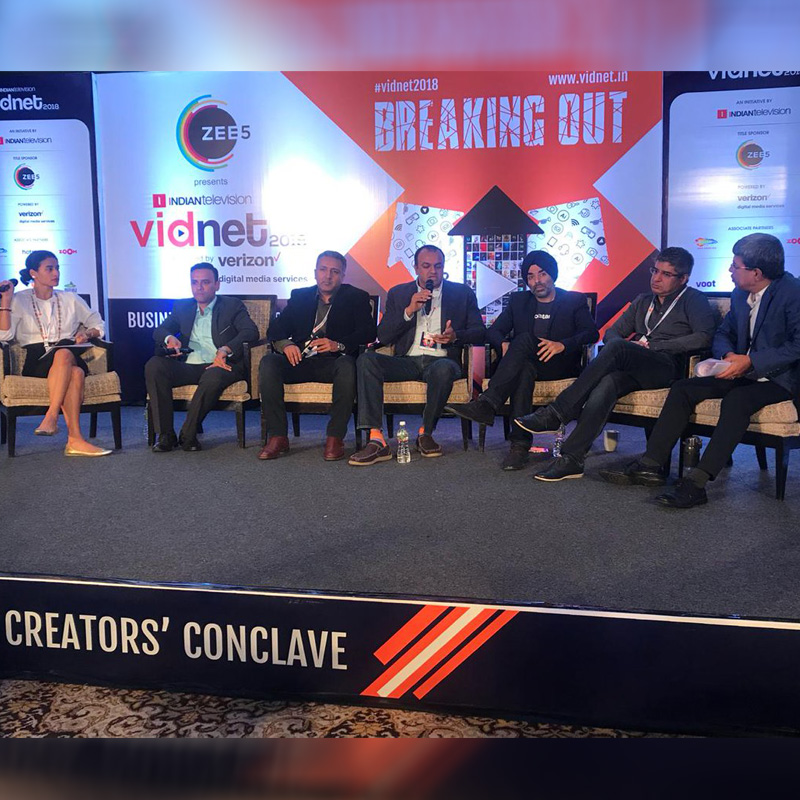
    The beauty of the Indian market is its diversity enabling opportunities for various business models and content in several regional languages along with Hindi and English. However, with the growth of the industry, new challenges in different areas including technology and regulations are cropping up. To delve deeper into the issues, experts across the entire ecosystem came together at Vidnet 2018 hosted by Indiantelevision.com powered by Verizon which had ZEE5 as title partner. The long day summit became a perfect stage to discuss relevant issues concerning the industry as well as to gain new insights.

    At the beginning of the event, a very interesting session with Hulu Japan CCO Kazufumi Nagasawa moderated by Indiantelevision.com founder and CEO Anil Wanvari set the tone for the day. The spokesperson shared the state of Japanese OTT market which is super crowded as well. But in contrast to the Indian market, most players are focused on SVoD service in Japan. However, Hulu Japan stands with 1.8 million paying subscribers with more than 50,000 hours of content. The session was followed by Verizon Digital Media Services EMEA and India managing director Taylor Riese who also said they are listing the challenges in the market with infrastructure in India.

    The attraction of the day was definitely the power packed session with speakers from the most popular OTT services and digital video platforms in India. ZEE5 India CEO Tarun Katial, Amazon Prime Video India business director and head Gaurav Gandhi, YouTube India entertainment head Satya Raghavan, Voot head marketing and partnerships Akash Banerji, Hotstar consumer and revenue lead Prabh Simran Singh shared their key learnings.

    Gandhi debunking the myth that Indians don’t want to pay for digital content saying that if customers see value in product they won’t mind paying and Katial mentioned an important fact that content cost in OTT is not going to be same as TV. While the session was named as “lessons from battlefront”, all the experts more or less agreed that the Indian market gives best opportunities for partnerships and collaborations.


    In another impacting session, Green Gold Animation founder and MD Rajiv Chilaka, Pocket Aces founder Ashwin Suresh, Contiloe founder Abhimanyu Singh from, SVF Entertinment president Ravi Sharma and Goldi Behel discussed the power of local storytelling. While five of them have been a part of the experience in creating versatile content targeting a particular audience, they highlighted how the time is perfect for content creators to be in the space owing to the new digital mediums. Applause Entertainment CEO Sameer Nair, another veteran in the production business, mentioned another important fact that content is not a commodity that someone can win with a price war, rather it has to be won with a good story.

    Other than content, topics like the need for unified video measurement for better data was discussed in presence of IPG Mediabrands India CEO Shashi Sinha, MX Player CEO Karan Bedi, BARC India COO Romil Ramgarhia and Eros Now COO Ali Hussein.  Sinha said industry stakeholders need to arrive at a consensus for unified measurement to be a reality in India. Interestingly BARC India COO commented their technology is fully equipped to measure digital video.

    Content is king but it cannot conquer customers alone if distribution is not well enough. Nowadays people watch OTT content via various devices including basics like smart TVs, smartphones. Telcos also bundle OTT apps with their services to acquire more consumers as well as make it easy for those platforms to spread out. Questions related to making better innovations in distributions were discussed by ALT Balaji COO Sunil Nair and Viu head monetisation and distribution Sameer Gogate.

    Even the confab delved deep into the creator’s brains, tech strategies as various production houses, cloud servicing companies were also present in the conference to discuss their play. Ongoing issues like how to regulate OTT platforms were also discussed by two eminent lawyers, Abhishek Malhotra and Nidhish Mehrotra. Other industry stalwarts including Eros Now COO Ridhima Lulla, Hotstar EVP and chief marketing officer Sidharth Shakdher, Facebook entertainment partnerships head Saket Jha Saurabh, Arre co-founder and CEO Ajay Chacko, ZEE5 business head Manish Aggarwal, Vertice Entertainment founder and CEO Varun Mathur also shared key insights through different sessions.

    Though the ecosystem is evolving, it will take more time to say what’s going to work or what not.

  • Facebook and Priyanka Chopra come together to talk #SocialForGood

    Facebook and Priyanka Chopra come together to talk #SocialForGood

    MUMBAI: Facebook India and Priyanka Chopra are coming together to introduce the first-of-its-kind Live-athon called – #SocialForGood. With this 4-hour Live event, on November 27, Facebook and Instagram plan to bring together some of the biggest names in popular culture. This carefully curated list of people are those who believe in the power of social media – they have used their voices to educate supporters, inspire advocacy and put people at the center of the issues they care most about.

    “Social Media has been playing a pivotal role in recent times to bring awareness to issues that affect minorities, local communities and even matters of national importance. With #SocialForGood, our endeavor is to shine a spotlight on some of the fantastic work our community of public figures and socially-responsible volunteers have been doing to bring positive change, not just on the internet but our everyday lives. With a global force like Priyanka Chopra joining hands with us, this mission to spread the message of Social For Good will definitely make a huge impact.”- Saket Jha Saurabh – Head of Entertainment Partnerships, Facebook India.

    The #SocialForGood FB Live-athon will take place on 27th November 2018 from 12noon to 4:00 pm (IST). This live streamed event will be power-packed with some of the biggest names from films, sports, music, etc. Driven by Priyanka, these conversations will range from Mental Health Awareness and Standing Against Cyber Bullying to Celebrating Women Entrepreneurship and Making a Difference, one contribution at a time.

    “There is no denying the power of Social Media. It is a force which once unleashed, is difficult to control or stop. Its force comes from the huge influence it wields and recognizing that means, using it well, to do some good. I have personally witnessed the positive effects of social media in bringing awareness and action to many of the causes I hold dear to my heart. The right content can make all the difference. To use it to bring awareness to causes that matter, celebrate some real-life stories and also inspire people to do their bit for the community, is a fantastic idea. I am looking forward to this partnership with Facebook. May the Force to spread the good, be with all of us #SocialForGood” – Priyanka Chopra – Actor, Producer, Humanitarian and UNICEF Goodwill Ambassador

  • Facebook clones TikTok; launches Lasso app

    Facebook clones TikTok; launches Lasso app

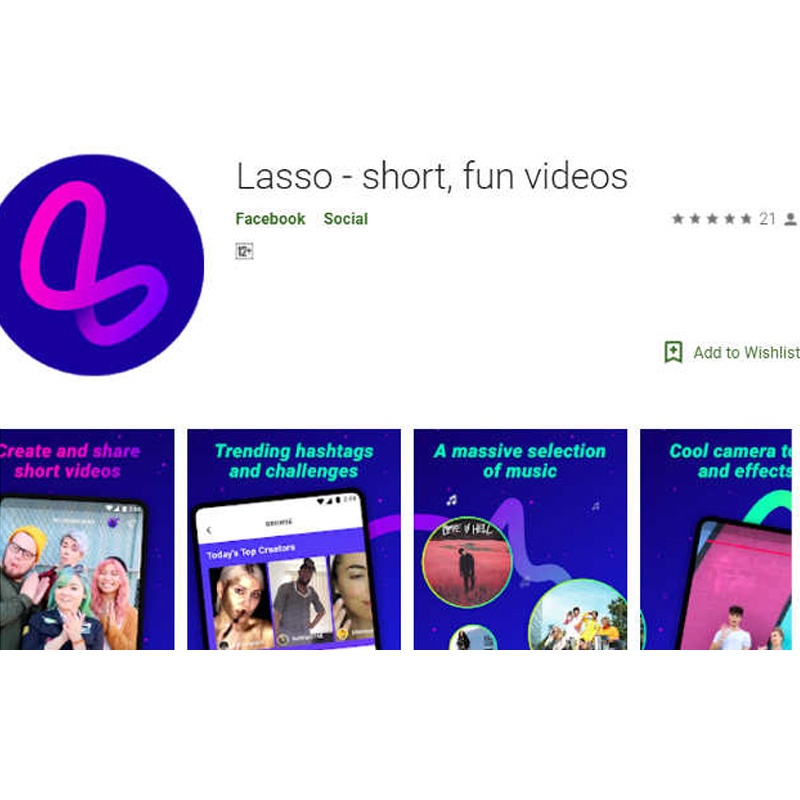
    MUMBAI: Facebook, without making any noise, has released an app called Lasso that lets users create short videos in a bid to compete with TikTok which is the 15 second video app that recently merged with Musical.ly.  

    According to the reports, in 2018, only half of the teens claimed to use Facebook, compared to in 2014, when 71 per cent of them said that they still use it. In order to catch hold of its lost charm, Facebook has planned to set the ball rolling by launching Lasso to win over teens.  

    Lasso is almost the same as TikTok. Users can record themselves dancing, lip-syncing to music and recording short clips like Vines. The app is also available on iOS and Android. The rollout of the app was made with no official statement from the company on its website, said the reports. However, later, its product manager Bowen Pan specifically tweeted about its launch.

    This isn’t the first time that the company has cloned an app. Facebook copied Snapchat by launching a standalone app called Slingshot in June 2014. After a year, it wasn’t available in the app store.

  • BrandVid 2018: Emerging importance of content creators in branded videos

    BrandVid 2018: Emerging importance of content creators in branded videos

    MUMBAI: With the rapid change in the online ecosystem, marketers are gradually increasing their investment for branded content. Subtle product placement and proper storytelling in branded videos are becoming two key elements of video marketing. Facebook and YouTube have emerged as the most important platforms while they are working closely with brands as well as creators.

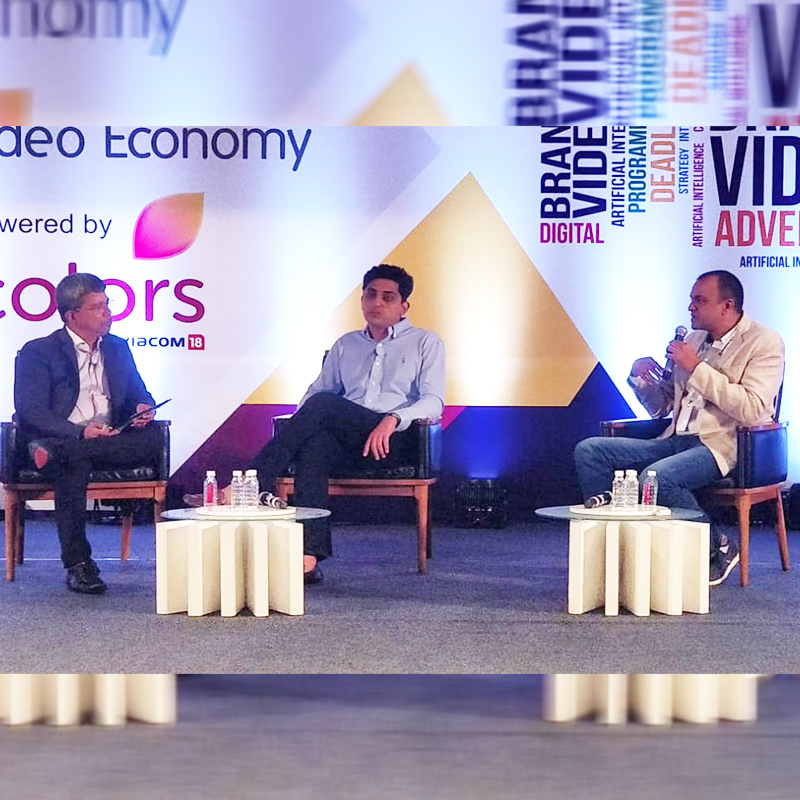
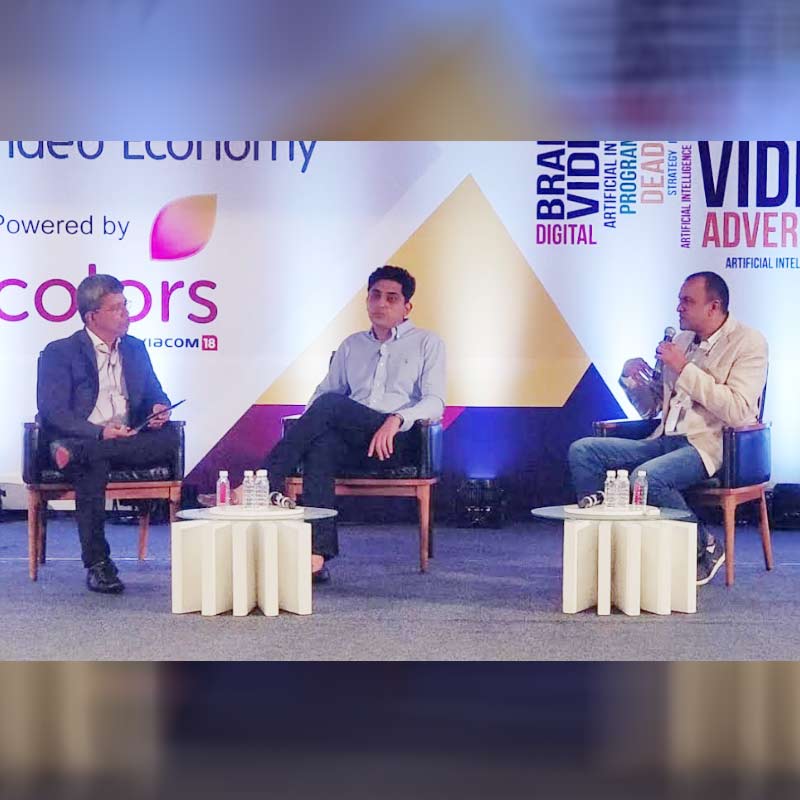
    In the first edition of Indiantelevision.com’s BrandVid powered by Colors, spokespersons from the two tech giants spoke about their experience in new video economy. YouTube India entertainment head Satya Raghavan and Facebook India entertainment partnerships head Saket Jha Saurabh discussed what each of them is offering to brands, how brands are operating in the respective ecosystems and what could be the best practices for them to follow.

    Talking about branded videos and digital films, Raghavan said YouTube always thinks about three primary stakeholders which are the consumers, creators and advertisers. Whether it is about integrating a brand within the existing content or a brand wanting to create content with creators, these three elements of the ecosystem always create amazing opportunities together. Going back in time, he mentioned #CrashThePepsiIpl campaign when they discovered all of these three stakeholders actually ended up coming together to make this program a huge success.

    “Last year we started new format called speed dating where we had brands give briefs to our upcoming creators and creators then got 10 minutes to pitch the solutions to brands and out of that also emerged pieces of content. I think we are just at the beginning of the interplay of content integration and branded content,” Raghavan said.

    Facebook has also started out building communities which can be monetised. As a platform, Facebook sees video as a form, not substance. “We feel that from Facebook and Facebook family of apps’ perspective, the idea is how you solve or customise solutions for brands. I think that’s really what we focus on,” Saurabh commented.

    While Facebook has definitely been the dominant one in video marketing ecosystem, he also mentioned how other apps from the group are also growing relevance. As an example, he spoke about Make My Trip’s association with WhatsApp, where the entire booking process was moved to the messaging app, and the company saw a huge fall in call centre complaints. In this case, Make My Trip leveraged the intimacy and inter-connectivity on Whatsapp to engage consumers.

    Fashion and beauty brands have been optimising Instagram on a great scale. “These people understand that visual storytelling is really the thing to do, especially when you are trying to reach a younger audience. Instagram is really a choice when it’s visual storytelling,” Saurabh added. According to him, brands are increasingly realising they have to do platform-first, mobile first content as well as creating customised videos.

    Speaking about what brands can achieve on YouTube, Raghavan said a consumer comes to YouTube to either entertain himself or inform or educate. According to him, it’s important for brands to understand this behaviour and even YouTube spent a lot of time trying to explain brands how to fit themselves into this continuum of things. 

    His advice for brands is that they should think about how they can be a part of all of these three types of storytelling whether its entertainment, education or information. “We are seeing a lot of that happening in financial services space now because brands are starting to penetrate deeper. Earlier, very few of us dabbled on things like the stock market or even mutual funds. But, that category is seeing amazing penetration at this point in time. So, a lot of brands from that area come to us and talk about what they can do about all of these three things.  This game is still to be played and in a couple of years we will see some amazing things happening in that space,” he added.

    Both of the experts were asked if a brand can become media destination for customers where they build a direct engagement with storytelling. Saurabh gave a few niche examples such as Craftsvilla’s birth and growth was aided by Facebook. Royal Enfield is also doing a great job in community building. In the case of Instagram, he gave the example of fashion designer Sabyasachi Mukherji’s page which depicts good storytelling.

    “Brands need to build the community ahead of the transaction, not when they will transact. It may lead to a transaction or different levels of engagement. The fact is that our goal is to make brand managers understand that whether it’s brand marketing or performance marketing, Facebook has solutions for both but building a community and having a certain thematic play in the market is very important,” he said.

    However, while all the gaga is over traditional brands who are investing in branded content, Facebook has noticed that creators are becoming brands as well. Hence, this is about content brands also who are finding their voice on the platform and being able to monetise what they do best.

    Agreeing with him, YouTube’s Raghavan put it in a little different angle. According to him, best practice a brand can follow is actually to think like a creator. “We encourage brands to think like a creator. Create consistent output of content and appreciate the fact that content has always been there. Think like a creator and work with our creators. They understand consumers and that’s how they continue to create content day in and day out. It’s really about the message,” he commented.

  • BrandVid 2018 sees industry stalwarts discussing video marketing in depth

    BrandVid 2018 sees industry stalwarts discussing video marketing in depth

    MUMBAI: Video is the new glue fusing brands with their consumers thanks to the massive explosion in consumption on digital and handheld devices. Marketers are working overtime to understand the nuances of video storytelling, platforms ‐ social or web destinations and distribution in order to build stronger bonds between brands and their fans. 

    Brands are increasingly realising the importance of branded content and video marketing as a whole. It is no longer a one size fits all formula but rather customised content that is often native and geo-targeted. To learn and delve deeper into understanding video marketing as a crucial marketing tool, Indiantelevision.com hosted industry stalwarts at Sahara Star, Mumbai for BrandVid 2018, powered by Colors. The annual event is the ideal place for the industry to converge, discuss and ideate on the way forward for brand marketing.

    The day-long summit was held with a vision to optimise the use of video as a brand communication tool and get a better bang for the buck for all those operating in the ecosystem. BrandVid brought together publishers, broadcasters, digital platforms, agencies, technology, brands and social media outlets to share notes and best practices, exchange ideas, understand and forecast video trends and build relationships.

    The glittery event saw industry leaders from Facebook, Twitter, YouTube, Myntra, Marico, Fastrack, GroupM, VICE India, Bosch Home Appliances, Syska Group, Prajakta Koli, Miss Malini, Times Network, TVF, Onida, White Rivers Media, L'Oréal and more. 

    The conference began with a keynote from Havas Media CEO India and South Asia Anita Nayyar where she discussed at length about how digital videos have grown significantly over the past two years from mere 60 million in 2015 to an astounding 200+ million digital video reach in 2017. She also highlighted that India stands second in the global mobile traffic share and the impact of Jio saw 48 per cent drop in data prices amongst other players. She also mentioned that today, 39 per cent of the content coming out of brands is meaningless and also 55 per cent of the youth is still watching television.

    This was followed by a panel discussion on how important are branded videos to print publications and broadcasters and how are print and television media companies taking advantage of the large reach that they have through content in video format. On this, Group M business head of entertainment sports and live events Vinit Karnik said that if content is the king, distribution is god, then data is new oil that will pump up the mechanism. In the same discussion, Lokmat Media senior EVP and head of digital business Hemant Jain also noted that there is an over emphasis on data, due to which creativity is getting lost in the hype.

    Facebook, Twitter and Youtube are the social giants today but what is the play for branded videos with these giants?  What is each of them offering to brands and how do brands operate in this universe were some of the key questions that were highlighted in the next panel where YouTube India entertainment head Satya Raghavan pointed out that the best practice a brand can follow is to think like a creator rather than a brand itself.

    Speaking on the top 5 things to keep in mind for branded videos for both television and digital, Byju’s marketing head Atit Mehta highlighted that the hero of Byju’s business is the content that they create in house. An important insight that was highlighted at the session was that 75 per cent of videos played on Facebook were without sound which goes to prove that the audience is ‘looking’ at the content more rather than ‘watching' and listening to it. Hence, it is important for marketers to create more visually engaging videos. UltraTechCement brand building head Sanchita Ganguly concluded by stating that insights, respecting medium, conversation and being dynamic is important for branded video.

    In a fireside chat with Indiantelevision.com editor in chief Anil Wanvari, Vice India CEO Chanpreet Arora spoke about how brands can be at the forefront in videos and there is no need to hide brands as consumers love to be entertained.

    The event was also the appropriate venue for Vidooly to unveil a report on the rise of branded content in India that forecast that the branded content ecosystem in India is going to be worth Rs 745 crore in 2022.

    We all agree that influencers have become celebrities in themselves and they carry a brand value. The products they use, the car they drive or the mobile phone they use have at some point or the other influenced our buying decisions. Hence, investing in influencers is key to a brand. But how can broadcasters, publishers use the influencers they have to build their communities and marry them with brands to have that multiplier factor? On this panel, White Rivers Media CEO and co-founder Shrenik Gandhi said that the fundamental of influential marketing is trust whereas Loose Cannons Studio COO Gaurav Lulla added that influential marketing may not necessarily mean brand endorsement and it goes way beyond that. 

    The last session of the evening was an analysis of measuring the efficacy of videos where Legrand India head of marketing communications Laxman Tari stated that brand integration is reassuringly possible for entertainment industry and it does not work with news or current affairs. For L’Oreal India 60-70 per cent of its advertising money goes into videos. On a concluding note, the brand’s media and digital head Neel Pandya pointed out that unified measurement of TV and digital is the biggest challenge today for companies.

    For marketers there never has been a better time to create and distribute videos. But it has also never been so complicated to reach audiences. They need to remember that whatever is the format of the content, it needs to be meaningful!

  • La Liga ahead of the curve with Facebook deal: Jose Cachaza

    La Liga ahead of the curve with Facebook deal: Jose Cachaza

    MUMBAI: As the new wave of acquiring rights is shifting from broadcast to OTT players and social media giants, La Liga is the most recent example which has been acquired by Facebook and sub-licensed to Sony Pictures Network (SPN) India. The Spanish premier football league has launched its football school focussing on grassroots programme in Delhi in the first week of October and then in Kerala recently. In Delhi, the school was inaugurated by former French international and Arsenal legend Robert Pires.

    Apart from Kerala and Delhi, La Liga is planning to open centres in Mumbai, Pune, Bengaluru and Kolkata.

    Indiantelevision.com caught up with La Liga India MD Jose Cachaza to talk about the league’s expansion plans and the strategy behind partnering with social media giant Facebook.

    He believes that they are little ahead of the curve from others because it is the way broadcast is going as major companies are getting strongly into sports and OTT is taking a lead role in various countries.  Cachaza also believes that the exit of Cristiano Ronaldo has had no effect on the viewership and sponsorships of the league.

    Excerpts:

    How do you plan to expand the popularity of La Liga in India?

    This is an ongoing project that we started two years ago and we are working in different ways. There are two sides of our work; one that is quite central is our digital project for India. Digital is the most direct way of interacting with fans today, especially considering the penetration of digital communications in India. Two years ago, we had 300,000 followers on social media and today we have reached 3.3 million followers. Digital allows us to not only give information directly to our fans but also to get feedback from them. Our broadcast agreement with Facebook strengthens this strategy.

    We cannot forget of course the relationship with fans so we do a number of activities involving the fans like the public viewings. We just announced the next big public viewing of the upcoming El Clasico in Kolkata on October 28. They have been successful in the past two years in New Delhi and Mumbai and now we are going to Kolkata, which is the modern heartland of football. We want to get there and bring the excitement of the El Clasico to the Bengali fans. Last year in New Delhi, we had 20,000 people showing up and we hope there will be more in Kolkata.

    We are also now bringing to India our network of Football Schools. We are starting with 33 La Liga Football Schools in more than 10 cities and almost 4,000 kids training with us. This project is important to us because we are our philosophy of football, the Spanish way of understanding the game, head coaches who are La Liga trained and UEFA certified coaches. We decided to bring the joy of playing football to thousands of kids and we will leave a legacy of dozens of coaches trained with our methodology and philosophy of football.

    We are bringing legends to India like Fernando Morientes, Luis Garcia, Christian Karembeu, Gaizka Mendieta, Robert Pires and Steve McManaman. We are doing many things and a lot more to come.

    What is the rationale behind going with the social media giant? How satisfied are you with this deal?

    We are highly satisfied and I think it was the right thing to do in this market. So maybe we are a little bit ahead of the curve from others because it is the way broadcast is going. It’s not something we invented with Facebook, major companies are getting strongly into sports and OTT is taking a lead role in various countries. The only thing we have done differently is that we are the first but we won’t be the only.

    A recent report was that football in India is at the third position in terms of viewership and revenue, after cricket and kabaddi respectively…

    No, that is not right. Audience wise, if you consider all the competitions, football is number two. If you see Indian statistics, Pro Kabaddi League has just a few thousand more viewers than ISL. However, if you consider everything like LaLiga, EPL, UEFA and all other leagues, football is clearly the second sport. In terms of revenue, if you take sponsorship, ticketing and broadcast deals from ISL to FIFA, you will once again find that football is the second sport in India.

    Are you planning any content and distribution deals in India to offer more content apart from matches?

    We are offering tens of hours of content to India, various shows and content that is already on Sony and now will be available to fans through Facebook.

    With the new broadcast model, with TV and digital both, has the viewer engagement changed?

    Maybe it has changed in the way they see it, but it is engagement at large. Indeed, our engagement with fans on social media is growing.

    Telecom industry in India has seen a great spike after the entry of Reliance Jio. Data consumption got a boost but till now the country is not well-equipped to watch the full tournaments on smartphones. Don’t you think it is a big risk if the digital platform does not reach to a sub licensing agreement with the broadcaster?

    It is a risk we are eager to take. Always when you are the first in anything, something that will be the trend, you are taking a risk. But, we are proud to do it.

    After the rights are sold, what is the role of La Liga with the broadcast or streaming platform?

    We have a really strong cooperative relationship with our broadcasters, anywhere in the world, not only here. It’s not just that they pay and they show the matches, there’s a lot of thing to do, activations, marketing opportunities and more to this that we work together with them. We are here to understand them and to help them to better promote their product because we also have it in our own interest. Our relationship is very close and intense; it was with Sony and now with Facebook.

  • The Age of Heroes has arrived

    The Age of Heroes has arrived

    Mumbai: Humanity plunges into despair; panic spreads like plague. The death of Superman spells a terrible reign of darkness. Will a band of unlikely allies vanquish supervillain Steppenwolf, as he returns to claim his rightful place as the ruler of this world? Can Batman and his troop of gifted meta-humans defeat this invincible abomination? To find out, tune in to the premiere of the much-awaited, Justice League, only on Sunday, 28th October, 2018 at 12pm and 8pm, only on HBO and HBO HD!

    Justice League brings together an unprecedented situation that calls for an equally exceptional team of warriors. The entry of one of the New Gods, Steppenwolf and his Parademons wreak havoc to collect all ‘Mother Boxes’, as Batman recruits superheroes with the help of Wonder Woman. The movie, much to the delight of die-hard DC fans, introduces champions from different worlds – from Men, to Atlanteans, to Amazonians. That’s the cue for a cocky and self-sufficient Aquaman; The Flash as an impressionable University student with superhuman speed; and a techno-organic Cyborg!

    The impending catastrophe and superhero battles mark a new milestone in the DC Extended Universe. Directed by Zack Snyder, the movie is aplenty with stylistic action, slow-motion shots and visual effects that elevate every combat sequence. The plotline cleverly balances action and drama, peppered with moments of humour.

    HBO and HBO HD is set to elevate movie magic with exciting social and digital fan engagement. Fans too can #JoinTheLeague and become a Superhero! Viewers need to simply visit http://hbosouthasia.com/jointheleague/ to take part in the contest and enter their Desired Superhero Name and Power. The lucky winner will get to watch his or her Superhero avatar featured in a cool animated short movie that will be aired on HBO! The contest will be promoted on air and run on all social media platforms. And the superhero bug never spared anyone! So popular stand-up comedian and superhero fan Sahil Shah will also be sharing his excitement for this contest on his social media pages!

    Check out HBO India on Facebook, Twitter and Instagram to know more! Justice League set cash registers ringing worldwide and won millions of hearts. Now it’s your turn to experience the magic only on HBO and HBO HD, on Sunday, 28th October, 2018 at 12pm and 8pm!

  • Netflix makes up 15% of total downstream traffic on global internet

    Netflix makes up 15% of total downstream traffic on global internet

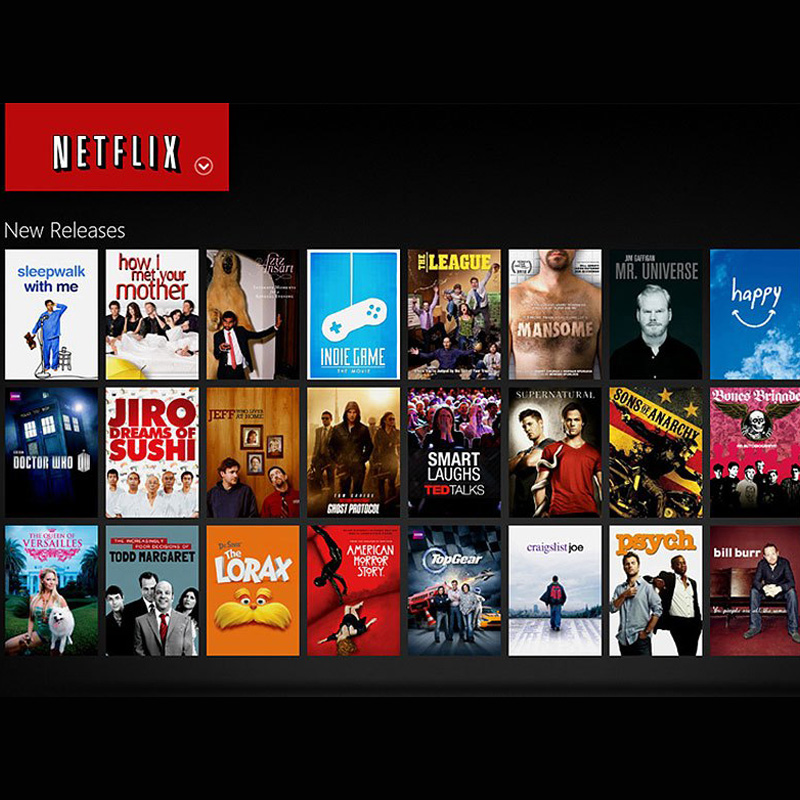
    MUMBAI: The world’s largest over-the-top (OTT) player, Netflix, makes up 15 per cent of the total downstream volume of traffic across the entire internet, according to The Global Internet Phenomena reports by Sandvine released in October 2018. The reports customer base represents over 150 T1 and T2 global network operators and the solutions touch over 2.1 billion internet subscribers worldwide which does not include significant data from either China or India.

    This edition combines fixed and mobile data into a single comprehensive view of internet traffic across all network types.

    Video is still dominant with almost 58 per cent of overall downstream traffic, despite operators more aggressively managing video traffic. The reports from previous years highlighted that Netflix, YouTube, Facebook and BitTorrent were the biggest historical traffic sources. All of the applications are still big players, but the internet landscape has significantly diversified; regional variations are showing up throughout this report. A conservative estimate of the data shows that over 50 per cent of the traffic on the internet is encrypted and the adoption of Transport Layer Security (TLS) 1.3 has grown (showing a shift to a more secure protocol than Secure Sockets Layer (SSL).

    The global application category traffic share have video streaming, web and gaming on top application type on the internet. As web and video traffic dominate, Netflix is the top video site in the world.

    Sandvine CEO Lyn Cantor said, “The foundation of our business model is being ‘the best’ telco network data analytics company with use cases that help our customers understand, optimise and manage subscriber quality of experience (QoE).”

    Amazon Prime service has been a huge market success according to the report, and Prime Video has been increasing its footprint not only in the US, but is now available in 200 countries worldwide and is increasing its share of global traffic.

    YouTube is at the third position when it comes to global application traffic share and still the dominant video streaming application consumed on mobile. Netflix takes the lead due to sheer volume in fixed networks as well as higher resolution videos being the norm. YouTube benefits from being the most commonly “embedded video on other sites, including Facebook.

    Sandvine VP marketing Cam Cullen said, “With the attention of both consumers and network operators focused on network quality, it is more important than ever for operators to understand how their bandwidth is being consumed.”

  • Facebook planning smart STB for TVs with video calling support

    Facebook planning smart STB for TVs with video calling support

    MUMBAI: According to a United States news website, Cheddar, social networking company Facebook is working on smart set-top boxes for TV.

    And according to the sources, the set-top box will be camera equipped. It will also allow video calling along with entertainment services like Facebook’s YouTube competitor.

    Internally codenamed ‘Ripley’, the device uses Artificial Intelligence (AI) to automatically detect and follow people as they move around during a video call.

    Apart from opening the door for video chat feature, the new hardware would help Facebook compete in the TV market averse to Apple and Amazon.

    With concepts like Ripley, Facebook is attempting to build consumer hardware business outside of its virtual reality brand ‘Oculus’. Oculus VR is an American technology company acquired by Facebook in March 2014 for around $2 million.

  • Brands, agencies to rewire approaches using data: CVL Srinivas, WPP

    Brands, agencies to rewire approaches using data: CVL Srinivas, WPP

    MUMBAI: Data. A four letter word that has even the senior most executives sweating and scratching their heads. While it is a small little word, understanding how to use it, is actually very complicated. That’s why  all we’ve been hearing about in the last year is how can brands and agencies leverage the most of data and more importantly, understanding the basics of data. 

    Data is not restricted to using it only in advertising (for data-driven advertising), it can essentially be a very function of every brand. With all the buzz around data and using it to reach the consumer effectively and efficiently, marketers and agencies must know how to make the most of data for better ROI and consumer engagement.

    Google Maps, Instagram, Facebook, Twitter, Snapchat, Google, YouTube, Netflix have all changed our world, and for good! Technology has changed the way we connect with brands and things around us. You like something, you hit a ‘heart’, something makes you furious, you reply via an angry emoji on Facebook. All this consumer behaviour is Data for marketers. And with a consumer’s likes, dislikes, hearts, tweets and browsing history available readily, a brand maps the consumer behaviour and reaches to them with targeted advertising and content. That’s why you only get a message or pop up to shop or buy your favourite pair of clothes, lipstick, car or mobile that you’ve been eyeing for long.

    However, with brands being able to map your behaviour by scrutinising you and using your data, it also violates a consumer right to privacy. To address this, the Government of India is currently considering sweeping a data privacy law –  Personal Data Protection Bill of 2018 , which states that privacy is a "fundamental right" under the Indian Constitution. 

    The bill is closely modelled after the European Union's General Data Protection Regulation (GDPR). It broadly applies to all personal data defined as any data of a person which allows direct or indirect identifiability; and envisions a regime where individual consent is the cornerstone of data-sharing. If the bill is passed, it may change the way on when, where and how much data can brands actually use. 

    Maybe eventually brands will have to pay their users in some form to be able to use their data in the new framework of guidelines. It could be in the form of money, virtual money, coupons or discounts.

    To understand the current scenario and future of data driven marketing, in a quick chat with Indiantelevision.com, WPP country manager CVL Srinivas gave us insights about creating the balance between using data and human insights, future of advertising with data, WPP’s plan for 2019 and more. Excerpts: 

    The importance of data in advertising today is more than ever. How do you see the future of advertising along with data?

    Data is a critical part of every business today. We have a lot more data available to us than we ever had before. Today, every business is looking at transforming itself – by smartly leveraging data, businesses can fast track their growth in numerous ways. Advertising is becoming a lot more data-led. Not just in targeting the right audience or deciding the best 

    medium, data is inspiring creative thinking on brands. We saw numerous examples of data-inspired creativity at our summit today. Going forward, we will see brands and agencies adapting to this new data world by rewiring their approaches. This is not to say that all the

    traditional methods will go out of the window. We need as much of the marketing gut as we need data.

    Having too much data can often become complex. What’s the way out?

    A data strategy needs to start with a purpose. The end uses of data need to be defined. Else there is a tendency to try and boil the ocean. Like we heard from a lot of our panellists that day, that the best approach is to start small, test a few hypotheses and then scale up. 

    Somewhere along the way one learns what kind of data is most valuable for a particular business/brand.

    While brands and agencies have a lot of rich data available today, we don’t know what to do with it. Do we still need time to get there where we understand the data and can leverage it to the best?

    Most businesses are on the journey to get better at harnessing the power of data. There is no one defined method. Some of them have made more progress while others are starting off from scratch. While there is an abundance of data, what we really need is a more 

    balanced approach to putting it to good use. By ‘balanced’, I mean combining data points across different sources to paint a broader picture. That’s where we need to see more progress generally speaking. 

    Focus point for agencies and brands in 2019?

    Data-centricity will be a key priority going forward, but it must go hand in hand with creativity. 

    Do you think brands and agencies need to take a step back, pause and say, “I think we are pushing it too much!” How can we as an industry skip being ad-blocked?

    I think we will soon get to a point where most, if not all advertisers will realise the need to move from a completely push-based advertising approach to a more balanced way of engaging with their consumers. Data and technology are making it easier to identify consumer tastes and preferences more sharply. This will reduce the bombardment. On top of that, if one knows what kind of content engages the consumer, it can result in more relevant messaging being served.