Tag: Facebook

  • Modern brand marketing methods not just digital-exclusive

    Modern brand marketing methods not just digital-exclusive

    MUMBAI: The use of the internet and other digital media and technology to support 'modern marketing’ has given rise to the concept of digital marketing, and we at Tanishq believe that the focus has always been on building a 360-degree marketing plan, with seamless integration of products, services and communication. We try to not look at traditional and digital as two separate entities. Although digital ad spends have shown a considerable increase in comparison to traditional media, the base however, continues to be relatively smaller. Regardless, we have intensified the number of digital assets and we are also leveraging new-age tools at disposal like geo-targeting, virtual reality, online-to-offline attribution modelling etc., basically all tools that help us ensure maximum accessibility of the brand, for the consumers.

    Most categories and brands are focusing on a multichannel media approach and that has reflected a lot in the festive season as well. With regards to the ad spend share for FMCG brands, we have noticed a reduction in their focus from traditional mediums like TV and seen them re-direct their path to the digital front with customised campaigns across YouTube, Facebook, Instagram and other social channels.

    With the upcoming concept of omni-channel marketing, a smart digital strategy becomes all the more critical. No more can we focus only on one medium, especially if buyers themselves are branching out through new arenas. A diversification in mediums is essential when it comes to communicating our brand messaging.

    Brands today are evolving with its consumers, and are looking towards transforming mass online marketing to one-to-one interactions to engage with the consumer. As a result of this, we are already on our way to developing a big-data driven approach to create moments of delight for our consumer through an intelligent recommendation system, not to mention taking the in-store experience online through AR/VR tools. Basically we want to be present with the customer, when the “intent rich” digital discovery moment occurs.

    (The author is  associate vice president, marketing, jewellery division at Titan Company. The views expressed here are her own and Indiantelevision.com may not subscribe to them)   

  • Bob Bakish on turning around Viacom, tie up with CBS, company’s culture and future

    Bob Bakish on turning around Viacom, tie up with CBS, company’s culture and future

    MUMBAI: Viacom CEO Bob Bakish describes his tenure at the giant company using two words – turnaround and evolution. At the end of 2016, Paramount Pictures was coming off a year where it had lost half a billion dollars and consumed another billion in cash. There was friction with distributors with the company’s cable networks not performing as they should have. It highlighted a trend line that was moving in the wrong direction. Cut to 2019, Paramount has delivered an earnings improvement in seven straight quarters with earnings improvement. The studio produced films that matter and made money on them. The television business delivered 400 million dollars in revenue, putting out nine series. Bakish has scripted one of the most fascinating times in the media and entertainment world with his work as CEO of Viacom. At CES 2019, he sat down for a fireside chat to reveal how we made it happen. Here are the excerpts of that insightful conversation with Variety.

    You’ve been on record recently saying Viacom doesn’t require a transformational deal. In this environment there were companies even bigger than yours are consolidating. How is that position tenable?

    Look, we and I, continue to believe there’s a lot of value in the assets we already own. In 2016 people thought that MTV was dead and buried but today it is the fastest growing network in television. Its audience is up again, in the current quarter, in double digits and we are already beginning to benefit from that resurgence from a monetisation standpoint… there’s a lot of value to the assets we already own. We, unlike most media companies, are truly a global operating media company, we don’t just have sales forces outside the US, you know we own the number one broadcast network in Argentina, we are major broadcaster on Channel 5, we are making content all over the world. We own half of the leading Indian media company called Viacom18 which owns the Colors brand. There’s a lot of value there and if you think about the transition we are in from an industry standpoint. Back in February of ’17 we started talking about something we call a flagship brand which was partially about prioritisation but it was also about unlocking opportunities through multi-platform expression. If you look at MTV, it’s only not only a linear cable network with substantial programming slate, but it also has a piece of the Paramount film slate. We started a digital native division called the Viacom digital Studios which produces original content in short form for distribution both in front of the wall social and other places… that has dramatically taken us from number 22 in space into top 10. There’s a lot of opportunity and when we got to our fourth fiscal quarter of ’18 we saw our company to return to growth, something that hasn’t been the case since ’14. So, we think there’s a lot of growth ahead.

    And relative to some of our peers, we are further along in making this transition. Look at the ad business, it’s not all 30 seconds up. We got an advanced ad business with significant branded content assets, significant data-driven assets. We can insert dynamically in 90 per cent of the VoD homes in the US. Something nobody else we can do. We have been doing M&A, we have been doing what I call accelerant deals. We bought a company called Whosay, a branded content company, which clearly increased our capabilities in the lower-end of the branded content space from a price perspective which is important. We also bought a company called Vidcon which is ground zero for social influencers… it has really strengthened our legacy with young-adult audiences and associated talented and it is also an extension of our experiential business, we most recently bought a company called Awesomeness which people think of as a web company and it’s true that they are an expert in marketing content on web but it’s also true it’s a studio in its own right. And increasing our participation in creation of content including for third parties is a big push we are making as a company and that Awesomeness has produced among other things “To All the Boys I have Loved Before”, which was amongst the most watched shows on Netflix.

    But these are very small deals. Are you going to look at making bigger deals or are you looking at more of the same smaller deals?

    Scale is very much in vogue, vertical integration is very much in vogue. If you look at the history of the industry in certain media vertical integration doesn’t tend to work, bigger is not always better. I don’t think that is the necessary path. What is really important is that you have a plan and you know where you are going and you’re executing against and you are achieving growth and that’s exactly what we are doing.

    Let’s address the elephant in the room. There’s a plenty of speculation that Viacom and CBS can be combined this year. How do you manage for you know an uncertain future? Do you have a distinct vision that you are planning for Viacom with smaller acquisitions or are you trying to build for a bunch of different possible futures?

    I’m a huge believer in having a plan. Our plan is fundamentally based on the assets we have because that is the only thing I can bet on for sure. We got to focus, we got to play through, we got to execute, we got to grow because there’s only one thing I know for sure that at the end of the year you are going to be talking to me or you are going to be talking to somebody else. What you don’t want to have to say is that ‘well yeah we had this opportunity but we got distracted and we didn’t get it done’. So our mission continues to be focussed on the assets that we have, focus on execution, look broadly to capture value and opportunistically see what else happens, and that’s what we do day in and day out and that’s what we’ll keep doing.

    However, in this climate where the pay-TV business is challenged, you guys are dealing with your tensions with some of major distributors. That could end up dropping key channels. How do you manage the future?

    You have to make sure you’re adding values. Point one and two is that you have to recognise how the world is changing. To the first point, talking about what we are doing in distribution, we broadened our ability to add value for our mutual benefit, both our partner’s benefit and Viacom’s benefit and certainly our whole extension to advanced advertising, what we call AMS, is fundamental to that.

    The second thing I would say in terms of how the world is changing is the fundamental thing is going on is fragmentation in terms of how people access content. In the television space 85 per cent people had the same product and that was big basic and that was very nice structure. Today, that’s no longer true and it continues to fragment. So you have a vast majority of the people in the highest priced segment, but you got people at 45 dollars, that price is starting to creep up as people are trying to make economic businesses there. We have people in teens, people around 10 bucks in terms of the SVoD space, then you have some single digit numbers and then you have free, the AVoD mode. So, that world is not going to change, that’s the world we are going to live in, and what’s important is that we take these called flagship brands and we make sure that we participate in all those levels. The big basic levels, that’s fairly obvious… you know we are active in VMVPD in the OTT space, we are also active in the SVoD space through our third party production business.

    Are those deals in the future big enough?

    We are in the state of transformation of our industry. You can either view that as glass half full or half empty. I view it as half full. Global distribution really is the catalyst that will turn this whole decline of television argument on its head because you have 3G, soon 4G, never mind 5G as 5G is more about fixed broadband. It will eventually be handset. If you have 500 million pay TV homes outside the US at the high side, probably 300 million quality ones, if you take out India and China. These kinds of deals where you bring in product either products that look like exactly what you get on television so that’s Telefonica and aggregated product that combines a lot of different things under one brand.

    We are in Indonesia with a mobile carrier that has 160 million subscribers. We have Nick Play and Nick Junior Play apps which provide access to that product on an on-demand basis. Some of these are through a third party intermediary, you could think Amazon channel store, and some of these are called B2B2C deals with carriers. You could think about Telefonica or Telenor or Telecom Cell. Now in this kind of hybrid economy of distribution, unfortunately, everybody doesn’t get the same thing, people are getting different products bigger bundles or smaller bundles.

    So you look at the difference between Sling and Dish in the US. For us we are carried on both, but all the Sling ads are dynamic, we can insert a specific ad to a specific person based on specific data. On the Dish platform we can’t do that, for obvious reasons, it’s a DTH going down, we can’t do it because of some technical work but that is another big move forward in terms of our ability to create values and we are in the super early days of that.

    So your focus will be more and more on production now, and what’s interesting about that is if there is a double edged sword to the success there. Doesn’t it make it harder for you to get eyeballs because people are watching your content on Netflix or Facebook? Doesn’t it hurt your core business?

    No, it doesn’t. For two reasons, one is whether we make a show for Facebook or not it’s not going to influence whether they have shows on their platforms. Point two is the most important thing from a consumer perspective and that is to continue to have our flagship brand on top for consumers that think about entertainment. And that entertainment might be going to see a movie in a theatre, on your flat screen watching pay video bundle or access to product on an app. Out of the extended ecosystem of entertainment experience associated with these brands that cross this fragmented environment is what it’s all about. It provides great solutions for advertisers. It’s all about being able to get reach to say men 18-34, which is not easy to reach these days, it is harder than ever. Use a cross-section of platforms, leveraging our linear distribution, adding our app distribution, adding our over the top distribution, adding our Viacom Digital Studios product, in branded content, in a programme that synchronised to reach that 18-34 group.

    How did you energise thousands of employees especially at Viacom, because looking at their world, there is pessimism, there is negativity. How did you get people going?

    You have a plan and you have to make sure people understand what it is and how they fit in and both you and they can understand if you are making progress and if so it is the path you want to take. Or if you are not making progress in one year you can see if you want to take some different direction. If you talk to people at Viacom they fundamentally believe in our plan. That we are actively participating in places that we haven’t before including providing original content on a day-in-day-out basis to the AVOD digital stratosphere and that we are acting in advance. In total, we actually grew the earnings of the company and all of that is the culture of content. Whether you make short-form, long-form, feature-length or event, whether you are on the creative side, monetisation side, or sports side, they all are working in this culture of content and they see the progress we’re making. I know because I talk to them, at least quarterly, I talk to them on Facebook live and take questions and ask them do you see the progress. Because at the end of the day people are pretty simple, it comes down to what’s in it for them and that is the future.

    Here at Las Vegas with CES you are spending a lot of time. What are the kind of technologies that are catching your eye?

    If you think about the fundamentals of our business there are kind of two things we are working on. One is we get the consumers to spend more time, that’s important, and two is that you are getting paid for it. If you have those two things, everything else can sort itself out. And if you look at the arc of consumption, I remember because I’ve been in this business 30 odd years when second TV sets starting showing up in scale in kids’ bedrooms and other places and that drove more minutes. That was a good thing and then more reasons like computers with infrastructures started to show up in places like offices and that wasn’t really in the heavy video space but there were more impressions and of course much more recently you get into over the top and you get into mobile and that’s much more ton of a product. There are two things that are coming like a freight train. One is the continuing acceleration of broadband infrastructure both in the name of 5G which is definitely coming as you all know, maybe its fixed broadband first but that’s going to flood in and all the wireless carriers when you talk to them all they say we need use cases and certainly entertainment is a use case and the other thing that’s got less press at CES is 10G and that’s the cable industry talking about their next length. They are delivering 1G now and their next push is to deliver 10x that which will be five years or something. 5G autonomous cars that people don’t have to drive is also coming. So just like adding a TV set to a bedroom or adding mobile on the go, the last vestige of video free consumption is automobile.

  • Facebook appoints Siddharth Banerjee as director-global sales organisation

    Facebook appoints Siddharth Banerjee as director-global sales organisation

    MUMBAI: Siddharth Banerjee, the ex- Vodafone EVP marketing, has moved on from the organisation and has joined Facebook India as director—global sales organisation.

    His role includes partnering with businesses to help them to achieve strong business outcomes by leading the verticals, agency relationships and solutioning teams for Facebook India. Banerjee comes with an experience of 19 years in marketing and sales.

    He initiated his career as the regional sales manager at Reckitt Benckiser and served the company for two years. His next move was at General Mills as the area sales manager. After working with the organisation for a year, he joined Unilever in 2003. He was appointed there as the area sales manager and after the span of two years he was elevated as the national marketing manager. Banerjee spearheaded many caps like regional marketing manager, global category director and country marketing director. After his 12 years of stint with Unilever, he joined Vodafone.

  • Buzzoka launches Influencer Marketing Outlook 2019

    Buzzoka launches Influencer Marketing Outlook 2019

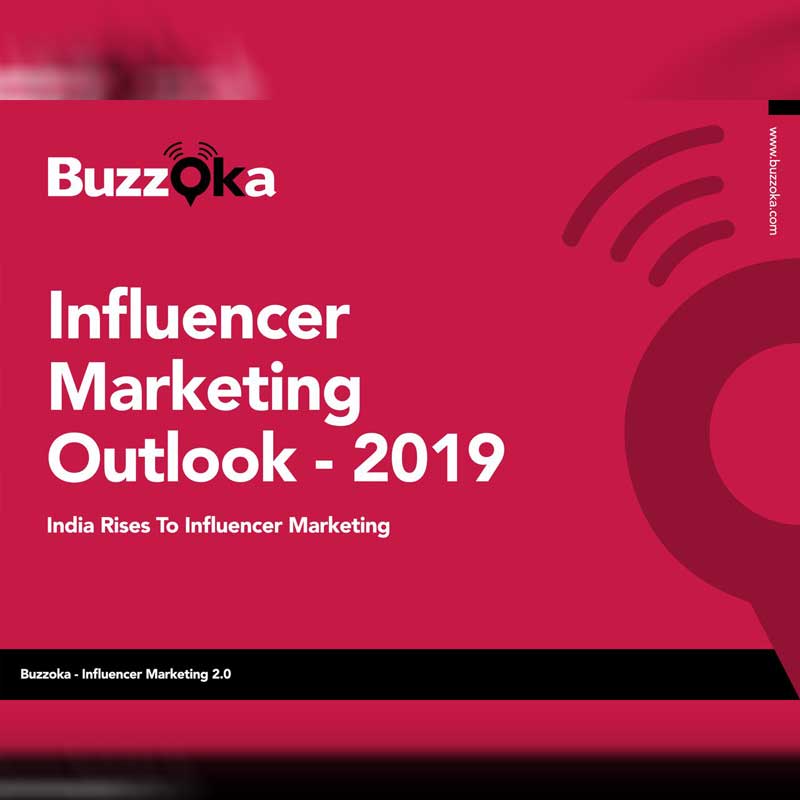
    MUMBAI: Integrated influencer marketing platform Buzzoka has released the second edition of its annual ‘Influencer Marketing Outlook’ series. As per the survey, which was conducted with over 500 brands and content creators, Instagram is the primary choice of brands for influencer marketing.

    The report that tries to provide a provide holistic understanding of influencer marketing ecosystem in India highlights that 69 per cent of brands spend $ 50,000 per year on influencer campaigns, while 27 per cent go ahead to spend $ 1,00,000 per year. Out of these, 77 per cent brands see huge potential in Instagram as the primary choice for influencer marketing, followed by Facebook at 54 per cent.

    The report also forecasted a market potential for 2019 predicting that top three platforms for influencer marketing will be Instagram (69 per cent), LinkedIn (8 per cent) and TikTok (8 per cent). The increased growth in influencer marketing and successes in 2018 has inspired the brands to spend more on influencer marketing. 73 per cent brands will thus be investing more.

    Buzzoka co-founder Ashutosh Harbola said, "We are glad to unveil the second annual report highlighting the substantial facts that are driving the market growth. Influencer marketing has never been more important with the years passing by. The consumers continue to trust word of mouth versus other forms of marketing.” 

    He further stated, “Being a key player in the industry, backed by the passionate team of experts, we are really optimistic that influencer marketing has the potential to grow manifolds in the coming years. Also, we are gung-ho on the inclusion of commoners in the gambit of influencer marketing and hope a billion dollar industry is waiting in India to be explored.”

  • Indian M&E saw mix of regulations change the game in 2018

    Indian M&E saw mix of regulations change the game in 2018

    MUMBAI: If TRAI’s tariff regime for the Indian broadcast and cable sectors did not occupy top mind space of the industry in 2018, the year just gone by could also boast of some other major regulatory exploratory moves that could have deep impact on the sector in the near future; especially those relating to data protection, digital communication policy and online content that, according to some critics, is on a freeway with no checks and balances.

    Though many would say that the Indian media sector continues to be a challenging market (a polite euphuism for high level of regulation) offering tantalising opportunities because of sheer numbers on offer, Indian policy-makers have always had to counter such perceptions and, like their peers in many other parts of the globe, have at times found themselves outpaced by technology.

    Increasing protectionism aka economic nationalism around the world, led by the likes of US, the UK and China, resonates very well with Indian politicians and policy-makers too. And, such a trend is led more by regulations.

    Year 2018 has seen an interesting mix of regulations (some are still in the formative stages) for the Indian media and entertainment sector. Here we try to capture some of the annual highlights.

    Telecom Regulatory Authority of India

    Broadcast carriage regulator Telecom Regulatory Authority of India (TRAI)’s new tariff regime that had been embroiled in legal tangles hogged the limelight throughout 2018 with judicial directions clearing some hurdles. The last part relating to the 15 per cent discount cap was also dismissed as withdrawn in the Supreme Court.

    Issued early 2017, tariff regime aims to do away with bundling of TV channels and offering them on a la carte basis to consumers, apart from other directions like caps on discounts to consumers and distributors of content. The regulation’s main aim was to empower further a consumer who has primarily grown up on a diet comprising free meals. I-should-have-access-to-200-TV-channels-and-best-content-but-will-pay-a-nominal-monthly-fee attitude has over the years definitely spoilt the Indian consumer and part of the blame does lie with the industry that has been subsidising costs in a mad race for numbers.

    Now that TRAI wants to break those shackles of the consumer, industry stakeholders also have been pushing back against changes in the status quo. If content aggregators or broadcasters are to be blamed for subsidising costs, distributors, especially LCOs, too should be blamed for refusing to change with time and technology that have now brought them to the precipice where saying no to technological changes and upgradation could only hurl them towards closure. Lack of proper awareness and education of consumer too has created a vote bank of sorts that wants to consume global dishes at Indian rates.

    TRAI could be blamed for many things, but certainly not for lack of transparency. One of the most transparent regulators in the country, not only does it hold wide ranging discussions with stakeholders and industry, but has made some good recommendations too. For example, the regulator’s suggestions on ease of doing broadcast business, a new DTH policy and even use of foreign satellites or Open Sky Policy are not only radical but progressive and industry-friendly.

    However, many such nuggets are not implemented by nodal ministries like the Ministry of Information and Broadcasting, Department of Telecoms and Department of Space.

    In 2019 it is to be seen the stand TRAI takes on issues like proposed changes in audience measurement, OTT platforms (excluding video content) and the fast disappearing boundaries between telecom and traditional media companies as business interests converge.

    Ministry of Information and Broadcasting

    For MIB the year 2018 has been a roller-coaster ride with a former minister making more news than policies it has framed and rolled back. Whether it was a purported crackdown on social media and online journalists or handing out diktats to Indian TV channels to shift to Indian transponders or face the music or planning a social media hub within the ministry to track Indians’ digital footprints, TV-actress-turned-politician Smriti Irani has been in the limelight too often… till a Cabinet reshuffle saw her relinquish her MIB responsibilities to her junior minister Rajyavardhan Rathore in the first quarter of the year.  

    Irani waded into controversies because of her largely perceived unpopular move to create a panel in April 2018 to explore regulations for online media/news portals and online content. It did not help her or the government’s cause as this announcement, though being hinted at for several months, came close on the heels of a widely protested move to cancel accreditation of journalists if found peddling fake news, while the government did not define clearly what constituted fake news.

    Though the order was rescinded at the behest of the PM’s Office, the move had antagonised not just online journalists, but also social media players (many of whom are backed and funded by government’s sympathisers) and video-on- demand portals. That the responsibilities have been now passed on to Ministry of Electronics and Information Technology (Meity) tells how hot a potato it had been — and still continues to be with the latter being able to only partially address some of the issues.

    It would be an understatement to say that the past two years have been a difficult period for the Indian media and entertainment (M&E) sector what with after-effects of demonetisation of high value currency notes late 2016 and a new tax regime of GST rolled out last year. The story remains the same for ease of doing business in the sector as well.

    MIB is still to focus on the recommendations made by TRAI on 'Ease of Doing Business in Broadcasting Sector’ and implement them in letter and spirit. A unilateral decision by the previous leadership of MIB to impose a processing fee of Rs 100,000 per day/channel on temporary live uplinking of events (such as sports) and the same amount for seeking minor amendments (like change in name, logo, etc) is still causing heart burns.

    What was the rationale behind such moves to review processing fees? Allegedly non-revision for several years and that such a move could bring in some revenue for the government. But, should a government use licensing/permission fee as means of revenue maximisation? Probably, no.

    Towards the end of 2018, a proposal to amend the mandatory sports sharing rules to allow all distributing platforms to re-transmit sports programmes on Doordarshan’s terrestrial network where the rights lie with a private sector TV channel is unlikely to please those broadcasters who have invested billions of dollars in getting premium content for the Indian region. Giving up exclusivity would hurt the business, the sports broadcasters have chorused. It is to be seen how the MIB reacts to criticism of such a proposal.

    A revision of the DTH policy too is hanging fire as is an overhaul of the film certification processes as suggested by the Shyam Benegal committee. Interestingly, clearances for new TV channels too slowed down in 2018.

    Ministry of Electronics and Information Technology (Meity)

    For the Indian M&E sector, Meity gained importance in 2018 as proposals to regulate OTT platforms like WhatsApp, Facebook, YouTube, etc fell in its lap as has the proposal to frame content guidelines for the country’s burgeoning digital sector.

    If online video distribution is growing in India, so has the demand for content regulation. Even as Indian policy-makers struggle to understand the business model(s) for digital players, the cry for regulation to suit Indian sensibilities (or lack of it) too has increased. Netflix Indian original Sacred Games is still fighting out a legal case, while informal warnings have gone to other Indian OTT platforms too to tone down edgy programming being streamed.

    Bouncing amongst several government organisations (MIB, TRAI and Meity), the issue of online content regulation was a hotly debated topic in India with a large section of the industry pushing for self-regulation like those prevailing for TV content.

    If not in 2018, some sort of content regulation for online video will definitely come. With general elections round the corner in Q1 of 2019, Meity has preferred to sit over the issue of online content regulations.

    In response to a question asked by Congress Party’s Dr AM Singhvi few days back, the government informed Rajya Sabha or Upper House  that it has no proposal to introduce a legislation to codify web media and news portals or to introduce legislation for mandatory registration of web news portals. So, it’s truce for the time being.

    Department of Space

    Indian Space Research Organisation (ISRO) over the years has done some incredible work, including making the country an important player in the realm of global space industry. But in its zeal it has also ended up with several conflicts of interest — most importantly being a player and a gatekeeper or a regulator too.

    Thus, despite PM Modi’s government claiming it has eased norms for doing business in India, the foreign players in the space sector will always say otherwise. Year 2018 was no change from previous years as DoS and ISRO continued to push for increased reliance on Indian satellites for delivering broadcast and telecoms services while having inadequate capacities to match ballooning domestic demand.

    That satellites can play a critical role in deployment of broadband in remote places in India makes it imperative that a collaborative outlook on Indian and foreign satellites is taken. However, a new space policy, drafted in 2018 and likely to be brought in Parliament sometime in 2019, has left most foreign players and investors with an uneasy feeling as early readings suggest restrictive norms.  

    Department of Telecoms

    One of the biggest telecoms market in the world, India’s total subscriber numbers are a shade over 1191.40 million, while the wireless segment clocked a subs base of 1,169.29 million end of September 2018 as per data collated by TRAI. And, this humungous growth in mobile tele density has been fuelled by cheap feature phones and data packages at throwaway prices, though the internet infrastructure continues to be patchy.

    And, one of the biggest policy decisions of 2018 has been the formulation of the National Digital Communications Policy (NDCP), 2018 that seeks to unlock the transformative power of digital communications networks to achieve the goal of digital empowerment by attracting investments of about $ 100 million over the next few years.

    The NDCP 2018 aims to accomplish the strategic objectives by 2022 of broadband for all, creating four million additional jobs in the digital communications sector, enhancing the contribution of the digital communications sector to 8 per cent of India’s GDP from 6 per cent in 2017 apart from several other aims.

    The NDCP will aim to have more synergies amongst various government organisations, stopping just short of creating an over-arching communications regulatory body for broadcast, telecoms and digital realms.

    In some ways every new beginning comes with a mix of hope and fear, but India’s telecoms, broadcast, cable and digital sectors do have many upsides to look out for in 2019. That is, if policy-makers do uphold their part of the bargain of easing norms for doing businesses even while empowering the consumer and making the country an investor-friendly destination.
  • Nestlé launches Workplace by Facebook

    Nestlé launches Workplace by Facebook

    MUMBAI: Nestlé has adopted Workplace by Facebook as its global internal communication tool, to connect its workforce and better serve consumers. While a large majority of users have now joined the Workplace platform, the rollout will continue throughout 2019.

    The announcement comes as the latest and largest wave of staff join the platform, part of a process that began only nine months ago. Today, around 210,000 of its employees worldwide use the platform to connect and collaborate.

    Nestlé has pledged to move quicker to turn good ideas into great products to meet fast-changing consumer demand. With the majority of its employees active on the platform, Workplace is already making a difference. Internal engagement is higher and responses faster. People are experimenting and collaborating more, as well as sharing information and ideas.

    Workplace offers familiar Facebook features such as news feed, groups, chat, events and live streams, as well as seamless mobile integration.  Because Workplace is easy to use, it can connect everyone and reach employees where they are.

    The first wave of market adoption including Mexico, Brazil, the Middle East and South Africa saw 25 times higher engagement per post and very high rate of use on mobile devices. Amongst other advantages, managers can use Live video to connect directly with employees at different locations. Sales teams can also use Workplace for daily check-ins and to share information and best practice.

    Commenting on the move to Workplace, Nestlé executive vice president Chris Johnson said, “Nestlé is a people-first environment. We really rely on our talented teams to manage more than 2,000 Nestlé brands worldwide. We help our employees develop and we give them the right tools, so Workplace is a perfect fit.”

    Nestlé chief information officer Filippo Catalano said, “Today, using Workplace by Facebook we are able to give our employees across the globe a platform to build connections, enabling faster and more engaging sharing of information.”

    Workplace by Facebook vice president Julien Codorniou said, “As the global work landscape continues to change and the demand for better collaboration, best-of-breed IT and mobile-first work increases, we are honored to partner with a company like Nestlé to help employees work together to allow for limitless innovation.”

  • Facebook tops list of least-trusted tech cos

    Facebook tops list of least-trusted tech cos

    MUMBAI: The year 2018 has been a stormy one for social media giant Facebook. In the latest stir of data breach events surrounding company, the company is said to have sidestepped its own privacy rules to give more than 150 companies, including Microsoft, Amazon, Netflix, and Spotify, special privileges to its user’s data.

    Now, in a recent survey conducted by research company Toluna, it reported that out of 1,000 participants, 40 per cent of participants trust Facebook the least with their personal information. This gave Facebook the number one position in the list of least-trusted tech companies.

    With 8 per cent, Twitter and Amazon are tied for second on the list followed by Uber on the fourth with 7 per cent of participants saying they trust the company least with their data.

    Google and Lyft with 6 per cent are tied on the fifth position. Apple and Snapchat at 4 per cent, Microsoft at 2 per cent, Netflix and Tesla both at 1 per cent making them the most trusted company with personal data in the survey list.

    Since the Cambridge Analytica scandal, Facebook has seen a bumpy ride as controversies have been following the social networking company.

  • OTT platforms may soon adopt self-censorship

    OTT platforms may soon adopt self-censorship

    MUMBAI:  Leading OTT players clearly don’t want the government interfering with their content or creating rules like broadcast. So, Netflix, Hotstar, Reliance Jio and some other streaming services may soon adopt a voluntary censorship code.

    As part of the code, the platforms will remove content that has been banned by the courts and that disrespects the national flag, emblem, hurts religious sentiments or promotes violence or terrorism against the country, or even shows children in sexual acts. These are codes that even the broadcast industry follows.

    Economic Times citing sources reported on the self-censorship initiative. However, tech companies including Amazon, Facebook and Google are unlikely to sign up for the code as this move of could set an example of how to regulate internet and meddle with creative freedom.

    The code is likely to include a “redressal mechanism” allowing the users of the streaming platform to issue complain in case they think that the over-the-top (OTT) services have violated the code. Eventually, this mechanism may transform in an “adjudicatory body” that will resolve the complaints filed by the customers.

    According to the report, ZEE5, Times Internet, Eros Now and AltBalaji are in favour of the code and the Internet and Mobile Association of India (IAMAI) is facilitating the process. It also added that the players who don’t think it as a very wise step opine it would lead to an unnecessarily nervous environment and validates the government’s point of view that the internet needs regulation.

    Allegedly, the whole process has been opaque and closed-door while content creators have not been included in the discussions. The opposition group to the court also believes the process has been swayed by companies that want OTT companies to be at a more level playing field with broadcasters.

  • Facebook India reports 27% rise in profit in FY18

    Facebook India reports 27% rise in profit in FY18

    MUMBAI: According to Registrar of Companies (RoC) filings sourced by data platform Tofler, Facebook India Online Services reported a 27 per cent increase in net profit to Rs 77 crore for the year ended March 2018.

    Facebook reported a 53 per cent rise in revenue from operations to Rs 521 crore in FY18 from Rs 341 crore in FY17. At the same time, expenses went up 55.4 per cent to Rs 443.8 crore in FY18 from Rs 285.5 crore.

    The company’s employee benefit cost also rose 18 per cent to Rs 110 crore from Rs 89.6 crore last year.

    Although, Facebook reported a 53 per cent rise in revenue in FY18 but as per filings, it reveals that there has been a slowdown in the rate of growth. Facebook had reported a 93 per cent jump in revenue to Rs 342 crore in FY17 from Rs 177 crore in FY16. And with that, the growth in net profit also looks to have been slowing down as Facebook’s net profit had jumped 31 per cent to Rs 40.7 crore in FY17 from Rs 31 crore in FY16.

    After the Cambridge Analytica data breach, Facebook had drawn a lot of criticism both from users and advertisers. Since then, Facebook has tried to take several measures to fix the issues.

    To call attention, in India, Facebook has undertaken an offline process to verify identity and locations of political advertisers in India as the country’s general elections arrive next year.

  • #YouAreMyParleG short films created by thought blurb continues to tug at the hearts of Indians

    #YouAreMyParleG short films created by thought blurb continues to tug at the hearts of Indians

    MUMBAI: The second leg of the #YouAreMyParleG campaign is back with three heart-warming films by thought blurb. No Indian needs an introduction to this brand that’s become an icon in itself. The brand is one of the oldest in India and appeals to every demographic in the country, transcending age and socio-economic divides. Parle-G biscuits are as inseparable from the Indian consciousness as some human relationships. This variety of human relationships would need different interpretations that can be related to the viewer’s deep bond with the brand. Parle wanted to talk about this very bond Indians have with Parle-G through human relationship and so came the campaign ‘You Are My Parle-G’..

    thought blurb, the creative agency behind the campaign was given this challenge. Mayank Shah, Senior Category Head at Parle Products, Parle Products gave the agency a clear one-line brief – ‘Parle-G is not just a brand, it’s an emotion.’

    The first phase of this campaign was launched in the month of August with two films that celebrated relationships we often forget to acknowledge, but without which, life isn’t quite the same. The first film was a long overdue salute to the unsung hero of the nation, the soldier while the second film captured the unbreakable bond between a brother and sister who can’t stand each other yet can’t stay apart. Needless to say, both films received an overwhelming response and went viral.

    Followed by the success of the first phase of the campaign, Parle launched the second phase in December with three films that told stories of everyday relationships and focused on that one person everyone has in their life who has always been there for us. They are such an important part of our life that we take them for granted, just as we take our breath for granted. 

    These films take us through the inevitable, deep-settled familiarity between a husband and wife, the intense bond between a mother and son that never fades with time or new family members and the endearing, eternal bond between a father and daughter. In each film, an action, a few words, or an emotion triggers the moment of clarity. The subtext of the relationship becomes clear to the protagonist and they understand how indispensable the other person is to their life. India’s complex and unwavering connection to Parle-G is equated to this. When the protagonist tells someone ‘You are my Parle G,’ he speaks for India and its relationship with the brand.

    One of the astounding facts about this campaign is that it became viral through WhatsApp, Facebook, LinkedIn and other channels, organically much before putting any media money behind it. This is a good example of a client working closely with the agency, thought blurb to create video content for a brand, that narrates a story so powerfully that it makes for compelling viewing. After all, even in the digital age, the source code for every engaging content continues to be consumer stories.