Tag: Facebook

  • Facebook’s revenue rises by 28% to $16.9 billion in Q2 earnings

    Facebook’s revenue rises by 28% to $16.9 billion in Q2 earnings

    MUMBAI: Facebook beat analysts’ expectations in the second quarter, posting $16.9 billion in revenue with money from advertising pegged at $16.62 billion. The result came after hours aftee Facebook struck a $5 billion settlement with the Federal Trade Commission following the 2018 Cambridge Analytica scandal. The social media giant recorded a $2 billion charge in the quarter tied to the FTC settlement while it previously set aside $3 billion.

    The social media giant’s earnings per share rose to $1.99 cents in the quarter and monthly active users across its family of services, which includes Instagram and Whatsapp, were 2.41 billion as of 30 June 2019, an 8 per cent increase year-on-year. Moreover, daily active users also saw an increase of 8 per cent reaching 1.59 billion on average for June 2019.

    In addition, the company estimates that more than 2.1 billion people now use Facebook, Instagram, WhatsApp, or Messenger every day on average and more than 2.7 billion people use at least one of the company’s family of services each month.

    “In July 2019, we entered into a settlement and modified consent order to resolve the inquiry of the FTC into our platform and user data practices. Among other matters, our settlement with the FTC requires us to pay a penalty of $5 billion and to significantly enhance our practices and processes for privacy compliance and oversight,” the company highlighted.

    “In particular, we have agreed to implement a comprehensive expansion of our privacy program, including substantial management and board of directors oversight, stringent operational requirements and reporting obligations, and a process to regularly certify our compliance with the privacy program to the FTC. In the second quarter of 2019, we recorded an additional $2 billion accrual in connection with our settlement with the FTC, which is included in accrued expenses and other current liabilities on our condensed consolidated balance sheet,” it added.

    Facebook mentioned that the company was informed by the FTC in June that it had opened an antitrust investigation of its company. It also noted that the online technology industry and the company have received increased regulatory scrutiny in the past quarter. Moreover, the Department of Justice announced in July that it will begin an antitrust review of the market-leading online platform.

  • CITROEN INDIA LAUNCHES #InspiredByIndia CONTEST

    CITROEN INDIA LAUNCHES #InspiredByIndia CONTEST

    Continuing its Brand immersion, Citroën India launched a contest for the Indian market – #InspiredByIndia. This unique contest will allow the participants to explore their creativity, while getting a chance to win Citroën Lifestyle products. The contest started on 15 July 2019 and the winners of the contest will be announced on 05 August 2019.

    After introducing the Brand to India with pronunciation guides in 18 Indian languages, Citroën India is engaging Indians through this contest with the Brand logo. Taking the tagline of Inspired by You one step ahead, Citroën wants to be Inspired by Indians by their unique interpretations of the double chevrons logo in their surroundings. Be it the colourful rangoli, samosas or kites, the contest will entail people of India to find the chevrons in the more creative ways and share it, to be eligible for the contest.

    Commenting on the contest, Mr. Roland Bouchara, Senior Vice President, Sales & Marketing, Citroën India, said, “Since inception in 1919, Citroën logo stood for boldness and an unfailing human attachment. Globally, Citroën is a “Loved Brand” recognised for its Bold Designs & Comfort offering unique “People minded technologies” in its vehicles. The unique double chevron logo is unmistakably & distinctively Citroën. We are new in India. To connect with the new age “digital Indians” we have launched the #InspiredByIndia Contest on Facebook, Instagram & Twitter which will enable the people of India to engage with our Brand through the exciting opportunity of identifying omni-presence of chevrons in our everyday life.  The contest is now live and we would like to invite everyone to be a part of Citroën’s exciting new journey in India. Come join us!”

    A Century Old History of Citroën logo

    In 1900, André Citroën successfully utilised a patent for gears in the form of double chevrons, a symbol he then used in 1919, when he began to manufacture cars. Between 1921 and 1936, the oval was replaced by a hexagon on a blue background that highlighted the yellow chevrons, then the name Citroën was introduced. In the early 1930s, a parallel logo appeared, representing a swan sailing in Citroën rafters, to symbolize the new floating engines.

    By 1959, yellow chevrons protrude from a white ellipse and then in 1966, the name Citroën is integrated in a blue square. From 1985, to modernize the image of the brand, the rafters are now white and inserted within a red square. In 2009, the brands new logo features chromed and rounded chevrons in 3D, with Citroën inscribed in red underneath. It was refined further in 2016 when a 2D version inspired by a flat design, was unveiled.

  • Facebook’s ‘Why Am I Seeing This Ad’ update to help brands create better impact

    Facebook’s ‘Why Am I Seeing This Ad’ update to help brands create better impact

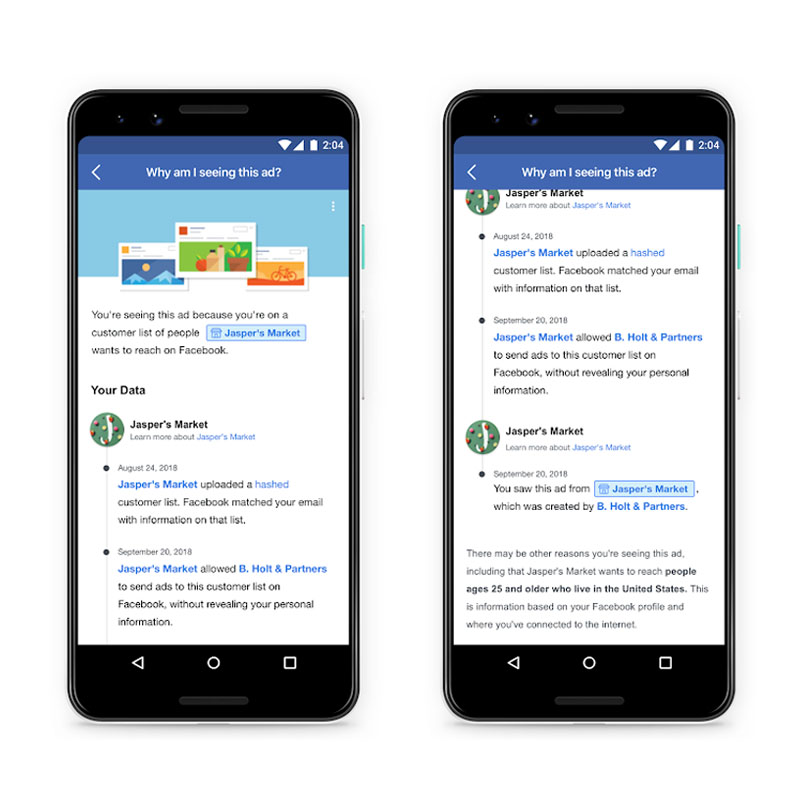
    MUMBAI: Social media giant Facebook recently announced some new controls to its ‘Why Am I Seeing This Ad’ feature offering more transparency and control to its users. The platform will now show more detailed information on the targeting parameters used and the source of information for a particular ad, among several other control measures for the users to pick which ads they want to see and which they don’t.

    Digichefs co-founder Deep Mehta feels that there was a strong need for Facebook to roll out features like these given ‘the scandals’ it had been involved in during the last few years.

    Logicserve Digital co-founder and CEO Prasad Shejale thinks that the social media company is making conscious efforts to take care of  users’ data & privacy and gain back their trust after numerous concerns that it has faced around user data misuse.

    He adds, “Also, we saw many countries passing laws to ensure user data is protected and not misused by companies and brands including GDPR, California Consumer Privacy Act and also India's Personal Data Protection Bill to be discussed in the upcoming parliament session. The new-age users are smart and becoming mindful about their data, its usage, and how, at times, unwanted ads often cross the fine line between being helpful and being spooky. This further adds to consumers' concern about how their information reaches the brand. They also feel the need for an option to opt-out of such marketing activities and, sometimes, judge the brands for exploiting users' behavioural data.”

    Times Internet COO-Indiatimes and lifestyle brands Angad Bhatia notes that this is a step in the right direction. “Empowering users to further control their newsfeed experience helps build a stronger relationship between the user and the platform. The more control users have, the better is the retention and higher is the uptake of the platform. Facebook has reached a critical mass from both the advertiser demand and user supply sides. This only leads to a better advertising recommendation. With this, advertisers can gauge customer affinity and organic pull of the brands by serving them their brands of choice.”

    Most of the digital industry is of the view that the move won’t impact the advertisers’ reach immediately. Shejale says, “I really don't think any good step like this can truly impact the reach. Rather, if they adhere to the rules, it will only help brands create better impact among the audiences and build their brand equity.”

    1702 Digital co-founder Mihir Joshi mentions that this is just the ‘learning phase’ for Facebook. He adds, “The new update in the Facebook feature won't impact the advertisers reach. Diligent audience targeting helps marketers achieve their goals. Seldom, they do bombard the user, which is when the question of ''Why do I see this Ad?'' arises.”

    However, Zolo co-founder and CEO Nikhil Sikri says that the move will impact the advertisers who use Facebook retargeting by uploading user lists which they’ve not generated themselves i.e. purchased from 3rd party vendors. “This change will have a long-standing impact on those businesses which are using the non-opt-in database as Facebook might stop those brands from targeting custom audiences and thus limit their reach on social channels.”

    The move is not only a great proposition for users worried about the safety of their data but comes as a great opportunity for advertisers looking to streamline their strategies and targeting approach.

    Triton Communications executive vice president Virendra Saini shares that it can help advertisers in checking competitors' ad targeting. This might help them in better planning their approach as well.

    Bhatia quips that such initiatives are a part of the bigger shift in the industry’s perspective of the advertiser-consumer relationship and thus they should look at it with an approach to embrace this system.

    He says, “The ‘spray and pray’ approach in advertising has rarely worked and is rightfully on its way out. It pays to effectively engage potential customers via a meaningful conversation about your brand than sneak in pop-up ads that are jarring and disrupt their experience.”

  • Influencer-led brand marketing is the way to target GenZ and millennials

    Influencer-led brand marketing is the way to target GenZ and millennials

    MUMBAI: In terms of media consumption patterns GenZ has the lowest attention span, which comes to only eight seconds and video being the viewers’ choice of content consumption, one-third of them watch videos for at least an hour a day.

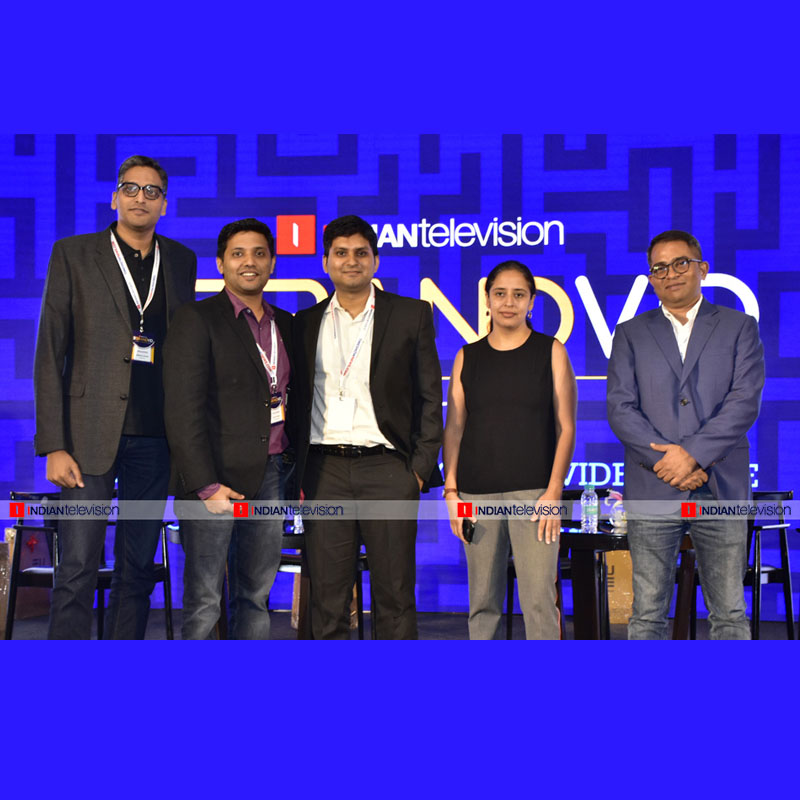
    Gen Z was the topic in focus at BrandVid 2019 session ‘GenZ: The new video sticklers’. The session included speakers– Burger King India CMO Srinivas Adapa, Leo Burnett Orchard COO Prashanth Challapalli, Onida CMO Pratyush Chinmoi and MediaCom west head Priya Choudhary. It was moderated by Worldwide Media VP – Content Studio Vidyut Patra.

    The panellists agreed that YouTube is for getting reach and long-form content, TikTok is for user-generated content while Instagram is for sharp targeting. “Not all brands have a content strategy. They all have a brand strategy. Therefore, they go after influencers. But, people are on Instagram because they are following their interest, not brands,” said Challapalli.

    To which Choudhary said that influencers play a role especially with GenZ and even millennials. She said that the lure of brands is going down and the new generation trusts these influencers. Hence, a long term content strategy is extremely important to make it work. “We have done extensive consumer work with GenZ and they are smart. They see through brands using influencers so the minute an influencer starts endorsing the brand they stop trusting the influencers so we have to figure out a very smart way of doing it. And it cannot be in-your-face it has to be subtle. So influencers are worth investing but there has to be a right way to use them,” she said.

    In the case of long term content, Adapa feels that it is a struggle. He explained the two ways to look at it, one way could be a story told from the lens of the brand without force fitting the brand plug-in.  The second way could be running a series of episodes where a brand can be deeply integrated inside the show. Adapa went on by saying, “From a Burger King perspective, one is from the US and one is from India. In the US we just launched something called an ‘Upside Whopper’ which is a tie-up with Stranger Things since season 3 is launching. Back in India, we launched the limited edition Big Boss whopper which is in line with the reality show. So yes, the straight forward answer is that we need much deeper integrated brand integration.”

    Choudhary chipped in and said that the thumb movement today is almost a microsecond and Facebook even believes there are brands can make meaningful content in just two seconds, thus putting pressure on brands. According to her, there are also categories in which a longer video is required. It depends on what job the brand is trying to do, what the category is and which environment one is looking into. “I would like to add that we used to believe that 30 seconds is enough to tell a story, more and more we are realising that better stories can be told in short form,” she said.

    Adapa said that in today’s data-driven age, it does not take too long to know if people are really completing your video online or not. “GenZ is very kind with comments, they will let you know very quickly saying you are wasting my time or it is wow, but even in terms of analytics, both Google and YouTube are very clear in terms of x or y percentage of people who actually have crossed this much seconds in a video so it’s very quick and easy to learn and adapt and develop from there,” he said.

    When Patra questioned about how home-grown brands are treating this format, Challapalli said that a brand like Ola does not do much of TV commercials. It believes in digital content. He added that Ola doesn’t look at the age of the target audience or where do they come from, it looks at what their pain points are. He gave the example of its April Fool’s day campaign that had nothing to do with mobility but about lack of public toilets. It was later that they realised that every ride will contribute to the creation of public toilets.

    Chinmoi comes from a brand that is popular with the earlier generations. Recently, Onida resurrected its devil mascot to target the new generation. “Gen Z customers are the ones who are going to be the major future buyers,” he said.

    Challapalli also said, “We do a lot of social listening and data analytics and look at the larger cultural trends that are happening and think that can we do something around it,” he concluded.

  • Deep-sea thriller ‘The Meg’ premieres on HBO and HBO HD

    Deep-sea thriller ‘The Meg’ premieres on HBO and HBO HD

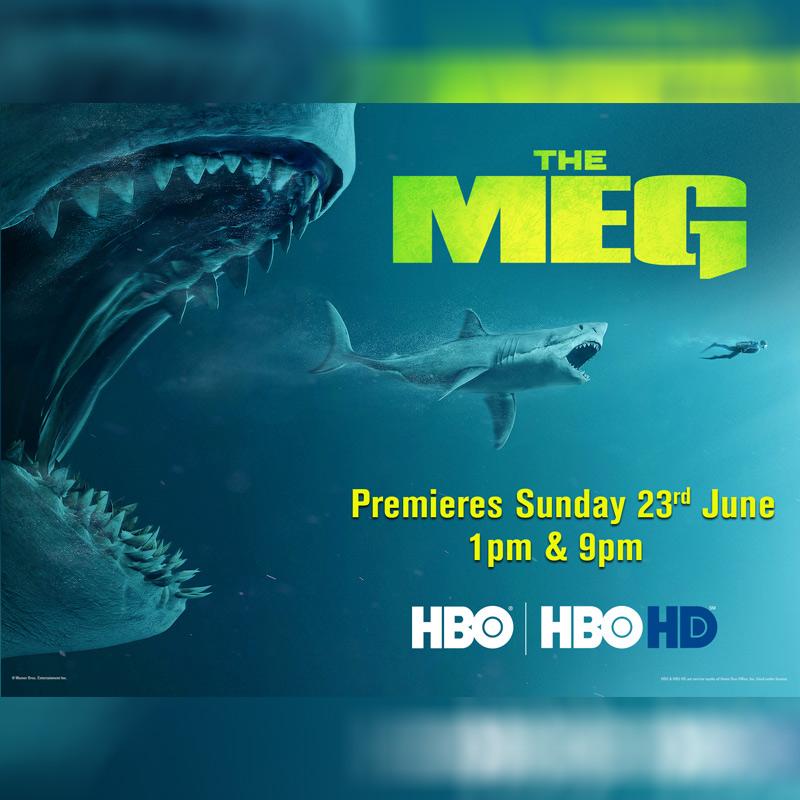
    Mumbai: Deep in the Pacific looms a prehistoric terror, awaiting an unassuming team of scientists on an undersea expedition. Join action superstars Jason Statham and Ruby Rose as they dive into director Jon Turteltaub’s adrenaline-filled sci-fi extravaganza! Stack some popcorn and gear up for ‘The Meg’ premiering this Sunday, 23rd June at 1pm and 9pm on HBO & HBO HD, co-powered by Xiaomi and driven by Compass Trailhawk.

    Faithful to the premise of Steve Alten’s 1997 book, Meg: A Novel of Deep Terror, a group of international scientists embark on an undersea observation program, only to face their worst nightmare. Trapped in their damaged submarine in the depths of the vast ocean realm, they try to escape – but in the way is a snapping 75-foot long primeval shark, the Megalodon! Thought to be extinct millions of years ago, this blast from the past is ready to feed its appetite. But will Statham’s action-happy rescue diver Jonas Taylor go down without a fight? If you’ve been on a steady diet of man vs. giant creature flicks, you know where this one goes!

    ‘The Meg’ is an action caper that combines creature feature, with a dash of comedy and horror in the most entertaining way. This deadly adventure showcases visual effects that makes the underwater experience and action seem life-like. The movie also stars award-winning Chinese superstar Li Bingbing, and American television favourite, Rainn Wilson.

    The film is a perfect summer entertainer you’ve been waiting for! HBO and HBO HD bring the exciting prehistoric shark fare, ‘The Meg’ on Sunday, 23rd June, 1pm and 9pm. Check out HBO India page on Facebook, Twitter and Instagram to know more about the super cool activities for #MegonHBO, for fans! 

  • 237 EXHIBITORS AND 7,429 PROFESSIONALS ATTENDED COSMOPROF INDIA MUMBAI 2019

    237 EXHIBITORS AND 7,429 PROFESSIONALS ATTENDED COSMOPROF INDIA MUMBAI 2019

    Mumbai: Cosmoprof India Mumbai closed the 2019 edition with excellent results, reflecting the constant growth of the cosmetics industry in India: from 107 exhibitors in 2018, 237 exhibiting companies from 23 countries and regions took part in the 2019 edition. Compared to 3,898 attendees last September, 7,429 professionals attended the three days of the event this year. 

    "These figures well represent the growth of Cosmoprof India, compared to the preview edition of September 2018, thanks also to the new location, the Bombay Exhibition Center, with a richer exhibition offer – declares Enrico Zannini, General Manager of BolognaFiere Cosmoprof. – Cosmoprof India does not stop there: this year's success bears witness to the enormous potential of this event, in a constantly growing market – in the period between 2018 and 2023 an overall growth of 9.7% is expected, with significant growth rates in particular for the perfumery sector (+ 19.6%) and for make-up (+ 13.1%). To facilitate networking and business between companies and international and local operators, for the next edition we will increase the display area available to exhibitors, focusing on manufacturing, a key sector of the cosmetics industry in India. We are sure that these are the first steps for the development of an event, which will soon become a reference appointment for the beauty sector in India.” 

    Mr Yogesh Mudras, Managing Director, UBM India said, “We are impressed with the immense success of the debut edition of the Cosmoprof India Show. It is indeed an amazing achievement to organize a show of this caliber in such a short while since the preview edition. Cosmoprof India proudly encourages a Made in India concept of beauty: We wish to do so by setting new standards for the sector through the immense amount of exposure and networking between local and global brands. This give and take will no doubt inspire new ideas, innovations, technology and solutions and will play its part in making the market set to reach the projected valuation of USD 35bn even before 2035.” 

    Cosmoprof India has hosted the best of local and international companies for all sectors: ingredients and raw materials, machinery, OEM, contract manufacturing and private labels, primary and secondary packaging, service providers, finished products – divided into Perfumery and Cosmetics, Beauty Salon and Spa, Hair, Nail and Natural & Organic. Country pavilions from Italy, USA and South Korea exhibited on the show floor, too. 

    Over 100 top buyers have been invited to the event, as part of the Buyer Program, a consolidated tool for all the events of the Cosmoprof platform. Particular attention was paid on the one hand to retailers and salon owners from the main Indian states, on the other to key markets for the local cosmetics industry – China, Czech Republic, Kenya, Malaysia, Saudi Arabia, South Africa, Spain, Thailand and United Arab Emirates. 

    Great success for the eight seminars of CosmoTalks, with the involvement of 20 international speakers and 800 participants. The issues analyzed by the partners of the initiative – BEAUTYSTREAMS, CENTDEGRES, EUROMONITOR INTERNATIONAL, KLINE & COMPANY, MINTEL, ONELINE WELLNESS, STYLESPEAK and WGSN – provided companies and professionals with interesting suggestions, helping them to identify the trends that are influencing the Indian market and to understand which are the most suitable strategies to face the consumers’ demand for sustainable products.At Cosmoprof Onstage, selected exhibiting companies – DERMAPEN, DNG GROUP with BARBA ITALIANA, LOOKX, PEVONIA INTERNATIONAL, RICA and SWATI – presented their products and services to operators and buyers, with live demonstrations. 

    Cosmoprof India Awards rewarded exhibiting companies that are investing in research and innovation, to present new proposals to Indian consumers. The winners, chosen by a jury of 11 international cosmetic industry experts, were announced at the Cosmoprof India Gala Night, on Wednesday, June 12. The international trend agency Beautystreams contributed to the initiative; the exclusive trophy was created by centdegrés, global design agency. 

    New products, innovations, trends and the most significant initiatives of the event were shared by the five Official Bloggers of Cosmoprof India 2019, who involved their followers – about 1 million fans – in the international Cosmoprof community. The 2019 edition has received considerable feedback on the main social media, too – instagram, facebook and linkedin: since last year, the official pages of the event have reached over 62,000 followers. 

    The key trends of the local market are the subject of the CosmoTrends report, prepared with the participation of Beautystreams, one of the most interesting content for professionals participating in all the Cosmoprof events. The initiative aimed at highlighting the most recognizable trends at Cosmoprof India Mumbai, chosen by Beautystreams trend scouters. Thanks to CosmoTrends, buyers, journalists and influencers will have an exhaustive overview of what is new for the beauty universe in India. 

    Among the most appreciated areas in the event, #VibrantIndia: The Scented Fabric Play, in collaboration with centdegrés. The installation offered a new perspective to understand the potential of the Indian market, starting from the culture and traditions of the country. To the thousand colors and fabrics that represent India all over the world, centdegrés has combined the scents which have always made the country recognizable, offering visitors the opportunity to personalize a candle. 

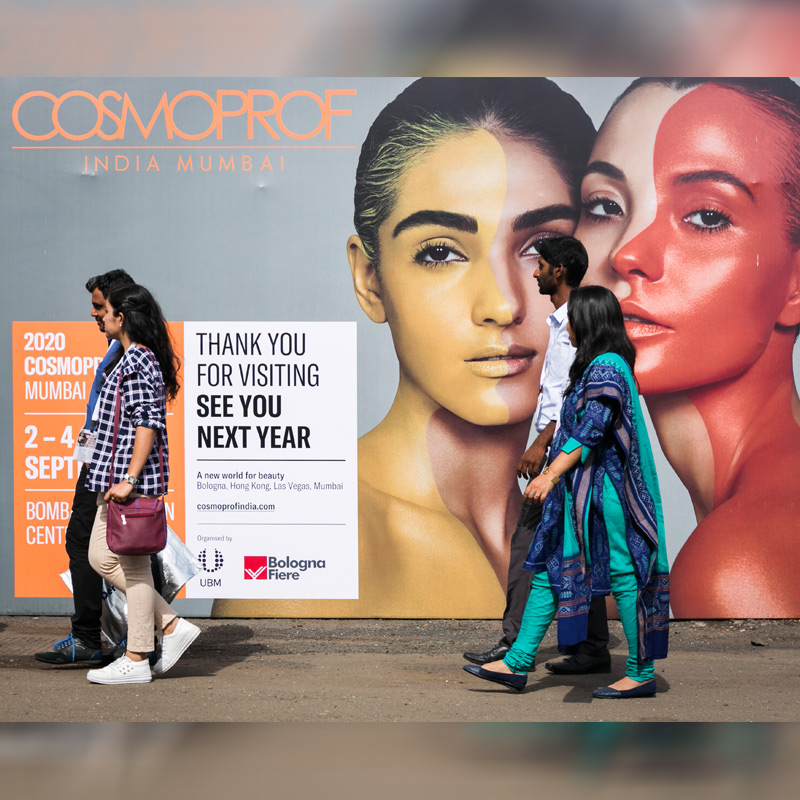
    Next appointment with the Indian market trends is for the next edition of Cosmoprof India, from 2 to 4 September 2020. 
  • Facebook reveals plan to launch cryptocurrency Libra

    Facebook reveals plan to launch cryptocurrency Libra

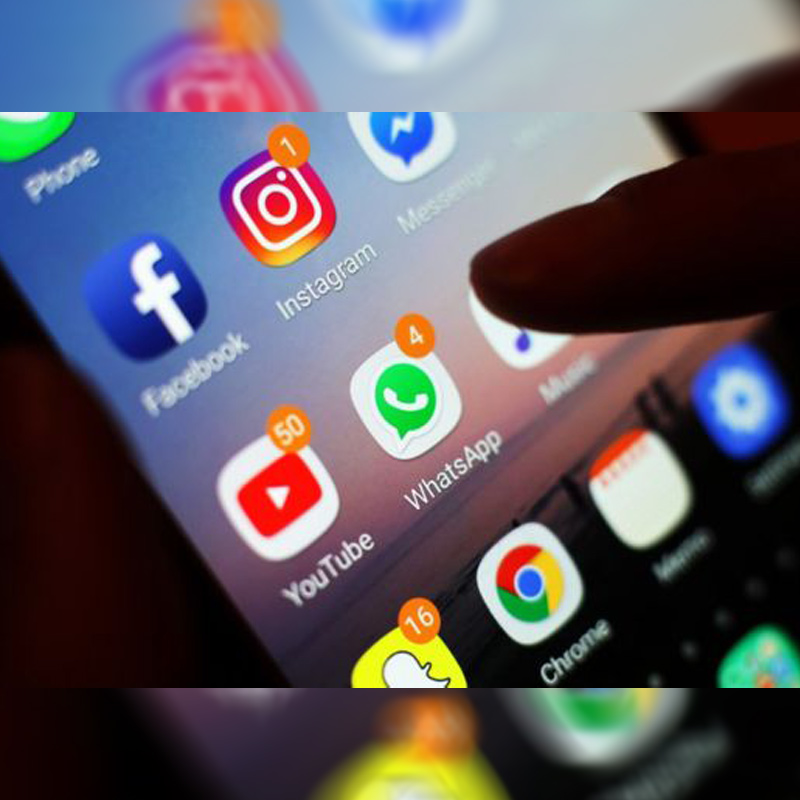
    MUMBAI: Social media giant Facebook moves ahead in the direction of entering the e-commerce sector as it revealed plans on Tuesday to launch a cryptocurrency called Libra. According to media reports, Facebook has linked with 28 partners in a Geneva-based entity called the Libra Association which will govern its new digital coin. It is due to arrive in the first half of 2020.

    A subsidiary called Calibra has been created by Facebook which will not only offer digital wallets to save, send and spend Libras but will be connected to Facebook's messaging platforms Messenger and WhatsApp.

    The FAANG company hopes it will power transactions between established consumers and businesses around the globe along with offering unbanked consumers access to financial services for the first time.

    However, the move comes at a time when Facebook is already devastated with security-related controversies across the world. It seems the new step may face strong opposition from privacy advocates, consumer groups, regulators and lawmakers. It is very unclear right now how Facebook’s entry into the unregulated world of cryptocurrency will be perceived by lawmakers.

    According to reports, company executives said it has engaged with regulators in the United States and abroad about the planned cryptocurrency. Kevin Weil, who runs product for the initiative in Facebook, hopes it can bring global regulators to the table by publicising Libra. "It gives us a basis to go and have productive conversations with regulators around the world," he said.

    Facebook said that Calibra will conduct compliance checks on customers who want to use Libra, using commonplace verification and anti-fraud processes. Moreover, the company plans to refund customers who lose money because of fraud.

  • Facebook and Kiran Rao partner to unleash the power of mobile storytelling

    Facebook and Kiran Rao partner to unleash the power of mobile storytelling

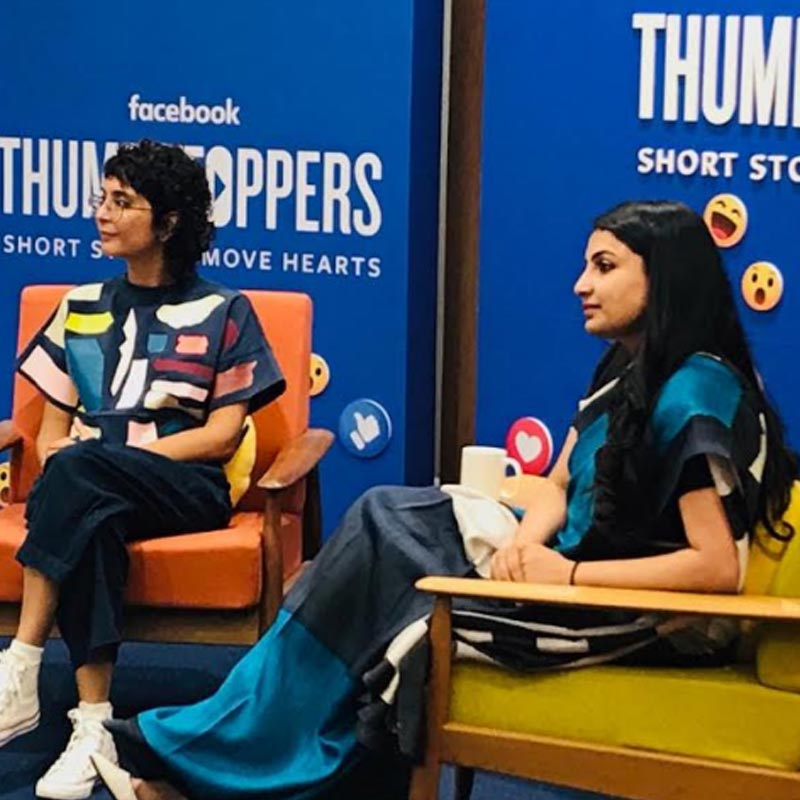
    MUMBAI: From cinematic canvas to mobile canvas, filmmaker Kiran Rao marked her return to direction with two films made for Facebook India. Each film is under ten seconds in duration and is a part of the Facebook Thumbstoppers initiative launched in May this year to redefine short-form mobile video ads in the country

    Speaking about the films, Kiran Rao said, “Ten seconds. No audio. To shoot vertical. And show change in human behaviour. The brief for these films was certainly exciting. I must say that it was some great learning as a filmmaker. The mobile medium has a set of realities which as content makers one must embrace and play with. Once you understand the medium, the storytelling comes naturally. It was fun making these films, and it is great to be back doing what I love most.”

    Kiran's last directorial venture, ‘Dhobi Ghat’, premiered at the Toronto International Film Festival, and enjoyed worldwide acclaim with its global release in 2011. She has produced several films such as Taare Zameen Par (2007), Peepli Live (2010), Delhi Belly (2011), Dangal (2016), Secret Super Star (2017), and the television show Satyamev Jayate (2012-2014) with Aamir Khan Productions.

    Link to the videos: https://www.facebook.com/business/m/thumbstoppers

    Sunita G.R., Head of Marketing at Facebook India said, “Mobile has fundamentally reshaped consumer behaviour. People consume as well as recall content faster on mobile. As mobile becomes more pervasive, there has emerged an ardent need for marketers and creative agencies to create mobile-first ads and to embrace the possibility that stories that stop thumbs from scrolling, evoke emotions, and change human behavior can be told in under ten seconds. The partnership with Kiran Rao is a powerful ode to the magic that can be created in ad storytelling for the mobile-first world.”

    Since its launch in May, Facebook Thumbstoppers has endeavored to encourage the industry to create short-form mobile storytelling that is built for the medium rather than adapted from other traditional formats. Thumbstoppers are those stories that can stop thumbs from scrolling, evoke emotions, and have the potential to change human behavior in less than ten seconds.

    The two films created by Rao touch upon two of the most glaring societal truths – gender inequality and domestic violence against women. The first film depicts a young boy and his sister being served milk at home. The milk in the boy’s glass is considerably greater in quantity than that in his sister’s glass. He pours some of the milk from his glass into hers to make the quantities equal, thus crafting a compelling story against gender discrimination.

    The second film has a woman nursing a bruise with an ice pack when her domestic help walks up to her and hands over a cellphone which has the number of the police. The film aims to inspire people to take that first courageous step.

    The two films powerfully showcase how integral it is to capture the audience’s attention in the first few seconds. Keeping the sensibilities of mobile consumption in mind, they are both built for the vertical landscape for seamless mobile viewing, and ensure that the right messaging lands even with the sound-off, and is a delight with sound-on. The films formidably convey that powerful storytelling is possible in a few seconds without compromising on the tenets of good filmmaking – emotion, suspense, drama, and cutting-edge creativity. 

    As a part of this initiative, Facebook is also throwing open a 'Thumbstopper Challenge' – an invitation to all creative minds to submit their short stories on the brief of driving behaviour change in less than ten seconds, by 12th July. The winners of the Thumbstopper Challenge will be announced in August, and the top winners will get to travel to Cannes next year. Facebook will also produce the top 20 films.

  • BJP’s magic-bullet approach to social media for Election 2019

    BJP’s magic-bullet approach to social media for Election 2019

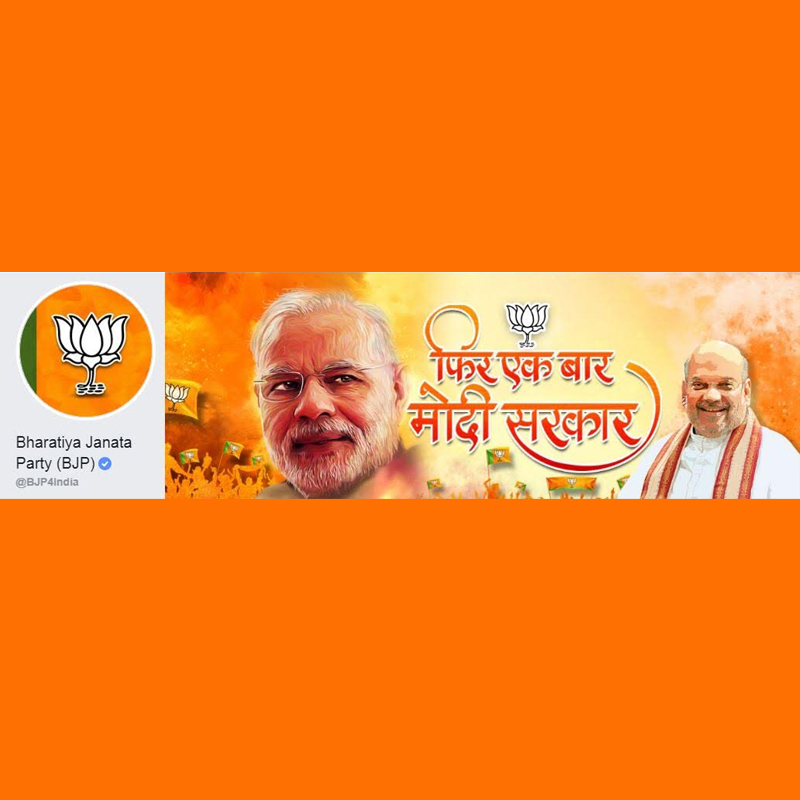
    MUMBAI: With less than 10 days left for the most awaited General Election of India, where the country selects its next prime minister, global social media giant Facebook, which also owns Instagram and WhatsApp, took down around 700 pages for showing “coordinated inauthentic behaviour”, associated with various political parties, from its site.

    The list of the pages taken down by the global giant from Facebook and Instagram under its refined social media policy for political campaigns included 687 associated with an IT Cell of the Indian National Congress (INC) and 15 belonging to Indian IT firm Silver Touch, which usually handles the duties for the ruling National Democratic Alliance (NDA) government.

    These pages were spending a hefty amount of money on promotions and advertisement. While the 687 accounts linked with Congress had spent $39,000 between August 2014 and March 2019, the 15 pages being associated with BJP had nearly double spends with $70,000 flowing from June 2014 to February 2019.

    And it can very well be just the tip of the iceberg. It is no revelation that social media has been playing a prominent role in the political battles not just in India but globally for the past few years. In fact, the landslide victory that BJP recorded in the 2014 polls, probably the biggest ever in its decades-old history, has been significantly attributed to the smart use of social media as a tool to allure young voters.

    And this year is no different. While all political parties are spending a considerable amount of money and manpower in refining their social media strategies, BJP is way ahead of the curve. Compare the amount spent by a collective of 687 pages with just the 15 that have been taken down by Facebook, and one can see the stark difference in the expenditures being incurred by the parties.

    `While none of the pages revealed the identity of the source running these accounts and from where the money was pouring in to spend on these promotional activities, it is evident that the IT machinery of BJP is quite strong and refined. Given that its magic-bullet approach resulted in a success in 2014, it is obvious that the party will once again take the same route.

    As per Facebook’s Ad Library, which includes data related to ads of political nature and relevant to national importance on Facebook and Instagram, political advertisers cumulatively have spent more than Rs 8 crore in less than two months and again leading the charts is BJP with top three accounts promoting it. One of the topmost pages called “My First Vote For Modi” has spent close to Rs 61 lakh in the past two months. In fact, the same page is offering gifts and free BJP merchandise to people who pledge to vote for the ruling party in the upcoming elections, which means extra expenditure on those goodies.

    The BJP social media teams and leadership have been intelligent with their hashtag campaigns too. Just recently the #MainBhiChowkidaar campaign was trending on Twitter. Not just that, the on-ground rallies with people showing support to this slogan surely grabbed a lot many eyeballs. Other hashtags like #ModiOnceMore are being used widely by the party supporters.
    While social media is a war zone that BJP is banking on very strongly, another interesting attribute of its campaigns is the Modi merchandise. From caps to sarees to masks to kids’ snack packets, Modi’s face can be found anywhere and everywhere. The TV, print, and radio campaigns have seen an equally big investment in promotions.

    Though such wide promotions might give an edge in terms of recognisability to the party, it might not be a stepping stone to success, says TRA Research CEO N Chandramouli on being asked to compare the expenditures made by the parties across media.

    He shared, “When speaking to a local political party's communication advisor recently, we got discussing on the ad budgets of the current ruling party and the others. The ad budget differences between the BJP and Congress are estimated to be at least 3 to 4-fold. With such high budgets, BJP has started advertising with high intensity early on using all media at its means. On the other hand, Congress, which is estimated to have an ad-spend of just 25-30 per cent of the ruling cash-bags laden party, is surely waiting for the appropriate time to spend most productively.”

    Elaborating more on the same, Chandramouli continued, “Not many notice this but the seven phases can be construed as a wily orchestration of distributing the lesser budget of the opposition over two extra phases to try and reduce their advertising fire-power. That said, such battles are not just won depending on the amount of ammunition that the side has, but on the ability of the party's message to mobilise people through positive messaging. Parochial politics, dividing, blaming, and finger-pointing and jingoism do not have a high impact on the highly aware electorate, who decides with the ballot keeping their personal concerns and needs in mind.”

    The party having the highest ad-decibels and ad-spends faces one more critical challenge, that of their messages going into the blind-spot of the voter due to the repeated 'noise'.

    India will go into polls over 7 phases starting 11 April to 19 May. The results will be announced on 23 May.

  • Facebook takes down 700 fake pages ahead of elections

    Facebook takes down 700 fake pages ahead of elections

    MUMBAI: Social media network Facebook, in its first big crackdown ahead of the Lok Sabha polls, has taken down around 700 pages associated with various political parties in India. The global giant cited “coordinated inauthentic behaviour” for removing the pages over four separate takedowns.

    Out of the accounts taken down from Facebook and Instagram, 687 were linked to individuals associated with an IT Cell of the Indian National Congress (INC), while 15 belonged to an Indian IT firm, Silver Touch that usually handles pages for NDA.

    In a blogpost, Facebook head of cybersecurity policy Nathaniel Gleicher stated that the pages were taken down based on their behaviour, not the content they posted. He wrote, “We are constantly working to detect and stop coordinated inauthentic behaviour because we don’t want our services to be used to manipulate people. We’re taking down these pages and accounts based on their behaviour, not the content they posted. In each case detailed below, the people behind this activity coordinated with one another and used fake accounts to misrepresent themselves, and that was the basis for our action.”

    Facebook further revealed that an advertisement amount of around $39,000 had been spent on the 687 accounts linked with the Congress between August 2014 and March 2019, while the 13 accounts linked with Silver Touch had spent $70,000 from June 2014 to February 2019.

    However, none of the official accounts of either BJP or Congress have been affected by the takedown.