Tag: F1

  • Mastercard clinches naming rights to McLaren Formula 1 team from 2026

    Mastercard clinches naming rights to McLaren Formula 1 team from 2026

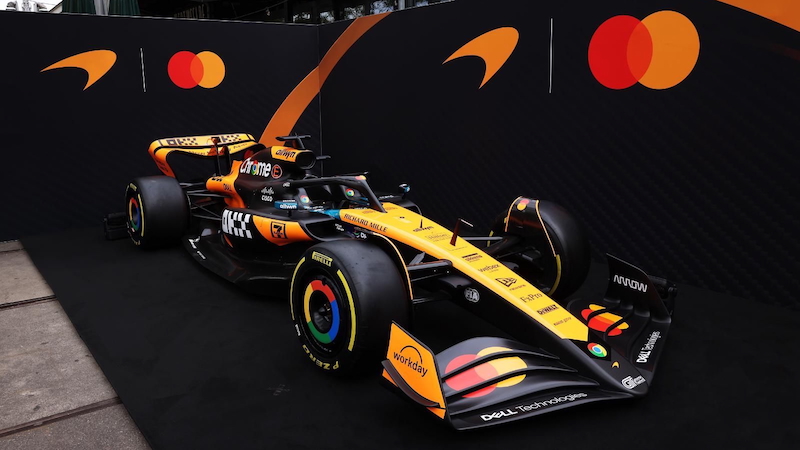
    AMSTERDAM: Mastercard has signed a landmark naming-rights deal with McLaren Racing, under which the team will compete from 2026 as the McLaren Mastercard Formula 1 team. The partnership is valued by industry observers at more than $100 million over several years, putting it among the top tier of F1 sponsorship agreements.

    The announcement was made in Amsterdam by Raja Rajamannar, Mastercard’s chief marketing and communications officer and founding president of its healthcare business, alongside McLaren chief executive Zak Brown and drivers Lando Norris and Oscar Piastri.

    Rajamannar said the tie-up rested on shared values of innovation, performance and fan engagement. “McLaren is the number one team, and this partnership allows us to connect fans to the sport in ways never seen before,” he said.

    As part of the deal, Mastercard unveiled Team Priceless, a global fan programme aimed at bringing supporters closer to the action through behind-the-scenes access, immersive digital activations and exclusive experiences with the drivers.

    The timing is strategic. Formula 1’s popularity has surged since Liberty Media acquired the sport in 2017 for $8 billion. Global TV audiences now exceed 500 million per year, with more than 45 per cent of viewers under 35 — a demographic highly prized by brands. Social media engagement grew 23 per cent year-on-year in 2024, making F1 the fastest-growing sports property online.

    McLaren, meanwhile, has staged a revival, finishing fourth in the constructors’ championship last season and securing eight podiums. New technical regulations in 2026, including hybrid power units with 50 per cent electrical output, are expected to level the playing field — an opportunity McLaren intends to seize with fresh investment.

    For Mastercard, the move reinforces a sponsorship strategy that already spans the UEFA Champions League, the Rugby World Cup and the Australian Open. Sports partnerships account for a significant portion of its global marketing spend, estimated at over $1.7 billion annually. By attaching its name directly to an F1 team, the company is betting that the sport’s glamour and youthful audience will deliver long-term brand dividends.

  • Taste of India available at Sony’s ‘Cafe Rio’

    Taste of India available at Sony’s ‘Cafe Rio’

    MUMBAI: It was almost 65 years ago that a revolution started from a small village in Gujarat, and since then Amul has been a part and parcel of our lives, everyday.


    The company, which saw Rs 18,150 crore turnover last year, has become a part of our lives like its products. From just sarcastic hoardings on topical issues, Amul has now ventured into the television screens through its limited advertisements, but what has caught more attention is its association with various sporting events.


    The year 2011 saw the Anand-based Gujarat Cooperative Milk Marketing Federation (GCMMF) sponsoring the cricket team of Netherlands in the ICC Cricket World Cup and Switzerland-headquartered Sauber F1 team at the inaugural Indian Grand Prix. It took a step further when it decided to sponsor the Indian contingent at the London 2012 Olympic Games.


    And now with the football fever gripping the entire world, the ‘Taste of India’ can be seen on our screens every day before the game begins. Amul is the main sponsors of the shows – Cafe Rio and Football Extraa – on Sony Six.


    “Our sponsorship of Cafe Rio and Football Extraa was a good option as it gave an opportunity to cover the entire event very comprehensively right from pre-match discussion to post-match wrap up during the breakfast show next day,” says the company’s MD RS Sodhi.


    When asked why this sudden interest in sports, he says, “Milk is nature’s original energy drink and plays a pivotal role in building the physical and mental strength of the sportsmen. Nutritious dairy diet comprising milk, cheese, yogurt etc. is an important part in the diets of athletes around the world. India is the largest producer of milk in the world and Amul is not only India’s but Asia’s largest milk brand.  This association with sports and activities around it will help us in engaging with the youth so that they can enjoy a healthy life and strive to become more competitive in their endeavours.”


    It also believes that sporting events are now getting increasingly popular amongst all age groups, both men and women and hence, live sporting events provide a good opportunity for the brand. So much so, that it has become an integral part of its media plans. “We do not treat this as an additional spend,” points out Sodhi.


    The cherry-picking begins well in advance since the schedule of most of the sporting events is available much in advance. So far, it has associated itself with events like F1, Olympics, IPL, EPL and now the 2014 FIFA World Cup. Many more such associations with other events is on cards.


    The brand’s marketing strategy has changed as well. The girl in the polka-dot frock is inseparable from the brand’s identity, but through its recently launched digital campaign ‘Har ghar Amul ghar’, because it wanted a longer format that went beyond 40 seconds followed by a humorous campaign featuring a person with a milk moustache who ‘Eats Milk with Every Meal’, it has (finally) moved on with time.


    The audience plays the key role when it comes to media selection. “If a large number of our youth are on social media, we cannot ignore it. We have a very high traction on social media – be it Facebook or Twitter. Our topicals are first released on social media, then on hoardings, TV and print. The topicals are published in 35 newspapers every Wednesday with a print run of over 35 million copies,” informs Sodhi.


    At the recently concluded World Dairy Innovation Awards 2014 during the eight Global Dairy Congress, Amul bagged the ‘Best Marketing Campaign’ award for the ‘Eat Milk with Every Meal’ campaign. The full-page format across leading dailies like the Times of India, Hindustan Times, The Hindu, The Telegraph, Deccan Chronicle etc. highlighted the importance of milk and dairy products in every one’s diet. “We are happy that our efforts have got recognised at the global level,” says Sodhi humbly.


    FY14 was extremely good for Amul and with its expansion plans the brand is optimistic about 2015 as well. “Amul has been growing at a CAGR of 22 per cent since last five years. Our last year’s growth was 32 per cent. And we plan to grow by 20-25 per cent this year too,” concludes Sodhi.

  • Vodafone Sports: Changing the sports viewing landscape

    Vodafone Sports: Changing the sports viewing landscape

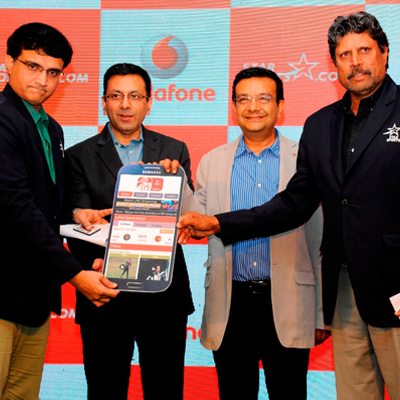
    MUMBAI: What do you get when one of the leading telecom players in the country joins forces with one of the biggest television network? The result is uninterrupted, curated and the best delivery of sports content on the go.


    The partnership between Star India and Vodafone India will make available to consumers a first-of-its-kind service that brings the best on track, on court and on field action to feature phones as well as smart phones.


    Star India COO Sanjay Gupta says: “Sports is something the network truly believes in, and we have put our money where our mouth is time and again.”


    Vodafone Sports powered by starsports.com will offer customers premium live and curated in-depth content built around some of the most popular sports in India such as cricket, football, tennis, hockey, golf and motorsport. The portal  (live.vodafone.in/sports) will feature cricket, football and hockey and will cover other major sports like F1, tennis, etc.


    Star India head digital Ajit Mohan says: “Since the launch of starsports.com in June 2013, we have witnessed good traction among sports fans and have become the YouTube of sports in India.”


    Launched in June 2013, starsports.com has become the go-to destination for following the best of international sports. It has in a way redefined the sports experience through a revolutionary video timeline that is a first of its kind in the world of sports, and allows the viewer to keep track of live sports as well as catch up on games with ease.


    The company has also built an advanced technology infrastructure that enables HD quality streaming across multiple devices. It will now bring the power of the proposition to the most important screen in the country – the mobile, for Vodafone consumers.


    “The fact that the content available on Vodafone Sports will be generated from starsports.com works well for the network as we will be able to reach the homes where TV sets and internet facility is not easily accessible,” Mohan explains.


    Recent studies have shown that there are more mobile handsets in the country than TV sets in homes. With this strategic partnership with Vodafone, Star India has certainly played an ace card. It would now be able to propagate its message of supporting the growth of sports in the nation even better; reaching out to the millions of Vodafone subscribers and delivering live as well as curated content at an economical price.


     “Our core business has always been services and after the success of Vodafone Music, we were looking at taking things to a whole new level,” expounds Vodafone CCO Vivek Mathur on the reason for partnering with Star India.


    “India in many ways is in the forefront as far as mobile internet consumption is concerned. We are only second to Germany and we truly believe that mobile internet is the future. We were on the lookout for a partner with some terrific content to deliver and we are glad to have found that partner in Star India,” Mathur adds.


    As a result of the tie-up with Star, customers using Vodafone Sports will have access to an exhaustive array of legal, unadulterated content at their fingertips, including all the latest news, trivia, scores and results, instant access to live matches, interactive video scorecards, exclusive insight and analysis, columns, photos and wallpapers across sports.


    The interactive video scorecard, for example, will allow users to watch the fall of a wicket or replay individual innings highlights for a particular player right from the scorecard, so if you miss a pivotal, game-changing moment in a game, or a match-winning knock, you can replay it at the touch of a button. Apart from live games, customers will also be able to sample additional archived video content, such as the best of M.S. Dhoni’s sixes or Sachin’s straight drives, created from over 10,000 hours of cricket footage.


    Gupta says: “Our aim is to change the way sports is perceived in the country. We need to change the mindset of people who feel that sports is a waste of time and resource and will not benefit in anyway. We continue to stay committed to building all sports and the best way to encourage young adults to play sports is to increase the consumption of sports.”


    The service will be available exclusively to Vodafone consumers in attractive packages. The ‘Snack Pricing Plan’ will allow consumers to watch a single match for a minimal price of Rs 10 or 20; a curated video clip for Rs 3 or Rs 5 and also give them an opportunity to download wallpapers at as low a price of Rs 3.


    The ‘All You Can Eat Plan’ will give the consumer a chance to sign up to enjoy watching a series and the price ranges between Rs 49, Rs 99 and Rs 150. This plan also allows the subscriber to enjoy archival videos of some of the best shots or sixes by a cricketer for Rs 30 or Rs 50 depending on the length of the clips.


    And there is also an option to subscribe on a day-to-day and monthly basis at Rs 5 and Rs 150 respectively. Mathur says: “We want to encourage our customers to consume as much of sport as they wish to and thus we have tried to keep the prices very reasonable.”


    This is certainly a giant step taken by the Star network in continuing to deliver on its promise of delivering the best in sports, but does it also plan to get its other properties on the digital platform in a big way?. Gupta clarifies: “We do have plans of taking a lot of our other properties on the digital platform in the near future, but currently we are focusing on sports as we as a network truly believe it has struck a chord with the youth of the nation and we will continue to deliver on our promise.”


    The road ahead certainly looks very rosy for Indian sports fans and Star Sports as a network is certainly making a statement with such bold moves. Guess it’s time for other broadcasters to wake up and smell the coffee.

  • Starsports.com: YouTube of sports in India?

    Starsports.com: YouTube of sports in India?

    Barely a year old and starsports.com could well qualify as an example of the limitless possibilities of the World Wide Web.


    Ever since its launch in June 2013, starsports.com, has been drawing nearly 28 million unique visitors every day with as many as 45 minutes spent per match. These numbers – comparable to television – are the highest ever on a digital platform.


    starsports.com’s meteoric rise is not for nothing as the website has always been about giving sports fans a rich, immersive video experience a la YouTube and becoming a one-stop shop for them.  


    Star India digital head Ajit Mohan puts it well when he says: “The philosophy of the design and the service itself was to make video the hero; we believe we have become the YouTube of sports.”


    Drawing attention to how sports coverage has evolved from print to radio to television and now the digital medium, Mohan says: “The idea was to create a new immersive experience around sports on digital for fans. The best way to attract the viewers was to add a lot of video elements that allowed getting data and analytics into the experience in a very meaningful manner. So we wanted it to be fully relevant to the digital medium, rather than what consumers were being served.”


    Starsports.com has a 20-strong content development team and leverages the network’s production and broadcast team. Explains Mohan: “The idea is to keep delivering content on-the-go and report as events take place. The team creates video stories as well as columns and articles, but the point is to create a lot of video during the course of a live match as people would love to listen to someone’s point of view on the state of the match, thus driving home our point of an immersive experience.”


    Speaking of design, starsports.com isn’t cluttered with irrelevant content like other sports sites. “We have kept the design experience for the consumer in mind where it becomes easy for viewers to discover a live match. Having said that, we have had a lot of learning over the past 12 months and we want to further improve on the experience for consumers,” says Mohan. “We work with a lot of world-class platforms and partners to help out with execution on the video as well as platform development.”


    Apart from content and design, the revenue model too has evolved with time. At the time of the beta launch in December 2012, the streaming was free and had a little delay but post the launch, the live streaming experience was taken behind the pay-wall. “Just to give an idea about the conversion rate, it’s been in the range of three to five per cent – depending on whether on the web or the mobile app or any other operator service. Looking at the current subscriber base, if we exclude the telecom world, we probably have one of the largest subscription base of content subscriptions in the digital world,” says Mohan. “We are currently in a dilemma trying to figure out what services to charge for and what to keep free access for. So if we are asking people to pay, then there has to be something really exceptional and a high value proposition.”


    Mohan believes the site’s success owes to two big leaps: firstly, high quality streaming of an even higher standard than YouTube or a comparable platform and secondly, advertising which allows a deeper engagement with sports fans on the back of very high quality video and content created exclusively for starsports.com.


    “We have provided a much customised backbone to serve a very good video experience in live viewing. The response for the streaming quality has been very good and users find it very reliable and of high quality. So if the user has access to even a 1 mbps net connection, the video is of HD quality. That is something that is unprecedented and no other sports company has managed thus far,” Mohan exults. “We already had Adidas and Red Bull being associated with Starsports.com and within the next four to six weeks, we are sure to get more brands on-board with the announcement of the IPL streaming rights. Also, we will be having a lot of action for fans with the Asia Cup, the ICC T-20 World Cup in March and moving onto the IPL in April and May. So with a fully packed calendar for the next three and a half months, advertisers are keen to come on board.”


    On the subject of IPL streaming rights, Mohan believes that despite the five-minute delay in streaming, IPL is sure to generate a lot of viewership on the digital platform.


    “There is a habit of watching the event on the mobile and other portable devices, so the idea is to leverage our platform and provide a much better consumer experience and advertising solution and deploy it for IPL where there is already a habit and increase the numbers even more as against last year,” says he.


    Again, IPL isn’t the only such property available on starsports.com; the site also streams as many as six to seven matches of the Barclays Premiere League (BPL) at one time. “We also show Sierra and La Liga matches along with F1 and the Australian Open. During the grand slam, we witnessed a spike of 200,000 users in a day coming on the back of the Open. Cricket will continue to be our cornerstone but we will also generate focus and engagement in other sports,” says Mohan.


    Any discussion on the success story of starsports.com would be incomplete without a reference to ‘The Sachin Memory Project’, one of the website’s biggest and most innovative online campaigns around cricketing legend Sachin Tendulkar.


    “The idea was to be distinctive at the same time connect the master blaster with his fans. So starsports.com believed that the best way to create that connect would be to make a timeline of all the major events of Tendulkar’s career and best innings with the support of archival videos,” recalls Mohan, pointing out that the engagement reached such levels that people tried to think back and see where they were when Tendulkar broke a certain record. “The reason for calling it ‘The Memory Project’ came across well and we achieved what we had set out for!” he exclaims. Starsports.com had nearly four million visitors during the India-West Indies series, largely on the back of this innovation.


    Mohan is happy with the way things have shaped up. “We have already made strides on unchartered territory and it would be really difficult for anyone to find a digital service on sports that has created a great video player and gives HD quality output,” says he. Currently, the site has video content across cricket, football, tennis, hockey and F1 but is looking at what consumers want and intends to bring back discontented sports fans who aren’t satisfied with the digital content provided by others. “We will add new sports and improve the consumer experience, and try and reach out to people with lesser bandwidth as well and provide equal quality of content,” says Mohan of the company’s future plans.


    Plans are afoot to provide short clips which allow consumers to pick up the best moments in the match which they either missed or would love to relive. Providing ample visibility for advertisers is also on the cards. “We do believe that going forward, a lot of the brands will be looking to build traction on the digital platform and we want to provide such a platform where advertisers feel their products and brands will get proper visibility and the right value,” he signs off.

  • Discovery Turbo gears to give its audience thrill of Grand Prix 2013

    Discovery Turbo gears to give its audience thrill of Grand Prix 2013

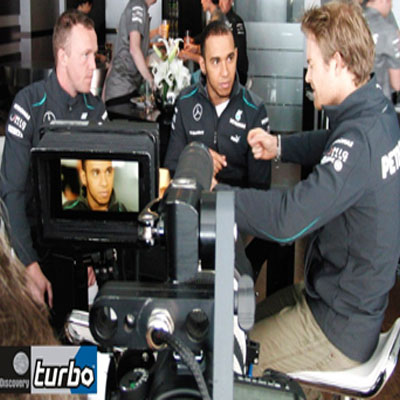
    MUMBAI: Discovery Turbo is all set to give its viewers the thrill of Grand Prix of 2013 season even before the sporting event begins in India.  The 15-part series Inside Grand Prix 2013 highlights the Grand Prix scenario of upcoming event at Greater Noida and takes viewers behind the scenes of this year’s events in Australia, Malaysia, China, Monaco, Canada, Spain, Great Britain, Germany, Hungary, Belgium, Italy and Singapore.


    How long does the transportation of the full F1 equipment for an overseas race take? What happens during a pit stop? How do F1 fans celebrate in Monaco or South Korea? How and where do the stars have their parties?  Premiering every night at 9 pm on Discovery Turbo, Inside Grand Prix 2013 follows the Formula One teams around the world and prepares viewers for each Grand Prix in the best way possible.

    An informative and highly entertaining F1 magazine-format series, it gets behind the scenes of elite motorsport and to the heart of action.  Premiering Sunday, 27 October, the India episode takes viewers on track at Buddh International Circuit, Greater Noida to witness the preparations for the big sporting event.


    The viewers will follow their favourites like Lewis Hamilton (Mercedes AMG Petronas, England and Formula 1 world champion 2008), Sebastian Vettel (Infiniti Red Bull Racing, Austria and World Champion 2010, 2011 and 2012), Christian Danner (Formula One expert, Germany), and Michael Schumacher (Seven-time world champion, Germany) as they share curiosities and personal information from the mysterious F1 world.  The drivers also introduce their respective race tracks – with all its particularities, difficulties and key points.


    Travel to the Albert Park circuit in Australia where Nico Hülkenberg (Sauber F1 Team, Germany) and Sebastian Vettel (Red Bull Racing) explain the euphoria behind Formula One in the country.  The episode also celebrates Sauber F1, the Swiss team’s 20th anniversary in Formula One.  Debuting at the South African Grand Prix in Kyalami in March 1993, the team finished fifth and picked up two points with J.J. Lehto.  


    The show both informs and entertains viewers with exclusive interviews and stories of F1 sports celebrities and stars under various themes:


    In Close Up, the segment will take viewers to the drivers’ recommended places, restaurants, joints, hangouts and spots where one can have a blast and describes the culture of each country.


    Preview will showcase drivers and introduce the respective race track with all its accuracies, difficulties and key points such as the ideal line.


    Personal lets viewers hobnob with drivers, team chefs and engineers and will let them satiate their curiosity of the sports stars’ personal lives. Portraits of singular drivers, impressions from their childhoods, hobbies, motor sport careers, wishes, dreams, and successful moments form a part of each episode.


    Technology freaks can look forward to Techno section in which the complicated world of F1 is described in detail by F1 drivers, experts and animations leaving no questions unanswered.


    The Set Up will give the viewers a look at what goes on behind-the-scenes.
    The Legends will throw light on more than 60 years of F1 and share their moments from achieving milestones, world records, spectacular events, tragic accidents and overwhelming.


    The last segment News will provide the most important and updated information concerning F1 in a crisp format.

  • Times Mobile brings home the Pepsi IPL play

    Times Mobile brings home the Pepsi IPL play


    MUMBAI: Times Mobile Limited has partnered, with Techfront, for their App – FollowOn which will provide a unique home experience to instadia fans at the Kotla for the playoffs on 21 and 22 May.

    In a first of its kind, a large format sports venue will enable instadia fans, a fresh experience on the mobile and one that can change the quotient for a fan forever.

    The viewers inside the stadium will be able to download the free app – Followon. The app will serve live cricket action to one‘s mobile phone as it happens on the pitch. The viewer will get live scores, commentary, news, features, stats, special scores, graphs, magic moments with push notifications and video content while being present at the venue.

    All fans will be able to access free wi-fi connectivity at the venue and download the App from iTunes, Google Play, Market place to have this elevated fan experience at the venue.

    FollowOn is from the stable of Techfront- a specialised provider of digital display systems, interactive solutions, instadia lighting for popular sports such as Cricket, F1, Football, Rugby, Tennis, Hockey etc.

  • F1 India GP zooms ahead of other races

    F1 India GP zooms ahead of other races

    MUMBAI: While it was expected that viewers in the six major metros would have watched the first F1 Grand Prix that took place in Delhi last month, it now turns out that people in other parts of the country were tuning in as well.

    Tam data (C&S4+ All India) shows that if an average race had a TVR of 100, then the F1 GP had a TVR of 725. This is even better compared to the six-metro performance where the TVR would have been 715.

    In terms of how the other F1 GPs fared at an all India level, the Malaysian GP would have got a 183 TVR, the Australian GP a TVR of 178 and the Monaco GP a TVR of 78.

    It remains to be seen if the excitement over the Delhi race spills over to the remaining races in the season.

    Also Read

    Audiences swell for India F1 GP

    www.indiantelevision.com/mam/headlines/y2k11/nov/novmam22.php

  • Audiences swell for India F1 GP

    Audiences swell for India F1 GP

    MUMBAI: The first Indian F1 Grand Prix that was held last weekend has seen a sixfold increase in TV ratings compared to other F1 races, according to data from TAM Sports (c&s, 4+ six Metros).

    Tam data shows that if an average F1 GP has a TVR of 100, then the India race managed a TVR of 715. In terms of the other GP races, the Malaysian GP ran a TVR of 171 while the Australian GP managed 154 and the Singapore event got around 85 TVR. The analysis is based on the Qualifying Race and Race Day.

    Lodestar UN COO Anamika Mehta said that since the F1 race was taking place in India for the first time, there was a lot of buzz. “There was a lot more excitement and it is natural that the TVR grew. F1 is still a nascent sport but if it is cultivated and marketed well, it will grow.”

    Advertisers are still figuring out how an F1 association works in terms of economics and ROI. “The good news is that the race took place during the holiday season. Around 95,000 people watched the race on the ground which shows the kind of interest the event generated,” said Mehta.
     
    Mehta feels that interest in advertisers among F1 at a ground level will mostly be for the India event as opposed to being involved with the other races. “Being involved with F1 at an overall level will be a slow burn process. Even Indian companies which want to go abroad for now are mostly only involved with the Indian race. It does not make sense for Indian companies who are mostly local to be involved at a ground level with races in foreign markets.”

    Mehta expects advertisers to experiment with the F1 race in India over the next two to three years, both on-air and on the ground. So one could see different kinds of partnerships taking place.

    Mehta also does not expect much viewership growth to happen for the other races remaining in the season. “While there might be a bit of growth for the remaining races in the season, I don‘t think that it will be dramatic. The sport has to be cultivated in the country,” she averred.

  • ‘We plan to list at the US stock exchange to raise funds for the league’ : EFLI CEO Richard Whelan

    ‘We plan to list at the US stock exchange to raise funds for the league’ : EFLI CEO Richard Whelan

    There is a rush among sporting bodies to follow the Indian Premier League (IPL) way to build their sport. The latest to follow this route is American football.

    The Elite Football League of India (EFLI) is making an entry with its first edition ready to kick off in November 2012 in Pune. The franchise model starts with eight teams, building up to a total of 52 by 2022 representing all Indian cities with a population in excess of one million.

    EFLI will work with the Indian government to develop the first ever governing body for the game, similar to that of the BCCI and its governance of cricket.

    Ten Sports has the rights to televise 33 games in the first season including Saturday and Sunday games as well as 13 Monday Night Football games. The league will commence its first nationally televised game beginning November 2012 and the inaugural season will run through February 2013.

    EFLI plans to list in the US stock exchange to raise funds for the league.

    In an interview with Indiantelevision.com‘s Ashwin Pinto, EFLI CEO Richard Whelan talks about the growing sports market in India.

    Excerpts:

    You have a scene where different sporting bodies are looking at leagues in India. What is the reason for this sudden push?

    India is today one of the fastest growing economies in the world. Its vast middle class population acts as the backbone of its economy. They want more than just cricket; they are today watching F1, EPL, Wimbledon and various other sporting activities. This has encouraged people to explore opportunities in the dynamic Indian sports landscape.

    When you look at the Indian sporting landscape, what is your vision for EFLI?

    Looking at the sporting scene in India today, the future for EFLI looks very bright. Games like rugby, basketball and lawn tennis have gained a strong ground in this country. Moreover, F1 and other motorsports events too are getting off the ground. The environment for sports in India is very conducive.

    Have you done any research to find out how American football is perceived in India?

    Clearly we‘ve started from scratch, and the slate couldn‘t have been any clearer for us. This has been terrific. From the early responses to our training and orientation camps, we can tell that India has a great sporting culture hitherto unknown.

    The message about the advent of American football coming to India spread virally at the ground level purely through word-of-mouth and we‘ve had a massive response with hundreds of candidates turning up for player and coach trainings. We are overwhelmed with this kind of response, and whilst we understand that we need to educate people about the sport in its entirety, the desire to want to learn is very strong.

    Indians don‘t watch much of other sports except for cricket. A few major events like the soccer World Cup get some traction primarily among males. Do you see things changing in this regard?

    We have seen some radical changes in Indian sports scenario in these recent years. As recent as two months ago, there was a report in one of the leading English Indian dailies that audience and advertising revenue are bound to multiply in the coming years and that Indians love to see American sports on television.

    It‘s fast, furious and fun to watch. They further reported that according to Tam, Indian viewers are now watching sports other than cricket. There is no doubt in our minds that the EFLI has picked the right time for its Indian touchdown. Even women are keen on watching sports!

     ‘EFLI will create legal bylaws, working with the Indian government to develop the first ever governing body for the game, similar to that of the BCCI and its governance of cricket‘

    You start with eight franchises. How will this be scaled up?

    Economically, EFLI will have an astoundingly unmatched impact on India. The league will incorporate sponsorship from around the world and provide a platform for multinational companies to reach India‘s burgeoning retail market.

    EFLI will auction eight teams internationally. An opportunity will be created within the Indian investment banking arena to offer franchise, league and team ownership to the public marketplace. India offers enormous room for growth within the industry of sport. The US sports industry is currently valued at a half trillion dollars leading the layperson to easily recognise India‘s potential to reach beyond the scope of the American precedent.

    In order to achieve this standard, India must embrace and become a country of many sports. Football will lay the foundation and open the pathway for an explosive sports and media marketplace with reverberating impact into memorabilia and second and tertiary product sales. There is no question that, on behalf of India, football will elicit interest and participation from a broad spectrum of sporting enterprises once the door has been opened.

    What are the different revenue streams available to franchises and have you spoken to any parties for feedback?

    We are still working out these details.

    On the broadcast front, have you signed a deal with anybody?

    EFLI has signed letter of intent with Ten Sports to televise 33 games in its first season including Saturday and Sunday games as well as 13 Monday Night Football games.

    The league will commence its first nationally televised game beginning November 2012 and the inaugural season will run through February 2013.

    Could you talk about how you will partner the sports ministry to set up a governing body like the BCCI?

    We have set up EFLI, the first ever American-style Football Federation in India. This allows for the non-profit entity to work directly with the central government of India for the benefit of Indian society.

    EFLI will distribute 15 per cent of its revenue to the Sports Ministry of India to help maintain many of its ongoing programmes and facilities.

    Also, the league will forge strategic alliances by offering ownership opportunities to all Indian entities; business, military, political, municipalities, private and public partnerships. The EFLI will create legal bylaws, working with the Indian government to develop the first ever governing body for the game, similar to that of the BCCI and its governance of cricket.

    Could you give us an idea of the investments being made and by when you expect the venture to be profitable?

    We plan to list EFLI at the US stock exchange to raise funds for the league. We are planning to raise around $10-12 million through this route. Americans know the growth story of India and want to invest in India.

    The sports business industry is untapped and they are very familiar with the power behind American football. Besides tapping the US stock market, we are also looking at the option of raising funds from private investors but at this point we have quite a few options. We also have private investors and potential debt investors for equity down the line.

    Is the initiative being done under the aegis of the NFL and do you have similar leagues in other markets?

    No, EFLI has no affiliation with NFL. It‘s a completely independent entity which was formed by people sharing a similar thought process.

    There are various other leagues which are present in the US today like the United Football League (UFL), or the Stars Football League which will begin from August 2011. Even Canada has its own football league called the Canadian Football League (CFL). Apart from these professional leagues, there are other various semi-pro and amateur leagues which are held in various parts of United States.

    Could you talk about the team and support staff behind the EFLI?

    EFLI‘s management is in the hands of a very dynamic and experienced team. We have Sunday Zeller, who is the founder of this exciting new initiative. She has worked as a marketing consultant in branding and positioning startup enterprises to help attract capital and attention for the past 22 years.

    Then we have Alex Emmanuel who is the co-chairman. He was the Tata group global VP for Human resources. He has also worked with MNCs like ABB / Boehringer Mannheim. I am the CEO of EFLI. I come from a stock broking background. I had a firm called Moveable Cubicle. I have been involved in many start-up or early stage private companies, many of which went on to become publicly traded.

    Mohan Bangera is our COO. Previously he was Videocon VP marketing and sales. He has been closely associated with sports since a long time. He is the Technical Council of Judo Federation of India Chairman. Bangera comes with 30 years of experience in this field as a player, coach and administrator.

    We also have a robust executive management team with specialists from various backgrounds coming on board with their expertise in specific roles such as corporate alliances, production, events, marketing and choreography among other important job functions.

    What are the different facets of the EFLI?

    EFLI will create an exclusively Indian product packaged perfectly and specifically to advantage television and media support ultimately to become the most valuable sports franchise in the world.

    Thousands of jobs will be created as a result of the immense need for coaches, athletes, trainers, referees, and support staff as well as the even greater demand for employees in the legal, maintenance, media, marketing and retail sectors.

    EFLI will strive to eventually support the highest paid athletes in all of India. Founding athletes and coaches will have an opportunity to become owners of the league. The league will recruit and train a team that will physically and strategically compete at the level of the current US teams, one day defeating the US in competitive play.

    EFLI will establish a grassroots educational project to incorporate the game of football in schools beginning at grade school level extending to universities which will feed the professional recruitment efforts. By introducing and supplying footballs and equipment along with the programme, the league will provide a much needed physical and intellectual stimulus through competitive game play to the male youth of India.

    What are logistical challenges you will face and what is the strategy to tackle this?

    Educating people about the game, providing them with the right kind of exercise and nutrition to be able to play the game in its true form will be our biggest challenge. And we are fully aware of this, and will do everything possible to make this best in sports entertainment.

    What is American football‘s USP from a viewer‘s perspective compared to other sports that Indians follow like cricket and soccer?

    Indian viewers have opened up to newer sporting events in recent years. Sports like rugby and badminton have gained momentum in the Indian sporting culture.

    The introduction of American football will be a new robust sport that Indian viewers can look forward to. It‘s a game which needs speed, strength and strategy. These traits will keep the viewers to their seats. It‘s a total entertainment for the viewers.

    In the US, American football has maintained its pinnacle in a competitive and fragmented market with the Super Bowl being the most watched event in the year. What are the learnings from this success that you would look to apply in India?

    When football took off in America in 1960, there was a population of 180 million people; India has 1.2 billion.

    America had 45 million TV households; India currently has 130 million and this is increasing exponentially.

    The economic strength of the United States was $520 billion; the economic strength of India is currently more than double at $1.2 trillion and growing at a blistering pace! India is without doubt an exceptionally fertile market for the immediate and overnight success of the game of football.

    Having said that, you have the disadvantage of a relative lack of awareness for American football compared to other sports in India. How will you work around this?

    We agree that there is lack of awareness towards American football in the county but people are willing to know about this game. There is a huge Indian population in America which follows American football. This trend has passed on to the Indian audience as well.

    EFLI believes that it will easily be able to capture the interest of the enormous population under the age of 30 which has shown proven interest in American form of sports. The EFLI will be branded as the “New and Cool” intelligent ultimate athlete gladiator sport and form of entertainment.

    We also believe that the top US companies with an international presence or those looking to grow their international presence in this enormous 1.21 billion population market will have a keen interest in attaching their brands to the “proven power” of this game. The EFLI will capitalise from the unbelievable discrepancy between the number of unpaid athletes in the country and the enormous potential of gross revenue football has proven to capture through television and electronic media broadcasting, merchandising and licensing revenue, ticket sales, and local and corporate sponsorship as well as future team franchise sales.

    We plan to establish EFLI as an educational project at the grassroots level to incorporate the game of football in schools beginning at school level extending to universities which will feed the professional recruitment efforts. By introducing and supplying footballs and equipment along with the programme, the league will provide a much needed physical and intellectual stimulus through competitive game play to the male youth of India.

    What new technologies have come in to enhance the viewing experience of American football?

    These aspects will be worked upon in close cooperation with our broadcaster partner. Needless to say we will offer our viewers a cutting-edge and technologically advanced viewing experience.

    In terms of global television viewership, how does American football compare to the NBA, soccer and tennis?

    American football has gained strong ground outside US. It‘s now a very popular sport in countries like Israel, Australia, Belgium, Brazil, Germany, England, Ireland, Italy, Japan, Mexico, New Zealand, Hungary, Norway and Spain. Ironically, these are the nations where soccer and rugby are a religion. In terms of viewership, the Super Bowl has a global audience of over two million – this is an impressive number.

    What role do new media like mobile and social networks play for American football in building brand equity?

    Mobile and social networks play a huge role in building a brand name for American football. These are the new platforms through which we can spread the word amongst the new generation.

    They are connected through Facebook and Twitter for news and information, which I guess is apt to promote the game. Besides, new media tools like electronic and fantasy gaming have already proven their ability to attract consumers and also rake in huge profitability.

  • Harmful labels work the other way round: Martin Lindstrom

    Harmful labels work the other way round: Martin Lindstrom


    MUMBAI: The cigarette industry has actually gained from the ‘harmful labels‘ that come along with the packs, said noted brand consultant Martin Lindstrom.

    Speaking at the World Brand Congress 2010 here today, Lindstrom said the government‘s steps to reduce smoking through mandatory cautionary messages have been ineffective and have actually worked the other way round.

    In his study of neuroscience and sensory branding, Lindstrom found that cigarette packs with warning failed to dissuade smokers; on the contrary, it encouraged them to smoke more.
     
    India, in fact, should take a lesson from this as the government has continuously come down heavily on the cigarette industry. Advertising is banned and cigarette packs come with gory and cruel images of people afflicted by various smoking related diseases. In spite of all these restrictions by the government, a recently concluded survey shows that smoking around the world has increased by over 11 per cent. 
     
    “Governments in Europe are thinking of asking the cigarette manufacturers to have no logos or messages on their cigarette packs. This may actually dissuade people from smoking,” said Lindstrom, the author of Buyology – Truth and Lies About Why We Buy.

    Highlighting the importance of subliminal advertising, Lindstrom cited the example of the mysterious barcode on Ferrari F1 cars. The European Public Health Commissioner claimed that the red, white and black barcode was designed to look like a packet of Marlboro cigarettes. This kind of surrogate advertising, vehemently denied by both Ferrari president Luca di Montezemolo and the owners of Marlboro, is actually banned on F1 cars.
     
    Lindstrom said the colour of Ferrari F1 cars is carefully chosen to match the red on a Marlboro packet. Hence by not even mentioning the name of the brand, this colour creates an urge in the smoker to light a tab.

    The brand futurist also discussed the various aspects of Somatic Markers. In one of his surveys, people were made to eat McDonald‘s French fries in two different packets – one with a logo and the other without one. “French fries in a packet with logo tasted 96 percent better than the one with no logo. This is the result of people‘s association or connection with a brand,” Linstrom elaborated.