Tag: EY India

  • India’s influencer marketing industry estimated to reach Rs 3,375 crore by 2026: EY – Collective Artists Networks Big Bang Social report

    India’s influencer marketing industry estimated to reach Rs 3,375 crore by 2026: EY – Collective Artists Networks Big Bang Social report

    Mumbai: Highlighting the influencer marketing trends in India, the latest report by EY and Collective Artists Network’s Big Bang Social indicates that the industry is poised for significant growth. The report titled ‘The State Of Influencer Marketing in India’, states that influencer marketing in India is expected to surge by 25 per cent in 2024, reaching Rs 2,344 crore, and further expand to Rs 3,375 crore by 2026. These projections underscore the continued growth and immense potential of the influencer marketing industry, presenting ample opportunities for brands, marketers, and influencers alike.

    The report highlights a crucial insight: with 50 per cent of mobile usage dedicated to social media platforms, integrating influencer marketing into communication strategies is essential for marketers. In addition, it is expected that there will be 740 million active smartphones in India by 2030. Consequently, three out of four brand strategies are expected to include influencer marketing. Brands prioritize engagement rate and the quality of the target audience when selecting influencers, recognizing the importance of authentic connections in reaching their desired audience.  

    Reflecting on the key findings of the report, EY India partner, marketing advisory Amiya Swarup said, “In today’s rapidly changing Indian society, citizens face transformations in various aspects – be it societal norms, career paths, financial strategies, or cultural shifts. Influencers are stepping in to provide guidance, reassurance, and advice, effectively assuming the role of contemporary heroes. Coupled with the projected growth in influencer marketing, it’s clear that influencers now define an unprecedented era of knowledge and impact, while also unlocking vast opportunities for brands and marketers.”

    The report further reveals that the growth of influencer marketing is anticipated to be driven by lifestyle, fashion, and beauty categories. Further insights from the survey indicate that sectors such as automobiles, e-commerce and FMCG are expected to increase spending on influencer marketing the most.

    Collective Artists Network group CEO and founder Vijay Subramaniam shared, “It is heartening to see that brands are recognizing the potential of the creator economy and are increasingly investing in influencer marketing, with sectors like FMCG, automobiles and consumer durables leading the way. This report should serve as an invaluable resource for brands seeking to harness the power of influencer marketing to connect with their audience, drive engagement, and achieve sustainable growth in the dynamic and competitive landscape of the Indian market.”

    It was found that marketers must strike a strategic balance between mega/ macro influencers to drive awareness and brand loyalty, while also tapping into the power of micro/ nano influencers to drive engagement. Interestingly, nano influencers had the highest engagement rate compared to other influencer categories. It is important to note that 47 per cent of brands preferred driving influencer campaigns with micro and nano influencers due to the lower cost per reach.

    Challenges were reported from both the brand side and influencer side. The biggest challenge for marketers was determining the ROI of their influencer marketing campaigns, while building a loyal audience and maintaining credibility were the top two challenges for influencers.

    Key insights:

    •    75 per cent brands are expected to consider influencer marketing as part of their marketing strategy.
    •    56 per cent of the brands invested more than 2 per cent on influencer marketing.
    •    70 per cent of brands plan to keep their influencer marketing budget the same or increase it in 2024, with half planning to increase it by up to 10 per cent
    •    77 per cent brands believe that their agencies are fairly equipped to drive influencer marketing campaigns.
    •    71 per cent of brands engage with influencers on a fixed fee model and 29 per cent are exploring performance linked models to drive influencer accountability.
    •    77 per cent of influencers reported income growth in the past two years and 86 per cent of influencers expected over 10 per cent increase in their income over the next two years.

    Big Bang Social CEO Anurag Iyer commented, “India is often described as a young and aspirational country, and as one of the fastest-growing major economies in the world, it is a complex time to be an Indian. In the world of digital marketing, where getting 2-3 mins of attention from a consumer is a massive challenge, creators are able to capture undivided attention with their creativity. May this report serve as an invaluable resource for brands seeking to harness the power of influencer marketing to connect with their audience, drive engagement, and achieve sustainable growth in the dynamic and competitive landscape of the Indian market.”

    This report reflects the findings from the survey of CMOs, creators, agencies, and individuals.
  • The Indian M&E sector anticipated to achieve Rs 3.1 trillion by 2026: FICCI-EY report

    The Indian M&E sector anticipated to achieve Rs 3.1 trillion by 2026: FICCI-EY report

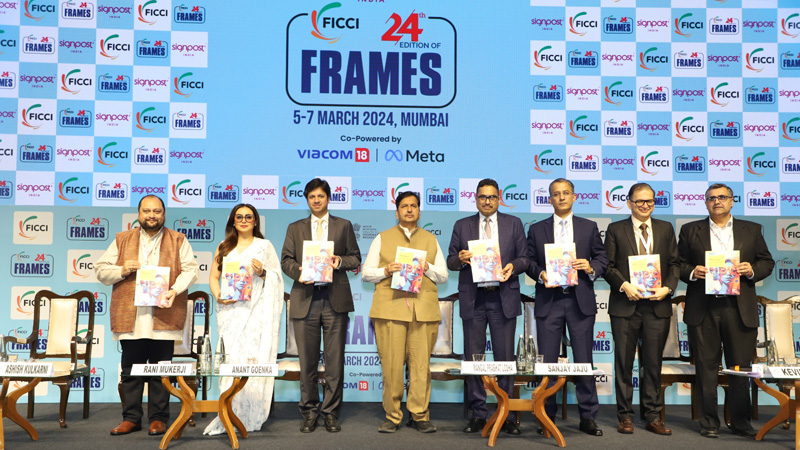
    Mumbai: The latest FICCI-EY report titled ‘#Reinvent: India’s media & entertainment sector is innovating for the future’, launched at the FICCI FRAMES 2024 in Mumbai, revealed that the Indian M&E sector grew by eight per cent in 2023, reaching Rs 2.3 trillion (US$27.9 billion), 21 per cent above its pre-pandemic levels in 2019.

    New media, comprising digital and online gaming, emerged as the frontrunner in growth, contributing Rs 122 billion of the overall increase of Rs 173 billion, and consequently, increased its contribution to the M&E sector from 20 per cent in 2019 to 38 per cent in 2023.

    Experiential (outside the home and interactive) segments continued their strong growth in 2023, and consequently, online gaming, filmed entertainment, live events, and OOH media segments grew at a combined 18 per cent, contributing 48 per cent of the total growth. With the exception of television, which experienced a marginal decline of 2 per cent, all other segments experienced positive growth in 2023.

    FICCI Media and Entertainment committee chairman and Viacom 18 chief executive officer – broadcast entertainment Kevin Vaz said, “India is a unique market where the M&E sector distinguishes itself through a harmonious fusion of tradition and innovation. Here, technology-enhanced entertainment channels, OTT platforms, AI-powered newsreaders, traditional print media, flagship films, and short-form content not only coexist but thrive together, showcasing the vibrant diversity and dynamic growth of our industry. The Government of India’s thrust on improving digital infrastructure in the country combined with our ambition to be at the forefront of the next big technological thrust in media and entertainment, our sector is primed for a massive transformation.”

    EY India partner and media & entertainment leader Ashish Pherwani said, “I believe the M&E sector is at the “inflection point” we foresaw in 2018, with the dominance of digital channels over traditional media. In 2023, new media comprised 52 per cent of total advertising revenues, yet, unlike in many other countries, Indian traditional media also grew. This underscores the unique Indian market where while we are witnessing a seismic shift towards digital consumption, there is still adequate headroom for traditional media to grow.”

    Key highlights:

    Indian advertising reached Rs1.1 trillion:

    Digital advertising grew 15 per cent in 2023 and surpassed traditional advertising for the first time. Social, sports, e-commerce and SME advertisers will continue to drive growth in the sector moving forward.

    A billion screens by 2030:

    India is expected to have almost a billion active screens by 2030. Of these, around 240 million will be large (TV, laptop, PC), while the remaining will be small (mobile phones, phablets). pay TV, free TV, and connected TV are expected to emerge as significant markets, each comprising between 60 to 80 million homes. The 3:1 ratio in favour of mobile phones will sustain the demand for short videos and social commerce.

    Online gaming is expected to reach Rs 388 billion by 2026:

    The segment will see growth across all its verticals, including esports, fantasy sports, casual gaming, and other games of skill to reach an estimated 150 million daily users. Revenue growth will be led by mobile-based real-money gaming and casual gaming.

    Segmental performance in 2023

      . Television: Linear viewership increased by two per cent over 2022, the number of smart TVs connected to the internet each week rose to 19 to 20 million, up from around 10 million in 2022. Television advertising declined by 6.5 per cent due to a slowdown in spending by gaming and D2C brands, impacting revenues for premium properties. The Hindi-speaking market (HSM) experienced softness, resulting in a three per cent overall ad volume de-growth. However, subscription revenue saw growth after three years of decline, driven by price increases, despite a decrease of two million pay TV homes.

     .  Digital advertising: Digital advertising grew 15 per cent to reach Rs 576 billion, constituting 51 per cent of total advertising revenues. This figure includes advertising by SME and long-tail advertisers totalling over Rs 200 billion, and advertising earned by e-commerce platforms amounting to Rs 86 billion.

     .  Digital subscription: Digital subscription grew 9 per cent to reach Rs 78 billion accounting for a third of 2022’s 27 per cent growth, as premium cricket properties were moved in front of paywalls. Paid video subscriptions decreased by two million in 2023 to 97 million, across 43 million households in India. However, paid music subscriptions grew from five million to eight million, generating Rs 3 billion, while online news subscriptions generated Rs 2 billion.

     .  Print: Contrary to the global trend, print media continued to thrive in India, with advertising revenues growing by four per cent in 2023. Notably, there was significant growth in premium ad formats, as print remained a preferred medium for affluent metro and non-metro audiences. Subscription revenues also grew by three per cent due to rising cover prices.

     .  Online gaming: The segment’s growth slowed to 22 per cent in 2023, reaching Rs 220 billion. It surpassed filmed entertainment to become the fourth largest segment. India saw over 450 million online gamers, with approximately 100 million playing daily. Over 90 million gamers paid to play, with real money gaming comprising 83 per cent of segment revenues. Larger players absorbed the impact of a higher GST levy, hurting their margins but safeguarding growth.

     .  Film: The segment grew 14 per cent to reach Rs 197 billion in 2023. Over 1,796 films were released in 2023, and theatrical revenues reached an all-time high of Rs 120 billion. The number of screens grew four per cent. 339 Indian films were released overseas.

     .  Animation and VFX: The Hollywood writers’ strike impacted global supply chains, and consequently, the segment grew just six per cent in 2023. Potential mergers and falling ad revenues also reduced the slate of animated content produced for broadcast in India. A revival in demand in the second half of the year led to growth, boosted by the trend of using more VFX in Indian content.

     .  Live events: The organized segment grew 20 per cent exceeding pre-pandemic levels. Growth was driven by government events, personal events, weddings, and ticketed events, including several international formats and acts that came to India.

     .  OOH: OOH media grew by 13 per cent in 2023, surpassing its 2019 levels. Growth was led by premium properties and locations. Active digital OOH screens crossed 1,00,000 contributing nine per cent of total segment revenues.

      . Music: The Indian music segment grew by 10 per cent to reach Rs 24 billion in 2023, slower than previous years as certain music OTT platforms went pay and stopped or reduced their free services. 87 per cent of revenues were earned through digital means, though most of it was advertising led on YouTube, there being around only eight million paying subscribers despite music streaming’s reach of 185 million.

     .  Radio: Radio segment revenues grew by 10 per cent in 2023 reaching Rs 23 billion. This growth was driven by increased retail and local advertising, as well as alternate revenue streams. Ad volumes increased by 19 per cent in 2023 as compared to the previous year, although ad rates remained below their 2019 levels.

  • EY survey: Only 60 per cent of music creators pursue full-time careers

    EY survey: Only 60 per cent of music creators pursue full-time careers

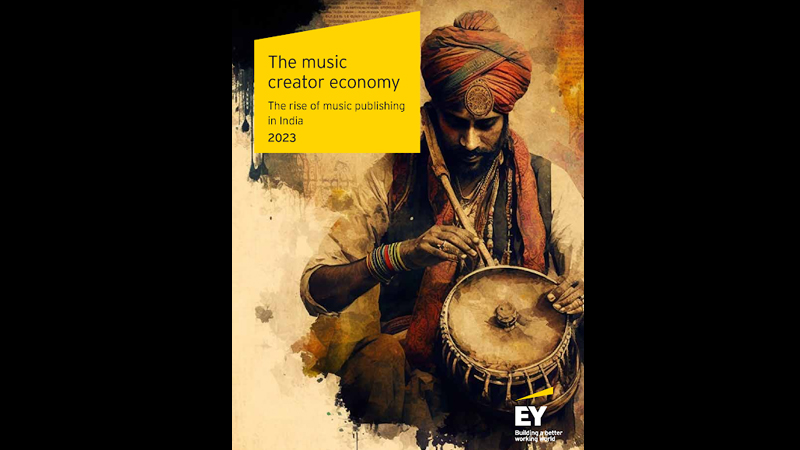
    Mumbai: EY, the leading professional services firm, launched the first-ever comprehensive report on the state of the music publishing industry in India titled ‘The music creator economy: The rise of music publishing in India.’ The report aims to provide valuable insights into the current state, market potential, and perspectives surrounding music publishing in the country.

    The report estimates that India generates over 20,000 original songs annually, contributed by 40,000 music creators. Music directly or indirectly generates over Rs 12,000 crore in revenues each year.

    Commenting on the survey findings, EY India media & entertainment leader Ashish Pherwani said, “Music is an important part of India’s media and entertainment sector and is an important contributor to India’s Soft Power. Both local and international labels have driven the music segment’s sound recording revenues for a long time. However, music publishing revenues remain much smaller, given the differing views on its applicability and litigation.”

    Björn Ulvaeus of ABBA fame, now president of the International Confederation of Societies of Authors and Composers (CISAC) stated, “The works of songwriters and composers inspire our lives and enrich our cultures. With the support of publishers and authors societies, they are also a driver of economies that fuel other businesses and employ millions of people. This study can help improve many readers’ knowledge of our sector.”

    The first-of-its-kind survey conducted by EY, in which 500 music creators participated, indicated that their financial income is unpredictable and often limited:

    1.    87 per cent of respondents would have liked to make a living off their music alone, but only 60 per cent were able to do so

    2.    Working outside of the traditional employer-employee relationship, one-time payments (upfront fees), live performances and royalties were the primary sources of income for most creators

    3.    A majority strongly believed that they needed to learn more about music production and monetization

    4.    Only 56 per cent of respondents had access to the equipment and infrastructure required to produce music

    5.    35 per cent of respondents reinvested more than 50 per cent of their earnings from music on equipment, gear, software, and other infrastructure required to create music

    While India consumes more music per capita than the world average, it ranks 14th in recorded music revenues. In contrast, publishing revenues are ranked 23rd due to various issues like lack of legal clarity and consequently, low compliance.

    However, despite these challenges, India’s music publishing industry has grown, reaching Rs 884 crore (approx. US$100 million) in the fiscal year 2022-23. The Indian Performing Right Society (IPRS), with over 13,500 authors as its members, continues to expand its revenue, thanks to the support it has received from GOI, as more music users comply with publishing requirements.

  • COVID-19 to impact 2020 ad rev estimates: FICCI-EY report

    COVID-19 to impact 2020 ad rev estimates: FICCI-EY report

    MUMBAI: The rapid spread of COVID-19 has fractured the whole world, particularly hitting India’s economy, which could have a drastic impact on the predicted advertising revenues for 2020, says FICCI and EY India’s media and entertainment report 2020.

    According to the report, “the coronavirus’ impact on various segments of M&E could include postponement or cancellation of events, impact on theatrical revenues due to loss of weekends, stoppage of print production or circulation in impacted areas, newsprint import blockage, stoppage or delay of content production and post-production, etc.”

    Already, a majority of sporting events at both international and local levels have been postponed or cancelled, including the first-ever postponement of 2020’s Tokyo Olympics. Even tech seminars and auto events are being scrapped one after another to curb the spread of the virus. FICCI’s own international convention – FICCI Frames – had also been postponed. The event was scheduled to take place between 18-20 March.

    The report estimated that the pandemic will cause disruption across the sector in the world, reducing the global economy by 0.5 per cent in 2020. “Organisation for Economic Co-operation and Development (OECD) reduced its growth forecast for India by 1.1 per cent for 2020, despite it being the fastest-growing major economy in the world,” says the report. The country’s growth was expected to be around five per cent, which is higher than the global average of around 2.5 per cent. India’s expected growth rate is a little higher than that of China.

    Reaffirming a positive stance for India in the future, the report expects that despite a growth slowdown in 2019 and 2020, India is expected to regain its position as a global growth leader. As a glimmer of hope, the report mentions that the positive angle is the increased time that people will spend with media in their homes. This is likely to boost media consumption and sampling.

    Giving a fresh statement on the current economic situation of the world, International Monetary Fund’s chief Kristalina Georgieva in her online press briefing said: “It is now clear that we have entered a recession as bad or worse than in 2009.” Her statement came on the back of unstoppable cases of coronavirus that has created a financial stir across the globe.

    Projecting a recovery in 2021, Georgieva adds: “There may be a sizeable rebound, but only if we succeed with containing the virus everywhere and prevent liquidity problems from becoming a solvency issue. A sudden stop of the world economy could create a wave of bankruptcies and layoffs.”

  • Budget 2020 proposals offer few benefits to M&E industry: EY India

    Budget 2020 proposals offer few benefits to M&E industry: EY India

    MUMBAI: As always, the industry's hopes from union budget 2020 were high. According to a report from EY India while the budget proposals offer few benefits to the industry, some of the changes may have a material impact which will need to be assessed.

    “The budget proposals will provide relief to the foreign companies earning income such as license fees from making compliances in India, provide clarity and do away with avoidable tax litigation through reduction in withholding tax rate for technical fees as well as withholding tax provisions for e-commerce operators. New media and digital business qualifying under start up incentives will get additional impetus from the measures proposed. Reduction in newsprint import duties will help print industry which is going through a tough business cycle. Tax amnesty scheme for resolution of pending litigation offers an opportunity to reassess the tax game in the country,” the report adds.

    The report states that the proposed alternate personal tax regime will be relevant to mass employment by the industry in its content production processes, however, it is difficult to determine whether the regime will provide a material differential cash surplus to the employed.

    It also adds that expansion of domestic tax regime will lead to tax uncertainty for foreign companies with no resource to any credible advance ruling mechanism which will allow them to understand their tax position upfront.

    “Removal of exclusion relating to theatrical receipts would certainly put pressure on the finances of the film businesses with a 10 per cent withholding tax rate and increase their compliance burden. The uncertainty attached to film business certainly makes a strong case for a rate much lower than applicable 10 per cent withholding tax rate. Increase in import duties will lead to increased cost for businesses,” it adds.

    Key impacts:

    ·  Withholding tax rate on “fees for technical services” reduced from 10 per cent to 2 per cent, reducing potential litigation on withholding tax rate on content production services and certain other services which do not qualify as “professional services”.

    ·  Exclusion of consideration from “sale, distribution or exhibition of cinematographic films” removed from “royalty” definition that may make theatrical and other receipts from exploitation of cinematographic films taxable and subject to withholding tax at 10 per cent.

    ·  Expansion of domestic source rule will bring to tax income of a nonresident from (i) advertisements targeted at a customer located in India

    (ii) sale of data collected from a person in India and (iii) sale of goods or services using data of customer located in India.

    ·  The list of services subject to Equalisation Levy provisions remain unchanged.

    ·  Exemption provided to non-residents earning royalty and fees for technical services from the requirement of filing a return of income, subject to fulfilment of stated conditions.

    ·  Relief provided d to the print industry by reduction in customs duty on newsprint and paper.