Tag: experimentation

  • Jayesh Patil takes charge of Star Pravah’s programming

    Jayesh Patil takes charge of Star Pravah’s programming

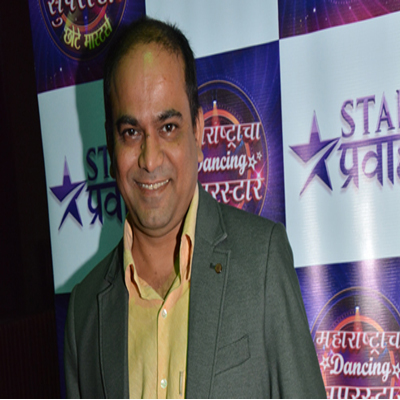
    MUMBAI: A change of face will mark a change of programming strategy on Marathi GEC channel Star Pravah. Jayesh Patil has been roped in as the new programming head for the channel, filling in the shoes of Shrabani Deodhar who has been elevated to a higher position which is yet unknown.

    Patil was previously with Reliance Big Productions for nearly two and a half years where he led the programming as fiction head. Prior to that, he has been a writer for several popular shows starting off with Ek Mahal Ho Sapno Ka and continuing with trend setters such as Kumkum, Jassi Jaisi Koi Nahi, Laagi Tujhse Lagan and more recently with Bade Achche Lagte hain.

    Taking charge on 26 August, he has already got to work to study the market and to strategise new plans. “Marathi space is very attractive. There is lots of scope for experimentation and there will be a lot of focus on events,” says Patil. He says he has had enough of writing and now it is time for him to reinvent himself as well as the programming strategy of Pravah.

    As far as competition is concerned Patil says that it is always good to have competition. Marathi as a genre has been lagging as compared to other regional genres but Patil says that this was the case a few years ago, but not anymore.

    Pravah faces competition from Zee Marathi and E TV Marathi but as of now it is leading in the genre.

  • A Centenary of experimentation through cinema is highlight of FD festival

    A Centenary of experimentation through cinema is highlight of FD festival

    NEW DELHI: This weekend, Mumbaiikars will see a feast of experimentation through a Retrospective of Indian Cinema and Video over the last one hundred years.

    The Retrospective from 28 to 30 June has been curated by Ashish Avikunthak & Pankaj Rishi Kumar and will be screened at the Films Division in Mumbai.

    The prints of the films have been acquired from the Directorate of Film Festivals, the Film and Television Institute of India in Pune and the Satyajt Ray FTI in Kolkata, and the National Film Archives of India in Pune.

    The retrospective is a celebration of the spirit of experimentation in Indian cinema; from the moment of its mythic birth in 1913 with D G Phalke’s Raja Harishchandra to the innovative and challenging moving images produced and exhibited today. The films brought together chart the transformation of experimentation, from early celluloid spectacle to contemporary digital adroitness. The curatorial impetus of this retrospective is marked by an emphasis on tracing the chronology of experimentation through the history of Indian cinema. The idea of ‘experimentation’ rather than the experimental or avant-garde drives the films put together in this retrospective.

    These films challenge modernity by generating a contemplative dialogue with Indian history, tradition, culture and religion. They are not driven by the desire to just produce an aesthetic artifact, but rather to create a discursive field. 

    It was more than 50 years later after Phalke’s experiments that the first experimentation occurred within the bureaucratic confines of the postcolonial Films Division in the late 1960s. These films challenged the formidable account of the sturdy developmentalist state and shattered its edifying edifice. These were the first cinematic critiques of the nation – forthright, trenchant and angry. S. Sukhdev, Pramod Pati, S.N.S Shastry and K.S. Chari among others, radically altered the possibilities of cinematic representation in India.

    Soon the films funded by Film Finance Corporation (later NFDC) ushered the much-celebrated rise of the Indian New Wave. Mani Kaul’s Uski Roti (1969) and Kumar Shahani’s Maya Darpan (1972) spearheaded profound experimentation in this period. However, the foundation of this continued experimentation was first established in the venerable FTII under the tutelage of Ritwik Ghatak. The section “Experiment in School” is a small curatorial gesture towards the pioneering works produced in its confines along with the later established SRFTI.

    This retrospective is conceptualised as a conversation with cinema, cinematic experience and cinematic thought.

    Screening Schedule
    Day One — 28 June, 2013, Friday
    28 June, 2013, Friday: 10.00-12.30 pm
    Session 1: Experiments with Gods 
    A collection of early films made by D.B. Phalke between 1913 and 1935. 
    Raja Harishchandra (20 mins, 35mm, 1913)
    Lanka Dahan (9 mins, 35mm, 1917)
    Shree Krishna Janma (6 mins, 35mm, 1918)
    Kaliya Mardan (50 mins, 35mm, 1919)

    28 June, 2013, Friday: 1.15- 3.45 pm
    Session 2: Experiment in the State 
    The earliest robust experimentation in India begins under the imaginative tutelage of Jean Bhownagary while he headed the Films Division in 1965. 
    Explorer – Pramod Pati (7 mins, 35mm, 1968)
    Claxplosion – Pramod Pati (2 mins, 35mm, 1968)
    Trip – Pramod Pati (4 mins, 35mm, 1970)
    Koodal – Tyeb Mehta (16 mins, 35mm, 1970)
    Abid – Pramod Pati (5 mins, 35mm, 1972)
    Child on a Chess Board – Vijay B. Chandra (8 mins, 35mm, 1979)
    India ’67 – S. Sukhdev (57 mins, 35mm, 1968)
    28 June, 2013, Friday 4.00- 6.45 pm
    Session 3: Experiment in the School 
    FTII became the centre of experimentation soon after it was headed by Ritwik Ghatak. Since then, along with SRFTI, it has continued to be a space where experimentation in cinema occurs on a regular basis.
    Bodh Vriksha – Rajan Khosa (27mins, 35mm, 1987)
    In Short – Kuntal Bhogilal (18 mins, 35mm, 1996)
    Repentance – Rajeev Raj (22 mins, 35mm, 1997)
    Chinese Whisper – Raka Dutta (27 mins, 35mm, 2006)
    Airawat – Renu Savant (10mins, 35mm, 2011)
    Moon Stars Lovers – Jessica Sadana (10 mins, 35mm, 2012)

    28 June, 2013, Friday, 7.00- 9.00 pm
    Session 4: Feature Film 1- Kanchan Seetha (87 mins, 35mm, Malayalam, 1977)
    by G. Aravindan
    Ending the first day with Malayali Filmmaker Aravindan’s masterpiece Kanchan Seetha – an invigorating reworking of the Ramayana, which opens up a new discourse on Indian cinema and its interpretation of religion. This film is located here to be in direct conversation with Phalke’s cinema of religiosity.

    Day Two
    29 June, 2013, Saturday
    29 June, 2013, Saturday, 10.00- 12.30 pm
    Session 1: Experiment with the Documentary 
    Documentary has been a formidable cinematic form in India. Although most innovation has occurred in world of the political, it has also has seen serious experimentation. 
    I am Twenty S.N.S. Sastry (20 mins, 35mm, 1967)
    Tales from Planet Kolkata – Ruchir Joshi (38 mins, 16mm, 1993)
    Brahma, Vishu, Shiva – R.V. Ramani (19 mins, video, 1999)
    Presence – Ekta Mittal & Yashaswini B. R.- Behind the Tin Sheets Project (18 mins, HD, 2012 )
    Nayi Kheti – Pallavi Paul (11 mins, HD, 2013)

    29 June, 2013, Saturday, 1.15- 3.45 pm
    Session 2: Experiments with the Short Film 
    This section focuses on films that were made outside the institutional framework of the state or the school and can be understood as independent experimentations, especially focusing on the short form.
    Nirjan Godhuli – Santosh Gour (10 mins, 16mm, 1993)
    Dust – Ashim Ahulwalia (20 mins, Video, 1993)
    Atreyee – Shumona Goel (17 mins, Video, 2003)
    Straight 8 – Ayisha Abraham (17 mins, Video, 2005)
    Bare – Santana Issar (11 mins, Video, 2006)
    Jan Villa – Natasha Mendonca (20 mins, HD, 2010)

    29 June, 2013, Saturday, 4.00- 6.00 pm
    Session 3: Experiments in the Gallery 
    In the last decade, the Art Gallery has become a vibrant space for exhibiting moving images mostly in the form of video art and installations. This section attempts to grasp with this new space of experimentation. It has been co-curated by Mortimer Chatterjee.
    Record/Erase – Nalini Malani (10 mins, Video, 1996 )
    Flight Rehearsals – Kiran Subbaiah (7: 26 mins, Video, 2007)
    Dance Like Your Dad – Hetain Patel (6:15 mins, Video, 2009)
    There is a spider living between us – Tejal Shah (7 mins, Video, 2009)
    Man Eats Rock – Nikhil Chopra & Munir Kabani (22:11 mins, Video, 2011)
    The First Dance – Hetain Patel (7:44 mins, Video, 2012)
    Forerunner – Sahej Rahal (12:16 mins, Video, 2013)
    File not Found – Jaret Vadera (1 min, Video, 2013)

    29 June, 2013, Saturday, 6.30-8.30 pm 
    Session 4: Feature Film 2- Satah Se Uthata Aadmi (114 mins, 35mm, Hindi, 1980) by Mani Kaul
    Mani Kaul is known mostly for his landmark film Uski Roti. However, the Satah Se Uthata Aadmi is probably his most conceptually rigorous and philosophically penetrating work. Based on the writings on Muktibodh, this film is a deep philosophical articulation on postcolonial modernity.
    Day Three
    30 June, 2013, Sunday
    30 June, 2013, Sunday 10.00- 12.30 pm
    Session 1: Experiments with Animation
    Co-curated by Nina Sabnani, this section examines experimentation in the world of animation. We shall look at the way in which animation directors have pushed the boundaries and expanded its scope in process, materials, concepts and its functions.

    30 June, 2013, Sunday 1.30- 4pm 
    Session 2: Cinema of Prayoga 
    The invocation of “prayoga” from Sanskrit etymology is Amrit Gangar’s radical move of rejecting the Western art historical terminology of experimental and avant-garde to explain the specific nature of experimentation in Indian cinema. This section has been co-curated by Amrit Gangar.
    And now i feel i don’t know anything – Kabir Mohanty (35 mins, 35mm, 2001)
    Egotic World – Vipin Vijay (21 mins, 35mm, 2002)
    Kramasha – Amit Dutta (22 mins, 35mm, 2006)
    Vakratunda Swaha – Ashish Avikunthak (22 mins, HD, 2010)
    21 Chitrakoot – Sambhavi Kaul (9 min, HD, 2012)

    30 June, 2013, Sunday 4.15- 6.30 pm 
    Session 3: Feature Film 2- Kaal Abhirati (120 mins, 35mm Bengali, 1989) by Amitabh Chakraborthy. 
    This is a significant film of this era that explores the complexities of human existence within the confines of Indian philosophy and discourse. This film, along with Kamal Swaroop’s Om Dar Badar, is the link between experimentations by Mani Kaul and Kumar Shahni and contemporary articulations by the ‘Cinema of Prayoga’ filmmakers.

    30 June, 2013, Sunday, 6.45- 8 pm 
    Session 4: Round Table Discussion
    The curators along with filmmakers, discussants and respondents will have a Round Table conversation teasing out and putting on the board the major points/ issues /debates that have been brought out in these three days.

  • Go Goa Gone: A well executed experiment

    Go Goa Gone: A well executed experiment

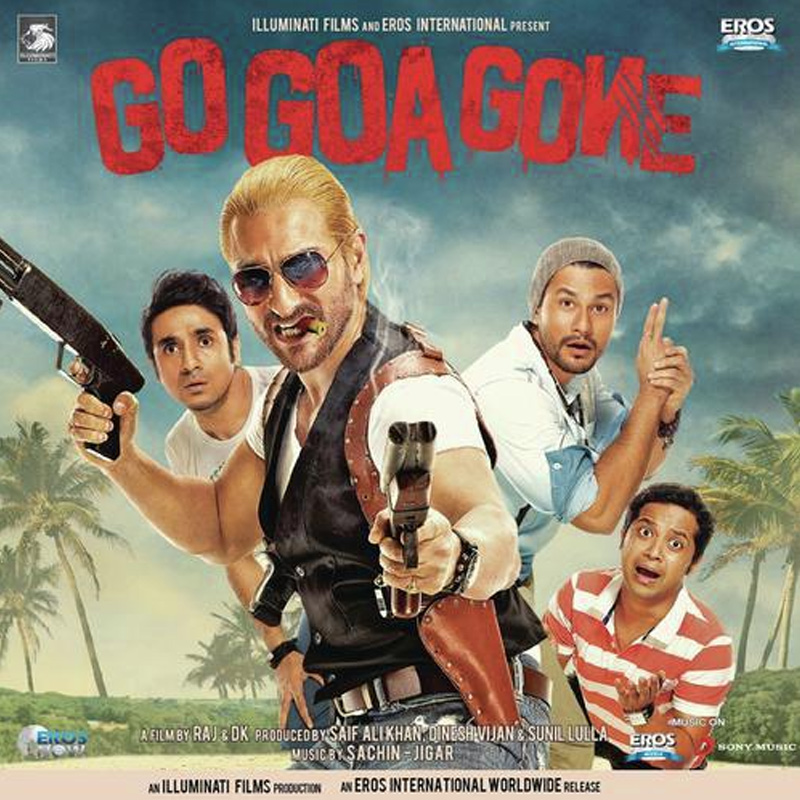
    MUMBAI: Ever so keen to try something new and define a new genre that the Hindi film audience is not familiar with, the filmmakers at times come up with a new idea that works. While Hollywood has been dishing out zombie movies for over 70 years now and has a repertoire of 100s of them in its archives, the Hindi film industry seems to have awakened to this genre only now. So we have the second zombie movie of the year in Go Goa Gone. Indian (more specifically Hindi movie) audience generally does not like ‘yuck‘ stuff so the two wise things that the makers have made sure while making Go Goa Gone is that, the title nor promotion material hint at zombies. The other is that, it has been made into a comedy.

    Producers: Saif Ali Khan, Dinesh Vijan, Sunil Lulla.
    Diretors: Raj Nidimoru, Krishna DK.
    Cast: Saif Ali Khan, Kunal Khemu, Vir Das, Anand Tiwari, Puja Gupta.

    Kunal Khemu, Vir Das and Anand Tiwari are buddies sharing accommodation and employed at the same work place. All three have different philosophies of life. While Khemu is happy go lucky and believes in living life on day to day basis, Das is a romantic who lives like Khemu but wants to live normal life while Tiwari is a serious kind who has no vices and is sincere about his work. Tiwari is due to go to Goa on office work and the other two decide to tag along. No sooner are they in Goa, Khemu and Das are out hunting for female company when Das meets Puja Gupta who tells him about a rave party, organised by the Russian mafia, taking place that night on an island off Goa. The boys decide to gatecrash.

    At the party, alcohol, drugs and women are in free flow. Soon, a new drug specially acquired from Siberia is introduced for those who can afford it. The boys, obviously, can‘t. Next morning, the rave party is over but it has left a strange sort of after effect, all those who took the new drug have turned into zombies who, when hungry, seek human beings for food. The trio has now turned into a foursome as Gupta has joined the group. They are being chased by zombies, first by a few and later by scores of them. That is when the Mafioso, Saif Ali Khan emerges as their saviour; because he organised the rave and also introduced the drug, automatically he has become an expert on zombies overnight. According to him, there are 1399 zombies on the island since that is the number of guests he had invited and the only way to finish them was to shoot them in the head. To this end, he has already come prepared with all kinds of guns including a bazooka!

    The first half of the film is racy with many witty one-liners coming from Khemu and the film so far rests on the three boys and the girl. Khan comes on the scene much later. The second half is all about continuous race to outrun zombies and some yucky scenes of zombies feasting on human bodies which may not be to everyone‘s liking.

    With an acceptably limited duration of 110 minutes, the film has been well scripted with some enjoyable moments. Khemu‘s being the author backed role, he emerges the best with able support from Das and Tiwari. Gupta makes her presence felt. Khan‘s role is more like a cameo where he plays a superman like gun wielding Delhi born Russian Mafioso. Musically, Babaji ki booty is catchy. Photography is good with zombie scenes well executed. Direction is handled deftly.

    Go Goa Gone is a fair entertainer but not everyone‘s cup of tea with its odd combine of wit vs gore and may end up just being an experiment. 


    Gippi: Modern day Ugly Duckling

    Gippi bases its theme in the age old story of The Ugly Duckling written by the Danish writer Hans Christian Andersen in 1843. This is story of an ugly duckling born in a barnyard who is subjected to much abuse and insults from others around him till he grows up into a beautiful swan. The story has since been adapted in various formats like opera, film, drama and animation formats.

    Producers: Hiroo Yash Johar, Karan Johar.
    Director: Sonam Nair.
    Cast: Riya Vij, Divya Dutta, Doorva Tripathi, Arbaz Kadwani, Jayati Modi, Taaha Shah, Mrinal Chawla, Aditya Deshpande, and guest app by Pankaj Dheer and Raqesh Vashisht.

    Gippi– Riya Vij is a 14 year girl in the ninth standard who is fat, poor at sports and struggles through her studies. In fact, she has nothing going for her. However, there is one thing she is good at and that is to dance to the tunes of Shammi Kapoor‘s songs. Not that it is much use to her when she vies for attention; let alone boys not even many girls want to be her friend. Her total friends list includes Doorva Tripathi and a boy who has a crush on her. Vij is always made fun of and made to look small in front of other classmates by the top ranker, slim and well turned out class prefect, Jayati Modi. Modi excels in sport, always gets 90 per cent plus grades and is presentable; in fact everything that Vij is not, but aspires to be.

    Things are not so great for Vij at home either. Though her mother, Divya Dutta, gives her and her brother, Arbaz Kadwani, the best possible upbringing while managing her beauty parlour, her father, Pankaj Dheer, is about to marry a gori ma‘am; a fact, which while making her mother always sad, deprives her of a male support at her crucial growing up years.

    It is at Dheer‘s engagement ceremony that she meets a senior from her school, Taaha Shah with whom she bonds well but makes the mistake of taking his casual friendship as a budding romance. The realisation comes with humiliation in front of all her classmates at a party that romance was the last thing on Shah‘s mind.

    Finally, the cause to face up to her small world and be accepted for what she is comes when she is challenged by Modi to contest school head girl elections against her and win. Shaky at first, Vij takes up the challenge. She succeeds in conveying to other students that she is not perfect, nor are they and hence she is one of them. The underdog wins.

    Is there an audience for Gippi kind of a film? Who does it cater to? An acceptable teenage story is generally about 16 to 19 and usually romance. Not many would identify with a 14 year school girl‘s problems however good the intentions. Story and direction by Sonam Nair are routine. Performances are generally average except those of Dutta and Kadwani. Old Shammi Kapoor songs provide some relief.