Tag: Exim Bank

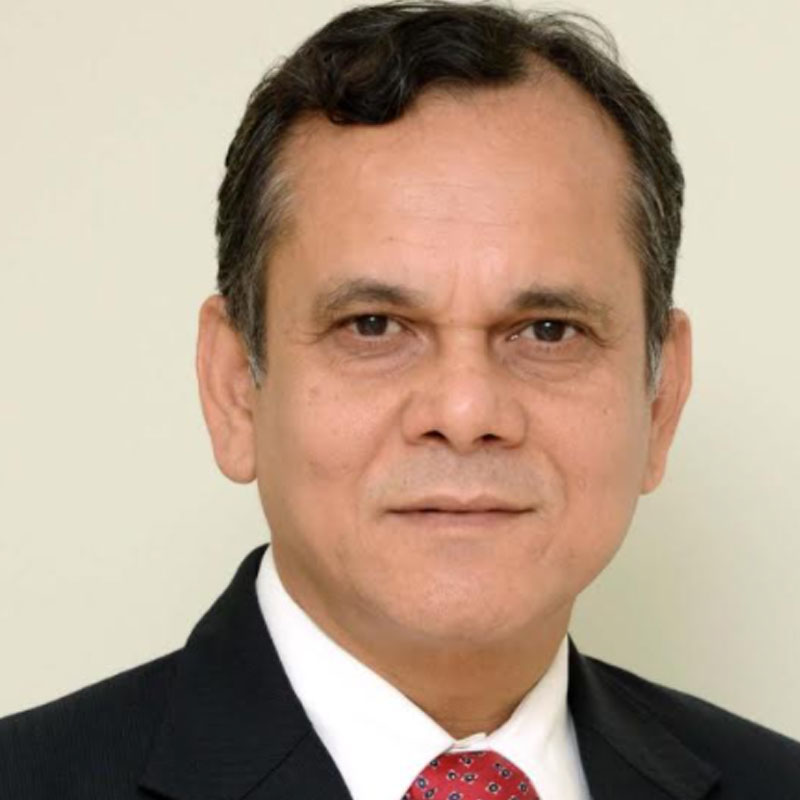
  • Former Dy Managing Director of EXIM Bank, Debasish Mallick joins CapSavvy Board as Non-Executive Vice Chairman

    Former Dy Managing Director of EXIM Bank, Debasish Mallick joins CapSavvy Board as Non-Executive Vice Chairman

    CapSavvy Consultants Pvt Ltd today announced joining of Mr. Debasish Mallick as a non-executive Vice Chairman of the company. Mr. Mallick has served as Deputy Managing Director of EXIM Bank of India and as MD & CEO of IDBI Asset Management Company Ltd (IDBI AMC).CapSavvy is a leading player in the fields of finance, technology and education.

    Mr. Mallick is an economist and a certified Associate of the Indian Institute of Bankers. His versatile career of 35 years includes serving in various domains such as Development Banking, Investment Banking, Commercial Banking, Capital Markets, Corporate Finance, International Bond Markets, Treasury and Retail Banking.

    Sharing his thoughts on the occasion, Mr. Mallick said, “Concerted effort must be made for all round growth and development through a strategy of widespread industrialization in a decentralized manner. This will provide large employment opportunities and produce wide ranging goods and services to fulfill the aspiration of ‘Make in India and Make for the World’. Decentralized industrialization can be best provided by healthy and systematic growth of MSMEs. CapSavvy is a young and fast-growing company, which uses latest and modern technological tools in providing advisory to businesses and industries, with special focus on SMEs and MSMEs”.

    “My purpose of joining CapSavvy Board is because Anil is known to me for more than 2 decades and I found him extremely passionate, go-getter and a through professional. His focus on nurturing MSME and Start-up at grassroots level will harness the MSME sector and captivate its entrepreneurial potential to build a sustainable and equitable society”, added Mr Mallick 

    While speaking on the occasion, Anil Goyal, a rank-holder Chartered Accountant and Founder MD of CapSavvy said, “We are thrilled and privileged to have Mr. Mallick join as an Independent Vice-Chairman to the board at CapSavvy. His presence gives us confidence that we have a visionary leader guiding us as we scale responsibly to serve India’s most crucial sector, which contributes about 30% of its GDP”.

    “Debasish Mallick’s acceptance as a non-executive Vice Chairman at CapSavvy Consultants during Covid is a great breakthrough for us. Under his leadership and operational experience, SMEs and export sector will get huge benefit on long term” Mr Goyal added.

    Welcoming Debasish Mallick to the Board, Aruna Goyal, Co-founder and Director, CapSavvy Consultants Pvt Ltd said, “We are delighted to have Mr. Mallick join us at the board. Being an exceptional leader having led top institutions of India, Mr Mallick will be a valuable asset to the Board. His acceptance to join us is gratifying and we look forward to his guidance as we embark on our journey forward.”

    SMEs and MSMEs have emerged as a highly dynamic and vibrant sector of the Indian economy since the last five decades. With its agility and dynamism, the sector has shown admirable innovativeness and adaptability to survive in the recent economic downturn as a result of the Covid Pandemic and have lots of opportunities to grow in the future. In the recent years, the sector has consistently registered higher growth rate compared to the overall industrial sector in India. Similarly, the start-up landscape in the country has become the epitome of innovation with some of them bringing out solutions to the local and regional problems. However, to stimulate their growth and enable their journey, they require appropriate market access and funding which is one of the initiatives being undertaken by CapSavvy. The joining of Mr Mallick on the board of CapSavvy will have a significant impact from the perspective of the MSMEs and the Start-up industry.

  • Exim Bank puts Rs 2 billion behind films in FY07, mulls equity in animation companies

    Exim Bank puts Rs 2 billion behind films in FY07, mulls equity in animation companies

    MUMBAI: For the Bollywood industry which is keen to tap the overseas market, there is good news. The Export-Import Bank of India (Exim Bank) is willing to loosen its purse strings and has extended funding to the tune of Rs 2 billion for eight movies during the current fiscal.

    Exim Bank, in fact, has funded the recently released Yash Raj Films’ big ticket movie Dhoom 2. “We have lent Rs 2 billion to the film industry this fiscal,” Exim Bank chairman & managing director TC Venkat Subramaniam tells Indiantelevision.com. “Our total exposure to the sector is Rs 4 billion.”

    Of the other Yash Chopra movies funded by Exim Bank are Veer Zaara, Hum Tum, Bunty Aur Babli and Dum. The Bank has also financed Don (Rs 100 million) and Mangal Pandey – The rising (Rs 80 million). Exim Bank has been funding Hindi movie projects which have a potential to earn foreign currency revenues in the overseas market.

    Animation is another area in the entertainment sector that has drawn the attention of Exim Bank. It is eyeing the option of picking up equity in start-up animation companies. “With their outsourcing models, animation companies in India have the potential to grow. Apart from prividing debt, we may consider equity participation in the start-ups. But for the companies which are listed and are already enjoying high valuations, it doesn’t make sense for us to enter as equity partners because they are already highly valued,” says Subramaniam.

    Exim Bank is in talks with an animation company to provide finance for the expansion needs. With Crest Animation Studios Ltd, it has already agreed to lend $7 million to Crest Animation Studios Ltd.

    The Bank has extended lending to over Rs 4 billion for film projects which have potential to earn foreign exchange. “We are not only financing on production but also on the overseas distribution side.

    Noted film producer Bobby Bedi will approach Exim Bank to discuss his new project Mahabharata for which he plans to invest Rs 3-4 billion. Bedi is considering institutional financing for the epic project which will extend to a talent hunt, TV series, film trilogy, gaming, animation and a theme park. “Bedi is looking at an innovative financial structuring. He is taking the project to financial institutions. He is also going to approach Exim Bank for this,” an industry source says.

    Exim Bank will examine the cash-flow situation of the project as it spans over different formats and will take a longer period to complete.

  • Institutional finance on the up for Indian movies

    Institutional finance on the up for Indian movies

    MUMBAI: Institutional finance is beginning to flow in to fund Indian movies. IDBI, for instance, has sanctioned Rs 5.5 billion on a cumulative basis over the last five years. Exim Bank, similarly, has extended lending to over Rs 4 billion for film projects which have potential to earn foreign exchange.

    “Overseas earnings from films recently financed by us has touched Rs 1.15 billion. We are not only financing on the production, but also on the overseas distribution side. The industry has a lot of potential even in the animation business,” said Exim Bank chairman & managing director TC Venkat Subramaniam, while speaking at “India The Big Picture,” a seminar here today on the film entertainment industry organised by the CII.

    Exim Bank has a lending cap of Rs 250 million for a single film project. The film industry earns an estimated Rs 69 billion a year, contributing 26 per cent to the total revenue of the entertainment sector. This is just 1.7 per cent of the global market, said Subramaniam.

    Export revenues have jumped from Rs 2 billion in 1998 to Rs 4 billion in 2000 and further to Rs 11 billion in 2005, accounting for 16 per cent of the total earnings. “There is a healthy outlook as we increase earnings from the international market, strengthen animation outsourcing, provide institutional financing and extend government incentives,” he added.

    IDBI is also cautiously bullish on the industry. “We have funded 70 movies. We are not only providing rupee loans but also in dollars for borrowers to hedge foreign exchange risk. Besides, we are extending line of credit so that film producers can cover up not on one but a slate of movies,” said IDBI general manager Aloke Dasgupta.

    IDBI funds only projects which have a minimum budget of Rs 4 billion and have a debt-equity ratio of 1:1. “We are providing financial support only for film production. We don’t fund in the reail and distribution end of the business. But for supporting smaller movies, we are in dicussions with NFDC to ensure that money is put in the right place for such projects,” said Dasgupta.

    But are the southern films having access to institutional finance? South Indian Film Exporters association president and MD of Ananda Exports L Suresh said film financing had not trickled down to the southern region. “It is probably because most of the banks are headquartered in Mumbai. Besides, banks take a long time to sanction loans and we finish production within three months. Besides, banks insist on collateral securities,” he said.

    Speaking on the sidelines, Dasgpta, however, said IDBI had financed Tamil and Telugu movies.

    Speaking on the occasion, Sony Pictures India MD Uday Singh said financial rigour was essential as the movie business is not without risks and revenue leakages. Media is fragmented and there are market access issues in certain states. “We have done enough hard work and there is now a bottom-up realism. We are extending from our distibution business and getting into film production as well. We are starting with one but are in alks with other directors as well. Our mandate is to have a slate of at least 2-3 films in a year’s time,” he said.

    Emphasising on the importance of a theatrical success, he said the Hollywood studios are realising that fast growth would come from the BRIC (Brazil, Russia, India and China) markets.

    Ernst & Young partner and head of media practice Farokh Balsara said the home video segment accounted for just 4 per cent of filmed entertainment revenues while in the US it was as high as 50 per cent. This sement could see increased activity as ventures capitalists have started to invest into new models of home video.