Tag: everest

  • Everest Spices ropes in celebrity Chef Ranveer Brar as a brand ambassador

    Everest Spices ropes in celebrity Chef Ranveer Brar as a brand ambassador

    Mumbai: Everest Spices on Tuesday announced the appointment of chef Ranveer Brar as its brand ambassador. It is the brand’s reassuring move that brings forward the story of goodness, purity of ingredients, legacy, taste and how it has withstood the test of times in its commitment towards delivering quality always.

    Ranveer Brar super-efficiently juggles between being a chef, TV presenter, judge, teacher and an actor, and thanks to his popular food-shows, he enjoys massive stardom on television and a tremendous fan following on social media as well. 

    Lucknow-born Indian celebrity chef has set up several restaurants in India and abroad, including the Flyp at MTV chain of restaurants pan India, and curated the menu of many more like cruise kitchens aboard Royal Caribbean.

    Today, the chef-turned-actor’s brand value has increased by 20-25 per cent since his acting debut with Amazon series Modern Love and he is regarded as one of the most adorable and sought after chef personalities which has swelled his number of ardent followers by the day. Each and every new video of his is eagerly awaited for their release on YouTube and watched by a truly diverse audience, cutting across all age groups which talks volumes about his fan following.

    He has also been part of a year-long digital association with Milkmaid alongside other noteworthy brand endorsements that includes Kellogg’s, Philips, Hershey’s, Home Centre Stores, Victorinox, Asahi Kasei, IIHM, Swiggy and Govardhan.

    Talking about the collaboration, chef Brar said, “Spices have always been my favourite area of study and experimentation and I believe this association will be a great opportunity for me to delve deeper into not just the brand’s spice laterals, but also make further inroads into understanding the food-loving audience’s ever evolving choices and lifestyles.”

    For all these years, Everest  has grown exponentially garnering  the largest market share in this segment and have now even reached out to the Indian diaspora internationally. With their core principle of using the best quality ingredients, following the best manufacturing process and hygiene protocols, a strong R&D for perfecting unique blends have helped Everest to gain the trust and respect of not only Indian but global consumers. Hence this collaboration with chef Brar is expected to reach out to a new audience in the younger age group with ever-changing taste preferences who admires him and closely follows his endeavours. 

    Everest Foods chairman and managing director Sanjeev Shah added, “We are delighted to stitch an association with none less than Chef Ranveer Brar because we believed that it would be a perfect brand fit as he understands food and taste and most importantly we share the same value systems of not compromising with quality.”

  • Genpact recognised for analytics solutions & digital capabilities

    Genpact recognised for analytics solutions & digital capabilities

    MUMBAI: Genpact, a global professional services firm focused on delivering digital transformation for clients has announced that Everest Group has named Genpact as a “Leader” and “Star Performer” in its 2017 Analytics Business Process Services (BPS) Service Provider Landscape with PEAK Matrix™ Assessment. In North America specifically, Everest Group positioned Genpact as the market leader for Analytics Services market share.

    The report evaluates 18 providers of global analytics BPS on their market success and delivery capabilities. Everest Group cites Genpact as a dominant leader in the space for its broadened scope of advanced analytics solutions; strategic acquisitions such as Endeavour Technologies and PNMsoft; and digital capabilities in machine learning, cognitive computing, and Internet of Things.

    “Genpact has successfully used its existing accounts to grow its analytics business, putting to good use its expertise and experience in those industry verticals, and rising to become a Leader and a Star Performer,” said Everest Group practice director Anupam Jain. Its investments and partnerships, including those with academia, will allow Genpact to meet future client demands and stay competitive in the rapidly evolving analytics market.”

    Enterprises are shifting their approach to global analytics. To obtain a full picture of their entire businesses and gain greater insights, they are moving from piecemeal solutions to enterprise-wide, industrialized solutions. To be more effective, enterprises are partnering with one or two key strategic vendors to manage their company-wide analytics.

    Everest Group recognized Genpact’s analytics capabilities, flexibility, and customer responsiveness to improve business operations. Genpact helps enterprises harness data to transform operations to make smarter decisions and meet business goals.

    For example, Genpact used advanced analytics to help a consumer finance company acquire two million new customers by enabling more than 1,500 direct marketing campaigns. Genpact embedded analytics across marketing, risk, collections, and operations functions to generate $700 million of business impact for the client over ten years.

    “Our digitally-enabled analytics capabilities are pivotal in our ability to improve business operations and drive transformational value for our clients across industries,” said Genpact senior vice president and business leader – analytics and research Rohit Tandon. “Through our distinctive Data-to-Insight-to-Action approach, we help enterprises become more competitive. During 2016 alone, Genpact’s analytics interventions generated over $2 billion in annual impact for clients in support of their growth initiatives.”

  • Universal Pictures to release ‘Everest’ across India in September

    Universal Pictures to release ‘Everest’ across India in September

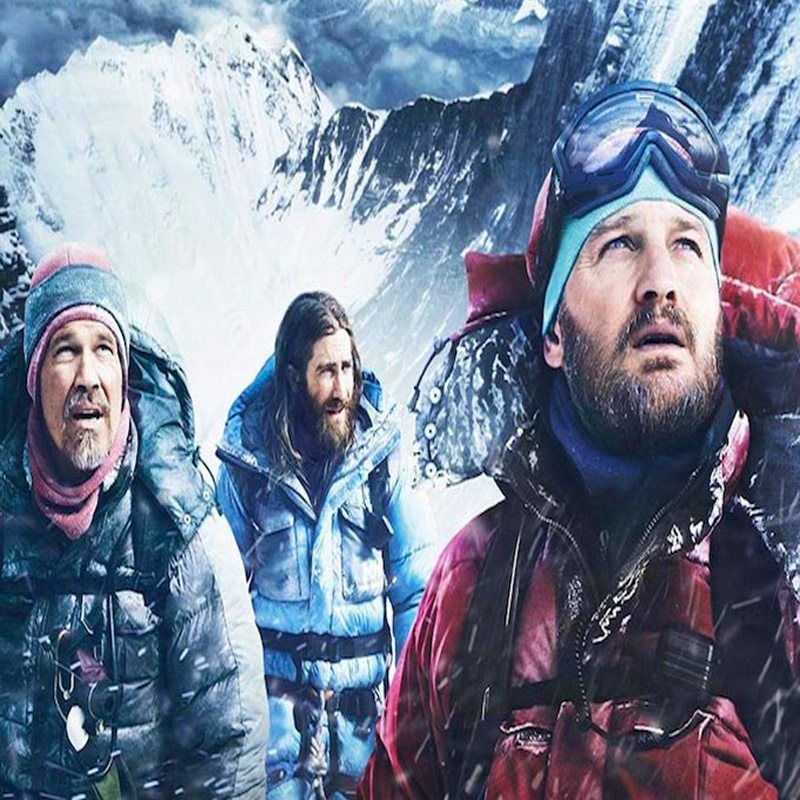
    MUMBAI: Universal Pictures is all set to release the epic adventure Everest across India this September.


    This movie showcases the spine-chilling journey of a group of mountaineers who embark on a journey to reach the summit of the world’s highest mountain, Everest.


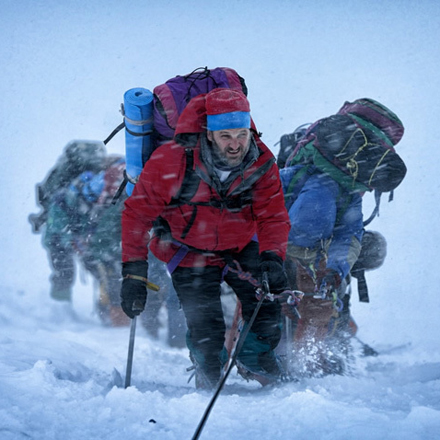
    It is based on the real life incidents that took place in the 1996 Mount Everest disaster and stars Jason Clarke, Josh Brolin, John Hawkes, Robin Wright, Michael Kelly, Sam Worthington, Keira Knightley, Emily Watson and Jake Gyllenhaal. Everest has been directed by Baltasar Kormákur.


    Inspired by the incredible events surrounding an attempt to reach Mount Everest, the movie documents the awe-inspiring journey of two different expeditions challenged beyond their limits by one of the fiercest snowstorms ever encountered by mankind. Their mettle tested by the harshest elements found on the planet, the climbers will face nearly impossible obstacles as a lifelong obsession becomes a breathtaking struggle for survival.   


    Shot across the locales of Nepal, Rome and UK, Everest will focus on the challenges faced by two groups, the one that was led by Scott Fischer (played by Gyllenhaal), and the one led by Rob Hall (played by Clarke).


    The movie has been co-written by William Nicholson and Simon Beaufoy.   

  • Hit at the box office, flop on TV

    Hit at the box office, flop on TV

    From Anurag Kashyap’s Yudh for Sony Entertainment Television (SET), Ashutosh Gowariker’s Everest on Star Plus, Vipul Amrutlal Shah with Pukaar – Call For The Hero on Life OK, Anil Kapoor’s 24 to Sanjay Leela Bhansali’s Saraswatichandra on Star Plus, the small screen has always welcomed big filmmakers with open arms. However, it is a different story that not many of them have been able to make a mark on television.

    Despite having deep pockets, the crowned kings of weekend box office, somehow fail to rule weekdays on television. Moreover, these were not your “typical Indian daily soaps.” With oodles of star power and mammoth production budgets, these shows took programming on Indian television to a different level.

    Producers are now pumping in more money in daily soaps, be it for grander sets, better special effects or skilled writers and directors. For instance, each of these episodes costs upwards of Rs 1.25 crore as compared to the normal budget of Rs 6-8 lakh for 30 minutes of fiction.

    Moreover, these handful of shows are attempting to push the fiction envelope in the Rs 43,000-crore Indian television industry today.

    Unfortunately, the production cost incurred by these shows fails to justify the visibility the shows garner.

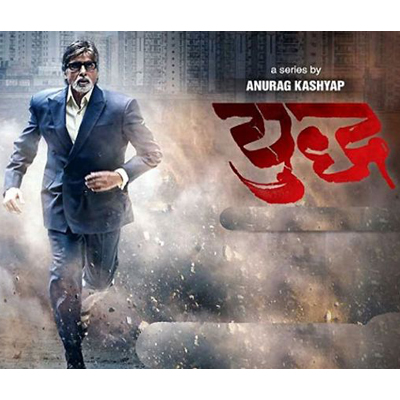
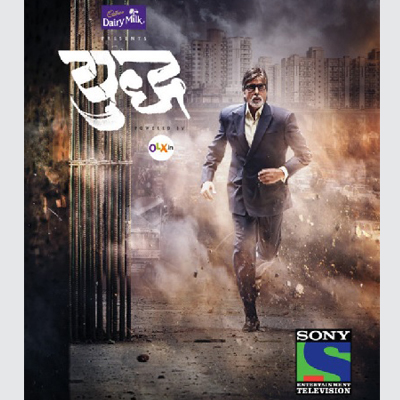
    Let’s start with Yudh. This was one of the most talked-about shows of 2014 with Bollywood megastar Amitabh Bachchan making his television fiction debut on Sony. The show ran for four weeks, with five episodes a week. The estimated cost of the show, per episode, was around Rs 3 crore. While the channel promoted the property extensively, the buzz hit the rocks when it clocked an average of 1,199 TVTs in its opening week. The industry termed it as ‘dark’ content for the 10 pm slot on Indian television. 

    Similarly, Bhansali’s Saraswatichandra spent close to Rs 12 lakh per episode, little higher than what a fiction daily soap would spend. Though it started on a good note with 5,730 TVTs, it later lost track and the numbers fell drastically.

     After Bhansali, Star Plus brought Bollywood filmmaker Gowariker back to the small screen with Everest. Touted as one of the most expensive fiction shows, it was shot at locations like Nepal, Uttarakhand and the Dokriani glacier. With technical equipments like GoPro cameras, 4K technology etc, the production cost per episode was around Rs 35 lakh. The channel had pinned high hopes on the show but it failed to generate ratings as expected. It registered 2,845 TVTs in its opening week.

    Another show with a different perspective titled Pukaar had men as the main protagonists. Based on a story with an army background, it saw filmmaker Vipul Shah making his debut on television. Close to Rs 13 lakh had been spent per episode on production. Needless to say that Pukaar failed to call in the audience.

    While more often than not they’re armed with a magic formula for success on the big screen, why do these filmmakers’ high-budget television stint fail to bring in viewers?

    Indiantelevision.com spoke to industry experts to know whether Bollywood biggies have simply lost their way or have audiences grown tired of their particular brand of filmmaking?

    Media planners feel that no matter how much money a maker puts in, if the content doesn’t reflect the taste and preferences of Indian viewers, the show is bound to flop.

    Helios Media managing director Divya Radhakrishnan opines that television and movies are very different mediums. “In a movie, you get two hours to tell your story and a maker knows how to build it section by section. Television is 22 minutes in and out. How you can link the 22 minutes and have a 24-hour gap before you come up with next 22 minutes is important. So, there is a different knack of doing television, which is very different from movies,” she says.

    Similarly, Radhakrishnan believes that television makers can’t do movies. “Look at the mindset, for instance, from a hijack sequence in Diya Aur Baati Hum to a wedding scene in Yeh Rishta Kya Kehlata Hai, a viewer’s mindset is changing constantly. Assuming that a person is watching Star Plus end-to-end, this is the kind of graph that goes on television. However when you are watching a movie, a viewer, right from the first minute to the end of the three hours, is fully in tune with the character. Movie format is very different from that of television.”

    Another observer feels that film producers are so oriented towards movie making that they have to re-orient themselves for television, which is very difficult for someone of creative caliber like Gowariker, Bhansali etc.

    “It’s not about a show doing well or not doing well, but when BARC rollout happens, the benchmarks are going to change. The mindset of a Baalika Vadhu viewer will be different from that of a Yudh viewer,” adds Radhakrishnan.

    Concurring with Radhakrishnan, a media analyst feels that the grammar of storytelling on television is different from films. “On the big screen, filmmakers have support of huge stars, which is one reason for the film doing well. On TV, big filmmakers will definitely have the money to pump in but no big stars, which can back them up with the content they deliver. Shooting at exotic locations and increasing production cost are not necessarily recipes of good content.”

    Argue that Yudh failed to make an impact on viewers despite having probably the biggest star there ever has been in Bachchan and the burden of failure immediately falls on the frail shoulders of content, which invariably is king.

    Another point to factor in here is the crew that works on the production. A media analyst feels that by getting the crew that works on films will not necessarily work on television. “The way creative people think for movies and television is way different. You can’t get the same set of film people to write or direct for television,” the analyst opined.

    From a purely demand and supply point of view, mainstream watchers do not look for intellectual content after a day full of hardship. “They just want entertainment, which Yudh failed to deliver,” opines a top executive of a production house. “After full day of work, who would want to watch ‘dark’ content? What one needs is good content, which can de-stress the mind.”

    Another observer believes that in the US, TV series form a substantial market for various studios, and it is taken quite seriously by all participants like studio, writers, producers, director, actors and the audience. “In India, the television industry is yet to achieve that status. For this to happen, the content and formats on Indian television needs to witness a sea change.”

    While one has caught a glimpse of this change wherein big-budget shows like 24, Bigg Boss, Satyamev Jayate and Mahabharat have worked, the fact remains that such shows are far and few. A media planner says, “Why is it that these high-budget shows worked on television? It is because the content directly clicked with the audiences as the makers understood what the audience of today wants.”

    Offering a different take, a Hindi general entertainment channel (GEC) executive says, “The target audience for most Indian TV shows is households that don’t prefer watching anything sophisticated but only the typical serials. For many years, saas-bahu serials, in which Ekta Kapoor thrived, ruled the roost. Over the years, many other themes opened up like dance, music competitions, historical serials etc. However, in all these the inherent style remains the same, just the setting changes.”

    How important is time slot for the success or failure of shows? To this, Radhakrishnan says, “People chase good content. For instance, last year Colors filled up the 9-10 pm slot with two shows Beintehaa and Rangrasiya, which did average in numbers and less in viewership. Why didn’t these shows work in the primetime slot? However, now the channel airs Ashoka Samrat in the same time slot. The show has a very strong base and so it’s doing well. At the end of the day, it’s all about having good content.”

    A trait that people lack today is patience. Radhakrishnan argues that people are not patient nowadays and will go wherever they find content that appeals to them. It boils down to the game of content and the appeal it brings to the table. “Otherwise Saath Nibhana Saathiya at 6.30 pm and Yeh Hai Mohabattein at 11 pm wouldn’t be the top rated programmes in the genre. Similarly, Diya Aur Baati Hum for a very long time was the top rated show on the TAM TV ratings chart. However, the last four weeks had a different story to tell when the numbers dropped drastically with the show losing its numero uno position. Thus, to get the audiences back, the show took a generation leap to bring it back on track. In the interim, KumKum Bhagya of Zee has become number one.”

    High production budget and big names don’t necessarily result in getting the eyeballs. So while Karan Johar may produce a show tomorrow starring Shah Rukh Khan and Katrina Kaif, if the content is not strong enough, be rest assured that the viewer is not going to lap it up.

  • Hindi GECs 2014: The year of experimentation

    Hindi GECs 2014: The year of experimentation

    MUMBAI:  Experimentation, experimentation and experimentation. 2014 was the year when India’s Hindi general entertainment channels (GECs) went to the lab and tested out many new programming concoctions for the Indian viewer.

    Whether it was in the form of new channels or new programmes or new time slots or episode budgets, channel and creative heads played the quintessential scientist.

    Three new channels emerged in the specialised Hindi GEC space: Sony Pal, Zindagi and Epic TV. They had yet to make a mark on Indian viewing habits, though Zindagi was the only one that got the thumbs up from TV critics. 

    Star Plus continued to lord it over all in the ratings space for most of the year, but the second, third, and fourth spots witnessed a see-saw battle between Zee TV, Life OK and Colors. Sony, which once ranked second amongst GECs sank to a lowly sixth position during 2014 even as it’s flanking laughter channel Sab, stayed steady through 2014 at the fifth spot.  The year also saw the near demise of what was once the No. 4 GEC – Sahara from the troubled Subrata Roy-run Sahara Group.

    Star Plus: The year started on a good note for Hindi GEC market leader, Star Plus.  An extra dose of fiction entertainment was on offer to the audiences. It made a strategic move of extending its prime-time (6 pm – 11.30 pm) weekday fiction band to Saturdays too. The move worked wonders for the channel and helped further to maintain its Numero Uno position on the ratings chart.

    Taking a cue from the runaway success that Colors’ Comedy Nights with Kapil had raked in, the channel launched Mad in India, placing it head to head with it. But sadly, Gutthi (Sunil Grover) failed to connect with the audiences. 

    In a bid to attract the younger Indian demographic to the channel, it decided to focus on real urban stories, rather than melodrama based on the heartlands. It took the big budget, limited episode route, streamlined its programming and made the channel look peppy.

    On offer for traditional Star Plus viewers was the YoYo Honey Singh- backed India’s Raw Star (IRS), the more current and urban-based Airlines and film-maker Ashutosh Gowariker’s Everest – a story about a girl wanting to clamber on to the world’s largest peak and the city-focused Nisha Aur Uske Cousins.

    Just as 2014 was ending, it unveiled, the spell-binding Private Investigator (PI) and Tu Mera Hero.

    Aamir Khan’s much talked-about Satyamev Jayate (SMJ) made a comeback in two seasonal parts in keeping with CEO Uday Shankar’s commitment to do socially-relevant programming. Estimates are that while IRS entailed an investment of Rs 55 – 60 crore, SMJ cost Rs 4 crore an episode and Everest about Rs 50 lakh an episode. These are the budgets that TV producers have been dreaming of.                                                                                                                                                                                       The heavy investment was worth it as the network’s sales folks managed to make advertisers fork out Rs 3.5 – 4 lakh per 10 seconds spot and Rs 6 – 12 crore per sponsor for SMJ (Airtel was the presenting sponsor with Aquaguard being the co-sponsor and Coca-Cola, Johnson & Johnson, Skoda Auto, Axis Bank, Berger Paints and Dixcy Scott, the associate sponsors) and Rs 3.3 – 4 lakh per 10 second spot for IRS. Almost all the inventory for the shows was sold out, making it a win-win year for Star Plus.

    With many launches to its kitty, the channel executives had to bring the curtains down on some earlier shows: finite mythological series Mahabharat and drama Saraswatrichandra.  The former helped Star Plus get a tremendous connect with mythological show lovers, and its producer Swastik Productions walked away with many awards.

    The Sanjay Leela Bhansali produced Saraswatrichandra, which was handed over to the Sanjoy Wadhwa run Sphere Origins, too ran its course and was shut down in 2014.

    On the other hand, existing fiction shows have always been great contributors to Star Plus’ ratings. To connect with the youth a lot more, storylines changed to have a progressive outlook. Diya Aur Baati Hum continued to grab eyeballs as it turned out to be the highest-rated No. 1 fiction show across all channels, followed by series like Yeh Hai Mohabbatein and Yeh Rishta Kya Kehlata Hai. Shows like Veera and Saath Nibhana Saathiya too continued to win over audiences this year.

    Colors: The year saw a tug of war between Colors and Zee TV for the second position. Colors finally won the battle and stood steadfast at No. 2. What created the magic for the Channel in 2014?

    Colors this year created a league of its own with its strong non-fiction portfolio. From the fifth edition of Fear Factor: Khatron Ke Khiladi with the tagline ‘Dar Ka Blockbuster’ to India’s Got Talent, from Jhalak Dikhlaja to Bigg Boss 8, it has kept viewers on the edge of their seats and given them a dose of entertainment 365 days of the year. Comedy Nights with Kapil too contiued to make people laugh and stood strong at the ratings chart.

    The fact of the matter is that advertisers have never shied away from investing in these brand properties. For Jhalak, the channel had increased its ad rates by 15 – 18 per cent over last year whereas for Bigg Boss it hiked them by a whopping 30 per cent.

    Apart from a different theme, the 2014 season of Bigg Boss observed a lot of brand integrations on the show. To go beyond the 10 sec to 30 sec TVC, it had brands from TVS Scooty Zest to Britannia; from Garnier Men’s Products posters to using Oppo Smartphones for any task.

    Another highlight was that after five long years, the channel changed its title sponsor with Vodafone dropping out and Snapdeal coming in.

    Further strengthening its non-fiction band, for the very first time the channel launched a celebrity talk show – The Anupam Kher Show Kuchch Bhi Ho Sakta Hai. The finite series was hosted by actor-producer Anupam Kher.

    On the fiction front, with new shows failing to deliver good numbers, old programmes continued to shine and the longest-running series Balika Vadhu is a case in point. Madhubala too won the hearts of many until mid-year and sadly had to end its three-year sojourn with the channel.

    To encourage appointment viewing, it got on-board new and riveting shows like Udaan, Shastri Sisters and Meri Aashiqui Tumse Hi.

    Star Plus’ loss was Colors gain as it went about cherry picking most of the prime events:  Sansui Colors Stardust Awards; from the sixth edition of Mirchi Music Awards to Indian Television Academy Awards, to the 13th Indian Telly Awards.

    It also announced its association with RFS Entertainment to captivate Indian audiences with Got Talent World Stage Live. Hosted by the badshaah of Bollywood, Shah Rukh Khan, it is a first-of-its-kind global on-ground extension of Simon Cowell’s Got Talent franchise.

    Zee TV: It was a year of back-to-back launches for Zee TV. The channel which takes pride in creating original non-fiction formats has had many firsts to its name.  Be it Sa Re Ga Ma Pa, Dance India Dance (DID) or Antakshari, it has consistently tasted success with its non-fiction originals in a market dominated by internationally-acquired formats like Bigg Boss and Kaun Banega Crorepati (KBC).

    Zee’s first attempt with Cinestars ki Khoj, an acting-based reality show in 2004, did not work out. After almost a decade, this year it was miraculously brought back which in its first edition gave recognition to actors like Ankita Lokhande (Archana Deshmukh on Zee TV’s Pavitra Rishta). But once again it did not really set the ratings chart on fire.

    After a year of non-fiction shows on weekends, Zee TV decided to give DID a break. With an aim to strengthen its weekend slot with fresh content, the channel got on-board for the first time a superhero trilogy called Maharakshak Aryan simply to engage with the family a lot more. 

    The channel felt that an original superhero series was a fresh theme. From its slick production values to innovative visual effects and ingenious cinematography, the show has definitely raised the bar for action thrillers and the fantasy genre on Indian television. To further strengthen its weekend slot, it also launched a light-hearted show titled – Neeli Chhatri Wale.

    For Zee TV, India’s first private Hindi GEC channel, launching a number of new shows in a year is nothing new. What is noteworthy is the fact that the channel has produced the top four weekday fiction launches of 2014. That’s quite an achievement.

    If one takes a look at the opening week averages of all the fiction launches across GECs for the year, it is very clear from the numbers as to who has ruled the ratings charts.

    Jamai Raja leads the pack with 5,488 TVTs, Satrangi Sasural that opened in week 49 with 4,970 TVTs, stands at number two,  Bandhan with 4,366 TVTs and Aur Pyar Ho Gaya with 4,044 TVTs followed at number three and four respectively.

    Its other prize property, Kumkum Bhagya, too has done well. After a six-year stint, the channel’s longest running and most popular series – Pavitra Rishta sadly had wound up.

    On 23 June, the Zee TV network launched Zindagi to break free from the stereotype framework and melodrama with shows never before seen on the Indian small screen. True to its philosophy and tagline Vasudhaiva Kutumbakam, shows like Humsafar, Maat, Kitni Gir hain Baaki Hain were handpicked from across the border.

    Life OK: The channel, which is not your run-of-the-mill type catering to the entire family, has played a different game in 2014. This year’s highlights include its first big-ticket Bollywood event, The 20th Annual Life OK Screen Awards. The show registered a whopping 9 million TVTs, three per cent more than the 6.9 million TVTs (ratings provided by Life OK itself) garnered by Colors from its last year’s edition.

    Riding high on the success of Screen Awards, the channel decided to get more Bollywood stars on-board and launched Life OK Now Awards which celebrates excellence in the field of film, television and music every month.  The popcorn generation was its target over a successful three-months run.

    Its belief was in narrating a variety of stories from different walks of life. It thus launched an action-packed serial – Pukaar – Call for the Hero. With a different perspective, Pukaar had men as the main protagonists. Based on a story with an army background, it saw well-known film producer-director Vipul A Shah making his debut on television. Close to Rs 13 lakh has been spent per episode on production.

    Life OK too took the comedy route with Comedy Classes – but the show quickly fizzled out.

    Not only did big film producers make their way to the network, but the channel attracted a lot of film celebrities too. To make the content line-up bolder and stronger, it got an action reality series – Dare 2 Dance with celebrity Akshay Kumar as its host.

    On the fiction front, viewers saw gorgeous actress Sonali Bendre making her debut on television with the series christened – Ajeeb Daastan Hai Yeh. Actress Bhagyashree too made her debut on television with a gutsy series – Laut Aao Trisha.

    Moreover, after a successful three-year run, the channel’s flagship property Mahadev saw its shutters come down and this paved the way for a new show Mahakumbh- Ek Rahasya, EkKahani. The channel’s crime properties – Savdhaan India and Shapath continued to fly high on the ratings chart.

    Sab TV: This family channel from the Multi Screen Media (MSM) stable, can be credited for the rise in the comedy genre with its popular shows Tarak Mehta Ka Ooltah Chashmah, Lapataganj and Chidiya Ghar, by experimenting with a new format based on live audience participation titled Tu Mere Agal Bagal Hai.

    The sitcom was like no other. The cast acted in front of a live audience which the channel believed was the USP of the show. Launched as a daily soap, it was penned as a finite one. Again, a first of its kind, the channel launched India’s only alien comedy TV serial – Badi Door Se Aaye Hai.

    Tarak Mehta Ka Ooltah Chashmah continues to win the hearts of many and is the chart leader. Not only that, but the team was also invited by our country’s PM Narendra Modi to help him with Swachh Bharat Abhiyan campaign.

    F.I.R continued to be very gripping. In between for a month (July – August), the show tried a stint of stand-up comedy with live audience but failed to capture viewers.

    Sony Entertainment Television (SET): It was a year of struggle for Sony and it ended the year at the bottom rung of the TAM TV ratings ladder. This despite the fact that it experimented with concepts, shows, formats and even programme and marketing spends.

    The channel’s hopes were riding high on Amitabh Bachchan’s fiction debut Yudh, but the dark content was unpalatable. The 20-episode drama launched in July dashed all hopes as it only made around 1,199 TVTs in its opening week. The buzz generated around Big B failed to translate into ratings.

    What clicked this year was its only famous property – Kaun Banega Crorepati 8, giving some respectable numbers to the channel to barely survive. This time around, it moved out of its comfort zone, set in Film City with the launch and mid-season episode being shot like events in Surat and Raipur with live audiences. It also went on a big bang 360 degree promotional exercise with 100 on-ground events. The channel spent an outrageous 30 per cent of the total budget on marketing.

    Sony is pinning its hopes high on yet another launch, another high-investment property – Box Cricket League (BCL), a sports reality show. Played with a soft ball and filmed in a studio it will have 19 matches with around 120 celebrities playing the game.

    Fiction turned out to be a near disaster for the channel. Its biggest fiction launch of the year – Itna Karo Na Mujhe Pyaar with Ronit Roy, did not do as well as it was expected. But both, Balaji Telefilms, the producer and the channel’s management think it will build on its viewers over time.

    Other fiction series like Humsafars, Hum Hai Na and Tum Aise Hi Rehna have only a glimmer of hope. The only silver linings are the channel’s crime and investigation properties – CID, Crime Patrol and Adalat and the historical Maharana Pratap.

    MSM launched a new channel – Sony Pal on 1 September aimed at women and housewives with stories about the fairer sex and family. With the ‘Yeh Pal Hamara Hai’ tagline, it was meant to compliment its sister channels Sony Entertainment and Sab. It launched with nine new shows and Juhi Chawla as its face. Pal like the network’s other GEC initiatives did not make much headway with viewers.

    As the year came to a close, another big experiment saw the light of day with the launch of Epic TV. After a wait of almost a year or more. Headed by former Disney executive Mahesh Samat, Epic is India’s first genre-specific Hindi entertainment channel.

    Covering genres ranging from action, drama, comedy to narrative non-fiction, it seeks to celebrate India’s heritage by creating unique and original content within Indian history, folklore and mythology, using a contemporary story-telling format.

    Discovery Communications India too entered the Hindi enertianment space, with the launch of its Investigation Discovery (ID) channel.

    Hopefully, India’s demanding TV viewers will lap it up. And hopefully, India’s GEC executives will continue to experiment in 2015 and possibly continue with their efforts to redefine India TV audience’s entertainment tastes.

  • The Content Hub: Talent shows and drama series drive the global format business

    The Content Hub: Talent shows and drama series drive the global format business

    MUMBAI: “Format business is a major industry.  Today, the production value of format business is well over 20 billion euros,” said The Format People CCO & partner Justin Scroggie during his keynote at ‘The Content Hub’ organised by indiantelevision.com.

    It is unquestionable that television formats have indeed become essential components in the international television market. Largely licensed by television networks, TV formats describe the overall concept of a show and its premises. Investors around the world are now looking at television as an attractive business.

     “Over the past nine years, American Idol has generated US $8 billion on its own,” he said.

    Scroggie also discussed about the major global trends and television formats in the international landscape as part of his keynote presentation. According to him, the original drivers for the format business are game shows. “Game shows are flexible, relatively short, scalable in terms of cost and renewable. They are repeatable and above all, they are adaptable in various cultures,” he opined while highlighting that despite all this, game shows are struggling these days.

    So why is this happening? “Everybody is looking for the next big game show breakout and nobody is finding it,”Scroggie explained.  Citing the example of the popular game show Who wants to be a Millionaire, Scroggie said that big money prizes are not delivering the kind of drama as the audience is too familiar with it now.

    In addition, with the advent of reality and talent programmes, game shows are not delivering the same level of drama, strong characters and emotional connect which the audiences are expecting. According to Scroggie, talent and reality shows are driving the international format business.

    “Got Talent entered the Guinness book of world record as the world’s most successful reality television format. It has been adapted in 63 countries,” he informed. There are many successful talent show formats like ‘Strictly Come Dancing’ and ‘Masterchef’ that have been adapted globally.  “However trends don’t happen in every country at the same time,”Scroggie added. While Canada does not have many talent shows, China currently has more than 90 talent shows on air.  

    At this point, Scroggie also said that talent shows are also getting saturated.  “Having learnt the grammar of making international talent programmes, more and more countries are making their own versions so that they don’t need to buy international formats,” he explained.  

    Scroggie believes that the fastest growing area of format business is scripted formats which include drama series that can be adapted and remade in other countries. Homeland, for example, one of the highly successfully television shows in the US, is actually an Israeli format.

     
    “The best dramas are those that travel and have something about them. They can be adapted into the story and emotions of any country,” he said.

    Scroggie also spoke about telenovelas, such as ‘Everest’ on Star Plus that drive scripted formats. He believes that today we can find quality drama content written by top talent starring A-listers.  Serialised dramas like family, crime and politics also work.

    In the last part of his keynote, Scroggie explained how the barriers between viewers and shows are breaking down. “Television is a passive medium and the audience wants to interact with the people they see on screens,” he added.  Scoggie feels that web series is picking up and is easy to watch.  While social experiments are popular, they are also risky as they involve real people in a live and reality drama.

    Scroggie, whose organisation deals in format creation, consultancy on formats, branding and in-house training also delved on why UK is a leader in format sales.

    “UK broadcasters are only allowed to keep 15 per cent of the rights on the show. The creators of the shows retain 85 per cent. This has created a huge incentive for producers to sell their formats to broadcasters,” he stated.   

    While UK, US, Netherlands, Israel and Brazil are doing well in the format business, Scroggie feels that Turkey and China are potential countries to also look out for in the future.

     “With your help, let’s add India to the list,” he concluded.


  • Will ‘Everest’ be able to climb the peak?

    Will ‘Everest’ be able to climb the peak?

    MUMBAI: It all began nearly two years ago, when the numero uno channel Star Plus started brainstorming to develop a content which can break the clutter and should help in taking television to the next level.

    To do so, it joined hands with one of the finest filmmakers – Ashutosh Gowariker to produce a series set against an extraordinary background of the magnificent Mount Everest.

    Produced under Ashutosh Gowariker Productions Private Limited (AGPPL) banner, the show – ‘Everest’ is in line with the GEC’s strategy of offering innovative and differentiated content. It has been conceptualised, shot and presented on a scale never seen before on TV.

    The channel re-defined television when it brought a talk show that spoke about social issues in Satyamev Jayate (SMJ) in 2012, and 2013 saw its mythological series Mahabharat. According to Star Plus general manager Gaurav Banerjee, ‘Everest’ is the next step.

    With the first episode telecast on 3 November, indiantelevision.com spoke to people from the industry to know their views on the concept of the show and whether it will re-define television the way shows like SMJ and Mahabharat did in their respective genres.

    According to Havas Media managing director Mohit Joshi believes that Star has taken the right step by going youth with shows like Airlines and now Everest. For Joshi everyone wants to cater to the youth today and traditional housewives’ viewership is not going to be something on which it can sustain for coming years.

    “With the new age viewers being the way they are, I think it is very important to engage with them in multiple test parts and that is what Star is doing through the show. Audiences today are looking for content, doesn’t matter if Star is delivering it or MTV.  With mobile phones in their hands, it only takes a minute for them to switch between devices. So if you give them promising content to watch, you are the king.”

    Agreeing with Joshi, Maxus managing partner north and east region Navin Khemka believes that right from the production quality to the look and the feel, the show seems extremely well done. He further goes on to say that as more and more such programmes launch, the ratings increase, acceptability increases and the channels will be left with no choice but to increase the production quality level and engagement level with the viewers.

    Penned for about 110 episodes, almost 90 per cent of the shoot was canned before the telecast of the show in locations like Mount Everest, Jodhpur, NIM and Mumbai. It has also used a lot of heavy technical equipments like GoPro cameras, 4K technology and a lot more.

    Joshi feels the concept is enterprising and coming from the AG portfolio with big names, it will be able to garner decent amount of visibility. However, he further reasons that overall the viewership has gone for a toss. “The overall fragmentation has led to a lot of drop as far as viewership is concerned which is why all the shows are not performing at the level they used to perform a couple of years ago,” he says.

    He cites an example of SMJ and says that nowadays numbers are not important, but content and the traction from social media buzz plays a major role. “Like for SMJ, more than the numbers it was social media buzz that showed that the program was a hit.” Joshi feels the way SMJ is activating all the social media platforms on television, the channel has done for Everest as well. At present, on Facebook, SMJ has six million likes and Everest has more than 2,000 likes.

    Khemka states that Star has always been a leader in terms of content they provide to the viewers. He presents the example of shows which airs on sister English GEC Star World such as Homeland which is at par with any Hollywood movie. “A similar transition will happen in India. And as more and more channels started investing in content which is of the standard of Everest and as viewers gradually start accepting it, channels will have no option but to change their programming content,” he narrates.

    The series is presented by Fair and Lovely and co-powered by Godrej Ezee while Vinod Cookware has signed up as an associate sponsor. Joshi is confident that the channel should be able to get good mileage from the advertisers’ side too.

    Talking about the ad-rate per 10-second slot, Madhok earlier revealed that the cost of the show is significantly more expensive than anything else on the channel. “As sponsors have demonstrated, this is top quality television produced by an iconic filmmaker so people are happy to be associated and pay the premium required,” he said.


  • ‘Everest’ will break the clutter like ‘Mahabharat’: Nikhil Madhok

    ‘Everest’ will break the clutter like ‘Mahabharat’: Nikhil Madhok

    MUMBAI: A regular girl’s struggle to win her father’s acceptance is a story which we have all seen on television screens, but what differentiates this one from the others is the treatment.

    Set against extraordinary background of the magnificent Mount Everest, the upcoming show, ‘Everest’, on Star Plus aims to create history.

    Star India CEO Uday Shankar believes that the channel has always aimed to bring audiences, innovative content that takes the Indian television viewing experience to the next level and Everest is another big leap in that direction.

    He says, “We are proud to have partnered with a visionary like Ashutosh Gowariker who is one of the most adept story-tellers of our country. ‘Everest’ is a stunning visual delight and an attempt at presenting something never-seen-before to our viewers. I am sure that the story of our protagonist Anjali will resonate with millions in India and inspire them to conquer their own Everest.”

    In the same not, the channel’s general manager Gaurav Banerjee adds, “The series will re-define how television is made in this country considering its visual appeal and the way it will be presented.”

    Produced under Ashutosh Gowariker Productions (AGPPL) banner, the show is in line with the number one GEC’s strategy of offering innovative and differentiated content, it has been conceptualised, shot and presented on a scale never seen before on TV.

    With the use of a lot of heavy technical equipments like GoPro cameras, 4K technology and a lot more, 90 per cent of the show has already been canned in locations like Jodhpur, Mount Everest, NIM and Mumbai.

    The concept took shape in Gowariker’s mind about two years ago where he was confused between two themes. “First was about a girl child, about women empowerment and the other theme was about a sport that was not much talked about (mountaineering). I was not getting anywhere in terms of both the scripts. Then I thought why not to combine the two themes into one.”

    He further says that the whole idea of the show actually began with an insight that what are you willing to do for your dreams? A project of this scale demands a cast who will do complete justice to the roles endowed on them and Gowariker hand-picked the actors for each role after an extensive search.

    The series has brought together some of the finest artistes from both Bollywood and the Indian television industry. The show launches Shamata Anchan as Anjali Singh Rawat, the gutsy girl who is willing to climb Mt Everest in order to win her father’s love and respect. The two male leads of the show are Sahil Salathia as Arjun Sabharwal and Rohan Gandotra as Akash Joshi. The stellar cast also includes Suhasini Mulay, Mohan Kapoor, Milind Gunaji, Rajat Kapoor, Kishori Shahane and Manish Choudhary.

    And hence, the channel is pulling all its marketing muscles out to create buzz for it. The show emanates from a belief that everyone has a personal Everest they aspire to conquer, however the question is how far are they willing to go to conquer it?  

    Keeping this in mind it will launch a campaign asking viewers, #WhatsYourEverest. “We want to make this show feel very relevant to the audiences. People should not feel that this is a show about a mountaineering expedition,” states the channel’s SVP marketing Nikhil Madhok.

    The on-air promos talk about cancer patients winning over their Everest as they fight the disease, sports personnel making into the Indian team as they overcome their Everest. “This is the thought that we are building and we have activated this thought in digital and radio to establish to people that while the show is about Anjali’s journey, it is relevant to everybody,” answers Madhok.

    For the first time on television, a two and half minute theatrical promo has been made for a television series and while this will play on Star Plus at 7.58 pm on 18 October, it will also break in theatres with Shah Rukh Khan starrer ‘Happy New Year’.

    The channel has tied up with some of the outlets of Costa Coffee and has created an ‘Everest’ zone there wherein the temperature would be at just 5 degrees and waiters will serve the customers cold coffee wearing jackets. Customers will also be given a jacket when they enter the coffee shop and will find snow on the ground. Starting from 22 October, the activity will take place throughout the day for couple of weekends across various cities. “Basically the idea is to make sure that people get an experience of how Everest feels like,” says Madhok.

    It has also tied up with Fair and Lovely foundation and through the course of the series the channel will invite people, especially young women to write about an Everest in their life and will help them in conquering it.

    “That assistance could be anything – be it in terms of counselling or monetary assistance. It could be in face of education, somebody wants to get money to become a doctor, somebody wants to actually climb Mount Everest but don’t know how to fund the course. So, we will help them in these things,” reveals Madhok. For a certain set of lucky winners, the channel will help them achieve their Everest.

    The extensive 360 degree marketing campaign includes not just the entire Star Network and 30 other channels, but also activations on radio, outdoor innovations including 3D hoardings. It will be aggressively available in print as well and a huge presence on digital including the YouTube masthead and page takeovers in MSN and Yahoo.

    The new series will replace the on-going Sooraj Barjatia’s show – Pyaar Ka Dard Meetha Meetha Pyaara Pyaara, which has been constantly delivering good ratings at the TAM ratings chart and will air at 10 pm.

    Both Madhok and Banerjee believe that the last year has been good for the channel. “Most of the slots that we operate are the slot leaders. Wherever we would have put this show, it would have replaced a well-performing show,” says Madhok.

    Agreeing to Madhok, Banerjee adds: “At 10 pm, what we felt was that some of our iconic shows in the past have come at 10 pm and all the shows have worked wonders for us.”

    Madhok goes on to say that it did not do so much of number crunching and analysis because between 8-10 pm the audiences available are very similar. “Differences that you see are in very early prime time and LC1 markets are bigger. Those audiences sleep off at 10.30. Outside of that for us, all the slots are very viable.”

    The channel wanted to launch the show around winter and Madhok is confident that with winters coming in, people will enjoy the series more.

    Star Plus has got Fair and Lovely on-board as its title sponsor. It is co-powered by Godrej Ezee while Vinod Cookware has signed up as an associate sponsor.

    Talking about the ad-rate per 10-second slot, Madhok reveals that the cost of the show is significantly more expensive than anything else on the channel. “As sponsors have demonstrated, this is top quality television produced by an iconic filmmaker so people are happy to be associated and pay the premium required,” adds Madhok.

    He hopes that one of the things that ‘Everest’ will do is like ‘Mahabharat’, it will break the clutter. “It will look and feel different on television. And anything that breaks the clutter is something that brands want to associate with and are also happy to pay premiums.”

    “The first important thing when the show goes out is it should break the clutter and it should help in taking television agenda to the next level. Second thing is it should find a good strong loyal audience base,” responds Madhok.

    Though Madhok refused to divulge any numbers, media planners feel that the ad-rate for the new series will be four times more than the average regular rates that a fiction show demands. “Rates differ a bit depending on which show and at what time. For example, a show like Diya Aur Baati Hum will be much more expensive than a show like Suhani Aisi Ladki which airs at 6.30 pm,” states a media planner.

    Talking about the marketing spends; planners believe that in terms of share of marketing it will not be different from what Mahabharat demanded. Out of the total budget, planners estimate that 20 per cent would be spent on marketing.


  • Star Plus to its viewers: ‘What’s your Everest?’

    Star Plus to its viewers: ‘What’s your Everest?’

    MUMBAI: It was in 2012 that Star Plus brought uncomfortable realities to television screens with Satyamev Jayate, then in 2013 the biggest mythological series with Mahabharat and keeping with the trend, the number one rated channel is back in 2014 with Everest.


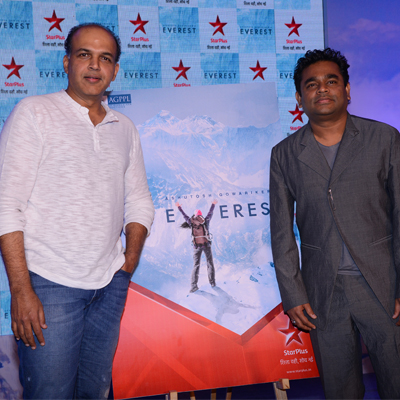
    Bringing to the viewers a great blend of drama, adventure and inspiration, Star Plus and celebrated filmmaker Ashutosh Gowariker have come together to present this finite series. The show is produced under Ashutosh Gowariker Productions (AGPPL) banner and has music by A R Rahman.


    “I wanted to tell a story on television, but films kept me busy,” says Gowariker who previously had made television shows like Fauji, Circus and Kachchi dhoop.  He further goes on to say that the journey with Star Plus began two years back when they first met and started ideating about the project.


    According to Star Plus general manager Gaurav Banerjee the decision was critical to its strategy thought ‘Rishta Wahi Soch Nayi’. “For a channel like ours which is always working on getting new ideas onboard, it takes a lot of time to execute any idea to perfection. One really has to gear up the story telling environment and shape an idea into certain direction.”


    Banerjee adds, “Youth focus is something that we are consciously working on from past one year and Everest was on our horizon.”


    According to the channel’s SVP marketing Nikhil Madhok what appealed to them was Gowariker’s innovative unique ambition and the vision behind the concept. “Two years ago we were toying with the idea of what is going to be the next big thing for us, and then Gowariker came onboard.”


    Madhok believes that this is a show that the youth will relate to and also find resonance in the large population of the country.


    Why Gowariker decided to make television series and not a film? “There are many sides to this story, which I wanted to tell, as each character has its own tale,” he says while adding that if he had to make a film on the subject then it would end up being a 15-hour-long movie.


    The story is about a 21-year old Anjali, who aspires to conquer her own personal Everest. She gets a rude shock when she discovers that her father, who is her hero, never really wanted a daughter. Faced with the biggest conflict of her life, she is forced to question her very own existence. To redeem herself and find a place in her father’s heart she decides to accomplish his unfulfilled dream.


    A project of this magnitude and scale, which demands extreme physical and mental strength, required a world-class crew to do complete justice to the concept. The core team consists of Joh Jeeta Wahi Sikandar and Akele Hum Akele Tum fame directors Glenn Baretto and Ankush Mohla, screenplay for the series (writer) is done by Mitali Mahajan, who was also the assistant art director on films like Swades, Jodhaa Akbar, Munna Bhai MBBS and many more.


    Episodic screenplay has been done by Bhavani Iyer (her first film as a screen writer was Black), dialogues penned by Preeti Mamgain, makeup design by Vikram Gaikwad who has won four national awards for movies like The Dirty Picture, DOP is by Mahesh Aney (he won the national award for best cinematography for Swades), Alphonse Roy (has worked with Oscar winner DOP, Conrad Hall Jr for an American film ‘Oka Amerikee’) and Piyush Shah (worked on films like Salaam-E-Ishq, China Gate and etc), stunt director Amar Shetty who has worked on movies like Om Shanti Om, art director Aparna Raina who has worked on films like Khosla Ka Ghosla , Namesake and etc and costume stylist Preeti Sharma who has done movies like Fashion, Bombay Talkies, Paying Guests and many more.


    For cameramen, shooting was the most crucial part considering unfavourable climatic conditions. Aney says, “The weather was so unfavourable to shoot. We had to test the cameras every now and then. While shooting at the top of 12,000 and 15,000 ft, we had to fight a lot of hurdles like light, batteries draining out etc. However, safety was always a priority for us.”


    “The cold really hampers the number of hours one can shoot. Everybody in the crew lost tons of weight. They have really climbed the Everest,” laughs Banerjee.


    Gowariker further reveals that while shooting a lot of heavy technical equipments were used for the first time like GoPro cameras, 4K technology and a lot more.


    Technology has been a big enabler for the makers. It was there to help and make it easier believes Banerjee. “The show has been masterfully crafted by Gowariker.”


    Madhok further says that if you are able to take out 20 minutes of content in regular studio conditions, one will barely get one minute of content in the mountains considering its climatic conditions.


    As per the nature, usually a show starts three months before the telecast but this is a show that came into being almost two years before. “A show like this requires a completely different financial model where you are committing to a large monetary resources not really knowing when the show will see the light of the day,” says Madhok.  


    With the shoot almost on since last December, almost 90 per cent of the episodes have been canned in locations like Jodhpur, Mount Everest, NIM and Mumbai. For extremely dangerous sequences, the channel had created a set in Naigaon.


    What was the reason behind not signing famous faces for the show? “We wanted to be very real in terms of casting. And we wanted our characters to be 21 years old because young faces brings a lot of energy,” reasons Gowariker.


    Talking about the marketing part, the communication line of the marketing campaign is going to revolve around the thought “‘What’s your Everest’? ‘Hum Sabki life Mein Everest Hota Hai Jisse Hume Jitna Hota Hai’.”


    “We feel that by doing that people will be able to connect with it and make them think, ‘even I have a challenge in life, so let me watch this girl’s story and how she overcomes it’,” states Madhok.


    Though Star officials refused to divulge any financial details regarding the production cost per episode, sources from the industry believe that it ranges anywhere between 30-35 lakhs per episode.


    “If we decide to shoot 90 episodes before the telecast, it is going to be expensive. The fact that we have shot in different locations, none of them is cheap. We have been careful that we have resourced it well,” concludes Banerjee.


    Though the time slot has not been locked, the show is slated to hit the television screens two months down the line and is going to be a weekday property (Monday – Saturday) and will run for less than six months.