Tag: European Union

  • La Chimera to open the 29th European Union Film Festival

    La Chimera to open the 29th European Union Film Festival

    Mumbai: The 29th European Union Film Festival (EUFF) will open with La Chimera, screening on 7 November 2024 in New Delhi. Written and directed by Alice Rohrwacher, the film follows an Englishman exploring Italy’s historical treasures with an eccentric group. La Chimera touches on themes of lost love, relationships, life, and death. Yile Yara Vianello, the film’s lead actress, will attend the opening night in India.

    Writer-director Alice Rohrwacher said, “The proximity of sacred and profane, of death and life, that characterised the years in which I was growing up has always fascinated me and given a measure to my way of seeing. This is why I decided at last to make a film that tells this layered story, this relationship between two worlds, the last part in a triptych about a local area whose attention is focused on one central question: what should it do with its past? As some grave-robbers say, down our way it’s the dead that give life.”

    The European Union Film Festival (EUFF) will run in New Delhi from 7 to 16 November 2024, showcasing 26 European films in 31 languages, providing insights into European society, culture, and people. Organised by the European Union in partnership with EU Member States and regional partners, the festival strengthens EU-India cultural ties and fosters cross-cultural understanding.


    The festival will take place at three venues in New Delhi: India Habitat Centre, Instituto Cervantes, and Goethe-Institut / Max Mueller Bhavan. It features films exploring diverse themes, including relationships, gender identity, sisterhood, and self-discovery. The lineup includes several India premieres, such as What A Feeling, Because I Love Bad Weather, Stairway To Heaven, Death is a Problem for the Living, Jim’s Story, Without Air, Black Velvet, The Last Ashes, Blood on the Crown, Baan, Horia, and The Man Without Guilt.

    All films will have English subtitles and are available on a first-come, first-serve basis. Some films are rated 18-plus; please check ratings before attending.

    EUFF 2024 film line-up by country:

    ●    Austria: What a Feeling 
    ●    Belgium: Employee of the Month (L’employée Du Mois) 
    ●    Bulgaria: Because I Love Bad Weather (Защото обичам лошото време) 
    ●    Cyprus: Embryo Larva Butterfly 
    ●    Czech Republic: Restore Point (Bod Obnovy) 
    ●    Denmark: Sons (Vogter) 
    ●    Estonia: Stairway To Heaven (Taevatrepp) 
    ●    Finland: Death is a Problem for the Living (Peluri- Kuolema on Elävien Ongelma) 
    ●    France: Jim’s Story (Le roman de Jim) 
    ●    Germany: Afire (Roter Himmel) 
    ●    Greece: Animal 
    ●    Hungary: Without Air 
    ●    Ireland: An Irish Goodbye 
    ●    Italy: La Chimera 
    ●    Latvia: Black Velvet (Melnais Samts) 
    ●    Lithuania: Five And A Half Love Stories In An Apartment In Vilnius (Penkios su puse meilės istorijos, nutikusios viename Vilniaus bute) 
    ●    Luxembourg: The Last Ashes (Läif a Séil) 
    ●    Malta: Blood on the Crown 
    ●    Netherlands: Como el Viento 
    ●    Poland: Dangerous Men (Niebezpieczni dżentelmeni) 
    ●    Portugal: Baan 
    ●    Romania: Horia 
    ●    Slovenia: The Man Without Guilt (L’uomo senza colpa) 
    ●    Spain: The Teacher Who Promised The Sea (El maestro que prometió el mar) 
    ●    Sweden: UFO Sweden 
    ●    Ukraine: How is Katia? (Yak Tam Katia?)

  • The European Union’s ‘More Than Food’ campaign continues its culinary journey in India

    The European Union’s ‘More Than Food’ campaign continues its culinary journey in India

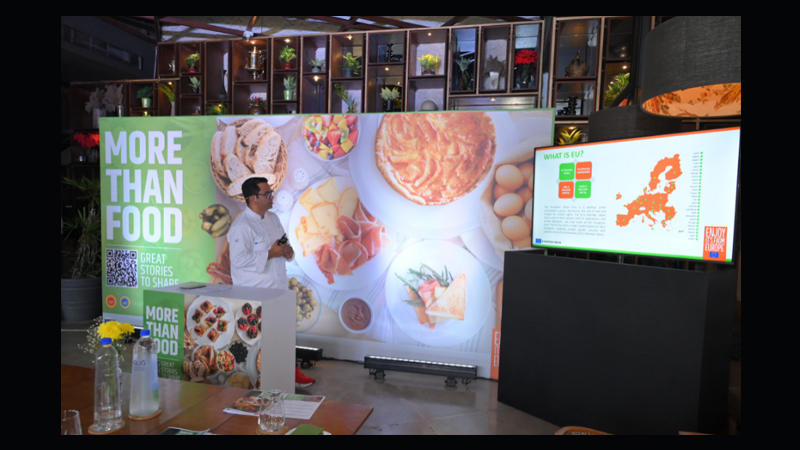
    Mumbai: Following the resounding success of its premier food and beverage campaign, ‘More Than Food’ in India last year, the European Union (EU) extended its culinary offerings through an all-new exclusive gastronomical event, ‘Banter Over Brunch’. Anchoring the event, renowned chef, chef Ajay Chopra assumed his status as the ambassador for the campaign once again and helped transport attendees on a captivating journey into the flavours of the European Member States through a delectable brunch spread.

    The ‘More Than Food’ campaign in India was conceptualised with the aim to create a range of culinary experiences, bringing alive applications of European food and beverages in Indian cuisine with the objective to transport the audience to the picturesque and culturally rich landscape of the European Union.  In line with this, ‘Banter Over Brunch’ saw a variety of mouthwatering dishes, including Berry blast smoothies, chocolate waffles, blackberry and Danablu (PGI) crostini, Mozzarella Avvolta Nel Prosciutto di Parma (PDO) and more, crafted from premium ingredients from the EU, such as fresh and processed fruits and vegetables, dairy and cheese, olive oil, chocolates, , along with pork and poultry products. The EU’s commitment to safety, quality, authenticity, and sustainability was at the heart of the menu, as chef Ajay Chopra introduced each ingredient and its compelling heritage, as well as the EU’s ‘farm to fork’ strategy.

    Sharing his thoughts on the extension of the campaign, Delegation of the European Union to India and Bhutan Charge d’affaires a.i H.E. Seppo Nurmi said, “The idea behind EU’s More Than Food Campaign was to bring to Indian audiences exquisite culinary experiences from across Europe, while highlighting our commitment to vigorous food safety regulations that ensures that every European product that one bites into or drink is authentic, of exceptional quality, sustainable, and safe. Given the overwhelming response to the last campaign, we are happy to announce the extension of the campaign. We look forward to our Indo-European collaboration with the Chefs as well as unique curated events that we hope will bring out the rich European flavours.”

    Speaking about the event, Ambassador for the More Than Food campaign in India chef Ajay Chopra said, “I am thrilled and honoured to continue my association with the European Union’s ‘More Than Food’ campaign in India, especially as we bring this celebration forward with ‘Banter Over Brunch.’ European ingredients are a testament to the rich and diverse European culture, and this event offers our audience a unique opportunity to savour these culinary treasures. This event and partnership with the EU helped us explore exquisite European food and beverages, knowing they embody authenticity, excellent quality, sustainability, and safety. I look forward to seeing how our guests will craft their own delightful brunch experiences with these incredible ingredients, adding to the tapestry of European food culture.”

    The guests were seen in awe of the flavourful dishes and authentic ingredients as they enjoyed the sumptuous brunch curated by the chef. With ‘More Than Food’, the EU will continue to increase awareness about the diverse, rich stories of ingredients and agricultural products from the European Union with campaign ambassadors chef Ajay Chopra and chef Guntas Sethi.  The campaign aims to celebrate the diversity of product from across the 27 EU Member States through a series of events, social media features, B2B activities, and promotions.

    In addition, The European Commission is organising a High-Level Mission with EU Commissioner for Agriculture Janusz Wojciechowski to New Delhi and Mumbai on 6 – 12 December, to facilitate business networking between high-level delegates from the European agri-food sector and their Indian counterparts.

    The Indian market places a lot of value on high quality, authentic products, which is evidenced by the level of imports of EU food and drink, amounting to €857 million in 2021. However, given the size of the Indian market – there is room for significant growth in exports of EU food and beverages, and the ‘More Than Food’ campaign is an initiative aimed at capitalizing on this potential.

    Food and beverages from the European Union are available at multiple online and on-ground retail outlets across India. 

  • Google parent Alphabet’s profit hit by EU fine

    MUMBAI: Google’s parent Alphabet has reported a quarterly profit of USD 3.5 billion, with a massive fine by the European Commission biting into earnings.

    The technology giant on Monday reported that revenue grew to $ 26 billion in the recently ended quarter, and that profit would have tallied nearly $ 6.3 billion if it weren’t for a $ 2.74 billion anti-trust fine levied on search engine Google by the European Commission, according to an AFP report San Francisco.

    Revenue was up 21 percent from the same quarter last year, according to earnings figures. “We’re delivering strong growth with great underlying momentum, while continuing to make focused investments in new revenue streams,” the AFP report quoted Alphabet chief financial officer Ruth Porat as saying.

    Alphabet shares slid about 2.9 percent to 969.03 in after-market trades that followed release of the earnings figures.

    Investors have been concerned about what the regulatory trouble in Europe means for Alphabet, which gets most of its money from Google advertising while investing in “other bets” such as self-driving cars. Alphabet took in $ 248 million in revenue and posted a narrower loss of $772 million in its “other bets” category in the recently ended quarter.

    Meanwhile, Google and the EU are gearing up for a battle that could last years, with the Silicon Valley behemoth facing a relentless challenge to its ambition to expand beyond search results.

    Brussels has already spent seven years targeting Google, fueled by a deep apprehension of the company’s dominance of Internet search across Europe, where it commands about 90 percent of the market.

    In a verdict that could redraw the online map worldwide, the EU’s top antitrust sheriff Margrethe Vestager in June imposed a record fine on Google for illegally favoring its shopping service in search results, according to the AFP report.

    The EU accuses Google of giving its multitude of services too much priority in search results to the detriment of other price comparison services. The decision — if it survives an expected appeal process – could prove to be momentous for Google, as well as for competition law in general.

    The EU is also examining Google’s AdSense advertising service and its Android mobile phone software.

  • TRAI issues fresh paper seeking views on Net Neutrality definition

    TRAI issues fresh paper seeking views on Net Neutrality definition

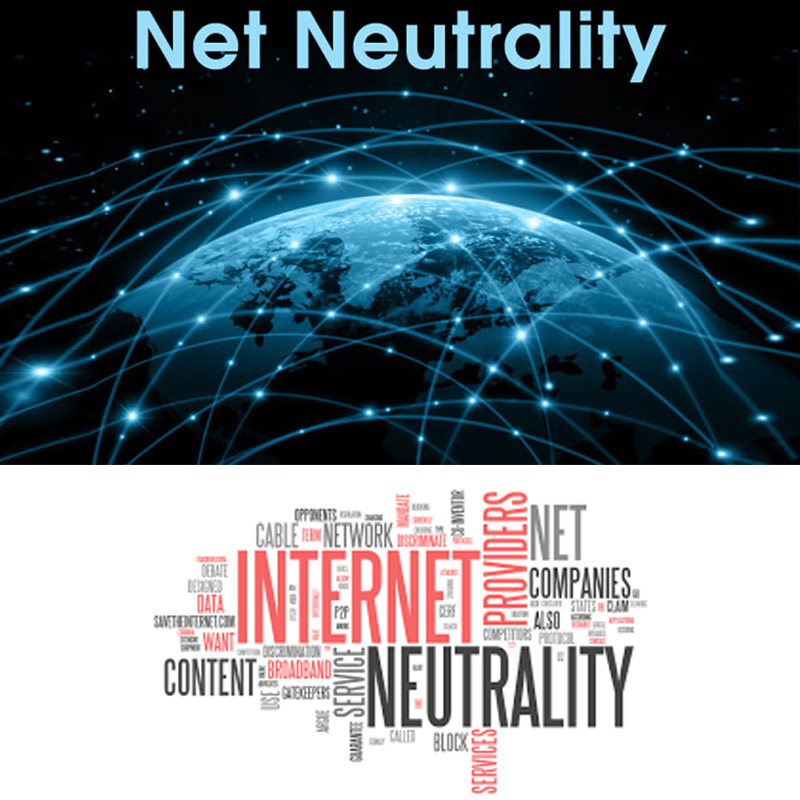
    NEW DELHI: India’s telecoms regulator Telecom Regulatory Authority of India (TRAI) yesterday floated another consultation paper on Net Neutrality (NN) seeking to establish a framework that allows Internet users the `freedom of expression’ and non discriminatory access to the Net.

    In the discussion paper, TRAI stated having identified the India-specific context, the next challenge is to examine what should be the country’s policy response on issues relating to any form of discriminatory treatment in the provision of access to the Internet and seeks views on framing a regulatory framework that would ensure that access to content on the internet is neither ‘blocked’, ‘throttled’ nor ‘preferentially treated’ by ISPs and telecom service providers (TSPs).

    “The idea of equal or nondiscriminatory treatment of traffic that flows on the Internet resonates in the NN principles adopted by various jurisdictions, although the term itself does not necessary feature in their regulatory instruments. The EU regulations, for instance, create ‘common rules to safeguard equal and nondiscriminatory treatment of traffic’ without expressly using the term NN. Given that key terms such as `equal treatment’ are still contested, many have urged against a rigid definition of NN. This was also the view expressed by the DoT (Department of Telecoms) committee in its report where it stated that ‘the crux of the matter is that we need not hard code the definition of Net Neutrality but assimilate the core principles of Net Neutrality and shape the actions around them’,” TRAI said in the consultation paper.

    The issue of Net Neutrality has been occupying Indian mind space for the last 13 months with pro and anti neutrality views floating around without actually addressing the issue that is also a topic of debate in developed markets like the US, Europe and in Asia. TRAI, which has dealt with the issue in a piecemeal fashion (zero rating plans), for example, earlier in 2016, refers to US regulator FCC stand on the issue in its present paper. However, with a new government led by President-elect Trump to take over later this month, even FCC stand may change on the issue of Net Neutrality.

    Some of the questions raised by TRAI in its present 60+ pages paper on Net Neutrality include the following:

    # How should “Internet traffic” and providers of “Internet services” be un-derstood in the NN context?

    # Should certain types of specialised services, enterprise solutions, Inter¬net of Things, etc be excluded from its scope?

    How should such terms be defined?

    # How should services provided by content delivery networks and direct interconnection arrangements be treated?

    # In the Indian context, which of the following regulatory approaches would
    be preferable?

    # Whether and how should different categories of traffic be objectively defined from a technical point of view for this purpose?

    # Should application-specific discrimination within a category of traffic be viewed more strictly than discrimination between categories?

    # How should preferential treatment of particular content, activated by a users choice and without any arrangement between a telecom service provider and content provider be treated?

    The paper, however, does seem to highlight that telecom service providers have to deploy certain traffic management practices to ensure that the wireless networks are able to maintain a certain quality of standards. Hence, it also attempts to establish the framework for what it calls “reasonable traffic management practices” to ensure the wireless networks do not get choked or congested, Economic Times reported yesterday evening on its website.

    All stakeholders will have to give in their responses by February 28, 2017after which the telecom regulator will deliberate upon the responses and make its final recommendations to the government.

    ALSO READ

    “There would be a lot on TRAI’s plate in 2017” – RS Sharma

    Free data, net neutrality: Discussion on TRAI paper to be held

    Net Neutrality: Reactions from the consumers provide deep insights

    Net Neutrality: TRAI receives a million mails, Indians awaits judgment day

  • TRAI issues fresh paper seeking views on Net Neutrality definition

    TRAI issues fresh paper seeking views on Net Neutrality definition

    NEW DELHI: India’s telecoms regulator Telecom Regulatory Authority of India (TRAI) yesterday floated another consultation paper on Net Neutrality (NN) seeking to establish a framework that allows Internet users the `freedom of expression’ and non discriminatory access to the Net.

    In the discussion paper, TRAI stated having identified the India-specific context, the next challenge is to examine what should be the country’s policy response on issues relating to any form of discriminatory treatment in the provision of access to the Internet and seeks views on framing a regulatory framework that would ensure that access to content on the internet is neither ‘blocked’, ‘throttled’ nor ‘preferentially treated’ by ISPs and telecom service providers (TSPs).

    “The idea of equal or nondiscriminatory treatment of traffic that flows on the Internet resonates in the NN principles adopted by various jurisdictions, although the term itself does not necessary feature in their regulatory instruments. The EU regulations, for instance, create ‘common rules to safeguard equal and nondiscriminatory treatment of traffic’ without expressly using the term NN. Given that key terms such as `equal treatment’ are still contested, many have urged against a rigid definition of NN. This was also the view expressed by the DoT (Department of Telecoms) committee in its report where it stated that ‘the crux of the matter is that we need not hard code the definition of Net Neutrality but assimilate the core principles of Net Neutrality and shape the actions around them’,” TRAI said in the consultation paper.

    The issue of Net Neutrality has been occupying Indian mind space for the last 13 months with pro and anti neutrality views floating around without actually addressing the issue that is also a topic of debate in developed markets like the US, Europe and in Asia. TRAI, which has dealt with the issue in a piecemeal fashion (zero rating plans), for example, earlier in 2016, refers to US regulator FCC stand on the issue in its present paper. However, with a new government led by President-elect Trump to take over later this month, even FCC stand may change on the issue of Net Neutrality.

    Some of the questions raised by TRAI in its present 60+ pages paper on Net Neutrality include the following:

    # How should “Internet traffic” and providers of “Internet services” be un-derstood in the NN context?

    # Should certain types of specialised services, enterprise solutions, Inter¬net of Things, etc be excluded from its scope?

    How should such terms be defined?

    # How should services provided by content delivery networks and direct interconnection arrangements be treated?

    # In the Indian context, which of the following regulatory approaches would
    be preferable?

    # Whether and how should different categories of traffic be objectively defined from a technical point of view for this purpose?

    # Should application-specific discrimination within a category of traffic be viewed more strictly than discrimination between categories?

    # How should preferential treatment of particular content, activated by a users choice and without any arrangement between a telecom service provider and content provider be treated?

    The paper, however, does seem to highlight that telecom service providers have to deploy certain traffic management practices to ensure that the wireless networks are able to maintain a certain quality of standards. Hence, it also attempts to establish the framework for what it calls “reasonable traffic management practices” to ensure the wireless networks do not get choked or congested, Economic Times reported yesterday evening on its website.

    All stakeholders will have to give in their responses by February 28, 2017after which the telecom regulator will deliberate upon the responses and make its final recommendations to the government.

    ALSO READ

    “There would be a lot on TRAI’s plate in 2017” – RS Sharma

    Free data, net neutrality: Discussion on TRAI paper to be held

    Net Neutrality: Reactions from the consumers provide deep insights

    Net Neutrality: TRAI receives a million mails, Indians awaits judgment day

  • Films and music bridge cultures and connect people, says Rathore

    Films and music bridge cultures and connect people, says Rathore

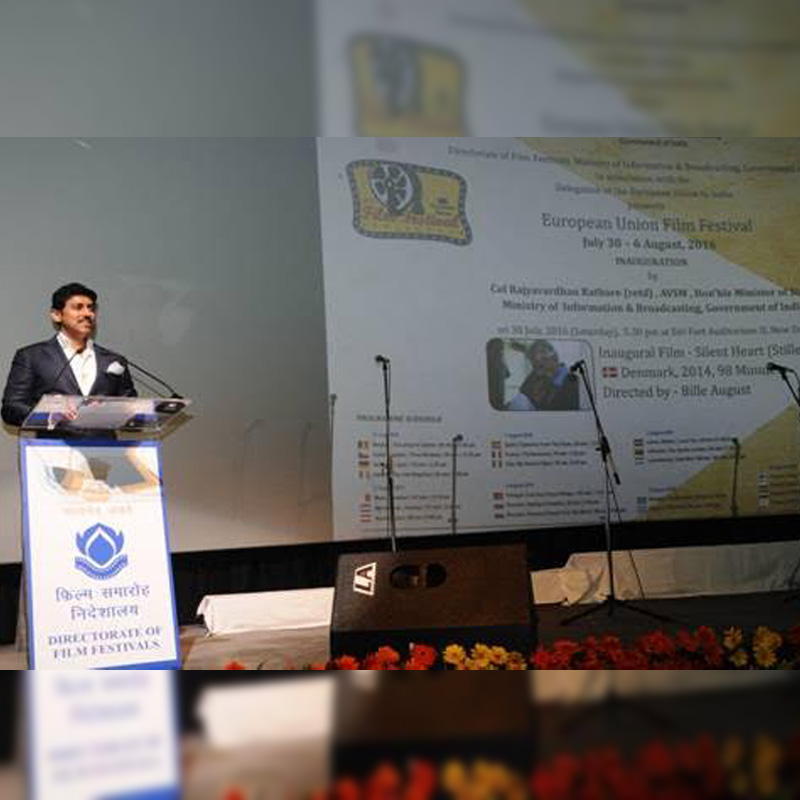
    NEW DELHI: Noting that films and music provided a bridge between cultures that connects people across nations, Minister of State for Information & Broadcasting Rajyavardhan Rathore has said Film Festivals provide an opportunity to understand different cultures from different regions.

    Inaugurating the European Film Festival over the weekend in the capital, Rathore said the medium of cinema helps humanity to understand the people, their relationships and their emotions.

    A delegation of European Union including ambassadors from European Union member states was also present on the occasion.

    There was also a musical performance by Neemrana Choir. Neemrana Choir consists of 50 singers of all ages and backgrounds.

    The opening film of the festival was famous Danish Film Silent Heart (Stille Hjerte) directed by Bille August. The film was premiered at the San Sebastián International Film Festival where it received a 20-minute standing ovation. Bille August is a Danish Academy Award-winning film and television director. His film Pelle the Conqueror in 987 won the Palme d’Or, Academy Award and Golden Globe. He is one of only eight directors to win the Palme d’Or twice, winning the prestigious award again in 1992.

    The festival was organized by the Directorate of Film Festivals in collaboration with the delegation of the European Union of India. The festival ommenced on 30 July and will conclude on 6 August 2016. Twentythree films would be screened during the period.

  • Films and music bridge cultures and connect people, says Rathore

    Films and music bridge cultures and connect people, says Rathore

    NEW DELHI: Noting that films and music provided a bridge between cultures that connects people across nations, Minister of State for Information & Broadcasting Rajyavardhan Rathore has said Film Festivals provide an opportunity to understand different cultures from different regions.

    Inaugurating the European Film Festival over the weekend in the capital, Rathore said the medium of cinema helps humanity to understand the people, their relationships and their emotions.

    A delegation of European Union including ambassadors from European Union member states was also present on the occasion.

    There was also a musical performance by Neemrana Choir. Neemrana Choir consists of 50 singers of all ages and backgrounds.

    The opening film of the festival was famous Danish Film Silent Heart (Stille Hjerte) directed by Bille August. The film was premiered at the San Sebastián International Film Festival where it received a 20-minute standing ovation. Bille August is a Danish Academy Award-winning film and television director. His film Pelle the Conqueror in 987 won the Palme d’Or, Academy Award and Golden Globe. He is one of only eight directors to win the Palme d’Or twice, winning the prestigious award again in 1992.

    The festival was organized by the Directorate of Film Festivals in collaboration with the delegation of the European Union of India. The festival ommenced on 30 July and will conclude on 6 August 2016. Twentythree films would be screened during the period.

  • BBC.com sees record traffic in India post Brexit results

    BBC.com sees record traffic in India post Brexit results

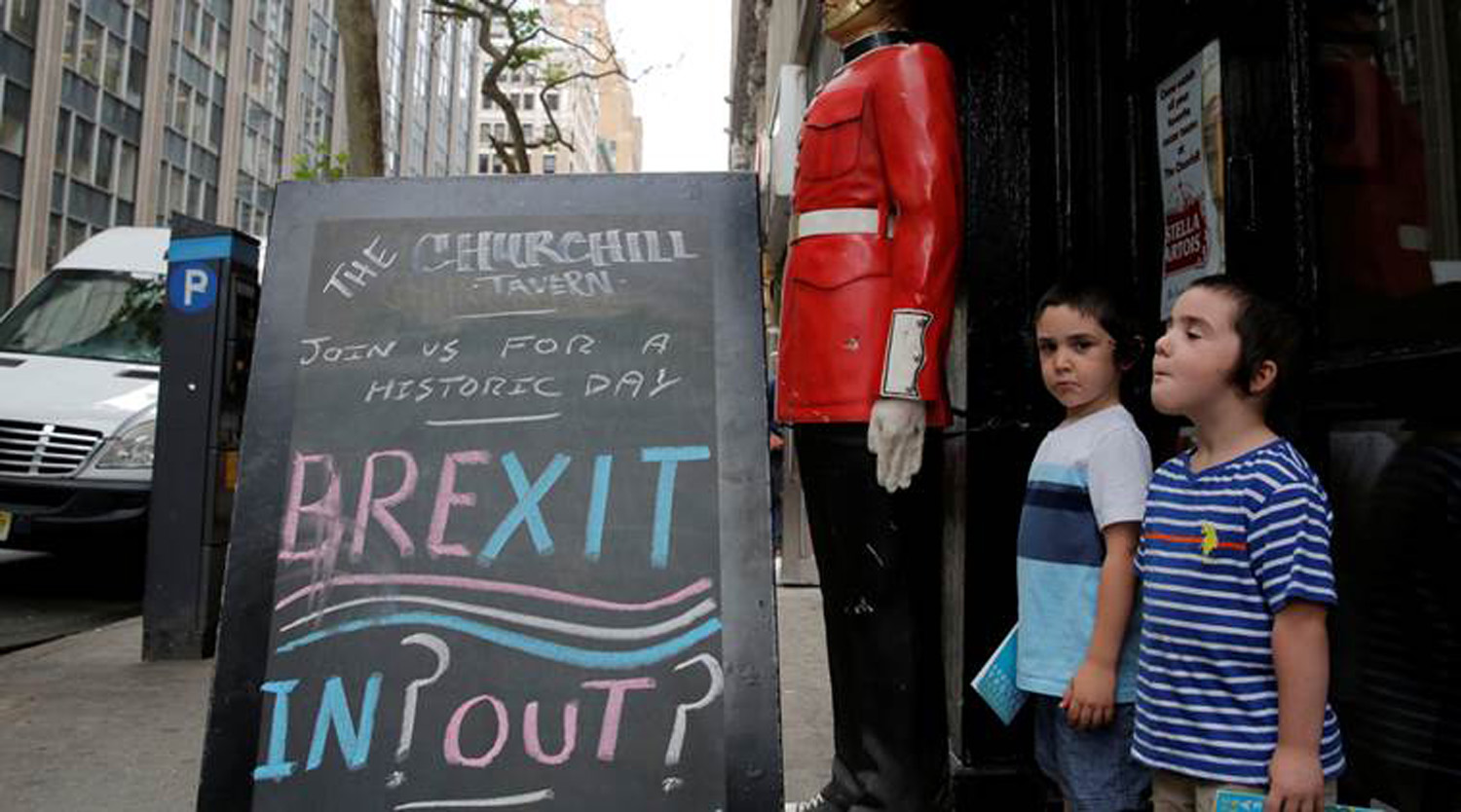
    MUMBAI: Indians seeking the latest on the UK’s vote to leave the European Union have helped BBC.com reach a record breaking spike in traffic. On the day the historic result became clear– June 24, the BBC’s international news services were in demand as people around the world sought to understand what the next steps are and what it could mean for them.

    Operating a dedicated url during the campaign at bbc.com/eureferendum and following up with bbc.com/brexit to bring audiences updates after the result, meant the global news platform has been able to provide a continuing wealth of content drawing on the BBC’s network of experienced correspondents particularly across politics, business and finance (such as EU referendum: Will India benefit from Brexit? and UK starts post-Brexit trade talks with India)

    Globally BBC.com attracted more than 21million unique browsers and 114million page views on results day (Friday 24hJune) alone – with 30million unique browsers and 170million page views across the weekend*.

    In India alone, unique browsers increased by 170% with page views going up by 324%, when compared to the average daily amount in May 2016 as per Adobe Digital Analytix.

    Page views per browser stood at 3.9 on the day of the result which was +56% compared to average daily figure in May 2016*. Even after the initial furore around the result had died down in India the daily average of unique browsers and page views was still 44% and 43% more respectively after 72hours, than the average daily traffic for May*.

    Speaking about the spike in traffic, BBC Global News COO Naveen Jhunjhunwala said,“These record figures are testament to the effort of the BBC World News teams, as they have worked tirelessly to help our global audiences make sense of this historic and fast paced story. That so many people, not just in India but around the world, made BBC.com their go to place for impartial trusted, information and analysis on the decision by UK voters to leave the European Union is incredibly heartening.”

  • BBC.com sees record traffic in India post Brexit results

    BBC.com sees record traffic in India post Brexit results

    MUMBAI: Indians seeking the latest on the UK’s vote to leave the European Union have helped BBC.com reach a record breaking spike in traffic. On the day the historic result became clear– June 24, the BBC’s international news services were in demand as people around the world sought to understand what the next steps are and what it could mean for them.

    Operating a dedicated url during the campaign at bbc.com/eureferendum and following up with bbc.com/brexit to bring audiences updates after the result, meant the global news platform has been able to provide a continuing wealth of content drawing on the BBC’s network of experienced correspondents particularly across politics, business and finance (such as EU referendum: Will India benefit from Brexit? and UK starts post-Brexit trade talks with India)

    Globally BBC.com attracted more than 21million unique browsers and 114million page views on results day (Friday 24hJune) alone – with 30million unique browsers and 170million page views across the weekend*.

    In India alone, unique browsers increased by 170% with page views going up by 324%, when compared to the average daily amount in May 2016 as per Adobe Digital Analytix.

    Page views per browser stood at 3.9 on the day of the result which was +56% compared to average daily figure in May 2016*. Even after the initial furore around the result had died down in India the daily average of unique browsers and page views was still 44% and 43% more respectively after 72hours, than the average daily traffic for May*.

    Speaking about the spike in traffic, BBC Global News COO Naveen Jhunjhunwala said,“These record figures are testament to the effort of the BBC World News teams, as they have worked tirelessly to help our global audiences make sense of this historic and fast paced story. That so many people, not just in India but around the world, made BBC.com their go to place for impartial trusted, information and analysis on the decision by UK voters to leave the European Union is incredibly heartening.”

  • Long-term negative impact of Brexit on India negligible; short-term challenges remain

    Long-term negative impact of Brexit on India negligible; short-term challenges remain

    NEW DELHI/MUMBAI: Britain’s politically controversial referendum last week to exit from the European Union, a unique economic and political union between 28 European nations, has created ripples globally, but in India the general feeling is long term impact may be negligible.

    While the British media and entertainment industry, having major exposure to European market(s), are wringing their head in dismay at possible long-term financial fallout and increased bureaucracy and paperwork, Indian media industry has been subdued in its reaction.

    Sources in both BBC World and Star India said that they were still studying the fine prints of Brexit — as Britain’s EU exit has been popularly dubbed — but added they don’t see any short to medium-term impact (except, of course, the currency exchange valuations).

    Some Indian media companies like Zee, Star, and Times TV Network do have fairly big exposure to the European markets in terms of their TV channels’ distribution and sale of Indian content and formats.

    Similarly, Hindi and increasingly Indian language film industry are shooting more in various European countries in sharp contrast to yesteryears few fav foreign locales like Holland, London and Paris.

    While organisations like The Film & Television Producers Guild of India had no statement put out on Brexit, European media & entertainment players have been very active.

    Forbes magazine quoted a statement on Brexit from Britain Stronger in Europe campaign, signed by the likes of Patrick Stewart, Benedict Cumberbatch and Keira Knightley amongst hundreds of celebrity-signatories, as saying: “Our global creative success would be severely weakened by walking away.”

    Such sentiments and falling markets and currencies, coupled with media conjectures on future of multi-billion dollar budget TV programmes like the popular Game of Thrones, made its producer HBO to issue clarifications.

    “We do not anticipate that the result of the EU Referendum will have any material effect on producing Game of Thrones,” HBO said in an official statement late last week

    Variety magazine reported that HBO had confirmed GoT received financial support from the EU’s European Regional Development Fund when it first began, but there has been no contribution to its massive $10 million per episode budget in recent years.

    That everybody is scrambling to assess the political and economical fallout of Brexit, while remaining cautiously optimistic at present, is reflected in the opinions of some industry chambers too.

    Pointing out that the “way forward, and timelines to achieve negotiated agreements with the EU and other trade partners is not yet known”, UK India Business Council said, “What is clear, though, is that the UK’s trade and economic engagement with the world’s leading countries, including India, will become more important to the nation’s future, not less.”
    Motion Picture Association of America in a statement said, “While it will take time to understand the full implications of the referendum result, we urge the UK Government to prioritize a stable environment for the film and television sector.”

    Closer home in India, some reactions did come forth on Brexit.

    Ashish Bhasin, chairman and CEO, Dentsu Aegis Network, South Asia discounted any mid or long term impact of Brexit on India.

    Pointing out short term uncertainty may lead to a “depressed business sentiment,” Bhasin said advertising gets directly influenced and often suffers when business sentiment weakens.

    According to Frost & Sullivan’s senior partner and managing director for Europe Sarwant Singh, “It is important to note that during this interim period, Britain will still be subject to existing EU treaties and laws, but will be barred from decision-making processes. Therefore, existing regulations are likely to continue until negotiations are completed.”

    The National Association of Software and Services Companies (NASSCOM), whose member-companies have billions of dollars of exposure in the European and UK market, termed the Brexit announcement as a phase of uncertainty in the near term but a mix of challenges and opportunities in the longer term.

    Meanwhile, the Indian government has assured that the Indian economy is fundamentally strong enough to withstand any immediate impact of Brexit.