Tag: Euromonitor International

  • Rise of zebra striping as drinkers mix spirits with sobriety

    Rise of zebra striping as drinkers mix spirits with sobriety

    MUMBAI: Raise a glass and then a soda. The world’s latest drinking trend, dubbed “zebra striping”, is rewriting social rituals one sip at a time. According to new research by Euromonitor International, consumers are alternating between alcoholic and non-alcoholic beverages in a single evening, a mindful move that’s helping people balance indulgence with intention.

    The global alcoholic drinks industry poured out 253 billion litres in 2024, but growth is showing signs of a hangover. Enter zebra striping, a trend spreading faster than happy-hour offers, especially among Gen Z and younger millennials who are redefining what it means to “go out for a drink.”

    Euromonitor’s World Market for Alcoholic Drinks 2025 report finds that moderation is now mainstream. Only 17 per cent of consumers say they drink weekly in 2025, a sharp drop from 23 per cent in 2020 while 53 per cent are actively cutting back. The share of people who never drink at all has risen by 3 percentage points in just five years.

    Behind the shift lies a mix of health goals and pragmatism: 87 per cent of respondents cited a desire to feel healthier and avoid long-term health risks; 30 per cent said saving money mattered, while 25 per cent credited better sleep as motivation. The “sober curious” movement is making abstinence aspirational and redefining nightlife as we know it.

    Among those swapping cocktails for kombucha, Gen Z stands out with 36 per cent of legal-age respondents never having consumed alcohol at all. Hedonism, it seems, is being traded for hydration.

    Yet, while traditional booze is flatlining, India is raising the bar. The country is projected to add 357 million litres to its alcoholic drinks consumption between 2024 and 2029, making it a standout growth market. With rising incomes and evolving social norms, India along with Brazil, Mexico, and South Africa is expected to outpour mature markets where spending power remains under strain.

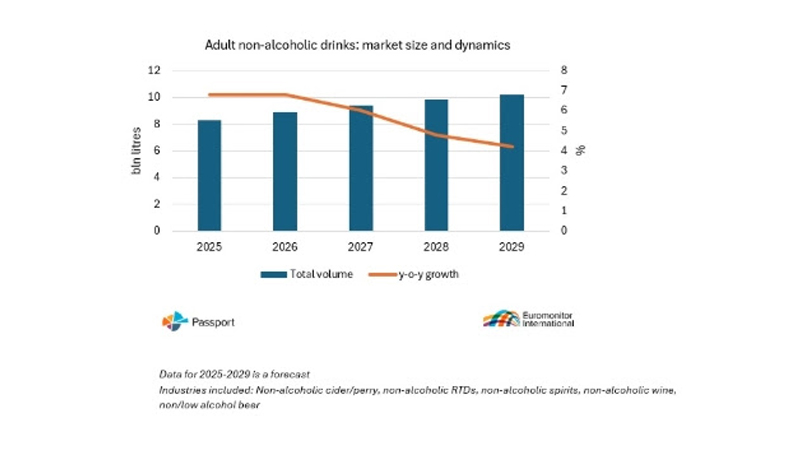
    Globally, the adult non-alcoholic category is bubbling with momentum. In 2024, total alcoholic beverage volume grew a modest 0.6 per cent, reaching a 1.7 trillion dollars market, while the no/low segment soared: non-alcoholic spirits rose 17 per cent, RTDs 14 per cent, non/low beer 11 per cent, and non-alcoholic wine 7 per cent. Between 2025 and 2029, the adult non-alcoholic drinks market is expected to swell by 24 per cent, surpassing 10.2 billion litres by 2029.

    As Euromonitor, global insight manager for alcoholic drinks Spiros Malandrakis put it: “Non-alcoholic alternatives are no longer niche, they’re becoming central to how people celebrate and connect.”

    So, the next time someone says they’re going for a drink, don’t be surprised if it’s an alcohol-free G&T. After all, in today’s world, balance is the new buzz.

  • Quaker and Euromonitor release report on ‘Lifestyle Choices and Ageing Perception of Urban Indians’

    Quaker and Euromonitor release report on ‘Lifestyle Choices and Ageing Perception of Urban Indians’

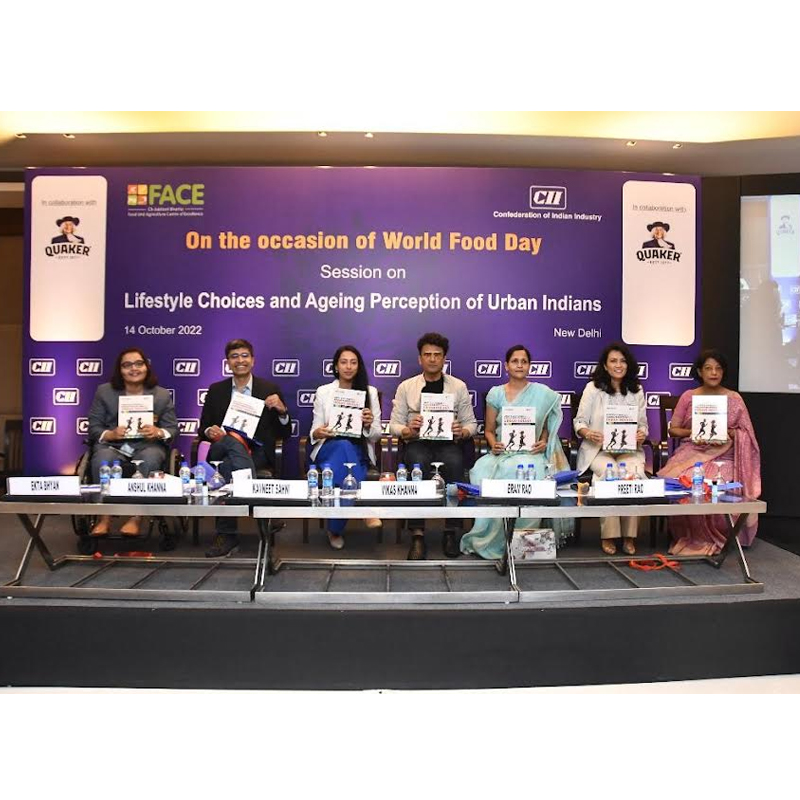
    Mumbai: On the occasion of World Food Day and National Nutrition Month 2022, PepsiCo India, through its brand, Quaker, and London-based market research major, Euromonitor International, released a research study on ‘Lifestyle Choices & Ageing Perception of Urban Indians’.

    The launch of the report was followed by a panel discussion in collaboration with the Confederation of Indian Industry (CII) around the key findings and the importance of incorporating healthy ageing habits to ensure holistic health.

    The panel discussion, which was moderated by GotoChef founder and CEO Kavneet Sahni, included eminent names like celebrity chef and Quaker brand ambassador Vikas Khanna, Asian Para Games Gold medalist and Tokyo Paralympian Ekta Bhyan, PepsiCo India senior director of marketing-foods Anshul Khanna, health and wellness consultant & Weljiii founder & CEO Preeti Rao, and Delhi University professor from the department of food technology Eram Rao.

    The report revealed that 82 per cent of the gen-X audience (those people aged 41 years and above) feel their own age or younger, while 40 per cent of the gen-Z audience (18–25 years of age) and 46 per cent of the millennial audience (26–40 years of age) feel older than their current age. Low energy, general tiredness, and poor immune health are some of the internal factors that lead to respondents feeling older than their own age.

    Interestingly, data also shows that over 40 per cent of gen-X never skip breakfast, while busy mornings and long workdays affect the breakfast patterns of the younger lot, with over 50 per cent of gen-Z and 61 per cent of millennials tending to skip breakfast. However, since the pandemic, 82 per cent of the total respondents have started incorporating more wholesome breakfasts, especially multigrains such as oats, into their approach towards healthy ageing.

    The survey, conducted to better understand the overall well-being of Indian consumers, also highlighted that since the pandemic, over 90 per cent of respondents have started adopting habits that support healthy ageing. Indians have become more cognizant of improving digestive health, reducing stress levels, and enhancing immunity. The study indicates that over 70 per cent of respondents have improved their nutrition intake, with 44 per cent consuming vitamins and supplements daily. The report also sheds light on breakfast being considered as the most important meal of the day, with 82 per cent of respondents intending to start incorporating more wholesome breakfast as part of their healthy habits.

    Speaking at the event, Khanna said, “It is encouraging to see the younger generation making conscious efforts towards better health and seeking ways to incorporate more nutrition into their daily lives. The pandemic brought the food community together in a completely new way, supporting each other in their journey to stay fit and eat better. We even saw chefs across the world join the conversation with interesting and fun recipes that encourage better eating. Through my continued association with Quaker, my goal is to provide people with nutritious yet tasty recipes that appeal to today’s generation as well. Incorporating a wholesome breakfast into one’s daily regime is a must for those embarking on their healthy ageing journey, and I personally consider breakfast to be the most important meal of the day.”

    Talking about the study findings, PepsiCo India associate director and category lead-Quaker portfolio Sonam Vij said, “The survey provided us with unique insights and views of Indians on aging. According to the study, gen-X feels younger by following a healthy routine, whereas young India feels older than their current age. However, it was good to see the shift towards a better quality of life with over 90 per cent of respondents incorporating healthy ageing habits into their daily routine.”

    She added, “Breakfast being one of the most important meals of the day, the survey revealed that oats and cereals are the preferred choices for people who are working towards incorporating wholesome breakfast into their daily routine. Much to our delight, the survey also revealed that Quaker Oats is among the most consumed breakfast cereals across India, highlighting its nutrition quotient and the value it adds to the lives of consumers who are choosing healthier options. With our philosophy of winning with pep+, we are consistently working towards addressing changing consumer and societal needs, and with Quaker Oats, we provide consumers with nutritious yet quick and delicious recipes.”

    Euromonitor International consultant Dilip Radhakrishna commented, “Indians across age groups of 18 to 40 feel older than their current age, primarily due to their poor nutrition intake. However, since the pandemic, 90 per cent of people have started incorporating habits for healthy ageing and over 70 per cent have improved their nutrition intake. People believe that higher consumption of vegetables, fruits, and wholegrains will improve their overall health. A majority of people believe that breakfast cereals, such as oats, provide lasting energy and resolve digestive health issues. In fact, those who take wholegrains consume them every day or every alternate day in a week with an average of one-two servings per meal.”

    The research was conducted with over 1,000 respondents aged 18 and above, living across four key metros: Delhi, Mumbai, Bangalore, and Kolkata. With a key focus on understanding multiple factors which impact overall health, the study helped in identifying drivers and deterrents to good health. It also mapped the changing behaviours of Indians towards overall health and wellbeing, energy, and weight management, which are top priorities for better health.

    Key findings of the report:

        Over 70 per cent of respondents have improved their nutrition intake, with 44 per cent consuming vitamins and supplements daily.

        The gen-X audience understands their body, lifestyle and needs, with 82 per cent of those surveyed feeling their own age or younger.

        82 per cent of the total respondents have now started incorporating more wholesome breakfasts, especially multigrains such as oats, into their approach towards healthy ageing.

        40 per cent of gen-Z and 46 per cent of millennials believe they are older than their actual age. However, over 90 per cent of the total respondents, including gen-Z and millennials, are now taking steps to support healthy ageing.

        Digestive health and fatigue are primary health concerns for almost 40 per cent of respondents.

        Over 40 per cent of gen-X never skip breakfast, while busy mornings and long workdays affect the breakfast patterns of the younger lot—over 50 per cent of gen-Z and 61 per cent of millennials tend to skip breakfast.

        Overall health & wellbeing, energy, and weight management are the top priorities of respondents for better health.