Tag: EU

  • TRAI issues fresh paper seeking views on Net Neutrality definition

    TRAI issues fresh paper seeking views on Net Neutrality definition

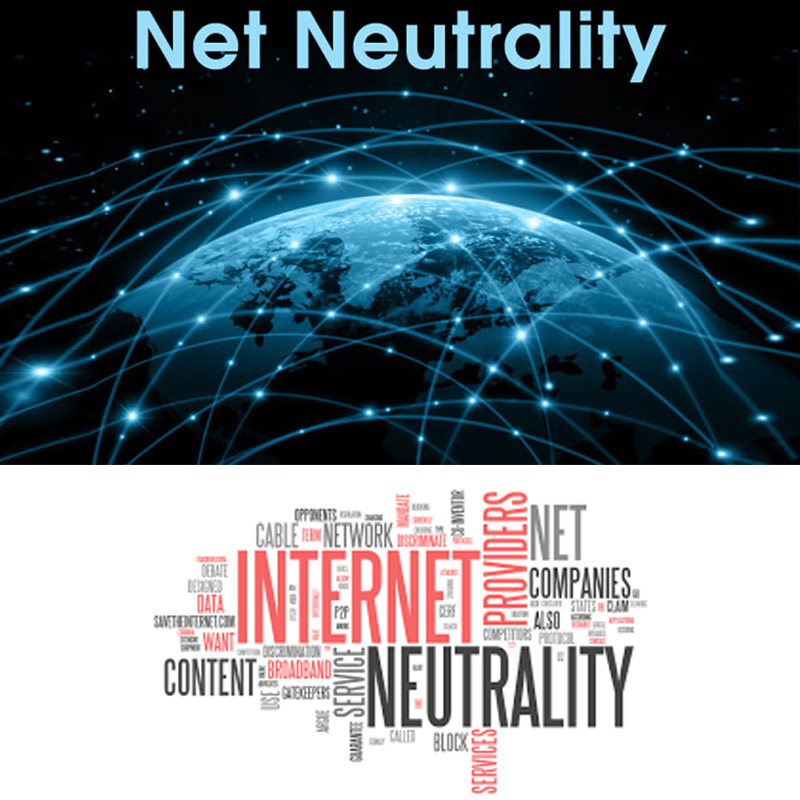
    NEW DELHI: India’s telecoms regulator Telecom Regulatory Authority of India (TRAI) yesterday floated another consultation paper on Net Neutrality (NN) seeking to establish a framework that allows Internet users the `freedom of expression’ and non discriminatory access to the Net.

    In the discussion paper, TRAI stated having identified the India-specific context, the next challenge is to examine what should be the country’s policy response on issues relating to any form of discriminatory treatment in the provision of access to the Internet and seeks views on framing a regulatory framework that would ensure that access to content on the internet is neither ‘blocked’, ‘throttled’ nor ‘preferentially treated’ by ISPs and telecom service providers (TSPs).

    “The idea of equal or nondiscriminatory treatment of traffic that flows on the Internet resonates in the NN principles adopted by various jurisdictions, although the term itself does not necessary feature in their regulatory instruments. The EU regulations, for instance, create ‘common rules to safeguard equal and nondiscriminatory treatment of traffic’ without expressly using the term NN. Given that key terms such as `equal treatment’ are still contested, many have urged against a rigid definition of NN. This was also the view expressed by the DoT (Department of Telecoms) committee in its report where it stated that ‘the crux of the matter is that we need not hard code the definition of Net Neutrality but assimilate the core principles of Net Neutrality and shape the actions around them’,” TRAI said in the consultation paper.

    The issue of Net Neutrality has been occupying Indian mind space for the last 13 months with pro and anti neutrality views floating around without actually addressing the issue that is also a topic of debate in developed markets like the US, Europe and in Asia. TRAI, which has dealt with the issue in a piecemeal fashion (zero rating plans), for example, earlier in 2016, refers to US regulator FCC stand on the issue in its present paper. However, with a new government led by President-elect Trump to take over later this month, even FCC stand may change on the issue of Net Neutrality.

    Some of the questions raised by TRAI in its present 60+ pages paper on Net Neutrality include the following:

    # How should “Internet traffic” and providers of “Internet services” be un-derstood in the NN context?

    # Should certain types of specialised services, enterprise solutions, Inter¬net of Things, etc be excluded from its scope?

    How should such terms be defined?

    # How should services provided by content delivery networks and direct interconnection arrangements be treated?

    # In the Indian context, which of the following regulatory approaches would
    be preferable?

    # Whether and how should different categories of traffic be objectively defined from a technical point of view for this purpose?

    # Should application-specific discrimination within a category of traffic be viewed more strictly than discrimination between categories?

    # How should preferential treatment of particular content, activated by a users choice and without any arrangement between a telecom service provider and content provider be treated?

    The paper, however, does seem to highlight that telecom service providers have to deploy certain traffic management practices to ensure that the wireless networks are able to maintain a certain quality of standards. Hence, it also attempts to establish the framework for what it calls “reasonable traffic management practices” to ensure the wireless networks do not get choked or congested, Economic Times reported yesterday evening on its website.

    All stakeholders will have to give in their responses by February 28, 2017after which the telecom regulator will deliberate upon the responses and make its final recommendations to the government.

    ALSO READ

    “There would be a lot on TRAI’s plate in 2017” – RS Sharma

    Free data, net neutrality: Discussion on TRAI paper to be held

    Net Neutrality: Reactions from the consumers provide deep insights

    Net Neutrality: TRAI receives a million mails, Indians awaits judgment day

  • TRAI issues fresh paper seeking views on Net Neutrality definition

    TRAI issues fresh paper seeking views on Net Neutrality definition

    NEW DELHI: India’s telecoms regulator Telecom Regulatory Authority of India (TRAI) yesterday floated another consultation paper on Net Neutrality (NN) seeking to establish a framework that allows Internet users the `freedom of expression’ and non discriminatory access to the Net.

    In the discussion paper, TRAI stated having identified the India-specific context, the next challenge is to examine what should be the country’s policy response on issues relating to any form of discriminatory treatment in the provision of access to the Internet and seeks views on framing a regulatory framework that would ensure that access to content on the internet is neither ‘blocked’, ‘throttled’ nor ‘preferentially treated’ by ISPs and telecom service providers (TSPs).

    “The idea of equal or nondiscriminatory treatment of traffic that flows on the Internet resonates in the NN principles adopted by various jurisdictions, although the term itself does not necessary feature in their regulatory instruments. The EU regulations, for instance, create ‘common rules to safeguard equal and nondiscriminatory treatment of traffic’ without expressly using the term NN. Given that key terms such as `equal treatment’ are still contested, many have urged against a rigid definition of NN. This was also the view expressed by the DoT (Department of Telecoms) committee in its report where it stated that ‘the crux of the matter is that we need not hard code the definition of Net Neutrality but assimilate the core principles of Net Neutrality and shape the actions around them’,” TRAI said in the consultation paper.

    The issue of Net Neutrality has been occupying Indian mind space for the last 13 months with pro and anti neutrality views floating around without actually addressing the issue that is also a topic of debate in developed markets like the US, Europe and in Asia. TRAI, which has dealt with the issue in a piecemeal fashion (zero rating plans), for example, earlier in 2016, refers to US regulator FCC stand on the issue in its present paper. However, with a new government led by President-elect Trump to take over later this month, even FCC stand may change on the issue of Net Neutrality.

    Some of the questions raised by TRAI in its present 60+ pages paper on Net Neutrality include the following:

    # How should “Internet traffic” and providers of “Internet services” be un-derstood in the NN context?

    # Should certain types of specialised services, enterprise solutions, Inter¬net of Things, etc be excluded from its scope?

    How should such terms be defined?

    # How should services provided by content delivery networks and direct interconnection arrangements be treated?

    # In the Indian context, which of the following regulatory approaches would
    be preferable?

    # Whether and how should different categories of traffic be objectively defined from a technical point of view for this purpose?

    # Should application-specific discrimination within a category of traffic be viewed more strictly than discrimination between categories?

    # How should preferential treatment of particular content, activated by a users choice and without any arrangement between a telecom service provider and content provider be treated?

    The paper, however, does seem to highlight that telecom service providers have to deploy certain traffic management practices to ensure that the wireless networks are able to maintain a certain quality of standards. Hence, it also attempts to establish the framework for what it calls “reasonable traffic management practices” to ensure the wireless networks do not get choked or congested, Economic Times reported yesterday evening on its website.

    All stakeholders will have to give in their responses by February 28, 2017after which the telecom regulator will deliberate upon the responses and make its final recommendations to the government.

    ALSO READ

    “There would be a lot on TRAI’s plate in 2017” – RS Sharma

    Free data, net neutrality: Discussion on TRAI paper to be held

    Net Neutrality: Reactions from the consumers provide deep insights

    Net Neutrality: TRAI receives a million mails, Indians awaits judgment day

  • Long-term negative impact of Brexit on India negligible; short-term challenges remain

    Long-term negative impact of Brexit on India negligible; short-term challenges remain

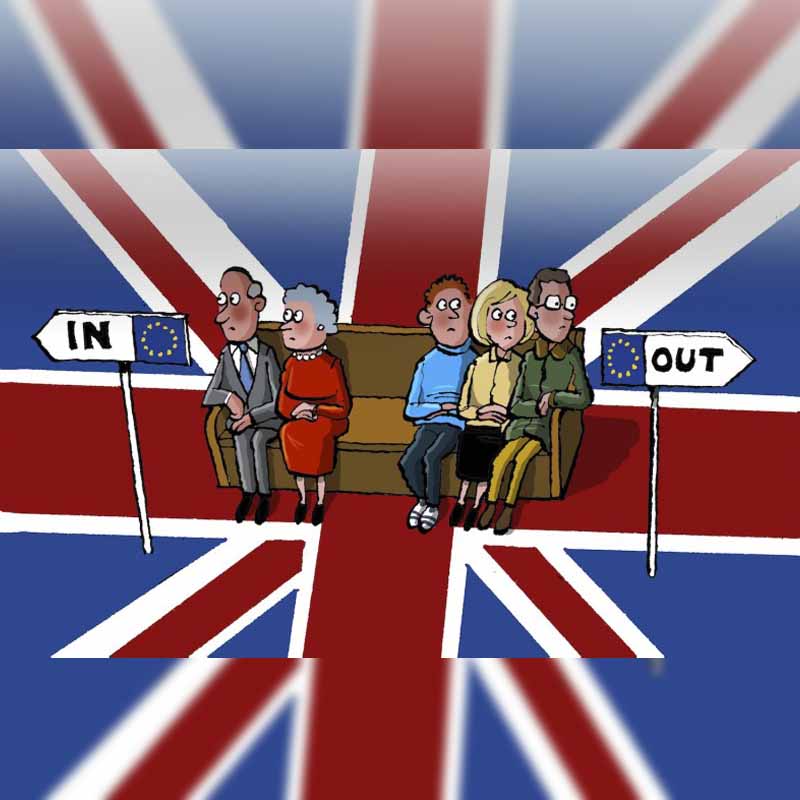
    NEW DELHI/MUMBAI: Britain’s politically controversial referendum last week to exit from the European Union, a unique economic and political union between 28 European nations, has created ripples globally, but in India the general feeling is long term impact may be negligible.

    While the British media and entertainment industry, having major exposure to European market(s), are wringing their head in dismay at possible long-term financial fallout and increased bureaucracy and paperwork, Indian media industry has been subdued in its reaction.

    Sources in both BBC World and Star India said that they were still studying the fine prints of Brexit — as Britain’s EU exit has been popularly dubbed — but added they don’t see any short to medium-term impact (except, of course, the currency exchange valuations).

    Some Indian media companies like Zee, Star, and Times TV Network do have fairly big exposure to the European markets in terms of their TV channels’ distribution and sale of Indian content and formats.

    Similarly, Hindi and increasingly Indian language film industry are shooting more in various European countries in sharp contrast to yesteryears few fav foreign locales like Holland, London and Paris.

    While organisations like The Film & Television Producers Guild of India had no statement put out on Brexit, European media & entertainment players have been very active.

    Forbes magazine quoted a statement on Brexit from Britain Stronger in Europe campaign, signed by the likes of Patrick Stewart, Benedict Cumberbatch and Keira Knightley amongst hundreds of celebrity-signatories, as saying: “Our global creative success would be severely weakened by walking away.”

    Such sentiments and falling markets and currencies, coupled with media conjectures on future of multi-billion dollar budget TV programmes like the popular Game of Thrones, made its producer HBO to issue clarifications.

    “We do not anticipate that the result of the EU Referendum will have any material effect on producing Game of Thrones,” HBO said in an official statement late last week

    Variety magazine reported that HBO had confirmed GoT received financial support from the EU’s European Regional Development Fund when it first began, but there has been no contribution to its massive $10 million per episode budget in recent years.

    That everybody is scrambling to assess the political and economical fallout of Brexit, while remaining cautiously optimistic at present, is reflected in the opinions of some industry chambers too.

    Pointing out that the “way forward, and timelines to achieve negotiated agreements with the EU and other trade partners is not yet known”, UK India Business Council said, “What is clear, though, is that the UK’s trade and economic engagement with the world’s leading countries, including India, will become more important to the nation’s future, not less.”
    Motion Picture Association of America in a statement said, “While it will take time to understand the full implications of the referendum result, we urge the UK Government to prioritize a stable environment for the film and television sector.”

    Closer home in India, some reactions did come forth on Brexit.

    Ashish Bhasin, chairman and CEO, Dentsu Aegis Network, South Asia discounted any mid or long term impact of Brexit on India.

    Pointing out short term uncertainty may lead to a “depressed business sentiment,” Bhasin said advertising gets directly influenced and often suffers when business sentiment weakens.

    According to Frost & Sullivan’s senior partner and managing director for Europe Sarwant Singh, “It is important to note that during this interim period, Britain will still be subject to existing EU treaties and laws, but will be barred from decision-making processes. Therefore, existing regulations are likely to continue until negotiations are completed.”

    The National Association of Software and Services Companies (NASSCOM), whose member-companies have billions of dollars of exposure in the European and UK market, termed the Brexit announcement as a phase of uncertainty in the near term but a mix of challenges and opportunities in the longer term.

    Meanwhile, the Indian government has assured that the Indian economy is fundamentally strong enough to withstand any immediate impact of Brexit.

  • Long-term negative impact of Brexit on India negligible; short-term challenges remain

    Long-term negative impact of Brexit on India negligible; short-term challenges remain

    NEW DELHI/MUMBAI: Britain’s politically controversial referendum last week to exit from the European Union, a unique economic and political union between 28 European nations, has created ripples globally, but in India the general feeling is long term impact may be negligible.

    While the British media and entertainment industry, having major exposure to European market(s), are wringing their head in dismay at possible long-term financial fallout and increased bureaucracy and paperwork, Indian media industry has been subdued in its reaction.

    Sources in both BBC World and Star India said that they were still studying the fine prints of Brexit — as Britain’s EU exit has been popularly dubbed — but added they don’t see any short to medium-term impact (except, of course, the currency exchange valuations).

    Some Indian media companies like Zee, Star, and Times TV Network do have fairly big exposure to the European markets in terms of their TV channels’ distribution and sale of Indian content and formats.

    Similarly, Hindi and increasingly Indian language film industry are shooting more in various European countries in sharp contrast to yesteryears few fav foreign locales like Holland, London and Paris.

    While organisations like The Film & Television Producers Guild of India had no statement put out on Brexit, European media & entertainment players have been very active.

    Forbes magazine quoted a statement on Brexit from Britain Stronger in Europe campaign, signed by the likes of Patrick Stewart, Benedict Cumberbatch and Keira Knightley amongst hundreds of celebrity-signatories, as saying: “Our global creative success would be severely weakened by walking away.”

    Such sentiments and falling markets and currencies, coupled with media conjectures on future of multi-billion dollar budget TV programmes like the popular Game of Thrones, made its producer HBO to issue clarifications.

    “We do not anticipate that the result of the EU Referendum will have any material effect on producing Game of Thrones,” HBO said in an official statement late last week

    Variety magazine reported that HBO had confirmed GoT received financial support from the EU’s European Regional Development Fund when it first began, but there has been no contribution to its massive $10 million per episode budget in recent years.

    That everybody is scrambling to assess the political and economical fallout of Brexit, while remaining cautiously optimistic at present, is reflected in the opinions of some industry chambers too.

    Pointing out that the “way forward, and timelines to achieve negotiated agreements with the EU and other trade partners is not yet known”, UK India Business Council said, “What is clear, though, is that the UK’s trade and economic engagement with the world’s leading countries, including India, will become more important to the nation’s future, not less.”
    Motion Picture Association of America in a statement said, “While it will take time to understand the full implications of the referendum result, we urge the UK Government to prioritize a stable environment for the film and television sector.”

    Closer home in India, some reactions did come forth on Brexit.

    Ashish Bhasin, chairman and CEO, Dentsu Aegis Network, South Asia discounted any mid or long term impact of Brexit on India.

    Pointing out short term uncertainty may lead to a “depressed business sentiment,” Bhasin said advertising gets directly influenced and often suffers when business sentiment weakens.

    According to Frost & Sullivan’s senior partner and managing director for Europe Sarwant Singh, “It is important to note that during this interim period, Britain will still be subject to existing EU treaties and laws, but will be barred from decision-making processes. Therefore, existing regulations are likely to continue until negotiations are completed.”

    The National Association of Software and Services Companies (NASSCOM), whose member-companies have billions of dollars of exposure in the European and UK market, termed the Brexit announcement as a phase of uncertainty in the near term but a mix of challenges and opportunities in the longer term.

    Meanwhile, the Indian government has assured that the Indian economy is fundamentally strong enough to withstand any immediate impact of Brexit.

  • EU files anti-trust charges against Sky TV & major Hollywood studios

    EU files anti-trust charges against Sky TV & major Hollywood studios

    MUMBAI: The European Commission has filed anti-trust charges against Sky UK and six major US film studios namely Disney, NBCUniversal, Paramount Pictures, Sony, Twentieth Century Fox and Warner Bros, accusing them of unfairly restricting customers’ access to content within the European Union.


    The Commission takes the preliminary view that each of the six studios and Sky UK have bilaterally agreed to put in place contractual restrictions that prevent Sky UK from allowing EU consumers located elsewhere to access, via satellite or online, pay-TV services available in the UK and Ireland. Without these restrictions, Sky UK would be free to decide on commercial grounds whether to sell its pay-TV services to such consumers requesting access to its services, taking into account the regulatory framework including, as regards online pay-TV services, the relevant national copyright laws.


    If the Commission’s preliminary position were to be confirmed, each of the companies would have breached EU competition rules prohibiting anti-competitive agreements. The sending of a Statement of Objections does not prejudge the outcome of the investigation.


    EU Commissioner in charge of competition policy Margrethe Vestager said, “European consumers want to watch the pay-TV channels of their choice regardless of where they live or travel in the EU. Our investigation shows that they cannot do this today, also because licensing agreements between the major film studios and Sky UK do not allow consumers in other EU countries to access Sky’s UK and Irish pay-TV services, via satellite or online. We believe that this may be in breach of EU competition rules. The studios and Sky UK now have the chance to respond to our concerns.”


    US film studios typically license audio-visual content, such as films, to a single pay-TV broadcaster in each Member State (or combined for a few Member States with a common language). The Commission’s investigation, which was opened in January 2014, identified clauses in licensing agreements between the six film studios and Sky UK, which require Sky UK to block access to films through its online pay-TV services (geo-blocking) or through its satellite pay-TV services to consumers outside its licensed territory (UK and Ireland).


    The Commission’s preliminary view as set out in the Statement of Objections is that such clauses restrict Sky UK’s ability to accept unsolicited requests for its pay-TV services from consumers located abroad, i.e. from consumers located in Member States where Sky UK is not actively promoting or advertising its services (passive sales). Some agreements also contain clauses requiring studios to ensure that, in their licensing agreements with broadcasters other than Sky UK, these broadcasters are prevented from making their pay-TV services available in the UK and Ireland.


    As a result, these clauses grant ‘absolute territorial exclusivity’ to Sky UK and/or other broadcasters. They eliminate cross-border competition between pay-TV broadcasters and partition the internal market along national borders. The Commission’s preliminary conclusion is that, in the absence of convincing justification, the clauses would constitute a serious violation of EU rules that prohibit anticompetitive agreements (Article 101 of the Treaty on the Functioning of the European Union).


    The Commission previously also set out concerns as regards licensing agreements between the film studios and other major European broadcasters (Canal Plus of France, Sky Italia of Italy, Sky Deutschland of Germany and DTS of Spain). The Commission continues to examine cross-border access to pay-TV services in these Member States.


    These antitrust investigations focus on contractual restrictions on passive sales outside the licensed territory in agreements between studios and broadcasters. At the same time, broadcasters also have to take account of the applicable regulatory framework beyond EU competition law when considering sales to consumers located elsewhere. This includes, for online pay-TV services, relevant national copyright laws. In this context, in parallel to its actions under EU competition law, the Commission will propose to modernise EU copyright rules and review the EU Satellite and Cable Directive as part of its Digital Single Market Strategy adopted in May 2015. The aim is to reduce the differences between national copyright regimes and allow for wider access to online content across the EU.


    Background

    EU antitrust rules prohibit the restriction of passive sales, i.e. the sales of products cross-border in the internal market responding to demands from customers not solicited by the seller. In its October 2011 ruling on the Premier League/Murphy cases, the EU Court of Justice specifically addressed the issue of absolute territorial restrictions in licence agreements for broadcasting services. The Court held that certain licensing provisions preventing a satellite broadcaster from providing its broadcasts to consumers outside the licensed territory enable each broadcaster to be granted absolute territorial exclusivity in the area covered by the license, thus eliminating all competition between broadcasters and partitioning the market in accordance with national borders.


    As part of its Digital Single Market strategy, the Commission will propose to reform EU copyright rules. It seeks to improve people’s access to cultural content online as well as to open new opportunities for creators and the content industry. More specifically, the Commission wants to ensure that users who buy online content such as films, music or articles at home can also enjoy them while travelling across Europe.


    Currently, service providers, in particular in the audio-visual sector, may be prevented from providing such portability features by copyright licensing arrangements. The Commission also wants to facilitate wider access to online content across borders. In this context, the Satellite and Cable Directive will be reviewed and a public consultation will be launched after the summer. The Commission will notably assess if the scope of the Directive needs to be enlarged to broadcasters’ online transmissions.

  • EU welcomes India’s decision to open telecom to FDI, concern about in-house testing

    EU welcomes India’s decision to open telecom to FDI, concern about in-house testing

    NEW DELHI: The European Union has noted with satisfaction India’s recent decision not to use security as justification for domestic manufacturing preference policies in telecom and electronic goods; and not to extend restrictive measures to private procurement (e.g. of telecom operators as licensees for radio spectrum).


    The EU has also supported India’s decision to open up the telecom sector to foreign direct investment (foreign ownership had been limited to 74 per cent).


    During a meeting of the EU-India Joint ICT Working Group met in Brussels, EU expressed concerns about mandatory ‘in country’ testing and certification of telecom network elements by Indian labs and demanded that mutual recognition for example under the Common Criteria Recognition Arrangement (CCRA) should be accepted. India has also mandated compulsory registration of 15 groups of consumer electronics products in order to comply with Indian product safety standards.


    It was decided at the meeting that two sub-groups will be established: one on Market Access and ICT Manufacturing (lead: EU) and another on internet security (lead: India) which should focus on matters of network and information security and provide input to EU-India Cyber Security Consultations.


    Both sides highlighted the crucial role ICT research and innovation can play in tackling the economic and societal challenges of our time, and agreed to deepen cooperation in this area. Interest was expressed particularly in the areas of e-Infrastructures, High Performance Computing, Cloud Computing, Wireless Broadband Communications, Internet of Things, and Electronics. Cooperation was proposed, inter alia on standardisation and interoperability matters, for which follow-up is envisaged.


    The Indian delegation was referred to the High Level Dialogue on Migration and Mobility as the “one-stop shop” where concerns regarding the ease of mobility of Indian IT professionals could be addressed.


    India’s request for “data adequacy status” under the EU data protection legislation (which is of high importance for Indian services and business process outsourcing businesses), will need to be addressed to an expert group of national data protection authorities, which is ready to meet with Indian representatives in order to advance the dialogue.


    The EU delegation was led by Gerard de Graaf, Director, DG Connect, and the Indian side by Raj Kumar Goyal, Joint Secretary for International Cooperation in the Department of Electronics and Information Technology, within the Ministry of Communications and Information Technology.


    DigitalEurope had hosted the EU-India ICT Industry Dialogue, where leading industry experts from Europe and India met with delegations of the Government of India (Department of Electronics and Information Technology) and of the EU (European Commission – DG Connect and European External Action Service). There was a unanimous call by both Indian and European participants for global approaches and global solutions.

  • ‘Mobiles will be the first introduction to the internet for an awful lot of people’ : Vinton G Serf – Google’s vice president and chief internet evangelist

    ‘Mobiles will be the first introduction to the internet for an awful lot of people’ : Vinton G Serf – Google’s vice president and chief internet evangelist

    Google’s Vice President and Chief Internet Evangelist Vinton G Serf is regarded as one of the fathers of the internet. While in Bangalore, he shared his views, Google’s objectives and the future of the internet, with Indiantelevision.com’s Tarachand Wanvari.


    Excerpts:

    IPR issues – You say that Google would like to make information available everywhere globally. Recently a Belgian court passed a ruling against Google over copyright. Google has been accused of dragging its feet in bringing in technology to take care of IP rights and help fight piracy. What does Google propose to do now on this issue?

    First of all, I’d like to point out that Google does not preview the content and we don’t claim any ownership or anything like that. Our intent is to make people aware of content which is already on the network. There are issues arising when someone who pulls copyright material and someone else has put that material improperly on the network. Google is unaware of any of the copyright claims when that information shows up on the net, it was there.


    Our package is very much like the package that was established in the US called the Digital Millennium Copyright Act.

    The US DRM is not as good as the framework in the EU.

    Actually, there is some tension in here between the piracy laws and the copyright laws and there is uncertainty as to how that is going to be resolved. The European Commission is trying to figure out how to adapt their intellectual property and content protection laws to match the US DRM laws.

    Google earth has run into several problems with regards to security. Lot of concerns have been raised about sensitive locations being viewed easily. What do you propose to do about this?

    Our policy is that whenever we have an issue arising with the national authorities, we take it away. We do understand their problems, and in fact there are any number of images that have been adapted. But I do need to point out to you that the data that we are using is not ours, typically it is available for free like the Nasa Landsat. Anyone could have access to it, and so removing it from Google Earth does not necessarily solve the problem, because the imagery is there. It’s also commercially accessible, in other words if you wanted that information, particularly if someone deliberately wanted the security overhead in order to mount an attack, if they have a coherent capability to attack, they probably also may have the ability to purchase this information quite independent from Google. So the problem is more complex than taking things out of Google Earth. The problem is that a lot of the overhead imagery is widely accessible. Period.


    I actually do not know of the specifics of the issues here in India, I can say that for some US installations we have removed or replaced information with less resolution or in some cases actually wiped out – like the White House for example, you can’t see the roof, it’s simply been covered up digitally. So those are things where actions have been taken.


    We face this all the time with regards to content that is indexed in different parts of the world you’ll find governments with different views, usually the Chinese example, the one everyone brings up, but I want to mention that there are other places. For example in France and Germany, it is illegal to profit form Nazi war memorabilia, and so it is considered illegal literally to put up images of these materials. So we have to consciously remove them form the google.de and the google.fr index. We understand that and we try to work with governments.

    The way mobile penetration is going on compared to laptops and desktops, do you see the internet more as a virtual net?

    In some ways yes. I think that we’re going to see expansion in all directions 802.11, Wifi, as opposed to physical networking technology. Lots and lots of mobiles which I think will be the first introduction to the internet for an awful lot of people in the world. Their first opportunity to interact with the internet may be on a mobile device.

    The ability to respond to an individual interaction, and to produce relevant advertising material in these different media is very important for us to consider

    As evangelist at Google, is it right for Google to acquire companies like Youtube, etc. Basically your core competency lies in developing search engines, aren’t you moving away from those core competencies?

    I disagree that we are going away from our core competencies. First of all, we acquire a lot of companies, because their technology we think is helpful. It’s true that our primary business is search and we have never lost track of that. But remember what’s driving the company right now is advertising, because advertising is how we pay for everything. And so you have to remember that the core of the business is revenue generation through target advertising. And we are very interested in all the mediums, not just the online internet, which has turned out to be wonderful for us. But that doesn’t mean that the other advertisement mediums should be ignored. They are still quite valuable.


    Youtube and Google video are media and so is radio. So we have been experimenting with video advertising, with audio advertising and with print advertising. Using similar kinds of techniques, the thing which is probably the most critical is the ability to produce an intervention in real time as opposed to the traditional thing where you produce a video advertisement which is a part of a television show actually prepared months or weeks ahead. The ability to respond to an individual interaction and to produce relevant advertising material in these different media is very important for us to consider.

    Could you speak on Web 2.0 and Web 3.0?

    I actually think those are two marketing terms and I sort of reject them out of hand as being overly simple. I do think however that the web as we know it with xml and html and so on has created an infrastructure layer on top of which you can now do things and so to the extent that there is a Web 2.0, maybe it uses web services and Service Oriented Architecture, it’s still very nascent, still very infantile. Long ways to go before we see it grabbing hold. I even chatted with Infosys this morning abut that and we have a similar view that it is still very much in its infancy.


    But, the concept is very compelling that you could standardize interaction. I hope we do it right this time. We tried once before in 1980, we called it the Webtronic Data Interchange and it didn’t work out because it was too vertical. So I sort of don’t like the terms Web 2.0 and Web 3.0., the thought behind them is standardizing of exchanges creating a layer of infrastructure that everyone can use and build on.

    How much is your India R & D center involved in solving these issues and challenges?

    In very obvious terms, we have a large number of Indian researchers and engineers at Google working very hard on many of these problems. So it’s a direct contribution at least to Google.

  • EU court reverses EC decision on approval of Sony BMG deal

    EU court reverses EC decision on approval of Sony BMG deal

    MUMBAI: In what has come as a shock to the global music industry, The Court of First Instance of the European Communities annulled a decision made by the European Commission a couple of years ago.

    That decision had given the nod to the merger of Japan’s Sony and Germany’s Bertelsmann. The ruling marks the first time that the courts have overturned a commission decision to clear a deal. It could affect other acquisitions in the music space. Warner and EMI are belieevd to be talking to merge.

    Media reports indicate that Sony BMG which is the world’s second largest music company has to return to the European Commission within a week to seek new approval. The EC will decide in a month’s time whether to approve the merger while considering current market conditions. The 2004 decision was annulled on the argument that regulators did not show whether a monopolistic situation would be created in the event of the merger or that there wasn’t one at the time of the merger.

    In a statement Bertelsmann said, “Today’s judgment does not affect the validity of the Sony BMG joint venture, which has been up and running since August 2004.” If the EC does not aprove the merger things will get tricky.

    A suit had been filed by Impala, the Independent Music Publishers and Labels Association, in December 2004 due to concern over dominance of the market by firms like Sony BMG, a newly created joint venture.