Tag: ETV Marathi

  • Marathi TV: The BTL surge

    Marathi TV: The BTL surge

    MUMBAI: While shows such as Bigg Boss and Dance India Dance are capable of drawing eyeballs on their own steam, they owe their popularity, at least in part, to extensive marketing and promotion undertaken by the Hindi GECs in question.

    Contrastingly, the Marathi GEC space is not too well known for going aggro on advertising, however, there’s one element of the marketing mix which even these channels resort to frequently in order to connect with its audiences.

    Viacom 18 EVP and ETV Marathi business head Anuj Poddar says, “On-ground activities integrate elements of emotion, logic, and general thought processes to connect with the consumer. The goal is to establish the connection in such a way that the consumer responds to the show offering at both an emotional and rational response level.”

    Poddar gives the example of Kon Hoyil Marathi Crorepati(KHMC), ETV Marathi’s flagship programme, which garnered high views. He says a KHMC van with a ‘hot seat’ travelled to 90 markets in the state, with people getting an opportunity to experience the thrill of being in the coveted seat answering questions.

    On the other hand, Zee Marathi, which leads the genre, has on-ground activities weaved into its shows such as Home Minister, which is entering its tenth year and involves meeting women in their homes on a regular basis; Aamhi Saare Khavaiyye and Madhali Sutti to name a few. During rainy season events are conducted indoors while during other times they are outdoor.

    Zee Marathi claims to have touched all of Maharashtra’s prime markets, whereas ETV is looking to expand its on-ground activities, mainly in towns and villages. Both the channels undertake these activities on its own. Zee Marathi says the local part is taken care of by local agencies such as booking places.

    Most of the times, the cast also accompanies in such activities for which they are also paid. “The casts of the shows are a major crowd puller and play an important role in driving audience for any on-ground activity,” says Poddar.

    “Our audiences don’t sit in Mumbai and Pune and so, our on-ground activities are targeted at other towns,” points out Poddar, adding that the channel is currently into on-ground operations for its upcoming dance show, Mhanjech Assal Dancer (MAD).

    “On-ground activities, especially experiential marketing, will play a pivotal role in all marketing campaigns as we move from mere product attribute communication to focusing on delivering experiences that develop relationships and bonds that enable brands to grow over time,” he adds.

    It turns out ETV devotes 10 per cent of its entire marketing budget to on-ground.  Zee Marathi refused to comment on how much it spends on below the line activation. Sources however peg total on-ground expenditure at around Rs 3-5 crore per annum. Again, the expenditure may vary depending on the scale of the show.

    Zee Marathi business head Deepak Rajadhyaksha is of the opinion that the impact of on-ground activities is almost always visible. “We get to understand what people like and don’t like as well as the impact of the channel. Viewers give us a clear picture.” All marketing activation of the channel is done under the brand name Utsav Natyancha, involving games, acts and prizes along with discussions. Utsav Natyancha’has travelled to more than 11 towns across the state, claims Rajadhyaksha. He discloses that the channel resorts to close to 15-20 BTL initiatives each year. ETV Marathi says that it selects locations on the basis of viewership contribution as well as market classification.
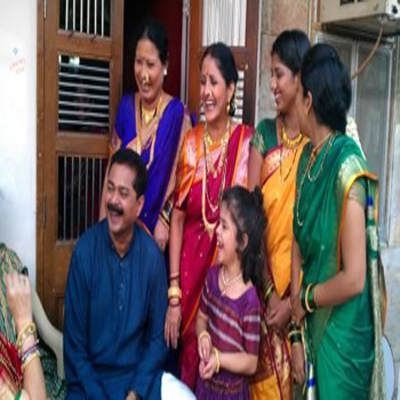
    People participating in the KHMC activity, organized by ETV Marathi

    Madison COO Karthik Lakshminarayan says that more than the Marathi channels Hindi TV channels normally go into a greater overdrive on this front and hence get a lot more visibility amongst lay consumers.  “Such activities create a lot of buzz for the TV channel and show,” is Poddar’s stated view.

    So what happens once an event is done? “We conduct a survey by distributing forms to people asking them about the show,” says Rajadhyaksha. During the course of the event, games are conducted in which contestants are asked questions pertaining to the channel’s shows after which winners get prizes. All contact details of the people is piled into a database and they are informed and invited the next time Zee Marathi does an event.

    Same goes for ETV Marathi. Feedback from an event is used in the next event they undertake. Regular mailers, SMS updates, Facebook uploads and Twitter tags are used to build curiosity among the viewers.

    “What such kind of marketing does for the channel is that it gives it an opportunity to tailor messages in a personal manner. It also gives marketers valuable insights into their ROIs,” says Poddar.  So while print, TV and radio form the main chunk, channels seem to be waking up to the possibilities offered by on-ground as a critical component of reaching out to consumers. Marathi TV appears to be on the road to getting the fourth ‘P’ of its marketing mix right.
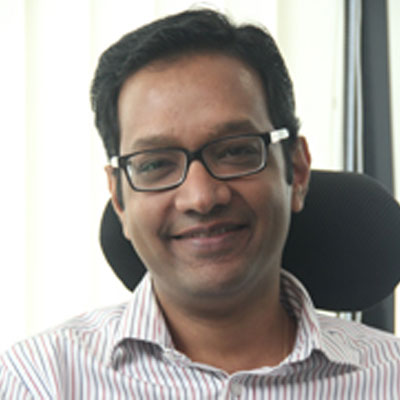

  • ETV Marathi: Changing the rules of the game : Anuj Poddar EVP Viacom18 and Business Head, Marathi

    ETV Marathi: Changing the rules of the game : Anuj Poddar EVP Viacom18 and Business Head, Marathi

    ETV Marathi has been one of the pioneers in regional entertainment and to our credit, we’ve been visionaries.

    The way I see it there have been three phases of content. The first was the evolution of content. ETV Marathi, when it started out, was not on par with national TV channels but it was locally unique and culturally closer. The next phase was when Star Pravah came into being, and the quality and nature of programming took a leap. The third phase is what ETV Marathi has done since Viacom 18 came into the picture. We’ve taken the current entertainment to its next phase.

    KHMC gets a lot more visibility and helps signify that change at multiple levels such as scale of programming, quality, production values or benchmark impacts the kind of audiences we draw.

    Kon Hoyil Marathi Crorepati (KHMC) was one of the first steps to signify that. The kind of shows we were doing before and after KHMC signify the extent of change in the genre.

    KHMC gets a lot more visibility and helps signify that change at multiple levels such as scale of programming, quality, production values or benchmark impacts the kind of audiences we draw.

    The kind of programming that we have lined up is going to bring in more audiences from outside the genre. These are audiences that were not watching much of our Marathi programming but because of the quality and diversity, they would be looking at it. These are the younger audiences or more contemporary and educated in English or Hindi medium schools and therefore, are not watching regional Marathi entertainment. So it has to be the language and content that has to appeal to them. The content more than the emotional attachment to their language should pull them in.

    ETV Marathi’s legacy is very strong but we were stuck in the past where it pulled in a certain kind of audience. We are now bringing in content that is far more vibrant, younger, contemporary and fresh in order to pull in a whole new segment of audiences to Marathi GEC.

    We had to change our FPC (Fixed Point Chart) but we didn’t have the luxury to create content and wait because it was a running channel. We started replacing shows in a certain priority. We started by replacing some fiction shows. We brought contemporary drama on the channel. We created a completely original show called Vivah Bandhan while another was a remake of the popular show Uttaran called Asawa Sundar Swapnache Bandhan. We thought of taking something that worked nationally and serving it in a regional language with a setting that’s closer home.

    Post that, we worked on the fiction vs. nonfiction mix. Previously, E TV Marathi had nonfiction during a late night time band post 9:30 pm or 10:00 pm, which we pulled to the 9:00 pm to 10:00 pm band. We launched three shows; one was Natya Rang, another was Comedy Expressthat we reworked on and third was another popular ETV Marathi show called Crime Diary that we brought back in a new avatar.

    E TV’s legacy is very strong but we were stuck in the past where it pulled in a certain kind of audience. 

    Traditionally, ETV Marathi was not known for marketing. Now we have changed that and there is cross-channel marketing; outdoor, print, ground activities-pretty much 360 degree. We used KHMC to amplify our marketing because in a GEC space, a channel is never marketed, the show is. We did many on-ground activities for KHMC. We had vans going from city to town and organising a game play on the ‘hot seat’. So people in a small town would gather and get an opportunity to answer five questions and get the feel of it. So we did a lot of these things that may not ultimately give an ROI on a specific show but will help to create a lot of buzz for the channel. KHMC did manage to shake people up as it came as a disrupter.

    Incidentally, KHMC is just about 20 per cent of our ratings while the rest comes from our other shows.

    We’ve not only started doing a lot of marketing but we started just letting people know that ETV Marathi was undergoing a change.

    The consumer would take time to realise a change was happening. After carrying out some changes till March, we launched KHMC in May as our flagship program. That brought us a lot more visibility. What we have noticed is that every new show’s launch has beaten the record of the previous show’s launch. We brought on board better quality and differentiated nonfiction programs this year. The channel now has something for everybody.

    As a channel, for us, it is important to know what is happening in every age group. We track that by age or by SEC. Every single age group is showing growth in reach and time spent on ETV Marathi . We want to make sure that a lot of our old and loyal audiences have reason to stay on the channel as well as the younger audiences come back to the channel because our audiences don’t sit in Mumbai and Pune. So we target the rest of Maharashtra in both ground activities and print.

  • ETV Marathi: Changing the rules of the game

    ETV Marathi has been one of the pioneers in regional entertainment and to our credit, we‘ve been visionaries.

    The way I see it there have been three phases of content. The first was the evolution of content. ETV Marathi, when it started out, was not on par with national TV channels but it was locally unique and culturally closer. The next phase was when Star Pravah came into being, and the quality and nature of programming took a leap. The third phase is what ETV Marathi has done since Viacom 18 came into the picture. We‘ve taken the current entertainment to its next phase.

    KHMC gets a lot more visibility and helps signify that change at multiple levels such as scale of programming, quality, production values or benchmark impacts the kind of audiences we draw.
    _____****_____

    Kon Hoyil Marathi Crorepati (KHMC) was one of the first steps to signify that. The kind of shows we were doing before and after KHMC signify the extent of change in the genre.

    KHMC gets a lot more visibility and helps signify that change at multiple levels such as scale of programming, quality, production values or benchmark impacts the kind of audiences we draw.

    The kind of programming that we have lined up is going to bring in more audiences from outside the genre. These are audiences that were not watching much of our Marathi programming but because of the quality and diversity, they would be looking at it. These are the younger audiences or more contemporary and educated in English or Hindi medium schools and therefore, are not watching regional Marathi entertainment. So it has to be the language and content that has to appeal to them. The content more than the emotional attachment to their language should pull them in.

    ETV Marathi‘s legacy is very strong but we were stuck in the past where it pulled in a certain kind of audience. We are now bringing in content that is far more vibrant, younger, contemporary and fresh in order to pull in a whole new segment of audiences to Marathi GEC.

    We had to change our FPC (Fixed Point Chart) but we didn‘t have the luxury to create content and wait because it was a running channel. We started replacing shows in a certain priority. We started by replacing some fiction shows. We brought contemporary drama on the channel. We created a completely original show called Vivah Bandhan while another was a remake of the popular show Uttaran called Asawa Sundar Swapnache Bandhan. We thought of taking something that worked nationally and serving it in a regional language with a setting that‘s closer home.

    Post that, we worked on the fiction vs. nonfiction mix. Previously, E TV Marathi had nonfiction during a late night time band post 9:30 pm or 10:00 pm, which we pulled to the 9:00 pm to 10:00 pm band. We launched three shows; one was Natya Rang, another was Comedy Expressthat we reworked on and third was another popular ETV Marathi show called Crime Diary that we brought back in a new avatar.

    E TV‘s legacy is very strong but we were stuck in the past where it pulled in a certain kind of audience.
    _____****_____

    Traditionally, ETV Marathi was not known for marketing. Now we have changed that and there is cross-channel marketing; outdoor, print, ground activities-pretty much 360 degree. We used KHMC to amplify our marketing because in a GEC space, a channel is never marketed, the show is. We did many on-ground activities for KHMC. We had vans going from city to town and organising a game play on the ‘hot seat‘. So people in a small town would gather and get an opportunity to answer five questions and get the feel of it. So we did a lot of these things that may not ultimately give an ROI on a specific show but will help to create a lot of buzz for the channel. KHMC did manage to shake people up as it came as a disrupter.

    Incidentally, KHMC is just about 20 per cent of our ratings while the rest comes from our other shows.

    We‘ve not only started doing a lot of marketing but we started just letting people know that ETV Marathi was undergoing a change.

    The consumer would take time to realise a change was happening. After carrying out some changes till March, we launched KHMC in May as our flagship program. That brought us a lot more visibility. What we have noticed is that every new show‘s launch has beaten the record of the previous show‘s launch. We brought on board better quality and differentiated nonfiction programs this year. The channel now has something for everybody.

    As a channel, for us, it is important to know what is happening in every age group. We track that by age or by SEC. Every single age group is showing growth in reach and time spent on ETV Marathi . We want to make sure that a lot of our old and loyal audiences have reason to stay on the channel as well as the younger audiences come back to the channel because our audiences don‘t sit in Mumbai and Pune. So we target the rest of Maharashtra in both ground activities and print.

  • TV9’s Mumbai-centric Hindi news channel to convert into Marathi

    TV9’s Mumbai-centric Hindi news channel to convert into Marathi

    MUMBAI: Associated Broadcasting Company Limited (ABCL), which runs a clutch of regional channels, is converting its Mumbai-centric Hindi news channel into full-fledged Marathi.

    The decision to make TV9 Maharashtra a local regional-language news channel comes in the wake of losses from the city-specific Hindi news channel. “We are changing it into Marathi as it is the only loss-making channel in our entire bouquet. Earlier being in Hindi, we were not attracting any state government advertisements. Going local would also mean that we get more connected with people outside Mumbai,” said ABCL vice president operations KVN Murthy.

    The channel’s operational loses are estimated at close to Rs 300 million a year, according to market estimates. TV9 officials, however, declined to comment on the extent of these losses.

    TV9 Maharashtra has begun the process of transitioning into a full-fledged Marathi news channel as part of its strategy to go local. The news bulletin and the other prime-time shows have already made the shift to Marathi with the exception of the Entertainment bulletin which will eventually go Marathi.

    TV9 Maharashtra head Srinivas Reddy said that 90 per cent of the content is in Marathi while only 10 per cent is in Hindi. “We haven’t decided any date on when we want to become a Marathi channel completely. But that is the way we are moving.”

    ABCL had made its expansion into the Hindi language with the launch of TV9 Mumbai in 2009 focussed on local news. However, TV9 Mumbai was last year rebranded as TV9 Maharashtra to widen the viewership base. But language turned out to be a major impediment since Marathi is the most widely spoken language in Maharashtra.

    “Marathi is the language of the common people in Maharashtra. We thus decided to become a Marathi news channel,” Reddy said, talking about the shift to Marathi language.

    TV9 Maharashtra, which will have to compete with established players like Zee 24 Taas, ABP Majha (earlier Star Majha) IBN Lokmat and ETV Marathi, is betting on local content to drive viewership.

    “If you look at other Marathi news channels, they are covering more of other news rather than news of local relevance. We will be focusing only on local news. In fact, TV9 Maharashtra will have 90 per cent of local content and maybe 10 per cent of other content like sports,” he averred.

    TV9 Maharashtra has around 100 part-time and full-time journalists across Maharashtra and around 15 anchors. While most of the team is in place, the channel will hire new employees for its output division.

    The Marathi news broadcaster also has offices in different cities of Maharashtra including Nagpur, Nashik and Pune.

    So will there be a sizeable retrenchment because of this makeover exercise? “We are not sacking anybody. In fact, a lot of our employees were already Marathi speaking and we are also training existing employees in our output division in addition to hiring new people for output division.”

    However, Indiantelevision.com has been made to understand that the broadcaster has already told certain employees to look out for a new job as part of its resturcutring excercise.

    In addition to TV9 Maharashtra, ABCL runs four regional news channels including TV9 Karnataka (Kannada), TV9 Gujarat (Gujarati), Indiavision (Malayalam), Kolkata TV (Bengali), besides an English news channel News9. It also has a niche channel in Telugu devoted to Entertainment and News called TV1.

  • ETV Marathi awards creative mandate to Rickshaw Communication

    Mumbai: Rickshaw Communication & Design has bagged the creative mandate of ETV Marathi following a multi-agency pitch.

    They have been awarded this business on their strategy and creative strengths which were innovative and compelling, according to a statement.

    The agency will be responsible for devising campaigns for ETV Marathi that will cover outdoor, print and radio. It has already started work on a 360 degree marketing campaign for two new non fictions shows that will soon launch on ETV Marathi.

    Rickshaw Communication & Design founder and creative partner Suhas Parab said, “This win is going to be a challenge and equally good opportunity for the team at Rickshaw to explore the creative lengths for the pioneers of Marathi general entertainment. This account gives us an opportunity to get closer to the consumer of this genre and design campaigns that are more personal, effective and captivating. This is just the sort of work that we at Rickshaw enjoy doing.”

    Some of the other brands that Rickshaw Communication & Design has worked on are Mahindra Automobiles, UTV Stars, UTV Bindaas and Phoenix – Palladium Mall.

  • ‘Star Pravah is only entertainment channel with 25% of content aimed at males’: Star Pravah channel head Nachiket Pantvaidya

    ‘Star Pravah is only entertainment channel with 25% of content aimed at males’: Star Pravah channel head Nachiket Pantvaidya

    Star Pravah had a bad start and had to rework on its programming strategy to keep in pace with rivals Zee Marathi and ETV Marathi. Now having found the right content mix and being aggressive in buying movie rights, the channel leads the ratings chart.


    Launching with culturally rich shows like Raja Shivchhatrapati and Agnihotra, the channel changed track and is now focusing on contemporary content reflecting today’s lifestyle. It is betting big on movies and is willing to pay high prices.


    In an interview with Indiantelevision.com’s Gaurav Laghate, Star Pravah channel head Nachiket Pantvaidya talks about the channel’s programming plans and the challenges of the Marathi market.


    Excerpts:

    Q. After joining on 1 April last year, Star Pravah has grown in the Marathi general entertainment genre. What has worked in your favour?

    From 120 GRPs during the last IPL, we have grown to 250 GRPs today. While the ratings are just a number, we have come a long way because we got the right strategy in place.

    Q. Star Pravah started with a show like Raja Shivchhatrpati and other shows portraying rich Marathi culture. Today, the shows are more on the contemporary day-to-day life. Are you talking of this shift in strategy?

    We believe that whatever the content is, it needs to reflect the society of today. So while we respect the ‘Maharashtrian’ culture, we are focussed on catering to today’s generation.


    With the help of our researches and various contact programmes, we have realised that our viewers, staying in whatever part of Maharashtra, are global citizens with big dreams and aspirations. They understand the importance of values versus the changes that are happening in the current economic scenario. With our programming, we are constantly portraying “today’s Maharashtra”.

    Q. Marathi viewer is equally comfortable with Hindi. And if Hindi GECs are offering same shows, doesn’t it pose a challenge?

    One of the major challenges is that a Marathi viewer is equally comfortable in watching Hindi general entertainment channels, news and sports. So we decided to work not just like a Marathi entertainment channel but an entertainment vehicle. We focus on being concurrent as well as on entertaining our viewers.


    And it is paying also. In the last eight weeks we have been ahead of the Hindi GECs. In the week ended 26 May, we clocked 256 GRPs, highest for the channel so far.

    Q. From programming point of view, what is the thought process behind the shows?

    All our shows are based on unique themes and we promote the idea of positive bright relationships.


    Our shows like Bhandaa Saukhya Bhare (game show between saas-bahu), Devyani, Pudhcha Paaul, Swapnanchya Palikadle, and upcoming Laxmi Vs Saraswati portray today’s time, today’s value system and ask relevant questions.


    We have kept the packaging the same… the dresses, attires, setups are still the same, but our approach is very modern.


    Also, we are the only entertainment channel with 25 per cent of the FPC dedicated to the male audience. We decided to have differentiated content, so from 9.30 pm till 10.30 pm we show Lakshya (crime drama) and Anolkhi Disha (supernatural) to cater to the male audience. In future we would also like to create some shows for the kids audience as we are a wholesome entertainment channel.

    ‘The ratings of TV premiere of Marathi movies have doubled. We are progressive and aggressive in the film acquisition space and want better production value, for which a better price is justified ‘

    Q. What are the other genres you are exploring?

    We would like to explore genres like comedy, thriller and socially relevant shows. We are sticking to our identity and will make sure that we offer the complete package.

    Q. Many times a viewer is not happy with the quality of production. How are you tackling this issue?

    A few of our shows are already being shot in high definition. And Shrabani Deodhar (creative director), at the helm of programming, makes sure our programming quality is no less than the Hindi GECs – at the price of Marathi GECs!

    Q. You have been acquiring a lot of movies. How has it helped the channel?

    We are bullish on acquiring movies as we want to see the Marathi film industry grow. So if you see, we have acquired a major chunk of movies, including all the three national award winning movies.


    We are looking at buying the rights of these films prior to the release. And these films have helped us to aggregate the incremental viewers. With every blockbuster, new viewers come to sample the channel and we promote our other properties.


    We have a good mix of high concept cinema as well as commercial films in our library. For high concept films we are investing in subtitling. We also put advertisements in English dailies so that a non-Marathi speaking viewer can also watch and enjoy good cinema.

    Q But many players say that you are also spoiling the market with such high acquisition prices?

    We want to write the resurgence story for the Marathi film industry. If you see, Maharashtra still has the lowest film acquisition price. If we keep doing hard bargain to acquire good films, it will drag us all down.


    In today’s time, the ratings of TV premiere of these movies have doubled and we can recover the cost of acquisition. And after all, the price is just any number; we want to be assured of good cinema. We are progressive and aggressive in the film space and want better production value, for which a better price is justified.


    Today, all the big filmmakers in Maharashtra are willing to partner with us as we are expanding their market and trying to make the economic model work for them as well.

    Q. How are you marketing the channel and the properties?

    We know that as a late entrant in the market, we did not have the legacy to fall back on. Thus, we had to make that extra effort to reach out to our viewer. We have very extensive direct connect programmes and activities through which we keep reaching out to them.


    We want to make the viewers realise that we love them, we know their aspirations and we try to meet and talk to them directly. So you will not see many hoardings from our side just announcing a new show; we will reach to the nook and corner of the state and will meet them in person. Our ground connect programme is very strong.

    Q. And how is the response from the advertisers?

    Today we are a big vehicle for the advertisers to put their message across. A big leap of thought for us is that economic and SEC classification is not a geographic concept anymore. The concept of rural and urban is not there. We see rural parts in metropolitans like Mumbai and Pune as well as an urban class in very small towns. We are working closely with the local brands to help give them a global identity.

    Q. How is digitisation going to help you?

    I believe that digitisation will benefit us more than anybody as the inequalities in the distribution business will iron out.

    Q. How is being part of Star India helping you?

    Today Star India has many No. 1 channels in the national as well as regional space. The group has done great in regional with faith that regional could be the new national. The group strength also helps us in leveraging resources.

  • Marathi GEC space: Zee Marathi winner in numbers game

    First the good news. The Marathi general entertainment space is expanding. The market is currently estimated to be above Rs 2 billion for 2007-2008. Now the bad news (for the current players). New entrants are eying a share of the pie.

    At present, there are just four players in the space – Zee Marathi, ETV Marathi, Sri Adhikari Brothers Mi Marathi and public broadcaster DD Sahyadri.

    A point of note is that apart from GEC, Marathi broadcast arena also includes three players in news – Star Majha, Zee 24 Taas and new entrant IBN-Lokmat. Additionally, there is Zee Talkies which enjoys a monopoly of being the only Marathi movie channel.

    Backgrounder:

    In the first phase of launches in this space there was DD Sahyadri, Zee Marathi, ETV Marathi, Tara Marathi and Prabhat.
    DD Sahyadri was launched in 1998 followed by Zee Marathi in 1999. Later ETV Marathi, Tara and Prabhat joined the arena between 2001-02.

    By 2003, Tara Marathi and Prabhat channels had gone off air.

    In 2007, Mi Marathi entered the fray.

    Position as of now:

    In the fiscal 2007-2008, If we check the Tam data for Maharashtra market in cable and satellite homes (4+ TG, 1st April 2007 to 29 March 2008), it has clearly been a two-horse race between Zee Marathi and ETV Marathi, as 1st and 2nd respectively. Though ETV Marathi got the better of the ratings in the period June-August 2007, it started losing ground after that and Zee Marathi emerges the clerar winner in the numbers game. (See the table).

    Channel share %
      Zee Marathi ETV Marathi DD10 Sahyadri (Marathi) MI Marathi
    Apr ‘07 51 28 13 8
    May ‘07 45 39 9 6
    Jun ‘07 41 41 12 6
    Jul ‘07 39 43 13 5
    Aug-07 41 43 12 5
    Sep-07 44 39 12 5
    Oct-07 52 36 8 4
    Nov ‘07 45 38 11 6
    Dec-07 48 35 11 6
    Jan ‘08 51 32 11 7
    Feb ‘08 51 32 12 6
    Mar-08 48 33 12 6
    Source TAM:- Market: Maharashtra Mkt TG: CS 4+ years Period: 1 April 2007 to 29 March 2008

    ETV chief producer Manvi admits, “We were on top from June till August in 2007. However, because of some connectivity and distribution issues we have fallen behind. Zee Marathi is doing well and it is not easy, but we are trying hard, to regain the lost position.”

    Among the other players, DD Sahyadri is maintaining its channel share of 12 in the market. However, also ran MI Marathi has not shown any growth and is stuck with an average channel share of 5. MI Marathi, despite having 3,000 hours of content and boasting of strong brand value among Marathi people, has not managed to get significant viewer eyeballs.


    All year performance:

    Zee Marathi is leading in this market with an average of almost 46 per cent channel share. At the beginning of April, it was holding 51 per cent market share, but slid after that to a low of 39 per cent in July, wherein ETV surged ahead. On the back of movies, reality and soaps, Zee Marathi had regained its lead position by September and has remained close to an average of 48 per cent ever since. ETV Marathi, meanwhile, has a channel share of 33 in March 2008. The average channel share of ETV Marathi is around 37 for the fiscal 07-08.

    DD Sahiyadri had average channel share of 11 for the whole year. While 6 per cent went to MI Marathi.

    Content:

    So what is it that clicks with the viewer? Is it a feature film, reality show, or fiction based daily soap?

    From Tam top 100 programmes for the period under review, Marathi feature film Subh Mangal Savadhan has got the highest TRP of 7.85 on Zee Marathi in April. Second and third were reality shows based on comedy (Hasyasamrat) and dance (Eka Pekshya Ek). Event show Swartarang was fourth while ETV Marathi serial Hya Gojirvaanya Gharat made it to fifth in the Top 5.

    Data from the month of march depicts that apart from dance reality show Eka Pekshya Ek, soaps from Zee Marathi like Avghachi Sansaar and Vahini Saheb are also getting an average rating of 5 and 4 respectively in the All Maharashtra Market.

    Zee Entertainment Enterprise Ltd (ZEEL) director (Zee regional channels) Nitin Vaidya told Indiantelevision.com, “Zee Marathi is offering viewers variety with quality and continuity. Viewers are very smart and demanding, so we are offering them a mix of reality and fiction. This explains why we are on top.”

    Talking about content, here it is interesting to note that Marathi soaps do not focus on so much on saas-bahu tussles and kitchen politics like Hindi GECs.

    “Maharashtra is a state of progressive minded people. They don‘t like the typical Hindi saas-bahu sagas. Viewers can see completely different programming on Zee Marathi,” explains Zee TV programming head (till recently Zee Marathi VP) Ajay Bhalwankar.

    That makes sense. But are daily soaps or reality shows the ticket to success? Bhalwankar says, “For Zee Marathi both the genres are working.

    For ETV Marathi however, it is the soaps that are working. Its soaps Char Diwas Sasuche, Hya Gojirvaanya Gharat and Kata Rute Kunala are getting decent TRPs of 4, 3.3 and 2.6 respectively.

    But to be on top, Manvi believes that his channel will have to ramp up its reality quotient. “Reality shows are in. Audiences like to watch dance and music shows rather than fiction. So we are putting emphasise in this genre.”

    Will reality help ETV turn the tide in its favour? Time will tell.

  • ‘Zee’s largest bouquet makes it the best prepared network for digitalisation’ : Joy Chakraborthy – Zee Entertainment Enterprises Ltd President, Head – Revenue

    ‘Zee’s largest bouquet makes it the best prepared network for digitalisation’ : Joy Chakraborthy – Zee Entertainment Enterprises Ltd President, Head – Revenue

     Zee is on an upsurge, driven by its flagship Hindi general entertainment channel. Kicking in ad revenues for the fiscal has not just been Zee TV but also the two regional channels – Zee Marathi and Zee Bangla – who together will make Rs 2 billion. And despite less aggressive movie buying, Zee Cinema will see a 25 per cent jump to rake in Rs 2 billion.


    As revenue head for Zee Entertainment Enterprises Ltd, Joy Chakraborthy takes credit for it. His role extends to the regional general entertainment channels (except south) which reside in sister company Zee News Ltd. The sports side of ZEEL’s business, however, doesn’t fall under his supervision.


    “I handle the power brands where effort to returns are high,” he says.


    Joy also takes pride in continuously doing price-correction deals. Even then Zee is under-priced and there is scope for growth, he says.


    In an exclusive interview with Indiantelevision.com’s Sibabrata Das, Joy talks of how Star Plus’ loss in GRPs has been pocketed largely by Zee TV and its regional channels. He also elaborates on Zee’s plans to pile up a huge bouquet so that it stays as the best network prepared for the digital era.


    Excerpts:

    How much of an ad revenue growth will ZEEL see in the current fiscal and is this still disproportionate to the rise in GRPs of the network?
    There will be a 65 per cent robust ad sales growth for the channels that are handled by me. Advertisers like to invest in channels which are growing. Zee TV, Zee Marathi and Zee Bangla particularly gained, as the leader channels in these segments (Star Plus, ETV Marathi and ETV Bangla) were falling sharply.


    The revenue has grown disproportionate to the GRP growth. The pricing, though, needs correction. We feel we are under-priced. With every new deal, we have corrected the price upwards.

    Are the channels that fall under you (ZEEL channels except sports, and the regional GECs barring the south languages) going to post a revenue of Rs 12.5 billion during the fiscal?
    Since we are a listed company, I can’t reveal the figures of the specific channels.

    As Zee TV is the predominant revenue earner, isn’t ZEEL in as risky a position as Star India is with the dominance of Star Plus?
    Zee TV accounts for 65 per cent of ad revenues that the channels under me generate. But that is how the network business will look like in India. Hindi general entertainment channels (GECs) make bulk of the ad revenue business.

    Zee Next was launched as a flanking channel in the GEC space, but it doesn’t seem to have worked at all?
    Zee Next has a problem. We are doing introspection on what went right or wrong. We will be ready with a plan within 5-7 weeks. Besides, distribution is an issue. But we feel it is not right to pay this kind of carriage fee and spoil the market.

    What is the purpose of launching a flanking channel without aggressively distributing it when in the marketplace there is a scramble for space on choked cable networks?
    Strategically, it is important to have a second GEC as a de-risk business model. The GECs are sitting on Rs 20 billion of ad revenues. In as large a size as this, we can’t put all our eggs in one basket. If viewers want something outside Zee TV, we are offering a different kind of programming in Zee Next. With fragmentation happening, our plan also is to try and grab whatever audiences we can with the concept of a family channel for all age groups.


    But we still have to be realistic on the carriage fees. Otherwise, it will affect the business model of the whole network; we are, after all, not a single channel company. We have to take a business rather than an emotional call.


    The channel will take time to build. Any GEC with less than 130 GRPs will continue to bleed – and we have been seeing that. But with a new plan in place, we will sort out the distribution and other issues that need to be corrected.

    The loss of GRPs by Star Plus has been made up by Zee TV and its regional channels. Zee Marathi and Zee Bangla are doubling their previous year’s revenues to touch Rs 1 billion each

    Isn’t growth of GEC as a category slowing down?
    The GRPs of GEC channels as a category have grown by 6 per cent. Revenue from GECs, on the other hand, have jumped 22 per cent. What is happening is that the GRPs of GECs are getting reorganised. Star Plus, for instance, has seen a fall in GRPs while we have gained.

    Could you elaborate?
    The loss of GRPs by Star Plus has been made up by Zee TV and the regional channels. Our regional channels are operating in the most important primary markets. Zee Marathi and Zee Bangla have particularly grown.

    One reason for the growth of these two channels, according to you, is because the leader ETV is falling. But what sort of ad growth are both of them going to post this fiscal?
    Zee Marathi and Zee Bangla are doubling their previous year’s ad revenues. They will end up making around Rs 1 billion each. The ad rates of regional channels, though getting corrected, are still very low.

    After rolling out Zee Talkies to addess the Marathi market, are you planning to launch a Bengali movie channel?
    We will be launching a Bengali movie channel as it will help us create a wider bouquet in that local market. We have created a GEC, a news and a movie channel in the Marathi market. We will be repeating this combination in the Bengali market. Regional movie channels work for sales as well as help boost distribution.

    Like Kalanithi Maran’s Sun network, are you looking at packing in regional music channels as well?
    We don’t see music channels being viable in these markets.

    Doesn’t Zee have such plans for Gujarat?
    Zee Gujarati didn’t see much growth. Almost 99 per cent of the Gujarati viewership is covered by Hindi GECs and movies. It is not a viable market for india, but has an international distribution story.

    Though Zee Cinema is the second biggest channel in the network, it has been less aggressive in movie buying this fiscal. Will this hurt the revenues?
    For the movie channel category as a whole, GRPs have fallen. But Zee Cinema’s revenue for the fiscal would be Rs 2 billion, up 25 per cent. We are selling better, using all time bands.

    As revenue head, why haven’t the sports, news and southern language channels come to you?
    I am handling the power brands where effort to returns are high. The sports business is cricket-centric and needs dedicated attention. So Ten Sports is handling the ad sales. I already have too much on my plate as the network revenue head.
    Will subscription revenues be sluggish, driven by slowdown in international business and foreign exchange loss?
    Domestic subscription will grow by 30 per cent – and we see the situation improving in next fiscal. The Star bouquet is strong, but we have been catching up this year. We have more pull channels than anybody else – Zee TV, Zee Cinema, Zee Cafe, Zee Marathi, Zee Bangla, Zee Talkies and Zee Studio. International distribution is outside my ambit and I can’t comment on that.
    There is a buzz in the market that the TV18 group channels including CNBC TV18 will soon move to Star DEN?
    There is still time for some channels to move out, if at all. We will soon be making an announcement of more channels in our bouquet to make it stronger.

    Are you referring to Ten Sports moving out from SET Discovery (now MSM Discovery) to Zee Turner?
    I can’t comment on this.

    Zee has the largest bouquet of channels. With carriage fee on the up, how does it impact the business at the net level?
    Since we have a large bouquet, this at one level affects us in carriage deals. But on subscription ground, it helps make our bouquet stronger. We have presence in all genres except kids. The net effect in the long term is beneficial once digitalisation happens. We are the best prepared network for digitalisation.

    What is being done to beef up Zee’s English genre channels?
    Zee Cafe is airing new American shows and has a very loyal viewership. It will grow in ad revenues by 45 per cent this fiscal. Zee Studio’s perception as a repeat channel is changing. The sub-titling has helped us, we will be seeing 37 per cent growth, and it completes our bouquet.

    What is your revenue forecast for the next fiscal?
    Keeping in mind the fragmentation scenario, our target will be to post 30 per cent growth in both ad sales and domestic subscription. It will be a challenging year and we hope that the newcomers don’t spoil the ad sales and distribution market with price cutting and high carriage deals.

    Do you see BARC (Broadcast Audience Research Council) taking off any time now?
    It is a good initiative as it represents an association of broadcasters and advertisers. TV as a medium is very research-focused. The sector is also grossly under-priced. BARC is at an initial stage of progress but the intention is there to set it rolling.

  • Nick ramps up Feb-schedule with two new shows & SpongeBob ‘Pakda Pakdi’ contest

    Nick ramps up Feb-schedule with two new shows & SpongeBob ‘Pakda Pakdi’ contest

    MUMBAI: Nick India is in rejig mode and is set to make a lot of noise this February. Kicking off the month, the channel will launch two new acquired shows Tumoya Island and Meteor and The Mighty Monster Trucks on its pre- school block Nick Jr. from Monday to Friday at 9.30 am and 10.30 am respectively.

    Tumoya Island narrates the fun between three friends Mafi, Buddy and Mekki, while Meteor…. tells the story of an aspiring astronaut truck and his adventures with his friends.

    Close on the heels of the ‘Masti Dosti’ contest, Nick has yet another SpongeBob based initiative titled ‘Pakda Pakdi’ to be rolled out across the channel on 5 Feburary.

    During the four week watch and win contest, kids will have to spot SpongeBob zooming across the screen on either a skateboard, a rope or a scooter during primetime (6-8 pm) from Monday to Friday and report it back to the channel.

    The idea behind the contest, Nick India vice president and general manager Nina Elavia Jaipuria explains that the theme is centered around the fact that SpongeBob is fatigued after a whole year’s work and is planning a holiday get away to theme park Nick Central in Australia. Unfortunately, his best buddy Patrick refuses to let him go and it is here that the viewers get involved to help SpongeBob in his efforts to escape from Patrick only to be rewarded with a free trip for one lucky winner and his family to Nick Central. Thus the tagline “SpongeBob Pakro Australia Jao.”

    What’s more, kids can also win television sets, discmans, mobile phones remote controlled cars and MP3 players everyday for spotting SpongeBob getting away from Patrick.

    To promote the contest, Nick has adopted a 360 degree approach and has tied up for cross channel promotions with Sony, SAB, MAX, Zee, Zee Cinema and Sahara as well as regional channels like ETV Marathi or Zee Bangla.

    Additionally, the campaign will be supported with a school contact programme which will be conducted across 350 schools in Mumbai, Delhi and Kolkata reaching out to almost 3, 00,000 kids. “We will distribute activity sheets, stickers, small quizzes to create a very comprehensive programme at schools. Nick will also have ‘meet and greet’ events with SpongeBob and Patrick in malls and multiplexes during the weekends when the footfalls are high,” says Jaipuria.

    Members of the ‘Nicksters Club’ will also be intimated via direct mailers or post so as to reach out to every Nick fan giving them an opportunity to compete for the grand prize.

    The contest has roped in four key sponsors including LIC as the main sponsors, co-presenting sponsors Maggi rice noodles Mania and associate sponsors Perfitti’s Big Babool and Tata Sky.

    The SpongeBob themed initiative follows as a continues and concerted effort by the channel to build a bond between the character and kids, so as to make SpongeBob synonymous with Nick. At the same time this will drive kids to sample the show and up the presence of the channel in India.

    By way of on-ground events Nick is going to bring other characters to Indian shores so kids can better relate to them. “In a similar manner, we will bring Dora The Explora for our juniors in India sometime later this year,” adds Jaipuria.

  • NGC, ETV announce content partnership

    NGC, ETV announce content partnership

    MUMBAI: The National Geographic Channel (NGC) and regional network ETV have announced a content partnership.

    NGC will provide content to ETV, which will air five days a week (Monday-Friday) in a half hour evening slot. From today 13 November viewers of ETV Telugu, ETV Oriya, ETV Kannada, ETV Bangla, ETV Gujarati, ETV Marathi, ETV UP, ETV MP, ETV Rajasthan and ETV Bihar will be able to catch NGC’s programmes in their native language. The regional language versions of the programs will be provided by NGC to ETV Network.

    The new partnership with ETV is a step further in NGC’s strategy to reach out to a wider audience across the country. The programmes being aired on ETV will cover a wide range of topics. The alliance will be kick started with NGC’s series Most Amazing Moments” that will premier across the ETV network from today. This partnership also underlines ETV’s mission to provide its viewers with quality international programming to enhance the viewer experience.

    NGC India VP marketing Rajesh Sheshadri, “National Geographic Channel is synonym for smart, innovative and interesting programmes that invite viewers to Think again. Reaching a wider audience to expose them to our superior content has been a goal we have been constantly working towards.

    “Partnership with a leading channel like ETV that reaches to millions of viewers through their bouquet of regional channels is an excellent opportunity to further our reach. I am confident that viewers in these states will appreciate our unique programmes and will look forward to their daily dose of the best of National Geographic Channel programmes in their native language.”

    ETV Network VP – operations Bapineedu said, “Quality entertainment in the language of our viewer’s choice is one of the key contributors to our success. Our programs depict the culture with which our viewers are able to connect and it is this spirit of empathy with individual cultures/languages that has helped us to reach to millions of viewers. Through this partnership with National Geographic Channel we endeavor to further enhance our viewer’s experience by exposing them to never before seen international programmes in their native language.”