Tag: ETC Punjabi

  • Rajiee Shinde returns as CEO to lead PTC Entertainment’s next chapter

    Rajiee Shinde returns as CEO to lead PTC Entertainment’s next chapter

    MUMBAI: Lights, camera, comeback! Rajiee M. Shinde, one of Indian media’s most formidable forces, is back in the director’s chair at PTC Entertainment. Effective 1 August 2025, she takes charge as chief executive officer, reporting directly to Sukhbir Singh Badal, the promoter of PTC Network. And yes, this isn’t just a reunion; it’s a reinvention.

    Known for her razor-sharp programming instincts and a CV that reads like a greatest hits album, Shinde helped catapult PTC Punjabi to the No. 1 spot during her earlier nine-year stint from 2008 to 2018. Now, she’s back for the sequel with a vision that’s bolder, more global, and unmistakably desi.

    A Dadasaheb Phalke Film Foundation Award winner, Shinde brings with her over two decades of experience across content, music and entertainment businesses. She previously launched Showbox for IN10 Media, headed Epic Channel India as president, and helmed ETC Punjabi at Zee, where she pioneered India’s first Punjabi music channel. In recent years, she’s led Sai Mehar Media and served as CEO of Wild Music Records.

    Her new innings at PTC will involve scaling up original programming, unlocking new digital strategies, and tapping into international viewership all while keeping the core audience firmly at heart. She will operate out of both Mohali and Gurugram.

    “Rajiee’s return marks an exciting new chapter for PTC Entertainment,” said a source close to the network. “She brings not just leadership but legacy and she’s already proven that she knows how to win audiences across borders and platforms.”

    Shinde’s appointment also signals PTC’s intent to double down on regional content with global ambition, at a time when vernacular storytelling is commanding centre stage in Indian entertainment. From boardrooms to backlots, she’s set to steer the brand through a new era of digital disruption, international expansion, and audience-first content innovation.

    And if her track record is anything to go by, she’s not just holding the mic, she’s about to drop it.

  • “Ad cap should have been restricted to only pay channels”: Yogesh Radhakrishnan

    “Ad cap should have been restricted to only pay channels”: Yogesh Radhakrishnan

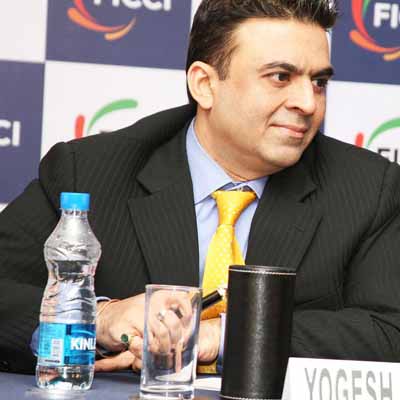
    A veteran in the cable TV industry, someone who dabbled in the sector almost three decades back, Yogesh Radhakrishnan, now the MD and CEO of Pioneer Channel Factory, has seen the sector grow from the scratch.


    Known for setting up businesses, Radhakrishnan has been the man behind building IndusInd Media and Communication Limited, ETC and ETC Punjabi, rejuvenating Zee Cinema, setting up Zee Middle East, launching the first HD movies channel with Times Television Network – Movies Now and the first HD music channel – MTunes.


    Radhakrishnan, who has seen the sector emerge from a mere video-tape business to entering the digital era, talks to Indiantelevision.com’s Seema Singh about the emergence of cable TV in India, the first satellite channel, the emerging music sector and more…


    Excerpts:


    How did you get into the cable industry? How was the sector then? Why did you move out of it?


    In an era when the only form of entertainment was Doordarshan, I was fascinated how it could capture loyal viewership despite old, dusted black and white movies they telecast. I sensed that if people were given the option of better quality of movies on their own TV sets without the hassle of VCR or cassette which was prohibitively expensive there would be a huge demand for it. Thus was born the idea of launching cable TV in India. However re distribution of home video cassettes was illegal so in the year 1988, I pioneered the launch of India’s first copyrighted cable content with my three other partners under the brand name Cable Master. This gave the entire cable TV trade a flip and a legal straw to hold on to as the Government was yet to announce licensing policy for cable TV operators.

    In the next stage of evolution from cable to satellite TV, in the year 1992, we were all geared to launch a channel but lost out the lone transponder on Asiasat 1 to Zee. Those were the days  of quotas and licence raj and we had to partner with an established business house to do business in India.


    At that time the Hinduja group was on the verge of launching IndusInd, and so we partnered with them to create a media division and that is how the IndusInd Media Communications was created as a joint venture.

    Incable emerged to be the largest consolidator at that time to bring in the economies of scale in a city like Mumbai which had more than 8000 cable operators. We were the biggest players across most of the states in the country.

    Under IndusInd, we launched India’s first cable channel In Mumbai and a 24 hour movie channel CVO.

    Recognising the strength of ground distribution that our company had, we got many offers for joint ventures from the likes of HBO, Time Warner Cable, TCI etc. A huge multi million dollars offer from Rupert Murdoch didn’t go through due to valuation differences between the Hinduja’s and News Corp.


    In 1997, the cable industry got into a turmoil and that was the day I decided to move out of cable.


    You went on to launching ETC which you later sold to Zee? What’s the story behind that? How did Movies Now and the distribution venture with BCCL happen?

    In the year 1998, the concept of a 24 hour music channel was a need I saw and that is when I launched ETC, a channel focusing on new releases, as has been established nowadays the exposure of songs on TV plays a big role in the box office success of a film. ETC became the number one Hindi music channel followed by MTV, which was then a Hinglish channel.


    ETC was the second listed company after Zee and after the successful launch of the channel, we also pioneered the daily live telecast by securing the rights to the telecast of Gurbani from the Golden temple and thus ETC Punjabi was born which went on to become the No.1 Punjabi channel and continues to be in that position till date in its other avatar PTC Punjabi.


    After music and Punjabi channels, we saw the gap for 24 hour Hindi news channel, and that is how ETC News was conceived even before Aaj Tak was launched. But Technology wasn’t in place at that time a camera cost Rs 20 lakh, which today is close to Rs 50,000. Editing equipment, bandwidth for news feeds had to be sourced from DD, all in all, it was an expensive proposition. Hence, a 24 hour news channel had to be put on hold.


    Subsequently in 2002 when we got a good offer from Subhash Chandra, we sold ETC Networks to Zee.


    And then my association with Zee began, which was also an exciting time. I was a partner with Zee Middle East. Subsequently, I went on to build a strong company in Zee Middle East, which till date is one of the strongest markets for ZEEL.


    In 2008, I sold back my equity to Zee and wanted to return back to India where the action really was. Former Times Television Network CEO English channels Ajay Trigunayat, was in Dubai then. We got together with our project to launch India’s first ever English Movie channel in HD.


    I had discussions with BCCL MD Vineet Jain and a JV was formed in 2010 to launch four channels and then we further got into launching a distribution venture together called Prime Connect.


    Movies Now was one of most successful TV channel launch. It went on to becoming the No. 1 channel in the first week of its launch. Finally, in 2012, I exited the company by selling my equity back to BCCL.


    Then you moved on to setting up Pioneer Channel Factory? How is MTunes doing?
     

    Following the trend of people wanting to go to multiplexes for the pleasure of enjoying quality production of Hindi cinema and their desire to watch songs in its full glory, I set out to launch MTunes, india’s first Bollywood music channel in HD on the premise of Bollywood music like never seen before. Our songs were carefully selected to ensure they lived up to the channel premise.
     

    Acknowledgement from advertisers came as we got many campaigns exclusively on our channel due to its HD premise. Today, MTunes delivers far greater HD audiences than English movie, entertainment or even sports for that matter.


    Our second music channel Music Express resonates well with the industry, we package music with Glamour and Gupshup. Bhakti Sagar is our foray into the spiritual space.


    How will digitisation help the music channel industry?

    In analogue what was important was opportunity to see (OTS). In digital, all the channels are blocked in one category. The advantage for us is that we are in HD and so we got the advantage of the four million eyeballs. Our reach is good in HD and we are also available on SD. So for our advertisers it is a win win situation.


    How big is the music channel industry currently?


    If you take 14 music channels on an average, advertising and promo put together, we would be around Rs 700-Rs 900 crore.


    Unless and until you can differentiate yourself, you will not be able to grow majorly. If you see the broadcast business, be it GEC, sports or music, it’s very unfortunate that you are operating in the world’s cheapest advertising market (CPT) and cheapest pay TV market and this growth is slow.


    What is your take on music channels turning into youth general entertainment channel? Are you looking at foraying in the youth space?
     

    No way. It is a lovely genre to be in and is growing. Youth programming will drive this market to a large extent.


    But I don’t look at great economics that really works in any GEC space, unless and until there is good subscription that one is getting. If you strip off the subscription from all these channels and make them play pure advertising driven GECs I think each of them will lose money.


    Where do you see the music channel industry heading, considering music is easily available, you think there is still a market for music channels?

    Linear television will always have its market. Music will continue to be in a market where there is a television population which is very huge. There are a lot of people who watch content online and for them we are present online. There is still a large market and it will continue to be that way.


    Television is larger than life, especially music channels like MTunes which is very current and new and which plays new music and promos and that is what people look forward to rather than online where you need to make searches for content, while here content just keeps flowing.


    Why did music and news channels not follow 10+2 ad cap?


    US is such a free market and FCC is very strict in terms of regulation, but they do not have an advertising cap. Why should the government intervene on how much of advertising air time one should carry. For a moment Pay channels could be directed but definitely not the FTA channels. And that’s what we argued in the court. In short people will not watch your channel, if you put too much of advertising. So why is it that the government wants to intervene with channels and that too for free to air channels. We are not charging customers any money, its free.


    If we put in excess advertising, anyways our ratings will fall as no one would watch the channel, and that would affect our business.


    Ad cap should have been restricted to only pay channels, as India is the only country, where the pay channels are getting paid from both subscription and advertising.

    Government needs to create level playing field. Currently as independent networks, it is a difficult situation.


    How do you think music channels can start generating more revenue?
     

    Carriage is the biggest drainer. Network channels have the advantage of either not paying carriage or less carriage. Advertising is stuck in the low rate game. Cartelization is a good experiment that we all can get into in order to get decent rates. But, with the plethora of channels available, advertisers have a lot of options.

    It’s not just the music channels, but with new GEC launches, competition is getting tough even in the GEC space.


  • Zeel shares see demand following RBI approval for FII investment

    Zeel shares see demand following RBI approval for FII investment

    MUMBAI: Interest in the Zee Entertainment Enterprises Limited (Zeel) appears to be rising. The stock witnessed a 52 week high of Rs 301.90 on 21 May 2014 and has been trading in the Rs 270 plus range today, rising Rs 7 plus in today’s trading.


    Not only did the company announce healthy results and a 200 per cent dividend on 21 May 2014, it has also got approval from the Reserve Bank of India (RBI)  for Foreign Institutional Investors (FIIs) to invest up to 100 per cent in the company under the portfolio investment scheme on 2 June 2014. The investment limit has been revised from the earlier 49 per cent ceiling. The announcement was made by Zeel through a statement issued to the BSE on yesterday. 


    “The said communication is based on the proposal approved by the Board of Directors of the Company on 22 May 2013 and by the shareholders by passing a special resolution at the Annual General Meeting held on 25 July 2013,” stated the release on BSE.


    The Reserve Bank, through a press statement said, “The Company has passed resolutions at its Board of Directors’ level and a special resolution by the shareholders, agreeing for enhancing the limit for the purchase of its equity shares and convertible debentures by FIIs. The purchases could be made through primary market and through stock exchanges and would be subject to Regulation 5(2) of FEMA Notification No.20/2000 RB dated 3 May 2000 (as amended from time to time) and other terms and conditions stipulated by the Reserve Bank.”


    The approval has been given subject to the condition that “the onus of compliance with FDI policy and FEMA regulations including downstream investment would continue to remain on the Indian company, Zeel,” said the RBI in its statement.


    The Reserve Bank has notified this under FEMA 1999.


    FIIs so far held 48 per cent stake in the company while the promoter and the promoter group’s shareholding was 43 per cent as of March 2013.


    Zee Entertainment’s channel portfolio comprises: Zee TV, Zee Cinema, Zee Music, Zee Premiere, ETC, ETC Punjabi, TEN Sports, Zee Studio, Zee Classic and Zee Sports.


  • ‘Our focus in 2009 will be to maintain profitability and not get into adventurous ventures’ : Bharat Ranga – Zee Entertainment Enterprises Ltd. COO international operations

    ‘Our focus in 2009 will be to maintain profitability and not get into adventurous ventures’ : Bharat Ranga – Zee Entertainment Enterprises Ltd. COO international operations


    A sliding global economy has turned up the heat on the international businesses of the Hindi content broadcasters.


    In 2008, Zee group stretched its wings in Russia while deepening its presence through the launch of Veria (the natural wellness channel is part of the Essel Group initiative) and Aflam (a Hindi movie channel with subtitles in Arabic) in the US and the Middle East respectively. Riding on a bull market, the group also launched a radio business in the UK.


    The 2009 landscape will be far different, more punitive, and starkly grim. Delinquent ventures will be avoided and risky bets put on hold.


    Zee Sports, thus, will not travel to other countries as the RoI (return on investments) just does not work out. In the US, it was launched as Zee Sports America because a partnership was hatched with EchoStar.


    Zee Entertainment Enterprises Ltd (Zeel) will make efforts to guard turf in its two main markets – UK and the US – which make up 70 per cent of its total international revenues.


    With around one-fourth of its revenues coming from its international business, Zeel’s drive will be to maximise revenue opportunities from each market.


    In an interview with Indiantelevision.com’s Sibabrata Das, Zeel COO international operations Bharat Ranga talks about the need to value content appropriately, keep away from reckless expansion, and be tough on costs.


    Excerpts:

    Zee took several initatives to expand its global presence in 2008 like tapping the Russian market and launching channels in the Middle East and the US. Will the global downturn force a more conservative strategy in 2009?
    Our focus in 2009 will be to maintain our profitability and not get into adventurous ventures. In these uncertain times, it is important to maintain stability. It is better to hold on to your growth plans than to expand recklessly in this market. We will have to be tough on our costs without compromising the value of our product.

    Will there be a drive to take Zee Sports to other markets after launching the sports channel in the US?
    We launched Zee Sports in the US in partnership with EchoStar. We work along with EchoStar on that brand. For launching in other markets, we feel that the RoI (return on investments) is not there at this stage.

    Will there be more subscriber churn and slowdown in Zee’s two main international markets, UK and the US?
    The global economic turmoil is bound to have an impact on these two markets, which make up around 70 per cent of Zee’s total international revenues. But growth in the US will be faster than in UK.

    Zee treats its international biz as a SBU. The irony is that the South Asian players have not valued their content appropriately. Hence, the revenue potential remains untapped

    Why?
    UK is a tougher market because not all South Asian content is pay. This is not the case in the US. We, however, are pay in the UK and have five channels in that market – Zee TV, Zee Cinema, Alpha ETC Punjabi, Zee Gujarati and Zee Muzic. We have a subscriber base of 200,000, but it is growing slower. The yield, however, is higher and we are priced at 13 pounds a month for two channels. For each additional channel, we charge 5 pounds a month.

    Have you priced yourself lower in the US?
    No. But unlike UK, we are not retailing ourselves. We are part of EchoStar and other cable companies like Comcast and Time Warner. We enjoy a revenue share with them.


    One of our group initiatives to expand in that market was the launch of Veria, a natural wellness channel, last year. It is a very premium and growing segment and we are bullish about the channel’s growth. We do not have Zee Muzic in that market. Our subscriber base in Americas is close to a million.

    How far has Zee progressed in cracking the Chinese wall?
    We have applied for landing rights and are waiting for approval for over a year. We hope to get the permission soon. China is a very complicated market to crack and it is important to have a very clear business model in place. Many international media companies have invested billions of dollars in that market, but not gained much. We have taken a cautious approach and, meanwhile, have started a syndication buiness there. Foreign content syndication itself is tough as there are more rules stating why not to buy such content than why there is need for it. For us at Zee, China remains a romantic thought at this stage.

    Even Russia is considered to be a very difficult market, as Disney found out recently when it did not get the nod for taking a 49 per cent stake in a joint venture with local firm Media-One Holdings. What has been your experience so far?
    Russia is a cheap pay TV and advertising market. We launched Zee Russia last year, but the channel hasn’t taken off the way we expected. It is a pay channel with Indian content dubbed in Russian. We are at a nascent stage but, like China, it is an initiative for the future.

    We launched Zee Sports in the US in partnership with EchoStar. For launching in other markets, we feel that the RoI is not there at this stage

    Zee had to rework on its strategy in the Middle East and shut down Zee Arabia. Why?
    We saw an opportunity for offering our content to local audiences in the Middle East. We tasted the water with Zee Arabia launch and learnt the nuances of the mainstream market. We replaced it with Zee Aflam, a free-to-air Hindi movie channel with Arabic subtitles, last year. Our Hindi offerings – Zee TV, Zee Cinema, and a hybrid channel of Zee News and Zee Gujarati – are, however, pay in that market.

    Since Zee Gujarati is wrapping up after 30 April, will that offering end in the international market as well?
    We have not decided if we will do away with that offering for our international audiences. We have standalone Gujarati audiences. We may have a repurposed channel by sewing up content from others. That business decision is yet to be taken.

    The rates of the Zee channels have stayed flat in UK at least. Has Zee lost pricing power in the international markets?
    There is room for hiking subscription and advertising rates, but it is not easy in this market condition. Besides, competitors have to work together for growing the size of the market.

    Which means that the revenue potential is still untapped?
    There are 35 million Indians residing outside India. There are also South Asians who consume Indian entertainment content. This throws up a nice business proposition. Zee is the dominant international player, with over 50 per cent market share. We reach out to 167 countries, have 200 people spread across 16 offices, and treat it as a strategic business unit (SBU). The irony of the international business is that the South Asian players have not valued their content appropriately. Hence, the revenue potential remains untapped.

    What is it that Zee has done right in the global arena?
    We learnt from our Indian market experiences and priced ourselves appropriately in the developed markets.