Tag: Etc

  • Nandini Singh: bridging the worlds of Indian and Korean entertainment

    Nandini Singh: bridging the worlds of Indian and Korean entertainment

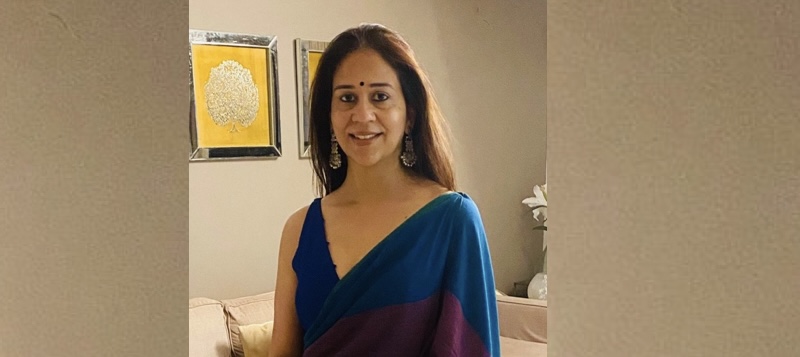
    MUMBAI: Veteran television executive Nandini Singh is burning the midnight oil these days, but not just for business. As executive consultant at CJ ENM, South Korea’s entertainment powerhouse, Singh is not only driving market expansion in India but also mastering the intricacies of the Korean language. Guided by her dedicated colleague and boss, Seb Dohyun Kim, she engages in late-night lessons in Hangul, fully immersing herself in the cultural world she now represents.

    Her new role is a dream come true. 

    “From K-drama to more K-drama!” she exclaims. “Joining CJ ENM was like stepping into my dream Korean drama company.” 

    Singh’s position at the global entertainment giant places her at the forefront of bridging the gap between two entertainment-loving nations, introducing Korean storytelling to Indian audiences on a grand scale. Beyond television, she is embracing all aspects of Korean culture—content, cosmetics, cuisine, and K-pop—bringing a new wave of Hallyu to India.

    Singh’s illustrious career spans over two decades, during which she has played a pivotal role in shaping India’s television landscape. Before joining CJ ENM in August 2024, she spent 18 years at Disney Star, where she held several leadership roles. 

    As general manager, she spearheaded a remarkable turnaround for a regional channel Star Pravah  in Maharashtra, increasing its market share from 13 per cent to 52 per cent and driving revenue growth sixfold.
    In 2018, she led the launch of Star Bharat, Disney Star’s first free-to-air channel, crafting a brand identity rooted in national pride. The channel quickly became a household name, establishing itself as India’s leading urban and rural entertainment brand within just eight months.

    learning the cultureHer tenure at Disney Star also saw her driving the growth of a portfolio of six English-language channels, overseeing sales, marketing, content acquisition, and partnerships with Hollywood studios. As Business Head of Star Movies, she launched the premium offering Star Movies Select HD in 2015, targeting India’s top-tier households and redefining Hollywood content consumption in the country.

    Earlier in her career, Singh played a crucial role in programming strategy for Star Plus, aligning sales, acquisition, marketing, and communication to relaunch the brand in 2010. Her strategic approach to slot management boosted non-original programming viewership by 40 per cent, earning her the prestigious ‘Star Achiever’ award that year.

    Her expertise extends to advertising sales, where, as Vice President of Sales, she developed long-tail sales strategies for regional channels, bringing in 40 new clients from sectors including FMCG, education, and real estate. She also pioneered ‘Star Scribble,’ an online sales training programme, which achieved a 99 per cent completion rate among participants.

    Now at CJ ENM, Singh is leveraging her extensive experience to drive market expansion and business development in India. Her deep understanding of consumer behaviour, honed through years of research and media planning at Mindshare and Disney Star, positions her perfectly to bridge the gap between Korean content and Indian audiences.

    Her transition from Indian dramas  to Hallyu appears seamless, given her track record in handling diverse entertainment markets. Singh’s success in managing English-language channels catering to India’s elite households has given her a unique ability to make foreign content relatable to Indian audiences—a skill that will prove invaluable in her new role.

    Nandini SinghThe perks of her position extend beyond just television content. “The best part is getting access to all things Korean—content, cosmetics, food, K-pop,” Singh shares, highlighting the cultural immersion that comes with the job.

    As she embarks on this exciting journey, Singh remains committed to her mission of making high-quality Korean entertainment accessible to a wider Indian audience. With late-night language lessons and a growing passion for Korean culture, she is not just working to bring K-dramas to India—she is fully embracing the world of K-content herself. 


    Her late-night Korean language sessions with Kim symbolise a broader shift in global media consumption patterns, where cultural boundaries are increasingly blurred, and Asian content continues its march onto the world stage.

  • Star, Sony or Etc, BCCI will have the last laugh

    Star, Sony or Etc, BCCI will have the last laugh

    MUMBAI: If you have the set-up, we have the story. If you have the money, we have got the ideas. In spite of all IPL bidders prepared to make the highest bid for the media rights, what are the chances that BCCI may favour the ones who have the infrastructure and wherewithal to give the game maximum and utmost exposure and BCCI the best mileage? A level playing field for IPL broadcast rights bidders is suspect.

    The India digital rights and rest of the world rights are for five IPL seasons each, between 2018 and 2022 and the Indian sub-continent television rights being offered are for 10 IPL seasons (2018 – 2027).

    It is being speculated that broadcasters may have the upper hand in the selection of the winner of IPL media rights. The Board of Control for Cricket in India (BCCI) said it has sold 18 tenders for the IPL rights. However, experts speculate that the tendering process may have been tilted in favour of television broadcasters.

    The row is connected to the format in which bids had to be submitted. The original tenders had specified that separate bids would have to be made for the three buckets into which media rights have been divided — India digital rights, television broadcast rights for the Indian subcontinent, and a third one for international media rights.

    In the new bundled versus separate format, if a single bidder were to quote higher than the sum of individual bidders globally, that bidder could walk away with all the rights. This change will significantly benefit Sony Pictures and Star India one of which may pocket all IPL rights. BCCI changed the bidding pattern and dynamics to permit consolidated bids across digital, TV, and international, the Times of India had reported.

    The probable winners hence could be Sony Pictures or Star India. These two broadcasters only seem to be keen for television broadcast rights, the biggest media rights component. This modification could make it uncertain for international or digital rights bidders to compete for those rights. Crucial interest was shown by Amazon, Twitter, and Reliance Jio, and by ESPN and Sky Sports for digital rights and international rights.

    Sources familiar with the tendering process said that BCCI reserved the right to pick either separate bids or consolidated bid. Bidders were earlier asked to give a separate value for each of the three packages. But, later, bidders were allowed to put in a single figure for all three rights, making it difficult for BCCI to compare consolidated bids against bids for individual rights pieces.

    By permitting TV broadcasters to put in one figure for all three packages, it seems to have nullified the international or digital bidders such as GroupM, Amazon, or ESPN, from being able to bid at par with the established TV broadcasters.

    This could also bring down the number of stakeholders BCCI may have to deal with. The new proposed change will also keep out deals between the BCCI and international broadcasters in key territories.

    Sports broadcast giant Star India and its competitor, Sony Pictures Network, seem to be in neck-and-neck race for television broadcast rights. The latter has been arguing with BCCI that its existing contract grants it the first right of refusal. While SPN enjoyed the telecast rights to Twenty-20 tournament since inception in 2008, Star India has been making inroads into IPL system. SPN has grown the property on television with innovations around language feeds, marketing, and monetising the IPL from a distribution and advertising stand-point. The 2016 edition of the IPL reached nearly 350 million TV viewers in India, a significant boost over 2015’s 200 million viewers thanks to the addition of rural households in the reporting of television viewership.

    Vinit Karnik, business head, ESP Properties, had told Business Standard, that, “It is no longer about the bouquet or distribution. The biggest change in the sports broadcast landscape is that the rights will now be awarded on the basis of production and packaging. When there are only two options, the organiser will go for the one that will present the property in the best way possible. Investments in sports production should increase now.”

    ALSO READ-

    Top court throws out BCCI’s review petition on Lodha recommendations

    18 prospective bidders for IPL Media Rights

  • Star, Sony or Etc, BCCI will have the last laugh

    Star, Sony or Etc, BCCI will have the last laugh

    MUMBAI: If you have the set-up, we have the story. If you have the money, we have got the ideas. In spite of all IPL bidders prepared to make the highest bid for the media rights, what are the chances that BCCI may favour the ones who have the infrastructure and wherewithal to give the game maximum and utmost exposure and BCCI the best mileage? A level playing field for IPL broadcast rights bidders is suspect.

    The India digital rights and rest of the world rights are for five IPL seasons each, between 2018 and 2022 and the Indian sub-continent television rights being offered are for 10 IPL seasons (2018 – 2027).

    It is being speculated that broadcasters may have the upper hand in the selection of the winner of IPL media rights. The Board of Control for Cricket in India (BCCI) said it has sold 18 tenders for the IPL rights. However, experts speculate that the tendering process may have been tilted in favour of television broadcasters.

    The row is connected to the format in which bids had to be submitted. The original tenders had specified that separate bids would have to be made for the three buckets into which media rights have been divided — India digital rights, television broadcast rights for the Indian subcontinent, and a third one for international media rights.

    In the new bundled versus separate format, if a single bidder were to quote higher than the sum of individual bidders globally, that bidder could walk away with all the rights. This change will significantly benefit Sony Pictures and Star India one of which may pocket all IPL rights. BCCI changed the bidding pattern and dynamics to permit consolidated bids across digital, TV, and international, the Times of India had reported.

    The probable winners hence could be Sony Pictures or Star India. These two broadcasters only seem to be keen for television broadcast rights, the biggest media rights component. This modification could make it uncertain for international or digital rights bidders to compete for those rights. Crucial interest was shown by Amazon, Twitter, and Reliance Jio, and by ESPN and Sky Sports for digital rights and international rights.

    Sources familiar with the tendering process said that BCCI reserved the right to pick either separate bids or consolidated bid. Bidders were earlier asked to give a separate value for each of the three packages. But, later, bidders were allowed to put in a single figure for all three rights, making it difficult for BCCI to compare consolidated bids against bids for individual rights pieces.

    By permitting TV broadcasters to put in one figure for all three packages, it seems to have nullified the international or digital bidders such as GroupM, Amazon, or ESPN, from being able to bid at par with the established TV broadcasters.

    This could also bring down the number of stakeholders BCCI may have to deal with. The new proposed change will also keep out deals between the BCCI and international broadcasters in key territories.

    Sports broadcast giant Star India and its competitor, Sony Pictures Network, seem to be in neck-and-neck race for television broadcast rights. The latter has been arguing with BCCI that its existing contract grants it the first right of refusal. While SPN enjoyed the telecast rights to Twenty-20 tournament since inception in 2008, Star India has been making inroads into IPL system. SPN has grown the property on television with innovations around language feeds, marketing, and monetising the IPL from a distribution and advertising stand-point. The 2016 edition of the IPL reached nearly 350 million TV viewers in India, a significant boost over 2015’s 200 million viewers thanks to the addition of rural households in the reporting of television viewership.

    Vinit Karnik, business head, ESP Properties, had told Business Standard, that, “It is no longer about the bouquet or distribution. The biggest change in the sports broadcast landscape is that the rights will now be awarded on the basis of production and packaging. When there are only two options, the organiser will go for the one that will present the property in the best way possible. Investments in sports production should increase now.”

    ALSO READ-

    Top court throws out BCCI’s review petition on Lodha recommendations

    18 prospective bidders for IPL Media Rights

  • “Ad cap should have been restricted to only pay channels”: Yogesh Radhakrishnan

    “Ad cap should have been restricted to only pay channels”: Yogesh Radhakrishnan

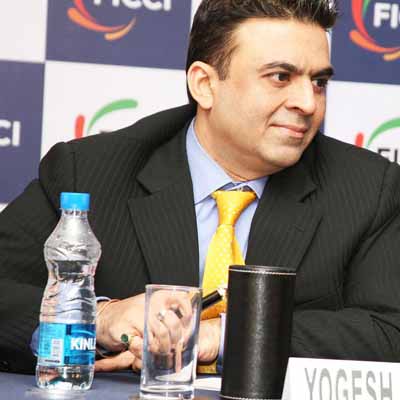
    A veteran in the cable TV industry, someone who dabbled in the sector almost three decades back, Yogesh Radhakrishnan, now the MD and CEO of Pioneer Channel Factory, has seen the sector grow from the scratch.


    Known for setting up businesses, Radhakrishnan has been the man behind building IndusInd Media and Communication Limited, ETC and ETC Punjabi, rejuvenating Zee Cinema, setting up Zee Middle East, launching the first HD movies channel with Times Television Network – Movies Now and the first HD music channel – MTunes.


    Radhakrishnan, who has seen the sector emerge from a mere video-tape business to entering the digital era, talks to Indiantelevision.com’s Seema Singh about the emergence of cable TV in India, the first satellite channel, the emerging music sector and more…


    Excerpts:


    How did you get into the cable industry? How was the sector then? Why did you move out of it?


    In an era when the only form of entertainment was Doordarshan, I was fascinated how it could capture loyal viewership despite old, dusted black and white movies they telecast. I sensed that if people were given the option of better quality of movies on their own TV sets without the hassle of VCR or cassette which was prohibitively expensive there would be a huge demand for it. Thus was born the idea of launching cable TV in India. However re distribution of home video cassettes was illegal so in the year 1988, I pioneered the launch of India’s first copyrighted cable content with my three other partners under the brand name Cable Master. This gave the entire cable TV trade a flip and a legal straw to hold on to as the Government was yet to announce licensing policy for cable TV operators.

    In the next stage of evolution from cable to satellite TV, in the year 1992, we were all geared to launch a channel but lost out the lone transponder on Asiasat 1 to Zee. Those were the days  of quotas and licence raj and we had to partner with an established business house to do business in India.


    At that time the Hinduja group was on the verge of launching IndusInd, and so we partnered with them to create a media division and that is how the IndusInd Media Communications was created as a joint venture.

    Incable emerged to be the largest consolidator at that time to bring in the economies of scale in a city like Mumbai which had more than 8000 cable operators. We were the biggest players across most of the states in the country.

    Under IndusInd, we launched India’s first cable channel In Mumbai and a 24 hour movie channel CVO.

    Recognising the strength of ground distribution that our company had, we got many offers for joint ventures from the likes of HBO, Time Warner Cable, TCI etc. A huge multi million dollars offer from Rupert Murdoch didn’t go through due to valuation differences between the Hinduja’s and News Corp.


    In 1997, the cable industry got into a turmoil and that was the day I decided to move out of cable.


    You went on to launching ETC which you later sold to Zee? What’s the story behind that? How did Movies Now and the distribution venture with BCCL happen?

    In the year 1998, the concept of a 24 hour music channel was a need I saw and that is when I launched ETC, a channel focusing on new releases, as has been established nowadays the exposure of songs on TV plays a big role in the box office success of a film. ETC became the number one Hindi music channel followed by MTV, which was then a Hinglish channel.


    ETC was the second listed company after Zee and after the successful launch of the channel, we also pioneered the daily live telecast by securing the rights to the telecast of Gurbani from the Golden temple and thus ETC Punjabi was born which went on to become the No.1 Punjabi channel and continues to be in that position till date in its other avatar PTC Punjabi.


    After music and Punjabi channels, we saw the gap for 24 hour Hindi news channel, and that is how ETC News was conceived even before Aaj Tak was launched. But Technology wasn’t in place at that time a camera cost Rs 20 lakh, which today is close to Rs 50,000. Editing equipment, bandwidth for news feeds had to be sourced from DD, all in all, it was an expensive proposition. Hence, a 24 hour news channel had to be put on hold.


    Subsequently in 2002 when we got a good offer from Subhash Chandra, we sold ETC Networks to Zee.


    And then my association with Zee began, which was also an exciting time. I was a partner with Zee Middle East. Subsequently, I went on to build a strong company in Zee Middle East, which till date is one of the strongest markets for ZEEL.


    In 2008, I sold back my equity to Zee and wanted to return back to India where the action really was. Former Times Television Network CEO English channels Ajay Trigunayat, was in Dubai then. We got together with our project to launch India’s first ever English Movie channel in HD.


    I had discussions with BCCL MD Vineet Jain and a JV was formed in 2010 to launch four channels and then we further got into launching a distribution venture together called Prime Connect.


    Movies Now was one of most successful TV channel launch. It went on to becoming the No. 1 channel in the first week of its launch. Finally, in 2012, I exited the company by selling my equity back to BCCL.


    Then you moved on to setting up Pioneer Channel Factory? How is MTunes doing?
     

    Following the trend of people wanting to go to multiplexes for the pleasure of enjoying quality production of Hindi cinema and their desire to watch songs in its full glory, I set out to launch MTunes, india’s first Bollywood music channel in HD on the premise of Bollywood music like never seen before. Our songs were carefully selected to ensure they lived up to the channel premise.
     

    Acknowledgement from advertisers came as we got many campaigns exclusively on our channel due to its HD premise. Today, MTunes delivers far greater HD audiences than English movie, entertainment or even sports for that matter.


    Our second music channel Music Express resonates well with the industry, we package music with Glamour and Gupshup. Bhakti Sagar is our foray into the spiritual space.


    How will digitisation help the music channel industry?

    In analogue what was important was opportunity to see (OTS). In digital, all the channels are blocked in one category. The advantage for us is that we are in HD and so we got the advantage of the four million eyeballs. Our reach is good in HD and we are also available on SD. So for our advertisers it is a win win situation.


    How big is the music channel industry currently?


    If you take 14 music channels on an average, advertising and promo put together, we would be around Rs 700-Rs 900 crore.


    Unless and until you can differentiate yourself, you will not be able to grow majorly. If you see the broadcast business, be it GEC, sports or music, it’s very unfortunate that you are operating in the world’s cheapest advertising market (CPT) and cheapest pay TV market and this growth is slow.


    What is your take on music channels turning into youth general entertainment channel? Are you looking at foraying in the youth space?
     

    No way. It is a lovely genre to be in and is growing. Youth programming will drive this market to a large extent.


    But I don’t look at great economics that really works in any GEC space, unless and until there is good subscription that one is getting. If you strip off the subscription from all these channels and make them play pure advertising driven GECs I think each of them will lose money.


    Where do you see the music channel industry heading, considering music is easily available, you think there is still a market for music channels?

    Linear television will always have its market. Music will continue to be in a market where there is a television population which is very huge. There are a lot of people who watch content online and for them we are present online. There is still a large market and it will continue to be that way.


    Television is larger than life, especially music channels like MTunes which is very current and new and which plays new music and promos and that is what people look forward to rather than online where you need to make searches for content, while here content just keeps flowing.


    Why did music and news channels not follow 10+2 ad cap?


    US is such a free market and FCC is very strict in terms of regulation, but they do not have an advertising cap. Why should the government intervene on how much of advertising air time one should carry. For a moment Pay channels could be directed but definitely not the FTA channels. And that’s what we argued in the court. In short people will not watch your channel, if you put too much of advertising. So why is it that the government wants to intervene with channels and that too for free to air channels. We are not charging customers any money, its free.


    If we put in excess advertising, anyways our ratings will fall as no one would watch the channel, and that would affect our business.


    Ad cap should have been restricted to only pay channels, as India is the only country, where the pay channels are getting paid from both subscription and advertising.

    Government needs to create level playing field. Currently as independent networks, it is a difficult situation.


    How do you think music channels can start generating more revenue?
     

    Carriage is the biggest drainer. Network channels have the advantage of either not paying carriage or less carriage. Advertising is stuck in the low rate game. Cartelization is a good experiment that we all can get into in order to get decent rates. But, with the plethora of channels available, advertisers have a lot of options.

    It’s not just the music channels, but with new GEC launches, competition is getting tough even in the GEC space.
     

  • Zeel shares see demand following RBI approval for FII investment

    Zeel shares see demand following RBI approval for FII investment

    MUMBAI: Interest in the Zee Entertainment Enterprises Limited (Zeel) appears to be rising. The stock witnessed a 52 week high of Rs 301.90 on 21 May 2014 and has been trading in the Rs 270 plus range today, rising Rs 7 plus in today’s trading.


    Not only did the company announce healthy results and a 200 per cent dividend on 21 May 2014, it has also got approval from the Reserve Bank of India (RBI)  for Foreign Institutional Investors (FIIs) to invest up to 100 per cent in the company under the portfolio investment scheme on 2 June 2014. The investment limit has been revised from the earlier 49 per cent ceiling. The announcement was made by Zeel through a statement issued to the BSE on yesterday. 


    “The said communication is based on the proposal approved by the Board of Directors of the Company on 22 May 2013 and by the shareholders by passing a special resolution at the Annual General Meeting held on 25 July 2013,” stated the release on BSE.


    The Reserve Bank, through a press statement said, “The Company has passed resolutions at its Board of Directors’ level and a special resolution by the shareholders, agreeing for enhancing the limit for the purchase of its equity shares and convertible debentures by FIIs. The purchases could be made through primary market and through stock exchanges and would be subject to Regulation 5(2) of FEMA Notification No.20/2000 RB dated 3 May 2000 (as amended from time to time) and other terms and conditions stipulated by the Reserve Bank.”


    The approval has been given subject to the condition that “the onus of compliance with FDI policy and FEMA regulations including downstream investment would continue to remain on the Indian company, Zeel,” said the RBI in its statement.


    The Reserve Bank has notified this under FEMA 1999.


    FIIs so far held 48 per cent stake in the company while the promoter and the promoter group’s shareholding was 43 per cent as of March 2013.


    Zee Entertainment’s channel portfolio comprises: Zee TV, Zee Cinema, Zee Music, Zee Premiere, ETC, ETC Punjabi, TEN Sports, Zee Studio, Zee Classic and Zee Sports.


  • ETC engages audience to spread anti-piracy measures through short films

    ETC engages audience to spread anti-piracy measures through short films

    MUMBAI: ETC the most credible Bollywood trade channel in association with India’s leading creative crowd sourcing company Talenthouse India, have jointly undertaken the initiative to say ‘Thank You’ along with the Bollywood industry to loyal cinema goers for choosing theatres over other pirated medium to bring about awareness and thereby an end to piracy.


    The initiative, ‘Bollywood Thanks You’ has developed from a simple thought to appreciate people who consume films the way they are supposed to be – in theaters. The objective of the initiative was to represent the entertainment industry for a cause in a country like India where the film and TV industry lose money and livelihood due to piracy. ETC extended this idea to the audience to directly involve them in the initiative by inviting budding filmmakers who are all a part of the entertainment industry to bring forth a strong message.


    Talenthouse India, hosted this exciting opportunity on their platform www.talenthouse.co.in. The participants were required to create an ad film of maximum 30 seconds duration based on the theme ‘anti-piracy’. The crowd sourcing route to this campaign not only resulted in 50 creative thoughts on the theme from across India, but also generated engagement and a challenge to young filmmakers to convey the message in 30 seconds.


    The entries were monitored by the ETC team. 10 winners have been selected by the channel for a career defining opportunities. The films created by these young budding filmmakers will now be showcased at leading multiplexes and aired on ETC for the next one year.


    Zee Entertainment’s Anurag Bedi, said, “We, at ETC, represent the entertainment industry where the audience is the stakeholder and if they stop supporting the industry then the industry can’t make more products for them. Through ‘Bollywood Thanks You’ initiative, we hope to educate and encourage audience to watch films in theaters. Talenthouse India who had the access to the right kind of talent to generate the films gave us an opportunity to be relevant to the younger audience and enabled us to connect to and inspire young film professionals to bring out a strong message through the crowd sourcing activity.”


    From a marketing point of view, ETC has taken anti-piracy to a whole new level. Focusing on a positive and educative route, the aim for them is to develop user generated content that resonate with their brand identity and the initiative undertaken to shape future industry leaders.


    The winning films created by film students and enthusiast would be showcased soon.


    To view the films Log on to http://www.talenthouse.com/zee-2013

  • Divaakar returns to TV9 as ad sales VP

    Divaakar returns to TV9 as ad sales VP

    MUMBAI: S Divaakar is set to start his second stint with the Associated Broadcasting Company Ltd. (ABCL), which operates the TV9 news network. He will serve in the capacity of vice-president ad sales national and will report to ABCL director Clifford Periera.

    Divaakar will be based in Bangalore and will handle ad sales nationally.

    Pereira said, “Divaakar’s appointment is a part of our expansion plans. We are looking at aggressive growth in the near future. This includes new appointemtns and launch of new channels which will be revealed in due course of time.”

    Divaakar had previously worked with ABCL as AGM for four and a half years before joining Public TV nine months back where he was vice-president, sales and marketing.

    He has nearly 19 years of experience in the television industry. He began his career as a sales executive in Udaya TV when the channel was launched in 1994 and has been associated with channels like Gemini TV, Jaya TV, ETC, Zee Network, Sahara One and Filmy since then.

  • Viewers looking for FM feel in visual space?

    The viewer‘s verdict for music channels for the year 2007 is out. The long established players like MTV and Channel [V] are losing on the front of relative shares while new kid on the block 9XM has shown an unprecedented growth from the second month of its launch.

    Indiantelevision.com‘s analysis of music channels using Tam data (HSM, CS 15 – 24 years, all day parts) during the one-year period beginning January 2007 reveals that 9XM is way ahead than MTV and Channel [V].

    Launched in October 2007, 9XM, with its tagline Haq Se, had secured a relative share of 43 per cent by December. In comparison, MTV stood at 20 per cent while Channel [V] had 11 per cent.

    Music Channel‘s Relative Shares
    Channel Jan Feb Mar Apr May Jun Jul Aug Sep Oct Nov Dec
    9XM 0 0 0 0 0 0 0 0 0 6 34 43
    MTV 32 29 31 32 29 30 31 31 32 29 21 20
    Channel V 15 14 13 11 11 14 13 11 13 16 11 11
    Music India 12 15 12 14 19 20 18 17 16 17 11 7
    B4U Music 12 11 11 11 9 10 10 13 13 11 6 5
    Zee Music 8 11 11 11 12 7 10 12 9 7 5 4
    ETC 15 12 12 9 9 10 8 8 7 6 4 4
    YO Music 3 3 6 7 6 5 5 4 4 4 3 3
    Enterr10 4 4 4 4 3 2 4 3 5 5 4 3
    Lemon 0 0 1 1 2 2 2 1 1 1 0 0
    Source: TAM, TG 15 – 24, HSM, Jan-Dec 2007, All Day Part

    From January to October 2007, MTV was on top of the music channel heap with an average relative share of 30 per cent while Music India and Channel [V] were tossing for second and third position with 15.8 per cent and 12.8 per cent respectively.

    The whole scenario changed dramatically with the launch of 9XM in October. By the second month of launch, 9XM had 34 per cent whereas MTV was reduced to 21 per cent and Music India and Channel [V] had 11 per cent each.

    In December, it was thumbs down for other channels like Zee Music (4 per cent), B4U music (5 per cent), ETC (4 per cent), Enter10 (3 per cent) and Yo Music (3 per cent). Wooden spooner Lemon‘s share is so insignificant that it has not even registered on the GRP scale.

    On the new market scene, INX Media‘s music entertainment channel head Vikas Varma says, “I think the qualities of youth are what our channel targets, not necessarily as the demographic youth. That is why we are getting the unprecedented ratings.”

    It is to be noted that 9XM has no VJ‘s, only some animated characters. The USP of the channel is current Bollywood songs. However, the verdict among the media pundits is that 9XM is playing only songs; it is more like an FM station in the visual space.

    The ratings have not got in much by way of ads as yet though so how is it going to generate revenue? Avers INX Media revenue management, advertising sales and new media group director Probal Gaanguly, “We are offering ‘Club INX‘ partnerships to sponsors. Very soon we will officially announce the tie-ups. An exclusive platform will be provided to them.”

    MTV India vice president ad sales and marketing Aditya Swamy has a different story to tell: “Our ad sales and revenue has gone up. We have established the youth based music channel in India. Roadies, Konees (animated characters) etc are our initiatives; it is not fair to compare it with a channel like 9XM. We are a youth brand.”


    Channel [V] head honcho Amar K Deb sings a similar tune. “Channel [V] has won awards for many initiatives we have taken. We have our hands full and our competition is not with 9XM. It is anyways too early to comment on the future,” avers Deb.

    Music India that started life without ad breaks, gave in to the lure of commercials in 2007. 9XM appears to be going the same route, with a few ads visible on the channel intermittently since the beginning of the year.

    If indeed all that the Indian viewer is interested in is uninterrupted songs sans ads, it will be interesting to watch how the year unfolds for 2008.

  • Zee Muzic, ETC launch Nayee Padosan 2 Face Hunt

    Zee Muzic, ETC launch Nayee Padosan 2 Face Hunt

    MUMBAI: The sequel to the movie Nayee Padosan is on the look out for a fresh new face. Zee Muzic and ETC announced the launch of their Nayee Padosan 2 Face Hunt.

    The two music channels ran a joint contest offering its viewers an opportunity to share screen space with the original starcast. The talent hunt which saw hundreds of entries will be short listed through auditions.

    The 12 shortlisted candidates will be groomed for the final show down. The talent hunt will culminate in a grand finale in Mumbai on 25 March.
    Zee Music and ETC are the media partners for the movie and have been associated with the original Nayee Padosan as well.

    Speaking on this unique initiative, Zee Muzic Business Head Irshwin Balwani said, “For the first time, Zee Muzic and ETC have come together for this unique hunt. Through the combined efforts with the producers, we hope to find a new heroine who will not only star in this film, but will also be a talent to reckon with in film industry”.

    The film is choreographer turned film maker B.H. Tharun Kumar’s second attempt at a comedy. While the original star cast of the film – consisting of Vikas Kalantri, Aslam Khan, Rahul Bhatt stay the same the film has been on a look out for a second heroine.

  • Watch the exclusive EXPLOSION of DJs Power On ETC

    Watch the exclusive EXPLOSION of DJs Power On ETC

    Mumbai February 23, 2006: ETC, channel that takes pride in taking films, artistes and musicians into the homes of its viewers, is now bringing a unique blend of musicians and trend of musical remixing in its show Chit Chaat called the DJ Power.


    Dj Logical Lloyd, Dj Sunil S. and Dj Kiran have come together on ETC to recreate the magic of Power Play Version 1.0 by Dj Aqeel. They will all unleash the power of remixed music exclusively for the viewers of ETC on Wednesday March 1st , 2006 at 8.00 PM


    Chit Chaat is a celebrity interview show, wherein every celebrities from show biz appears to share themselves with ETC viewers. Each episode the anchor shoots a few rapid questions to the celebrity and thus reveals interesting and unknown facets of the celebrity’s life. The program is intercepted with songs of the guest’s choice.


    ‘Power Play Version 1.0’ is the remixed version arranged by Dj Amit B, Dj Jatin Sharma, Dj Sunil S., Dj Kiran and Dj Logical Lloyd who were brought together by Dj Aqeel to create this dance album. ETC star anchor Suresh Menon sakes them question on selection of the song the remix techniques used, what made them take on the job of remix, what excites them in music and what is their take on music today. It is an interesting show interspersed with extempore singing by Dj Logical Lloyd, Dj Sunil S. and Dj Kiran.


    ETC is a music based entertainment channel with music dominating more than 98% of the programming content. In all India markets, ETC enjoys the largest reach amongst all the music channels. ETC is watched by more then 35 million households.