Tag: Essel Group

  • Cornershop Entertainment Company appoints Parag Kamani as new Business Head

    Cornershop Entertainment Company appoints Parag Kamani as new Business Head

    MUMBAI: Parag Kamani has joined Cornershop Entertainment – An Essel Group Enterprise – as Business Head Wireless. Parag will be reporting to director Cornershop, Chirag Shah and will be handling the entire wireless entertainment and enterprise business, including the management of Short Code 7575 among various new initiatives that are in the pipeline, said an official release.

    “7575” was the first to launch Voting and Polling for Reality television and mobile enables all Zee Network Channels and is a leading provider of wireless entertainment, its applications and services.

    Parag’s vast experience in the entertainment space – initially in the record industry and, thereafter, in the home video business – has seen him execute various roles at Magnasound, BMG Crescendo, Virgin Records [now EMI India], Saregama India [formerly, popularly known as HMV], and the Dubai-based Vanilla Group [now known as Viva Entertainment].

    Commenting on Parag’s appointment, director Cornershop, Chirag Shah says, “We are really happy to have Parag on board, his vast experience in the music and home video industry will shed a fresh perspective to our existing business and add value to new initiatives in the wireless space.”

    Parag says, “Having worked for the music industry for 14 years, followed by four years in the home video business, I have always pursued a career providing me new challenges. For the immediate future and, without compromising on my passion for entertainment, I have found it in wireless entertainment and the enterprise business.” Parag is a music aficionado and used to write for various publications on aspects of the entertainment industry.

    Cornershop is looking forward to having Parag on board and scaling new heights. The Cornershop team believes there will be a fresh strategic perspective for all with the synergies of Cornershop’s inherent strengths of being backed by the reputed and well-established Essel Group and Parag’s past experience obtained in the entertainment business, ensuring that it is only a matter of time before Cornershop takes on the wireless entertainment world.

  • Essel targets January 2007 launch of digital venture; plans web portal

    Essel targets January 2007 launch of digital venture; plans web portal

    MUMBAI: Subhash Chandra-promoted Essel Group will unveil a set of digital initiatives under the banner of its newly-formed digital arm Digital Media Convergence Ltd (DMCL) by January 2007, including a web portal.

    The plan is to explore new media platforms such as mobile and IPTV and the online space in a full-fledged manner to distribute various formats of digitised content.

    “We will be unveiling our initiatives in three months time. We are going to create various in-house formats and shows. Apart from this, we are speaking to various foreign players as well to acquire internationally acclaimed formats. We are sending a special programming delegation for the upcoming Mipcom session. Though the stress is on delivering fresh content, we are keen on the Zee digital library as well,” says DMCL CEO Abhijeet Saxena.

    DMCL will concentrate on acquiring, digitising and making available content on various delivery platforms. “Apart from our library products, we are keenly looking at providing our services to all the content owners who want to distribute their content in these platforms. The company will also be exploring the interactivity segment to tap the potential this space offers to the maximum,” Saxena adds.

    To enrich its platforms, DMCL will be creating special interest content, apart from making use of the Zee Network library on a selective basis. DMCL has already initiated talks with various Indian as well as international companies to acquire programming formats and various genres of content.

    According to Saxena, the company is thinking beyond mobisodes and other existing mobile value added services (VAS). He says the plan is to launch multiple formats of shows, targeting various segments of the consumer.

    “We have thought about the viability of the services from a consumer point of view and the practicalities of making it a popular medium. Hence, we will offer various price rates depending on the duration and uniqueness of the formats. For example, we are working on multiple formats for movies, not just abridged versions. To market these multiple segments, we have classified the services into premium and mass oriented,” Saxena offers.

    DMCL expects to contribute to the mobile VAS in a significant manner with the initiatives. “The existing mobile VAS market size comes about $500 million and this space is expected to reach $10 billion by 2010. DMCL expects to be a major contributor to the expansion,” says Saxena.

    DMCL has recently roped in Intel and IBM for its back-end technology support. The company has already brought most of the telecom operators on board for the initiative.

  • Play TV to launch ‘Quizmaster’ on 9 September

    Play TV to launch ‘Quizmaster’ on 9 September

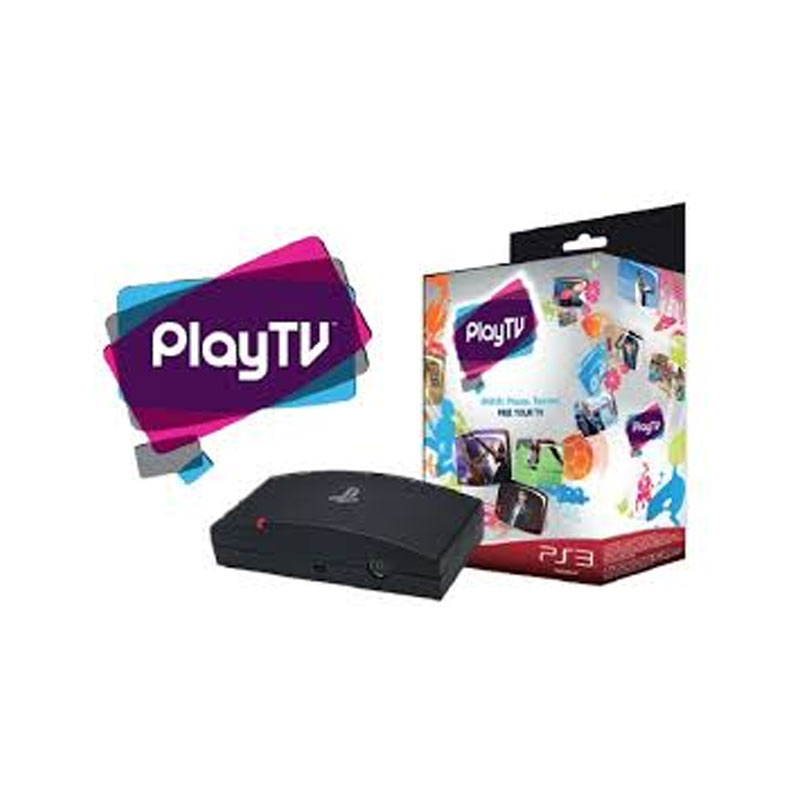
    MUMBAI: Starting 9 September, the interactive and gaming channel PlayTV will launch a show named Quizmaster. The one hour show, will air at 8 pm.

    The show Quizmaster, according to an official release, it will no more be a theoretical, intellectual event, rather be a fun filled game of luck and intelligence that involves the entire family at the comfort of one’s home.

    Participating in the show is stated to be simple and if the six questions are correctly answered, one can win the jackpot amount of Rs 1 lakh. A participant will have to answer five questions correctly to be eligible for the sixth question for jackpot.

    After answering the first three questions correctly, a participant wins Rs 3,000. Even if he answers the fourth question incorrectly, he can take home Rs 3,000, informs an official release.

    On answering the fourth question appropriately, the participant wins Rs 5,000 and if he answers the fifth question correctly, he wins Rs 10,000. However if he answers the sixth jackpot question incorrectly, he will lose whatever he won on the show, informs the release.

    The show introduces a unique concept of using a Randomizer to select the live caller. That is not all, the show also has a play-along round where in if the caller is unable to answer the question the same is open for viewers to answer and win Rs.1000 at the comfort of their living room.

    Speaking on the launch of Quizmaster, Play TV MD Amit Goenka said, “PlayTV has a loyal set of young viewers who enjoy this new genre of entertainment where interactivity is an integral part of television viewing. Quizmaster is a show that will appeal to viewers across age groups. It is a family activity that everyone can sit together, watch and participate in.”

    Play TV is the first 24 hours interactive and gaming channel, managed by Dakshin Media Solutions, which is an enterprise of the Subhash Chandra-promoted Essel Group.

  • Essel Group picks up stake in UNI

    Essel Group picks up stake in UNI

    NEW DELHI: The Subhash Chandra-promoted Essel Group, which is the co-owner of DNA newspaper along with the Dainik Bhaskar group, has joined the United News of India (UNI) board as a shareholder.

    News agency UNI has shareholding from about nine big media organisations who also form the board of the news organisation formed in 1961.

    Confirming the development, Essel Group senior vice-president Ashish Kaul said, “We are on the board of UNI now as a shareholder, but the quantum of the holding cannot be disclosed at this point of time.”

    Kaul also clarified that Zee Telefilms, also an Essel Group enterprise, has nothing to do with the UNI deal. The other shareholders and board members of UNI include media outfits like HT Media, Times of India group, Ananda Bazar Patrika and The Hindu.

    Chandra has used his investment vehicle, Mediawest, to conclude the UNI agreement.

    Launched in March 1961, UNI has grown into one of the largest news agencies in Asia. today it serves more than 1000 subscribers in more than 100 locations in India and abroad. They include newspapers, radio and television networks, web sites , government offices and private and public sector corporations.

    The agencies communication network stretches over 90,000 kms in India and the Gulf states with bureaux in all major cities and towns of India.

    UNI has collaboration agreements with several foreign news agencies, including Reuters and DPA , whose stories are distributed to media organisations in India.

    Apart from that, UNI has news exchange agreements with Xinhua of China, UNB of Bangladesh, Gulf News Agency of Bahrain, WAM of the United Arab Emirates, KUNA of Kuwait News Agency, ONA of Oman and QNA of Qatar.

  • ETC share buyback programme: SEBI exempts Zee from making open offer

    ETC share buyback programme: SEBI exempts Zee from making open offer

    MUMBAI: The Securities and Exchange Board of India (SEBI) has paved the way for repurchase of shares by ETC Networks Ltd. The market regulator has granted exemption to Zee Telefilms Ltd. (ZTL) and Asian Satellite Broadcast Pvt. Ltd. from making an open offer regarding increase in their voting rights from 54.42 per cent to 58.73 per cent.

    “Pursuant to the said increase in voting rights, there would not be any change in control of the target company (ETC Networks). The application seeking exemption was forwarded by SEBI to the takeover panel. The panel recommended for exemption to the acquirers from making an open offer,” SEBI says in a release.

    ZTL and Asian Satellite Broadcast (referred to as ‘the acquirers’) are the promoters and collectively hold 54.42 per cent in ETC.

    “The repurchase of shares by ETC is aimed at increasing shareholder value. We plan to exercise the buyback programme after getting the necessary approvals,” says Essel Group CEO of corporate strategy and finance Rajiv Garg.

    ZTL and Asian Satellite Broadcast (holding company of the Group) had, on 13 June 2006, filed an application with the SEBI. “ETC Networks has announced to buy back up to 10 per cent of its total paid up equity capital and free reserves at a price not exceeding Rs 62 per share in compliance with the provisions of sections 77A and 77AA of the Companies Act 1956 and provisions of SEBI (Buy-Back of Securities) Regulations, 1998. In view of the said buy back, the holding of the acquirers would increase from 54.42 per cent to 58.73 per cent of the total paid up capital of the target company. As the shareholding of the acquirers would increase beyond 55 per cent of the issued capital of the target company, the acquirers have sought exemption from the provisions of Chapter III of the Takeover Regulations,” the letter said.

    The aim of the share repurchase programme is reduce the paid up share capital and improve earnings per share (EPS). This will be beneficial to the shareholders in the form of higher dividend pay out and increased EPS.

  • Zee Telefilms mulls an entry into China

    Zee Telefilms mulls an entry into China

    MUMBAI: Foreign media companies seem to have hit a wall when it comes to China. Star Group, for example, continues to bleed in that market despite pumping in big money for years. This, however, has not stopped global firms from eyeing a slice of the cake that a 1.3 billion population promises.

    Subhash Chandra is the latest media baron willing to throw his hat in the ring. Zee Telefilms Ltd. (ZTL) is planning to enter China, the toughest market to crack with its tight controls on foreign media.

    “We will be entering that market. We have not yet applied for the landing rights. It will take time and we expect it to happen sometime towards the end of this fiscal,” says Essel Group chief executive officer of corporate strategy Rajiv Garg.

    Though Zee plans to have a presence in China in the broadcasting space, it has not yet finalised on what content and channel it should set up to lure viewers. ZTL chairman Chandra recently said Zee would launch a dubbed movie channel in Russia.

    ZTL also plans to launch in Afghanistan, Cambodia and Indonesia to expand its international operations which account for almost one-fourth of the company’s revenues. Running businesses which have matured in the UK and US, Zee’s strategy is to launch dedicated channels in certain markets which it has identified. The company has stitched a deal with Malaysia’s multi-channel pay TV operator Astro to create a channel with Hindi content drawn from Zee TV, Zee Cinema, Zee Music and Trendz for the Indonesian, Malaysian and Brunei audiences. For tapping youth audiences in the Arab region, Zee also has launched Zee Arabiya, a music and lifestyle channel.

    Global media companies like News Corp, Time Warner and Viacom see China as a fertile revenue market in the long term, though it is currently spoilt by heavy-handed regulation on foreign media.

  • Essel Group institutes excellence awards

    Essel Group institutes excellence awards

    MUMBAI: The Essel Group and its flagship, Zee Network, have unveiled an ambitious Awards programme aimed at recognising institutions or individuals who have made a significant contribution in public or private life. The Awards aim at celebrating the contribution of unsung heroes in various fields in order to encourage them to scale greater heights.

    Announcing the launch of the Awards, Essel Group and Zee Network Chairman, Mr Subhash Chandra said: “Ours is a Group fired by the spirit of nationalism and patriotism. Through these Awards, we hope to inspire the youth and instil in them a pride for India’s rich heritage. The Awards represent the Group’s strong resolve to empower the people and thereby build a vibrant and resurgent India.”

    The Awards will be instituted under different categories every month, beginning January 2007. The categories are: Legislator (January), Sports (February), Civil Service (March), NGO /Social Worker (April), Police /fire force (May), Legal (June), Minister (July), Young innovator /entrepreneur (August), Medical service (September), Art, Culture and Literature (October), Media (November), Gram Panchayat / Zilla Member (December).

    The Award series will first be launched in Karnataka and then replicated in other States.

    “These Awards will ignite young minds, awaken dormant senses and motivate the people to strive for a brighter future,” Mr M. Gautham Machaiah, Vice-President, Corporate and Public Affairs added.

    This is a truly a people’s Award, where the general public plays a key role in selecting the winner. For each category, nominations will be invited from the public and prominent citizens of the State. The nominations will be sifted by a screening committee and then put before a jury of eminent citizens, which will shortlist five finalists. A capsule on the five finalists will be produced and telecast on Zee Network. The public will then be invited to vote for best in each category.


    “It is significant that the Awards are being launched in Karnataka to coincide with the Suvarna Karnataka celebrations. Zee Kannada is proud to be associated with these Awards,” Head of Zee South Initiative Mr R. Ajay Kumar said.


    In the case of Karnataka’s Best Legislator, the parameters for the selection include: exemplary public service, commitment to issues, clean image and integrity, social and economic uplift of the constituency and constituents, accessibility to the people, and performance in the State legislature. The last date for receiving nominations is December 15, 2006.


    The Jury for the Best Legislator’s Award comprises Justice M.F. Saldhana, former Judge, Karnataka High Court (Chairman); Mr H.S. Balram, Editor, The Times of India, Bangalore; Dr M.S. Thimmappa, former Bangalore University Vice-chancellor; Mr M.C. Nanaiah, former Minister for Law and Parliamentary Affairs; and Ms Teresa Bhattacharya, former Chief Secretary, Government of Karnataka.


    The Essel Group stands out as a shining example of a socially conscious corporate citizen. Education is among the causes that the Group is most passionate about. The Ekal Vidayalaya Foundation of India, headed by Mr Chandra provides free education to over five lakh tribal children every year in remote parts of the country.


    The Essel Group with interests spanning across news, entertainment, packaging, infrastructure and communication, is a pioneer in virtually every business that it ventures into. The Group has always responded to opportunities created by changes in technology and captured the first-mover advantage – be it satellite television (Zee TV), amusement parks (Essel World) or cable distribution (Siticable).

  • Dishtv selects Scopus Video Networks to increase transponder capacity

    Dishtv selects Scopus Video Networks to increase transponder capacity

    MUMBAI: Subhash Chandra’s Dishtv has expressed serious intent to increase its channel offerings on the direct-to-home (DTH) platform. The company has selected Scopus Video Networks, a provider of digital video networking products, to support this expansion.

    The technology will help Dishtv pack up 28 channels per transponder, eight more than its current capacity. “We will be implementing this technology within a month. It is a better compression system without sacrificing the quality,” Essel Group director technology Amitabh Kumar tells Indiantelevision.com.

    Dishtv has seven transponders on NSS-6, offering a total of 130 channels. “We are building up the capability to offer more channels on our DTH platform,” Kumar says.

    Dishtv will use Scopus products to enhance its transponders’ utilization and expand its already fast growing DTH market share throughout the Indian subcontinent. The decision to tie up with Scopus comes ahead of Tata Sky’s DTH launch expected in July.

    The deal brings to Dishtv’s headend Scopus’ full line of products including E-1200 encoders, IRD-2900 decoders, IVG-7100 intelligent video gateway (IVG) platforms and network management system software. Scopus is a Nasdaq-listed company.

    Scopus’ IVG platform will provide advanced video processing capabilities including joint transrating, grooming and bit rate shaping. 

    India is beginning its transition to digital TV in which the number of digital subscribers is expected to grow ten-fold within the next five years.

    Says Kumar commented, “We operate in a complex web of multiple satellites and multiple carriers and the unique capabilities offered by Scopus’ product line such as the Intelligent Video Gateway will help us optimize operations while minimizing cost and enhancing reliability in our operations. Scopus has also helped Dish TV achieve very high satellite utilization and bring down costs on a per channel basis.”

    Scopus VP sales Eitan Koter stated, “We are honoured and delighted to continue doing business with the Essel Group, India’s leading media conglomerate. This achievement is a testimony to our on-going commitment to our customers’ success. Scopus is the only vendor that offers a full product portfolio under one roof, enabling us to provide simple solutions to complex requirements such as the ones posed by Dishtv.”

  • Essel Group to expand media education venture

    Essel Group to expand media education venture

    MUMBAI: Subhash Chandra-promoted Essel Group is planning to expand its media education venture, Zee Institute of Media Arts (ZIMA). The company will invest about Rs 350 million in the venture over a period of three years.

    “Zima was launched as a high level pilot project and we are planning a major expansion of the project now. We will keep adding new courses to the curriculum apart from bolstering the facilities. The whole process will take at least three years to complete,” states Zee Interactive Learning Systems Ltd (ZILS) CEO Arun Khetan.

    According to Khetan, Zima will be trying to position itself as a complete media institute through the new initiatives. “We are looking to introduces courses in the areas of radio, mass communication and various other new media segments evolving. We will be doing training programmes on Intellectual Property Rights (IPR) as well,” he says.

    Essel Group launched Zima in the banner of ZILS in November 2004, on an initial investment of Rs 30 million. The institute presently offers one year diploma, six months advanced certificate and six months certificate courses in the streams of direction, acting, production, editing, cinematography, writing, sound and animation-visual effects. The fees charged by Zima range from Rs 60,000 to Rs 150,000 depending on the course.

  • ‘Consolidation in news business is an inevitability’ : Laxmi Goel – Zee News Ltd director

    ‘Consolidation in news business is an inevitability’ : Laxmi Goel – Zee News Ltd director

    Laxmi N Goel, director Zee News Ltd and the second of the three brothers of Essel Group chairman Subhash Chandra, is not given to hype and hoopla.

    Even when he has to announce his organisation’s achievements, true to his style, he’s most likely to hold the event in modest surroundings. A case in point being the launch of the book Pehal, which he authored, done in Federation of Indian Chambers of Commerce and Industry auditorium in Delhi instead of a five star hotel. As he says, every paise or penny saved is that much earned, which can be reinvested into the company.

    He doesn’t have any formal training in business management or television programming, but has still managed to oversee the functioning of Zee News channel quite successfully over the years after it was decided to do away with professional CEOs at the helm to manage news.

    These days Laxmi Goel spends more time discussing annual budgets and increments of his colleagues than on the exercising cycle. After all, the restructuring of Zee Telefilms has landed him added responsibilities of all the Zee family regional channels, which have been hived off into Zee News Ltd to conform to government guidelines on foreign investment in television news entities. “I wish I could find some more time for my daily walks,” Goel rues.

    In an interview with Indiantelevision.com, held at the Zee News’ headquarters in Noida on the outskirts of Delhi, Goel discusses some aspects of the restructured Zee News.

    Excerpts:

    Why was the de-merger of Zee News necessary?
    When the organization becomes big, this type of de-merger helps in better control of various aspects of business. However, for me, things still remain the same. We have to do well and show good results to our shareholders. That was the theme earlier. It’s still so.

    Have you settled down in your new role and what would be the agenda now?
    It’s still early to spell out agendas as it’d take five to six months for things to settle down completely.

    But, as I said earlier, the basic process remains by and large the same. We have started a Bengali news channel (24 Ghanta or 24 Hours) and we would evaluate our expansion options as the market pans out.

    The Bengali channel seems to be a case of the Right shaking hands with the Left. Zee’s promoter family are said to be Bharatiya Janata Party and parent RSS sympathizers, while Bengali channel partner Akaash Bangla owners are known backers of the Left parties. Comment.
    I don’t understand what political ideologies, if at all there is one, has to do with business decisions? 24 Ghanta was a business decision where Zee News thought Akaash Bangla to be the right business partner. Moreover, as Akaash Bangla is an existing TV channel, its owners had the advantage of understanding the TV business.

    What would you like to do with the organization now that you have more properties to look after, apart from Zee News and Zee Business?
    The functioning of the organization remains more or less the same. It has just taken a different avatar. What is remarkably different is that there would not be any consolidated profit and loss account for Zee News any more. You journalists can say that we would not be able to hide behind Zee Telefilms with our financial performance any more. Now, that’s a challenge too. We would have to continue showing good results and keep our shareholders happy by nurturing the bottom-line.

    Apart from that, we are now free to take independent decisions on expansion, which will always be guided by market forces. At the moment, we are not actively considering any addition to the present crop of channels, but I cannot predict the future. If a sudden need arises to have a product in a certain segment of television business or geographical area, we can consider it then.

    Do you feel that so many news channels, including those from the Zee News stable, will survive in the long term?
    India is a growing market where increasingly people are formally getting educated. A combination of this has fuelled consumption of news. The trick lies in delivering news quickly and in a manner that is consumer friendly.

    But such mushrooming of news channels all over is unlikely to be supported by the market in the long term. The process of consolidation has started.

    We would have to continue showing good results and keep our shareholders happy by nurturing the bottom-line

    Will the economics of running news channels force consolidation?
    Partly yes. Let’s take, for example, a news channel that aims to have a national presence. On an average capital expenditure on national news channel can range between Rs 800 to Rs 900 million. At times it can go beyond that too. Then the running expense per month for a national news channel comes to approximately Rs 80 million, which would include expenditure on news gathering and marketing activities. Now these figures are not small, though not huge either.

    As different news channels have different business models, over the years mounting expenses will force consolidation. This can happen in the form of mergers and acquisitions or can result in cutting down cost on news gathering and infrastructure by evolving a model where some sharing is done by various players in the industry.

    Carriage fee that most TV channels pay to cable operators, coupled with growing employee wage bill in news organizations, also add to the cost. To outsiders, these costs might not look very important, but let me assure you that carriage fee and increasing pay packets of TV journalists do weigh down a TV news organization.

    Since the Indian news market is still very active, the exact shape of consolidation is difficult to predict accurately. But consolidation is an inevitability.

    How is Zee News Ltd addressing the problems of carriage fee and bloating wage bills?
    We are not as aggressive as other news channels in holding back people who want to leave for another channel for a better pay packet. We do talk to people who want to leave and try to reason out the advantages of Zee News Ltd. However, we feel that beyond a point it’s futile to negotiate on remuneration as the demands and wish list of some people just don’t seem to end. Such people would leave anyway. If not today, then tomorrow.

    In such cases, Zee News lets people go for the larger benefit of the company and its bottom-line. And, there have been innumerable cases when former Zee News employees have requested to be taken back at the salary that they had been drawing at the time of leaving.

    As far as carriage fee is concerned, we feel CAS is the solution. Newer technologies like CAS and DTH would help in arresting the demands of cable operators, which can be unreasonable at times.

    What is the revenue mop up level for Zee News and Zee Business channels?
    A majority of the revenue, of course, comes from Zee News, which is in the range of Rs 10-20 million per month. Out of this, subscription revenue is more than advertising money.

    How are the regional channels doing financially and ratings wise?
    Most of the channels are doing well, but the actual process of consolidation is still on. Only after the formal work is complete, we’d get down to evaluate the prospects of each channel in our company (which include Zee Bangla, Zee Telegu, Zee Gujarati, 24 Ghanta, etc).

    How many news channels do you foresee in the next two to three years?
    At the national level, I foresee 2-4 channels surviving in the next three to five years time.