Tag: ESS

  • ESS to air Kartikeyan’s tryst with the Malaysia track

    ESS to air Kartikeyan’s tryst with the Malaysia track

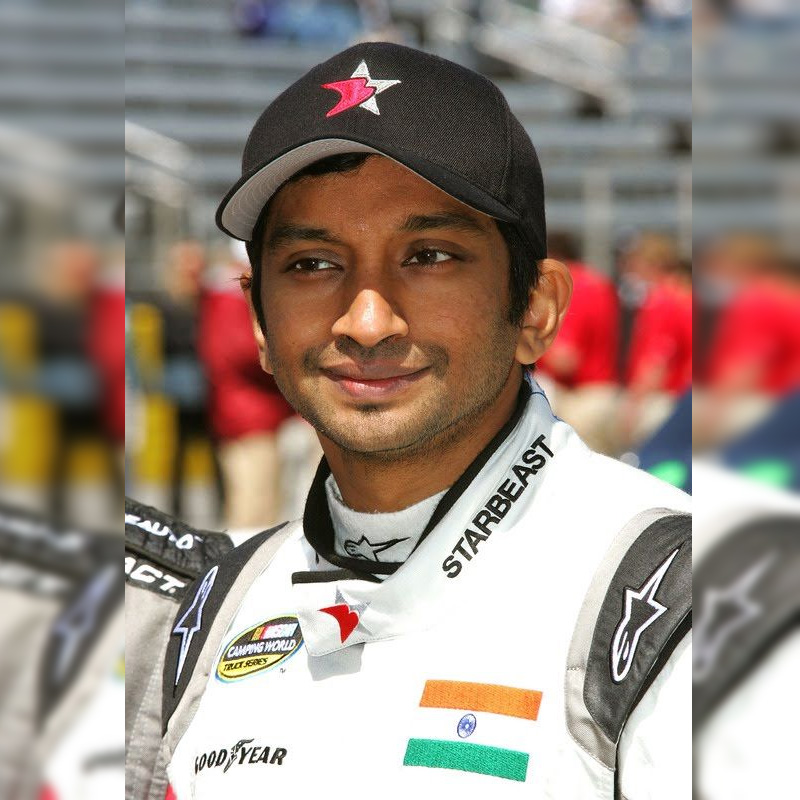
    Over the weekend ESPN Star Spotrs (ESS) will air the second race of the F1 season 2005. The race takes place in Sepang, Malaysia . Karthikeyan finished the race in Australia as the fastest debutant and is confident that the state-of-the-art Sepang circuit will suit his driving style.

    Star Sports will have live action on 20 March at 11:30 am. Michael Schumacher and the Ferrari team will be looking to salvage their pride after a poor performance in the opening Australian GP. While Barrichello managed eight points with the second position, Schumacher and the Ferrari team would not be too happy with the unfortunate spin out of the titleholder.

    The Renault team will look to maintain their winning streak with both the first and the third position going to their drivers Fisichella and Alonso respectively. World Championship leader after the first race, Giancarlo Fisichella believes that he can increase his advantage in the points table, while team mate Fernando Alonso is determined to increase his challenge.

    Besides the main race, Star Sports' comprehensive coverage of F1 also includes the action of the Qualifying Race. And 45 minutes before the main race Star Sports will have the preview show Race Day. There will be interviews, race preview together with track and weather update. In the post-race show Chequered Flag there will be post-race interviews and highlights, plus a preview of the next race.

  • Hindi commentary simulcast delivers well for ESS

    MUMBAI: Sportscaster ESPN Star Sports‘ strategy of introducing Hindi commentary simulcast has found favour with cricket fans as it contributed 40 per cent of the overall ratings for the recently concluded India-Australia Test series.

    According to Tam data provided by ESS, the television broadcast of the recently concluded India-Australia Test series has delivered average rating of 2.05 TVR, which the broadcaster claims, is the highest average rating for a Test series played by India in the past four years. The test series delivered a reach of 92.8 million.

    The India-Australia series 2013 has delivered almost 50 per cent higher ratings as compared to the previous India-Australia series played in Australia in the year 2011/12 which averaged 1.37 TVR.

    The four test series also delivered 22 per cent higher ratings than the India-England test series played earlier this season which delivered an average of 1.68 TVR. The TV ratings peaked at 3.2 TVR on the eventful third day of the fourth test match when Cheteshwar Pujara made a quick fire 82 in India‘s pursuit for victory.

    ESPN Software India COO Vijay Rajput states, “We are extremely delighted with the results. Our approach to the presentation of Indian cricket has been a game changer in many ways. The introduction of Hindi commentary feed has done well and so has our strong web offering through starsports.com which allows consumers to get in the game online.

    He adds. Our aggressive marketing campaigns through the season which focussed on new and upcoming heroes of team India in transition culminating with the ‘Asli Test Baaki Hai‘ campaign for the India Australia series struck a chord with fans across the country.

    “Our aim is to take the viewership of this game to a completely new level – be it through our compelling campaigns, quality of talent, look and feel of the presentation, multi-platform delivery or through promoting it across the entire Star network.”

  • ESS threatens to switch-off channels to Airtel digital TV

    ESS threatens to switch-off channels to Airtel digital TV

    MUMBAI: ESPN Software India has issued a public notice informing Airtel digital TV subscribers that ESPN, Star Sports and Star Cricket channels will be de-activated from the platform due to non-signing of agreement and breach of statutory obligations by ESPN Software India.

    The notice says that the three channels will also be de-activated from Airtel‘s IPTV platform. The channels will be de-activated in 21 days after the expiry of the notice, which was issued on 1 March.

    Last year, Airtel digital TV had de-activated ESPN and Star Cricket HD channels from its platform citing prohibitive prices of the two channels.

  • Rohit  Arora  quits ESS to join TheOneAlliance

    Rohit Arora quits ESS to join TheOneAlliance

    MUMBAI: MSM Discovery, the distribution joint venture company between Multi Screen Media (MSM) and Discovery Communications, is strengthening its team as India‘s cable networks move from analogue to digital mode of delivery.

    The company, which operates under TheOneAlliance brand, has appointed Rohit Arora as Senior Director – Business Development. Himanshu Dhoreliya was occupying this post earlier.

    Arora, who was earlier with ESPN Star Sports, will be heading the direct-to-home (DTH) business of TheOneAlliance. He will report to MSM Discovery president Rajesh Kaul.

    Confirming the new appointment Kaul said, "In this digitisation era, where the industry is evolving at a faster pace, Arora brings with him 12 years of rich and diverse experience in the industry at various levels and functions. He will be playing a significant role in providing strategic direction to the DTH business. I am confident that TheOneAlliance DTH business will scale new heights under his leadership and experience."

    At ESPN Software India Limited (ESIL), Arora was Marketing Director looking after the trade related communications. He was closely associated with Affiliate Sales and strategy for both analogue and DTH businesses.

    Arora, who had spent almost 12 years at ESIL, had joined the sports broadcasting company in 2000 as Area Sales Manager. He rose to the rank of Marketing Director in 2004, a position that he held till the time of quitting the company.

    Along with MSM and Discovery channels, TheOneAlliance also distributes outside channels such as Headlines Today, Aaj Tak, Neo Prime and Neo Sports.

  • ESS clinches four awards at Promax Asia

    MUMBAI: ESPN Star Sports (ESS) clinched two Gold and two Silver awards for its in-house on-air campaigns at the recent Promax Asia Awards that honours the industry‘s best communications campaigns.

    The sportscaster has won a total of 14 awards during the year which includes four at Promax International USA and six at PromaxBDA Awards India.

    ESS MD Peter Hutton said, “It‘s excellent that our creative team have received further recognition for their consistently high level of original work.”

  • StarHub  in  multi-platform deal with ESS

    StarHub in multi-platform deal with ESS

    MUMBAI: Singapore telecom operator StarHub has signed a multi-platform deal with ESPN Star Sports (ESS) to carry its portfolio of multi-media assets including television, broadband, and mobile services on a non-exclusive basis.

    StarHub is a full-fledged telecommunications company providing a range of services over mobile, internet and fixed platforms in Singapore.

    The deal comprises six ESPN Star Sports channels, which brings the number of dedicated sports channels on StarHub TV to 22; the broadband video player ESPN Player; and the live streaming mobile service, Mobile ESPN.

    The channels and ESPN Player will be launched on StarHub TV on 14 December while Mobile ESPN will be introduced on StarHub’s Mobile platform later in December.

    Sports fans can look forward to a comprehensive line-up of sports coverage on ESPN, Star Sports, the high-definition 24-hour sports channel ESPN HD, the 24-7 sports news channel ESPNews and premium cricket channels in Star Cricket and Star Cricket HD.

    Customers will also be able to access ESPN Player via StarHub’s Internet TV service, TV Anywhere. Mobile ESPN apps for iPad, iPhone and Android devices will be launched soon, allowing Singapore sports fans Anywhere, Anytime access to their favourite sports.

    “We are excited to welcome ESPN Star Sports back to our sports content line-up. Combined with our current spread of sports channels, viewers can now look forward to the widest range of sports programming, including all the tennis and golf majors, on our trusted network. Customers can also take advantage of our TV Anywhere service to savour exciting ‘live’ sports coverage on their personal devices on their personal devices. By delivering a comprehensive range of sports content across multiple platforms, we are confident that customers will have the finest sports viewing experience possible,” said StarHub Head of Marketing & Products Chan Kin Hung.

    ESS features sports content that includes exciting football properties (the Spanish La Liga BBVA, Asian Football Confederation events); motor-racing (Formula One, SBK, MotoGP, Nascar, Dakar Rally); Grand Slam tennis (Wimbledon, Australian Open); events from the WTA Tour and ATP World and the Hopman Cup, the Golf Majors (The Masters, US Open and The Open Championship) as well as the PGA Grand Slam of Golf; popular American sports (Major League Baseball, NCAA College Football and Basketball), premier Asian sports (Asean Basketball League, OneAsia golf tournaments, HSBC Asian Five Nations); and top cricket properties (ICC events, Champions League Twenty20, international and domestic cricket from the BCCI, Cricket Australia and England and Wales Cricket Board).

    “We‘re very happy to be able to offer the full range of our programming to the widest possible audience in Singapore and to return back to StarHub after two-and-a-half years away with a new long term agreement,” said ESS MD Peter Hutton.

    ESPNEWS will be a complimentary channel available to all StarHub TV customers at no additional cost. With the addition of ESPN, Star Sports and ESPN HD to the Sports Group, the subscription to the Sports Group will be revised to $19.26 per month (with GST), effective from 15 January.

    The Sports Group subscription includes access to ESPN Player and other sports channels such as Racquet Channel, Football Channel, SuperSports, SuperSports Arena and Setanta Sports via TV Anywhere. Currently available on the Apple App Store and Google Play Store, Mobile ESPN will be added to StarHub’s Gee! portal later this month. Star Cricket and Star Cricket HD will be available on the Cricket Group, which is unchanged at $32.10 per month (with GST).

  • ESS EMG renews sponsorship deals for its properties

    MUMBAI: ESPN STAR Sports‘ (ESS) Event Management Group has renewed multi-year sponsorship deals for two of its marquee events, Tiger Street Football and Achilles Formula Drift Asia.

    Asia Pacific Breweries has extended its partnership with ESS to continue building the profile of the Tiger Street Football event for the next two years till 2014. The event will see the competition expanded to new markets such as Australia, Cambodia and Mongolia.

    ESS has renewed a multi-year deal with PT Multistrada Arah Sarana Tbk, one of Indonesia‘s leading tyre manufacturers with brands like Achilles and Corsa, as title sponsors till 2015 for the event in three markets – Malaysia, Indonesia and Australia, for the very first time.

    These wins bring to a close a packed calendar of events which include Tiger Street Football, Achilles Formula Drift Asian Series, Guinness World Series of Pool and the KIA X Games, as well as new events such as adidas Extreme Power 5s and the upcoming iFly World Championships 2012 in December.

    “The Tiger Street Football and Achilles Formula Drift Asia events have grown from strength to strength, and we are encouraged by the tremendous support and enthusiasm of Asia Pacific Breweries Limited and PT Multistrada Arah Sarana Tbk,” said ESS VP-Event Management Harvey Davis.

    EMG was also awarded the coveted Gold Award for Best Event Production and Silver Award for Best Sponsorship Activation, both for the Tiger Street Football 2012 event, at the recently held Marketing Events Awards, an annual industry event.

  • Tdsat directs ESS against switching off channels to Dish TV

    Tdsat directs ESS against switching off channels to Dish TV

    MUMBAI: The Tdsat has granted interim relief to Dish TV in its dispute with ESPN Software India directing the sports broadcaster to keep giving signals to the direct-to-home (DTH) operator.

    ESPN Software India, a subsidiary of pan-Asian sports broadcaster ESPN Star Sports (ESS), runs five channels namely ESPN, Star Sports, Star Cricket, ESPN HD and Star Cricket HD.

    Dish TV had filed a petition with the broadcast tribunal against the public notices issued by the ESS on 5 and 12 November for disconnection of signals to its subscribers.

    The notice was issued on the grounds of non-signing of the agreement, breach of regulations including reporting requirements and non-payment of subscriptions fees.

    The Tdsat member P.K. Rastogi ruled that ESS will not give effect to its public notices till further hearing in the matter.
    The tribunal also directed Dish TV to allow ESS to conduct audit in terms which the latter should complete in two weeks by providing full co-operation.

    It also told Dish TV to produce all the relevant records before the representatives of ESS in conducting the audit including the manner in which it is maintaining ‘India Cricket Pack‘.

    "Based on the audit report, both the parties will meet and reconcile their accounts," Rastogi stated in his order.

    Dish TV‘s senior counsel Maninder Singh contended that ESS did not issue notice under clause 4.1 of the inter-connect agreement which is necessary to give effect to the public notice, a fact that was not disputed by the broadcaster.

    However, Mukul Rohatgi appearing on behalf of ESS contested the argument by saying that it was not necessary to issue notice 4.1 before disconnection.

    The tribunal, however, held that a notice under 4.1 is essential in this matter since there was a written agreement in place which expired due to efflux of time.

    Tdsat had passed an order on 10 April directing the two parties to reconcile the amount that ESS needs to refund on the basis of SMS reports.

    However, Dish TV based on its own record determined that ESS was required to refund Rs 196.8 million till September and started adjusting the same from subscription fee payable to ESS.

    The broadcaster contended that unless it was allowed to audit the SMS system of the DTH operator it would be difficult to determine the exact amount to be refunded.

    Another bone of contention between the parties is the India Cricket Pack introduced by Dish TV which according to ESS is causing revenue loss since the subscriber numbers cannot be recorded as these packs are available only when India cricket is available on the channel and gets disconnected after the event ends.

    To this, Singh said that the pack is available on a monthly basis and not only for days when India was playing cricket as alleged by the respondent.

    While stating that it was ready to sign a deal based on RIO, Dish TV said it can‘t share the names of subscriber as the regulation doesn‘t mandate it and is against its commercial interest. It has also agreed to provide audit of its SMS system.

  • ESS targets 8 sponsors for Indo-Pak series

    MUMBAI: Sports broadcaster ESPN Star Sports is looking at roping in eight sponsors for the blockbuster India-Pakistan series
    comprising 3 ODIs and two T20s.

    The sportscaster has already got one sponsor on board for the series which will be held from 25 December to 6 January. “We are looking at two co-presenting and six associate sponsors. We have just gone to the market with it and have got one sponsor,” said ESPN Software India MD Aloke Malik. He, however, did not name the sponsor.

    ESS is eyeing Rs 2 billion ad revenue from the India-England series involving 4 Tests, 5 ODIs and 2 T20s. “We have sold 90 per cent of our ad inventory for the series,” said Malik, while declining to talk about the revenues.

    Meanwhile, ESS will kick off its second multimedia campaign in a couple of weeks. It will rest on the search for a new Indian hero which India’s home season will throw up. The focus of the first multimedia campaign rested on the fact that three stalwarts – Laxman, Dravid and Ganguly – are no longer a part of the team and whether India can still beat England. The theme is ‘Kya Team India Baja Payengee’.

    Malik said that the campaigns had been conceptualised based on consumer insights. “The campaign is tactical. People haven’t forgotten the drubbing that India received in England. We have shot creatives also with Shane Warne (the legend spinner inked a 3-year contract for commentary with ESS).”

    The focus of Warne’s creatives is that the viewer doesn’t want to know about his achievements or the peripheral things happening. He wants to know how the game is unfolding and why the game is changing direction. “Also the fact is that Warne has his own persona. He is fortright in his views,” Malik said.

    Warne noted that 85 per cent of India’s cricket viewers would want commentary in Hindi. “That is why it is great that they have Hindi commentary. ESPN Star Sports’ commentary team is sensational. My aim is to provide an insight into tactics and what I would do if I was in the batsman or in the captain’s shoes,” he said.

  • ‘BCCI rights great opportunity to build Star’s sports biz’ : Star India CEO Uday Shankar

    ‘BCCI rights great opportunity to build Star’s sports biz’ : Star India CEO Uday Shankar

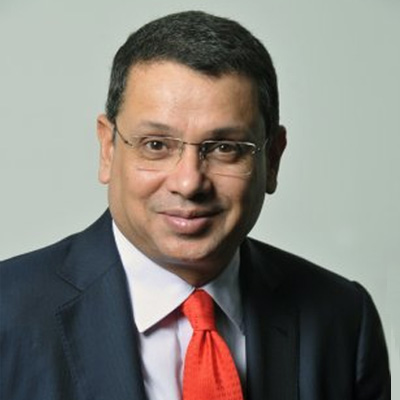
    Star India CEO Uday Shankar, conqueror of TV news and entertainment business, is ready to wage a new battle in sports broadcasting.

    When the BCCI rights came up for grabs after the abrupt termination of contract with Nimbus, Shankar quickly pounced upon it. He tiptoed in, surprising hot contender Sony to pocket the prized rights to telecast international cricket in India from 2012 through 2018. His winning bid: a whopping Rs 38.5 billion.

    “We believe in the power and value of cricket as content in India. By acquiring the BCCI rights for telecast, we think it is a great opportunity to create a new business,” he says.

    Shankar‘s timing couldn‘t have been better. A couple of months later, joint venture partner Disney agreed to sell its 50 per cent stake in ESPN Star Sports, allowing Star to aggressively build and expand the sports broadcasting business in India.

    “Drama and cricket are the two big pools of content that the masses love to watch in India. We are already a key player in entertainment. Now we can have independent charge over the sports broadcasting business,” he says.

    Shankar has placed huge bets on digitisation that would plug leakages in subscription revenue and dramatically increase the paying subscribers to broadcasters. “In the current construct, those rights are not profitable. The market is primarily so unattractive because of the theft and leakage in subscription revenues. Digitisation would enable content owners to get a better share of the subscription revenue,” he avers.

    In the first part of the interview with Indiantelevision.com‘s Sibabrata Das, Shankar talks about Star‘s game plan in sports broadcasting, the rise in acquisition costs, the huge opportunity that digitisation would throw open and the need to build a robust subscription income.

    Excerpts:

    Q. Why did News Corp. and Disney end their 16-year-old joint venture partnership in ESPN Star Sports (ESS) when it allowed them to lead the sports broadcasting business in Asia?
    When the discussions started two years back, it was not on a buyout proposal but on how to take ESS forward in a changed market environment. The sports business was under financial pressure and both partners were worried. The Champions League T20 rights (for $975 million) did not bring much value. Acquisition prices were rising and competition was not helping stem it. This later turned into the need to go separate ways but the possession of the rights over sporting events made a split in the properties complex and impossible.

    The obvious course was to acquire the entire 50 per cent stake of the joint venture partner and be the sole owner. The deal took time because Disney had to take the final call on whether it wanted ESPN to exit from Asia.

    Q. When Star bid for the BCCI rights on its own, had Disney agreed to sell or it was an act of defiance to build a sports broadcasting business outside the JV?
    We were still discussing the future of ESS when the BCCI rights came up for renewal. And because there was no clarity on the future of ESS, we could not come to an understanding on what its position would be on BCCI. We at Star knew the strategic value this property would add to our thriving entertainment business. We expressed an interest that in case ESS was not clear and since the bid had a final deadline which was approaching fast, Star would go ahead and bid for the rights as a one-off.

    Even in the JV agreement, this kind of provision was there that either party (ESPN or Star) could go and bid for the rights. However, they could not use the rights on their own without the approval of the other party. So we agreed that instead of letting BCCI go away to a competitor, Star would bid for it as a one-off and then assign the rights to ESS in case they wanted it. If ESS didn‘t want, Star could go ahead and broadcast it. So that‘s how it happened.

    Q. Did the BCCI rights tilt the deal in your favour as we understand that even Disney had expressed an intent to acquire News Corp‘s stake in ESS (though they had made heavy investments in UTV and were looking at consolidating that business)?
    The two are not linked. We were very clear that it would be a one-off bid (for rights). Now let‘s assume that Disney had bought out ESS. Then they would have definitely insisted on a non-compete agreement and we would have had to find a way of handing over BCCI. I don‘t know what would have happened; that‘s a conversation one can only speculate on. But if Disney had chosen to play in the sports market here, then they would have definitely tried to also get a piece of the BCCI.

    Q. When you realised the strategic value of the BCCI rights, did the fear of Sony haunt you as it had the lucrative IPL (Indian Premier League) rights and its entertainment business was on the upswing?
    Of course, it was an important consideration. It would have made Sony a very formidable player in the sports space. And we were then not present in that space; we were only an entertainment company.

    We also knew that there were a few others like Ten Sports and BCCL (Benett Coleman and Company Ltd) who had bought the tender documents. All of them were key competitors. And anybody who had the cricket rights would have a serious strategic weapon.

    But that wasn‘t why we decided to go for the BCCI rights. We definitely believe in the power and value of cricket as content. It gets the largest number of viewers across all target groups. We also genuinely believe that there is an opportunity to improve the quality of cricket on TV. And we thought the best place to start that would be the BCCI rights.

    ‘In the current construct, those rights are not profitable. Our big punt is in digitisation‘ 

    Q. Was the bid of Rs 38.51 billion on the higher side?
    You would bid only what is the rational value of the tournament and not beyond reasonable limits. In fact, Sony and our bids were pretty close; it clearly tells you that there was a consistent logic that both of us were applying.

    You must appreciate that nobody had the time to plan for it because it happened suddenly. BCCI (rights) wasn‘t on Sony‘s or anybody‘s horizon. It was comfortably settled with Nimbus; they were holding the rights for almost six years and they were going to have it for several years more. If anybody says it was part of their serious strategic consideration, that wouldn‘t be correct. How can you plan for something that is not available in the market? But when it came up for grabs, everybody thought it was a great opportunity. And we definitely thought of it is as a great opportunity to create a new business.

    Q. But since it was unplanned, you could have overestimated the value of the property? Or how did you arrive at a right value?
    There was a reserve price that BCCI had indicated and based on that we did the mathematical calculations. The ad rates for India cricket matches per 10 seconds and the kind of distribution revenues that can be earned are available in the market. So based on that we did our calculations.

    Q. Media analysts say those numbers wouldn‘t make up for the bid amount unless digitisation happens. Did you bet too heavily on digitisation when you did the calculations?
    In the current construct, those rights are not profitable. The market is primarily so unattractive because of the theft and leakage in subscription revenues. More than Rs 150 billion gets collected from the ground in form of subscription income. But the net off carriage fees that comes to the broadcasters and content owners is a small fraction of that.

    Our big punt is that in the next couple of years when digitisation moves significantly forward, a lot of that would change. The leakages would have been plugged, there would be more fair and transparent business processes. And that would enable content owners to get a better share of the subscription revenue.

    Sports nowhere in the world has sustained on advertising revenue; that is a small part of it. Wherever it makes money, it makes it on the back of subscription income. And that is what we are hoping would happen in India as well.

    Q. Since Star has a very strong entertainment broadcasting business, will the network power not enable you to push up advertising rates for your sports properties?
    You can‘t move that synergy to up the ad rates much just because you have more properties under your belt. The target audiences and the set of advertisers are different. The big advertisers on sports, for instance, are telecom and auto companies. General entertainment channels primarily address a female TG.

    So you can‘t play much on network strength. We have not factored in any dramatic upside in advertising revenues. Let‘s face it; ad rates can‘t go beyond a certain level of elasticity.

    Q. Are you expecting ARPUs (average revenue per subscriber) to climb with digitisation of cable networks?
    No, I am not factoring in a tremendous increase in ARPUs. India is always a value conscious market and cricket is a mass market product. There would, of course, be some people who have the ability to pay higher value. But most people won‘t pay that kind of money.

    There is also enough competition in the market which would ensure that the ARPUs don‘t go beyond a certain limit. What we are looking at is the big shift in cable that should happen. In case of transparency, we clearly see a visible link between the subscriber base and the payouts. 

    Q. What sort of paying subscribers would sports broadcasters attract?
    If the whole country goes digital, you are talking about 120-130 million C&S homes in the next few years. Even if you say 60 per cent of the entire universe goes cable, you are talking about 70-75 million C&S homes.

    The 8-9 million paying subscribers for sports currently under analogue cable would go up significantly. Sports is driven by events. But at any time, the genre would be attracting 60-70 per cent of the total subscriber base. I think that is the ratio that DTH (direct-to-home) gets.

    ‘Sports had been relatively less competitive in India because the two big players were together. Now since ESPN and Star have parted ways, the next 5-10 years, will see a new round of competitiveness and aggression in the sports market‘

    Q. After having acquired the BCCI rights for such an aggressive price, will Star match that aggression for the upcoming cricket boards that will be up for grabs within a year?
    We neither choose to nor can afford to be over aggressive. If we are also aggressive, then rights prices would shoot up. Now it is Sony‘s and Ten Sports‘ turn to be aggressive.

    Q. Do you see acquisition prices climbing further?
    If the competitive norm stays, then there will definitely be a tendency for the acquisition prices to go up. A lot, however, depends on how the distribution market pans out. If the distribution market continues to be so leaky and porous and cable stays largely analogue, then even the current prices will be unsustainable. However, if the digital transformation happens and if there is a matured digital distribution market that comes up, then definitely the prices will go up.

    Q. Even if Disney decides to come back after the two-year non-compete period is over and India continues to have analogue cable?
    I am not too sure if it continues to be analogue, how many players would be interest. That is the biggest stumbling block. But on the other hand, I also think analogue cable will not survive even if the current digital initiatives fail to go through; analogue will dies on its own. This is a funny market. The analogue experience is poor and the number of channels that the consumers can watch is very few. The cable operator doesn‘t pay taxes; nor does he pay fair value to the content owner. How long will the society tolerate this kind of a distorted model?

    Q. Consumers are probably tolerating analogue cable because the ARPUs are low?
    The ARPUs are not that low. How much does DTH charge? You can‘t charge beyond a certain reasonable price. What you can charge consumers also depends on affordability and the kind of value that they attach to it. Price doesn‘t escalate in isolation; there has to be a realistic basis.

    In certain areas of Mumbai, cable subscription is Rs 300-350 per month. In low income areas, people are paying less. ARPUs are not uniformly low. That will happen in a digital environment also.

    Q. Can‘t acquisition prices for cricket rights go up because of strategic value that the property brings?
    No mature media company will pay irrationally high for strategic reasons unless this can translate into business value. If they do that, they will go bankrupt. There are a couple of media companies who are prime examples of that. There is a company that launched an entertainment channel and decided to go completely crazy for what they thought was the strategic value. The strategic value worked so well for them that they had to sell out. The news companies have gone ahead and spent so much money on all kinds of distribution, etc. We know the financial mess they are all in.

    You think anybody would pay obscenely high just because it has strategic value. Star would not do that; nor would Sony and Zee. If BCCI prices were double this and tomorrow if IPL is available for three times more, would I go and buy those rights? No way. I don‘t want to go and acquire rights and be sacked or drive my company bankrupt.

    Q. With the current distribution of cricket properties across sports broadcasters, what sort of dominance will Star have?
    It is very difficult for anyone to have any kind of very big position in market share, let alone dominance. In this market, every sector of broadcasting and media is so competitive. Whether it is entertainment, news or regional, one thing that we have seen is that there is new competition coming in every day.

    If anything, sports all these years has seen less and less of competition in India primarily because there was a JV between ESPN and Star. Until IPL came, it was just ESPN-Star. Sony had a game only because it got the IPL; without it, it would have been a marginal player. Ten Sports continues to be a marginal player except for a few rights they have like the South Africa and the Sri Lanka boards.

    Sports broadcasting requires heavy investments. And not everybody may have the appetite to take big risks unless you are a Zee or Sony, specially because the distribution deals are so uncertain.

    Since ESPN and Star have parted ways, it is only a matter of time that Disney and ESPN will come back to India. So I think over the next 5-10 years, you will see a new round of competitiveness and aggression in the sports market. Sony has launched a sports channel; they will have to really work hard to build that and will need more rights. I am sure they will surely bid aggressive for whatever rights come up. Ten Sports will also be forced to bid for a few more rights if they want to stay competitive in the game. You saw how expensive their bid was for the South Africa rights. The price they paid was pretty high and they got it.

    Sports had been relatively less competitive in this country because the two big players were together. That phenomena is set to change.

    Q. But in UK you have News Corp as a big player and ESPN as a much smaller player. Wouldn‘t India replicate that market?
    Those are very settled markets and even there that is not quite the case. In India tell me one sector of media where one single player sits with 50 per cent share. When it started, that may have been the case. About 20 years ago, Zee had a large share. Then Star came and build a large share in Hindi entertainment. See how competitive the market is today.

    Take regional. The only market where one player continues to build a very big share is Sun network in Tamil Nadu. And we all know the reasons behind that. But if it‘s a freee market, then it is difficult for anybody to take a 50 per cent or a 40 per cent share. Very, very difficult.

    India is an emerging market. So global attention is on this market. Media, despite all the softening, is still delivering the second largest growth rate in the world year-on-year. And that will continue to be the case for a long time. The most attractive growth rate market is not available so easily for media. China does not allow media that easily. So where can you dominate ? India has a huge consumer base; you are talking of 120-130 million C&S homes. Incomes are going up. I think there will be more and more people coming in.

    Western media companies are looking at India primarily because they are not getting growth in their own markets. More and more large Indian companies are stepping in. You have seen what has happened in the last 2-3 years. Big Indian corporates have made their foray into media. Reliance Industries Ltd (RIL) and Aditya Birla have come into media. I think media is going to get more and more competitive. And no matter how much money you might have, no matter how aggressive you might be, I don‘t see a situation where anybody will be able to build a 50 per cent share in any vertical.

    Q. Since Rupert Murdoch had said that IPL was a big miss, would Star‘s next big stretch be on acquiring its rights when it becomes available in future?
    Of course, it was a big miss. I don‘t even know what the contractual agreement between Sony and BCCI is. They may have a preferred access to renew it. But if it comes up and continues to be a strong property, then we will surely be interested. We have seen a little bit of softening in IPL and hopefully that‘s temporary. But the renewal is long away and it would depend on what BCCI‘s price expectation is at that stage.

    Q. Do you see cricket viewership plateauing?
    Cricket viewership depends on a variety of things. First and foremost is the nature of the tournament. Following immediately afterwards is the performance of India. I think there is a value to be obtained from that.

    The quality of TV broadcast can make a big difference to how much the viewership can grow. Sports broadcasters generally have done a very good job of providing a professional cricket experience to the viewers. But it seems to have plateaued.

    The only rule of content – and that applies to drama, sports, news, anything – is that the sameness brings in fatigue. And there is a certain amount of sameness that seems to have settled in sports. That is the reason why cricket viewership might be peaking. If we can disrupt that sameness, bring in innovation and fresh approach to connectivity, to visual and to graphics, I think given the passion that cricket generates in this country only sky is the limit for viewership. When cricket is played in every nook and corner literally, how can you say that the viewership has peaked. I think the viewership can grow a great deal more provided we continue to grow and build on the experience that we can provide. And there the broadcasters and the boards can do a lot more together.

    Q. Are you talking of introducing doses of entertainment?
    No, I am not suggesting that. You can‘t turn cricket into soaps; you have to stay true to the sport. But within that, you have to innovate. And there is so much of technology to be used – you see what has happened in the last 10-15 years! New graphic technology has come in and the kind of replays that we get to see only can enhance the viewing experience. You can further enhance that experience a great deal more.