Tag: eSports

  • PUBG: Game over for PUBG mobile in India

    PUBG: Game over for PUBG mobile in India

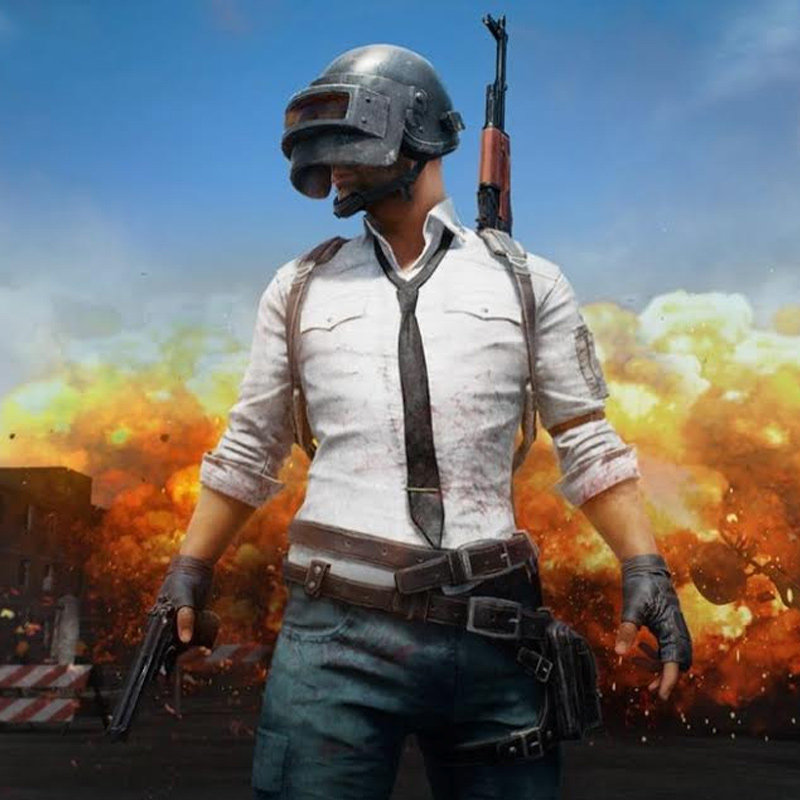
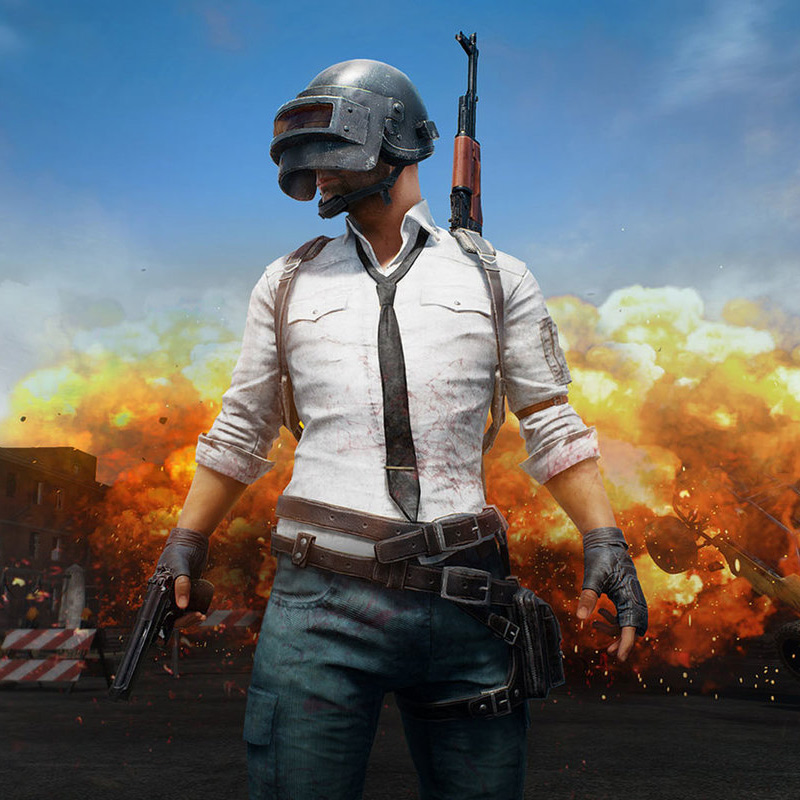
    KOLKATA: Despite the ban on PUBG Mobile in India, fans were desperately hoping that it might eventually make a comeback. Those hopes were sadly dashed when Tencent Games, the publisher, announced its decision to shut down all services and access for users in India on 30 October.

    “To comply with the interim order of the ministry of electronics and information technology dated 2 September 2020, Tencent Games will terminate all service and access for users in India to PUBG MOBILE Nordic Map: Livik and PUBG MOBILE Lite (together, “PUBG Mobile”) on 30 October 2020. The rights to publish PUBG MOBILE in India will be returned to the owner of the PUBG intellectual property,” the company said in a statement posted on its official Facebook page.

    Back in September, the Indian government had banned PUBG Mobile, along with 117 other Chinese apps, citing security concerns. India was one of the largest markets for PUBG Mobile and the game had generated close to $28 million since July 2019 through in-app purchases alone, a report from Sensor Tower stated.

    “Protecting user data has always been a top priority and we have always complied with applicable data protection laws and regulations in India. All users’ gameplay information is processed in a transparent manner as disclosed in our privacy policy,” the statement added.

  • GEMS: How talent agencies help young streamers grow & stay relevant

    GEMS: How talent agencies help young streamers grow & stay relevant

    KOLKATA: Shagufta Iqbal aka Xyaa, a young YouTube game caster, quit her job as a computer engineer to stream full-time. Iqbal mainly focuses on Call of Duty but makes sure her streams are a mixed bag. She described herself as more of an entertainment streamer. During a panel discussion at GEMS 2020, Iqbal joked: “I don’t know what to do if streaming fails.” However, she has a back-up plan, which involves branching into vlogging and podcasts.

    Another YouTuber, Ketan Patel, has amassed a following of 7 lakh plus gaming enthusiasts on his K18 gaming channel. Patel rose to prominence with the casting of PUBG tournaments before the game got banned in India. Now, the 22-year-old has ventured into vlogging too. “I am more of an entertainment gamer,” Patel said.

    Clearly, instances of millennials like Iqbal giving up a traditional career to make a living out of gaming are on the rise. According to a KMPG report, the number of online gamers in India was nearing the 400 million mark as of July 2020. It’s a testament to the popularity of online gaming and streaming in the country.

    Both Iqbal and Patel stated the importance of having a positive headspace in order to click with viewers. “You need to have a positive personality for your audiences. It does not to be too fancy but they should get something positive out of it,” added Patel.

    While streaming, gamers can’t let their emotions run away with them either. Iqbal said she doesn’t use expletives and always maintains proper language since there are many minors who tune in to watch.

    Young Indians are earning thousands by turning video games into a spectator sport. Yet, at the outset, many remain unaware of the obstacles they may encounter down the line; or after a certain point, they may flounder to stay relevant.

    Now, these emerging stars are turning to talent agencies to help them work towards their goals. Loco VP operations Firasat Durrani said that the streaming platform is aiming at creating a better product for millions of new gamers. “We have had a huge inrush of casters for the last few months. We have also seen people who were not big on any other platform on social media or had never live-streamed on any other platform actually match up to the number of live streamers who are big on other platforms. We are not just offering a service but also trying to create a level playing field,” he claimed.

    “At the start, no content creator knows that he/she will be a success right from the get-go; everyone starts from zero. And, the idea that you will be prepared to manage expectations is something like a dream and a vision at the beginning. This is one of the hardest parts of the job that we as managers have to do,” added Durrani.

    Trinity Gaming India managing director Abhishek Aggarwal termed his job as “streaming or gaming a viable career for talents”. He went on to say how the industry has grown multi-fold in just two years. Back in 2018 when Aggarwal started his career, there were only two or three live streamers. Now, platforms like Loco alone have a database of 300-400 live streamers. Hence, it is important to keep the talents financially motivated to make them stay in the industry for a long time.

    Talking about the role of talent management agencies, he said that they work as enablers. “We make them do what they want to do. We provide them with whatever facilities they need like creative support, design support, social media manager. We have an in-house business development team that goes out and pitch brands for the talents to help with connections and partnerships,” he explained.

    “Currently, we have 21  partners who are streaming through Loco. We are looking after their KPIs whatever provided by Loco. We are helping them deliver a minimum number of streaming hours, social media shoutcasting, social media partnerships, etc.” Aggarwal added.

    Agreeing with him, Loco’s Durrani cited an example. A streamer from Nepal wanted to get on board with Loco. Since Loco never had a streamer from abroad, the team was full of doubts and questions. The streamer lacked knowledge on how to make money in such a situation. Aggarwal’s agency mediated to help both the creator and the platform.

  • GEMS: How to make e-sports attractive for non-gamers

    GEMS: How to make e-sports attractive for non-gamers

    NEW DELHI: E-sports and virtual gaming in India is no longer limited to one-player play-to-win matches or personal entertainment without any benefits. It is now getting players recognised and driving immense monetisation across the spectrum. A fully-fledged industry now, it is supported by a larger play of schemes: from planning to development, production to play, and broadcast to post-broadcast content. And what has been at the centre of this evolution is quality content. 

    E-sports and gaming content production has come up as a separate genre of its own attracting technicians, creators, influencers, and publishers on board. Although the industry is still in its nascent stage, there is a wide scope for it to grow and flourish. To discuss current trends and the way ahead for the same, an elaborate panel of leading industry experts came virtually together for the Esports Production: Going Remote panel of Games, E-sports & More Summit (GEMS) presented by indiantelevision.com and AnimationXpress.com, co-powered by Tata Communications. The panel was supported by associate partner CapeTitans Games and support partner Loco by Pocket Aces. 

    Moderated by GoLive Games Studio founder and CEO Ravi Kiran, the panel was led by Anand Pimprikar (Tata Communications head sales BD – India, media and entertainment services), gaming/e-sports veteran Anurag Khurana, LXG director e-sports and broadcasting Kiran Noojibail, ESPL CEO Michael Broda, MPL VP-devops and reliability engineering Mukta Aphale, Playtonia Esports co-founder Sanupam Samantray, and Sky esports founder and CEO Shiva Nandy. 

    The speakers unanimously agreed that e-sports and gaming content is not just limited to live streams and India hosts a great pool of talent – be it technicians or players, or content creators who can take it a notch higher. 

    Hailing the role of content in popularising the category, Pimprikar noted: “Content drives viewership and that drives role models (for the upcoming generation of players). Therefore, it is very important to improve the quality of production, say like IPL, on both linear and essential channels.” 

    Multiplayer: The more, the merrier

    On the sporting level, the panellists pointed out that to improve the quality of content in any e-sport or game, it is essential to make it multiplayer and interactive. 

    Broda said on the subject: “What I think about e-sports beside it being skill-based and competitive, it must be multiplayer. In fact, it is important for any sport to be successful. One-on-one games are good for play-to-win, real money-making challenges, but on an overall industry perspective, it is very important to go multiplayer.”

    What makes multiplayer fun, added Noojbail, is that it shows glimpses of players playing the game live, making it interactive for people who are playing as well as those who are watching. “Interactivity plays a key part as unlike other games, you cannot see the player directly while playing e-sports. The entire e-sports perception eventually revolves around what the end-user gets to see and that’s where the value of e-sports content becomes even stronger,” he explained.

    Read more news on the gaming industry

    Beyond game-over

    Noojbail also insisted that there is a dire need to curate good post-content, which goes live after the matches to keep the audience hooked. Aphale pointed out that currently, only the audience that wants to better their own game is watching the e-sports and gaming streams and broadcasts, unlike the tier-1 offline sports. This needs to be changed. 

    Going forward, there are two major aspects that content producers must keep in mind: how to separate the production control rooms (PCR) from the site and then how to virtualise the whole PCR, said Pimprikar.  

    To this end, Aphale suggested that the technology needs to focus on making the mobiles lighter so a player doesn’t have to download a lot of gaming-related programmes, and then let the cloud servers do the entire processing. 

    E-sports a big hit in small towns

    Additionally, the panellists pressed upon the need to take e-sports to grassroots levels in India and equipping the game applications with technology and content support in regional languages. 

    Of the 6 crore active users on MPL, about 83 per cent of the gamers come from tier-2 and tier-3 cities, signifying that the format is already very popular there, Aphale pointed out. Therefore, they are looking for more game developers, technicians, and talents to drive the next leg of growth. 

    Nandy said that his aim is to further expand the presence of e-sports and gaming in every nook and corner of the country. In fact, he has already started providing streaming services in all major south-Indian languages. 

    Training is key to success in global arena

    According to Khurana, the Indian e-sports and gaming ecosystem also requires a strong backend support system in the forms of coaches and trainers. 

    “I feel we have great players when it comes to the domestic circuit but we fail when we go international. It is because we are not focussing on organisation and skill development within the sector. There is a great need for psychologists, coaches, and the whole supporting sports staff within the esports ecosystem,” he explained. 

    Samantray seconded the thought and shared that with Playtonia, the team is already working on these lines. “We are actually working at the grassroots level and are planning to bring a certification as well as a university dedicated to e-sports.” 

  • Game on: Finding balance between user experience and security

    Game on: Finding balance between user experience and security

    KOLKATA: A few years ago, online gaming was regarded as a mere recreational activity in India. With the digital ecosystem reaching a new pinnacle, the gaming industry has observed rapid expansion in terms of users as well as investment. To keep users hooked and grow the existing base, the industry is shifting its focus to quality user experience. Alongside that, the stakeholders are increasing investment in security too.

    In a panel discussion at GEMS 2020, ‘Building a robust backend and infrastructure network’, moderated by indiantelevision.com founder, CEO and editor-in-chief Anil Wanvari, industry experts weighed in on factors that should be considered for user engagement and platform security.

    Name of the game is user experience

    With India being one of the top five mobile gaming markets in the world, Indian players are acquainted with buttery-smooth gameplay and immersive user interface, courtesy global giants like Tencent, Activision etc. If an app is in any way inferior to this golden standard, the consumers would reject it, said GOQII founder and CEO Vishal Gondal. Loco VP engineering Viral Mehta added that keeping users engaged outside of the core game should be of top priority.

    Tata Communications media and entertainment services sales BD head Anand Pimprikar underscored that equal importance be accorded to pre-game and end-game experience. To this end, the use of multi-CDN and the good peering relation of delivery networks can benefit gaming platforms. Moreover, since bandwidth issue has always been a stumbling block in the Indian market, platforms should actively monitor the network to track performance and direct traffic accordingly, he said.

    “Serving things through CDN helps a lot and I think a major part is that you have to write some really good fall back mechanisms. Let’s say your user has a really good 4G network and he is travelling and keeps going from 2G to 3G to 4G, you need to have a really good fallback on your backend and client both. And you render less information on his screen when he is on a lower network to make sure the critical part is always there to give him the experience of playing, ” POCKET52 co-founder and chief technology officer Satyam Verma elaborated.

    Enhancing security: A work in progress

    When there are more fish in the sea, the sharks gather to feast. DDoS attacks are par for the course, but attackers are becoming more and more sophisticated, said Verma. According to him, they read patterns to discover vulnerabilities; in fact, attackers are able to identify and exploit threats even before platforms flag them.

    Read more news on the Gaming industry

    “Hence, you are the best judge for yourself to decide what is healthy traffic. You can identify these are my healthy URLs, healthy traffic, the patterns of traffic. If something is crossing that, it goes into the bad cluster, then we can put some restrictions,” Verma advised.

    GAMES24X7 chief technology officer Sandeep Agarwal said there has been not a day without DDoS attack. Agarwal said that his team protects the platform at all levels using advanced software tools. Hosting an open source software on the cloud service provider has greatly helped the company. Overall, the security situation is steadily improving, Agarwal assured.

    The strength of a program’s security depends on the ignorance of the user. But pirates are smart, enterprising and persistent. They cannot be eliminated, but that doesn’t mean developers are about to throw up their hands in despair.

    “We keep analysing what sort of threat and attacks could come our way and the infrastructure we need to put in place in order to safeguard ourselves. We have third party services keeping those threats away. We have a team that keeps analysing those threats. It’s a continuous development,” Winzo lead backend developer Rahul Sharma said.

    ‘Social media and security risks go hand-in-hand’

    The industry is more concerned about attackers resorting to social media networks to orchestrate security breach, GOQII’s Gondal said. Using social media, attackers can hack user credentials, compromise computers and smartphones with malware, and use phishing tactics to steal credit card, banking and other sensitive information.

    Moreover, fake apps are mushrooming as well. Already, over 500 copycat Fauji apps have popped up on the Android and Apple app stores.

    “We are massively struggling to get that down. These platforms don’t take any of these requests seriously. Also, there are several accounts on Instagram, Facebook, Twitter that sell you fake ids. At one end, while there is the whole server-side security, the bigger security risk is on the social network side where people are getting fooled. Frauds are happening in real money gaming also through passwords, OTPs,” he added.

    The need for cybersecurity in gaming

    Online gaming has a unique kind of duality when it comes to cybersecurity. A gamer is a software user just like any other; he or she is subject to the same security risks and threats as any other user. The same security principles are just as effective and important. However, each threat also involves a unique twist, adding a complication that isn’t seen in any other field.

    As security threats pose a grave challenge for all parties involved, Supercric co-founder and CEO Arvind Sivdas finds that it is better to formulate a security plan while development is in the nascent stages.

    Often, gaming companies tend to overlook security aspects at the initial juncture due to funding concerns, but following the Fortnite fiasco in 2018, they should know better. Even if they cannot fix the threats at that stage, conversations such as this panel at GEMS today may direct them in the proper direction.

    “When you understand a pattern of threat, attackers will come up with a new pattern. You can’t overdesign security,” Pimprikar added.

    Today, attackers have more options to compromise a player’s security at their disposal than ever before. By knowing which aspects of security are the same and which are different, game companies and their customers can protect themselves, and stay safe in a way of life that’s “just for fun” while avoiding potential for real loss.

  • Lower 2020 outlook, review investments, use big data for advertising, says EY M&E report

    Lower 2020 outlook, review investments, use big data for advertising, says EY M&E report

    MUMBAI: Given how things have unfolded in the last three months, media and entertainment companies foresee a lowered outlook for 2020, will have to review their investments and ramp up capacity to address the challenges, as per a new report by EY titled ‘Building a resilient enterprise- Now, Next and Beyond’. It shows that OTT, gaming, eSports, digital subscriptions and VFX will be most benefitted in the near future while live events, films, sports, out of home and print will be hard hit.

    The report adds that digital advertising saw five per cent to 15 per cent growth till 31 May but will drop to under five per cent by 30 June. Additionally, TV subscription will also reduce from minus five per cent to minus 15 per cent in the same time period. However, film will be worse off with minus 50 per cent.

    The media and entertainment sector is facing unprecedented challenges from the spread of Covid2019. Rapid changes in consumer behaviour and consumption, stoppages in content production, cancellation of live events and sports and cuts in advertising spend are impacting companies across the ecosystem.

    Publishers and media companies are benefitting from some marketers seeing the opportunity but face advertising revenue losses. Film and TV producers are under pressure to mitigate the impact of delayed-release schedules, theatre closures and production stoppages. Companies are currently focused on enterprise resiliency and triaging revenue, but will likely need to turn to rapid cost reduction as business models settle into new norms as business models are not on a solid foundation. Bright spots across the industry include digital pure-plays (such as video gaming) and other virtualised production capabilities, the report said.

    The report suggests that for ad revenue, companies should provide ad packages that are “calibrated to the gradual geographical lift of the lockdown as well as reorient ad products and capabilities to build targeted offerings for marketers.” The industry also needs to shift to a big data-based advertising.

    As a way to mitigate costs, companies can develop work-from-home strategies and consider real estate cost reduction strategies, with a focus on utilising purpose-built spaces. It also suggests updating the insurance coverage and contract clauses to provide cover for similar events in the future.

    Going forward, the report stated that segments such as online education, broadband and internet, hygiene, home entertainment and OTT, e-commerce/home shopping, health and wellness and online banking will see a rise.

    For advertisers, EY suggests engaging with marketers to understand changes to media strategy, content and ad placement. Additionally, leverage consumer insights and brand sentiment analyses to better engage marketers and provide targeted packages and offerings. One good source will be to introduce ad spend continuity initiatives.

    For content producers, it suggest coming with precaution-led production schedules to get back to shoot. Companies can repurpose their library or acquire content to serve loyal customers with new things. There needs to be more ways to shoot from home and ideation.

    Content distributers should look at leveraging digital platforms and OTT solutions to engage consumers and potentially serve as alternative channels for planned launches.
     

  • PUBG Mobile welcomes Airtel as preferred network of PMPL league

    PUBG Mobile welcomes Airtel as preferred network of PMPL league

    MUMBAI: As part of its mission to enable a superior and highly differentiated digital experience for its customers, Bharti Airtel will start supporting the esports dreams of millions of Indians.

    Airtel will power the PUBG MOBILE Pro League (PMPL) as the preferred network of the coveted esports tournament and will also bring the best of PUBG Mobile esports on the Airtel Xstream app.

    Bharti Airtel chief marketing officer Shashwat Sharma says: “Airtel has been consistently rated as India's best network by multiple global experts and we are thrilled to join forces with PMPL to power the country’s Esports revolution. We will also be bringing the best of Esports in India to our digital entertainment platforms as part of Airtel Thanks.”

    The PUBG MOBILE Pro League (PMPL) South Asia will take place from 22 May to 14 June, where the top 20 teams are competing for a spot in the PUBG Mobile World League. PMPL South Asia will be broadcasted 18:00-22:20 IST (+5:30 GMT) on Friday to Sunday per week from 29 May to 14 June.

    Tencent Games, PUBG MOBILE Global Esports, director James says: “PUBG MOBILE is always to deliver a good quality product and superior Esports experience to players and audiences around the world. With the help of Airtel high-speed network service, we have more confidence that players can enjoy wonderful PUBG MOBILE Esports tournaments."

    PMPL is a new pro-level of competition to take place across four regions – Southeast Asia, South Asia and Americas (North and South America)- allowing teams to compete for a slice of the $5 million USD prize pool on offer from the 2020 program.

    NODWIN Gaming co-founder and MD Akshat Rathee says: “Bringing together two of our partners who have shown a deep commitment to growing esports in India is the natural evolution of the ecosystem in India. In PUBG MOBILE, we have a partner who deeply understands the youth of India and in Airtel we have a partner who has deep customer insights. This is a match made in heaven”

  • Viacom18 to have 360-degree play for e-sports: Sidharth Kedia

    Viacom18 to have 360-degree play for e-sports: Sidharth Kedia

    MUMBAI: Esports is at an early stage of development in the country. It is expected to be the future of entertainment and holds an upcoming opportunity for brands and media to promote, reach digital natives and develop new content concepts.

    Viacom18 EVP & head corp strategy, M&A, data science and deputy chief commercial officer Sidharth Kedia said, “While e-sports is a youth phenomenon today, its growth pattern will reflect the trajectory it has followed in other parts of the world and we will see people starting to play e-sports at a much younger age group. Other OTT players just have e-sports content but we are doing a whole 360-degree play including live, TV and digital.”

    Nodwin Gaming MD Akshat Rathee said, “In about a five-year time, we will be close to the music industry and definitely bigger than all the other industries including comedy.”

    Kedia thinks that e-sports on television doesn’t exist. Though all OTT players including Hotstar, SonyLiv and Voot have delved into some kind of e-sports on digital, the industry cannot be defined because the numbers are too small. “We know the number of people that engage in e-sports. About 90 million people play PUBG in India and 30 million people play cricket game every month. These numbers will start translating into this phenomenon which will be on digital, TV and live,” he added.

    All youth focus brands and technology brands show interest in e-sports. Voot currently has some 100 hours of e-sports content out of which ESL has 40 hours of content.

    “We don’t have an end date to DreamHack since we just started. We believe no one in this country understands both kids and youth better than Viacom does and while television and digital are passive engagement platforms, e-sports is an active immersive engagement platform,” said Kedia.

    The state of sports industry over the next three to five years is estimated to grow by 5.3 per cent in Asia and 9.4 per cent in Middle East and Africa (ME&A) according to PwC Sports Survey 2018. Despite the growth in Asia and ME&A, globally the industry will witness a drop by 10.2 per cent. This is because the market conditions across the industry are stabilising as it transitions from traditional to digital media consumption, with sports leaders continuing to predict healthy growth in absolute terms.

    Viacom18 on television is experimenting and conceptualising with some interesting formats and that will not be just U Cypher that we saw on MTV. “We believe there are 150 million potential viewers of e-sports on digital and that number is only here to grow,” Kedia concluded.

  • Esports industry expected to reach $3 bn by 2021

    Esports industry expected to reach $3 bn by 2021

    MUMBAI: When everything is going online, what’s there to stop sports? With improved internet speed, smartphone penetration, government digital push and highest youth population, Esports in India has the right territory for growth.

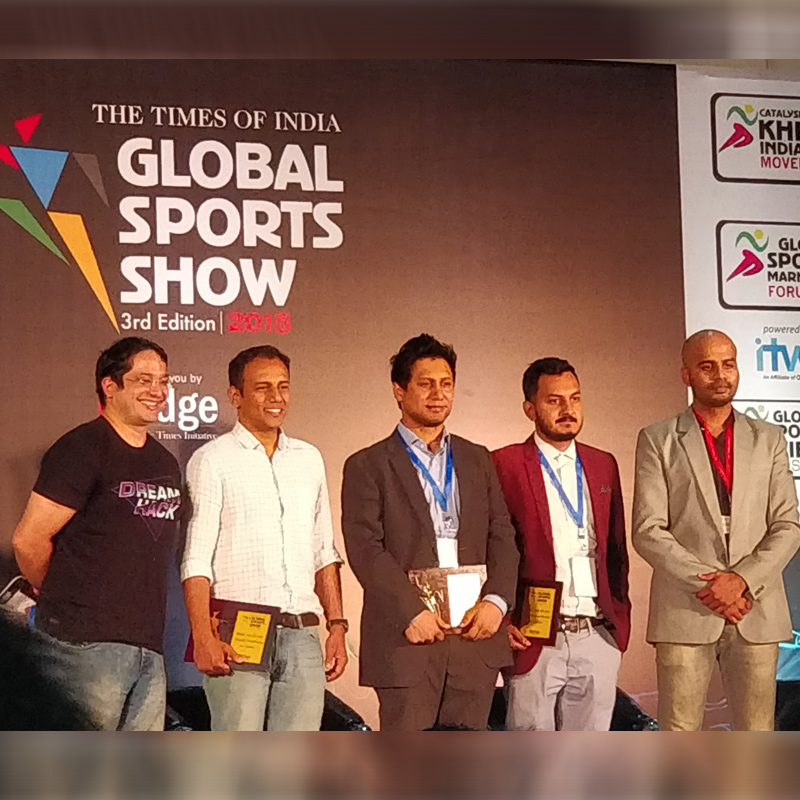
    In the third edition of Times of India Global Sports Show (GSS) 2018, industry experts came together to discuss about “Unlocking potential: The eSports revolution in India”.

    The state of esports industry over the next three to five years is estimated to grow by 5.3 per cent in Asia and 9.4 per cent in Middle East and Africa (ME&A) according to PwC Sports Survey 2018.

    Esports is a subculture that is just growing. It is the sport of the new generation. In India, it is played on multiple platforms like Voot, Hotstar, Youtube and Twitch.

    Tencent GM Aneesh Arvind said, “Once you have a large enough mass in a region or a country then I would think it’s a matter of time to really become big. The three things we can do from our side to make it really popular are the infrastructure, devices and data where people can play and watch others play.

    The recent sensational game made by Tencent Games is PlayerUnknown’s Battleground’s (PUBG) Mobile, which has crossed 100 million downloads.

    “We have such a large player base in India that all the assumptions we used to have in the gaming industry doesn’t hold true anymore. We have built the game and the ecosystem around it by doing TV commercials, advertisement in different media, got influencers on board,” Arvind added.

    U Sports AVP-brands and partnerships Tushaar Garg said that esports was the first they spotted when they looked for new investment. “The first season of UCypher was to create awareness and created a docu-drama series format. We looked at two thing that is the big massive fan base in terms of demographics as we have a very young population below the age of 35 and biggest smartphone market after the US. We took the most popular title like DOTA, Tekken and Counter-Strike.”

    “We packaged UCypher in such a way that the actual user gets tri-fold offering i.e., career, content and community and with that, we also looked at how we can mass-ify it,” Garg added.

    Esports for the first time became a part of a major sporting event in 2018 Asian Games Jakarta as a demonstration sports. This was announced by Asian Esports Federation (AESF). 10 Indian gamers qualified for the event.

    According to Tencent, Esports is a video game, which is played competitively with rewards attached to it and an ecosystem where people are ready to watch that.

    Nodwin Gaming MD Akshat Rathee asked the panel whether it a monetisation time or a growth time for esports in India to which Garg said, “I think for us it is an investment time. As a company which is building IPs we are very clear that for the next 3-5 year time frame we have to invest in the fan base, create the infrastructure getting the right stakeholder and the right federations.”

    According to UK-based Juniper Research, the advertising spend will dominate in terms of revenue and spend (accounting for 50 per cent in 2022).

    In 2018, the market size of esports is supposed to be $900 million and in 2021 it is likely to reach $3 billion. “We as the esports industry are trying to figure out ways in which we can grow and models of monetisation,” Arvind added.

    “We are the only sport in the world which is not run by the federation because the publisher owns the trademark of the game,” Rathee concluded.

  • Esports on the path to be mainstream in India

    Esports on the path to be mainstream in India

    MUMBAI: The state of sports industry over the next three to five years is estimated to grow by 5.3 per cent in Asia and 9.4 per cent in Middle East and Africa (ME&A) according to PwC Sports Survey 2018. Despite the prediction in Asia and ME&A, globally the industry will witness a drop of 10.2 per cent. This is because the market conditions across the industry are stabilising as it progresses in the transition from traditional to digital media consumption, with sports leaders continuing to predict healthy growth in absolute terms.  

    Adding to this, PwC head-sports business advisory David Dellea said, “Overall, sports leaders foresee stable market growth driven by persistent media and sponsorship revenues as the business models behind them continue to shift towards digital.”

    The report mainly focuses on top 10 sports by growth potential globally; esports is leading the chart this year leaving behind the likes of football. The amount of people around the world who have watched some of the FIFA World Cup this year is 3.4 billion which is nearly half the total world population of 7.6 billion, according to research company GlobalWebIndex. The most watched and followed sports in India, cricket, takes the number 10 position. Overall viewership of Indian Premier League (IPL) across all platforms TV (in-home & out-of-home) and digital in urban + rural audiences was 11.3 billion gross impressions.

    Esports economy is estimated to reach $804.9 million in 2018, which is a 29.8 per cent jump y-o-y from 2017. The growth in terms of revenue is expected to reach $1.58 million by 2022, which is 18.4 per cent compound annual growth (CAGR) from 2018. The drivers of this growth are sponsorship ($500 million, 31.7 per cent of overall revenues), followed closely by media rights ($449 million, 28.4 per cent of overall revenue) and streaming advertisers ($316 million, 20 per cent of the overall revenue).

    An Indian gaming solutions company and creator of e-sports events, Nodwin gaming head Akshat Rathee said, “Esports is already growing in India. One of the biggest testimonies to a market growth of anything is measured by the number of investments done in it. Fundamentally esports is like a sports media marketing property, it’s like the IPL. It is not measured by the number of teams or by prize pool but by media rights auction.”

    The growth in esports economy is substantiated by developments such as publishers (Blizzard Entertainment and Riot Games) introducing franchise leagues, traditional sports (such as the NBA and F1) launching esports competitions and mainstream broadcasters (such as ESPN and Sky Sports) airing esports content over the past year.

    Esports federation of India (ESFI) director Lokesh Suji said, “Esports in India has massive potential, which is yet to be tapped. With improved internet speeds, smartphone penetration, government digital push and highest youth population, there is no reason why India will not be one of the superpowers for esports.”

    Esports for the first time became a part of a major sporting event in 2018 Asian Games Jakarta as a demonstration sports. This was announced by Asian Esports Federation (AESF). 10 Indian gamers qualified for the event.

    “We created history for Indian esports when Tirth Mehta won bronze (Hearthstone) and Karan Manganani was placed 4th (Clash Royale) in Asian Games this year, where esports was a demonstration sport. This is the fuel/trigger point which Indian esports was waiting for, it has boosted the confidence of many people who wanted to get involved in esports but were sitting on the fence (be it the brands, investors, gamers or parents). Gamers who were playing casually have started playing seriously as now they know that they can become esports athletes and build a career in esports,” he added.

    In January 2018, Nazara Technologies invested Rs 767.68 million for 55 per cent of equity share capital of Nodwin Gaming, a company engaged in activities pertaining to eSports in India. Nazara Technologies is a mobile games company headquartered in Mumbai, which is engaged in the acquisition of, value addition to and distribution, of mobile games across emerging markets such as India, Middle East, Africa, South East Asia and Latin America.

    “The viewership market for Indian esports market is 150 million people. We believe that India in 2022 will contribute close to 20 per cent of the overall revenue. India along with China, America and Germany would be the top four esports watching countries in the world. The drivers of growth will be publishers, better teams and better experience between teams,” Rathee added.

    “We need to make the Sachin/Virat of Indian Esports and only then will we have viewership numbers. For that to happen, a lot of work needs to be done at the grassroots level such as skill development and enough opportunities need to be created for an esports athlete to showcase his/her skill not only at the national but also at the international level. Mere participation will not help, we have to win. Any broadcaster who is willing to invest will have to invest in building this sport and if they are only looking at building an event they will eventually fail, which at least we don't want as it will create a wrong precedent,” Suji added.

    If we look at the growth rate by market segment over the next 3-5 years, digital media rights contribute 11.5 per cent to the overall pie. Sponsorship and advertising is the next big thing with 5.5 per cent share followed by licensing and merchandising with 4.8 per cent share.

    India’s first multi-platform, multi-game esports championship was launched by USports in the name of UCypher. The league tied up with MTV for the television broadcast. UCypher’s ambition is to present a platform to talented gamers that help them achieve their maximum potential as well as shape their career in e-sports leagues.

    Many advertisers were part of UCypher in its inaugural season like Amazon, Burger King, Fossil, Gillette, Idea Cellular, Mercedes Benz, Nestle, OPPO, Nivea, Netflix, Philips electronics, P&G, Seagram, United Breweries, Vodafone and Xiaomi technologies to name a few.

    Sony Pictures Network India head-digital business Uday Sodhi said, “Esports is an early stage development; it’s just getting popular with the younger TG. We covered Asian games in Jakarta in which esports was a part. This is an interesting category but still a small category as compared to other sports in Asian games. Yes, it is a developing, fast-growing category but will take some time to build a large following in India in the mainstream.”

    Another Indian esports company, CobX co-founder and CEO Mujahid Rupani said, “Esport already is in the visibility market considering the number of events, price pools that have come into play. Currently, we are six to seven years behind China, but we have the advantage of acceleration. The main thing is that industry support is lacking in India. Global sponsors, who generally fund esports throughout the world, in India have no budgets. The broadcasters in India are interested in esports and they are talking to people. Right now they are at a stage of doing market analysis. The content demand is so much for broadcasting which is not available.”

    “We are watching that space and participating in it. Till the time we don’t have Indian winners and heroes it is very unlikely that the sport will develop. We will continue to look at opportunities to showcase on SonyLiv,” Sodhi added.

    Talking about esports being broadcast on sports channels in India, “I think it’s dependent on them and us to go out and see what kind of IP is put in. We are already in conversation with Star and Sony Ten. We also believe there is some regional focus with someone like Sun TV who can pick up regional rights,” Rathee added. 

    The esports industry is only just picking up in India. Only when it amasses a good amount of fan following or if someone takes up the challenge of building its popularity will there be a speedy growth.
  • IPL, FTA channels boost TV advertising by 10.3% in FY18: KPMG report

    IPL, FTA channels boost TV advertising by 10.3% in FY18: KPMG report

    MUMBAI: The media and entertainment industry is now on the road to recovery after facing headwinds due to major regulatory interventions such as demonetisation, GST and RERA, resulting in lower consumption and ad spend during FY18. 

    The KPMG in India’s – Media and Entertainment report 2018, launched on 5 September 2018, stated that strong and consistent economic growth fueled by a rise in consumption and growth in digitisation provided support, enabling the Indian media and entertainment (M&E) industry to grow at 11 per cent over FY17 to reach Rs 1,436 billion in FY18.

    The TV industry in India was estimated at Rs 652 billion in FY18, a growth of 9.5 per cent from FY17, having grown at a CAGR of 10.7 per cent between FY14-18. The market size consisted of advertisement revenues of Rs 224 billion and subscription revenues of Rs 428 billion in FY18.

    Television advertising grew at a rate of 10.3 per cent in FY18, aided by the strong performance of Indian Premier League (IPL), free-to-air (FTA) channels and consumer promotions by FMCG companies in the festive season. FMCG, telecom and auto sectors contributed more than two-thirds of the spends on television advertising in India. However, the first half of FY18 was majorly impacted by the implementation of GST and RERA as FMCG and real estate companies kept their ad spends on hold. Large broadcasters with a client base of national advertisers were less impacted than the ones with a predominantly local advertiser base.  

    The long term outlook for the M&E sector remains strong on the back of a buoyant Indian economy, robust domestic demand, particularly in rural and regional markets and growing digital access and consumption. This year, telecom-media-technology (TMT) convergence took centre stage. This has the potential to significantly change how media is created, distributed and consumed and media companies need to take a relook at their strategies and business models to successfully operate and thrive in the new paradigm.

    KPMG in India partner and head – media and entertainment Girish Menon said, “The India media and entertainment industry was affected by lower ad spend in FY18 due to goods and services tax (GST) rollout and the lingering effects of demonetisation. However, this effect has been temporary and the industry is seeing positive long term outlook on the back of rapid growth in digital access and consumption, coupled with strong domestic demand especially from the rural and regional markets. The sector grew by 10.9 per cent in FY18 to reach Rs 1,436 billion and it is expected to grow at a CAGR of 13.1 per cent over the next five years to reach Rs 2,660.2 billion by FY23. Growing presence of telecom and technology players in media distribution has led to convergence of business models across TMT and media companies will have to evolve to successfully operate in the new paradigm.” 

    According to the report, digital advertisement revenues have been growing rapidly in India, and the trend continued in FY18 with a growth of 35 per cent to reach Rs 116.3 billion. Key growth drivers were developments in digital infrastructure; increased inclusion of and adoption by regional, non-urban users; increase in the penetration of mobile phones; and increase in maturity in the digital ecosystem driven by public and private investments.

    KPMG in India head – technology media and telecom Mritunjay Kapur said, “Digital technology, coupled with radical shifts in consumption patterns have undeniably resulted in blurring of boundaries that define the TMT sectors. TMT convergence is now a reality and will likely cause significant disruptions across the value chain. Media organisations would need to re-evaluate their existing strategies and operating models to leverage the emerging opportunities and sustain against new evolving challenges.”

    Mobile gaming in India has seen a tremendous uptick. From a meagre contribution of 18 per cent in 2012 (the smallest segment), mobile gaming comprised 46 per cent of the global gaming revenue in 2017 and this number is set to reach 60 per cent by 2021. Mobile gaming already leads from the front in India with nearly 89 per cent of all gaming revenue in India generated by mobile games in 2017. The higher than expected growth in online gaming over the past 18 months has primarily been on account of the mobile gaming segment, which has benefitted from the fall in 3G and 4G data costs. “On the other hand, Esport is a very niche market and while it is growing, I’m not sure that it is going to become a very sizable number. The bulk of the gaming revenue is going to come from the online gaming business,” Menon added.