Tag: ESPN

  • ‘BCCI rights great opportunity to build Star’s sports biz’ : Star India CEO Uday Shankar

    ‘BCCI rights great opportunity to build Star’s sports biz’ : Star India CEO Uday Shankar

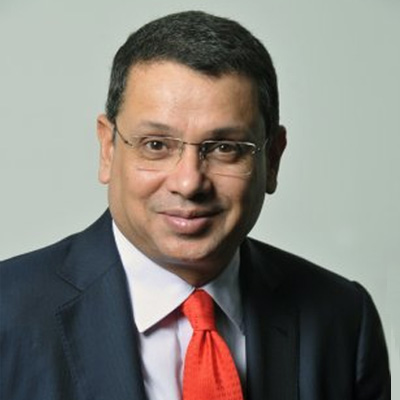
    Star India CEO Uday Shankar, conqueror of TV news and entertainment business, is ready to wage a new battle in sports broadcasting.

    When the BCCI rights came up for grabs after the abrupt termination of contract with Nimbus, Shankar quickly pounced upon it. He tiptoed in, surprising hot contender Sony to pocket the prized rights to telecast international cricket in India from 2012 through 2018. His winning bid: a whopping Rs 38.5 billion.

    “We believe in the power and value of cricket as content in India. By acquiring the BCCI rights for telecast, we think it is a great opportunity to create a new business,” he says.

    Shankar‘s timing couldn‘t have been better. A couple of months later, joint venture partner Disney agreed to sell its 50 per cent stake in ESPN Star Sports, allowing Star to aggressively build and expand the sports broadcasting business in India.

    “Drama and cricket are the two big pools of content that the masses love to watch in India. We are already a key player in entertainment. Now we can have independent charge over the sports broadcasting business,” he says.

    Shankar has placed huge bets on digitisation that would plug leakages in subscription revenue and dramatically increase the paying subscribers to broadcasters. “In the current construct, those rights are not profitable. The market is primarily so unattractive because of the theft and leakage in subscription revenues. Digitisation would enable content owners to get a better share of the subscription revenue,” he avers.

    In the first part of the interview with Indiantelevision.com‘s Sibabrata Das, Shankar talks about Star‘s game plan in sports broadcasting, the rise in acquisition costs, the huge opportunity that digitisation would throw open and the need to build a robust subscription income.

    Excerpts:

    Q. Why did News Corp. and Disney end their 16-year-old joint venture partnership in ESPN Star Sports (ESS) when it allowed them to lead the sports broadcasting business in Asia?
    When the discussions started two years back, it was not on a buyout proposal but on how to take ESS forward in a changed market environment. The sports business was under financial pressure and both partners were worried. The Champions League T20 rights (for $975 million) did not bring much value. Acquisition prices were rising and competition was not helping stem it. This later turned into the need to go separate ways but the possession of the rights over sporting events made a split in the properties complex and impossible.

    The obvious course was to acquire the entire 50 per cent stake of the joint venture partner and be the sole owner. The deal took time because Disney had to take the final call on whether it wanted ESPN to exit from Asia.

    Q. When Star bid for the BCCI rights on its own, had Disney agreed to sell or it was an act of defiance to build a sports broadcasting business outside the JV?
    We were still discussing the future of ESS when the BCCI rights came up for renewal. And because there was no clarity on the future of ESS, we could not come to an understanding on what its position would be on BCCI. We at Star knew the strategic value this property would add to our thriving entertainment business. We expressed an interest that in case ESS was not clear and since the bid had a final deadline which was approaching fast, Star would go ahead and bid for the rights as a one-off.

    Even in the JV agreement, this kind of provision was there that either party (ESPN or Star) could go and bid for the rights. However, they could not use the rights on their own without the approval of the other party. So we agreed that instead of letting BCCI go away to a competitor, Star would bid for it as a one-off and then assign the rights to ESS in case they wanted it. If ESS didn‘t want, Star could go ahead and broadcast it. So that‘s how it happened.

    Q. Did the BCCI rights tilt the deal in your favour as we understand that even Disney had expressed an intent to acquire News Corp‘s stake in ESS (though they had made heavy investments in UTV and were looking at consolidating that business)?
    The two are not linked. We were very clear that it would be a one-off bid (for rights). Now let‘s assume that Disney had bought out ESS. Then they would have definitely insisted on a non-compete agreement and we would have had to find a way of handing over BCCI. I don‘t know what would have happened; that‘s a conversation one can only speculate on. But if Disney had chosen to play in the sports market here, then they would have definitely tried to also get a piece of the BCCI.

    Q. When you realised the strategic value of the BCCI rights, did the fear of Sony haunt you as it had the lucrative IPL (Indian Premier League) rights and its entertainment business was on the upswing?
    Of course, it was an important consideration. It would have made Sony a very formidable player in the sports space. And we were then not present in that space; we were only an entertainment company.

    We also knew that there were a few others like Ten Sports and BCCL (Benett Coleman and Company Ltd) who had bought the tender documents. All of them were key competitors. And anybody who had the cricket rights would have a serious strategic weapon.

    But that wasn‘t why we decided to go for the BCCI rights. We definitely believe in the power and value of cricket as content. It gets the largest number of viewers across all target groups. We also genuinely believe that there is an opportunity to improve the quality of cricket on TV. And we thought the best place to start that would be the BCCI rights.

    ‘In the current construct, those rights are not profitable. Our big punt is in digitisation‘ 

    Q. Was the bid of Rs 38.51 billion on the higher side?
    You would bid only what is the rational value of the tournament and not beyond reasonable limits. In fact, Sony and our bids were pretty close; it clearly tells you that there was a consistent logic that both of us were applying.

    You must appreciate that nobody had the time to plan for it because it happened suddenly. BCCI (rights) wasn‘t on Sony‘s or anybody‘s horizon. It was comfortably settled with Nimbus; they were holding the rights for almost six years and they were going to have it for several years more. If anybody says it was part of their serious strategic consideration, that wouldn‘t be correct. How can you plan for something that is not available in the market? But when it came up for grabs, everybody thought it was a great opportunity. And we definitely thought of it is as a great opportunity to create a new business.

    Q. But since it was unplanned, you could have overestimated the value of the property? Or how did you arrive at a right value?
    There was a reserve price that BCCI had indicated and based on that we did the mathematical calculations. The ad rates for India cricket matches per 10 seconds and the kind of distribution revenues that can be earned are available in the market. So based on that we did our calculations.

    Q. Media analysts say those numbers wouldn‘t make up for the bid amount unless digitisation happens. Did you bet too heavily on digitisation when you did the calculations?
    In the current construct, those rights are not profitable. The market is primarily so unattractive because of the theft and leakage in subscription revenues. More than Rs 150 billion gets collected from the ground in form of subscription income. But the net off carriage fees that comes to the broadcasters and content owners is a small fraction of that.

    Our big punt is that in the next couple of years when digitisation moves significantly forward, a lot of that would change. The leakages would have been plugged, there would be more fair and transparent business processes. And that would enable content owners to get a better share of the subscription revenue.

    Sports nowhere in the world has sustained on advertising revenue; that is a small part of it. Wherever it makes money, it makes it on the back of subscription income. And that is what we are hoping would happen in India as well.

    Q. Since Star has a very strong entertainment broadcasting business, will the network power not enable you to push up advertising rates for your sports properties?
    You can‘t move that synergy to up the ad rates much just because you have more properties under your belt. The target audiences and the set of advertisers are different. The big advertisers on sports, for instance, are telecom and auto companies. General entertainment channels primarily address a female TG.

    So you can‘t play much on network strength. We have not factored in any dramatic upside in advertising revenues. Let‘s face it; ad rates can‘t go beyond a certain level of elasticity.

    Q. Are you expecting ARPUs (average revenue per subscriber) to climb with digitisation of cable networks?
    No, I am not factoring in a tremendous increase in ARPUs. India is always a value conscious market and cricket is a mass market product. There would, of course, be some people who have the ability to pay higher value. But most people won‘t pay that kind of money.

    There is also enough competition in the market which would ensure that the ARPUs don‘t go beyond a certain limit. What we are looking at is the big shift in cable that should happen. In case of transparency, we clearly see a visible link between the subscriber base and the payouts. 

    Q. What sort of paying subscribers would sports broadcasters attract?
    If the whole country goes digital, you are talking about 120-130 million C&S homes in the next few years. Even if you say 60 per cent of the entire universe goes cable, you are talking about 70-75 million C&S homes.

    The 8-9 million paying subscribers for sports currently under analogue cable would go up significantly. Sports is driven by events. But at any time, the genre would be attracting 60-70 per cent of the total subscriber base. I think that is the ratio that DTH (direct-to-home) gets.

    ‘Sports had been relatively less competitive in India because the two big players were together. Now since ESPN and Star have parted ways, the next 5-10 years, will see a new round of competitiveness and aggression in the sports market‘

    Q. After having acquired the BCCI rights for such an aggressive price, will Star match that aggression for the upcoming cricket boards that will be up for grabs within a year?
    We neither choose to nor can afford to be over aggressive. If we are also aggressive, then rights prices would shoot up. Now it is Sony‘s and Ten Sports‘ turn to be aggressive.

    Q. Do you see acquisition prices climbing further?
    If the competitive norm stays, then there will definitely be a tendency for the acquisition prices to go up. A lot, however, depends on how the distribution market pans out. If the distribution market continues to be so leaky and porous and cable stays largely analogue, then even the current prices will be unsustainable. However, if the digital transformation happens and if there is a matured digital distribution market that comes up, then definitely the prices will go up.

    Q. Even if Disney decides to come back after the two-year non-compete period is over and India continues to have analogue cable?
    I am not too sure if it continues to be analogue, how many players would be interest. That is the biggest stumbling block. But on the other hand, I also think analogue cable will not survive even if the current digital initiatives fail to go through; analogue will dies on its own. This is a funny market. The analogue experience is poor and the number of channels that the consumers can watch is very few. The cable operator doesn‘t pay taxes; nor does he pay fair value to the content owner. How long will the society tolerate this kind of a distorted model?

    Q. Consumers are probably tolerating analogue cable because the ARPUs are low?
    The ARPUs are not that low. How much does DTH charge? You can‘t charge beyond a certain reasonable price. What you can charge consumers also depends on affordability and the kind of value that they attach to it. Price doesn‘t escalate in isolation; there has to be a realistic basis.

    In certain areas of Mumbai, cable subscription is Rs 300-350 per month. In low income areas, people are paying less. ARPUs are not uniformly low. That will happen in a digital environment also.

    Q. Can‘t acquisition prices for cricket rights go up because of strategic value that the property brings?
    No mature media company will pay irrationally high for strategic reasons unless this can translate into business value. If they do that, they will go bankrupt. There are a couple of media companies who are prime examples of that. There is a company that launched an entertainment channel and decided to go completely crazy for what they thought was the strategic value. The strategic value worked so well for them that they had to sell out. The news companies have gone ahead and spent so much money on all kinds of distribution, etc. We know the financial mess they are all in.

    You think anybody would pay obscenely high just because it has strategic value. Star would not do that; nor would Sony and Zee. If BCCI prices were double this and tomorrow if IPL is available for three times more, would I go and buy those rights? No way. I don‘t want to go and acquire rights and be sacked or drive my company bankrupt.

    Q. With the current distribution of cricket properties across sports broadcasters, what sort of dominance will Star have?
    It is very difficult for anyone to have any kind of very big position in market share, let alone dominance. In this market, every sector of broadcasting and media is so competitive. Whether it is entertainment, news or regional, one thing that we have seen is that there is new competition coming in every day.

    If anything, sports all these years has seen less and less of competition in India primarily because there was a JV between ESPN and Star. Until IPL came, it was just ESPN-Star. Sony had a game only because it got the IPL; without it, it would have been a marginal player. Ten Sports continues to be a marginal player except for a few rights they have like the South Africa and the Sri Lanka boards.

    Sports broadcasting requires heavy investments. And not everybody may have the appetite to take big risks unless you are a Zee or Sony, specially because the distribution deals are so uncertain.

    Since ESPN and Star have parted ways, it is only a matter of time that Disney and ESPN will come back to India. So I think over the next 5-10 years, you will see a new round of competitiveness and aggression in the sports market. Sony has launched a sports channel; they will have to really work hard to build that and will need more rights. I am sure they will surely bid aggressive for whatever rights come up. Ten Sports will also be forced to bid for a few more rights if they want to stay competitive in the game. You saw how expensive their bid was for the South Africa rights. The price they paid was pretty high and they got it.

    Sports had been relatively less competitive in this country because the two big players were together. That phenomena is set to change.

    Q. But in UK you have News Corp as a big player and ESPN as a much smaller player. Wouldn‘t India replicate that market?
    Those are very settled markets and even there that is not quite the case. In India tell me one sector of media where one single player sits with 50 per cent share. When it started, that may have been the case. About 20 years ago, Zee had a large share. Then Star came and build a large share in Hindi entertainment. See how competitive the market is today.

    Take regional. The only market where one player continues to build a very big share is Sun network in Tamil Nadu. And we all know the reasons behind that. But if it‘s a freee market, then it is difficult for anybody to take a 50 per cent or a 40 per cent share. Very, very difficult.

    India is an emerging market. So global attention is on this market. Media, despite all the softening, is still delivering the second largest growth rate in the world year-on-year. And that will continue to be the case for a long time. The most attractive growth rate market is not available so easily for media. China does not allow media that easily. So where can you dominate ? India has a huge consumer base; you are talking of 120-130 million C&S homes. Incomes are going up. I think there will be more and more people coming in.

    Western media companies are looking at India primarily because they are not getting growth in their own markets. More and more large Indian companies are stepping in. You have seen what has happened in the last 2-3 years. Big Indian corporates have made their foray into media. Reliance Industries Ltd (RIL) and Aditya Birla have come into media. I think media is going to get more and more competitive. And no matter how much money you might have, no matter how aggressive you might be, I don‘t see a situation where anybody will be able to build a 50 per cent share in any vertical.

    Q. Since Rupert Murdoch had said that IPL was a big miss, would Star‘s next big stretch be on acquiring its rights when it becomes available in future?
    Of course, it was a big miss. I don‘t even know what the contractual agreement between Sony and BCCI is. They may have a preferred access to renew it. But if it comes up and continues to be a strong property, then we will surely be interested. We have seen a little bit of softening in IPL and hopefully that‘s temporary. But the renewal is long away and it would depend on what BCCI‘s price expectation is at that stage.

    Q. Do you see cricket viewership plateauing?
    Cricket viewership depends on a variety of things. First and foremost is the nature of the tournament. Following immediately afterwards is the performance of India. I think there is a value to be obtained from that.

    The quality of TV broadcast can make a big difference to how much the viewership can grow. Sports broadcasters generally have done a very good job of providing a professional cricket experience to the viewers. But it seems to have plateaued.

    The only rule of content – and that applies to drama, sports, news, anything – is that the sameness brings in fatigue. And there is a certain amount of sameness that seems to have settled in sports. That is the reason why cricket viewership might be peaking. If we can disrupt that sameness, bring in innovation and fresh approach to connectivity, to visual and to graphics, I think given the passion that cricket generates in this country only sky is the limit for viewership. When cricket is played in every nook and corner literally, how can you say that the viewership has peaked. I think the viewership can grow a great deal more provided we continue to grow and build on the experience that we can provide. And there the broadcasters and the boards can do a lot more together.

    Q. Are you talking of introducing doses of entertainment?
    No, I am not suggesting that. You can‘t turn cricket into soaps; you have to stay true to the sport. But within that, you have to innovate. And there is so much of technology to be used – you see what has happened in the last 10-15 years! New graphic technology has come in and the kind of replays that we get to see only can enhance the viewing experience. You can further enhance that experience a great deal more.


  • Trai not to implement ad regulations till further orders from Tdsat

    NEW DELHI: The Telecom Disputes Settlement and Appellate Tribunal (Tdsat) has directed the Telecom Regulatory Authority of India (Trai) to hold on to its commitment of not implementing regulation of advertisement on television channels till its further orders.

    The commitment that the Standards of Quality of Service (Duration of Advertisements in Television Channels) Regulations, 2012 dated 14 May 2012 will not be implemented till 30 August was given by Trai during a Tdsat hearing on July 17.

    Broadcasters had moved Tdsat challenging the authority of Trai to implement the provision in the Cable Act that restricts the total advertisements in an hour to 12 minutes.

    Trai will not take steps to implement the regulations on advertisement limit till the next hearing. Tdsat chairman S B Sinha and member P K Rastogi have listed for further hearing on 3 December the petitions filed by broadcasters and organisations against ad regulations.

    Tdsat gave its directive after Trai Counsel Saket Singh gave an assurance that the regulator was prepared to discuss the issue with broadcasters and other stakeholders. Singh also pointed out that Trai had, in fact asked all stakeholders to respond by 11 September to amendments proposed in the draft regulation “Standards of Quality of Service (Duration of Advertisements in Television Channels) (Amendment) Regulations, 2012”. The draft amendment was released on 27 August.

    The petitioners have questioned the powers of Trai contending that the regulator has no power to limit the ad times. According to the broadcasters, such power vests with the central government and that only it can issue such directions under The Cable Television Networks (Regulation) Act, 1995.

    The Tribunal was hearing different petitions by the Indian Broadcasting Foundation, the News Broadcasters Association,. ESPN Software India Pvt. Ltd., Multi Screen India Pvt. Ltd., Neo Sports Broadcast Pvt. Ltd., and Discovery Communication India which had been clubbed together.

    Some of the petitions had been filed when the first Regulations were issued on 14 May while those affecting sports channels were filed following the amended draft issued on 27 August.

    Counsel A J Bhambani who represented some of the petitioners in the appeal challenging the Trai Regulations said the regulator should not have issued any amended regulations in view of its assurance to the tribunal in July that it would not implement its regulation till 30 August.

    Singh said Trai had only issued draft Regulations as part of the consultation process and had no intention of enforcing it till all the stakeholders had been heard.

    Trai had first issued a notification on 14 May limiting the duration of advertisements in TV channels to 12 minutes per hour. Any shortfall of advertisement duration in any hour cannot be carried over, the telecom regulator had said. Trai in its regulation had also said that the minimum time gap between any two consecutive advertisement breaks should not be less than 15 minutes and not less than 30 minutes for movies.

    Trai in its draft amendment of 27 August has proposed to withdraw the requirement of a 15-minute gap between ad breaks, while sticking to the overall ad time of 12 minutes per hour. For sports broadcasters, Trai has proposed to remove the clause that permitted ads only during breaks in case of live broadcast of a sporting event.

    Also read:

    Broadcasters get breathing space as Tdsat stays Trai‘s ad cap rule Trai willing to discuss with broadcasters on TV ad time issue

  • Euro 2012: Spain vs Portugal match delivers 2.04 TVR for Neo

    MUMBAI: The semi-final match between Spain and Portugal was the most watched match of Uefa Euro 2012 garnering 2.04 TVR in the six metros (Sec ABC 15+ CS male target group), broadcaster Neo Prime said quoting TAM data.

    The second semi-final match between Germany and Italy got only 1.37 TVR. The two semi-finals had average ratings of 1.70 TVR.
    The viewership data for the final between Spain and Italy is expected next week.

    Comparably, the semi-final matches in the previous edition of tournament had average ratings of 1.12 TVR with the first semi-final match between Germany and Turkey getting a TVR of 1.91 and the second semi-final between Russia and Spain attracting 0.91 TVR.

    The 2008 Uefa Euro was aired on ESPN in India.

    The event‘s reach also improved significantly with 19.28 million viewers tuning in for matches till the semi-final stage. The previous edition had a reach of 14.96 million.

    The four quarter final matches for the tournament was 1.09 TVR with the last two matches getting viewership of above 1 TVR. The 2008 edition had average ratings of 0.88 for the quarter final stage.

    On the whole, the average event viewership notched 0.73 TVR which is just a tad better than the 0.67 TV in the previous edition. Eleven out of 30 matches till the semi-final stage rated more than 1 TVR compared to seven matches in the 2008 Uefa championship.

    In US, the Uefa Euro 2012 final on ESPN set a record as the most-watched European Football Championship game in the United States. The match was seen by an average audience of 4.068 million viewers in 2.699 million average television households.

    Throughout the 31 matches of the three-week tournament, ESPN‘s live English-language TV presentation delivered an average of 993,000 households and 1,300,000 viewers, up 51 per cent in households and viewers respectively, versus 31 matches in 2008 (657,000 households and 859,000 viewers).

    In the U.K., the Spain-Italy final on pubcaster BBC and ITV averaged 12.3 million viewers during the game, compared with two million on ITV.

  • ESPN Star Sports to earn Rs 50 mn ad rev from Wimbledon

    MUMBAI: ESPN Star Sports has completely sold out on its inventory and could earn advertising revenue of Rs 50 million from the Wimbledon tournament.

    Brands like Rolex, Tourism Authority of Thailand, Malaysia Tourism Board, Perfetti, Samsung, Colgate Palmolive, Vodafone, Renault Nissan, IBM, Nokia, Reliance Netconnect, Parle Agro, Pernod Ricard (Seagram) and MetLife have bought airtime on the live telecast of the Wimbledon.

    The main pull for advertisers to associate with the event is the fact that it has a following among male SEC ABC TG.

    According to a senior media buying executive, ESS could end up with Rs 50 million from the event. The executive says that advertisers are forking out between Rs 15,000-25,000 for buying airtime on the property as Wimbledon is the biggest Tennis championship.

    The event will be covered on Star Sports and in high definition on ESPN HD, with up to 140 hours of live coverage on both the channels.

    “Tennis has been quite a popular sport among its target audience in India and Wimbledon has been one of the most followed tournaments for a long time. I think we are seeing the reflection in TV ratings as well and given the fact that it’s a two-week long tournament, played during prime time for India, it’s a viable opportunity for marketers,” says Spatial Access CEO Nikhil Rangnekar.

    Agrees VivaKi Exchange CEO Mona Jain, “Even though the hype around Wimbledon isn’t the same as it used to be before, it continues to be the biggest Tennis property. Tennis has its own following in India and offers good opportunity for brands that are looking to reach out to specific target audience.”

    Neo Sports had earned an estimated advertising revenue of Rs 45 million from the recently concluded French Open. The channel had roped in Reliance 3G, Coca-Cola, Renault, Kerala Tourism and Vinni Pharmaceuticals as broadcast sponsors.

  • ESS eyes Rs 550 million from Olympics

    MUMBAI: ESPN Star Sports, the official broadcaster of 2012 London Olympics in India, is targeting advertising revenue of Rs 550 million from the 16-day event which will be held from 28 July to 12 August with the opening ceremony on 27 July.

    The sportscaster has roped in Tata DoCoMo as co-presenting sponsor while Airtel Digital TV has come on board as the associate sponsor, say sources.

    ESS is in advanced stage of negotiations with several other advertisers including the likes of Hero MotoCorp and Samsung, which is a global Olympic sponsor.

    ESS is looking at a total of eight sponsors for the event with two co-presenting and six associate sponsors. The sportscaster is betting big on advertisers from beverages, telecom, automobile, and insurance sectors.

    ESS is asking Rs 70-85 million for co-presenting sponsors and Rs 60-65 million from associate sponsors, according to a top executive at a media buying agency.

    “ESS is expected to make Rs 500-550 million from Olympics,” said a source.

    ESPN Software India senior director business development and event management group Rathindra Basu admits that selling sponsorships has been a challenging task as there is no previous viewership data to support sales pitch.

    “The challenge that we realised in the sales process was that we had no historical data in terms of viewership in the C&S space. Public broadcaster DD did show Olympics four years ago but there was no private broadcaster last time around,” Basu avers.

    What can work in ESS‘ favour is that there is no cricket featuring Indian team during Olympics. The interest level in London Olympics is also expected to be higher as many Indian athletes across disciplines have qualified for the event.

    “Brands who have traditionally been on sports are keen to associate with the event as Olympics typically attract viewership from youth segment particularly the male audience,” the executive from the media agency said.

    “ESS is offering a full three and a half months of window to sponsors starting with pre-event programming, promotions on ESS channels to the live broadcast of the event and highlights besides logo presence and other integrations. So the return on investment for Olympics works out well,” she further reveals.

    Agrees Basu, “With huge expectations from Indian contingent this year coupled with the most complete and comprehensive presentation of the Games on our bouquet, we expect London Olympics to be a huge draw in India.”

    According to Vivaki Exchange CEO Mona Jain, the viewership of Olympics has seen improvement and it has emerged as a viable marketing platform for advertisers who are looking at other sporting events that get viewership.

    A case in point is 2010 Commonwealth Games in Delhi which despite all the controversies surrounding it was sampled by 115 million viewers with average ratings of 0.5 TVR on DD1 and DD Sports on the back of encouraging performance by Indian athletes with Indian winning a record 101 medals.

    Besides ESS, the event will also be broadcast on DD and DD Sports as the pubcaster had secured the rights from Asia-Pacific Broadcasting Union, a non-profit, professional association of broadcasting organisations, after paying $3 million for acquiring the rights.

  • Champions League Twenty20 delivers 1.53 TVR

    Champions League Twenty20 delivers 1.53 TVR

    MUMBAI: Champions League Twenty20 on Star Cricket and ESPN has delivered an average TVR of 1.53 (not including qualifying matches), a slight improvement over the 1.44 TVR delivered last year.

    In the first year, the event had delivered an average TVR of 1.06. Including qualifying matches, the event this time delivered a TVR of 1.35, according to TAM data (C&S4+ All India).

    The big improvement, though, is in the semifinal delivery. This time the two semifinals delivered an average TVR of 2.74 compared to 1.34 last year. The main reason for this was that each semifinal saw an Indian Premier League (IPL) team winning.

    The highest rated match this time around was the semifinal duel between New South Wales Blues and Royal challengers Bangalore which got a TVR of 2.84.

    The second semifinal between Mumbai Indians and Somerset got a TVR of 2.64. Four matches during the event crossed a TVR of 2, TAM data shows.

  • ‘We will keep aside Rs 10 bn for organic or inorganic growth opportunities’ : Zeel MD and CEO Punit Goenka

    ‘We will keep aside Rs 10 bn for organic or inorganic growth opportunities’ : Zeel MD and CEO Punit Goenka

    Punit Goenka is in control of the media empire that patriarch Subhash Chandra built assiduously over almost two decades. He is quick to take decisions, is unruffled by temporary ups and downs, and believes in continuity.


    The elder son of Chandra digs deep into the Zee culture, has his own ways of finding solutions and does not hesitate to bet on sports as he takes up the responsibility of shaping Zee‘s broadcasting business.


    “I have learnt a lot from my dad. He is no more hands-on. See, he has not called me for over an hour (during the interview). I have my own style,” says Goenka, a grin on his face.


    Soft-spoken and shy, Goenka is a people‘s man. He backs his senior team, even when certain decisions do not work in the short run.


    In an environment of raunchy reality TV shows, he believes in clean content and explains that Zee TV, the flagship channel, is designed for family viewing.


    Goenka crafts strategies that focus on profitability; he hardly plays to the gallery.


    Under his leadership, Zee ended its 12-year-old rivalry with Star to float a joint venture distribution company named Media Pro Enterprise India. The aim of the JV: to pave the path for consolidation and hasten the need for digitisation in the sector.


    In an interview with Indiantelevision.com‘s Sibabrata Das, Zee Entertainment Enterprises Ltd managing director and CEO Goenka talks about the lack of opportunity in the marketplace to make the right purchase, the need to bet on sports broadcasting and to stick to profitability in a high-cost environment.


    Excerpts:

    Zeel is sitting on a cash pile of Rs 14 billion (as of 30 June 2011). Are you looking at acquisition opportunities?
    There is nothing that is available today that is fitting our criteria; we see no opportunity in the marketplace for us to make the right purchase. Even in the southern states, we are taking the organic route and patiently building our businesses there.


    As a company philosophy, we have decided to keep aside a cash of Rs 10 billion at any stage for organic or inorganic growth opportunities.

    But isn‘t this the right time for consolidation in the industry?
    Every two years we think the time has arrived for the industry to consolidate. But then something happens and there are more launches. Last time, it was the private equity firms; before that, we had the international strategic investors.


    However, for the benefit of the industry, consolidation is the answer. The sector is sized at Rs 300 billion and there are 500 television channels in the country earning an average ARPU (average revenue per user) of $3. That is why we have become an unprofitable industry.

    In a drive to consolidate and digitise the industry, Star India and Zee Group recently ended their 12-year divorce to create a distribution company. Has the joint venture been able to shake up the pay-TV market?
    It has been three months since the merged entity got formally rolling (on 1 July). Although we have started billing as a joint entity, there are old individual contracts that have yet to run their full cycle. We have over 5000 contracts with cable TV networks individually. So the impact will be felt when we start inking new contracts. There will be no major revenue upside in the short run. The deal will have a deeper impact after 18 months of implementation.

    How deep in terms of percentage growth?
    Both Star India and Zeel are seeing single-digit growth in subscription revenue from cable TV networks. Our domestic subscription income from cable rose 16 per cent (Rs 3.88 billion) in FY’11, but that included sports. By pooling together the resources of both the partners, we hope to post strong growth and address various anomalies of the analogue market including piracy.


    A large part of the deal plays out in analogue cable. In case of DTH, both of us are in any case growing independently.

    Given our growth trajectory and contracts, the sports business should break-even in two years. In the worst case scenario, we should be able to turn it around by the middle of FY‘14‘

    How painful has been the integration process?
    We have had to let go 20-25 per cent of the combined workforce. Some of them, however, have been absorbed inside the network.

    Media analysts say Zeel’s share price will get a boost if the sports broadcasting business is hived off and capital raised by offloading equity. Has any investment bank got the mandate to hunt for an investor for the sports business?
    We have no capital-raising plans. Zeel will continue to fund the sports business till it turns around. We have taken a long term call and sports broadcasting is a strategic business for us.

    When do you expect the sports business to turn around?
    Given our growth trajectory and contracts, the sports business should break-even in two years. In the worst case scenario, we should be able to turn it around by the middle of FY’14.

    Zeel‘s sports losses for FY‘11 stood at Rs 2.08 billion on a revenue of Rs 4.4 billion (excluding a one-time revenue gain of Rs 700 million as one-time fee for the pre-mature termination of rights for AIFF). So what will drive this to profitability?
    Subscription revenue will drive the business to profitability while advertising will be event-led.


    Ad revenue is heavily dependent on cricket. And within that segment, it is India cricket. While advertising revenue is cyclical, subscription income is consistent throughout the year.

    Zeel has bagged the eight-year Cricket South Africa (CSA) television rights for $180 million. Considering that the earlier five-year rights went for $75 million, isn’t the new price tag on the higher side?
    The price is in our comfort zone. It is an inflationary rise and has been one of the most valuable boards for us. By having one of the strategic boards under our belt for a longer term, we are under less pressure.

    We get to learn from sources that the Zimbabwe board rights have been retained for $20 million (earlier it had gone for $6 million for four years). But Zeel will be able to give its sports business maximum firepower when it is able to retain the telecast rights for the other three boards – Sri Lanka, Pakistan and West Indies. So will you bid aggressively?
    We have not yet signed with the Zimbabwe board, so I can’t comment on that. The other three boards are up for renewal during FY’12 and FY’13. We have done our calculations and will not bid recklessly for these rights. There are boards outside these which are also coming up for grabs.

    When is the golf channel getting launched ?
    We are awaiting government approval. We are ready to launch the golf channel within 60 days of obtaining the regulatory clearances.

    Will Comcast be a partner for the channel?
    Earlier Taj Television (which Zeel later acquired) had some sort of an agreement with Comcast for the golf channel. We have decided that we will do it ourselves and completely own it.

    When are you launching a full-fledged HD channel in sports?
    We are launching Ten Sports in HD format later this month. This will be a full-fledged HD channel and will have varied content from the other channels. So we will have four sports channels (Ten Cricket, Ten Action+ and Ten Sports already exist) by this month-end. We have acquired a slew of properties across different sports such as football and tennis. This has enabled us to launch three different channels and post strong subscription growth.

    Are there other HD launches planned?
    Zee TV, Zee Cinema and Zee Studio will be launched in HD format soon.

    Zeel has posted a measly 0.5 per cent ad growth in the fiscal first-quarter. Do you see the market improving?
    On the ad front, we have had a flat first quarter and do not expect to post double-digit growth this fiscal. But we will have a high single-digit growth.


    Subscription revenues will continue to have a similar growth trajectory, both on analogue cable and DTH. Our international revenues should stay flat.

    International subscription income actually de-grew two per cent in FY’11. Do you have any plans to fix the international business?
    The problem is with UK and Europe; the wobbly economy there is affecting our subscriber numbers. We have launched a hybrid channel, Zee Café, in the UK to arrest our degrowth in that market. The content, aimed at the South Asian diaspora, includes cricket and regional fiction shows sub-titled in English.


    In the other markets like the US, We are seeing growth.

    Is your localisation strategy working?
    Zee Aflam has seen reasonable growth and has reached break-even status within three years of operations. But operating in free-to-air markets (FTA) means the channel can grow only at limited speed.


    The other experiment we have carried out is in Russia. The audiences there love Bollywood, soaps and dramas. However, it is early days yet.


    We are also planning to launch in 3-4 other markets.

    Zee TV has slipped to fourth position as Sony Entertainment Television rejuvenated on the back of its big-ticket game show Kaun Banega Crorepati (KBC). Will you change the programming strategy and bring in celebrity-backed reality shows?
    There has been a streak of bad launches but it has not convinced us enough to believe that we need to change our content strategy. We are relaunching these slots.


    A large part of a particular channel‘s growth still comes from one show. A reality show may bring in spikes but we will wait to see what happens after that concludes. We will not take to celebrity-based reality shows unless we feel that we have a concept that needs to engage them. We are happy with our homegrown formats.


    Our prime competitor is Star. And as a network, we are in close competition.

    We will be increasing original hours of content on Zee TV from 28 hours to 33 hours per week. There has been some delay in that because we have had a few bad launches and we want to first fix those slots. We have also had a slowdown in the ad market

    Will you increase the programming hours of Zee TV as you fight back to regain market share?
    We will be increasing our original hours of content from 28 to 33 hours per week. There has been some delay in that because we have had a few bad launches and we want to first fix those slots. We have also had a slowdown in the advertising market.

    Zee has kept away from purchasing big movie titles. Will that affect Zee Cinema when Viacom18 launches its movie channel?
    With movie acquisition costs touching the roof, we have reduced the number of big title purchases. But we have maintained our 30 per cent share in the genre due to the extensive reach the channel enjoys; we have also wisely worked on our library content. We control 2800 movies.


    Big titles give rating spikes but they are first run on GECs rather than on movie channels. The Hindi movie channel genre has become cluttered and unprofitable due to high acquisition costs. But we have stayed profitable.

    Star Gold has reduced ad inventory on the channel by 33 per cent and is showing six fresh movies a day. Will you follow suit?
    Such a move has to be compensated with an increase in ad rates. In the current market scenario, this may not be easy. But we are working on reducing the ad time on the channel. And don’t forget that Zee Cinema was the first channel to show five fresh movies a day.
    Sun TV is under attack from the Jayalalithaa government. With the launch of the state-owned Arasu cable, will you make aggressive investments in the Tamil Nadu market?
    With Zee Tamizh, we have a foot in that market. Arasu has got presence in some pockets of the state. It is still early days and we have to wait and see how the market gets impacted. But if we get more distribution, we will get more aggressive.

    Isn’t Zee under attack from Star in the Bengali and Marathi regional language markets?
    The growth of Star has only expanded the market. In the southern region, we have fortified our position in Telugu and Kannada. Going beyond the Marathi and Bengali and the southern belt, there is no distinct language difference and Hindi still rules. Bhojpuri, for instance, has not met with much success yet. The Punjabi market can see growth once TAM (the television ratings agency) starts reporting Punjab as an independent market. Now it is clubbed with Haryana, Chandigarh and Himachal Pradesh; there is no clear weightage in that market.


    Regional news, on the other hand, is easily doable.

    Isn’t the news genre too cluttered?
    The industry can support 6-7 national channels. With so much of fragmentation, the way forward is serious news.


    There should be more stringent norms in this genre as entertainment is also passing as news. We have positioned ourselves as a serious news channel and are seeing decent growth. Unlike other players, we also have a strong pay revenue from our news business.


    It is the regional markets that are getting cluttered. The Andhra market, for instance, has seen too many launches. Some national news broadcasters are also having issue over cost structures.

    Will you launch an English general news and business news channel or you feel the balance sheet of Zee News Ltd has to further strengthen before you go in for these high-cost launches?
    The balance sheet can support these launches. But strategically, we will focus on Hindi and regional news channels. Yes, we have two critical genres left. But we will first fill up the regional space.
    Are you looking at expanding through the franchise route?
    We will take the franchise route only if editorial content is with us. After all, that is what impacts our brand.
    When you started, you were part of the Agrani satellite project. Do you still nurture the ambition of owning a satellite?
    Agrani was a good project but the policies were not supportive. Banks also had no clue how satellite funding works. Owning a satellite doesn’t make sense now; it is more feasible to lease transponder space on a satellite.
  • ESPNcricinfo makes advertising collaboration with Idea Cellular

    ESPNcricinfo makes advertising collaboration with Idea Cellular

    MUMBAI: ESPNcricinfo has made a long-term mobile advertising deal in with mobile operator Idea Cellular, with an aim to demonstrate its ability to deliver value to marketeers across multiple platforms.

    Multiple Idea Cellular ads both static and rich media banner ads, inviting user interaction with brand Idea — will be on display across the ESPNcricinfo mobile site and app.

    Rich media banners will allow Idea to deliver multiple messages to consumers at different times throughout their visit to their app. 

    According to an official statement, the campaign aims to ensure that on any single visit to the ESPNcricinfo mobile site or web portal, Idea is one of the most visible brands.

    Additionally, Idea Cellular will also sponsor the home page and rankings sections of the ESPNcricinfo mobile site, and, display advertising online.

    ESPN International digital media VP Tom Gleeson said, “Around the world, and especially in India, cricket is a sport consumed heavily on mobile media. More sports fans are following the sport on mobile phones and ESPN is now ideally placed to help leverage this opportunity for brands and to serve fans wherever they are. The nature and scope of this campaign enables Idea Cellular to deliver multiple messages during users’ visits and further demonstrates our unrivalled ability to connect brands to cricket fans both in India and worldwide.”

    Since its launch earlier this year, the ESPNcricinfo mobile app for iPhone and Android has remained one of the best within the sports app category in India.


  • ESPN Star Sports to spend Rs 300 mn to market Champions League Twenty20

    ESPN Star Sports to spend Rs 300 mn to market Champions League Twenty20

    MUMBAI: ESPN Star Sports (ESS) will spend in the region of Rs 250-300 million to market the Champions League Twenty20.

    Bollywood Badshah Shah Rukh Khan will be the face of the tournament, demonstrating ESS‘ conviction to promote a property that has yet to deliver large audiences. The theme of the campaign is ‘Rajao Ke Beech Jung Abhi Bhi Baki Hai!’.

    “We are promoting the event heavily, second time in a row. The marketing budget is the same as last year,” a company official said.

    ESS had upped its marketing budget fourfold last year and used Bollywood legend Amitabh Bachchan as brand ambassador of Champions League Twenty20.

    ESS will showcase the tournament in 174 territories and 18 languages across the world. The languages include Norwegian and Portuguese (for the very first time), English, Bulgarian, Czech, Danish and French.

    In India, all 29 matches will be broadcast live on Star Cricket and Star Cricket HD. ESPN will carry all 23 matches of the main tournament with Hindi commentary. The cricket experts doing commentary include Harsha Bhogle, Sunil Gavaskar, Ravi Shastri, Kepler Wessels, HD Ackerman, Ian Chappell, Tom Moody, Ian Bishop and Alan Wilkins.

    As reported earlier by Indiantelevision.com, ESS expects to get advertising revenue of Rs 500 million. The list of sponsors include Toshiba, Coca-Cola, Ambuja Cements, Next Retail and Digiworl. Nokia, Toshiba and Coca-Cola are also on-ground sponsors.

    ESPN Software India MD Aloke Malik said the event got a 35 per cent viewership increase in the second edition.

    Nokia, the title sponsor of Champions League Twenty20, announced the ‘Nokia Ke Asli Champions’ campaign providing the consumers an opportunity to showcase the ‘Asli Champions’ in them. Winners will get an opportunity to be part of Bollywood actor Priyanka Chopra’s ‘Champion team’ and watch the finals live with her.

    Nokia India MD D Shivakumar said, “Cricket holds a special place in the hearts of Indians and we have been associated with it over the years through our association with the T20 World Cup, Kolkata Knight Riders and IPL. We are excited to be the title sponsors for Champions League T20 as it reinforces our commitment to the youth by connecting them to their passion. Shah Rukh Khan has been our brand ambassador for five years. We have been involved with the Kolkata Knight Riders for the past four years. Shah Rukh Khan got involved with the Nokia Champions League Twenty20 and so we felt that it was appropriate to also get involved.”

  • Airtel exits Champions T20 League as title sponsor

    Airtel exits Champions T20 League as title sponsor

    MUMBAI: Airtel has exited the Champions T20 League as the title sponsor, exercising its review option after two years.


    Nokia is likely to take up Airtel‘s place, sources familiar with the development said. Nokia is also a sponsor of the Kolkata Knight Riders IPL team.


    ESPN Star Sports, the official broadcaster for the multi-nation club tournament, is also in talks with two other advertisers.


    “We are in talks with a telecom player, a handset manufacturer and a real estate player. We will be firming up the deal soon,” a source in the company said.


    Airtel‘s five-year deal was worth Rs 1.70 billion. “They had the right to review the deal after two years,” the source added.
     
     
    The Champions T20 League takes place this year from 23 September- 9 October. Before this event, there will be a qualifying tournament featuring among other teams the Kolkata Knight Riders. If the Shah Rukh Khan owned franchise gets through, then there will be four Indian Premier League (IPL) teams in the event.