Tag: Eros

  • Eros back in the frame with Q3 profit of Rs 114 crore after losses

    Eros back in the frame with Q3 profit of Rs 114 crore after losses

    MUMBAI: Bollywood’s box office may be unpredictable, but Eros International Media Limited has delivered a plot twist of its own swinging back into profit in the third quarter of FY24 after a string of red numbers.

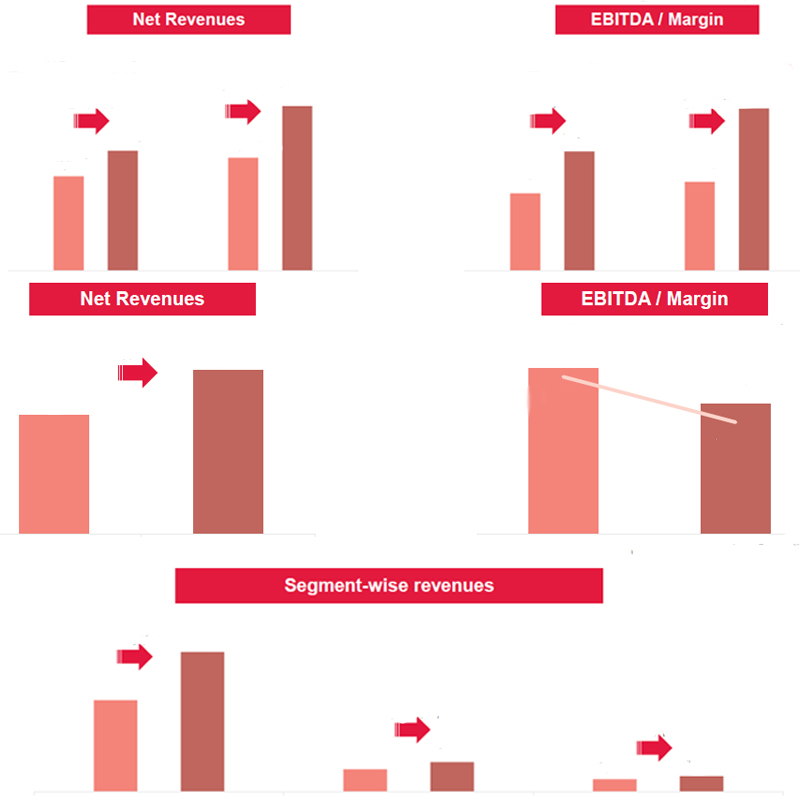
    The company’s consolidated results for the quarter ended 31 December 2024 show a net profit of Rs 114.4 crore, compared to a steep loss of Rs 528 crore in the same quarter last year. Even more telling, this turnaround follows a loss of Rs 117 crore just in the September quarter. For the nine months ended December 2024, Eros clocked Rs 1,376 crore in profit, a remarkable bounce from the Rs 1,298 crore loss recorded in the same period of FY23.

    Revenues, however, told a more modest story. Income from operations in Q3 stood at Rs 13.08 crore, down from Rs 31.57 crore a year ago. Total income came in at Rs 38.65 crore, versus Rs 254.55 crore in the previous nine-month period, suggesting the focus was less on topline growth and more on aggressive cost management.

    That cost discipline was evident in the expense sheet. Operational costs, including content amortisation, were Rs 19.76 crore, down from Rs 81.51 crore last year. Other expenses were pruned to Rs 2.82 crore in the quarter, compared to a hefty Rs 477 crore in the year-ago period. Finance costs and employee expenses also dipped, helping Eros reverse the narrative.

    Earnings per share (EPS) reflected the turnaround too, with basic EPS at Rs 11.9 for Q3 compared to a negative Rs 42.9 for FY24. Total comprehensive income for the quarter stood at Rs 370 crore, again a sharp rebound from the Rs 409 crore loss in Q3FY23.

    The board, which met on 3 September, also approved an application to extend the deadline for its annual general meeting (AGM) for FY25, even as it cleared the unaudited results reviewed by Haribhakti & Co. LLP.

    For investors, the Eros saga now reads like a redemption arc from a cliffhanger of mounting losses to a surprise happy ending in Q3. The real question is whether this revival is a one-off cameo or the start of a sustained sequel.
     

  • ZEE5’s Manpreet Bumrah joins Eros STX Global Corp

    ZEE5’s Manpreet Bumrah joins Eros STX Global Corp

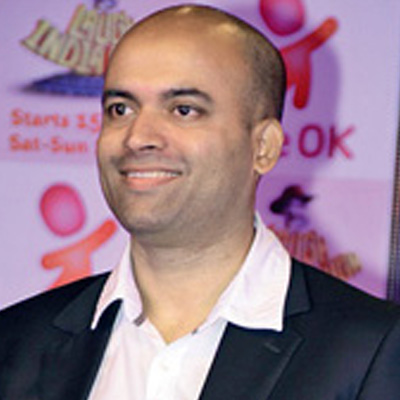
    KOLKATA: Content powerhouse Eros International (Eros STX) has appointed Manpreet Bumrah as senior vice president- distribution and alliance, techzone head. He will continue to be based out of Mumbai.

    Prior to this, Bumrah was working with leading OTT platform ZEE5 as vice president- business development and commercials. At ZEE5, he was spearheading the strategic partnerships with telecom operators,  e-commerce players, OEM manufacturers, edutainment platforms and tech partners.  

    Read more news on Eros STX Global

    He has nearly two decades of rich experience in business development, customer relation, revenue expansion. Bumrah, an alumnus of Symbiosis Institute of Management Studies, has worked across brands including LG Electronics, Vodafone, Reliance Broadcast Network, Samtel and others.

  • Pradeep Dwivedi elected as IAA vice president and area director for Asia Pacific

    Pradeep Dwivedi elected as IAA vice president and area director for Asia Pacific

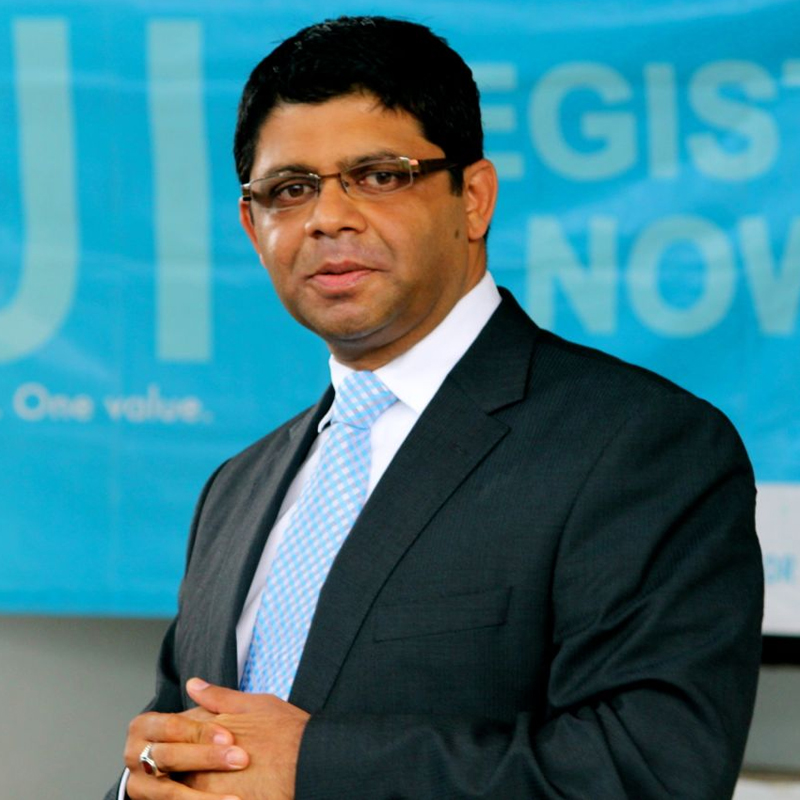
    NEW DELHI: Eros STX Global Corporation CEO Pradeep Dwivedi has been elected as the vice president & area director for the International Advertising Association (IAA) APAC region. He is a senior media industry professional and is currently treasurer and director of IAA India chapter. An accomplished industry leader with an experience of over two decades in advertising & media business, telecom & technology enterprises, banking & financial services institutions and automotive sector, he currently also serves as chairperson of the entertainment, media & sports committee at the IMC Chambers of Commerce and Industry, managing committee member of The Advertising Club of India,  Member of the CII National Committee on Media & Entertainment, as well as a member of the IBG Chamber of Commerce.

    He said, "I am humbled and honoured at the responsibility. I must thank  Ramesh Narayan for a fruitful and productive tenure as my predecessor in leading IAA APAC wonderfully for the past two years as well as IAA Global chairman & world president Srinivasan K Swamy, for inspiring me to take on this mandate.  The APAC region has amazing potential and I look forward to working with all the Chapter presidents to take the ideals of the IAA forward and collectively ensure that IAA remains the harbinger and compass of marketing communications world-wide in a unique post-Covid2019 era, even as we navigate the challenges ahead of us. "   

    IAA chairman and world president Srinivasan Swamy said, "I am delighted to welcome Pradeep Dwivedi as our area director and vice president for Asia Pacific. He has been an integral part of IAA India chapter for nearly a decade and has been leading many initiatives while building a world-wide network with his commitment to IAA. I wish him all the very best in taking on this leadership responsibility at IAA Global.”

    IAA APAC region’s outgoing VP & area director Ramesh Narayan said, “I have always believed in advertising as a potent force for social good, and our actions in IAA APAC have been a testimony to that ethos. I am happy that Pradeep will carry the torch forward with sustained zeal and continue our sincere endeavour. Our best wishes are with him.”

  • Eros CEO Pradeep Dwivedi on the Eros-STX merger

    Eros CEO Pradeep Dwivedi on the Eros-STX merger

    “Nowhere in the history of Bollywood has any studio really merged with a Hollywood producer in a manner like this.” This statement by Eros International Media Ltd (EIML) CEO Pradeep Dwivedi succinctly sums up the significance of the recent Eros-STX merger. The new global entertainment company will leverage the 40-year-old legacy of Eros and the strength of STX as one of the prominent Hollywood producers. In an interview with Indiantelevision.com, Dwivedi dwells at length on the significance of this merger, its strategic intent, the financial nitty-gritty of the deal, how the new entity will find common ground and tap the combined market of India, China, and the US, the OTT business and the effects of Covid2019 lockdown on the entertainment industry, among other things.

    Edited excerpts:

    The merger deal comes at a time when the entire movie production sector is shut due to the Covid2019 pandemic. So how challenging is the situation for you?

    We have been working on this merger transaction for nearly six months. The timing with respect to the production stoppage is a bit odd; it happened during the last one month. We eventually believe that in the next couple of months as and when the lockdown is lifted in phases and people get back to production work, the work on the ground in terms of production slate and shoots will resume. We had, even before the lockdown, a significant inventory of content that we had built up. So, in a phased manner we are pushing it out to the digital platform. Obviously no studio releases are possible as theatres are completely shut down, not just here but in the US as well.

    In this merger, what we were always planning as a strategic fit was the fact that you have STX, which is a Hollywood studio, which has been doing decent movies with top-of-the-line stars. The bottomline is that they have successfully created a content machine which is delivering good content with top-built star cast into the US market. We have had a similar ecosystem in Eros for nearly 40 years now; look at some of our hits like Vicky Donor. We had our own range of success.  

    Nowhere in the history of Bollywood has any studio really merged with a Hollywood producer in a manner like this.

    Can you elaborate on the structuring of the merger?

    There is a structuring of the transaction. It takes about eight weeks for all regulatory approvals to come in and then the two companies become one. At the merger, only one company will survive, which is Eros STX Global Corporation. In the interim, all of STX will be moving into a subsidiary which is incorporated in the US. That subsidiary merges into a 100 per cent owned subsidiary of Eros PLC, and that subsidiary eventually merges back into Eros. Today, Eros is listed at the New York stock exchange. In fact, if you see the stock value right after the merger announcement, it jumped almost 60 per cent in terms of value. We are getting strong analysts’ support. Just now I was talking to an investor in New York. There is huge excitement in the US and the overseas investor community on this deal.   

    The transaction works like this: STX, an unlisted company, has merged into Eros, a listed company, and Eros STX is the surviving company. So essentially what is happening is that the shareholders of STX will initially get what is known as contingent value rights (CVR). So effectively, we will own about 43 per cent of the surviving company. STX partners will hold another 43 per cent. Put together, it comes to around 85 per cent.

    Now, let me speak about the strategic intent. We want to take the best of Hollywood and Bollywood and create a big impact in China. There, we will be looking at the creation of content, by leveraging the Chinese talent in areas like acting, directing, photography, VFX, production, post-production, music, sound, etc.

    In China, who will be the partner of STX?

    In China, STX has Tencent Films and Alibaba Films as the partners on the production side. On the investment side, Tencent Holdings has invested money. They were already investors in STX to begin with. Eros has two partnerships in China for distribution. Because as you know, we made serious returns on movies like Bajrangi Bhaijaan. Other Indian movies also did really well in China, for example Dangal or Andha Dhun, which we distributed in China and did a fantastic business. We have a huge distribution model, not a production/co-production model in China. We work with Shangai Film Corporation and China Film Distribution Corporation. These two are our distribution partners.

    So you are looking at the Chinese market in a bigger way. What will be the roles of STX and Eros there?

    It will be a combined entity; there is not going to be any difference. In fact, this merger has got nothing to do with the India business per se. Eros International Media Ltd (EIML), a Bombay Stock Exchange- and National Stock Exchange-listed company, is a subsidiary of Eros International PLC.

    Eros International PLC is the holding company, which is Isle of Man-incorporated and listed in New York Stock Exchange and has multiple subsidiaries all over the world. For example, whatever OTT business we do in India is housed within Eros now, which in turn is part of EIML. The worldwide business that we do is housed in Eros Worldwide Digital which is based out of the UAE. We have distribution subsidiaries in Australia called Eros International Australia, we have one in Fiji, one in the UK, and in the US called Eros Incorporated USA, which is a distribution arm. They do the distribution business in all of those markets.  

    Please give an idea about the post-merger entity and the changes at the top level.

    Kishore Lulla, who is currently the CEO and chairman of Eros International PLC, becomes executive co-chairman of the combined company. Robert Simonds who has done about 70-odd movies as producer will be the CEO of the combined company. He will be my boss in that perspective. He has done almost 13-14 Adam Sandler’s top-selling movies.

    I will run all of the India business and there is the worldwide studio business including the collaboration that we will do with STX. So at the base level, STX Studios continues to make movies for the US market and Eros continues to make movies for the Indian market, which covers almost 60-70 per cent of our production output.

    Kishore Lulla is the executive co-chairman of the new company. Rishika Lulla, part of the management, is the co-president at the global management team of Eros-STX Global. Rishika will continue to lead the entire digital business worldwide, including what is coming from STX. Bob Simonds is the co-chairman and chief executive officer of the company. Andy Warren is the CFO of the combined company. I am running India business plus global studio collaboration. Adam Fogelson is running a global studios business. Noah Fogelson is going to manage the entire business from a US perspective. Ridhima is currently head of content – strategy for Eros. She is going to work very closely with the content leadership of STX.

    About 20-25 production output will be Indo-US collaboration that Adam Fogelson, as the president of the studio business in the US, and I will collaborate and jointly work out. Then there is about a 10 per cent layer on top of that. That will be all the Chinese movies that we want to make, with a focus on mainland China; movies that reflect their ethos, culture, science fictions, action, contemporary issues, etc.

    At the end of this exercise, there is no difference between STX and Eros. That’s the whole concept of the merger. We are one team.

    What about Eros’ OTT business?

    Ali Hussein, the CEO for the OTT business, will run the OTT business worldwide. STX worldwide does not have an OTT play, but it has a large content play. So it will obviously be selling some content to Amazon Prime, Netflix, etc. Today, Eros Now OTT has the access to Amazon, Netflix and exclusive access to Apple TV. Any India-Bollywood content you see on Apple TV will be coming from the house of Eros. The advantage it allows is that whatever the STX content is getting produced afresh we have the ability to take a call on whether we should park it in Eros Now, monetise and increase our subscriber base or to part it for Amazon, Apple, or Netflix and monetise better there. It will really depend on the financial equation there. But it gives us a tremendous amount of flexibility to be able to do both. That is one of the advantages we have on the OTT side coming from this merger.

    Will there be more dubbed versions of Bollywood and regional language films for the Chinese audience?

    There is a two-pronged strategy in this regard. As far as the digital front is concerned, we already have partnership with Wuzhou, one of the largest distributors in China. We are looking at other teleco partnerships, too. All the existing content, with dubbed and subtitled versions, will be available to the Chinese audience.

    Then there are the originals and the new movies that we do, which will be done in collaboration with the Chinese studios. It depends on who we want to work with: Huayi Brothers, Tencent, Alibaba, etc. All of these are existing partnerships. We will take a call depending on a particular project idea, which studio or investor on their side is more comfortable with or most excited by the idea.

    To answer your question specifically, yes, we will make sure that our stories are presented as an opportunity to be remade for China. We will look at China's original stories and make movies around that. And we will also look at building strong distribution strategies. So, movie production is one, distribution is another and we want to make sure that we are doing well on both the fronts in the Chinese markets. If you look at the sheer size of the market we are addressing with this joint venture, India already has 1.4 billion people, America has another population of 38 crore, and then you add China on top of that: 1.2 billion people.  So close to 3 billion people in the world is the potential market. And I am not counting other markets like Europe. Essentially, half the population of the world typically will be covered by the footprint of what we are doing right now. And we intend to make sure that we create world-class content. We have a huge reserve of stories that are original and genuine to India. For example Ramayan and Mahabharat. These stories, while they are set in Indian cultural and social context, are universal in many ways, about challenges in family, difference between right and wrong, etc. These are universal values. We intend to do this Indo-US-Chinese collaboration with the best of technology on science fiction, visual effects, etc. to create world-class content. We also wanted to showcase the slate of some of the content that we are going to make, but due to the Covid2019 situation we don’t want to do that. However, by around the end of June, when the merger deal will be closed, we will present a slate of the movies that we are going to produce.

    We believe that we will get all the regulatory approvals in the next eight weeks.

    Theatres are not going to be opened until September or October. When do you expect the production to resume?

    We believe that by middle or end of May some level of production activities will resume. Whatever can be done inside studios, not outdoor shoots, can typically start in a controlled environment in sets with the right level of hygiene, control, safety and distancing, etc., for our studio-related works to start off. I’d expect it to stabilise only by the end of June or early July.

    We still can’t say definitely when theatres will reopen. My hope is that by the end of August or early September some theatre releases will start.  

    The merged entity will have half a billion in cash, right?

    We already have about $195 million cash with us. We have secured $125 million fresh equity capital investment. We have got a limited sanction from JP Morgan in the US, which is leading a syndicate of six banks, to get another 350 million on the debt capital side. In addition, we have close to $300 million of predicted revenue from the 2019 slate of STX.

    Now, let me explain the efficiencies in the deal. Manpower costs as a percentage of our overall costs are not outside the industry norm. What that means is that these efficiencies will come largely on account of financing integrations and on account of financing/ process integration. For example, there are a lot of VFX/post-production works that STX movies need to do. We have negotiated – because we have this typical Indian approach of doing things in a more efficient and cost-sensitive manner – we will be transferring a lot of post-production works from the US studios to the Indian studios. So, that has efficiencies in savings. There is a significant saving opportunity on the financial efficiency and post-production work side. And we believe that as we integrate some of our offices we will have some savings on that side as well. We don’t expect this merger to have any large impact on any kind of reductions simply because these are very diverse universes. In our case there is a strong fit in what we do and what they do, so it is complementary. To that extent, the two teams come together, the efficiencies can be better utilised on the operation side than on the manpower side.

    How will the OTT releases work? You can’t raise the kind of money from OTT like you do through theatre releases. How will you monetise in times of shutdown?

    The film and entertainment industry is going through a cataclysmic shift due to the Covid2019 situation. Theatres are likely to remain shut for the next six months, perhaps even longer in some markets.

    If you look at the value chain of any monetisation for any studio, theatrical release is the largest chunk, followed by television syndication, digital and then DVD, cable and local TV distribution, in-flight distribution, etc. For six to nine months, theatrical will remain zero; it is a hit all companies will take in the top line. The market valuations of companies like Disney, Comcast, Warner Brothers, etc. have come down only because the theatrical revenues are not going to be there and that is true for everybody.

    It is like an airline industry business. If you are not flying for two months, your revenues will be reduced next year and you can’t fly more in the coming time to make up for the flight that you have not done. So it is the same for the theatres; that loss is real; it is going to hit our current year financials. Fortunately, it happened in the last week of March, so we didn’t lose much from last year’s financial standpoint. So we didn’t see the impact in FY 19 books. But in 2021, all studios across the world at an industry level will be hit.

    So if you are investing $100 billion in a film, you can’t get $100 billion back unless you do theatrical?

    No, that is not true. That’s what I was trying to come to. The model itself is now going to shift significantly towards digital. So, as a first step, digital or OTT will overtake television as the second port of call. As and when the theatres come back next year, you will have the releases that are there. The standstill is there on both the fronts in terms of releases and production. If there are no new movies being produced you are creating a lag in the equation completely. Once the theatres start opening up, the existing, ready-to-release movies will first get released. And we are evaluating the release of the movies that we have. We have big, multi-language movies waiting to be released. We are already sitting on some content, which we will release as soon as the theatres open up. In the meantime, we will try and monetise them on OTT. Will there be any audience in theatres for the movies which have been shown on OTT? Perhaps there will be a decline. But that’s the risk you have to take. But none of our movies are mega budget movies where we need to worry about huge dependence on the theatrical.

    So will you release on OTT first and then on theatres?

    It’s a product-by-product call. Our current strategy is to ensure that whatever content is ready with us, we will release them in OTT, because what we want to do is to give fresh content to the OTT audience. Today, the OTT audience has increased exponentially because of the lockdown. You are stuck at home and you don’t have a choice. Old movies are now popular because there is a limitation on new content that is being produced. Here, we will release and promote our old movies in OTT.

    And monetisation will definitely go up. Between last month and this month our paid subscriber base has been growing at 20 per cent per week.

    Will you be selling to other OTT platforms?

    We currently have partnerships with Amazon, Netflix, etc. We market movies to them. In the US, we have an exclusive partnership with Apple TV for Bollywood content. Same goes for STX. Eros-STX combined entity will evaluate every movie, a financial call which will have one of the two factors. We will see whether we are getting good price by selling/marketing it to one of the OTT platforms like Amazon or Apple TV or instead of putting it on a competitor platform, it is better to put it on Eros Now and monetise.  So, that is the kind of financial call that we have to make on every single movie that we make.

    While OTT is definitely the flavour of the time and everyone is talking about it, television syndication is a big deal, which is the second largest revenue stream. Theatrical accounts for 30-35 per cent, television another 30 per cent, digital used to be 20 per cent and rest 10-15 per cent is DVD and local cable TV distribution. So, only the top 30 per cent is impacted. Rest of the 70 per cent is not impacted. And the third category, OTT, is actually expanding.

    Look at an adverse scenario. If theatres don’t open for the next two years, what will you do? You need to figure out a way for the industry to monetise the content. Two things are likely to happen: studios that are agile, nimble, and mid-sized that make budgeted movies will actually do well. Look at the impact. The situation is such that the larger your studio is, the bigger the risk is, because you are putting in tonnes of money and you can’t get the money back from OTT alone. But if you are making here in India, the chances of getting the money back are much higher.

    As far as OTT expansion is concerned, we have seen extraordinary growth in the last couple of weeks.

    Were any of your projects halted because of the ongoing lockdown? And how do you communicate in these times?

    We suspended productions by the end of June.
    As far as communication is concerned we use platforms like Zoom, etc. The positive side is that a rhythm is being set. Now it starts to feel natural with all the Zoom and Skype calls. We can plan, strategise, ideate, work on script ideas, script validations, find out which projects to work on, etc. Those kinds of work can go on. But the works that have physical execution on the ground is obviously held up.

  • Eros numbers up in second quarter

    Eros numbers up in second quarter

    BENGALURU: The Sunil Lulla-led Indian film and media company Eros International Media Ltd (Eros) reported a 9.2 per cent jump in operating revenue for the quarter ended 30 September 2018 (Q2 2019, period or quarter under review) as compared to the corresponding year ago quarter (y-o-y comparison). Profit after tax (PAT) and total comprehensive income (TCI) for the period under review jumped 34.4 per cent and 109.3 per cent (more than doubled) respectively y-o-y. Total income increased 17 per cent y-o-y in Q2 2019.

    Eros reported operating revenue of Rs 292.88 crore for Q2 2019 as compared to Rs 268.26 crore. Total revenue during the quarter under review was Rs 320.56 crore as compared to Rs 273.93 crore in Q2 2018. PAT in Q2 2019 was Rs 77.31 crore as compared to Rs 57.51 crore in Q2 2018. TCI in Q 2019 was Rs 131.33 crore as compared to Rs 62.76 crore in the corresponding year ago quarter.

    The company released 17 films and one digital series in Q2 2019 as compared to 14 films in the previous quarter (Q1 2019). Contribution by overseas revenue to operating revenue almost doubled to 23.7 per cent during the period under review as compared to 12.6 per cent of operating revenues in Q2 2018. Theatrical revenues contributed 28.1 per cent to overall revenues in Q2 2019 as compared to 30.7 per cent in Q2 2018. Contribution to total revenue from television and others in Q 2019 was 48.2 per cent as compared to 56.7 per cent in the corresponding year ago quarter.

    Eros reported 10.9 per cent y-o-y increase in total expenditure in Q2 2019 at Rs 7231.36 crore from Rs 208.54 crore in Q2 2018. Films rights costs including amortisation costs increased 25.2 per cet y-o-y to Rs 148.87 crore from Rs 118.95 crore in the corresponding quarter of the previous fiscal. Employee benefits expense in Q2 2019 declined 12.4 per cent y-o-y to Rs 13.18 crore from Rs 15.04 crore in Q2 2018.

    Finance costs reduced 17.8 per cent y-o-y in Q2 2019 to Rs 21.36 crore from Rs 54.22 crore in the previous year. Other expenses increase 1 per cent y-o-y in Q2 2019 to Rs 51.22 crore from Rs 50.71 crore in Q2 2018.

    Company speak

    Eros executive chairman and managing director Lulla said, “We are happy to report a strong performance during the Q2 and H1 FY2019 which has been a result of our continuous focus on building a portfolio of content driven films that appeal to a wide cross-section of audiences, produced at optimum costs and marketed around the world across diverse entertainment platforms. During Q2

    FY2019, we released a total of 17 films & 1 Digital series, comprising of the hit franchise Happy Phirr Bhag Jayegi, the critically acclaimed Manmarziyan, Vishal Bharadwaj directed Patakhaa, Saakshyam (Telugu), Tc.Gn – Take Care Good Night (Marathi) amongst others. Overseas releases of Batti Gul Meter Chalu (Hindi) and Nawabzaade (Hindi) further supported performance during the quarter.”

    “With our strategy of being a leading producer in digital content, we released an ErosNow1 8-episode original series directed by Rohan Sippy, Side Hero which was received very well by the global audiences. Going forward, we have a refreshing slate of high-potential ErosNow originals with crime drama Smoke releasing today. We believe with the roll-out of our original series we will be able to capture the attention of the fast growing millennial and post-millennial audiences,” said Lulla.

    “H2 FY19 has begun well for us with the successful release of Boyz 2 (Marathi), Tummbad as well as Andhadhun (overseas), Helicopter Eela (overseas) and Namaste England (overseas) at the box office. Further, we have a growing and compelling line-up for the remainder of FY 2019 and FY2020. As we look forward, our proven content acquisition and co-production model, our strong partnerships with Colour Yellow Production, Reliance Industries and the latest partnership V. Vijayendra Prasad as well as our Indo-China collaborations will be the key differentiator in the forthcoming quarters”

  • Jyoti Deshpande appointed RIL’s president of the chairman’s office for media

    Jyoti Deshpande appointed RIL’s president of the chairman’s office for media

    MUMBAI: Jyoti Despande has been appointed as the president of the chairman’s office for the media and entertainment business at Reliance Industries Ltd (RIL). 

    With this appointment, Deshpande has stepped down from her current position of executive director at Eros International Media (Eros) but will continue as non-executive non-independent director at the company.

    Kishore Lulla will continue to hold his position of group chairman and CEO of Eros.

    In her new role at RIL, Deshhpande will lead the company’s initiatives in media and entertainment to organically build and grow businesses, such as broadcasting, films, sports, music, digital, gaming and animation, around the content ecosystem as well as integrate RIL’s existing media investments such as Viacom18 and Balaji Telefilms with a view to build, scale and consolidate the fragmented USD 20 billion Indian M&E sector.

    Earlier this year, RIL acquired 5 per cent stake through its subsidiary, in Eros with a view of producing and acquiring digital originals and Indian movies across all languages. 

  • Focus shifts to online streaming for Eros

    Focus shifts to online streaming for Eros

    Mumbai: Production and distribution company Eros International no longer wants to be a film studio but a digital content company.

    Listed on the BSE as well as the NYSE, Eros is reducing its dependence on box office and is focussing on its online video streaming platform Eros Now instead. “Over the last two and a half years, Eros Now has tripled in growth. About 25% of our overall revenue comes from digital platform and in three years, digital will be three quarters of our revenue. We are moving on from being a film studio to a digital company,” said Jyoti Deshpande, group chief executive officer at Eros, which aims $260-270 million revenue this financial year.

    Launched in 2014, Eros Now has 3.7 million paying subscribers, which the company expects to touch 6-8 million by March. Eros Now charges Rs 50 a month for streaming content and Rs 100 a month for downloading and watching the content offline. The company has commissioned six films which will be released directly on Eros Now.

    As part of its strategy, Eros, which produced movies such as comedy drama Shubh Mangal Saavdhan, Rajkumar Rao-starrer Newton and Amole Gupte-directed Sniff in 2017, is now only investing in films which are low cost, have a high return on investment and are suitable for digital platforms.

    Although the platform is film-heavy with Eros’s library, the company is working on launching one or two digital series every month. “We are doing a series on human trafficking starring Radhika Apte. We are also working on a comedy one,” said Deshpande.

    Revenue from domestic theatrical releases saw a 1.6% decline in 2016 to Rs9,980 crore, down from Rs10,140 crore in 2015, according to the Indian Media and Entertainment Report 2017 released by lobby group Ficci and consulting firm KPMG, in March. The number of movies that were able to record a positive return on investment also declined from 27 in 2014 to 18 in 2016.

    “On an industry level, the charm of big budget films with star cast appeal is going away as no such project is making money. Even the films which have been declared hit, there is nothing in the profit and loss accounts, when you actually look there. We were one of the first companies to call the trend,” added Deshpande.

    Earlier this year, Eros suffered a brief liquidity crisis ahead of the maturing of its $85 million revolving credit facility (RCF) on 31 March. Standard and Poor’s (S&P) had lowered its long-term corporate credit rating on Eros International to “B-” from “B+” and placed it on credit watch with negative implications. The company, however, won a last-minute reprieve from creditors by executing documentation to extend the maturity of the RCF by six months.

  • Eros Now’s OTT content hops on Roku TV & LG Smart TVs

    Eros Now’s OTT content hops on Roku TV & LG Smart TVs

    MUMBAI: Eros International has collaborated with TV Roku and webOS-enabled LG Smart TVs to make its OTT content from Eros Now available globally. Eros’ vast library of Bollywood and regional language films, TV shows, and originals will be shown.

    Commenting on the partnership with LG smart TVs, Eros Digital CEO Rishika Lulla Singh said, “We are excited to partner with one of the largest and formidable brands in consumer electronics. Smart TVs are increasingly becoming a must-have in every household today. This partnership offers a seamless viewing experience for Eros Now users which furthers our vision of being platform agnostic.”

    Users will also be able to enjoy a range of exciting features including full-length movies, thematic curated playlists, multi-language subtitles for movies, music video playlists, regional language filters, and access to a watch a list of titles.

    LG Electronics India director home entertainment Younchul Park said, “At LG, we constantly look at partnerships that can offer value proposition to consumers and our association with Eros Now is a step forward towards this endeavour. The market for smart TV is experiencing an upsurge in India. Availability of good content can certainly enhance the overall consumer experience of smart televisions. We are very confident that good content will further drive smart TV sales in India and create a conducive eco-system for us to cater to the ever-increasing demand.”

    Talking about the partnership with Roku, Singh said, “We are happy to collaborate with a leading streaming innovator like Roku and continue our global expansion to provide seamless user experience. Eros Now’s extensive premium content can now reach millions of homes across North America and the UK through the Roku platform.”

  • Siti Networks’ operating profit more than doubles in first quarter

    BENGALURU:  The Subhash Chandra led Essel group’s television cable network company Siti Networks Limited (Siti) reported EBIDTA including other income or operating profit of Rs 1,071.65 million (28.9 percent of Total Income) for the quarter ended 30 June 2017 (Q1-18, current quarter). The company’s operating profit for the current quarter was more than double (up 2.26 times) the Rs 474.09 million (16.5 percent of Total Income) the company had reported for the corresponding year ago quarter (y-o-y) and 54.2 percent higher than the Rs 694.88 million (20.6 percent of Total Income) reported for the immediate trailing quarter Q4-17 (q-o-q).

    Consequently, the company reported a lower total comprehensible loss in the current quarter at Rs 151.32 million, which was a little less than one third (1/2.87 times) the total comprehensible loss of Rs 435.26 million in Q1-17 and less than a fourth (1/4.26 times) the total comprehensible loss of Rs 647.16 million in Q4-17.

    Siti’s total income for Q1-18 was 29.4 percent higher y-o-y at Rs 3,711.13 million as compared to Rs 2,868.82 and 10.1 percent higher q-o-q as compared to Rs 3,370.46 million. Revenue from operations increased 29.4 percent y-o-y to Rs 3,649.57 million from Rs 2,819.67 million and increased 12.1 percent q-o-q from Rs 3,255.18 million.

    Breakup of revenue

    Siti’s subscription revenue in the current quarter increased 34.6 percent y-o-y to Rs 1,700 million from Rs 1,263 million and increased 6.3 percent q-o-q from Rs 1,600 million. Carriage revenue in the current quarter increased 6.3 percent y-o-y to Rs 765 million from Rs 720 million, but declined 4.1 percent q-o-q from Rs 798 million. Activation revenue in Q1-18 more than doubled (increased 2.32 times) y-o-y to Rs 849 million from Rs 366 million and was 75.4 percent more q-o-q than Rs 484 million. Broadband internet revenue for Q1-18 increased 32.3 percent y-o-y to Rs 258 million from Rs 195 million, but declined 3 percent q-o-q from Rs 266 million.

    Subscription numbers

    The company says that it deployed more than 1.6 million set top boxes during the quarter in West Bengal, Haryana, Andhra Pradesh and Telengana, primarily in Phase 4 areas. It says that its digital video base was about 11.6 million at the exit of June 2017 and that prepaid migration is on track with 1.16 million subscribers across 134 locations brought under its ambit by August 2017. Siti says that during the year 0.05 million of its customers adopted HD services taking the total HD customer base to 0.22 million by exit Q1-18.

    Siti’s broadband internet subscriber base increased by approximately 12,000 to 0.24 million in Q1-18 from 0.228 million in the immediate trailing quarter. The company says that as a strategy it increased focus on higher ‘Lock-in’ broadband internet plans in Q1-18. About 40 percent of its acquisitions are now coming on longer duration plans. Siti says that it is targeting to take this figure to over 50 percent in Q2-18.

    Company speak

    Siti executive director Sidharth Balakrishna said, ““SITI continues to hold a strong position in the market with record customer additions.We are well positioned to monetize this base from Q2 onwards and maintain a strong growth trajectory. In Broadband, we will selectively expand our offerings and drive increased customer focus. We are also making significant efforts to strengthen processes and optimise costs going forward, while also enhancing customer offerings. This along with a focus on certain revenue streams could potentially provide upsides going forward”

    Let us look at the other numbers reported by Siti

    Consolidated Total Expenditure increased 14.1 percent y-o-y to Rs 3,696.52 million (99.6 percent of Total Income) in Q1-16 from Rs 3,238.75 million (112.9 percent of Total Income) in Q1-18 and increased 0.4 percent q-o-q from Rs 3.680.87 million (109.2 percent of Total Income).

    Consolidated Employee Benefit Expense increased 22.6 percent y-o-y to Rs 234.46 million (6.3 percent of Total Income) in the current quarter from Rs 191.22 million (6.7 percent of Total Income) million but declined 3.9 percent q-o-q from Rs 243.97 million (7.2 percent of Total Income).

    Consolidated Carriage sharing, pay channel and related costs in Q1-18 increased 5.1 percent y-o-y to Rs 1,560.55 million (42.1 percent of Total Income) from Rs 1,484.36.36 million (51.7 percent of Total Income) but declined 3 percent q-o-q from Rs 1,608/94 million (47.7 percent of Total Income).

    Consolidated Finance costs in the current quarter increased 11.6 percent y-o-y to Rs 331.03 million (8.9 percent of Total Income) from Rs 296.71 million (10.3 percent of Total Income), but declined 2.1 percent q-o-q from Rs 338..02 million (10 percent of Total Income).

    Consolidated Other expenses increased 30.7 percent y-o-y to Rs 841.78 million (22.7 percent of Total Income) in Q1-18 from Rs 643.83 million (22.4 percent of Total Income) and increased 11.2 percent q-o-q from Rs 757.12 million (22.5 percent of Total Income).

    Also Read :

    Rajesh Sethi re-designated chief  biz transformation officer of Siti Networks

    Rajesh Sethi succeeds Wadhwa as ED & CEO of SITI Networks

    SPN India-SITI Networks dispute: TDSAT directs SITI to sign SPN RIO agreement (updated)

  • Eros & Lokmat host Shroff show as precursor to Munna Michael release in July

    MUMBAI: Lokmat, a regional language newspaper in Maharashtra and Goa, hosted a first of its kind musical and dance concert in Pune on 25 June 2017.

    On the occasion of the 8th death anniversary of the pop legend Michael Jackson, today’s youth sensation and Bollywood actor Tiger Shroff performed a tribute to this dance icon. Lokmat with Eros International created this special tribute based on life of a dancer from upcoming movie Munna Michael, produced by Eros International & Viki Rajani’s Next Gen Films, directed by Sabbir Khan, Munna Michael starring Tiger Shroff, Nawazuddin Siddiqui and debutante Nidhhi Agerwal, will release on the 21 July, 2017.

    Lokmat Media is a multi-platform media company with interests in a diversified portfolio of publishing, broadcast, digital, entertainment, community and social verticals.

    A Lokmat release claimed that more than 5000 people across all age-groups gathered to watch this event which saw also the performance of MJ 5, a popular dance troupe. Lokmat also gave platform to other aspiring groups and solo dancers to perform their best on MJ songs on the occasion.

    The audience was enthralled by Tiger’s performance on MJ’s famous tracks like “Billie Jean” and “Smooth Criminal” and special appearance by Nidhhi Agerwal the lead actor of the movie.

    The actor also grooved on the tracks of his upcoming movie Munna Michael with his co-star Nidhhi Agerwal.

    Speaking on the occasion, Tiger Shroff said, “I thank Lokmat and Eros entertainment for giving me this opportunity to perform on this platform. Michael Jackson is my inspiration and I started my dancing career watching his dance moves.”