Tag: Ernst & Young LLP

  • The future of original content

    The future of original content

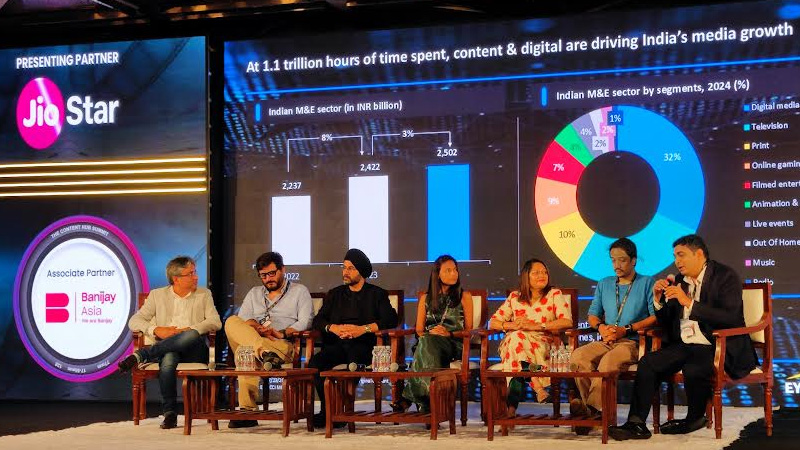
    MUMBAI: The 9th edition of the Content Hub Summit 2025 came roaring into Mumbai this week, promising answers to a question plaguing the media world: how do you stay original when the world’s drowning in content?

    Raghav Anand, partner at Ernst & Young LLP, kicked things off with some eye-watering numbers: the Indian media and entertainment (M&E) sector is now worth Rs 2.5bn, fuelled by 1.1trn hours of content consumption. “That’s a massive amount of attention,” said Anand. But with time spent on platforms now plateauing, he warned the next battleground will be retention, not reach.

    And yet, India’s churning out a gobsmacking 200,000 hours of original content a year—leading globally in volume. TV still dominates, but OTT, film and music are closing in fast. What’s changing is how and why content is made and the growing shadow of generative AI has everyone both curious and cautious.

    Goldie Behl, founder of Rose Audio Visuals, dismissed the obsession with “originality” as misplaced. “There’s nothing truly original. Everything’s borrowed, lived, or inspired. What matters is conviction,” he said, adding that content made with honesty and emotional depth is what ultimately cuts through.

    Aditi Shrivastava, co-founder and CEO of Pocket Aces, echoed the point, emphasising that her studio’s approach is to test stories at micro-scale before scaling up. “We find communities not demographics on social platforms. We create short, relatable pieces and build from there,” she said, adding that this modular testing lets them co-create with audiences in real time.

    Saugata Mukherjee, head of content at SonyLIV, was clear-eyed about what makes content stick: identity and consistency. “We built the platform on shows rooted in Indian culture. Our audience knows what we stand for, and that’s why they return.” Originals, he said, drive both customer acquisition and retention, with long-running franchises offering a steady heartbeat.

    Tejkarran Singh Bajaj, SVP and head of originals at Jio Studios, admitted times are “exciting but very difficult”. His team resists trend-chasing and instead banks on instinct: “We don’t make franchises. We find stories worth telling, ones that feel truly Indian.” That means even adaptations are reworked with a cultural lens, not just scene-by-scene lifts.

    Anuj Gosalia, founder of Terribly Tiny Tales, described today’s attention economy as “weaponised dopamine”, calling short-form ‘TV minus minus’—and still wildly effective. “People used to mock reels and TikToks. Now every A-lister’s on them. Micro-dramas will be the same,” he predicted.

    Swati Patnaik, creative director at Applause Entertainment, argued that the secret sauce of global success is local flavour. “The more rooted the story, the more it travels,” she said. “It’s not about the plot; it’s the point of view. That’s what cuts across borders.”

    As for AI, the mood was one of cautious intrigue rather than full-blown enthusiasm. Behl questioned whether AI can ever replicate emotional depth. “When an actor cries on screen, can AI make us feel that? I’ve yet to see it,” he said.

    Still, Anand noted that GenAI is already driving 20–25 per cent cost savings and slashing production time. The challenge, then, is less whether AI will be used and more how ethically and meaningfully it will be integrated.

    India’s original content scene is at a thrilling and slightly terrifying crossroads. The audience is fragmented, hungry, and overloaded. AI is knocking. Attention spans are plummeting. But as this year’s Content Hub Summit showed, the real winners will be those who tell deeply human stories with cultural authenticity, creative courage, and a sharp eye on what viewers really want.


  • Building brands for the gen z mindset – advertising in the digital era

    Building brands for the gen z mindset – advertising in the digital era

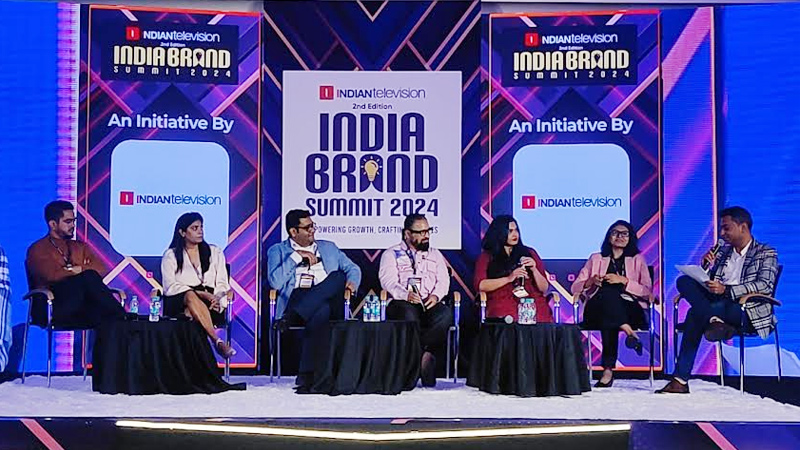
    Mumbai: The India Brand Summit featured a riveting panel discussion on “Building Brands for the Gen Z Mindset – Advertising in the Digital Era,” showcasing insights from industry stalwarts across diverse sectors. The panel discussion focused on the evolving landscape of advertising and brand building in the digital era, particularly emphasizing how brands connected with the Gen Z audience. The conversation revolved around topics such as content, personalization, e-commerce, and technology, exploring how brands effectively communicated with their end consumers using digital platforms.

    The session was chaired by Ernst & Young LLP, partner and head of marketing advisory, Amiya Swarup, Taco Bell’s general manager of business development, Vishal Suvas Telkar, The Belgian Waffle Co., general manager of marketing Vrushali Parab, Gamitronics CEO Rajat Ojha, Galderma, head of e-commerce & digital strategy, Sunil Nat, Birla Opus, head of digital, Surbhi Gupta and Interactive Avenues senior creative director, Eshwari Pandit.

    Vishal Suvas Telkar highlighted the importance of pricing strategies in attracting the Gen Z audience. He spoke about Taco Bell’s successful campaign which emphasised competitive pricing, especially with their Rs 99 menu, which has shown significant growth over the last three quarters. Telkar remarked, “We’ve done a lot on digital platforms. We are seeing results, but there’s more to be done. Our new advertisement shows a consumer choosing a taco over a burger, emphasising how our product is more filling and satisfying.” Telkar’s insights reflected a deep understanding of the value-driven Gen Z consumer who not only seeks affordability but also engages with brands through digital platforms and social media, where Taco Bell has found significant success.

    Vrushali Parab provided a powerful example of leveraging consumer insights to build brand narratives. She discussed how their digital-first approach, combined with data-driven efforts, has allowed them to track key performance indicators like reach and engagement. Parab shared the success of their National Waffle Day campaign, a brand-created property, which resulted in over 100 million digital impressions. “We didn’t need to remind people about National Waffle Day—our audience was already engaged. Our #EveryoneKnows campaign took this insight and ran with it, achieving 6 million views and 4 lakh comments within 24 hours. It’s the power of the right narrative, stitched together with the right partners,” she explained.

    Rajat Ojha took the conversation into the realm of the metaverse and gaming, emphasising how brands can engage Gen Z through immersive, social experiences. “In the gaming world, socialising happens naturally. Platforms like Roblox and Discord are popular because they bring people together,” Ojha noted. Ojha illustrated how Gamitronics helped brands like Dodge by creating a collaborative, virtual car-building experience for kids. The experience wasn’t just about interacting with a brand—it was about co-creating and socialising, elements that resonate deeply with Gen Z’s need for inclusivity and interactivity.

    Sunil Nat underscored the importance of transparency and personalisation in today’s digital age. He emphasised that Gen Z values inclusivity and authenticity. “We choose influencers carefully to ensure our messaging is neutral to gender and representative of all our consumers,” Nat explained. His comments reflected how brands must focus on crafting communications that align with Gen Z’s demand for authenticity while being inclusive in all their campaigns.

    Surbhi Gupta, shed light on how technology, particularly generative AI, is transforming the customer experience. She spoke about Birla Opus’ investment in visualisers that allow customers to visualise their home’s interiors with different paint colours in real time, showcasing how integrating technology can enhance consumer engagement. “Technology is not just about convenience; it’s about making the experience engaging. We are using AI to personalise experiences based on consumer behaviour, allowing us to provide a frictionless and immersive experience,” Gupta noted.

    Eshwari Pandit emphasised the importance of maintaining authenticity and transparency in brand messaging. “Gen Z and future generations will demand even more accountability because of the consequences they have witnessed. Staying true to your brand’s values is the only way forward,” Pandit affirmed.

  • IBS: Marketing in a VUCA world

    IBS: Marketing in a VUCA world

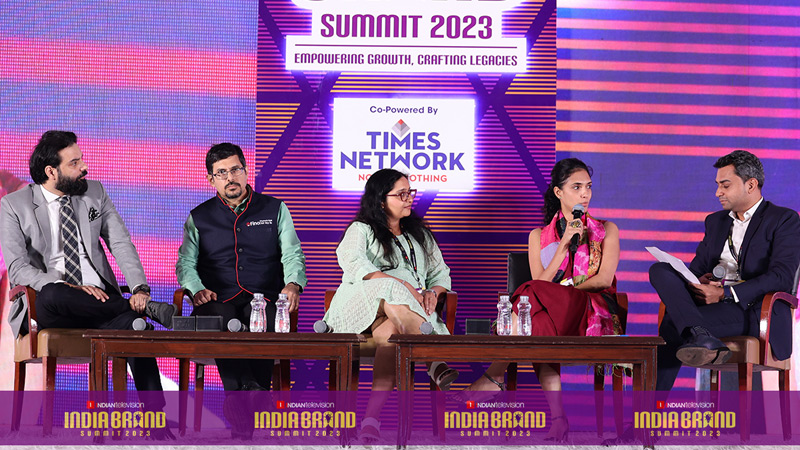
    Mumbai: The India Brand Summit held on 28 November 2023 at The Lalit Mumbai, convenes leaders, marketers, entrepreneurs, and experts to explore current trends, challenges, and opportunities in the dynamic brands and marketing arena.

    The session offered an in-depth exploration of the strategies and insights required to effectively navigate the challenges posed by a VUCA environment. VUCA stands for Volatility, Uncertainty, Complexity, and Ambiguity – characteristics that define the modern business landscape’s fast-paced & unpredictable nature.

    The panel was moderated by Ernst & Young LLP partner & head marketing advisor Amiya Swarup. Panellists for this session were Aditya Birla Fashion and Retail Ltd head- corporate marketing & strategy Apeksha Gupta, Bisleri International Pvt. Ltd. marketing head Tushar Malhotra, Fino Payments Bank CMO Anand Bhatia, Shemaroo Entertainment Ltd. CMO Anuja Trivedi.

    Key highlights of this session was to understand the VUCA dynamics & how it impacts marketing strategies and to learn about the tactics to respond to sudden market shifts, emerging trends, and unforeseen disruptions. Along with this, they will also speak on what role does data & decision making play in such dynamic structure, the role of digital platforms and technology in VUCA marketing and much more..

    The panel was started by Swarup asking Gupta on how marketing has evolved over the years, as it is at the forefront of generating data and the role it plays in the dynamic structure to which Gupta answered, “VUCA has always been around, because it’s always been an unstructured, volatile environment, because that’s the nature of how things move. It’s  just that the pace has increased right now and it’s multi fold in terms of what’s happening in the unpredictability of it. So I broadly kind of focus on three broad mantras to deal with this kind of uncertainty. My first one is, it’s perfectly okay to not know, I think we kind of get caught up in saying, okay, I’m supposed to be so and so. And I have to know all the answers, and I’m supposed to connect the dots. Actually, it’s perfectly okay to not know because that’s really where the starting point is. If you don’t know, you will work really hard to figure it out. So I’m always very open to saying, look, I don’t know how Gen Z is working, I don’t know how data works, I don’t know how digital is working. It’s a great starting point. The second for me really is  earlier, we were always told, go targeted, go really sharp, I think maybe that’s changing a little bit. Now, to the extent that anything that we do, actually try and figure out the larger implication or the ripple effect of it, because the ripple effect will actually help you be agile. Because when you shoot that stone, you can choose to jump off one ribbon to the other if you’re keeping your eye around that and not that Bullseye essentially. And of course, third, again, very spoken off in the past, but a lot more implication now is to celebrate failures. If we don’t have that cultural DNA to sort of help us celebrate our failures to take that much risk to constantly keep coming up with new and the new itself is so difficult because it’s like changing so rapidly. But those would be my three ways of dealing with uncertainty in terms of mindset and approach to how I deal with challenges.”

    Swarup was delighted by the answer as he shifted towards the content side by asking Trivedi on the evolution and strategies of marketing over the years to which she replied, “Marketing for the longest time been about, you know, you bring out the brand film and then you wait for the next brand track to know where things are going. Today with the data and you know the access we have, marketing has never been as close to business as it is today, like you said connecting the dots. So what I put out in 24 to 48 hours, I know whether it’s working or whether it’s not working, it allows me the agility to change those things. It allows me to, I mean, with digital, it allows us to experiment as AV testing, you can get those results. Marketing is a lot more two way process today. So you’re also listening to what your consumer is saying, and making those changes. So to my mind, actually, you know, we are as close to business today as we could be.”

    Marketing plays a fundamental role in terms of driving ROI, business goals etc. Bhatia shared his views by saying, “India is an incredibly homogeneous country. We are a country of ABCD. A as “Adda” when people get together to talk, you know, whether it’s politics or you know, whatever it is, B is “Bollywood”, hence any kind of old, you know Tolly calls you whatever comes with it, C “Cricket”, right? Everywhere. D is “Devotion” or only depends on which side of the spectrum you want. Marketing has just got very simplified over time. And I guess, the best thing that a CMO can do today is really bring it down to a few controllable variables. Good part is that technology today allows you that, right, so fundamentals don’t change. Technology just allows you to bring everything down to a few variables, few moving parts, and you can really leverage that in a big way and deliver ROI.

    At the end of the day, the name of the game is ROI. If the CMO is not getting in business, you really won’t be in business anymore, right? In fact, I think marketers need to start looking at the function as, as a profit center marketing is a profit center, it has always been a profit center, they, you know, they’ll always be disagreements on the way certain measurements happen, we counters will have the views, marketer will have his views, or her views, you know, that life goes on. But I think that fundamental shift is critical.”

    Swarup then asked Malhotra on the role of marketing and especially gave a lot of insights on the mindset of today’s Gen Z people. He said, “This is an everyday morning board conversation, right? The role of marketing. I would say four things stand out today, more than anything else. One is that marketing is a strategic and tactical function at the same time. Strategic from a perspective of brand building and tactical from sales delivery. So both go hand in hand together and the focus of marketing is on both parts, right. The second part is of course, the evolution of the consumer landscape today.

    Gen Z’s today are a very woke audience and conversations happen in a matter of minutes. So understanding Gen Z, understanding your product and understanding the relevance because truth be told, India is a very young country today. Its demographic dividend that we spoke about conditions are favourable. There are a lot of tailwinds towards business and how do businesses harness consumer trends? How do businesses prepare themselves when Gen Z’s really take over? Because this is an audience with a very different mindset. Very woke, looking for a brand for purpose? But also looking at getting away from a lot of stressors in life, right?

    The third bit I will speak about is that today, a marketer needs to be an integrated marketing specialist, there are so many channels, right? Traditional channels still exist as a mass brand, if you reach out for awareness, it has to be TV. So how do you make your campaigns tick across all channels, and get a proper ROI rather than just focus on one channel. And the last point is that whatever we speak about there is no one detail. You have to wait in different mini India’s with your messaging with your communication, because India is also filled with a lot of different cultural landmarks. If you go to South India, it behaves slightly differently from West or North India, and you have to appeal to those audiences to see what works for them as well.”

    The session concluded with many panellists agreeing on one thing that today Gen Z is where the conversations are happening and will also be the key to unlocking and staying relevant in the next 10 years as they are different drivers who talk about sustainability, brands with purpose, imagery, stresses, and by addressing all these things, their being ready for future of the consumers.