Tag: Ernst & Young

  • Warner Music strikes a new note with CFO hire

    Warner Music strikes a new note with CFO hire

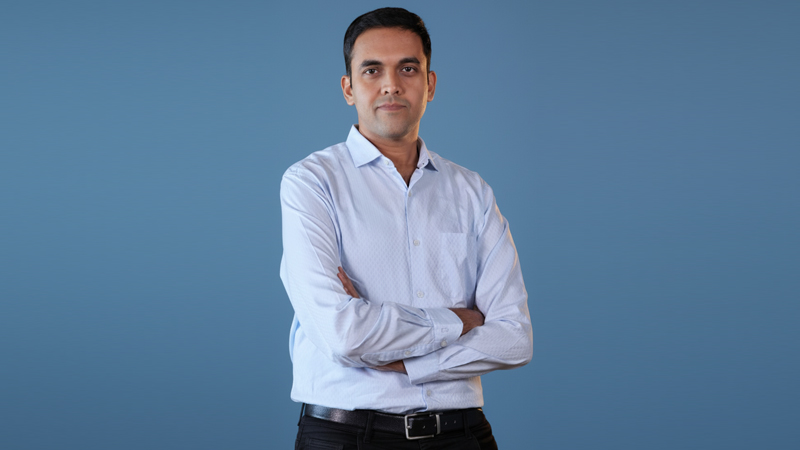
    MUMBAI: Warner Music India has hit a high note in its leadership line-up, naming Vikram Kulkarni as its new chief financial officer. The appointment underscores the company’s push to amplify its business strategy and deepen collaboration across the Asia-Pacific region.

    Armed with over 17 years of experience across finance, strategy, and governance, Vikram brings a sharp understanding of balancing numbers with creative ambition. Before joining Warner Music, he served as finance controller at Thermo Fisher Scientific, where he partnered with India and South Asia leadership to drive sustainable growth. He has also held key roles at Ernst & Young and Welspun Group, honing expertise in financial reporting, audit, tax, and business performance management.

    “I’m honoured to join Warner Music India during such a dynamic time for the music industry,” said Vikram Kulkarni. “The company’s artist-first vision and commitment to creative growth inspire me. I look forward to building strong financial foundations that fuel innovation and long-term success.”

    Warner Music India & SAARC managing director Jay Mehta added, “Vikram brings the perfect mix of financial insight and leadership. His strategic perspective will be vital as we continue expanding Warner Music’s presence and impact across India and South Asia.”

    With Kulkarni now in the mix, Warner Music India looks set to fine-tune its rhythm of growth, blending business precision with creative passion in one of the world’s fastest-growing music markets.


  • Jio Platforms to invest $200 million in AI-powered Glance

    Jio Platforms to invest $200 million in AI-powered Glance

    Mumbai: AI-driven lock-screen platform Glance has announced that it has agreed to raise $200 million from Jio Platforms (“Jio”) in its Series D round of funding. The transaction is subject to the satisfaction of customary closing conditions and regulatory approvals.

    The proposed investment by Jio is aimed at accelerating Glance’s launch in several key international markets outside of Asia such as the USA, Brazil, Mexico and Russia. The company is aiming to create the world’s largest live content and commerce ecosystem on the lock screen and will use the funds raised to expand globally. In addition to Jio Platforms, Glance is also backed by technology giant Google and Silicon Valley-based venture fund Mithril Capital.

    Concurrent with the proposed investment, Glance has also entered into a business partnership arrangement with Reliance Retail Ventures (“Reliance Retail”), providing for Glance’s ‘lock screen platform’ to be integrated into the JioPhone Next smartphones to transform the internet experience for millions of Jio users. This is the latest in a series of strategic partnerships between Glance and global players in the mobile ecosystem. The deal is also expected to lead to further strategic collaborations between Glance, Reliance Retail, and Jio across devices, commerce, content and gaming ecosystem.

    Glance will be integrated into the Pragati OS, which has been co-developed by Jio Platforms and Google, to bring LIVE content on Lock Screen for millions of Jio users. Its entertainment-led commerce platform Roposo will bring the power of live creator commerce to Jio users on their lock screen.

    Jio Platforms director Akash Ambani said, “Glance has grown at a phenomenal pace over the past two years and has given users a truly unique solution by unlocking the power of the lock screen for experiencing the internet, live content, creator-driven entertainment commerce, and gaming. With the help of this investment, Glance expects to launch in several key markets globally as well as to extend the experience to millions of Jio users, further reinforcing our commitment to provide the most advanced and next-level tech and digital ecosystem for consumers in India and beyond.”

    InMobi Group founder and CEO Naveen Tewari added, “Jio’s investment in Glance brings a deep synergy of vision and philosophy. Jio is a truly disruptive company. It made the internet accessible for millions of users, making India one of the largest internet markets in the world. Reliance is now disrupting the smartphone market with the launch of its JioPhone Next smartphones. Jio’s investment in Glance and Glance’s presence on the lock screen of JioPhone Next smartphones will lead to a paradigm shift in how its users experience the internet.”

    “Glance has created a disruptive lock screen-first discovery platform for live content, commerce and gaming in Asia, and we intend to scale it globally going forward,” shared InMobi Group co-founder and Glance president and COO Piyush Shah. “Jio’s investment is a huge validation of this vision and gives us the firepower to take the innovative experience of Glance to surfaces across the world. We look forward to working with Jio to build the content, creator and commerce ecosystem of the future together.”

    Morgan Stanley acted as the exclusive financial advisor and Khaitan & Co. acted as the legal counsel to Glance. White & Case and K Law acted as the legal counsels and Ernst & Young provided accounting and tax due to diligence services to Jio Platforms.

  • Guest Column: Measure by Measure

    Guest Column: Measure by Measure

    Year ends are always a good a time to reflect on the past, take stock of the present and plan for the future. So let me begin, by reflecting on the year that was.  

    In 2016, the state of audience measurement in India grew by leaps and bounds. From just 10,000 homes in the previous system, we are already at 22,000 homes, with the course set for 55,000 as mandated. Over the year, the broadcast industry got a better idea of ‘What India Really Watches’, thanks to the addition of rural viewership measurement which BARC introduced– a fact that has been applauded by all. In fact, BARC’s investment in technology has ensured greater robustness in the system, with more automation and less manual interventions. Our system is also very scalable as our Bar-o-meter costs less than US$400 compared to the previously used meters which cost US$2500!

    The watermarking technology adopted by BARC, is two generations ahead of the rest. It not only captures catch up TV but also simulcast. What this means is that BARC can monitor any recording of a programme, seen within seven days of its telecast, and can also accurately measure a simultaneous telecast of a cricket match across say 20 channels, including Doordarshan, and can report which channel is drawing the highest eyeballs. In fact, the watermarking technology is also future-ready which can be used for digital measurement, which BARC currently is evaluating.

    Taking stock of the present, we at BARC are immensely proud of the credibility we have established and the trust that we have earned from the industry. This has come about as a result of support of our stakeholders and our commitment to transparency. Incidentally, the need for transparency was also the one big reason industry came together and formed BARC. It propelled the need for the formation of a joint industry body, where all stakeholders’ representatives are part of the board and the technical committee. A unique aspect of that is BARCs governance structure which ensures that decisions must necessarily be agreed to jointly. To further strengthen transparency and credibility, BARC has partnered with Ernst & Young (E&Y) so that data can be audited by an external independent auditor. Evidence enough to the seriousness of thought that was given to credible data by the three industry bodies which make up BARC.

    Having established credibility in our data and systems, our task for the year ahead on that front is cut out: we will leave no stone unturned in our endeavour to maintain integrity, and take every step possible to ensure a robust and reliable viewership measurement environment: which is essential for the broadcast industry to thrive and grow. The support of our Board validates the faith we have in our systems and processes, and we will continue to build on that. We have set up a vigilance team that works with specialist agencies on the ground to track mala-fide activities. Any attempt to unfairly influence our measurement system has been dealt with firmly and we will continue to maintain zero-tolerance towards any acts of infiltration or tampering of our panel homes.

    The TV Industry draws in multiple crores of rupees worth of advertising in a country with over 153.5 million TV homes, where watching TV firmly remains a family routine. Be it entertainment or news, sports or movies, music, kids shows or a national events like Independence and Republic Days, TV will continue to take centre stage in the lives of Indians. And monitoring who is watching what will continue to remain a critical need for the growing stakeholders.

    While welcoming 2017, we at BARC, promise to continue our commitment to a transparent and credible viewership measurement system, because that’s the only way we know to measure things.

    public://Parth.jpg The author of this article is Broadcast Audience Research Council India CEO. You can follow him on Twitter @parthodasgupta. The views expressed are personal and Indiantelevision.com need not necessarily subscribe to them


  • Guest Column: Measure by Measure

    Guest Column: Measure by Measure

    Year ends are always a good a time to reflect on the past, take stock of the present and plan for the future. So let me begin, by reflecting on the year that was.  

    In 2016, the state of audience measurement in India grew by leaps and bounds. From just 10,000 homes in the previous system, we are already at 22,000 homes, with the course set for 55,000 as mandated. Over the year, the broadcast industry got a better idea of ‘What India Really Watches’, thanks to the addition of rural viewership measurement which BARC introduced– a fact that has been applauded by all. In fact, BARC’s investment in technology has ensured greater robustness in the system, with more automation and less manual interventions. Our system is also very scalable as our Bar-o-meter costs less than US$400 compared to the previously used meters which cost US$2500!

    The watermarking technology adopted by BARC, is two generations ahead of the rest. It not only captures catch up TV but also simulcast. What this means is that BARC can monitor any recording of a programme, seen within seven days of its telecast, and can also accurately measure a simultaneous telecast of a cricket match across say 20 channels, including Doordarshan, and can report which channel is drawing the highest eyeballs. In fact, the watermarking technology is also future-ready which can be used for digital measurement, which BARC currently is evaluating.

    Taking stock of the present, we at BARC are immensely proud of the credibility we have established and the trust that we have earned from the industry. This has come about as a result of support of our stakeholders and our commitment to transparency. Incidentally, the need for transparency was also the one big reason industry came together and formed BARC. It propelled the need for the formation of a joint industry body, where all stakeholders’ representatives are part of the board and the technical committee. A unique aspect of that is BARCs governance structure which ensures that decisions must necessarily be agreed to jointly. To further strengthen transparency and credibility, BARC has partnered with Ernst & Young (E&Y) so that data can be audited by an external independent auditor. Evidence enough to the seriousness of thought that was given to credible data by the three industry bodies which make up BARC.

    Having established credibility in our data and systems, our task for the year ahead on that front is cut out: we will leave no stone unturned in our endeavour to maintain integrity, and take every step possible to ensure a robust and reliable viewership measurement environment: which is essential for the broadcast industry to thrive and grow. The support of our Board validates the faith we have in our systems and processes, and we will continue to build on that. We have set up a vigilance team that works with specialist agencies on the ground to track mala-fide activities. Any attempt to unfairly influence our measurement system has been dealt with firmly and we will continue to maintain zero-tolerance towards any acts of infiltration or tampering of our panel homes.

    The TV Industry draws in multiple crores of rupees worth of advertising in a country with over 153.5 million TV homes, where watching TV firmly remains a family routine. Be it entertainment or news, sports or movies, music, kids shows or a national events like Independence and Republic Days, TV will continue to take centre stage in the lives of Indians. And monitoring who is watching what will continue to remain a critical need for the growing stakeholders.

    While welcoming 2017, we at BARC, promise to continue our commitment to a transparent and credible viewership measurement system, because that’s the only way we know to measure things.

    public://Parth.jpg The author of this article is Broadcast Audience Research Council India CEO. You can follow him on Twitter @parthodasgupta. The views expressed are personal and Indiantelevision.com need not necessarily subscribe to them


  • Broadband Forum report links incentives under GST to Digital India success

    Broadband Forum report links incentives under GST to Digital India success

    NEW DELHI: As online media consumption in India has shown growth over the past few years with mobile devices having taken over as the preferred medium of consuming online media, the government needs to incentivise further mobile handset manufacturing under the proposed Goods and Services Tax (GST), according to a new study.

    The Broadband India Forum (BIF), in association with knowledge partner Ernst & Young (EY), in a research paper unveiled yesterday said that it becomes important to grant incentives to domestic manufacturing in order to set off the “local disabilities” in manufacturing, including the booming mobile handset manufacturing.

    Wider deployment of 4G networks along with affordability and indigenisation, smartphones are going to drive mobile broadband to the next level of penetration, the BFI-EY report stated, adding that mobile handset manufacturing in India has gained fresh momentum in the past two years with a number of OEMs and third-party contract manufacturers setting up facilities in the country. The number of mobile handset manufacturing facilities reached 40 in August 2016 from just three in 2014 driven by the increase in duty differential in Union Budget 2015 to 11.5 per cent from five per cent, the report highlighted.

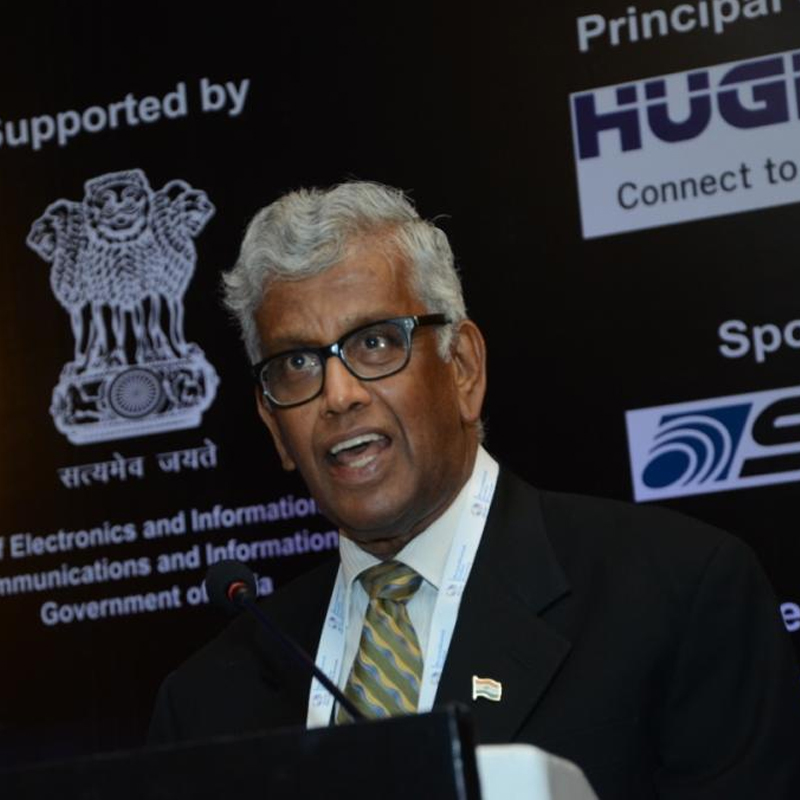
    According to Partner EY Bipin Sapra, “(Mobile) Handset manufacturing industry has seen a tremendous growth in past few years driven by government’s ‘Make in India’ initiative and policy changes such as duty reduction on domestically manufactured handsets. It is expected that the adoption of smartphones in India will go up to 688 million by 2020 as compared to 238 million in 2015. With the introduction of GST, most of the current central and state taxes/duties will be subsumed under GST. Thus, it is expected that the incentives available to domestic manufacturers under the current regime would decrease and there is need to continue the incentives under the GST regime to meet the increasing demand through domestic production.”

    The report, which notes the country has embarked on one of the world’s most ambitious broadband project with the `Digital India’ programme seeking to transform India into a digitally empowered society and knowledge economy, suggested the government may walk the extra mile to extend similar benefits to the component manufacturers that would encourage more investment in India and give a boost to the handset manufacturing eco-system.

    Pointing out that once the eco-system is created, the prices of parts and components may also become more competitive that in turn will reduce the cost of mobile handsets and make Indian handset manufacturers more competitive globally, BIF president T.V. Ramachandran said, “The broadband device today is a smartphone. We need to increase smartphone penetration as India today has less than 30 per cent smartphone penetration. This can only happen through local manufacturing and by further increasing local value addition.”

    The GST alone will by itself not be the driver for incentivising manufacturing in a country and some of the essential factors for a sustained manufacturing environment in the country are infrastructure, a robust manufacturing ecosystem, skilled manpower, technology, R&D facilities, etc., the report said.

    The report has also come out with a formula that may be adopted to hand out incentives to domestic manufacturing under GST.

    Electronics and Information Technology secretary Aruna Sundararajan, who was present during unveiling of the report, said, “This complementary study by EY-BIF, providing how incentives can be continued under GST to the domestic handset industry, will be helpful for the government to frame a better policy and boost local handset manufacturing.”

  • Broadband Forum report links incentives under GST to Digital India success

    Broadband Forum report links incentives under GST to Digital India success

    NEW DELHI: As online media consumption in India has shown growth over the past few years with mobile devices having taken over as the preferred medium of consuming online media, the government needs to incentivise further mobile handset manufacturing under the proposed Goods and Services Tax (GST), according to a new study.

    The Broadband India Forum (BIF), in association with knowledge partner Ernst & Young (EY), in a research paper unveiled yesterday said that it becomes important to grant incentives to domestic manufacturing in order to set off the “local disabilities” in manufacturing, including the booming mobile handset manufacturing.

    Wider deployment of 4G networks along with affordability and indigenisation, smartphones are going to drive mobile broadband to the next level of penetration, the BFI-EY report stated, adding that mobile handset manufacturing in India has gained fresh momentum in the past two years with a number of OEMs and third-party contract manufacturers setting up facilities in the country. The number of mobile handset manufacturing facilities reached 40 in August 2016 from just three in 2014 driven by the increase in duty differential in Union Budget 2015 to 11.5 per cent from five per cent, the report highlighted.

    According to Partner EY Bipin Sapra, “(Mobile) Handset manufacturing industry has seen a tremendous growth in past few years driven by government’s ‘Make in India’ initiative and policy changes such as duty reduction on domestically manufactured handsets. It is expected that the adoption of smartphones in India will go up to 688 million by 2020 as compared to 238 million in 2015. With the introduction of GST, most of the current central and state taxes/duties will be subsumed under GST. Thus, it is expected that the incentives available to domestic manufacturers under the current regime would decrease and there is need to continue the incentives under the GST regime to meet the increasing demand through domestic production.”

    The report, which notes the country has embarked on one of the world’s most ambitious broadband project with the `Digital India’ programme seeking to transform India into a digitally empowered society and knowledge economy, suggested the government may walk the extra mile to extend similar benefits to the component manufacturers that would encourage more investment in India and give a boost to the handset manufacturing eco-system.

    Pointing out that once the eco-system is created, the prices of parts and components may also become more competitive that in turn will reduce the cost of mobile handsets and make Indian handset manufacturers more competitive globally, BIF president T.V. Ramachandran said, “The broadband device today is a smartphone. We need to increase smartphone penetration as India today has less than 30 per cent smartphone penetration. This can only happen through local manufacturing and by further increasing local value addition.”

    The GST alone will by itself not be the driver for incentivising manufacturing in a country and some of the essential factors for a sustained manufacturing environment in the country are infrastructure, a robust manufacturing ecosystem, skilled manpower, technology, R&D facilities, etc., the report said.

    The report has also come out with a formula that may be adopted to hand out incentives to domestic manufacturing under GST.

    Electronics and Information Technology secretary Aruna Sundararajan, who was present during unveiling of the report, said, “This complementary study by EY-BIF, providing how incentives can be continued under GST to the domestic handset industry, will be helpful for the government to frame a better policy and boost local handset manufacturing.”

  • BARC India rolls out pricing philosophy

    BARC India rolls out pricing philosophy

    MUMBAI: As  Broadcast Audience Research Council (BARC) India reaches its last week of training sessions across Mumbai and Delhi, the team is in high spirits gauging the encouraging and positive response from all those who attended the BMW – User Software training programme.


    The Council is now reaching out to broadcasters and media agencies to inform them about the pricing philosophy. 


    BARC India has designed a standard pricing model for its principal stakeholders.


    While the industry as a whole will pay out roughly the same amount as it would have been paying, the way it works out to individual entities would be more scientific, objective and different.


    The pricing philosophy for broadcasters is a flat cess as a per cent of net TV advertising billing. This cess percentile will be constantly reviewed at periodic intervals to account for any change in the base cost due to change in sample size etc.  


    The philosophy for media agencies is based on the equaliser model which works on three parameters that distinguish one agency from the other.


    *Billing (Number of clients serviced by the agency).


    *Footprint (Markets being catered for planning & servicing e.g. All India, HSM, South etc).


    *Scale (Number of categories handled by the agency). 


    Weights have been assigned to each factor to arrive at the final pricing which has been designed and vetted by Ernst & Young. 


    Discounts on early payments, premium subscription packages, customised reports etc. have all been laid out for the customers to choose from.


    In continuation of its technical prowess, BARC India has designed a secured online pricing widget wherein both broadcasters and agencies fill their respective subscription details basis which proposals are sent out.  

  • Sony admits it is investigating its India operations

    Sony admits it is investigating its India operations

    MUMBAI: Sony Corp has admitted that investigations are on at its India unit – Multi Screen Media (MSM) – for alleged corruption in business practices.


    In an email sent out to media, Sony Corp today stated that “this investigation is ongoing… Sony Pictures is strongly committed to business ethics and the investigation of allegations of wrongdoing that might arise anywhere in the world. If wrongdoing is identified, we take appropriate action.”


    The Sony Pictures Entertainment email was sent out in response to a Bloomberg report on alleged business malpractices at MSM based on emails leaked following the hack on the electronics and entertainment giant’s IT infrastructure late last year.


    The Bloomberg report stated that the leaked emails revealed that Sony ordered an investigation, led by Ernst & Young, to look into its India business practices, which in turn revealed evidence of wrongdoing. And the hacked emails revealed that E&Y had allegedly uncovered fraudulent business practices in the case of the Sony and Discovery Communications joint venture (TheOneAlliance). Cases of fraudulent bids, kickback and excessive handouts to government officials came to light in the investigation by E&Y, said the Bloomberg report.


    It may be recalled that the Sony-Discovery JV company – TheOneAlliance – was allegedly dissolved on 1 January, 2015 due to the new regulations by the Telecom Regulatory Authority of India (TRAI), which stated that distributors could no longer bundle channels from different broadcasters while selling content to various platforms such as cable operators and direct-to-home (DTH) companies.


    Additionally, as per the Bloomberg report, an email from Sony Pictures Entertainment senior vice-president and compliance counsel Cindy Salmen  in early October stated that “further investigations be conducted, employees be re-trained and that some workers face disciplinary actions, including termination.”


    She cited four areas of concern in a memo, the Bloomberg report states. The first related to TheOneAlliance as a distributor of television channels to cable TV or DTH operators. The second to carriage or retransmission fees.  The third was linked to potential gifts and entertainment to government officials.  And finally the fourth referred to customs payments.  All these were investigated by E&Y.


    And on the first area of concern, the probe revealed that the process of appointing vendors for distribution through competitive bids was suspect. In some instances some of those who bid did not exist and those who won had ties to those who lost. Employees were aware of the practice, the Bloomberg report has the memo saying.


    E&Y stated that it received allegations that both MSM and MSM Discovery were receiving kickbacks from cable TV operators and distributors ranging from 10-15 per cent of carriage fees.  This apart, MSM Discovery recruited employees who were fired by other rivals for receiving kickbacks. 


    On the third probe, the memo pointed out that government officials were given expensive IPL tickets and laptop bags, much beyond the MSM Discovery limits.  As far as payments to customs by MSM Discovery’s marketing group were concerned, the memo stated that E&Y found some communication which was questionable.


    Sony Pictures senior vice president for global investigative and forensic services Raymond Smith had called for an investigation with regards to the alleged malpractices and policy violations in September. Emails from him revealed that he was planning to travel to India along with his colleague Mike Ornelas (executive director for global investigative and forensic services) to investigate the matter in October 2014, said the Bloomberg report.


    The report added that the leaked emails disclosed that “alleged” corruption at MSM as well was being investigated. This followed  an anonymous email to Sony Pictures Television worldwide networks president Andy Kaplan and to Sony Pictures Home Entertainment boss Man Jit Singh who headed  the India venture until last year.  The email alleged that MSM India deputy president Sneha Rajani was allegedly routing all movie acquisitions for the channel via an external agent namely Manish Shah of Goldmines Telefilms, which in turn raised the cost of buying by as much as 35 per cent. The email further alleged that Rajani also communicated to movie producers, who wanted to sell satellite rights for their films, to route their proposals through Shah.


    When Indiantelevision.com contacted MSM officials no one was willing to come on record. But a senior manager called the allegations against Rajani as a total fabrication or motivated by a disgruntled fired employee. 


    Goldmines Telefilms owner Shah stated that “it was a bunch of crap. Let the investigations continue. I have been dealing with all the broadcasters not just Sony. So I am not worried. We have been very transparent.”


    No one was available to comment from MSM Discovery at the time of writing the report.


    With heavy charges of malpractice and company policy violations, it remains to be seen what the outcome of the probe throws up and more importantly, what it means for the people, whose names are involved.