Tag: Ernst and Young

  • TCH 2024: One Nation: Diverse Voices

    TCH 2024: One Nation: Diverse Voices

    Mumbai: Exploring the shift from regional to national content, this synopsis delves into the trends and challenges. It navigates the transformation, analyzing industry dynamics, emerging trends, and the hurdles faced. From preserving regional variation to adapting to a broader audience, it examines the multifaceted journey of regional content evolving into a national narrative. In what ways do the emerging trends and challenges influence the dynamics of the entertainment industry during this transition? How can creators navigate these changes effectively? What strategic approaches can content creators adopt to strike a balance between maintaining regional identity and fostering a cohesive national narrative in their work? How can the transition from ‘regional’ to ‘national content’ impact cultural diversity within the entertainment industry, and what measures can be taken to ensure the preservation of regional variation?

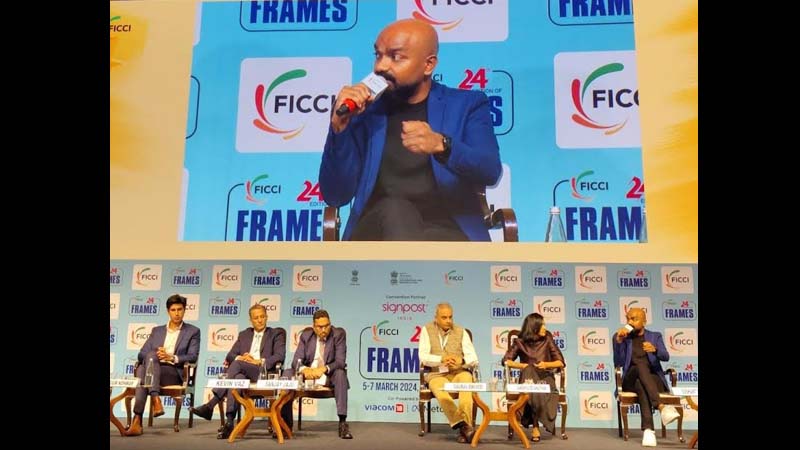
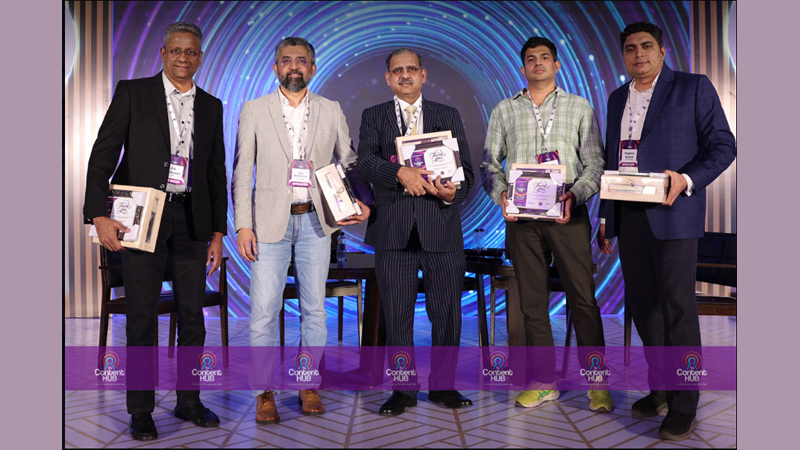
    In a rapidly evolving media landscape, seasoned industry professionals have offered valuable insights into the transformation of content consumption and production. The session was chaired by Ernst and Young partner Raghav Anand, MMTV chief executive officer P.R. Satheesh, Sony Marathi business head Ajay Bhalwankar, PTC Network chairman & MD Rabindra Narayan, Shemaroo Entertainment COO, Digital, Saurabh Srivastava esteemed voices in the field, have articulated their perspectives on the burgeoning shift towards globalised content.

    Rabindra Narayan emphasised the dissolution of regional boundaries in content consumption, attributing it to the accessibility facilitated by global platforms and connectivity options. He predicts a future where language barriers will fade, citing the potential of technology to clone and adapt voices, thus enabling seamless localization across languages.

    Saurabh highlighted the democratisation of content creation in the digital era, underscoring its empowerment and revenue potential, particularly in linguistically diverse markets like India. He emphasizes the value of culturally rooted storytelling in filling gaps in content supply, with technology enabling effective monetization, especially through OTT platforms.

    Ajay Bhalwan sheds light on the evolving landscape of Hindi and regional language content, noting a significant shift where a substantial portion of content on Hindi film channels originates from regional languages. He accentuates the importance of language in enhancing authenticity and audience engagement, exemplified by the strong resonance of Marathi content in Maharashtra.

    PR Satheesh underscored the paramount importance of content quality in driving viewership and transcending language barriers. Drawing parallels with the global popularity of Korean dramas, he advocates for leveraging technology, including AI and real-time translations, to enhance content creation and distribution.

    These insightful perspectives collectively echoed the industry’s adaptation to a globalised content landscape, where technology catalyzes innovation and accessibility. As content continues to evolve, these experts offered valuable guidance on navigating the dynamic media landscape and maximizing the impact of storytelling in diverse markets worldwide.

  • Streaming is seeing phenomenal growth in India: Prime Video India’s Sushant Sreeram

    Streaming is seeing phenomenal growth in India: Prime Video India’s Sushant Sreeram

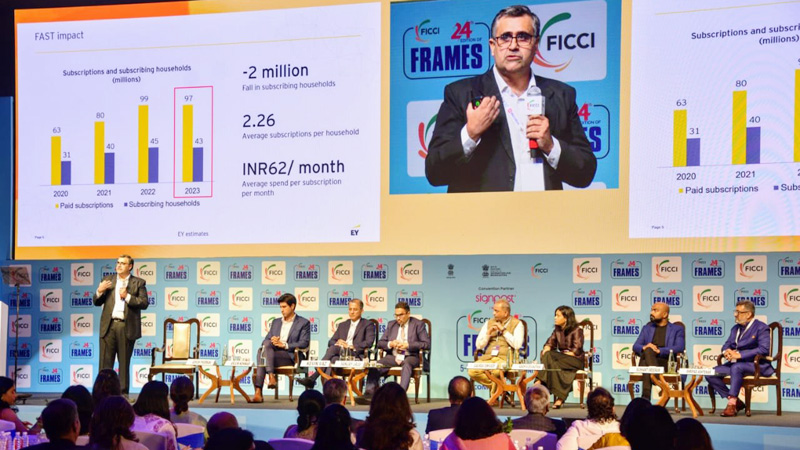
    Mumbai: In a highly engaging panel curated on the opening day of FICCI FRAMES 2024 titled ‘Reinvent: Navigating the Future of the Media and Entertainment Industry’, Prime Video India country director Sushant Sreeram delved into the dynamic landscape of the streaming industry in India, exploring growth trends while highlighting Prime Video’s business and content commissioning strategy.

    Moderated by Ernst and Young partner Ashish Pherwani the panel began with a keynote from Ministry of Information and Broadcasting secretary Sanjay Jaju.  In addition to Sushant Sreeram, the panel saw the participation of industry leaders from multiple M&E sectors, including Prasar Bharti CEO Gaurav Dwivedi, FICCI Media and Entertainment Committee chair and Viacom18 CEO – broadcast entertainment Kevin Vaz; FICCI Media and Entertainment Committee co-chair and Meta India VP and head Sandhya Devanathan; FICCI Media and Entertainment Committee co-chair and Warner Bros Discovery general manager – India & South Asia Arjun Nohwar, and Signpost India chairman & managing director Shripad Ashtekar.

    Responding to a question on key trends across SVOD, TVOD and AVOD business models, Sushant said, “Streaming is seeing phenomenal growth in India. It has, in fact, become a dominant use-case for internet in the country, and a large part of that growth is coming from outside the metros.  We have about as many people streaming content in India, as those watching linear TV. This is a very significant inflection point for the video streaming industry in India.”

    He went on to share, “Another key point to note is that there is no one single customer for streaming, our customers sit across the spectrum of accessibility, affordability, and the languages in which they prefer to consume entertainment. Therefore, our strategy for building solutions for India has always been to focus on “AND” solutions, rather than making choices between “this” or “that”. That is exactly why Prime Video’s entertainment hub – where all the different VODs come into play, continues to do incredibly well. In fact, India is one of the frontrunners on new customer adoption for Prime Video globally. Also, our Channels proposition, where consumers get access to content from popular streaming services with add-on subscriptions, has grown well, with more than 20 partners on the service. Further, our Movie Rentals service where consumers – both Prime members and those who aren’t yet Prime Members, can rent movies ala carte, is seeing great consumer uptake across the country. Mini TV, Amazon’s free ad-supported service, also posted steady great growth in 2023. When we think about how to serve India, we prioritize what is important for customers – great value, great selection, and convenience. It is true for what we do at Amazon overall and the same holds true for Prime Video as well.”

    Responding to a question on the cost of content, Sushant spoke about the fact Amazon and Prime Video is invested for the long-term in India. Elaborating on the same, he said, “It is important to place this in context – our investment thesis is built on developing this category over a fairly long period of time. That’s the time horizon that we operate with for all our investments at Amazon, and the same holds true for Prime Video. The second is that we want to create a category of great cinematic storytelling and we know that consumers value that. We realized that creating an ecosystem across the board, not just the service, but creators and the technical ecosystem is an investment that is well made.”

    He went on to add, “The other thing about our investment thesis is that we look at it through the lens of how we bring in customers to enjoy this multi-benefit proposition for Prime, which is a unique proposition for customers and Prime Video is a part of that. That changes how customers evaluate what is value for money, and that gives us the impetus to continue to make investments. And finally, we want to make all the great stories that we can, but we realize that we can’t make all of them. We’re therefore always excited about the collaborations that we can forge, with creators, Channel partners and studios to build out a true video entertainment marketplace. The fact that Prime Video has close to 100 projects right now in various stages of production and development is a clear indication that there is appetite for great stories in the country!”

    To wrap up the highly engaging session, each participant was asked their Mantra for 2024, to which Sushant replied, “For us, it’s still Day one!” Day one is both a culture and an operating model that puts the customer at the center of everything Amazon does. Day one is about being constantly curious, nimble, and experimental.

  • FICCI FRAMES 2024: #Reinvent: Navigating the future of media and entertainment industry

    FICCI FRAMES 2024: #Reinvent: Navigating the future of media and entertainment industry

    Mumbai: The Indian media and entertainment industry is witnessing significant changes, with shifting consumer preferences for high-quality content, new broadcasting technologies, pressures on advertising spend, and the advent of AI. The #Reinvent session at FICCI Frames 2024 examined the dynamics driving this transformation and explored a range of enabling policies designed to support an industry navigating through a period of significant upheaval.

    The keynote of this session was given by Ministry of I&B secretary Sanjay Jaju, who said, “As we move forward, the Government of India’s focus is on creating a conducive environment for the Media and Entertainment industry to thrive.”

    The session was moderated by Ernst and Young partner Ashish Pherwani.

    “In the last one year, the skilling ecosystem of Maharashtra has supported 48,000 youths from Maharashtra to be trained only in media and entertainment. This was something of a record under M&E skill council. A big thank you to Mangal Prabhat ji and his government for their proactive efforts to train rural and urban youths,” FICCI India AVGC-XR Forum chair Ashish Kulkarni.

    “Globally, the media and entertainment industry is witnessing remarkable shifts with digital innovation reshaping consumption patterns and content creation dynamics,” FICCI Media and Entertainment Committee chair and Viacom18 CEO – broadcast entertainment Kevin Vaz.

    “India is a significant priority market for Meta globally. We have invested considerable time in developing products tailored to the diverse needs of the hundreds of millions of people using our platforms. We are dedicated to serving both users and businesses by continually enhancing our offerings,” FICCI Media and Entertainment committee co-chair and Meta India VP and head Sandhya Devanathan.

    “There is no one single customer. Customers sit across a spectrum of accessibility, affordability, of languages in which they want to watch their entertainment and what their entertainment needs are. For us, building solutions for India has always been about what we need to build as an end solution and not making piecemeal choices,” Amazon Prime Video country head Sushant Sreeram.

    “Free dish has been growing continuously and consistently. In 2003, when it started, the industry was at a very nascent stage and it set the context for the rest of the industry to grow and develop,” Prasar Bharati chief executive officer Gaurav Dwivedi.

    “We usually focus on the who, what and where. Who is consuming us, what kind of content they are consuming and where do they prefer to consume. I think the new dynamic that is now emerging is for us to focus on when and traditionally linear TV networks didn’t focus on that. By when, I mean consumption patterns that are arising from the situation that you are in – like in an elevator, waiting for a bus or picking your child from school. And in that 30-second to five-minute moment, do you have content form that they find engaging,” FICCI media and entertainment committee co-chair and Warner Bros Discovery Sr VP and general manager  – India & South Asia Arjun Nohwar.

    “Out-of-home advertising is playing a great role in sustenance of smart cities because when we see any social spaces – roadside shelters, libraries or any basic first mile or last mile connectivity solutions, it is the responsibility and obligation of out-of-home player where they invest in basic infrastructure. It is beyond billboards and includes investing in smarter solutions like charging points too,” Signpost India chairman & MD Shripad Ashtekar.

  • VBS 2022: Over-regulation could impede pay-TV industry’s growth in near-term

    VBS 2022: Over-regulation could impede pay-TV industry’s growth in near-term

    Mumbai: Over-regulation could impede the pay-TV industry’s growth in the near term, especially amid rising competition from the OTT platforms, and DD Free Dish’s expanding territories, highlighted industry stakeholders at the Video and Broadband Summit (VBS) 2022 on Wednesday.

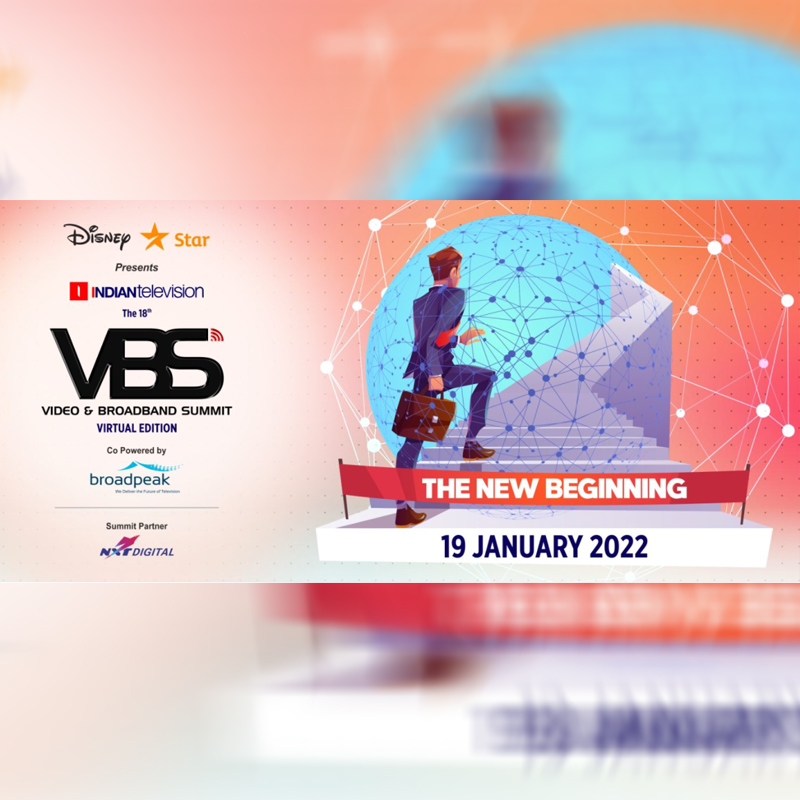
    The day-long virtual event organised by Indiantelevision.com and co-powered by broadpeak concluded its 18th edition. Disney Star came on board as the presenting partner, while NxtDigital was the summit partner.

    The event witnessed an engaging panel discussion among experts from the broadcast and DTH industry as well as other stakeholders as they examined the challenges faced by the pay-TV industry and deliberated on the opportunities that lay ahead. The session was moderated by Indiantelevision.com founder CEO and editor-in-chief Anil Wanvari.

    Overview of pay-TV industry

    TV penetration in India is currently estimated at 60 per cent which means that a third of the households are yet to own a TV set. There are around 210 million TV households, growing at seven per cent year-on-year and adding six-to-seven million new homes. The data also suggests that about 12-14 million TV sets are sold every year.

    While markets like Tamil Nadu and Kerala have a strong TV presence with 98 per cent and 92 per cent penetration, respectively, other markets like Bihar, Jharkhand, Orissa have a huge headroom for growth. In some markets such as Uttar Pradesh, Uttarakhand, Madhya Pradesh, and Chhattisgarh TV penetration is as low as ~40 per cent.

    The Telecom Regulatory Authority of India (Trai) and Federation of Indian Chambers of Commerce and Industry (FICCI) estimated that there are 130 million pay-TV homes in the country. Linear pay-TV business average revenue per user is ~Rs 240 which is less than $3.5.

    “The data shows that there are 300 million homes with 4.5 people on average. While the population may remain the same going forward, the number of households will increase owing to nuclearisation of families,” observed Tata Sky chief financial officer Sambasivan G highlighting the headroom for growth in the coming years. “More households will mean more opportunity for pay-TV to grow.”

    Migration to DD Free Dish

    According to the panellists, free DTH platforms like DD Free Dish are also invading the pay-TV territories and expanding their share. According to the latest data, DD Free Dish run by public broadcaster Prasar Bharati has doubled its base from 20 million to 40 million in the last five years.

    “In the last two years, we have seen the migration to Free Dish gaining momentum,” said Star and Disney India head – distribution and international (India) Gurjeev Singh Kapoor. Drawing attention to the impact of the pandemic, Kapoor said, pay-TV homes had tumbled down by two to three million as consumers moved to free TV because they did not have disposable incomes.

    Ernst and Young media and entertainment advisory services partner Ashish Pherwani noted that the upcoming FICCI report in March will show a further decline of six million households in the pay-TV universe. The report will also indicate a big growth in the number of connected TV (CTV) households. “If you look at pay-TV plus CTV then there’s a growth that will continue in the future,” he said.

    Den Networks CEO SN Sharma maintained that while Free Dish was a noble service that provided entertainment to lakhs of viewers, the challenge emerged when broadcasters charged distributed platform operators (DPOs) money for offering pay channels but gave it free of cost on Free Dish. “There must be a level playing field in terms of regulation,” he said.

    Serving the FTA audience

    Broadcasters and distributors agreed that the TV consumer in India exists on a spectrum where at the top of the pyramid there’s a customer who watches linear TV, broadband video, and OTT whereas at the bottom of the pyramid there’s a customer who prefers to watch only free TV. “For any product and not just TV, you’ll have a market where there will be a free, a pay, and a premium offering,” said Pherwani.  

    “Free TV exists even in mature markets such as the US, Europe, Australia, and the Indian consumer always wants more for less,” commented Indiacast president- affiliate sales- India, South Asia, and APAC Amit Arora. “The bulk of DAS 3 and DAS 4 markets are going to remain connected to the TV, however, growth remains a bigger challenge.”

    According to the panellists, broadcasters have discovered that being available on Free Dish and serving the FTA audience makes more business sense than moving away from the platform. “Somewhere in 2019, when broadcasters went off Free Dish it was estimated to have a base of 30 million. That audience segment remained there,” observed Amit Arora. “We should look at a different solution and attack the market where free TV is present, rather than wishing this problem will go away if we knock off our channels from Free Dish.”

    Star and Disney India’s Gurjeev Singh Kapoor also agreed. “When we vacated that platform (Free Dish) we saw other channels emerging as number one, therefore not being present on Free Dish is not a sensible proposition. You need to have content to entertain people who have less disposable income,” he contended.

    According to Nxtdigital CEO Vynsley Fernandes, free TV audiences can be wooed back to pay-TV by offering them a better product. “A Free Dish customer watches 100 channels for free by paying a one-time nominal fee for the set-top-box (STB),” he said. “We created a lifetime-free product that bundled 300 free channels where the customer had to pay a one-time fee for a digital STB. This allowed them to watch any free channel and upgrade their service to access pay channels if they wanted.”

    He added, “broadcasters and DPOs need to work together to develop products that cater to different socio-economic classes. Today, we’re struggling to figure out what those step-up products can be because you can’t create a thousand different products.”

    NTO 2.0 regulation

    After the first tariff order was implemented in February 2019, it took six months for TV viewership to stabilise and consumers to successfully migrate to the new tariff regime. Pay-TV subscribers declined by 12-15 million according to industry estimates which were compounded by the pandemic which struck in March 2020. Experts on the panel believe that the implementation of the new tariff order (NTO) 2.0 during this period of economic recovery would only disturb the whole ecosystem.

    “This black swan event has changed the consumption patterns on TV, meanwhile, 20-30 million subscribers have dropped from linear TV due to transitioning from one tariff regime to another,” said Amit Arora. “A lot of economies have shown that restrictive policies do not lead to fundamental growth of the sector. What we need right now is a broad paradigm and notover-regulation”

    Highlighting that India has immense competition in the broadcasting sector with 900+ channels and pressure from OTT and Free Dish platforms as well, Gurjeev Singh Kapoor said, in such a market, “the regulator should treat broadcasters with forbearance and let market forces prevail.”

    Adding further, he said, “The average ARPUs for satellite and cable TV and DTH providers is Rs 240. But if you look at what broadcasters walk away with, it is not even one dollar. Is that kind of business model sustainable? We have to look at what the consumer can pay best.”

    Tata Sky chief financial officer Sambasivan G said, said, there was no to flinch from any price increase as a result of NTO 2.0. “We are charging the customer 50 per cent of what we were charging them 20 years ago for double the content. That means the customer is getting four times the value. Even with a price increase we will still be the cheapest pay TV market in the world,” he asserted.

    “The status quo should be maintained for some time,” believed SN Sharma. “Broadcasters have hiked their channel prices by as much as 80 per cent but DPOs are not in a position to handle these kind of price hikes. This kind of disruption will disturb the whole pay TV ecosystem.”

    Parity in regulation of OTT and pay TV platforms

    SN Sharma observed that all major broadcasters are operating their own OTT platforms and offering their pay channels for relatively low cost compared to pay TV. “There must be parity in pricing on cable TV and on OTT,” he stated.

    Commenting on the issue, Gurjeev Singh Kapoor said, “OTT in India is still a second screen phenomenon where a large portion of OTT content is consumed on mobile. It is still not a living room experience. So, I don’t think it is fair to compare linear TV and OTT pricing.”

    He added, “In a market like India with 300 million homes, there are 10 million homes that watch TV content on OTT which is not a big number. So, we’re missing the forest for the trees.”

    “All our linear TV channels are behind the paywall on OTT and not on AVOD. I believe we should be talking about deregulation of linear TV rather than regulating OTT,” remarked Amit Arora.

  • Trai must focus on regulating process, not prices : Broadcasters at CII Big Picture Summit

    Trai must focus on regulating process, not prices : Broadcasters at CII Big Picture Summit

    Mumbai: As a regulator, the Telecom Regulatory Authority of India (Trai) must focus on regulating the process and not the prices, argued broadcast industry stakeholders at the CII Big Picture Summit held on Wednesday. The discussion was around the impact of new tariff order (NTO) 1.0 and 2.0 on linear TV broadcasting and the need for light touch regulation.

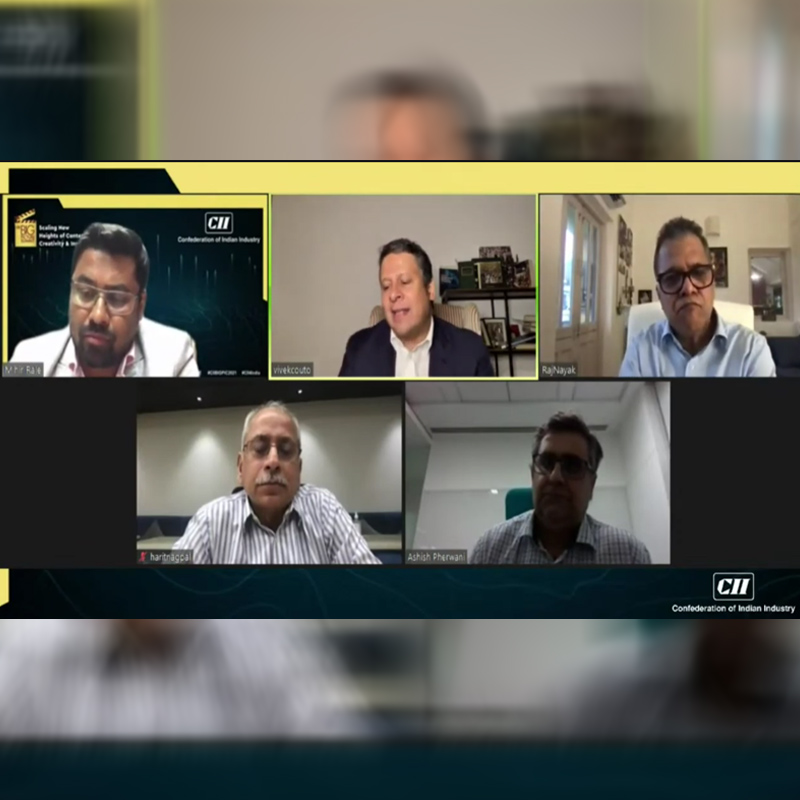
    The session was joined by Tata Sky managing director and CEO Harit Nagpal, Disney and Star India chief regional counsel Mihir Rale, House of Cheer Networks founder and managing director Raj Nayak, Ernst and Young Indian media and entertainment practice leader Ashish Pherwani and was moderated by Media Partners Asia co-founder and director Vivek Couto.

    The pay TV industry in India is the cheapest in the world and not by a small margin. Broadcasting is the largest contributor to India’s media and entertainment industry. India’s M&E industry accounts for 1.1 per cent of total GDP whereas in mature markets the contribution is usually 3-4 per cent. Panellists argued that excessive regulation by Trai is holding back the growth of the industry.

    “We belong to the service industry,” said Harit Nagpal. “A product like Tata Sky is aimed at customers who are willing to pay five to ten per cent extra to watch premium quality content. But when Trai regulates the prices, even if the customer is willing to pay extra, we can’t increase the prices. There is no incentive to invest in quality.”

    Trai’s intent seems noble on paper. The NTO regulations want to create parity in prices in linear TV broadcasting. However, there is a wide spectrum of customers in India that watch content. The players in the TV broadcast ecosystem understand the consumer’s needs and try to meet them with attractive prices. Trai’s regulation is akin to saying that a three BHK apartment must be priced the same whether you live in Cuffe Parade or the suburbs of Pune, remarked Raj Nayak.

    “When the regulator framed and implemented NTO 1.0 the stated objective was a-la-carte needs to be pushed in the interest of the consumer. Today, we know that if the consumer picks a-la-carte then his/her content costs will go up,” said Mihir Rale.

    Trai most contentious provisions in the NTO 2.0 were its twin conditions which mandated that average MRP prices of channels in a bouquet must not be more than 1.5 times the bouquet price. The second condition, which was struck down by a Bombay high court judgment, states that MRP of an individual channel in a bouquet should not exceed three times the average MRP of a channel in that bouquet.

    Rale said, “Linking a-la-carte pricing to bouquet pricing is a fundamentally flawed approach. The ability of the broadcaster to subsidise the cost to the consumer is important. Bouquets have an intrinsic value from an advertiser standpoint. We can customise and tailor our prices to everyone’s ability to pay. Why should that be taken away?”

    Stakeholders were of the view that Trai must step back and take a long hard look at the impact of NTO 1.0 regulation before implementing the amendment order. They said that consumer costs have gone up by 25-30 per cent and broadcasters have had to shut down a few of their channels. It was also noted that Trai must not assume every consumer is digitally savvy and will make the transition into the new regulatory mechanism easily. It is estimated that NTO 1.0 implementation resulted in the drop off of 12-15 million pay TV subscribers. 

    “We are in a free economy and the regulatory has come and put a price cap saying it is in the interest of the consumer. In fact, since there is a lot of competition in the linear broadcasting industry the fact is that broadcasters can’t raise prices indiscriminately without losing market share,” observed Raj Nayak.

    Trai has acknowledged that NTO implementation has yielded different results than what they expected. The need of the hour is for the industry to come together with the regulator and introspect on what’s best for the consumer.

    “The M&E industry is a creative industry. What we call different parts of the industry is just distribution. There are 130,000 digital influencers in India. How did this happen? Not by a regulated creative industry,” said Ashish Pherwnai. “The Indian media sector is $ 17 billion in size. How can regulation help us meet our targets in terms of percentage of GDP? Global companies like Disney and Lionsgate Universal get 50 per cent or more revenues from exports. In India that number is less than eight per cent.”

    Pherwani also talked about how the top studios in the US spend $20 billion on content, and in Europe, the top studios spend $40-45 billion. If 10 per cent of that market comes to us, then it is a $4 billion opportunity on a base of $17 billion, he said.

    The panellists hoped that the trust deficit between the regulator and broadcasting ecosystem can be dramatically reduced in the coming years and TV growth returns to 2017 levels.

  • Bacardi India taps Zeenah Vilcassim as marketing director

    Bacardi India taps Zeenah Vilcassim as marketing director

    NEW DELHI: International spirits company Bacardi India, has appointed Zeenah Vilcassim as marketing director. She will head consumer and customer marketing across the entire Bacardi portfolio of brands starting this month.

    Vilcassim will be responsible for driving synergies across marketing, commercial and finance teams to ensure campaigns are effective, impactful and deliver on business goals. She will be based out of the company’s Gurugram head office and report to Bacardi India managing director Sanjit Randhawa.

    She began her career with Bacardi four years ago as global brand director for Dewar’s Scotch whisky. During this time, she focused on growing the brand’s footprint in emerging markets and oversaw the marketing of three award winning innovations.

    Vilcassim said, “During my time as global director for Dewar’s Scotch whisky, India was – and still is – one of our most exciting markets. It is incredibly diverse, dynamic and constantly evolving. Each one of our iconic brands has an opportunity to play an authentic role in the hearts and minds of the Indian consumer. I can’t wait to get started and bring a little bit of creative rebellion into all that we do.”

    Vilcassim began her career as an economist and moved to a management consultant role in global banking at Ernst and Young. Her pivot into marketing was driven by an interest in combining data, analytics and creativity to accelerate business growth. She has held previous positions within digital analytics and content and also led the entire UK operations as managing director at Protein before joining the team at Bacardi.

    Randhawa added, “As we continue to build and grow our portfolio in the country, we are thrilled to have Vilcassim as part of the India leadership team. She has played an integral role in the Dewar’s brand’s global journey and will now be instrumental in driving the strategic direction and growth for the entire brand portfolio of Bacardi in India. With consumer at the heart of all our efforts, we’ll work closely to deliver on moments that matter and create solutions as well as campaigns that resonate with our audiences.”