|
The Indian Premier League (IPL) is caught in the midst of a storm with dark clouds hovering over team ownership issues, sources of funding, corruption and match-fixing charges.
Lalit Modi, the architect of the IPL, is being accused of holding hidden stakes in some of the franchises. Income-Tax sleuths have broadened their probe into the financial details of the IPL by conducting nationwide raids cut across Multi Screen Media (MSM), World Sport Group and the franchise owners.
So how will these chain of events affect the brand value of the IPL pegged at $4.13 billion?
In an interview with Indiantelevision.com‘s Sibabrata Das, Brand Finance India managing director Unni Krishnan says the risks for brand value erosion are significant if the IPL does not quickly put in place proper management systems and processes.
Excerpts:
It is too early to take a call on this. The probe has started and we will have to wait for the government to come out with a final report on the investigations before we can comment on whether the IPL brand is fractured.
But in our February report, we had cautioned that the IPL branded ecosystem is rapidly approaching an inflexion point. We had predicted this to happen in the next 6-10 months. This has come sooner than that.
Surely, there are definite weaknesses regarding brand value governance and transparency, management systems and processes. But have we got a revised value of the IPL brand? Not yet. Does this mean that there is no brand erosion at this stage? The risks for brand value erosion are significant if things are not managed swiftly and the stakeholder relationships start weakening. But the truth is that the IPL is a very valuable brand created in a very short period of time. The wealth that can be created by the brand is going to be substantially significant for many stakeholders. A conducive ecosystem has to be created to move the brand to the next level.
The fault is not with the IPL brand. Some people are commenting that the property be nationalised. That is not how you run a global commercial property like the IPL. Iconic brands such as the IPL are national assets and a source of wealth creation. The question is whether we have the capability and determination to put systems and processes in place to manage one of the best brands we have produced. If we fail to do so, and all the allegations also turn out to be true, the brand will take a big knock.
Let us not confuse the individual called Modi with the business and the brand. One individual is not capable of running such a complex business ecosystem like the IPL. The need is to fix the weaknesses.
As the architect of IPL, Modi has done a great job. But for such a large-scale property, we need 10-12 key members. We are not sure if the IPL governing council acts as a rubber stamp. We need to go through these questions urgently if are to create a sustainable brand property.
The IPL brand is a set of complex relationships with fans, franchises, sponsors, business houses and players. This can create huge value in future if properly managed – not by one individual but by a system.
There is an entry price to every business. Substantial investments are required and the revenue potential is huge. If there are misconducts like match-fixing and betting, then obviously the guy watching the game will turn off. So will sponsors. Years ago, when the first match-fixing charges were made, there was a brief period of lull. But that does not mean that cricket has died in India. The key question is governance and transparency.
There has to be transparency at the ownership level too. Media reports are suggesting murkier deals. We don‘t know at this stage what is the truth. But sporting properties have to be run like proper businesses. Look at how the English Premiere League (EPL) has hurt itself. The club owners chased iconic players and made unrealistic purchases through a huge load of debt. Sports businesses can be lucrative but proper regulations have to be in place. Is the IPL an overheated economy? Is there value to be created? Yes. There are strong revenue and marketing opportunities.
Most of the clubs, however, have not yet put the systems and processes in place to manage these opportunities. Take the licensing and merchandising (L&M) business which is pegged globally at $108 billion. This is not a Mickey Mouse number. Manchester United has 25-30 per cent of its revenues coming from L&M. But in India, this revenue stream is not visible in many of the clubs. We have to build the requisite bandwidth to monetise these opportunities.
As a country, we need to move away from intrigues and corrupt systems to a phase where we develop international properties. We can‘t run these properties with the same baggage as we move from a developing to a developed country. The tussle between the old and the new India will lead to pain and tribulations. But the fact is that we have created a positive property in the IPL which can provide sustainability in the long run for various stakeholders.
People are seeing a new India through the IPL. This goes much more than cricketing business; it is about brand India. On a much broader level, IPL has demonstrated the coming of age of India‘s commercial prowess on a global stage.
The developed world is looking at the IPL as a global property produced from India. The IPL has changed the very perception of India in the global stage. The unfortunate part is that if we don‘t do a clean-up action, we would be destroying IPL not due to any competition but because of our own action. The moment of truth has arrived for us. We have to face it with independence and courage. Can we live up to the expectations that we have created? It will be a sad essay if we don‘t deliver.
That is only an indicative figure we have given to compare a property developed in one part of the world with another that has achieved maturity status. The IPL has hardly scratched the surface. It has a long way to go and a considerable value to realise before it lives up to its full revenue and brand potential.
We are seeing a remarkable increase in revenues from broadcasting (as deal was renegotiated) and sponsorship. We have also considered the IPL‘s capability to draw in fans and viewership.
There are 3-4 breakaway clubs. We have looked at teams who have managed cricket as a product and blended this with marketing and commercial excellence. The two performances have to be done simultaneously.
CSK is beginning to put the various pieces together, synergising between their enterprise (India Cements) and their IPL business. We are also seeing Mumbai Indians show a remarkable revival this year, both in performance on the field and in their commercial activities.
KKR topped in our first round as it has an iconic brand like Shah Rukh Khan. This gives it an undue advantage. But they are not able to exploit this to the maximum. Their performance as a cricket team has also been bad. If this trend continues over the next few seasons, then it will seriously erode the brand value of KKR. |
Tag: EPL
-

‘One individual is not capable of running IPL’s complex business ecosystem’ : Brand Finance India managing director Unni Krishnan
-

‘We are seeing the beginnings of a global iconic brand in the IPL’ : Unni Krishnan – Brand Finance India Managing Director
The Indian Premier League (IPL) is set to revolutionise the cricketing economy, draw in a new bunch of younger audiences with the T20 format, reinforce India’s superpower status, create club cultures, and build market values that are in line with the English Premier League (EPL).
Just two years into birth, the IPL is enjoying a brand value of $311.44 million (IPL brand value of $240.72 million and IPL brand value to BCCI of $71.22 million) and an eye-popping enterprise value of $2.01 billion, according to UK-based brand valuation consultancy Brand Finance.
There is no stopping Shah Rukh Khan. Not even a dismal performance at the IPL. Kolkata Knight Riders, the team that the Bollywood star owns, leads the pack of eight with a valuation of $42.1 million. Mukesh Ambani’s Mumbai Indians walks into the crease at the second spot with a brand valuation of $41.6 million, followed by Rajasthan Royals with $39.5 million. The others in the pecking order are Chennai Super Kings ($39.4 million), Delhi Daredevils ($39.2 million), Bangalore Royal Challengers ($37.4 million), Kings XI Punjab ($36.3 million) and Deccan Chargers ($34.8 million).
The IPL and the team franchises will have to prepare for a long slog if they are to reach anywhere near the value of the EPL and its member clubs. They will have to induct professional management teams, introduce rigorous corporate structures, and chalk out strong commercial streams including merchandising and licensing.
In an interview with Indiantelevision.com’s Sibabrata Das, Brand Finance India managing director Unni Krishnan talks about the wonderful start the IPL has made, the potential it has in creating a global fan base and the things that need to be done to stretch the value of the brand and its market capitalisation.
Excerpts:
Sceptics have questioned the rationale for valuing Kolkata Knight Riders at $42.1 million. Does the performance of the team get a low weightage in comparison to the high-profile value of Shah Rukh Khan as the team owner?
The valuation process was on 2-3 months before the second edition of the IPL and, in many ways, you can’t predict the future. Having said that, enough data is available to prove that KKR has customer loyalty, a high degree of fan following, and amount of viewing for the matches that they play. Shah Rukh is able to generate an identity for the team. KKR is also able to tie in high-profile sponsors and sources of licensing and merchandising (L&M). Brand value is nothing but an ability to create fan base and convert that into cash.Even in the inaugural edition of the IPL, KKR didn’t fare too well. And in the second season, its performance has actually skid. So is there scope for a re-rating of the team franchise’s brand value?
Unlike the EPL clubs which have created a track record, the IPL is new. When we went into the exercise, the performances were just a year old. Which is why we can’t yet form a strong view of a clear winner. The valuation of the eight team franchises falls within a tight range of $42.1 million and $34.8 million.KKR is one of the clubs which has made money from the first year itself. But valuations are not chipped in stone. When we carry out our second exercise after a few months, we will weigh in certain factors like KKR’s performance, captaincy and blogger issues that could have had an impact on the commercial revenue streams and the value of the brand.
Brand Finance has valued the IPL brand at $311.44 million while fixing the enterprise value at $2.01 billion. Is there a ratio between the value of the brand and its market capitalisation?
Since the IPL is at its infant stage, the ratio between the brand and the market value is low and not clear yet. We can arrive at a benchmark after 3-4 years as the value of the brand grows. In a typical matured stage, the range varies between the 40-50 per cent ratio. The brand-to-the market value ratio in case of the EPL, for instance, should fall within this region. The brand contributes to the market value in a significant way.How come a recent study by UK-based Intangible Business and MTI Consulting has almost halved the team valuations that you have arrived at?
Valuations are based on opinions and the quality and strength of assumptions. We have conducted a rigorous exercise.Has IPL’s shift in home to South Africa for the second season created a disruption in the fan build-up process and hence a dip in valuation?
The IPL property is not under-rated because it has gone to South Africa. We are, in fact, seeing the beginnings of a global iconic brand. In the cricket-following countries like England, South Africa and Australia, it is creating a new interest among the youth, who had moved away to other sports. A whole new set of fans and audiences are being created,breaching ethnicity and race. Led by a blend of Indian and foreign players, it will take the next 4-5 years to build a global fan base for the teams, cutting across the identification of countries. We are going to see a global brand coming out of India much like the Tatas. That is the potential of the property that IPL is.But the IPL will not have a clear run in this T20 form of cricket. There are other countries like South Africa and England who are going to have their own form of IPL. Serious competition is going to come. But having said that, the foundations and start of the IPL have been a huge success. The value is just not in marketing but also with a lot of economic substance embedded into it.
‘EPL clubs have a heritage of 100 years and have moved towards corporatisation. Some of the values of these clubs are in the wide range of $100-600 million. The IPL does not have that kind of legacy or magnitude. But it has a lot of headspace for value creation‘Do the IPL teams have the potential of becoming as big as the EPL clubs?
The EPL clubs have a heritage of 100 years and have moved towards corporatisation and rigorous structures. Some of the values of these clubs are in the wide range of $100-600 million. The IPL does not have that kind of legacy or magnitude built into it yet. But it has a lot of headspace for value creation, though much depends on how an organised management process and system is being set up. We may have the teams being listed and huge value being created going forward.When do you see listing of these teams happening?
There is a lot of money and Bollywood thrown into the system called IPL. Listings can happen in the next 3-5 years after revenue streams, cost drivers and the need for professional management teams are clearly understood. Sustainable value needs to be built. Some teams may even opt for private equity.How IPL is going to impact the business of sports marketing in India?
It will be a game changing moment for sports marketing and merchandising in India. The global L&M market is $108 billion and is a significant industry on its own. Manchester United and Real Madrid have a vey strong licensing and merchandising model. India is taking its first baby steps. IPL is the medium under which these processes will come into the country. Bangalore Royal Challengers has already started focusing on sports marketing. L&M has a strong commercial role that needs to be developed, going forward. The IPL teams have appointed top legal firms to protect their IPRs. The leakages inside the system have to be plugged or you will have a case of lost opportunities.What are the steps IPL needs to take to scale up?
More teams and seasons need to be introduced. But IPL can’t consider the T20 format as its personal fiefdom because competition is already starting. We are yet to see the teams take to the professional management skills that the EPL clubs have imbibed. But the teams are on the right track.Will Test cricket be severely impacted because of the T20 format?
The Test format will be in crisis unless there is a reinvention in its game architecture. It is especially dying out among the youth in the developed countries. The T20 game has given a new lease of life to cricket. Whichever format is innovative will succeed. But T20 certainly has an edge. -

‘IPL has aspirations to evolve into a major league like the EPL’ : Ravi Krishnan- Rajasthan Royals vice chairman
After succeeding in the first edition of the Indian Premier League (IPL), Emerging Media-owned Rajasthan Royals has big plans to develop the franchise into a global brand. Part of the agenda is to do a variety of lucrative commercial deals and break even before three years.
Emerging Media is looking at raising around $20 million by selling 10 per cent of its stake. The company is in the process of appointing bankers to find a private equity partner, ahead of an initial public offering (IPO).
In an interview with Indiantelevision.com’s Ashwin Pinto, Rajasthan Royals vice chairman Ravi Krishnan spells out the franchise’s future strategies.
Excerpts:
The IPL franchisees are said to have recovered close to 80 per cent of the money they paid to the Board of Control for Cricket in India in the first year. Does the huge success of the first edition of IPL mean that Rajasthan Royals will break even faster than the earlier three-year target?
We are revising our plans positively, though I can’t comment exactly on the figures. We spent less on acquiring the franchise and invested judiciously. We did not sign an expensive contract with a Bollywood star; nor did we spend heavily on advertising campaigns. I have never seen Chicago Bulls run an ad campaign; it is PR-led and builds value from the success that it enjoys. You could focus on the peripheral stuff as well, but the IPL at the end of the day is a sporting competition.Since we played well and won the inaugural IPL tournament, this has opened up more opportunities for us like playing in the Champions T20 League. We will, thus, be in a position to rake in more money.
What are the commercial opportunities that have opened up for you after your success?
We are scouting for strategic partnerships. There are some obvious ones like sponsorships on the shirt, etc. Then there are those that are not so obvious that will showcase the success of our franchise. We will be announcing more details later.What are the plans in the licensing and merchandising arena?
We are in discussions with different parties for tie ups. We have a very broad licensing and merchandising programme, which would cover a range of goods and services.Would it be a challenge for franchisees to get sponsors at high value because of the global economic downturn?
Even if some sectors have been affected by the downturn, other clients will come on board. When the tobacco embargo came in and Wills stopped sponsoring cricket, there were predictions of doom. However, other companies stepped in. Advertisers can’t ignore the IPL. I do not think that there is cause for any of us to panic.Why are some franchisees including Rajasthan Royals looking at raising funds by divesting stake. Isn’t this coming too soon and at a time when there is a global downturn?
There are different reasons for selling a stake. For us, the aim is to fund the development of the franchise.‘We will be diluting a small part of the equity and are looking at the private equity route. We are in the process of appointing bankers‘Are you looking at private equity investors as it is a bad time to go for an IPO?
We will be diluting a small part of the equity and are looking at the private equity route. We are in the process of appointing bankers.Up next for the Rajasthan Royals is the Champions T20 League. How do you see this developing as a property?
I think that it will be as significant for cricket as the Champions League is to soccer. In tennis you have the year-end Masters Cup where only the best of the best get to play. The Champions T20 League will occupy a similar mind space. It is being held for the first time and so there is some uncertainty among some parties; but I think it will do really well. It will be the icing on the cake when you talk about global domestic competitions.One of the things that EPL (English Premier League) clubs have done is to market themselves through foreign tours. What plans do you have in making Rajasthan Royals a major brand?
You have to remember that the EPL and its clubs are 100 years old. IPL has just finished its first year. While it is new, the IPL has aspirations to evolve into a major league in world sport like the EPL.What role will Rajasthan Royals play in helping Emerging media become a player to be reckoned with on the global stage?
I think that the success of Rajasthan Royals will provide a platform for the company to enter into other areas. However at the moment, we are going into the Champions T20 League, which will be followed by another IPL season next year.What is your strategy going to be when the trading window opens on 15 December?
We are looking at various permutations and combinations. The fact is that our team had seven nationalities. The public loved seeing Shane Warne, Sohail Tanveer and Graeme Smith on the same team. This lent freshness to the proceedings.The trading window is an innovation that fans look forward to. Who is going to be in the team? Who will not be there? Who will be traded? There will be a lot of drama around this. This is what happens in the US with college drafts for baseball and basketball. The composition of some teams in the IPL will change which will cause speculation and excitement.
What were the things discussed at the recent meeting in Bangkok to improve the IPL?
We had a conference in Bangkok to debate on the areas where we can improve upon. It was a three-day session that looked at different things – from organisation to ticketing to hospitality.Hospitality as you mentioned is an area that could be improved upon. What are Rajasthan Royals’ plans in this?
We recently launched our membership programme. We benchmarked this against other membership programmes globally. It is a five-tier programme and also includes kids. Creating a community can contribute to the financial success of the franchise as they would buy tickets, merchandise products and also attend special events. We are the first IPL franchise to launch a structured membership programme.Our membership programme could create life-long fans for the franchise. I have supported a football club in Australia since I was five years old. I am a repeat buyer of their jerseys and other club merchandise. It is about building a community and then finding ways to get them excited. Giving them special offers is one such way.
What is the impact that IPL will have on world cricket and on the business of sports marketing?
Let me take the second point first. In terms of sports marketing, it is providing a viable platform for companies to get involved with cricket. It could be through attaching themselves to the league itself or to a franchise or getting visibility on the broadcasting platform. The fact that there is also a Bollywood element to it has made the IPL an interesting marketing platform.The IPL has also brought in opportunities for service providers like ticketing companies, ad agencies and firms that specialise in hospitality.
As far as the world of cricket is concerned, the IPL has found its place. English and Sri Lankan players badly want to play in it. The IPL offers players the chance to make the most out of their short career spans. While the Future Tours Programme might make it difficult for all players to take part, the way the BCCI and other boards are dealing with the issue is good.
The IPL has also upped the ante as far as careers in sports go for Indians. Cricketers who were unheard of, can make more money here than from playing the Ranji Trophy.
As a sports marketer, do you feel that there is danger of Test cricket and ODIs getting devalued as T20 grows in importance?
This sport has had its origins in Test cricket and it would be wrong if the people in charge of the future of cricket, were not concerned about this format losing its lustre. The gatekeepers need to ensure that there is enough opportunity for the various formats to survive. The administration has to see to it that no format is overplayed or underplayed.Would the league franchise model for another sport like hockey or soccer work?
A lot of things have to be pulling together in the right direction for this to succeed – the sports administration, the broadcast platform, the corporate community and the players. -
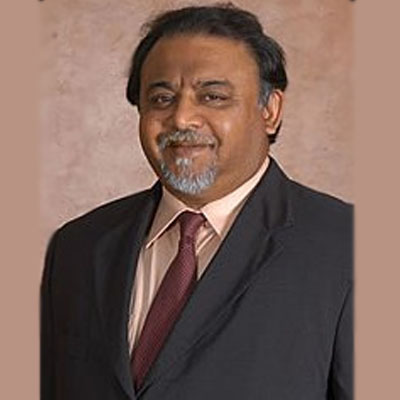
‘With IPL you have the power of 10’ : Kunal Dasgupta – Set India CEO
The Indian Premier League (IPL) has got off to a solid start. The ratings have been positive and crowds have thronged the stadiums. For Sony the IPL marks their return to cricket. Set India CEO Kunal Dasgupta offers Thomas Abraham and Ashwin Pinto his views on what he expects IPL to do for the game, telecast channel Max, as well as the importance of sustaining the brand.
Excerpts:
As a broadcaster what do you expect?
T20 is a made for television format. When India played a T20 match against Australia at the Wankhede stadium, ratings touched 20. I am looking for a rating of 4 or 5, which is possible, given that ICL, which has retired players, got 2.5. This is a good base for us to take off from.The format will mean that besides country against country, one will also view it as being team versus team. This is what exists in other sports like soccer, hockey, and baseball.
IPL is being pushed as being the ultimate in reality television. In that case how do you get that competitive environment?
The prize money (Rs 48 million goes to the winner) will ensure this. This is much more than you get for playing for the country and so the players will go all out. The matches will be hard fought. Here all the teams are evenly balanced and so you do not know the result. It will be unpredictable and matches will go down the wire. All teams have a good mix of batsmen, bowlers and youth.What are you hoping for in the first year as the telecast partner?
Ideally I would want the IPL to be a successful brand that has a long term play. After June, I will continue to do promotions to keep the team brands alive. This was one of the conditions on which we bid.We will do shows around the IPL. You could see teams (franchises) practicing and discussing strategies for the next season.
 ‘The trick for us is not getting ratings for the first season. The challenge is to sustain the excitement after that‘
But wouldn’t an ideal situation be for a franchise to build a brand without the big names who might be on national duty?
This might happen. Apart from April-May, you cannot have another period where all the stars are available. What will happen is that once the league is built the new players who are playing will become the core. You can then have matches in different parts of the world to popularise the game there using these new players.The trick for us is not getting ratings for the first season. This will happen as a matter of course because of the way the IPL has been hyped. The challenge is to sustain the excitement after that and it is here where we will have to take a leaf out of the book of the EPL. Teams have marketed themselves and have thus become iconic brands.
So Mallya for instance, will use the Royal Challenger brand name to go out there and create opportunities for exhibition matches. They can do charity work in Bangalore and build a fan base. Each franchise will have its own website where clips will be available. They can create merchandise.
Sony will pitch in through magazine shows. Otherwise it will just be a flash in the pan. As we come closer to the next season you will see transfers and there will be speculation.
New heroes will be born. It is possible that the likes of current heroes like Glenn McGrath, Kumble, and Saurav will not play beyond two seasons. Once that happens, then the brand will live outside the big names.
One of the aims is to broaden the viewer base is to get in more children, women, But for that you have to create marketing that speaks to those demographics. What is Sony planning?
One of the major attractions will be the presence of big Bollywood stars. Akshay Kumar will perform for Delhi. SRK will perform for Kolkata You will see proper Bollywood entertainment.We have even tweaked the timings of some of the matches to accommodate our entertainment specials. One match was supposed to start at 4 pm but we have pushed it back to 5:30 pm. We will even have stand up comedy for Extraaa Innings. On air we have gone in for fresh faces. We did not want Mandira (Bedi) for this. She is more suited for ODI cricket. I want 20-year-olds in T20. We also did not want Kapil Dev, Gavaskar. We wanted anchors who represent today’s kids. With the ICC World Cup we broke the mould and brought in females. Now we are breaking the mould back
What is the distribution upside from IPL?
This is a question mark. We are supposed to have a dip but we will retain the same level. There is no minimum guarantee now. Had Ten Sports still been present it would have been difficult to determine the value of IPL. Our team is happy as they are closing deals for the year and it is one of the distribution cornerstones.At $ 59 million in Year 1 and an average of $ 61 million over five years, IPL was literally sold at floor price. Wasn’t that a great deal?
It was. Most of the payout ($ 612 million) is from the next five years. ESPN’s bid was $150 million for the first five years. They had put in conditions that the top players should be there. We did not put in any conditions.Anyway, the way it has turned out, all the top players are taking part.
-
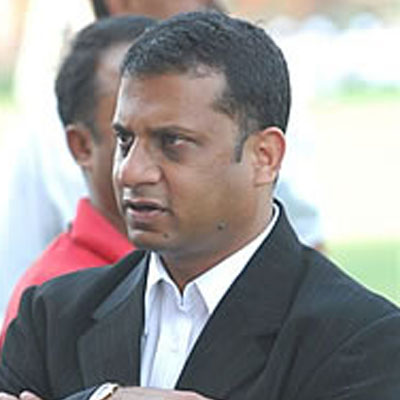
‘We will breakeven after the third year’ : Fraser Castellino- Emerging Media CEO
The Indian Premier League (IPL), which kicks off next month, has brought in $2 billion into the Twenty20 format over a 10-year period, involving big corporates like Reliance Industries and Bollywood Badshah Shah Rukh Khan.
Emerging Media, which has two other shareholders in Sporting Investment Group and Lachlan Murdoch, has bought the Jaipur team franchise for $67 million and is hoping to rake in profits after the third year.
Indiantelevision.com’s Ashwin Pinto caught up with Emerging Media CEO Fraser Castellino to find out about his plans for the team and the impact IPL will have on the game.
Excerpts:
What prompted Emerging Media to be involved with the IPL?
We have been in the sports business since 2005. Our first venture into cricket was when we bought the management rights for the Leicestershire County Cricket Club. Then we did an international T20 tournament that people today call the Champions Tournament.We came into India in 2006 and launched the reality show Cricket Star based on the T20 format. We are looking for the next Indian superstar. We saw IPL as a big opportunity as we also have experience in running clubs.
What is the IPL trying to achieve?
The IPL is BCCI’s attempt to bring in funds and get corporates involved with the development of cricket. The Board is trying to improve the infrastructure and facilities available to players who participate at a domestic level.By whipping up support for city-based league teams, the BCCI is also trying to bring new fans into the stadiums.
The tradition of supporting a regional team is not present in India. Do you feel that this will be a hindrance in terms of the IPL taking off?
I don’t think that there is a hindrance. Everything about the IPL represents an opportunity to grow the game. The challenge particularly for us is to create a fan base that supports the Rajasthan Royals.Another issue is that the BCCI wants the IPL to be for India what EPL is for English soccer. At the same time, the players are with EPL for several months each year and there is no conflict with an international schedule. How will IPL manage to do this?
One of the challenges franchisees face is taking the IPL team that participates in the tournament for 45 days and stretching it across the year. The international calendar is packed. We are working with the IPL Governing Council to see how the tenure can be extended. We have a squad of 22 players. While all may not always be available, we need 11 players at any given point in time. We are looking to take the Rajasthan Royals to play in other countries including Australia and England.Having bought the Jaipur franchise for $67 million, what breakeven period is Emerging Media looking at from IPL?
We will be investing $12 million in the first year which includes the payout for the team franchise, player costs, marketing, etc. Our assumption is that the business will breakeven after the third year. If IPL picks up, the breakeven can happen before that.How much will Emerging Media spend towards marketing?
We will spend close to $2-3 million on this. A 360-degree campaign will break shortly. O&M has put this together. There will be a TVC, radio spots and outdoor activities. There will also be a school, college and mall activation campaign. This will happen in Jaipur, Delhi NCR, and in Gujarat.What brief was given to the agency?
The brief is that the campaign must appeal to people at a local level. It must make people want to be supporters of Rajasthan Royals. It must inspire people to either switch on the television or come to the stadium.Have you tied up revenue deals?
We are in advanced talks with companies for sponsorship deals. We also have merchandising and licensing activities. Besides, there are central revenue streams including ad and broadcast rights.Is there any chance that Emerging Media might sell a stake in the IPL team?
Not in the first year. We might sell a stake later if we want to inject fresh capital into the company.‘One of the challenges franchisees face is taking the IPL team that participates in the tournament for 45 days and stretching it across the year‘What is the strategy you followed in selecting your team?
Our strategy was clear. We knew that there would be at least two auctions. The first auction had the stars. We knew that there was also a lot of talent that was not a part of that auction.During the first auction, we picked players and also set price points at which we felt that they had good value for us. If they exceeded these price points, we let them pass.
We did our research, and went after certain players. Now when you look at my team, they are at least as good as the others if not better. And we have spent $3.5 million while the others have burnt $5 million.
Are performance and marketability of players of equal importance?
Performance is more important. You can have glamour and entertainment, but at the end of the day we are here to win matches. Marketability has its place but it is not the primary determining factor for us.Could you talk about the branding of the team and how your star player Shane Warne will be used?
When we selected Jaipur, we were clear that we wanted to be in the state of kings. The name “Rajasthan Royals” reflects the characteristics of that state.Shane Warne was a strategic choice that many people do not understand. He has an incredible record in county cricket. When we signed him as both captain and coach, other teams who have specialist coaches were surprised. Specialist coaches are fine but Warne transformed the fortunes of Hampshire in county cricket. He took them from being a non-performer to a team to be reckoned with.
The IPL is about youth and developing domestic cricket. Now that he has retired, Warne is keen to come in and give back to the game by helping youngsters. The IPL is the perfect platform for him to do just that.
Has Emerging Media also appointed a consultant to help its IPL team form a cohesive unit?
We have a support team in place that includes physiotherapist John Glocter and assistant coaches. We believe that our team will be inspired by our captain and the support structure, and become a cohesive unit.Has T20 brought sports and entertainment closer?
The emergence of T20 has been interesting because as working life has become more hectic, people are increasingly looking for instant gratification.In India, while it has not been played often, we feel that this format will be well accepted. Since the IPL games will be played in floodlit stadiums in the evening, it will attract more women and families to enjoy an evening out.
How will IPL broaden the corporate involvement with cricket overall?
One of the things that will happen is that IPL will support academies, coaching centres, etc. These are feeder systems into T20 cricket.How did the idea of doing Cricket Star come about?
We wanted to be a body that works with the BCCI but at the same time goes off into areas where it has not managed to find talent. We believe that there are people who, while possessing talent, do not have the money to turn up at the BCCI’s coaching camps. We give them the chance to spend just two days with our experts and decide if they are good enough or not. If they are good enough, the sky is the limit.How have you grown the event over the years and how successful has it been in uncovering hidden talent?
I think what Cricket Star lacked in the first season was the gratification platform. It wasn’t clear what would happen with the chosen talent. Today anybody who is selected gets a contract with the Rajasthan Royals. The format has not changed much in terms of the testing process.We are clear in terms of what we look for in a T20 cricketer. Last year, we found two boys who were very good. But we had restricted entries to those who were absolutely fresh and had not played first-class cricket. They had never been part of an under 15 or under 17 squad. This year, we have opened it up for everybody.
Finally, are you looking at other sports?
Yes! We are interested in soccer, tennis and golf. There is potential for these three sports to grow in the country. We are looking at different options in terms of how to go about it. In terms of whether we do a reality show around these sports, it depends on the level of interest. There are many things that can work in sport provided you are willing to invest and watch it grow gradually. -

ESS wins South Asia broadcast, mobile & internet rights to EPL soccer
MUMBAI: In a bidding battle that finally became a three-horse race, ESPN Star Sports has won exclusive broadcast rights for the Barclays English Premier League (EPL) for the Indian subcontinent for the next three seasons through to 2010.
Incumbent ESS beat back bids by Zee Sports and Nimbus Sport to secure the EPL rights. Yes TV, which is owned by Malysian firm Astro and had made a pan-Asian bid, withdrew from the bid process in the last round.
The agreement grants ESS the right to broadcast 370 matches per season throughout India, Pakistan, Sri Lanka, Nepal, Bangladesh, Bhutan, Mongolia and the Maldives via television, broadband and mobile technologies.
Commenting on the acquisition, ESS managing director Jamie Davis said: “Our Company has been the catalyst for increasing the popularity of the EPL in India, ordinarily a cricket crazy nation. Our world class studio shows, intensive marketing campaigns, and localisation efforts including the introduction of Hindi commentary have made the EPL a highly watched sports property. We are very excited to continue our efforts to deliver the best of English football to the growing breed of football fans across India and the subcontinent. Our strong relationship with the FA Premier League has been built on our commitment to grow the EPL brand via live matches and over 400 hours annually of original, football programming.”
Premier League chief executive Richard Scudamore said: “ESPN Star Sports has indeed played a key role in growing the EPL brand in India. Their commitment to sports and to the EPL specifically gives us the confidence that this is the right partnership for the Premier League. As we move into an age of new media and all the flexibility and possibilities that come with this new technology, we are certain that this relationship will continue to flourish to the benefit of fans across the subcontinent.”
ESS’ array of original support programming for the EPL includes Nokia Football Crazy, Football Focus, Goals, Tiger FC Locker Room, Here We Go, Tiger First Edition and Football Extra. Over 200 million viewers across Asia tune into the EPL matches and packaged programmes each week. This season’s addition of Club EPL, Paula’s Perfect Ten and Jamie’s Greatest Hits further expands the overall football demographic to target women and youth.
“Keeping the young fans in mind we plan to enhance our EPL offering on mobileESPN substantially. Football fans can look forward to getting live scores, match schedules, player statistics, contests and much more from mobileESPN going forward,” said Sricharan Iyengar, vice-president, New Media and Marketing, ESPN Software India.
ESS has also extended its agreement with the FA Premier League to 12 other countries; Malaysia, Indonesia, South Korea, North Korea, Brunei, The Philippines, Cambodia, Laos, Myanmar, Vietnam, Taiwan and Macau. These rights also include television, mobile and internet platforms.
The lucrative territories where ESS has lost out include Singapore, where pay TV operator Starhub won and Hong Kong which went to PCCW. ESS has also not managed to retain the rights for China and Thailand, which went to Guangdong Soccer channel and UBC respectively.
-

EPL rights for India territory expected to be decided Tuesday; ESS loses ground in Asia
MUMBAI: The rights for a key sports property English Premier League (EPL) are in the process of being decided.
While the decision for India is expected tomorrow, the rights for some other key Asian countries have been announced. With a new entrant coming in this year (Nimbus’ channel Neo Sports Plus) and Zee Sports pushing soccer through its tie-up with the All India Football Federation (AIFF), one can expect the process to be competitive for India.
Nimbus Sport, Ten Sports and Zee Sports have all made bids for the Indian subcontinent. Geo TV has bid for Pakistan. ESPN Star Sports (ESS) had made a pan Asian bid. Yes TV which is owned by Malysian firm Astro, had also made a pan Asian bid.
Meanwhile, ESS which is the incumbent in India, is having a difficult time of it as far as Asia is concerned. Singapore pay TV operator Starhub has announced that it has won the exclusive rights to air EPL matches in the state.
Arch rival Singtel had also bid for the rights. Earlier it had been announced that Hong Kong’s PCCW had won the EPL rights for that city. The matches will air on PCCW’s internet and pay-television unit Now Broadband, which outbid i-Cable Communications to get the rights.
Information available with Indiantelevision.com indicates in addition to Singapore, ESS has also not managed to retain the rights for China and Thailand. They had to raise their bid quite a bit to retain the rights for Malaysia and Indonesia. An industry source believes that ESS will particularly feel the loss in Thailand but Singapore, with its substantial expat population that keenly follows soccer might also hurt.
Thailand had at least five bidders with UBC winning, ESS had to outbid eight parties to retain the rights for Malaysia. In Japan, Yes TV won. In China Guangdong Soccer channel won and there were reportedly six bids, Sources indicate that ESS has managed to get the rights for smaller territories like Philippines, Vietnam and Brunei.
Meanwhile, media reports indicate that sports fans are hoping for better programming and moderate price increases from StarHub. It has EPL rights for the next three seasons starting from next year. This will help StarHub maintain its vice like grip on the pay TV market in Singapore.
In a statement, StarHub says that it also has the rights to distribute EPL through broadband Internet and cellphone networks in Singapore. StarHub is now looking at delivering a more enhanced experience for socer fans.