Tag: Epic TV

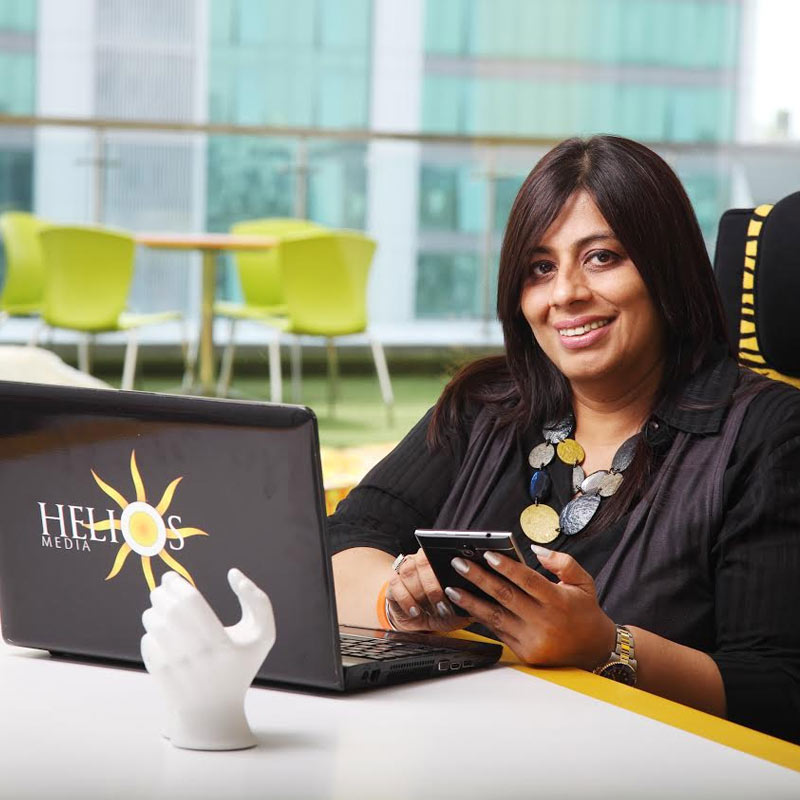
  • We are actively looking to work with regional channels – Helios Media MD Divya Radhakrishnan

    We are actively looking to work with regional channels – Helios Media MD Divya Radhakrishnan

    1 November 2016 was celebrated with much pomp by the folks at Helios Media. Five years of successful operation in a business (which has seen many come and go in shorter periods) was a good enough reason to party till late into the night with clients, media and friends on the terrace of its expansive office in Mumbai’s Andheri East suburb. High Five was the motto for the evening, and everyone was greeted as such.

    Started by media vet Divya Radhakrishnan (on 1/11/11) who was later joined by former Zoom business head Bala Iyengar – who is now a partner in the business, Helios Media today has gained a good reputation for itself as a company that delivers. Over the years, it has helped in the monetization of channels such as MTunesHD, Fashion TV, Epic TV, FoodFood, Living Foodz, FataFati, Green TV, Fakht TV, Spin TV among many other.

    With a staff strength of 55 (most of them involved in ad-sales branded content), Radhakrishnan states that the company has attained a level of stability and is looking at revving up its gross billings to the triple digit crore mark. She has been bringing in professionals and delegating responsibility to the team she leads. “I am basically a gardener,” she says, looking at the terrace lawn that her office looks on to on the top floor of an office complex in the suburb of Andheri east.

    Indiantelevision.com’s Papri Das got into a tete-a-tete with Radhakrishnan to get her insight into what has been achieved so far and where she sees Helios Media going. Excerpts:

    Helios Media is often viewed  as an outsourced ad sales wings for channels. What is the company’s positioning in the market currently?

    Clients initially approached us for the monetizing aspect of our services and were pleasantly surprised by the bouquet of services we offer, which has grown over the years. We are currently not only into pure play ad sales. We have a tendency to typecast things and put things boxes in our country. Therefore, to launch something new that doesn’t fit into the general notions of mainstream, to carving its own niche is a long journey.

    Our aim is to highlight these services and solutions as part of the entire mix, which in turn helps the revenue grow, and is not just considered as an afterthought. Therefore, the thought ‘Beyond Obvious’ came into being, and it has been our brand positioning since the past three years. We didn’t chance upon the concept overnight, we studied cases, researched extensively, interviewed people from the industry, and found the need gaps and oriented a team on this mantra.

    What value addition is there for channels to let Helios Media handle their revenue monetisation? Are you able to fetch them premium rates for their inventories?

    Hypothetically speaking, say I have a channel going at 20 GRP which sells at an effective rate of Rs 1000, now what will I sell a channel with 5 GRP for? Rs 50, if you apply a simple sales principle. But, Helios Media has the confidence to sell it almost close to Rs 1000. We do that with right positioning of the content and brand akin-ness.

    I have often been asked how I can fetch premium rates for clients when we don’t control bulk inventories in the market across different media platforms. Our proposition isn’t to sell inventories in packages, we treat each channel differently, and a different specialist handles its sales. Just because the channels have outsourced their sales, it doesn’t mean that their inventory ‘sort of’ goes to a supermarket shelf.  We target brands based on the brand akin-ness with the channel, and given that we serve niche channels, there is no question of overlapping their sales needs.

    For example, when we launched MTunes, we researched extensively with Ormax to understand what was lacking in the music scene, to hit the sweet spot that brands wanted to target and the channel could offer. It is interesting to know that we managed to get several brands involved at the content level, and explore innovative solutions through deals with the channel, as we worked around the restrictions of the music IPs having separate owners.

    How do you go about selecting the channels to partner with?

    Call us picky but we are very particular about the channels that we choose to sell for. If you look at our client bouquet, each one of them is a specialty channel, which needs to be positioned uniquely in the market, otherwise it won’t sell well. You can’t sell a channel such as BTVi on simply the standard unit of trade, that is, GRP. You have to sell the brand positioning, for which you need to get under the skin of the content. Therefore, a lot on how we choose clients is based on their basic understanding of this, how comfortable they are with acknowledging our inputs and working according to it.

    While it is easier for us to do that for a channel we were involved with from its inception such as MTunes and Living Foodz, we have also brought in clients well into their life cycle – Food Food, Fakht Marathi, etc.

    In the past five years, Helios Media hasn’t aggressively chased new clients and taken time to add a new channel to its portfolio. Is this a conscious decision?

    Ours is a very people heavy business. It has to make logical sense to me to expand my team to add new channels to sell. It doesn’t seem cost-effective or time-efficient for us to add a bouquet of 50 to 60 channels and build an enterprise. Where we see expansion is in the increase in revenue and value of our clients, because it directly links to growth in our own value.

    We have a channel portfolio of eight now. But, there were almost 80-odd broadcasters who approached us as prospective clients, but many a times we decided not to work with them. It is because most of them lacked the depth of understanding of the media concessionaire businesses. From broadcasters going ‘I want to launch a channel one day’ to people with content who hadn’t done up the lining to folks who simply don’t understand the distribution ecosystem: there are examples of such broadcasters galore.

    Helios Media is often compared to media agencies, and its performance judged on new clients and account wins. Do you find that unfair?

    Frankly, it doesn’t bother me how many crore of account I handle as compared to others, as long as I know how my business’ bottom line works.

    Media agencies work on two and half per cent commission basis from the client’s marketing spends whereas we work on revenue-sharing. Therefore, when I say we have done business of X amount of billing, Helios Media’s earning is a substantial part of that net billing we have done for our clients. We are in a different sphere altogether. Their commission is linked to the clients spends, while ours its directly linked to revenue. A brand can cut down on its spends, but our fortune is tied to the client’s fortune. Thus, evaluating Helios Media’s business and performance on number of new accounts or total strength of account is absurd.

    Since the launch of Brand Chef, how has this new vertical been performing for the company?

    We have recently spun a new division called Brand Chef which is about consultancy for food brands. From celebrity chefs, food bloggers, popular digital stars with cooking content, we have a wide range of content solutions for brands that work directly with this division. Clients range from Go Cheese, HUL, Marico, and many more. If I were to give an estimate of how successful this division has been for us, it is almost 50 per cent of our top line revenue. We see immense potential in the food sector. We have plans to launch social media strategy for clients specifically in the food sector.

    What prospects do you see in regional market?

    We are actively looking to work with regional channels. Regional market pricing is always higher from an advertiser’s standpoint, because it has very little spillover. Also, the industry is slowly getting over the myth that Hindi is the national language. You move outside Mumbai and go to Pune, people respond to you in Marathi. Therefore, brands need to stop putting an overemphasis on the so called ‘HSM- or Hindi speaking Market.’

    We are in talks with a regional client who is seeking our help to decide on what format they should launch in GEC, movies or something else? There is another network seeking our consultancy on which language they should go into. So, we are currently doing market prospect planning as well.

  • We are actively looking to work with regional channels – Helios Media MD Divya Radhakrishnan

    We are actively looking to work with regional channels – Helios Media MD Divya Radhakrishnan

    1 November 2016 was celebrated with much pomp by the folks at Helios Media. Five years of successful operation in a business (which has seen many come and go in shorter periods) was a good enough reason to party till late into the night with clients, media and friends on the terrace of its expansive office in Mumbai’s Andheri East suburb. High Five was the motto for the evening, and everyone was greeted as such.

    Started by media vet Divya Radhakrishnan (on 1/11/11) who was later joined by former Zoom business head Bala Iyengar – who is now a partner in the business, Helios Media today has gained a good reputation for itself as a company that delivers. Over the years, it has helped in the monetization of channels such as MTunesHD, Fashion TV, Epic TV, FoodFood, Living Foodz, FataFati, Green TV, Fakht TV, Spin TV among many other.

    With a staff strength of 55 (most of them involved in ad-sales branded content), Radhakrishnan states that the company has attained a level of stability and is looking at revving up its gross billings to the triple digit crore mark. She has been bringing in professionals and delegating responsibility to the team she leads. “I am basically a gardener,” she says, looking at the terrace lawn that her office looks on to on the top floor of an office complex in the suburb of Andheri east.

    Indiantelevision.com’s Papri Das got into a tete-a-tete with Radhakrishnan to get her insight into what has been achieved so far and where she sees Helios Media going. Excerpts:

    Helios Media is often viewed  as an outsourced ad sales wings for channels. What is the company’s positioning in the market currently?

    Clients initially approached us for the monetizing aspect of our services and were pleasantly surprised by the bouquet of services we offer, which has grown over the years. We are currently not only into pure play ad sales. We have a tendency to typecast things and put things boxes in our country. Therefore, to launch something new that doesn’t fit into the general notions of mainstream, to carving its own niche is a long journey.

    Our aim is to highlight these services and solutions as part of the entire mix, which in turn helps the revenue grow, and is not just considered as an afterthought. Therefore, the thought ‘Beyond Obvious’ came into being, and it has been our brand positioning since the past three years. We didn’t chance upon the concept overnight, we studied cases, researched extensively, interviewed people from the industry, and found the need gaps and oriented a team on this mantra.

    What value addition is there for channels to let Helios Media handle their revenue monetisation? Are you able to fetch them premium rates for their inventories?

    Hypothetically speaking, say I have a channel going at 20 GRP which sells at an effective rate of Rs 1000, now what will I sell a channel with 5 GRP for? Rs 50, if you apply a simple sales principle. But, Helios Media has the confidence to sell it almost close to Rs 1000. We do that with right positioning of the content and brand akin-ness.

    I have often been asked how I can fetch premium rates for clients when we don’t control bulk inventories in the market across different media platforms. Our proposition isn’t to sell inventories in packages, we treat each channel differently, and a different specialist handles its sales. Just because the channels have outsourced their sales, it doesn’t mean that their inventory ‘sort of’ goes to a supermarket shelf.  We target brands based on the brand akin-ness with the channel, and given that we serve niche channels, there is no question of overlapping their sales needs.

    For example, when we launched MTunes, we researched extensively with Ormax to understand what was lacking in the music scene, to hit the sweet spot that brands wanted to target and the channel could offer. It is interesting to know that we managed to get several brands involved at the content level, and explore innovative solutions through deals with the channel, as we worked around the restrictions of the music IPs having separate owners.

    How do you go about selecting the channels to partner with?

    Call us picky but we are very particular about the channels that we choose to sell for. If you look at our client bouquet, each one of them is a specialty channel, which needs to be positioned uniquely in the market, otherwise it won’t sell well. You can’t sell a channel such as BTVi on simply the standard unit of trade, that is, GRP. You have to sell the brand positioning, for which you need to get under the skin of the content. Therefore, a lot on how we choose clients is based on their basic understanding of this, how comfortable they are with acknowledging our inputs and working according to it.

    While it is easier for us to do that for a channel we were involved with from its inception such as MTunes and Living Foodz, we have also brought in clients well into their life cycle – Food Food, Fakht Marathi, etc.

    In the past five years, Helios Media hasn’t aggressively chased new clients and taken time to add a new channel to its portfolio. Is this a conscious decision?

    Ours is a very people heavy business. It has to make logical sense to me to expand my team to add new channels to sell. It doesn’t seem cost-effective or time-efficient for us to add a bouquet of 50 to 60 channels and build an enterprise. Where we see expansion is in the increase in revenue and value of our clients, because it directly links to growth in our own value.

    We have a channel portfolio of eight now. But, there were almost 80-odd broadcasters who approached us as prospective clients, but many a times we decided not to work with them. It is because most of them lacked the depth of understanding of the media concessionaire businesses. From broadcasters going ‘I want to launch a channel one day’ to people with content who hadn’t done up the lining to folks who simply don’t understand the distribution ecosystem: there are examples of such broadcasters galore.

    Helios Media is often compared to media agencies, and its performance judged on new clients and account wins. Do you find that unfair?

    Frankly, it doesn’t bother me how many crore of account I handle as compared to others, as long as I know how my business’ bottom line works.

    Media agencies work on two and half per cent commission basis from the client’s marketing spends whereas we work on revenue-sharing. Therefore, when I say we have done business of X amount of billing, Helios Media’s earning is a substantial part of that net billing we have done for our clients. We are in a different sphere altogether. Their commission is linked to the clients spends, while ours its directly linked to revenue. A brand can cut down on its spends, but our fortune is tied to the client’s fortune. Thus, evaluating Helios Media’s business and performance on number of new accounts or total strength of account is absurd.

    Since the launch of Brand Chef, how has this new vertical been performing for the company?

    We have recently spun a new division called Brand Chef which is about consultancy for food brands. From celebrity chefs, food bloggers, popular digital stars with cooking content, we have a wide range of content solutions for brands that work directly with this division. Clients range from Go Cheese, HUL, Marico, and many more. If I were to give an estimate of how successful this division has been for us, it is almost 50 per cent of our top line revenue. We see immense potential in the food sector. We have plans to launch social media strategy for clients specifically in the food sector.

    What prospects do you see in regional market?

    We are actively looking to work with regional channels. Regional market pricing is always higher from an advertiser’s standpoint, because it has very little spillover. Also, the industry is slowly getting over the myth that Hindi is the national language. You move outside Mumbai and go to Pune, people respond to you in Marathi. Therefore, brands need to stop putting an overemphasis on the so called ‘HSM- or Hindi speaking Market.’

    We are in talks with a regional client who is seeking our help to decide on what format they should launch in GEC, movies or something else? There is another network seeking our consultancy on which language they should go into. So, we are currently doing market prospect planning as well.
  • Epic TV ropes in Aditya Pittie as director tv

    Epic TV ropes in Aditya Pittie as director tv

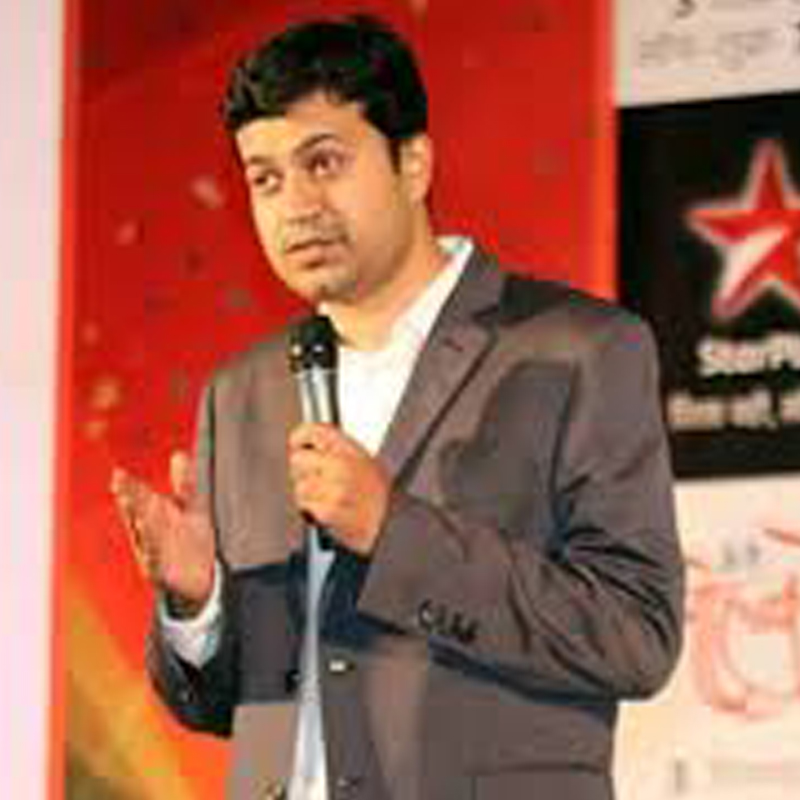
    MUMBAI: It’s an epic move. Aditya Pittie of the Pittie Group as has hopped on board Epic TV as a director. He will lead the day-to-day operations of the linear television channel, focusing on all the commercial functions of revenues and costs.

    He will be responsible for taking Epic to the next level with stronger monetisation and alliances with advertisers and MSOs.

    Epic channel founder & MD Mahesh Samat said, “Aditya will bring in a fresh energy and a new impetus behind Epic. As the channel moves from the first phase of launch to the next phase of consolidation and monetisation, we need leadership that will take Epic to this next key step of its long-term journey. With his drive, focus and result-orientation, Aditya is uniquely qualified to lead the linear television business into the future.”

    Samat will continue to be on the board of the company and will focus on the strategic and business development areas of the company with a focus on digital and non-linear opportunities.

    Apart from spearheading the Pittie group, he has had extensive experience in real estate, media and FMCG. He has successfully turned around Sanskar TV in the past and recently launched a bouquet of channels under the Shubh brand. He has also been responsible in making Patanjali consumer products the success story they are today in modern retail, becoming their biggest distributor.

    The channel has been well-received with viewers and met with critical acclaim for its distinctive content.

    Pittie adds, “Epic is a strong brand in the television space and it’s an honour for me to lead the team and fulfill its legacy. In this phase of the company, we will focus on monetisation and work with our customers very closely to help brands and businesses achieve their goals through unique partnerships, while continuing to grow Epic’s viewership.”

    Epic’s has close to 500 hours of unique and original content in Indian history, folklore and mythology using a very contemporary story-telling approach. The platform used to show case the content so far has been the linear television format. However, the landscape of video streaming is changing dramatically due to the increase in mobile Internet users which is expected to reach to 792 million users by 2018. This represents a huge opportunity to showcase great content to the urban viewer. The Indian diaspora of 27 million people also represent great potential for good quality content.

    Adds Samat, “Digital is the most significant opportunity for content creators and EPIC is uniquely positioned to take advantage of this opportunity with its strong and distinctive content. With the app and other syndication opportunities, we expect this to be a strong part of the business model in the coming years.”

  • Epic TV ropes in Aditya Pittie as director tv

    Epic TV ropes in Aditya Pittie as director tv

    MUMBAI: It’s an epic move. Aditya Pittie of the Pittie Group as has hopped on board Epic TV as a director. He will lead the day-to-day operations of the linear television channel, focusing on all the commercial functions of revenues and costs.

    He will be responsible for taking Epic to the next level with stronger monetisation and alliances with advertisers and MSOs.

    Epic channel founder & MD Mahesh Samat said, “Aditya will bring in a fresh energy and a new impetus behind Epic. As the channel moves from the first phase of launch to the next phase of consolidation and monetisation, we need leadership that will take Epic to this next key step of its long-term journey. With his drive, focus and result-orientation, Aditya is uniquely qualified to lead the linear television business into the future.”

    Samat will continue to be on the board of the company and will focus on the strategic and business development areas of the company with a focus on digital and non-linear opportunities.

    Apart from spearheading the Pittie group, he has had extensive experience in real estate, media and FMCG. He has successfully turned around Sanskar TV in the past and recently launched a bouquet of channels under the Shubh brand. He has also been responsible in making Patanjali consumer products the success story they are today in modern retail, becoming their biggest distributor.

    The channel has been well-received with viewers and met with critical acclaim for its distinctive content.

    Pittie adds, “Epic is a strong brand in the television space and it’s an honour for me to lead the team and fulfill its legacy. In this phase of the company, we will focus on monetisation and work with our customers very closely to help brands and businesses achieve their goals through unique partnerships, while continuing to grow Epic’s viewership.”

    Epic’s has close to 500 hours of unique and original content in Indian history, folklore and mythology using a very contemporary story-telling approach. The platform used to show case the content so far has been the linear television format. However, the landscape of video streaming is changing dramatically due to the increase in mobile Internet users which is expected to reach to 792 million users by 2018. This represents a huge opportunity to showcase great content to the urban viewer. The Indian diaspora of 27 million people also represent great potential for good quality content.

    Adds Samat, “Digital is the most significant opportunity for content creators and EPIC is uniquely positioned to take advantage of this opportunity with its strong and distinctive content. With the app and other syndication opportunities, we expect this to be a strong part of the business model in the coming years.”

  • Twitter, broadcasters & brands: Building a win-win partnership

    Twitter, broadcasters & brands: Building a win-win partnership

    MUMBAI: For some time now, the popularity of Facebook and Twitter has majorly concerned broadcasters and other industry stakeholders for its impact on the viewership ratings. The second screen can distract its audience easily and chip away at the already reduced attention span of this attention deficit hyperactivity disorder  (ADHD)  generation.

    Naturally companies like Twitter are mostly seen as competition, especially now that it is equipped with its own video arm. But if we were to say TV audience’s exposure to social media, and the digital chatter over Twitter is actually a plus for the broadcasters, would anyone agree?

    A fine example is the reception that the singing reality show Sa Re Ga Ma Pa got for its  finale episode. It notched  up record ratings for Zee TV, and the latter says it owes a good part of the success to the role Twitter played.

    “We were pleased to partner with Twitter India and set new benchmarks in terms of digital engagement. Twitter’s real-time, conversational capabilities helped audiences connect with the show and experience its world like nothing else can. This collaboration has also helped our contestants and mentors engage better with our viewers,” a Zee Tv spokesperson had earlier shared.

    The show had gained over 25 million tweet impressions, establishing itself as the biggest singing reality TV show on the platform in India and Zee Tv’s twitter handle, @ZeeTV gained more than 100K followers in just three months.

    “#SaReGaMaPa is a great example of how a TV show can leverage a platform like Twitter to celebrate the talent of a reality show, and to foster collaboration between a TV channel, talent and fans. For the first time, a multitude of voices in the TV ecosystem (TV channel, contestants, judges and fans) came together to provide a complementary experience to the reality TV show. Twitter lit up with more than 300,000 Tweets during this iconic social TV moment, and it brought viewers closer to the show via Tweets, behind-the-scenes and highlight videos,” said Twitter India head of TV partnerships Viral Jani.

    In fact the 12 final contestants were given special attention from Twitter team as part of this partnership with Zee TV. “We got them on board the platform and gave them individual training sessions on how to use twitter better, and leverage their stardom with it. We also gave them an idea of how international singing reality stars use twitter both when live and behind the scenes,” Jani explained.

    The result was phenomenal. Contestants tweeted twice the times of  videos than the @ZeeTV handle

    And added 115 per cent more Tweet impressions to @ZeeTV handle through the season (@ZeeTV  with 9.5 million impressions), as per the data shared by Twitter India.

    Zee TV and Sa Re Ga Ma Pa aren’t the only examples of a successful twitter + TV partnership in India in the recent past.

    In July 2015, EPIC TV  and Twitter launched a unique innovation for the channel’s new campaign – #EPICat10, where in the broadcaster used the Twitter Alarm letting followers set a reminder for the 10pm shows for the first time. ColorsTV and BiggBoss created massive engagement with #BB9 viewers using native video uploads on Twitter powered by SnappyTV – including sneak peeks, uncensored videos and live tweeting with fun videos, with Twitter being the only external platform showcasing Bigg Boss videos. India Today Television has joined hands with Twitter in an exclusive partnership to conduct Twitter Town Halls that gives an opportunity to followers on Twitter to engage with newsmakers, opinion makers and other eminent personalities. Apart from  this Twitter also works in regional markets with other partners such as the Sun Network in the south and ZEEL’s  certain regional channels.

    Apart from this Star Plus, CNN IBN and IBN7 have regularly used Twitter’s live-streaming app Periscope to engage with audiences. SPNI’s SAB has also collaborated with Twitter for  brand as well as several show promotions.

    “In fact, for our recent show launches like Khidki and Y.A.R.O Ka Tashan we had collaborated with Twitter at a more comprehensive level. For Khidki, we actively scouted comic content from consumers. We partnered with the micro-blogging site to run a contest titled ‘#Tweetyourfunnystory’ and also did a live Q&A session with the producers of the show JD Majethia and Umesh Shukla on Twitter’s video-streaming app Periscope. This initiative sure got the viewers excited enough to share some of their funniest stories. We received over 12000 plus stories,” shared SAB TV EVP & business head Anooj Kapoor.

    For its show, Y.A.R.O Ka Tashan, SAB  created a unique Twitter BOT representing the Humanoid – Y.A.R.O, a lead character in its new show. The BOT replicated the characteristics of Y.A.R.O by answering all kind of question thrown at it.

    “Adding to this online campaign, we also had live outdoor hoardings in several high-traffic vantage points. Wherein, if someone was around the vicinity and happen to ask a question on Twitter with #SABKaYaro, his/her tweet and the response got displayed on this outdoor medium,” Kapoor said, adding that the broadcaster has attempted several other Twitter centric promotions in the recent past.

    The natural question is: did it have any significant impact in the channel or the shows’ popularity?

    “While we would be unable to directly measure the growth in ratings or viewership being driven from Twitter or any social medium for that matter, we can certainly say one thing that such collaborations and engagement with viewers on the online platform does drives home more youth and newer audiences for our shows. It also helps us gauge their interest levels for our concepts, opinions, feedback and these insights together help us deliver better,” Kapoor states frankly.

    When it comes finding a direct correlation between twitter engagement and a channel’s viewership ratings global info measurement leader Nielsen and  its TV and social media measurement output SocialGuide has the industry covered. In 2013, a study released by data scientists identified Twitter as one of three statistically significant variables (in addition to prior-year rating and advertising spend) to align with TV ratings.

    “Increases in Twitter volume correlate to increases in TV ratings for varying age groups, revealing a stronger correlation for younger audiences. Specifically, the study found that for 18-34 year olds, an 8.5% increase in Twitter volume corresponds to a 1% increase in TV ratings for premiere episodes, and a 4.2% increase in Twitter volume corresponds with a 1% increase in ratings for mid-season episodes,” the study read.

    Albeit the observation was sampled from 32 million unique people in the US, but similar inferences can be drawn from the study for the Indian market as well, as youth in India aren’t a world removed from the global youth when it comes to their online behaviour especially since the explosion in smartphone penetration in the country in the past three years.

    If Tweeting frequently, in greater volume and gaining traction is all there is to it, what advantages does a partnership with Twitter India give any broadcaster that its social management team can’t master on its own?

    “It’s true that being an open platform, anyone can launch their own handle and tweet. When we partner a broadcaster for a brand or show promotion, there are a bunch of advantages that come with it. Firstly we invest time with our partners to create creative strategies that they can follow on Twitter, which includes sharing data and global case studies that help them get a better idea. Secondly, we also give our partners access to certain tools and accessories that are helpful in creating inherently viral content,” answers Jani.

    This includes access to the Twitter India Blue Room that is a great platform for brands, TV personalities  to come and interact live with the twitterati. Twitter Challenger app, the Twitter Q & A app, Twitter Challenger App, Vine and the Twitter Mirror app are some of the other accessories that could be a part of the deal with each broadcaster/ brand.

    “Preferred partners are also given access to tool called Snappytv specially created for broadcasters  to allow them to beam short videos through its handles picked up from its broadcast feed in real time,” adds Jani. Twitter also gives access to its co-monetised product Amplify available to only select partners, that helps them monetise broadcasters/brands its premium content on Twitter.

    Interestingly, not all of these partnerships are commercial contracts per say, but ‘relationship building’ on the social media platform’s part. Most often Twitter only plays the role of a consultant explaining to the broadcaster on how it can use the platform better and more efficiently, without any promised monetary deal. “We work with our partners with the aim of audience growth,” Jani quips.

    So is there anything there for Twitter in these ‘philanthropic’ endeavours?

    “Globally we have seen the TV viewers tweet while watching TV, and carry the conversation online way after the show is over by following their favourite shows, or stars online. We have identified it as one of the verticals that is good to invest in. it is a mutually beneficial initiative as the broadcasters get to grow their audiences, and we get more traction and our users get good content on the platform,” Jani explains.

    And how can broadcasters leverage this to  their commercial benefit? A media planner says that the TV-Twitter metrics can be incorporated in the media planning and buying presence to identify shows with high audience engagement.

    Brands and advertisers either sponsoring or taking up FCT on a show on television can also work with the broadcasters social teams  to forge deeper conversations and engagements about the brand with the series’ audience on Twitter and vice-versa to further build buzz.

    “Collaborations such as this can build brand or show love,” says the planner.  “And it is this love of a brand which drives transactions and engagement with it.”

    Now isn’t that a win-win situation?

    (With inputs from Sonam Saini )

  • Twitter, broadcasters & brands: Building a win-win partnership

    Twitter, broadcasters & brands: Building a win-win partnership

    MUMBAI: For some time now, the popularity of Facebook and Twitter has majorly concerned broadcasters and other industry stakeholders for its impact on the viewership ratings. The second screen can distract its audience easily and chip away at the already reduced attention span of this attention deficit hyperactivity disorder  (ADHD)  generation.

    Naturally companies like Twitter are mostly seen as competition, especially now that it is equipped with its own video arm. But if we were to say TV audience’s exposure to social media, and the digital chatter over Twitter is actually a plus for the broadcasters, would anyone agree?

    A fine example is the reception that the singing reality show Sa Re Ga Ma Pa got for its  finale episode. It notched  up record ratings for Zee TV, and the latter says it owes a good part of the success to the role Twitter played.

    “We were pleased to partner with Twitter India and set new benchmarks in terms of digital engagement. Twitter’s real-time, conversational capabilities helped audiences connect with the show and experience its world like nothing else can. This collaboration has also helped our contestants and mentors engage better with our viewers,” a Zee Tv spokesperson had earlier shared.

    The show had gained over 25 million tweet impressions, establishing itself as the biggest singing reality TV show on the platform in India and Zee Tv’s twitter handle, @ZeeTV gained more than 100K followers in just three months.

    “#SaReGaMaPa is a great example of how a TV show can leverage a platform like Twitter to celebrate the talent of a reality show, and to foster collaboration between a TV channel, talent and fans. For the first time, a multitude of voices in the TV ecosystem (TV channel, contestants, judges and fans) came together to provide a complementary experience to the reality TV show. Twitter lit up with more than 300,000 Tweets during this iconic social TV moment, and it brought viewers closer to the show via Tweets, behind-the-scenes and highlight videos,” said Twitter India head of TV partnerships Viral Jani.

    In fact the 12 final contestants were given special attention from Twitter team as part of this partnership with Zee TV. “We got them on board the platform and gave them individual training sessions on how to use twitter better, and leverage their stardom with it. We also gave them an idea of how international singing reality stars use twitter both when live and behind the scenes,” Jani explained.

    The result was phenomenal. Contestants tweeted twice the times of  videos than the @ZeeTV handle

    And added 115 per cent more Tweet impressions to @ZeeTV handle through the season (@ZeeTV  with 9.5 million impressions), as per the data shared by Twitter India.

    Zee TV and Sa Re Ga Ma Pa aren’t the only examples of a successful twitter + TV partnership in India in the recent past.

    In July 2015, EPIC TV  and Twitter launched a unique innovation for the channel’s new campaign – #EPICat10, where in the broadcaster used the Twitter Alarm letting followers set a reminder for the 10pm shows for the first time. ColorsTV and BiggBoss created massive engagement with #BB9 viewers using native video uploads on Twitter powered by SnappyTV – including sneak peeks, uncensored videos and live tweeting with fun videos, with Twitter being the only external platform showcasing Bigg Boss videos. India Today Television has joined hands with Twitter in an exclusive partnership to conduct Twitter Town Halls that gives an opportunity to followers on Twitter to engage with newsmakers, opinion makers and other eminent personalities. Apart from  this Twitter also works in regional markets with other partners such as the Sun Network in the south and ZEEL’s  certain regional channels.

    Apart from this Star Plus, CNN IBN and IBN7 have regularly used Twitter’s live-streaming app Periscope to engage with audiences. SPNI’s SAB has also collaborated with Twitter for  brand as well as several show promotions.

    “In fact, for our recent show launches like Khidki and Y.A.R.O Ka Tashan we had collaborated with Twitter at a more comprehensive level. For Khidki, we actively scouted comic content from consumers. We partnered with the micro-blogging site to run a contest titled ‘#Tweetyourfunnystory’ and also did a live Q&A session with the producers of the show JD Majethia and Umesh Shukla on Twitter’s video-streaming app Periscope. This initiative sure got the viewers excited enough to share some of their funniest stories. We received over 12000 plus stories,” shared SAB TV EVP & business head Anooj Kapoor.

    For its show, Y.A.R.O Ka Tashan, SAB  created a unique Twitter BOT representing the Humanoid – Y.A.R.O, a lead character in its new show. The BOT replicated the characteristics of Y.A.R.O by answering all kind of question thrown at it.

    “Adding to this online campaign, we also had live outdoor hoardings in several high-traffic vantage points. Wherein, if someone was around the vicinity and happen to ask a question on Twitter with #SABKaYaro, his/her tweet and the response got displayed on this outdoor medium,” Kapoor said, adding that the broadcaster has attempted several other Twitter centric promotions in the recent past.

    The natural question is: did it have any significant impact in the channel or the shows’ popularity?

    “While we would be unable to directly measure the growth in ratings or viewership being driven from Twitter or any social medium for that matter, we can certainly say one thing that such collaborations and engagement with viewers on the online platform does drives home more youth and newer audiences for our shows. It also helps us gauge their interest levels for our concepts, opinions, feedback and these insights together help us deliver better,” Kapoor states frankly.

    When it comes finding a direct correlation between twitter engagement and a channel’s viewership ratings global info measurement leader Nielsen and  its TV and social media measurement output SocialGuide has the industry covered. In 2013, a study released by data scientists identified Twitter as one of three statistically significant variables (in addition to prior-year rating and advertising spend) to align with TV ratings.

    “Increases in Twitter volume correlate to increases in TV ratings for varying age groups, revealing a stronger correlation for younger audiences. Specifically, the study found that for 18-34 year olds, an 8.5% increase in Twitter volume corresponds to a 1% increase in TV ratings for premiere episodes, and a 4.2% increase in Twitter volume corresponds with a 1% increase in ratings for mid-season episodes,” the study read.

    Albeit the observation was sampled from 32 million unique people in the US, but similar inferences can be drawn from the study for the Indian market as well, as youth in India aren’t a world removed from the global youth when it comes to their online behaviour especially since the explosion in smartphone penetration in the country in the past three years.

    If Tweeting frequently, in greater volume and gaining traction is all there is to it, what advantages does a partnership with Twitter India give any broadcaster that its social management team can’t master on its own?

    “It’s true that being an open platform, anyone can launch their own handle and tweet. When we partner a broadcaster for a brand or show promotion, there are a bunch of advantages that come with it. Firstly we invest time with our partners to create creative strategies that they can follow on Twitter, which includes sharing data and global case studies that help them get a better idea. Secondly, we also give our partners access to certain tools and accessories that are helpful in creating inherently viral content,” answers Jani.

    This includes access to the Twitter India Blue Room that is a great platform for brands, TV personalities  to come and interact live with the twitterati. Twitter Challenger app, the Twitter Q & A app, Twitter Challenger App, Vine and the Twitter Mirror app are some of the other accessories that could be a part of the deal with each broadcaster/ brand.

    “Preferred partners are also given access to tool called Snappytv specially created for broadcasters  to allow them to beam short videos through its handles picked up from its broadcast feed in real time,” adds Jani. Twitter also gives access to its co-monetised product Amplify available to only select partners, that helps them monetise broadcasters/brands its premium content on Twitter.

    Interestingly, not all of these partnerships are commercial contracts per say, but ‘relationship building’ on the social media platform’s part. Most often Twitter only plays the role of a consultant explaining to the broadcaster on how it can use the platform better and more efficiently, without any promised monetary deal. “We work with our partners with the aim of audience growth,” Jani quips.

    So is there anything there for Twitter in these ‘philanthropic’ endeavours?

    “Globally we have seen the TV viewers tweet while watching TV, and carry the conversation online way after the show is over by following their favourite shows, or stars online. We have identified it as one of the verticals that is good to invest in. it is a mutually beneficial initiative as the broadcasters get to grow their audiences, and we get more traction and our users get good content on the platform,” Jani explains.

    And how can broadcasters leverage this to  their commercial benefit? A media planner says that the TV-Twitter metrics can be incorporated in the media planning and buying presence to identify shows with high audience engagement.

    Brands and advertisers either sponsoring or taking up FCT on a show on television can also work with the broadcasters social teams  to forge deeper conversations and engagements about the brand with the series’ audience on Twitter and vice-versa to further build buzz.

    “Collaborations such as this can build brand or show love,” says the planner.  “And it is this love of a brand which drives transactions and engagement with it.”

    Now isn’t that a win-win situation?

    (With inputs from Sonam Saini )

  • Indian Screenwriters’ Conference: Star Plus to stop 7-days-a-week soaps, says Gaurav Banerjee

    Indian Screenwriters’ Conference: Star Plus to stop 7-days-a-week soaps, says Gaurav Banerjee

    MUMBAI: What kind of content works on Hindi general entertainment channels? Content that reflects our society or the content that is simply driven by the ratings? Are TV producers making content for dumb audiences or content is making audiences dumb? Why we don’t talk about the economy or politics on TV shows? Why are we so much focused on saas-bahu sagas? And most importantly in today’s TV who is telling the story, a producer, writer, broadcaster or a programming team or a research team?

    The Film Writers’ Association had a session entitled Serial Killer during the ongoing fourth edition of the Indian Screenwriters Conference 2016 in Mumbai in a bid to get some answers.

    And to answer all these questions, you could not have had a better set of panelists than Star India deputy chief creative officer Gaurav Banerjee, Epic TV head of content Ravina Kohli, Balika Vadhu writer Purnendu Shekhar, Sasural Simar Ka and Saathiya writer Ved Raj and Sasural Genda Phool’s writer Zama Habib to get some answers.

    The session was moderated by Saurabh Tewari who runs a production house named after himself, but in earlier avatars had donned the hat of a fiction programmer when he worked at Colors and the now defunct Imagine TV.

    The highlight of the session was the admission on a public forum by by Gaurav on a public forum that Star Plus may have erred by starting the mad race of pursuing seven days of soap and drama every week from the five day formula earlier.

    He admitted: “I confess that it was a mistake because we reduced the ideation time of writers and of actors as well. We thought that we could manage the workload and it won’t affect the product that we deliver but unfortunately we were thinking of the TV industry as a pizza delivery service which was a big mistake.”

    He also that announced that from next month Star Plus would stop airing seven days a week programming.

    Tewari set the ball rolling for the session by appreciating the kind of work and content that both Star Plus and Epic were churning out. He spoke especially in reference to Epic TV as it had carved out its own identity. “TV ratings should not always be the only way to measure the content and the feel of channel,” he opined.

    “Epic, since its beginning had a particular DNA which was supposed to be followed and we tried to stick to that goal and it’s been a struggle,” expressed a hapless Kohli. “We have received great feedback, people appreciated our work but what we don’t have, are ratings.”

    Often it so happens that the content is strong and good but it fails to garner the desired ratings, hence the broadcaster has to yank it off.

    “We have a very fragmented audience, may be the data that we are getting is not addressing to that group. In Epic TV, I have not made anything that has been driven by TRPs,” explained Kohli.

    There are some channels that have a very niche audience, and they end up doing very well in that specific demographic. We also have shows on Doordarshan, which are doing well as they have a different set of audience, expressed Tewari.

    Getting to the crux of the matter, was Purnendu whose show Balika Vadhu was not only critically-acclaimed but has also done fabulously well commercially for Colors. “When I wrote Balika Vadhu, many said that it’s D Dish content and, on a satellite channel, rural backdrops will not work. But thanks to Ashwini (Yardi, the Colors programming head then) who had the courage to select the show,” shared Shekhar.

    Purnendu thanked Tewari (Tewari was at Colors for a period when Balika Vadhu was on air) and the entire channel team for giving him the freedom to work on the story as in most of the cases, the conflict between the writer and the broadcaster arises because both have different visions.

    Shekhar also expressed his agony that there were only two broadcasters present on the panel. “Only Gaurav and Ravina are representing the broadcaster side and both of them are doing good things with a vision. And the channels on which we see dumb content have no representation today,” he cried out.

    It’s really important to remember that when we talk about the TV content we shouldn’t forget that saas bahu dramas are the most important part of TV today, opined Raj as they are consumed by the masses. There has been a never ending debate on these shows but the truth is because of this, these are in demand.

    Contradicting Purnendu, Raj said: “We have all reached a conclusion that everything that has been happening on primetime is wrong. There is something good in this dumb content. TV is a mass medium and my first responsibility will be for them. I am not a police, teacher or judge and I am not even at that level from where my audiences look dumb to me.”

    Tewari then raised the question that quantity has subsumed quality over the past 10 years. From once a week, the channels have taken soaps and dramas to seven days a week. While this has meant money for all concerned, it is a dangerous trend. Though business is important and producers and broadcasters are in the business of creating content and if the content is suffering due to business pressures then how long will the business itself last? asked Tewari.

    Talking about the TV ratings, Gaurav elaborated: “Our measurement system is not that sophisticated. We have seen major changes in the TV industry when BARC came in and now we have to wait for next level of innovation in TV ratings. If every story is unique then the tool to measure that story should be different. You can’t compare Star Plus with Epic as both the channels serve a different kind of audience.”

    A lot has been said about the low quality of TV content but who is responsible for that, broadcaster, writer, producer or the audience, expressed Gaurav.

    “Saathiya is a very well-written show. There are two types of writing scientific and artificial. But I am totally against what Ved said that you give what audience demands. The producer and writer should create the market why do we follow the market. If you will give something new and different to them that has always worked and will work. Most producers don’t care about the story, all they want channel to approve to the show,” he added.

    Several varying perspectives ruled the well-moderated session. TV is essentially a two-way communication medium. However, innovation in TV content is essential was the conclusion as one needs to inject some amount of reality in the content that is churned out for the masses.

  • Indian Screenwriters’ Conference: Star Plus to stop 7-days-a-week soaps, says Gaurav Banerjee

    Indian Screenwriters’ Conference: Star Plus to stop 7-days-a-week soaps, says Gaurav Banerjee

    MUMBAI: What kind of content works on Hindi general entertainment channels? Content that reflects our society or the content that is simply driven by the ratings? Are TV producers making content for dumb audiences or content is making audiences dumb? Why we don’t talk about the economy or politics on TV shows? Why are we so much focused on saas-bahu sagas? And most importantly in today’s TV who is telling the story, a producer, writer, broadcaster or a programming team or a research team?

    The Film Writers’ Association had a session entitled Serial Killer during the ongoing fourth edition of the Indian Screenwriters Conference 2016 in Mumbai in a bid to get some answers.

    And to answer all these questions, you could not have had a better set of panelists than Star India deputy chief creative officer Gaurav Banerjee, Epic TV head of content Ravina Kohli, Balika Vadhu writer Purnendu Shekhar, Sasural Simar Ka and Saathiya writer Ved Raj and Sasural Genda Phool’s writer Zama Habib to get some answers.

    The session was moderated by Saurabh Tewari who runs a production house named after himself, but in earlier avatars had donned the hat of a fiction programmer when he worked at Colors and the now defunct Imagine TV.

    The highlight of the session was the admission on a public forum by by Gaurav on a public forum that Star Plus may have erred by starting the mad race of pursuing seven days of soap and drama every week from the five day formula earlier.

    He admitted: “I confess that it was a mistake because we reduced the ideation time of writers and of actors as well. We thought that we could manage the workload and it won’t affect the product that we deliver but unfortunately we were thinking of the TV industry as a pizza delivery service which was a big mistake.”

    He also that announced that from next month Star Plus would stop airing seven days a week programming.

    Tewari set the ball rolling for the session by appreciating the kind of work and content that both Star Plus and Epic were churning out. He spoke especially in reference to Epic TV as it had carved out its own identity. “TV ratings should not always be the only way to measure the content and the feel of channel,” he opined.

    “Epic, since its beginning had a particular DNA which was supposed to be followed and we tried to stick to that goal and it’s been a struggle,” expressed a hapless Kohli. “We have received great feedback, people appreciated our work but what we don’t have, are ratings.”

    Often it so happens that the content is strong and good but it fails to garner the desired ratings, hence the broadcaster has to yank it off.

    “We have a very fragmented audience, may be the data that we are getting is not addressing to that group. In Epic TV, I have not made anything that has been driven by TRPs,” explained Kohli.

    There are some channels that have a very niche audience, and they end up doing very well in that specific demographic. We also have shows on Doordarshan, which are doing well as they have a different set of audience, expressed Tewari.

    Getting to the crux of the matter, was Purnendu whose show Balika Vadhu was not only critically-acclaimed but has also done fabulously well commercially for Colors. “When I wrote Balika Vadhu, many said that it’s D Dish content and, on a satellite channel, rural backdrops will not work. But thanks to Ashwini (Yardi, the Colors programming head then) who had the courage to select the show,” shared Shekhar.

    Purnendu thanked Tewari (Tewari was at Colors for a period when Balika Vadhu was on air) and the entire channel team for giving him the freedom to work on the story as in most of the cases, the conflict between the writer and the broadcaster arises because both have different visions.

    Shekhar also expressed his agony that there were only two broadcasters present on the panel. “Only Gaurav and Ravina are representing the broadcaster side and both of them are doing good things with a vision. And the channels on which we see dumb content have no representation today,” he cried out.

    It’s really important to remember that when we talk about the TV content we shouldn’t forget that saas bahu dramas are the most important part of TV today, opined Raj as they are consumed by the masses. There has been a never ending debate on these shows but the truth is because of this, these are in demand.

    Contradicting Purnendu, Raj said: “We have all reached a conclusion that everything that has been happening on primetime is wrong. There is something good in this dumb content. TV is a mass medium and my first responsibility will be for them. I am not a police, teacher or judge and I am not even at that level from where my audiences look dumb to me.”

    Tewari then raised the question that quantity has subsumed quality over the past 10 years. From once a week, the channels have taken soaps and dramas to seven days a week. While this has meant money for all concerned, it is a dangerous trend. Though business is important and producers and broadcasters are in the business of creating content and if the content is suffering due to business pressures then how long will the business itself last? asked Tewari.

    Talking about the TV ratings, Gaurav elaborated: “Our measurement system is not that sophisticated. We have seen major changes in the TV industry when BARC came in and now we have to wait for next level of innovation in TV ratings. If every story is unique then the tool to measure that story should be different. You can’t compare Star Plus with Epic as both the channels serve a different kind of audience.”

    A lot has been said about the low quality of TV content but who is responsible for that, broadcaster, writer, producer or the audience, expressed Gaurav.

    “Saathiya is a very well-written show. There are two types of writing scientific and artificial. But I am totally against what Ved said that you give what audience demands. The producer and writer should create the market why do we follow the market. If you will give something new and different to them that has always worked and will work. Most producers don’t care about the story, all they want channel to approve to the show,” he added.

    Several varying perspectives ruled the well-moderated session. TV is essentially a two-way communication medium. However, innovation in TV content is essential was the conclusion as one needs to inject some amount of reality in the content that is churned out for the masses.

  • Grey Group India’s Epic@10 wins two gold at Pro Max awards

    Grey Group India’s Epic@10 wins two gold at Pro Max awards

    MUMBAI: Grey Group’s campaign ‘Epic@10’ for Epic TV has been honoured at Promax award held on 12 May with two golds under catergories — Best launch campaign Out of house and  Best integrated marketing campaign.

    Last year, Grey group India had kicked off the campaign for India’s first genre-specific Hindi entertainment channel, Epic, and launched the 360 degree branding positioning for the winning campaign- ‘Maaf Kijiye Abhi Dus Nahin Baje that aimed to claim public attention to the 10pm TV viewing time on Epic channel and become the new prime time on television.

    Combining insight with some of the biggest of Bollywood, the Epic channel intended to launch three new television shows to strike an emotional connect with the audience. The shows titled as ‘Jaane Pehchaane’ by Javed Akhtar explores the journey and evolution of Bollywood over the decades.‘Mid-Wicket Tales’ by Naseeruddin Shah unearths some of the best-kept secrets in the history of Indian cricket. Lastly, stories by Rabindranath Tagore is a modern outlook to some of the best-written tales, narrated in Anurag Basu’s signature style.

    The campaign created a buzz of curiosity amongst this quintessential Bollywood/cricket fan with them wanting to know more.

  • Grey Group India’s Epic@10 wins two gold at Pro Max awards

    Grey Group India’s Epic@10 wins two gold at Pro Max awards

    MUMBAI: Grey Group’s campaign ‘Epic@10’ for Epic TV has been honoured at Promax award held on 12 May with two golds under catergories — Best launch campaign Out of house and  Best integrated marketing campaign.

    Last year, Grey group India had kicked off the campaign for India’s first genre-specific Hindi entertainment channel, Epic, and launched the 360 degree branding positioning for the winning campaign- ‘Maaf Kijiye Abhi Dus Nahin Baje that aimed to claim public attention to the 10pm TV viewing time on Epic channel and become the new prime time on television.

    Combining insight with some of the biggest of Bollywood, the Epic channel intended to launch three new television shows to strike an emotional connect with the audience. The shows titled as ‘Jaane Pehchaane’ by Javed Akhtar explores the journey and evolution of Bollywood over the decades.‘Mid-Wicket Tales’ by Naseeruddin Shah unearths some of the best-kept secrets in the history of Indian cricket. Lastly, stories by Rabindranath Tagore is a modern outlook to some of the best-written tales, narrated in Anurag Basu’s signature style.

    The campaign created a buzz of curiosity amongst this quintessential Bollywood/cricket fan with them wanting to know more.