Tag: Entrepreneurship

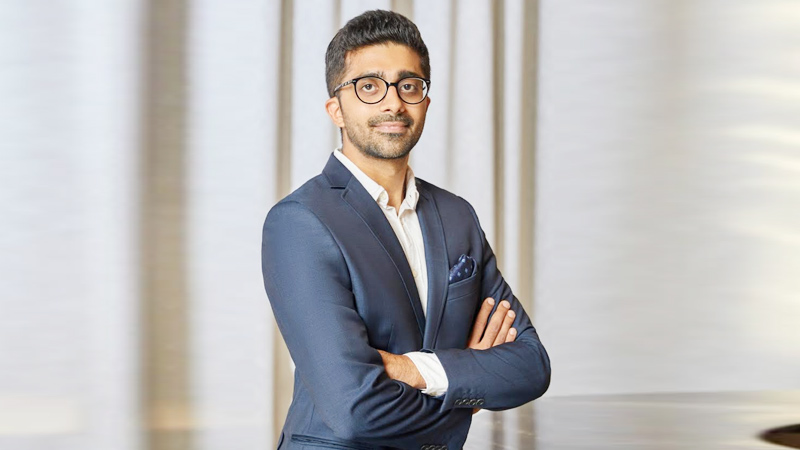
  • Akshay Gurnani steps down as Schbang CEO, gears up for next big leap

    Akshay Gurnani steps down as Schbang CEO, gears up for next big leap

    MUMBAI: For most, Mondays mean emails, meetings, and caffeine-fuelled survival. But for Akshay Gurnani, this Monday was different-it marked the end of a decade-long journey as co-founder & CEO of Schbang and the beginning of a brand-new adventure.

    “Ten years. A whole decade. A long time, yet in the larger picture of life, just a small fraction,” reflects Gurnani. “And yet, these 10 years have been nothing short of transformative.”

    Gurnani co-founded Schbang at just 25 years old, fuelled by the ambition to build something from the ground up. Along with his fellow co-founders, he set out to redefine the marketing landscape and provide cutting-edge solutions to clients. Under his leadership, Schbang scaled to a 1,100+ member team across Mumbai, Bangalore, Delhi, London, and Amsterdam, servicing over 200 brands globally. His relentless commitment propelled the agency to become one of the most sought-after creative powerhouses in the industry.

    From the boardroom to the brainstorming room, Gurnani’s leadership has been marked by resilience, innovation, and the sheer audacity to push creative boundaries. Schbang executed award-winning campaigns for Pidilite, Perfetti, Godrej Consumer Products, Tata Consumer, L’Oréal Group, Finolex Pipes, Ashok Leyland, Crompton, Castrol, Baskin Robbins, Philips, and more. Beyond building a successful agency, he fostered a community—mentors, teammates, industry peers, and clients who became friends.

    “More than anything, Schbang has been about the people, the culture. The teammates who turned into family. The mentors I looked up to. The clients who became partners (many now good friends) and believed in us. Each one of you has left a mark, and for that, I am eternally grateful.”

    While one chapter closes, another unfolds. Gurnani isn’t slowing down—he’s simply switching lanes. His next phase will focus on business transformation, mentoring startups, investing in game-changing ideas, and empowering young students. He aims to help brands and agencies on a hyper-growth trajectory in India and the UAE, leveraging his expertise in digital marketing, AI, media, and technology.

    “As business landscapes evolve and consumer behaviours shift, client needs are changing rapidly. My focus is on eliminating redundancies and prioritising services that deliver business value,” he shares. “Digital transformation isn’t just about technology—it requires a deep understanding of a client’s business and a partnership-driven approach to drive meaningful change.”

    Having worked with Fortune 500 brands, Gurnani has developed a keen eye for identifying inflection points where inefficiencies arise. His goal is to go beyond vanity metrics, dive deeper into digital transformation, and help brands achieve sharper outcomes powered by the right human resources, media, and technology.

    During his time at Schbang, Gurnani was also recognised with numerous 30 Under 30 awards and named among India’s Top 50 Content Marketing Professionals.

    “It’s not a goodbye, it’s just a shift in gears because if there’s one thing I’ve learned over the last 10 years, it’s that new ideas, new journeys, and new beginnings are always around the corner.”

    Schbang may have started as a bold idea, but its legacy continues. And so does Gurnani’s next great adventure.

  • Neeraj Vyas to move on from Sony Pictures Networks India

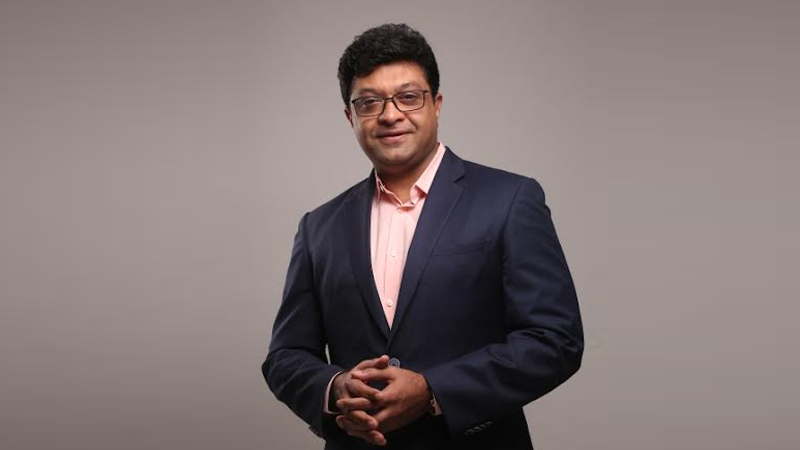
    Neeraj Vyas to move on from Sony Pictures Networks India

    Mumbai: Sony Pictures Networks India (SPNI) has announced that Sony Entertainment Television, Sony SAB, PAL, and Sony MAX Movie Cluster – business head Neeraj Vyas, will be leaving the company effective 31 August 2024. After an illustrious career spanning close to three decades, Neeraj has decided to embark on a new entrepreneurial journey.

    Neeraj Vyas has been instrumental in shaping several key businesses at SPNI, including the flagship general entertainment channels (GECs), Sony Entertainment Television, Sony SAB, Sony PAL, and the Hindi movies cluster. His journey with SPNI began in sales for Sony Entertainment Television (SET), and he swiftly rose to the position of national sales head for the channel in 2005. Within five years, he was appointed Executive Vice President for Sony MIX, the network’s Hindi music channel, demonstrating exceptional leadership and strategic vision.

    In 2011, Neeraj took on the responsibility for Sony MAX, followed by Sony SAB and Sony PAL in 2017, and Sony Entertainment Television in 2023. Under his guidance, Sony SAB was successfully repositioned as a premium entertainment brand, achieving significant growth through a revitalized programming line-up and content strategy. His leadership has been a source of inspiration for many in the industry.

    N.P. Singh said, “Neeraj Vyas’s journey with Sony Pictures Networks India has been remarkable. His vision and leadership have been pivotal in transforming our entertainment channels into market leaders. Neeraj has an innate ability to understand the pulse of the audience and create content that resonates deeply with viewers. On a personal level, Neeraj’s passion for excellence and his innovative spirit have always inspired those around him. His departure marks the end of an era for us, but we are excited about the new ventures he will undertake. Neeraj leaves behind a legacy of success, and we wish him all the best as he embarks on his entrepreneurial journey.”

    Neeraj Vyas said, “My time at Sony Pictures Networks India has been an incredible journey filled with learning, growth, and countless memorable moments. I am deeply grateful for the opportunities to lead dynamic teams and work on groundbreaking projects. As I move on to explore new entrepreneurial ventures, I carry with me the invaluable experiences and relationships built over the years. I am excited for what lies ahead and remain confident that the teams at SPNI will continue to achieve great heights.”

  • Omnicom Media Group India appointed Anand Chakravarthy as its chief growth officer

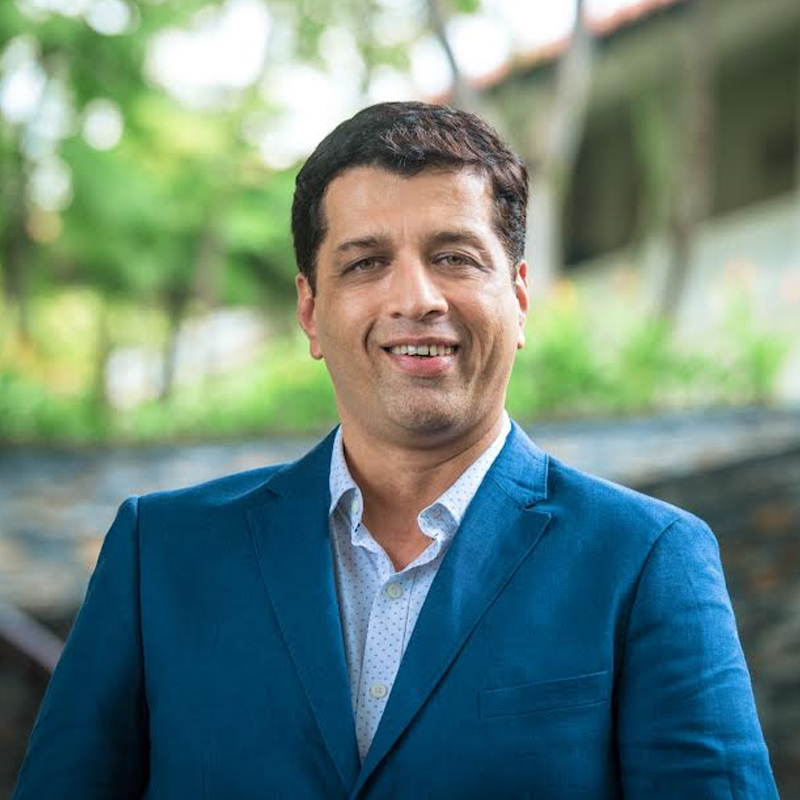
    Omnicom Media Group India appointed Anand Chakravarthy as its chief growth officer

    Mumbai: Omnicom Media Group (OMG) India on Tuesday announced the on-boarding of Anand Chakravarthy as its new chief growth officer. Anand is set to use his strategic foresight and over two decades of rich industry experience to create new opportunities for growth and play an instrumental role in shaping OMG India’s future trajectory.

    He will report to Kartik Sharma, Group CEO of OMG India.

    With over 24 years of experience in marketing, advertising, media, and entrepreneurship and having worked with many reputable businesses, all of which witnessed exponential growth under his guidance, Anand has a deep well of knowledge to draw from. Prior to this, he has led many profitable businesses, including during his leadership stints at Essence Global, Wavemaker, and Reliance Broadcast Network.

    Anand’s strength lies in his ability to formulate crucial strategies that help businesses scale up and become sustainable in an extremely competitive market. Across his repertoire of experience, he has worked with global and Indian brands, including several leading D2C brands in India.

    Speaking of his appointment, Omnicom Media Group India CEO Kartik Sharma said, “I am delighted to welcome Anand on board. His extensive knowledge, values-based leadership style, and commitment to delivering results will undoubtedly be a great asset to our business going forward. His work speaks for itself and shows that he has the propensity to lead and help companies capitalise on new growth opportunities in an emerging market.”

    Anand Chakravarthy said, “I am thrilled to be a part of OMG India and get the opportunity to work with Kartik and his leadership team, for whom I have immense respect. OMG is recognised globally for its thought leadership and building future forward capabilities—a critical need in the industry today. Working in this ecosystem with this team and leveraging these capabilities to help brands evolve without any limitations is a fantastic opportunity. I look forward to fully committing to OMG’s vision and pushing the boundaries of innovation and growth.”

  • Wonder Women 2022: Honouring the top 100 achievers

    Wonder Women 2022: Honouring the top 100 achievers

    Mumbai: Continuing its annual tradition of recognising and honouring remarkable women leaders, entrepreneurs and change-makers for their outstanding contributions in the arena of media, entertainment and marketing industries, IndianTelevision.com pulled back the curtain to reveal the list of 100 Wonder Women Award winners. The names of the winners were announced virtually at the Wonder Women 2022 event held on Friday, ahead of International Women’s Day 2022.

    While women account for about half of India’s population, they represent less than one-third of the workforce- the lowest among the major economies- as per a 2019 government report. The pandemic only made the situation worse. Awareness is important, but even more so is action. Companies, teams, and peers must continually choose to challenge workplace bias, advocate for inclusion, and ultimately effect lasting change at work.

    While a lot needs to be done on the ground level to narrow the gap and foster a gender-neutral workforce, the Wonder Women 100 aims to empower and inspire women by honouring professionals who have demonstrated excellence and leadership in their careers in the business & creative arts, overcoming challenges. The goal is to elevate the role models who can motivate and mentor the next generation of aspiring women.

    The event also saw panel discussions on relevant topics that play a critical role in driving this change. By creating spaces that elevate, amplify, and empower women and non-binary voices, these sessions aim to inspire attendees, offering hope for a future of true gender equity.

    The power list of the 100 top achievers has been compiled with the aid of an esteemed jury comprising the editorial heads from IndianTelevision Group.

    Here are the names of  this year’s standout winners.

  • Wonder Women 2022: Shaping a new class of women entrepreneurs in the business world

    Wonder Women 2022: Shaping a new class of women entrepreneurs in the business world

    Mumbai: Women entrepreneurs are accelerating India’s business growth story. Businesses led by women entrepreneurs are expected to grow by 90 per cent in the next five years. Wonder Women 2022, organised by Indiantelevision.com on 4 March, will stage women from across the business fraternity. The virtual conference will be a platform where insights will be deliberated and pertinent issues related to the rise of women entrepreneurs in India will be discussed. The topic of discussion will be ‘Women Entrepreneurs: Driving the Next Wave of Business Growth.’

    The roundtable conference will highlight how women entrepreneurs are driving business growth in the modern world. To motivate women entrepreneurs, the virtual meet  will bring together eminent personalities from the business space. These include The Woman’s Company founder & CEO Anika Parashar; IBM director – digital sales India & AseanNZK Digital Sales Centre Bangalore Deepali Nair; Kotak Mahindra Bank joint president-consumer, commercial &  wealth marketing Elizabeth Venkataraman; Technicolor India head of  studio Kranti Sarma; Clovia founder & director Neha Kant, and Pro Panja League founder-director (actress and producer) Preeti Jhangiani. Indiantelevision.com founder, CEO and editor in chief Anil NM Wanvari will be in conversation with them.

    Research reveals that women outscore men by being better leaders, team workers, innovators, and problem-solvers. Women have an immense potential to show when given a level playing field in major aspects such as mentoring, decision-making, capacity building, financial judgment, access to credit as well as new-age skills like critical and analytical thinking, which are imperative for the success of entrepreneurs. Women are the ones who have to play multiple roles and juggle different responsibilities. Constant multitasking and brain drain in the workforce are also compelling women to choose entrepreneurship. Flexibility is important for women, and this is why being the boss bestows females with more freedom. Women are realizing it and planning things as per their wishes, thereby, enforcing them to become entrepreneurs.

    Working for yourself means you can make self decisions, have full control of your business activities and directly network with business partners. Not surprisingly, women are becoming entrepreneurs to move quickly up the career ladder and taste success in life. The eminent speakers in the roundtable will deliberate their views on the opportunities women entrepreneurs will have in India in the next few years and actively contribute to the economic growth of the country.

    Join us to listen to the leaders and know their viewpoints. Indiantelevision.com will also be announcing the names of a  select and curated list of 100 women professionals and executives who made a difference in 2021.

  • ET Now concludes the 9th season of Leaders of Tomorrow Awards and Conclave

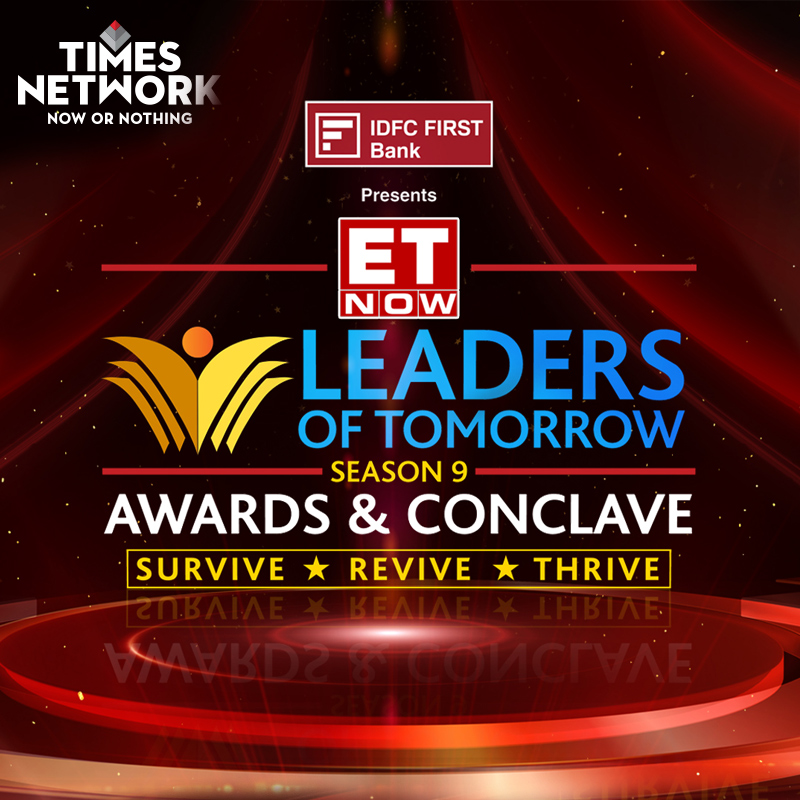
    ET Now concludes the 9th season of Leaders of Tomorrow Awards and Conclave

    Mumbai: ET Now has recently concluded the ninth season of ‘Leaders of Tomorrow Awards and Conclave’ which celebrates the success stories of India’s most innovative and resilient MSMEs and start-ups. This year’s event was driven by the theme ’Survive. Revive. Thrive’.

    The event witnessed a distinguished line-up of speakers including principal economic advisor to GoI, Sanjeev Sanyal; IDFC First Bank MD and CEO V Vaidyanathan; BSE MD and CEO Ashish Chauhan, and HSBC India former country head Naina Lal Kidwai amongst others, who discussed the challenges faced by the small businesses and the way forward for India’s small enterprises and start-ups.

    The distinguished jury of industry luminaries included Naina Lal Kidwai; Mahindra & Mahindra former MD Pawan Goenka; BSE head of SME Ajay Thakur; True Beacon & Zerodha co-founder and CIO Nikhil Kamath; Vinati Organics MD Vinati Saraf Mutreja; Growthstory investor partner and serial entrepreneur K Ganesh; Persistent Systems chairman Anand Deshpande; ASSOCHAM president and TCI MD Vineet Agarwal, and JBM Group vice-chairman Nishant Arya.

    The event culminated in an exciting finale wherein the best MSMEs and startups were awarded. EF Polymer was named ‘Start-Up Entrepreneur of the Year’ and Keetronics India clinched ‘MSME Entrepreneur of the Year’.

    “ET Now has been championing India’s growth story with a focused purpose of helping Indians rise with India. This mission reflects in our flagship property, Leaders of Tomorrow that empowers, enables and celebrates the spirit of small businesses and start-ups that are together powering the rise of a strong new India,” said Times Network MD and CEO MK Anand. “It is heartening to witness stories of several enterprising small businesses who not only showed resilience but rose through the adversities to innovate, reimagine and reinvent during the turbulent past two years. I firmly believe that Leaders of Tomorrow will continue to inspire more and more Indians to take the plunge and create new stories of entrepreneurial success.”

    “The Indian economy has bounced back after the first and second wave because the underlying human consumption is very strong in India,” said IDFC First Bank’s V Vaidyanathan. “All the major indicators of the economy – GDP, house sales, car and two-wheeler sales, and FMCG products’ consumption have been marking an upward trend. The power of an economy lies in its credit. The Indian banking industry’s current outstanding total credit is over 120 lakh crores, out of which about 50 lakh crore is for entrepreneurs. After 75 years, small entrepreneur credit is growing by 25-30 per cent per year. SMEs are being benefited tremendously by the power of leverage, which was earlier reserved for large corporations.”

    Highlighting the need for entrepreneurs to shift to an organised environment from an unorganised one, he said, “Migration from unorganised to organised is the need of the hour. The Indian retail industry or kirana market is a trillion-dollar market, out of which 80-84 per cent is unorganised and only four per cent is online. Every industry is now becoming organised, offline to online. For entrepreneurs, this is an opportunity to ride the new bandwagon and not just be spectators. The leaders of tomorrow need to have a digital play.”

    Sanjeev Sanyal stated, “As the Indian economy revives post-pandemic, we observed that the impact in the second wave was much lesser as compared to the first wave. Things are stabilising and industries are opening up now and we realise that demand is not a constraint in India. Globally, this is a serious issue, but India has been able to overcome this as our fiscal resources are strong. Our supply sector reforms are unparalleled. During the first wave, we focused on framework reforms like GST, Aadhar, labour reforms, and farm laws, however, the second wave reforms are more sectoral in nature like deregulation, monetisation, and privatisation of industries.”

    Talking about the third wave reforms which are currently in the pipeline, Sanyal further said, “Our thrust during the third wave reforms would be to get the Indian state to do what it should be doing which includes, delivery of justice, enforcement of contract, and upgradation of municipal services. We plan to give access to world-class infrastructure to poorer sections of the society to foster innovations. I do not believe in rigid planning, rather focus on growth strategy that is based on flexibility and resilience. One big example of this is ‘Atmanirbhar Bharat’ which focuses on leveraging our inner strengths. We as a nation need to give ourselves enough credit. Today, we delivered over 20 million Covid-19 jabs and I feel this is incredible, we have the capacity to deliver at this high level.”

  • “Good ideas always find an investor, so there is no point compromising with the idea:” Ronnie Screwvala

    “Good ideas always find an investor, so there is no point compromising with the idea:” Ronnie Screwvala

    20 years back when the word entrepreneur was rarely pronounced correctly, a 19 year old man in the midst of great legacy businesses turned out to be a stand-out first generation entrepreneur, who fearlessly kept invading into undiscovered territories.


    After starting as a local cable operator, he went on to finding United Television Group (UTV), ventured into sports with Kabaddi and funded e-commerce enterprises like Lenskart and Zivame. While the world was witnessing catastrophes, he decided to turn philanthropist with the Swadesh Foundation. From Shanti on Doordarshan to Swadesh on the big screen, from Rang de Basanti to Dev Dhe has enumerable number of trophies in his cabinet.  


    The distinguished voyage that ignites million minds, the role model for aspiring entrepreneurs in India – Ronnie Screwvala in conversation with Indiantelevision.com’s Anirban Roy Choudhury, shares his priceless guidelines for young aspirants.         


    Excerpts:  


    What triggered you to pen Dream with Your Eyes Open?


    Entrepreneurship is a challenge and the perception that only people with huge initial capital can become an entrepreneur is a myth and that’s the message I wanted to convey and that’s where the book came into picture.


    Dream With Your Eyes Open is not an autobiography but a voyage that has both highs and lows, failures and success, encouragement and demotivation. Another reason behind penning down the book is to encourage aspirants to go for entrepreneurship passionately and not take it as a second option.


    What do you think is stopping India from becoming a global leader when it comes to entrepreneurship?


    20 years back when I started, people could hardly pronounce the word entrepreneurship. Even today, while on the one side, there are a fair amount of businesses, on the other, there is huge parental pressure of going and getting a good job. Entrepreneurship has always been plan B. But that doesn’t stand true.


    One can either go and get a good job or turn an entrepreneur – both are equally respectable. The most important reason for less growth is the fear of failure. In India, people don’t talk about this fear and if they do, they can’t handle it. For most people, failure means the end of the game… the fear that everything is over is what acts as an obstacle.


    The thought process needs to be that if you failed yesterday, you should see today as another day and move forward. When you have such a fear about failure, you don’t start. That is one of the reasons why India is ranked between 140 to 150 when it comes to entrepreneuring nations.


    How does an aspiring entrepreneur deal with the intriguing question of ‘How do I get funded’? Do you think in order to find that answer, the basic idea gets feeble or compromised?


    Everyone in India thinks that you need an investor to start a business and finding one is the biggest challenge. In my opinion, that’s not the procedure that you need to follow always. If we look at the entrepreneurs who are prospering today, all of them bootstrapped themselves on their own. Bootstrapping is a must when it comes to entrepreneurship. You have your idea and you should start executing it and only after you reach a particular level, should you go for an investor.


    Your success ratio goes up if you bootstrap first and then go for an investor. If you get an investor early on, you get spoilt. The entire work culture changes and half the time the investor runs the business that you are supposed to run. The hunger is much more when you are doing it on your own and hence if you have an idea, you should start executing it and after you have concept proofed it to yourself, you go for the investor. A good idea will always find an investor therefore there is no point compromising with the idea.


    Is stagnancy another reason behind the low rate of entrepreneurship growth in India? Do you think one should have the hunger of invading into new territories?


    It’s good that these questions are coming now because a few years back, no one thought about what happens after the substantial establishment of a business. In India, after a certain level we refrain from moving forward, get stagnant and eventually start downscaling.


    In business, downscaling begins the moment stagnancy sets in. So, one should always be open to venturing into new territories as entrepreneurship doesn’t mean earning a livelihood but generating employment. The more we explore, the more are our chances of succeeding.


    Do you think digital can give birth to a non-advertiser source of revenue model, which will be subscription based?


    If we see globally Google, which is the world’s number one company, has taken its platform YouTube and left it free. It runs on advertising. Facebook is also on advertising. If we look at it from that perspective, that’s where it’s going.


    Let’s face it, in two weeks’ time, a newly released movie is available on Tata Sky for Rs 75 but people are refraining from opting for that as there are pirated DVDs available for Rs 35. Piracy is a huge barrier of subscription based model and to counter piracy we need consumer behaviour to change, which is a slow process and will take time.


    Digital media is cost efficient. The capital investment is less when compared to the other mass medium platforms and hence there is a slim chance of having a subscription based revenue model. However, it will take time as there are bandwidth and technological issues that need to be sorted first. For now, I think advertising is going to be a long-term stay.


    Don’t you think an investor, after financing the concept, at some point of time starts regulating the strategic affairs?


    If you are a strong entrepreneur, you will never let anyone regulate you. I think there is a misconception that an investor comes in to regulate. Investors have two aspects: firstly, his risk capital is higher than most entrepreneurs because he is choosing one out of 999 and secondly, all investors get into a portfolio investment mode where they know out of 10, five will fail, three will somehow sustain and two will succeed. Who else in the entire cycle has got a risk of five failures out of 10? So, investors are seasoned veterans, who take their decision after enormous number of research and knowledge so that they put their money in right place. 


    Investors’ key is to back entrepreneurs with whatever they are doing and not regulate them. So it’s a misconception that an investor regulates. Yes, if things go wrong, an investor may get hyper and interfere with a perception that he can add value. It’s a myth that investors regulate a company.


    What’s your opinion on the Indian eco-system? Is there enough encouragement and support from the Government’s side for an aspiring entrepreneur?


    I don’t think it’s the government’s job to support. The thing that everyone is looking at is ease to do business. So the business environment has to be simplified by the government. When it comes to taxation, with 30 per cent tax we are one of the least taxed nations of the world. The tax structure in the UK and the US is higher than India. With the Goods and Service Tax (GST), it will come down to 16 per cent, which solves many problems. In the UK, value added tax (VAT) is at 17 per cent so there is no room for blaming the government.


    The reason why service tax was increased is to bring it closer to GST. The complication lies in the number of regulations and multiple-window clearances. The media is the least controlled in India. In the US, you have to be a citizen of the United States to be able to operate any digital or broadcast media, whereas in India anyone can operate an entertainment venture and hence when it comes to democracy and freedom, India beyond question beats the rest.


    Regulations make doing business complicated in India as there is no single body that deals with all the regulatory issues, which makes opening a business in 10 days impossible.


    Do you think it’s important to add entrepreneurship as one of the major aspect when it comes to academic upbringing of the youth in India?


    There are 10 million graduates coming out of college every year. Do we have jobs for all of them? The answer is a big no. The only way of tackling that problem is adding entrepreneurship in the curriculum as early as possible. I started at 19, so an early start is possible provided you think about it at an early stage. The manifestation should be there. The target should not be to get a job and then become an entrepreneur.


    Managers and presidents of big companies should think about where they will stand ten years down the line when there will be a hundred million skilled youth looking for jobs. Hence they should devote time into entrepreneurship, which will provide job to those skilled people.


    You are venturing in motorsport now. Can you throw some light on it?


    Well, yes I am venturing into motorsport. However, the report stating an investment of Rs 300 crore is incorrect. Nowadays, whatever you do, a zero gets added automatically. Here motor sports doesn’t mean cars. It caters to bikers in India, which is the largest bike selling nation of the world. The over 250cc category has grown at an incredibly high rate in last five years and we are looking at a tourism based sport. Currently, we are researching on the ten most exotic places in India, where on television one will enjoy India’s natural beauty along with skilled bikers. The plan is to make it a tourism cum sporting event.


    In the beginning, we will get a mix of Indian and international bikers, as the aim is to make it world class. Each team will have one Indian and one foreign biker for the first two years and after that we would look at making it a 100 per cent Indian event.


    From the first super-flop Dil Ke Jharoke Mein to the blockbuster entrepreneur writing his book, how will you describe the versatile voyage of yours?


    The opening four lines in my book is about the biggest failure of my life Dil Ke Jharoke Mein, which is what I started with. The concept behind starting the book with that was to convey that failure is just a part of life and not the end of the world.


    My journey so far has been to not stop after a failure but to keep moving on. Cable was different, UTV was different and sports is different. I have always rediscovered myself and for me that’s the way forward.