Tag: entertainment

  • CII to organise a Big Picture conference at intl film festival in Goa

    CII to organise a Big Picture conference at intl film festival in Goa

    MUMBAI: On the occasion of the International Film Festival of India (IFFI) in Goa which kicks off later this month the Confederation of Indian Industries (CII) will organise a conference Big Picture from 22-23 November 2006.

    The conference is dedicated to the changing face of Indian cinema and envisions to provide direction for catalysing growth of the Indian film entertainment space. Focussed on the content and financing aspects of the film business with individual sessions on film marketing, communication, co-production and new technologies, the CII endeavours to open new vistas through a series of keynotes, panel discussions and case studies, presenting growth opportunities and strategies to overcome challenges facing the Indian film industry. The conference provides an opportunity to network with the key executives from different organisations.

    The speakers include Silicon Image, USA president and CEO Steve Tirado, E&Y global media and entertainment head John Nendick,
    Kuwait National Cinema Co head Hisham Alghanim, Motion Pictures Association senior VP and regional director – Asia Pacific region Mike Ellis.

    There will be knowledge sessions on home entertainment, financing, mobile entertainment revenues, digital technology and co productions. There is so much talk about the emerging mobile entertainment in the small screen. Where are we headed and what’s the opportunity in this space? That is one of the questions this seminar will tackle.

    Around 180 movies will be screened over 11 days of the festival. The films that will be shown include the critically acclaimed Babel with Brad Pitt and Cate Blanchett that could get a Best Picture Oscar nomination next year. It closes the festival. Volver from Spanish maestro Pedro Almodovar is the opening film of IFFI 2006. The country focus
    this year at IFFI will be Argentina. A retrospective of Spanish film actor Javier Bardem will also be part of the action.

    The majority of the Indian Panorama movies are available for overseas distribution and theatrical rights. Visitors can can meet the right holders at the Film Bazaar, The Indian Panorama section would feature 20 films, including Madhur Bhandarkar’s Corporate, Girish Kasaravalli’s Kannada film Nayi Neralu, K. Satyanarayan’s Telugu film Hope, Madhu Kaithapuram’s Malayalam film Ekantham and Cheran’s Dhavmai Dhavamirrunthu.

    In the cinema of the world section films that will be screened will include the American comedy Borat
    Cultural learnings of America for make benefit glorious nation of Kazakhs. Then there is the Italian film Le Caimanby from Nanni Moretti. The film tackles Italian politics and love as seen through the eyes of a failing film producer. From France there is Little Jerusalem by Kairn Albou The story focuses on sisters Laura (a philosophy student falling in love with an exiled Algerian Muslim) and Matilde (a devout mother of four torn by her husband’s infidelities).

    Following her characters from ancient religious rituals to contemporary situations, Albou vividly brings to life the challenges made to religious faith by secular society.

    This year the festival will feature a special retrospective of Prithviraj Kapoor’s films, and a special screening of Richard Attenborough’s oscar winner Gandhi will also be held to mark the centenary of Satyagraha movement launched by Mahatma Gandhi.

    Goa Chief Minister Shri Pratapsing Rane said, ‘Goa is slated to be India’s next entertainment super-hub and IFFI 2006 is spearheading its growing recognition as an International cinema destination. This year IFFI 2006 synergises global participation, high profile glamour, world-class entertainment and internationally applauded films. Add to that a beautiful locale and the frills and fancies that come with a red carpet event and you have the perfect concoction of fun, glitz and quality entertainment’.

    Entertainment Society of Goa (ESG) CEO Nandini Paliwal says, ‘IFFI 2006 will offer the best of world cinema. With acclaimed films from across the globe, the festival represents a kaleidoscope of cultures and creates a medium to appreciate and share cinematic excellence. In fact, ESG is in the process of making a yearly event calendar encouraging associated ventures with international brands in the field of cinema and will work towards making Goa the entertainment heart of the country”.

  • Rajshri launches broadband entertainment portal, to release ‘Vivah’ for viewers at $9.90

    Rajshri launches broadband entertainment portal, to release ‘Vivah’ for viewers at $9.90

    NEW DELHI: Rajshri Group, one of the oldest production and distribution houses in the country, has launched a broadband entertainment portal, www.rajshri.com, that will offer streaming and downloading of various forms of content including movies, music videos, concerts, and documentaries.

    Rajshri’s latest movie, Vivah, will be premiered on the portal simultaneously along with its theatrical release on Friday. This is the first time in India that a film is being made available on the internet at the day of its release.

    The downloading of Vivah will be at a payment of $9.9 through an international credit card, said Rajshri Media (P) Ltd managing director Rajjat Barjatya. The copies do not run the risk of being pirated because of a special software that has been used, he added.

    Rajshri Media (P) Ltd will be the group’s digital media initiatives arm. This will cover streaming services which users don’t have to pay for. Among the broad gamut of content available is the historic midnight speech of late Pandit Jawahar Lal Nehru on 15 August 1947. “We are also soon going to add humor, management-related content and spiritualism to our site,” said Barjatya.

    Describing the new initiative as an “historic moment,” Barjatya said the company had been working on this project for the past two years. The aim seems to be converting the ‘non-consumers into consumers’ while attempting to break the stranglehold of piracy.

    Barjatya is also targeting about 25 million Indians abroad, NRIs and Persons of Indian Origin (PIO) put together, who are “extremely keen to stay in touch with their roots and will pay for rich and origial Indian content as against the pirated one.”

    About 51 per cent Indians abroad spent time daily on the net, he revealed. Besides, Indian content was also becoming extremely popular among non-Indians across the world.

    So how will the box office takings of Vivah, for instance, be a hit because of online viewing? “We are getting into a four screen scenario, instead of a two-screen one. Cinema theatres were always there, and then came TV, the big screen and the small screen. Now there is the internet and the mobile,” said Barjatya.

    “Each of these screens are a different experience and one cannot replace any of the other. It is one thing to see a film on the Net alone, and quite another doing so with the family on a TV set, or watching it in a dark hall with a lot of people, so there is no cutting into turfs,” he added.

    The delivery of movies through the internet could also cut down piracy. “If there is a viewer in say Finland, I can now get to him before the pirates can,” Barjatya said.

    A key feature of the site is that the movies can’t be pirated. “We have used a software which ‘wraps around the programme’ and while it is being streamed, it cannot be copied, nor downloaded. Even while it is ‘sitting’ on the hard disk for 72 hours, it cannot be made into a CD or DVD,” he said.

    The portal is also aimed at the tech-savvy younger audience. “The site has a lot of features. You can actually saute the film, slice and dice it, rate it, send a link to a friend and read what others have to comment about it,” Barjatya said.

  • CBS operating income up 4% to $646 million

    CBS operating income up 4% to $646 million

    MUMBAI: US media conglomerate CBS Corporation has reported results for the third quarter ended 30 September, 2006.

    CBS’ operating income rose by four per cent to $646 million led by television and outdoor. Net earnings from continuing operations went up by 26 per cent to $324 million.

    Revenues of $3.4 billion for the third quarter of 2006 were up slightly from the same quarter last year, as growth at outdoor and publishing was offset by a decline at radio, the shutdown of broadcaster and lower home entertainment revenues due to the switch from self-distribution in 2005 to third party distribution in 2006.

    For the nine months ended 30 September 30, 2006, revenues were $10.4 billion which marked an increase of one per cent from the same prior-year period, as growth at outdoor, television and publishing was partially offset by a decline at Radio. Results for the first nine months of 2006 reflected $24.0 million of expenses related to the UPN shutdown as well as the impact of stock-based compensation expense of $51.7 million versus $13.1 million for the nine months ended 30 September, 2005.

    For the quarter, television revenues of $2.2 billion decreased slightly from the prior year as growth in television license fee revenues and affiliate fees was more than offset by lower advertising and home entertainment revenues.

    Television license fees increased by seven per cent principally due to the domestic syndication sale of CSI: Miami and higher foreign syndication revenues. Affiliate fees increased six per cent due to rate increases and subscriber growth at Showtime and the inclusion of CSTV Networks since its acquisition in January 2006. Ad revenues decreased by three per cent primarily due to the shutdown of UPN in September of 2006 and the absence of the Primetime Emmy telecast in 2006, partially offset by strong political advertising sales at the television stations.

    Home entertainment revenues decreased by 35 per cent principally due to the switch from self-distribution in 2005 to third party distribution in 2006. The CW, a 50/50 per cent joint venture broadcast network with Warner Brothers Entertainment, was launched in September 2006 and has been accounted for as an equity investment in the third quarter of 2006.

    CBS executive chairman Sumner Redstone says, “CBS Corporation is right on track. “We remain committed to escalating shareholder value as we continue to drive our businesses forward. I am encouraged by the strategic vision Leslie and his team have put forth to capitalize upon the tremendous opportunities unfolding in the digital age.”

    CBS president, CEO Leslie Moonves says, “This was another strong quarter, posting solid profit increases in Television and Outdoor, generating significant free cash flow, and delivering the third of three dividend increases since the start of the year. In Radio, our plan to strategically reduce the number of markets in which we operate is well underway. We have signed agreements to sell 29 stations for a terrific value. We also believe that the growth we’re seeing in key formats such as Jack, Spanish and Talk bodes well for improved performance at Radio in 2007.

    ” Through innovative partnerships with YouTube, Yahoo, and many other key new media concerns, we’re aggressively pursuing opportunities that help us extend our world-class mass-appeal content to new digital platforms and channels and get paid for it. As a premier content company, we continue to be pleased with new technological developments that allow consumers to more easily enjoy our content, and extend our reach into the digital space.”

    The company expects to deliver low single-digit growth in revenues, mid single-digit growth in operating income and high single-digit growth in earnings per share.

  • Epson launches the new all-in-one ‘EMP-TWD3’

    Epson launches the new all-in-one ‘EMP-TWD3’

    MUMBAI: Epson, which deals in data projectors, has announced the launch of the Epson EMP-TWD3. This is Epson’s first combo projector to feature a built-in DVD player with a pair of integrated stereo speakers.

    Designed as the home projector, the Epson EMP-TWD3’s cubical form factor is devoid of any unsightly wires typically found in a home entertainment set up. Based on the home entertainment all-in-one concept, the projector is even handy enough to be carried around, asserts an official release.

    The integrated optical disc player plays multiple video formats including DVD, Video CD and Super Video CD. It also spins audio CDs, MP3s and WMA files. For optimal sound reproduction, the two dynamic 10W speakers are rear facing and are fully capable of delivering rich natural sounds. The player also reads JPEG images and can present them as slide shows.

    Aside from just playing video and music data from disc sources, the Epson EMP-TWD3 has several ports which allow to connect external devices such as laptops and media devices such as tuners.

    The projector is fitted with a short focus lens capable of a 1.5X wide zoom, so it fits easily into smaller living spaces. It has a 1200 ANSI lumens, a high 1000:1 contrast ratio, and Epson-Twin Optimise Reflection Lamp (Epson’s E-TORL).

    Equipped with the new Epson Cinema Filter, the Epson EMP-TWD3 applies optical adjustments automatically to ensure precise colour re-production. The vertical and horizontal lens shift function allowing a shift of images without any distortion, even if the projector is not placed squarely to the screen, adds the release.

    The projector is available from October 2006 at a MRP of Rs. 99,400.

  • Entertainment, software are the most heavily counterfeited sectors

    Entertainment, software are the most heavily counterfeited sectors

    MUMBAI: Gieschen Consultancy has released the 2006 Mid-Year Counterfeit and Piracy Intelligence Report derived from Bascap’s Daily Counterfeit and Piracy Intelligence Report statistics compiled over the first half of 2006.

    This focusses on intellectual property theft, citing major links to illegal activity, the Internet, and brands.

    Entertainment, software are the most heavily counterfeited sectors. The US, UK, India, Malaysia and China top the list of countries that have the most intellectual property violations. Over the first six months of 2006 a total value of $699.3 million of counterfeit and pirated goods, specifically intellectual property theft, was discovered from 760 incidents in 69 countries. Louis Vuitton, Nike, Microsoft, Gucci and Prada are the brands that are counterfeited the most. Pepsi is the most counterfeited brand in the food category.

    Glen Gieschen says, “This activity has major implications upon job creation and sustainability, consumer health, safety and security, and is driving serious criminal activity into this seemingly innocent crime. The greatest misconception about counterfeiting is that the impact is negligible, however the truth is far different.

    “Consumers who are unaware they are purchasing fake products and those who are actively seeking them have consumed adulterated drugs and died, installed fake products in their vehicles which reduce its life or cause bodily injury when they malfunction. We have documented an endless number of instances where these bogus items result in serious problems, large and small for consumers.

    “Recently, counterfeit airline parts were discovered in Russia which, as a passenger, is a concern. When seizures are made of bootleg music, software, and films, it is becoming a frequent occurrence to discover illegal drugs and weapons. In some cases, phony items are sold by illegal immigrants to support their families and fund causes in their homelands. When you purchase these items, you have no idea of the type of people you are supporting, where these funds are going and for what purpose.”

    The top 5 (of 69) countries enforcing intellectual property violations:

    1. USA, 205 incidents, $51.7 Million seizures & losses

    2 UK, 116 incidents, $31.1 Million

    3. India, 87 incidents, $2.5 Million

    4. Malaysia, 52 incidents, $5.9 Million

    5. China, 43 incidents, $5.3 Million

    The report also analyses the use of the Internet in networking and organising the activity of counterfeiters in addition to providing unregulated and competitive advantages which legitimate businesses are unable to use through trade boards, spam, auctions and cyber outlets.

    The most heavily counterfeited sectors:

    1. Entertainment and Software, 383 incidents, valued at $256 Million

    2. Clothing and Accessories, 149 incidents, $69 Million

    3. Drugs and Medical, 44 incidents. $15.8 Million

    4. Food and Alcohol, 40 incidents, $1.7 Million

    5. Cigarettes and Tobacco Products, 37 incidents, $276 Million
    The reports conclusions are based on data obtained from actual counterfeit and piracy activity.

    – Countries, such as China and Russia, export more counterfeit goods than they seize domestically.
    – The US and UK are more effective at enforcing intellectual property rights than other countries.
    – Five per cent of all intellectual property theft is linked to other serious criminal activity such as drugs, thefts, and weapons offences.
    – Counterfeiters are now cross selling different brands with different types of fake goods and in some cases are dealing illicit items with the counterfeits.
    – 14 per cent of counterfeit investigations now involve the use of the Internet.
    – The Internet is being used by all types of counterfeiters to network and organise their activity.
    – Trademark and copyright goods are counterfeited in nearly equal proportions.

    The Bascap Intelligence Reports show that the Internet has been used as marketing tool in one of every seven reported investigations. A significant percentage of spam and junk email is attributable to internet vendors peddling everything from counterfeit drugs and watches to clothing, jewelry, software and pens. Manufacturers of fakes are using the Internet to market directly to consumers, retailers, and distributors through trade boards, auction sites, spam, and cyber outlets.

    The shift from physical marketing to cyber marketing of fake products is due to a number of factors. The Internet is a vast and growing consumer and business market in all economies. Websites can be set up in minutes, at a minimal cost, with the use of a credit card and require only basic computer skills to design and publish. Moreover, tracing the physical location of a counterfeiter through a website can be extremely difficult.

    Some counterfeiters are able to gain a competitive advantage over legitimate businesspeople by using Internet marketing methods that may be illegal or that most manufacturers or retailers would not wish to use. For example, the use of spam, online auctions, or trade boards may dilute a brand’s value and pose legal, technical, and ethical challenges for many legitimate brand owners.

    The top 5 (of 357) items counterfeited:

    1. Films, 13.3 per cent of items counterfeited
    2. Music, 7.5 per cent
    3. Software (Business and Games), 6.1 per cent
    4. Medicine, 4.3 per cent
    5. Handbags, 2.1 per cent

    In reviewing the top counterfeited items reported in the Bascap Intelligence Reports, it becomes evident that copyrighted (51.3 per cent) and trademarked (48.7 per cent) products are being infringed in nearly equal numbers. The variety of reported items suggests that counterfeiters are diversifying into a larger range of goods and industries, which phenomenon is regularly demonstrated when a wide mix of products is seized in raids on a single site.

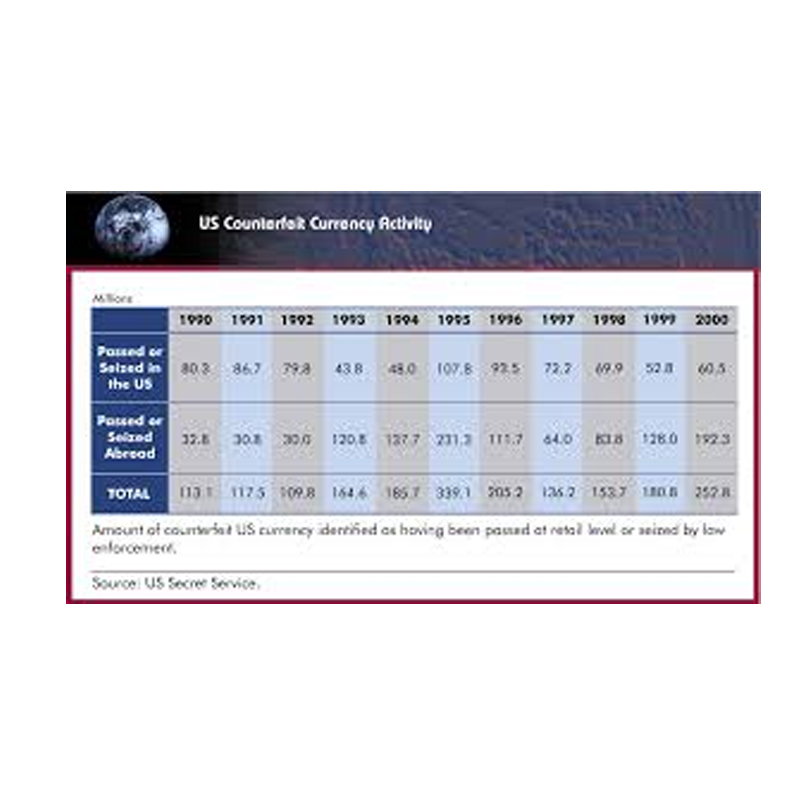
    Cross selling of different items and brands is also becoming a standard practice as fake Viagra is sold with cigarettes, CDs with handbags, and perfume with watches. In a small, but growing, trend, knockoffs are being sold with other illegal goods such as illicit drugs, fake identification and counterfeit currency.

    The growth of the popularity as a distribution channel for counterfeit and pirated goods notwithstanding, reports indicate that traditional channels and mobile operations are still a significant problem for brands. A large percentage of retail operations are now set up in homes to minimise detection of mail order, product assembly, copying, warehousing and distribution operations. Mobile operations such as street vendors, flea markets, bazaars, auctions, and boot sales remain strong due to the large numbers of consumers attracted to discounted items and bootleg goods.

    Intelligence also suggests that counterfeiters are experts at building upon existing brand marketing, thus saving themselves the cost of creating and testing consumer segments, setting up distribution channels, and advertising. For these reasons, it is not surprising that the leading brands counterfeited in each classification are well-known global brands. A notable case study is the Fifa World Cup 2006 which serves as an example of how counterfeiters implement this strategy.

    Unlike brands whose images have been developed over dozens of years, the World Cup was promoted by organisers and sponsors in a relatively short period of time. Counterfeiters anticipated key markets, manufactured and warehoused knockoffs well in advance of the consumer demand, and then began attempting to distribute them as soon as the brand image was created by the World Cup organisers.

    The top 5 (of 392) brands counterfeited:

    1. Louis Vuitton, 5.2 per cent of incidents.
    2. Nike, 4.9 per cent
    3. Microsoft, 4.7 per cent
    4 Gucci, 3.8 per cent
    5. Prada, 2.5 per cent

    During this reporting period, 392 brands were imitated. The majority of the 760 investigations focused on a number of brands, of which the top five were compiled in Table 4. Noticeably, Louis Vuitton, Gucci and Prada represent luxury products where supplies are limited and prices reflect the exclusivity of the brand. Counterfeiters are successfully moving large quantities of these products for a number of reasons. This exclusivity includes substantial marketing and retail costs, which translate into high prices that are easily avoided by counterfeiters.

    The counterfeiters are able also to manipulate product quality and thus lower the cost of copying the products. The result is a substantial undercut in price of between 50 – 75 per cent from the suggested retail price. Regardless of these deeply discounted prices, it is common to find hundreds of percentage points in profit margins on these knockoffs, thus making it an attractive market to enter.

    The top brands counterfeited in each category:

    Cigarette and Tobacco Products – Marlboro
    Clothing and Accessories – Louis Vuitton
    Computer Equipment and Supplies – Canon
    Drugs and Medical – Viagra
    Electronic Equipment and Supplies – Underwriters Laboratories
    Entertainment and Software – Microsoft
    Food and Alcohol – Pepsi
    Industrial Goods and Supplies – Toyota
    Jewelry and Watches – Rolex
    Perfume and Cosmetics – Giorgio Armani
    Toys and Sports Equipment – Fifa World Cup 2006
    Non-luxury goods, such as those produced by Nike, fight the challenge of popularity as opposed to exclusivity. Due to the high consumer demand for some brands, counterfeiters are able to sell large quantities at the full retail or modestly discounted prices. Again, quality is controlled by the counterfeiter to reduce costs and increase profit margins. Perhaps the highest-margin knockoff product is software. While hundreds of percentage points in profit appears adequate to counterfeiters and pirates for many phony products, margins in pirated software are in the thousands of percentage points.

    The 392 brands analysed for this report represent a significant portion of the portfolio of consumer products available worldwide and a significant percentage of international trade. Moreover, the production and distribution of these brands provide millions of jobs – many of which are at risk to growing competition from illegal markets distributing fake versions of the original products. In controlling the cost of production and thus the quality of fake products, counterfeiters may put consumer health and safety at risk and undermine the confidence placed in these brands.

    A number of factors affect sectors differently. Sales of fake Clothing and Accessories are influenced by a large variety of selling schemes, such as street peddlers, flea market vendors, bazaars, purse parties, internet auctions and discount outlets. The Entertainment and Software industries are vulnerable to Internet file-sharing technology and simple computer manufacturing techniques available to most consumers.

    The Drugs and Medical, Food and Alcohol, and Cigarettes and Tobacco sectors are subject to regulatory and health restrictions such as mandatory age limits, verification of prescriptions, and expiry of goods. In addition, added taxes levied on these products provide incentives for counterfeiters to enter these markets and infiltrate supply chains.


  • Divya Bhaskar to donate funds to Surat Flood victims

    Divya Bhaskar to donate funds to Surat Flood victims

    Mumbai, August 10, 2006: The Divya Bhaskar Gujarat Team will contribute a day’s salary alongwith the Bhaskar Group, contributing similar funds, to assist the victims of the Surat floods. 36 lakh residents of Surat have been marooned since Tuesday as almost 95 per cent of the city has been drowned in 10-15 feet of water.

    Divya Bhaskar has been the only newspaper that was printed and distributed in Surat during the last two days of the unprecedented flood situation. This has been largely possible, by the dedication and hard work of the Divya Bhaskar Surat team in-spite of suffering huge personal losses, ensured that the newspaper is brought out as compared to other newspapers who had a very skeleton print run today.

    Bhaskar Group is a 1700 crore business conglomerate with strong presence in Newspapers. Television, Entertainment, Printing, Textiles, Fast Moving Consumer Goods, Oils, Solvents and Internet Services.

    The group has rocketed to the top of the print media industry in India with its flagship Hindi daily newspaper, Dainik Bhaskar, and the Gujarati newspaper, Divya Bhaskar. Brand ‘Bhaskar’ is today synonymous with success, quality, dynamism and ethics in millions of households across India and the corporate world alike.

    ***************

    For further information, contact::
    Amrita Sadhu, Euro RSCG PR
    Tel : 24937188, extn 259, Mobile : 9819622591

  • Entertainment Network Q1 revenue up 69%, net profit at Rs 13 million

    Entertainment Network Q1 revenue up 69%, net profit at Rs 13 million

    MUMBAI: Entertainment Network India Ltd’s (ENIL) income has grown by 69.2 per cent to Rs 354.5 million for the first quarter ended 30 June 2006 as compared to Rs 209.5 million a year ago.

    Net profit for the quarter ended stood at Rs 13 million. The company incurred a marketing expense of Rs 0.9 million.

    ENIL manages FM broadcasting under the brand name of radio Mirchi.

    The earnings before interest, depreciation, tax and amortization (EBITDA) for the quarter stood at Rs 59.7 million as against Rs 60.1 million in the corresponding period of the previous year.

    On comparing the year-on-year (YoY) performance of the existing seven stations, the topline has grown by 47.3 per cent and earnings has grown by 55 per cent, according to an official release.

    During the quarter, ENIL had launched three new FM stations – in Bangalore, Hyderabad and Jaipur. “The financial result captures the costs for the full quarter whereas the revenue reported is only for part of the quarter,” the release added.

    Commenting on the results ENIL MD and CEO A P Parigi said, “As a company we continue to focus on expanding the FM Radio category and sustaining the leadership of Radio Mirchi in the existing and new markets. Research findings of IMRB, commissioned by us, indicate Radio Mirchi is the No. 1 radio station in terms listenership in Bangalore, Hyderabad and Jaipur”.

    Times Innovative Media Limited (TIMPL), the subsidiary of ENIL, has bagged a few contracts during the quarter. Times OOH Media has won, among others, the advertising rights for Patel Bridge, considered a unique outdoor advertising infrastructure in the city of Mumbai.

    The experiential marketing business, 360 Degrees, has been selected as the nodal agency for Habitat for Humanity, a Jimmy Carter Project – 2006. The project is part of a global endeavour of the former president of United States aimed at establishing low cost housing for the underprivileged across the world.

  • Eternal Dreams to foray into TV & film production; UTV’s Jain to head

    Eternal Dreams to foray into TV & film production; UTV’s Jain to head

    MUMBAI: Entertainment and event management company Eternal Dreams Pvt Ltd is making renewed efforts to get into television production after its initial experiment to turn around an ailing Marathi channel proved futile.

    Floated by ex-Sony hand Sapna Chaturvedi, the company plans to foray into Hindi film production as well. UTV non-conventional revenues general manager Bonnie Jain has rejoined the company as CEO to take up the task of finding buyers for TV content.

    In 2002, Eternal Dreams had found captive content for its production activities since it took up the management of Rathikant Basu-promoted Tara Marathi. But the channel had to shut operations due to losses.

    The company will now be looking at producing shows for the likes of Star, Zee and Sony in the Hindi general entertainment space and will also be looking at tapping opportunities with Doordarshan.

    Eternal Dreams managing director Sapna Chaturvedi said, “We are in talks with people in the industry for our venture but is too premature to talk to about it at present.”

    Jain was with Eternal Dreams till 2004, post which he joined UTV as channel director – television content. Later, Jain was made general manager of non-conventional revenues at UTV.

    He began his career with the Children’s Film Society of India (CFSI), and has also worked with Amitabh Bachchan’s ABCL, the K Balachander promoted Cuecom Entertainment Pvt Ltd and Kerry Packer’s Channel Nine India.

  • ETV launches IPTV pilot test in Thailand

    ETV launches IPTV pilot test in Thailand

    MUMBAI: ETV, a global Internet distribution network offering sports and entertainment content over the Internet, has commenced a pilot test of its IPTV service in Thailand

    Through its partnership with Media Partners International, ETV will be deploying the ETV On Demand test system to an initial test market of 1000, growing to 10,000 test users throughout Thailand. The test period will last for up to 90 days, and will aggregate both technical information and customer feedback on the delivery system, the content and ease of use of the system.

    It is expected that the ETV On Demand full service launch will begin by the end of the third quarter in Bangkok. At this point, MPI will market the system throughout Thailand, a country with a growing population of more than 65 million. MPI has projected users to grow by 50,000-100,000 monthly once it rolls out the ETV On Demand system.

    The full ETV On Demand system launch is expected to take place later this year, and through early 2007. Potential viewership in these markets approximates 600 million.

    ETV’s proven broadband delivery technology affords consumers their choice of entertainment and sports programming 24 hours a day over the Internet, with full-screen broadcast resolution on a guaranteed bandwidth backbone. The company’s complete end-to-end solution encompasses the latest Internet television technology, exclusive sports and entertainment content and worldwide broadband distribution.

    MPI is a vertically integrated media company operating in the filmed and recorded entertainment and sports events production, licensing, and distribution industries. MPI’s chairman Sitichai Nuanmanee said, “The Pilot Test with ETV positions our two companies to dominate the broadband viewership market throughout Southeast Asia and India.”

  • Times Now brings you the Big action, from the cities

    Times Now brings you the Big action, from the cities

    Launches ‘ACTION CITY’ – city centric show With News Now Overnight

    Mumbai, May 29, 2006: TIMES NOW, soon after successfully completing 100 days of bringing urbane viewers the ‘Big Story’, announced the launch of ‘Action City’ – the show that covers all the action from the big cities of India. Recognizing the urbane viewers need for a quick catch up on the action of the day, its added ‘Action City’ at 10:30 pm and News Now Overnight 11:00 pm, Monday to Friday only on Times Now. Viewers can now look forward to a fresh new power-packed hour every weekday evening with ‘Action City’- an energetic, slick, high spirited city-centric show giving a daily doze of what’s buzzing in the city; and a classic round-up news bulletin ‘News Now Overnight’- that will empower you with the days’ relevant news.

    Speaking on the launch of the show, Sunil Lulla, CEO, TIMES NOW said, “With just over 3 months of being on-air, TIMES NOW presentation of the big stories has made the channel capture quality market share. The success of accurate exit polls, insightful analyses and wide variety of guests during Assembly Elections has made a mark in the News Broadcast Space. The launch of two new shows with City focus and Big Story Focus will give our viewers a fulfilling news experience in the late prime time band.”

    Action City – ‘Your city’s barometer!’ tells viewers what’s hot, happening and buzzing in the city and about its people. The show with its fast paced, racy and distinct content will give viewers a closer look at the happenings in their own city. The show has exciting segments like 60 seconds, Action Headlines, Action Nuggets and Entertainment packed – Action E, offering viewers a dose of heady adrenaline-and-testosterone news, all packaged in thirty minutes. The show will be anchored by Ekta Kumar Nagpal.

    Speaking on the launch of the show, Arnab Goswami, Editor in Chief said, “With a strong focus on the big story, Times Now brings the action from the big cities adding to the news centric 7 to 11 PM Prime Time band. The show will be relevant to our target audience, making sense of all that is going on around them, bringing them face to face with the news from their environment and reporting on all that matters to them”

    News Now Overnight is a classic wrap of the day’s important and significant, big stories that are relevant and will impact the lives of the viewers. The format of the show provides the viewers a complete news experience that are uniquely packaged with slick production values.

    The shows will be anchored by Ekta Kumar Nagpal which will go beyond the conventional studio reporting and take the viewers in the city streets and lanes experiencing the news as it is.

    So feel the news on your city and watch out for what impacts your life the most…Don’t miss to watch out for Action City and News Now Overnight from Monday, May 22nd from 10.30pm to 11.30pm only on Times Now.


    About Times Now

    TIMES NOW, a Times Group & Reuters Service is an urbane, 24-hour cutting edge English news channel connecting viewers with news and shows, which are relevant, distinctive, & appealing.

    Focused at the Urbanite, TIMES NOW recognizes the varied television viewing habits across day parts and delivers news in relevant and distinctive formats at different times of the day. TIMES NOW weekend shows feature leading personalities from the field of theatre, business, defence and entertainment. The channel builds consumer associations through its various touch points – www.timesnow.tv, mobile and interactive voice response system.

    TIMES NOW, a Times Group & Reuters Service, brought to you by Times Global Broadcasting Co. Ltd. is based in Mumbai with studios in Mumbai and Delhi and bureaus across the nation.

    The Times Group is the largest media conglomerate in South Asia, with leadership in newspaper publishing; magazines; music; retailing; FM Radio; Internet; Interactive media; mobile services and lifestyle television.

    Reuters (www.reuters.com), the global information company, provides indispensable information tailored for professionals in the financial services, media and corporate markets. Its trusted information drives decision making across the globe based on a reputation for speed, accuracy and independence. Reuters has 15,300 staff in 91 countries, including staff from the acquisition of Moneyline Telerate (MLT) in June 2005. It also includes 2,300 editorial staff in 196 bureaus serving 129 countries, making Reuters the world’s largest international multimedia news agency. In the 2004 Annual Report and Form 20-F, Reuters Group revenues were ?2.9 billion.
    Reuters and the sphere logo are the trade-marks of the Reuters group of companies

    For further enquiries:

    Vishakha Singh
    TIMES NOW
    A Times Group & Reuters Service
    Times Global Broadcasting Co. Ltd.
    Trade House, 1st Floor,
    Kamala Mills Compound,
    Senapati Bapat Marg, Lower Parel
    Mumbai-400 013
    Tel: (+9122) 24990318
    www.timesnow.tv

    Ruchi Agrawal/ Sonia Huria
    Genesis Burson Marsteller
    1st Flr, Elegant House
    Raghuvanshi Mills Compound
    S.B.Marg, Lower Pare
    Mumbai-400 013
    Website: www.genesispr.com