Tag: entertainment

  • Column-Policy Cross-Connections

    Column-Policy Cross-Connections

    Point 1: With over 1.2 billion population, India is a dream market for any product or service. In short, a land of opportunities.

    Point 2: Despite economic liberalisation started in early 1990s and followed through by successive governments, including the present one in New Delhi, India is still termed a challenging market.

    Just like any other sector, India’s INR 1,157 billion media and entertainment (M&E) industry too gets affected by the two aforementioned points.

    That the M&E industry holds immense potential can be easily seen in various crystal-ball gazing done.

    Indian Government Economic Survey 2016, an annual report card for Indian economy released every February, states the M&E recorded “unprecedented growth” over the last two decades making it one of the fastest growing industries in India. It is projected to grow at a CAGR of 13.9 percent to reach INR 1964 billion by 2019, the Survey states, adding digital advertising and gaming are projected to drive the growth of this sector in the coming years.

    The FICCI-KPMG annual report on Indian M&E sector, released in March, also reiterates the optimism. According to the report, the sector is expected to be worth INR 2,260 billion by 2020 and the advertising sector grew by 14.7 percent from INR 414 billion in 2014 to INR 475 billion in 2015.

    But then what’s holding back big bang investments not only from Indian investors but also foreign ones? Especially when China, the only other market in Asia that outstrips India in terms of size and opportunities, is mostly closed for foreign investors with stringent rules relating to M&E sectors.

    My theory is that despite successive governments from 1990 (it was in 1991 that economic liberalisation was set in motion in India and Indians also got exposed to satellite TV in few years from then) following up on that, full benefits have failed to accrue to the country. Reason? Various liberalisation processes and easing norms of doing business get enmeshed with other policy decisions— some taken in isolation — thereby continuing to make India a challenging market.

    Take, for example, the much talked about government step in June in liberalising FDI investment norms for various sectors, including media, defence, pharmaceuticals and retail.

    FDI policy on broadcasting carriage services as of June 2016


    Sector/Activity

    New Cap and Route

    5.2.7.1.1

    (1)Teleports(setting up of up-linking Hubs/Teleports);

    (2)Direct to Home (DTH);

    (3)Cable Networks (Multi System operators (MSOs) operating at National or State or District level and undertaking upgradation of networks towards digitalization and addressability);

    (4)Mobile TV;

    (5)Headend-in-the Sky Broadcasting Service(HITS)

    100%


    Automatic

    5.2.7.1.2 Cable Networks (Other MSOs not undertaking upgradation of networks towards digitalization and addressability and Local Cable Operators (LCOs))

    Infusion of fresh foreign investment, beyond 49% in a company not seeking license/permission from sectoral Ministry, resulting in change in the ownership pattern or transfer of stake by existing investor to new foreign investor, will require FIPB approval

    (Source: Commerce Ministry)


    The government in June said that FDI in all broadcast carriage services like cable, MSO, DTH, mobile TV, HITS have been upped to 100 percent and brought under automatic route, which means bureaucratic and lengthy permission processes have been lessened.

    Small caveat in automatic route investment norms notwithstanding, Indian companies and foreign investors should have been popping the champagne bottles. But industry reactions were sober to the extent of being subdued.

    General analysis of the aforementioned decision, in short, was: the government took a big step, but not a giant one. Why?

    According to government data, total FDI flow into India since April 2000 to December 2015 stood at US$ 408.68 billion. But the media sector’s share of FDI inflows from 2000-2015 was pegged at $4.48 billion.

    Considering the burgeoning media industry and newer technologies coming in, this sector’s share of FDI during this 15-year period should have been higher.

    So, why are foreign investors hesitant in investing in India, especially when PM Modi’s dream of Digital India can dovetail into building digital infrastructure capable of delivering many media services?

    The federal government may be trying its best to ease norms of doing business in India and live up to its claim of ‘India being a fav destination for foreign investors’, other proposed and existing policy decisions not only send out confused signals, but, actually, create more impediments.

    Take, for example, broadcast carriage regulator TRAI’s two discussion papers on infrastructure sharing in TV broadcasting distribution and  set-top-box interoperability .
    TRAI’s contentions for floating these discussion subjects are to explore avenues to reduce expenditure of companies providing these services by doing away with duplication (in the first case) and examine whether interoperable STBs can largely benefit the consumers.

    Critics of both these TRAI discussion subjects opine that if followed through and converted into regulations, both measures could add another layer of restrictions on the industry.

    Hong Kong-based Asian media industry organisation CASBAA, which also has Indian members, doesn’t mince words when it said in its submission on STB interoperability that the TRAI paper was based on a “number of untested, unproven presuppositions concerning the practice of technical interoperability”.

    Countering TRAI assertions, CASBAA said, “Regulator-imposed technical interoperability requirements will impose very large burdens on Indian consumers and industry players and risk stifling innovation in development of new features of interest to consumers.”

    If a holistic view is taken of both the TRAI consultations, surprisingly aimed at bringing down media services to a common denominator having little USPs, it’s no wonder the likes of Comcast and Liberty Media or closer home the Hong Kong-headquartered PCCW, for instance, have not been enthused much to invest in Indian broadcast carriage segment despite FDI norms liberalisation and a whopping over 100 million TV homes still on the plate.

    It’s not only TRAI, but also the general layout of the taxation and financial environment, apart from other cross-media restrictions, which would deter foreign investors.

    A DTH service provider in India, for example, on an average pays 40 percent tax, including an annual 10 percent licence fee, while ARPUs range between INR 175-220 for most of the six DTH companies. Why would AT&T, parent company of American DirecTV, invest in a DTH operation in India?

    Or, for that matter, why would Comcast or PCCW invest in Indian cable TV distribution when a large number of LCO operations are still far from transparent?

    Add to that a slowing down of the digital rollout — the earlier two phases of the proposed four-phased digitisation of TV services did manage to bring about increased transparency resulting in higher tax revenues for the government — and you have a pitch that’s not conducive for fair foreign investment game.

    Singapore-based market media market research company Media Partners Asia estimates approximately $2 billion has been invested by strategic and foreign institutional investors in Indian pay-TV distribution platforms, which certainly is peanuts considering  over 250 million TV homes are target consumers.

    If confusing policy signals were not enough, stellar performer ISRO’s new-found love for Make In India and resultant insistence on weaning away all Indian users of satellite-based services from foreign satellites to INSAT — informal as of now but gaining currency — is also fodder to scare a foreign investor as such moves smack of throwback to pre-90s when India was dubbed a closed market and not an open economy.

    That’s why, I would insist, till systematic changes are brought about in the country and various government organisations and regulators also see the big picture on regulations instead of functioning within their own small islands, attempts by any Indian government to make India the most favoured destination for foreign investments will not bear ripened fruit. And, in the process, full benefits won’t accrue to the consumers.

    (1 USD= INR 67)

    (Anjan Mitra is Consulting Editor of Indiantelevision.com and will write a fortnightly column on media matters.)
     

  • Column-Policy Cross-Connections

    Column-Policy Cross-Connections

    Point 1: With over 1.2 billion population, India is a dream market for any product or service. In short, a land of opportunities.

    Point 2: Despite economic liberalisation started in early 1990s and followed through by successive governments, including the present one in New Delhi, India is still termed a challenging market.

    Just like any other sector, India’s INR 1,157 billion media and entertainment (M&E) industry too gets affected by the two aforementioned points.

    That the M&E industry holds immense potential can be easily seen in various crystal-ball gazing done.

    Indian Government Economic Survey 2016, an annual report card for Indian economy released every February, states the M&E recorded “unprecedented growth” over the last two decades making it one of the fastest growing industries in India. It is projected to grow at a CAGR of 13.9 percent to reach INR 1964 billion by 2019, the Survey states, adding digital advertising and gaming are projected to drive the growth of this sector in the coming years.

    The FICCI-KPMG annual report on Indian M&E sector, released in March, also reiterates the optimism. According to the report, the sector is expected to be worth INR 2,260 billion by 2020 and the advertising sector grew by 14.7 percent from INR 414 billion in 2014 to INR 475 billion in 2015.

    But then what’s holding back big bang investments not only from Indian investors but also foreign ones? Especially when China, the only other market in Asia that outstrips India in terms of size and opportunities, is mostly closed for foreign investors with stringent rules relating to M&E sectors.

    My theory is that despite successive governments from 1990 (it was in 1991 that economic liberalisation was set in motion in India and Indians also got exposed to satellite TV in few years from then) following up on that, full benefits have failed to accrue to the country. Reason? Various liberalisation processes and easing norms of doing business get enmeshed with other policy decisions— some taken in isolation — thereby continuing to make India a challenging market.

    Take, for example, the much talked about government step in June in liberalising FDI investment norms for various sectors, including media, defence, pharmaceuticals and retail.

    FDI policy on broadcasting carriage services as of June 2016


    Sector/Activity

    New Cap and Route

    5.2.7.1.1

    (1)Teleports(setting up of up-linking Hubs/Teleports);

    (2)Direct to Home (DTH);

    (3)Cable Networks (Multi System operators (MSOs) operating at National or State or District level and undertaking upgradation of networks towards digitalization and addressability);

    (4)Mobile TV;

    (5)Headend-in-the Sky Broadcasting Service(HITS)

    100%


    Automatic

    5.2.7.1.2 Cable Networks (Other MSOs not undertaking upgradation of networks towards digitalization and addressability and Local Cable Operators (LCOs))

    Infusion of fresh foreign investment, beyond 49% in a company not seeking license/permission from sectoral Ministry, resulting in change in the ownership pattern or transfer of stake by existing investor to new foreign investor, will require FIPB approval

    (Source: Commerce Ministry)


    The government in June said that FDI in all broadcast carriage services like cable, MSO, DTH, mobile TV, HITS have been upped to 100 percent and brought under automatic route, which means bureaucratic and lengthy permission processes have been lessened.

    Small caveat in automatic route investment norms notwithstanding, Indian companies and foreign investors should have been popping the champagne bottles. But industry reactions were sober to the extent of being subdued.

    General analysis of the aforementioned decision, in short, was: the government took a big step, but not a giant one. Why?

    According to government data, total FDI flow into India since April 2000 to December 2015 stood at US$ 408.68 billion. But the media sector’s share of FDI inflows from 2000-2015 was pegged at $4.48 billion.

    Considering the burgeoning media industry and newer technologies coming in, this sector’s share of FDI during this 15-year period should have been higher.

    So, why are foreign investors hesitant in investing in India, especially when PM Modi’s dream of Digital India can dovetail into building digital infrastructure capable of delivering many media services?

    The federal government may be trying its best to ease norms of doing business in India and live up to its claim of ‘India being a fav destination for foreign investors’, other proposed and existing policy decisions not only send out confused signals, but, actually, create more impediments.

    Take, for example, broadcast carriage regulator TRAI’s two discussion papers on infrastructure sharing in TV broadcasting distribution and  set-top-box interoperability .
    TRAI’s contentions for floating these discussion subjects are to explore avenues to reduce expenditure of companies providing these services by doing away with duplication (in the first case) and examine whether interoperable STBs can largely benefit the consumers.

    Critics of both these TRAI discussion subjects opine that if followed through and converted into regulations, both measures could add another layer of restrictions on the industry.

    Hong Kong-based Asian media industry organisation CASBAA, which also has Indian members, doesn’t mince words when it said in its submission on STB interoperability that the TRAI paper was based on a “number of untested, unproven presuppositions concerning the practice of technical interoperability”.

    Countering TRAI assertions, CASBAA said, “Regulator-imposed technical interoperability requirements will impose very large burdens on Indian consumers and industry players and risk stifling innovation in development of new features of interest to consumers.”

    If a holistic view is taken of both the TRAI consultations, surprisingly aimed at bringing down media services to a common denominator having little USPs, it’s no wonder the likes of Comcast and Liberty Media or closer home the Hong Kong-headquartered PCCW, for instance, have not been enthused much to invest in Indian broadcast carriage segment despite FDI norms liberalisation and a whopping over 100 million TV homes still on the plate.

    It’s not only TRAI, but also the general layout of the taxation and financial environment, apart from other cross-media restrictions, which would deter foreign investors.

    A DTH service provider in India, for example, on an average pays 40 percent tax, including an annual 10 percent licence fee, while ARPUs range between INR 175-220 for most of the six DTH companies. Why would AT&T, parent company of American DirecTV, invest in a DTH operation in India?

    Or, for that matter, why would Comcast or PCCW invest in Indian cable TV distribution when a large number of LCO operations are still far from transparent?

    Add to that a slowing down of the digital rollout — the earlier two phases of the proposed four-phased digitisation of TV services did manage to bring about increased transparency resulting in higher tax revenues for the government — and you have a pitch that’s not conducive for fair foreign investment game.

    Singapore-based market media market research company Media Partners Asia estimates approximately $2 billion has been invested by strategic and foreign institutional investors in Indian pay-TV distribution platforms, which certainly is peanuts considering  over 250 million TV homes are target consumers.

    If confusing policy signals were not enough, stellar performer ISRO’s new-found love for Make In India and resultant insistence on weaning away all Indian users of satellite-based services from foreign satellites to INSAT — informal as of now but gaining currency — is also fodder to scare a foreign investor as such moves smack of throwback to pre-90s when India was dubbed a closed market and not an open economy.

    That’s why, I would insist, till systematic changes are brought about in the country and various government organisations and regulators also see the big picture on regulations instead of functioning within their own small islands, attempts by any Indian government to make India the most favoured destination for foreign investments will not bear ripened fruit. And, in the process, full benefits won’t accrue to the consumers.

    (1 USD= INR 67)

    (Anjan Mitra is Consulting Editor of Indiantelevision.com and will write a fortnightly column on media matters.)

     

  • Long-term negative impact of Brexit on India negligible; short-term challenges remain

    Long-term negative impact of Brexit on India negligible; short-term challenges remain

    NEW DELHI/MUMBAI: Britain’s politically controversial referendum last week to exit from the European Union, a unique economic and political union between 28 European nations, has created ripples globally, but in India the general feeling is long term impact may be negligible.

    While the British media and entertainment industry, having major exposure to European market(s), are wringing their head in dismay at possible long-term financial fallout and increased bureaucracy and paperwork, Indian media industry has been subdued in its reaction.

    Sources in both BBC World and Star India said that they were still studying the fine prints of Brexit — as Britain’s EU exit has been popularly dubbed — but added they don’t see any short to medium-term impact (except, of course, the currency exchange valuations).

    Some Indian media companies like Zee, Star, and Times TV Network do have fairly big exposure to the European markets in terms of their TV channels’ distribution and sale of Indian content and formats.

    Similarly, Hindi and increasingly Indian language film industry are shooting more in various European countries in sharp contrast to yesteryears few fav foreign locales like Holland, London and Paris.

    While organisations like The Film & Television Producers Guild of India had no statement put out on Brexit, European media & entertainment players have been very active.

    Forbes magazine quoted a statement on Brexit from Britain Stronger in Europe campaign, signed by the likes of Patrick Stewart, Benedict Cumberbatch and Keira Knightley amongst hundreds of celebrity-signatories, as saying: “Our global creative success would be severely weakened by walking away.”

    Such sentiments and falling markets and currencies, coupled with media conjectures on future of multi-billion dollar budget TV programmes like the popular Game of Thrones, made its producer HBO to issue clarifications.

    “We do not anticipate that the result of the EU Referendum will have any material effect on producing Game of Thrones,” HBO said in an official statement late last week

    Variety magazine reported that HBO had confirmed GoT received financial support from the EU’s European Regional Development Fund when it first began, but there has been no contribution to its massive $10 million per episode budget in recent years.

    That everybody is scrambling to assess the political and economical fallout of Brexit, while remaining cautiously optimistic at present, is reflected in the opinions of some industry chambers too.

    Pointing out that the “way forward, and timelines to achieve negotiated agreements with the EU and other trade partners is not yet known”, UK India Business Council said, “What is clear, though, is that the UK’s trade and economic engagement with the world’s leading countries, including India, will become more important to the nation’s future, not less.”
    Motion Picture Association of America in a statement said, “While it will take time to understand the full implications of the referendum result, we urge the UK Government to prioritize a stable environment for the film and television sector.”

    Closer home in India, some reactions did come forth on Brexit.

    Ashish Bhasin, chairman and CEO, Dentsu Aegis Network, South Asia discounted any mid or long term impact of Brexit on India.

    Pointing out short term uncertainty may lead to a “depressed business sentiment,” Bhasin said advertising gets directly influenced and often suffers when business sentiment weakens.

    According to Frost & Sullivan’s senior partner and managing director for Europe Sarwant Singh, “It is important to note that during this interim period, Britain will still be subject to existing EU treaties and laws, but will be barred from decision-making processes. Therefore, existing regulations are likely to continue until negotiations are completed.”

    The National Association of Software and Services Companies (NASSCOM), whose member-companies have billions of dollars of exposure in the European and UK market, termed the Brexit announcement as a phase of uncertainty in the near term but a mix of challenges and opportunities in the longer term.

    Meanwhile, the Indian government has assured that the Indian economy is fundamentally strong enough to withstand any immediate impact of Brexit.

  • Long-term negative impact of Brexit on India negligible; short-term challenges remain

    Long-term negative impact of Brexit on India negligible; short-term challenges remain

    NEW DELHI/MUMBAI: Britain’s politically controversial referendum last week to exit from the European Union, a unique economic and political union between 28 European nations, has created ripples globally, but in India the general feeling is long term impact may be negligible.

    While the British media and entertainment industry, having major exposure to European market(s), are wringing their head in dismay at possible long-term financial fallout and increased bureaucracy and paperwork, Indian media industry has been subdued in its reaction.

    Sources in both BBC World and Star India said that they were still studying the fine prints of Brexit — as Britain’s EU exit has been popularly dubbed — but added they don’t see any short to medium-term impact (except, of course, the currency exchange valuations).

    Some Indian media companies like Zee, Star, and Times TV Network do have fairly big exposure to the European markets in terms of their TV channels’ distribution and sale of Indian content and formats.

    Similarly, Hindi and increasingly Indian language film industry are shooting more in various European countries in sharp contrast to yesteryears few fav foreign locales like Holland, London and Paris.

    While organisations like The Film & Television Producers Guild of India had no statement put out on Brexit, European media & entertainment players have been very active.

    Forbes magazine quoted a statement on Brexit from Britain Stronger in Europe campaign, signed by the likes of Patrick Stewart, Benedict Cumberbatch and Keira Knightley amongst hundreds of celebrity-signatories, as saying: “Our global creative success would be severely weakened by walking away.”

    Such sentiments and falling markets and currencies, coupled with media conjectures on future of multi-billion dollar budget TV programmes like the popular Game of Thrones, made its producer HBO to issue clarifications.

    “We do not anticipate that the result of the EU Referendum will have any material effect on producing Game of Thrones,” HBO said in an official statement late last week

    Variety magazine reported that HBO had confirmed GoT received financial support from the EU’s European Regional Development Fund when it first began, but there has been no contribution to its massive $10 million per episode budget in recent years.

    That everybody is scrambling to assess the political and economical fallout of Brexit, while remaining cautiously optimistic at present, is reflected in the opinions of some industry chambers too.

    Pointing out that the “way forward, and timelines to achieve negotiated agreements with the EU and other trade partners is not yet known”, UK India Business Council said, “What is clear, though, is that the UK’s trade and economic engagement with the world’s leading countries, including India, will become more important to the nation’s future, not less.”
    Motion Picture Association of America in a statement said, “While it will take time to understand the full implications of the referendum result, we urge the UK Government to prioritize a stable environment for the film and television sector.”

    Closer home in India, some reactions did come forth on Brexit.

    Ashish Bhasin, chairman and CEO, Dentsu Aegis Network, South Asia discounted any mid or long term impact of Brexit on India.

    Pointing out short term uncertainty may lead to a “depressed business sentiment,” Bhasin said advertising gets directly influenced and often suffers when business sentiment weakens.

    According to Frost & Sullivan’s senior partner and managing director for Europe Sarwant Singh, “It is important to note that during this interim period, Britain will still be subject to existing EU treaties and laws, but will be barred from decision-making processes. Therefore, existing regulations are likely to continue until negotiations are completed.”

    The National Association of Software and Services Companies (NASSCOM), whose member-companies have billions of dollars of exposure in the European and UK market, termed the Brexit announcement as a phase of uncertainty in the near term but a mix of challenges and opportunities in the longer term.

    Meanwhile, the Indian government has assured that the Indian economy is fundamentally strong enough to withstand any immediate impact of Brexit.

  • Eros Now and Micromax form strategic partnership

    Eros Now and Micromax form strategic partnership

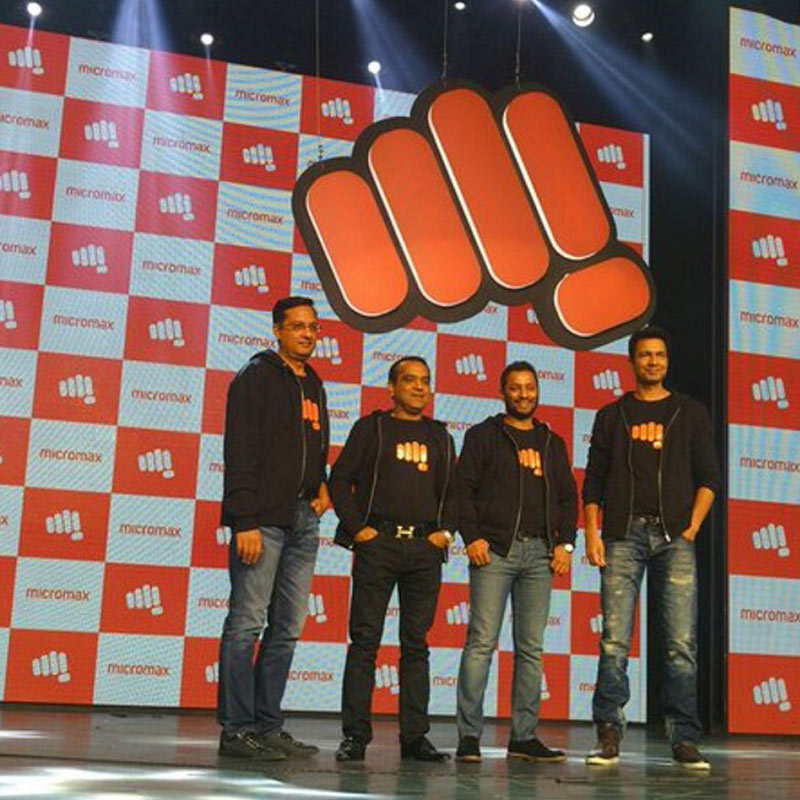
    MUMBAI: Eros International has announced a strategic partnership between its cutting edge OTT digital platform, Eros Now and Micromax Informatics Limited to bring endless entertainment to Micromax consumers.

    The growth of fast and reliable internet, and access to affordable big screen smartphones and handheld devices, has led India to the cusp of a digital revolution.

    Micromax says that it has been working towards building its services portfolio to offer convenience and exceptional digital experience to its consumers. With this partnership, the Eros Now app will be preinstalled into Micromax’s latest smartphones showcasing Eros Now’s extensive repository of Bollywood films, music, originals and regional content. Eros Now will leverage Micromax’s presence of over 150,000 retail outlets to distribute its content. For millions of Micromax users who look for great Bollywood and regional language content, this partnership simplifies the task of discovering great content anytime, anyplace, on a device of their choice.

    Commenting on the association, Eros Digital CEO Rishika Lulla Singh said, “We are extremely pleased to partner with Micromax to offer our collection of movies, music and more. With this partnership we will be expanding our ability to provide entertainment on-the-go, anywhere and anytime to Micromax’s new acquisition of 3.5 million users every month and also their existing base of more than 30 million connected users. Joining forces with one of the world’s leading smartphone manufacturers provide us with another opportunity for exponential growth and customer reach.”

    Micromax Informatics Limited co-founder Vikas Jain said, “We are extremely excited about this partnership, as it promises to make the digital content from cinema, movies and videos available to our urban and rural customers. Beyond urban cities in India, Micromax has found mobile internet to be one of the most favored connectivity options in rural cities. This tie up helps us to enhance the experience for our customers beyond hardware specifications. The rich content library of Eros Now promises to become a part of the daily digital consumption of our customers.”

    Micromax smartphone users can choose their subscription package for a duration of their choice ranging from one month to a year. Users will have access to unique content on Eros Now, with subscriptions offering a range of exciting features, such as viewing content offline, full-length movies, thematic curated playlists, watch-lists, regional language filters, video progression and subtitles to offer the best video viewing experience to users. Music-lovers can also enjoy individual music tracks and music video playlists using the app.

  • Eros Now and Micromax form strategic partnership

    Eros Now and Micromax form strategic partnership

    MUMBAI: Eros International has announced a strategic partnership between its cutting edge OTT digital platform, Eros Now and Micromax Informatics Limited to bring endless entertainment to Micromax consumers.

    The growth of fast and reliable internet, and access to affordable big screen smartphones and handheld devices, has led India to the cusp of a digital revolution.

    Micromax says that it has been working towards building its services portfolio to offer convenience and exceptional digital experience to its consumers. With this partnership, the Eros Now app will be preinstalled into Micromax’s latest smartphones showcasing Eros Now’s extensive repository of Bollywood films, music, originals and regional content. Eros Now will leverage Micromax’s presence of over 150,000 retail outlets to distribute its content. For millions of Micromax users who look for great Bollywood and regional language content, this partnership simplifies the task of discovering great content anytime, anyplace, on a device of their choice.

    Commenting on the association, Eros Digital CEO Rishika Lulla Singh said, “We are extremely pleased to partner with Micromax to offer our collection of movies, music and more. With this partnership we will be expanding our ability to provide entertainment on-the-go, anywhere and anytime to Micromax’s new acquisition of 3.5 million users every month and also their existing base of more than 30 million connected users. Joining forces with one of the world’s leading smartphone manufacturers provide us with another opportunity for exponential growth and customer reach.”

    Micromax Informatics Limited co-founder Vikas Jain said, “We are extremely excited about this partnership, as it promises to make the digital content from cinema, movies and videos available to our urban and rural customers. Beyond urban cities in India, Micromax has found mobile internet to be one of the most favored connectivity options in rural cities. This tie up helps us to enhance the experience for our customers beyond hardware specifications. The rich content library of Eros Now promises to become a part of the daily digital consumption of our customers.”

    Micromax smartphone users can choose their subscription package for a duration of their choice ranging from one month to a year. Users will have access to unique content on Eros Now, with subscriptions offering a range of exciting features, such as viewing content offline, full-length movies, thematic curated playlists, watch-lists, regional language filters, video progression and subtitles to offer the best video viewing experience to users. Music-lovers can also enjoy individual music tracks and music video playlists using the app.

  • Karishma, Sridevi serials on Sahara TV in April, June 2003

    Karishma, Sridevi serials on Sahara TV in April, June 2003

    MUMBAI: Sahara TV is firming up its plans to leverage its mega serials starring Bollywood stars during the forthcoming summer vacations. Also, the free-to-air Sahara channel will showcase the serials before the 14 July 2003 deadline when conditional access system will become a reality in the metros.

    Bollywood actress Karisma Kapoor’s TV debut Karisma The Miracle of Destiny will launch on 28 April on Sahara TV. The serial will be aired Mondays to Thursdays at prime time. According to Sahara Media and Entertainment head Sumit Roy, the serial will be of a finite duration and will not exceed 262 episodes.

    The second attraction of Sahara TV will be the Sridevi starrer Hamari Bahu Malini Iyer that will go on air by end May or first week of June.

    This serial too, will be aired Mondays to Thursdays at prime time, in conjunction with Karisma The Miracle of Destiny and will be telecast for a finite 208 episodes.

    The end of the year will see the debut of Amitabh Bachchan in the capacity of an actor in another mega serial. Roy refused to divulge details about the Bachchan starrer.

    “We will be in the top bracket of entertainment channels within a year,” promises Roy.

  • Karishma, Sridevi serials on Sahara TV in April, June 2003

    Karishma, Sridevi serials on Sahara TV in April, June 2003

    MUMBAI: Sahara TV is firming up its plans to leverage its mega serials starring Bollywood stars during the forthcoming summer vacations. Also, the free-to-air Sahara channel will showcase the serials before the 14 July 2003 deadline when conditional access system will become a reality in the metros.

    Bollywood actress Karisma Kapoor’s TV debut Karisma The Miracle of Destiny will launch on 28 April on Sahara TV. The serial will be aired Mondays to Thursdays at prime time. According to Sahara Media and Entertainment head Sumit Roy, the serial will be of a finite duration and will not exceed 262 episodes.

    The second attraction of Sahara TV will be the Sridevi starrer Hamari Bahu Malini Iyer that will go on air by end May or first week of June.

    This serial too, will be aired Mondays to Thursdays at prime time, in conjunction with Karisma The Miracle of Destiny and will be telecast for a finite 208 episodes.

    The end of the year will see the debut of Amitabh Bachchan in the capacity of an actor in another mega serial. Roy refused to divulge details about the Bachchan starrer.

    “We will be in the top bracket of entertainment channels within a year,” promises Roy.

  • China’s ‘Emmy’ wins MipJunior International Pitch of the Year

    China’s ‘Emmy’ wins MipJunior International Pitch of the Year

     CANNES: Kids content creators have a huge task in hand: to be able to woo the broadcasters who are looking for content that is unique, has great visual and concept, is innovative and has educational eminence, while avoiding cliché and having original ideas.


    Looking at all these aspects was the MipJunior International Pitch of the Year, which this year saw 130 entries. Of this, six projects made it to the finals of MipJunior International Pitch of the Year, the winner of which was Emmy produced by LeftPocket Animation Studio, China.


    Emmy is a story of a little girl who is not only brave, creative and clever, but she lives next door to a magical forest filled with the most wonderful creatures, including her best friend Gru. In every episode Emmy uses her own practical, common sense approach to life to help solve the very unusual problems that arise in the magical forest.


    This year, the International Pitch also saw a special prize being given to a very creative concept showcased by Belgium’s Contentinuum, called My Dream Job: A Customized series with Dad, Mum and Me!


    The series focuses on a kid who wakes up every morning, with different dreams of his parents being in different professions. The show has paper dolls animated via stop motion, CGI and FX.  A custom app lets kids produce their own versions of the series, putting their faces, and their parents’ faces, in place of the existing protagonists.


    The other projects that made to the finals were QB9 Entertainment’s (Argentina) Krakatoa, a 12 minute episode series, Isi by Edebe Audiovisual Licensing, Spain, Larva in New York by Tuba n Co, South Korea and Oongu Loongu: Animal Palace by OOMPH! Animation, South Africa.

  • CODA postpones agitation on Maharashtra cable TV entertainment tax

    CODA postpones agitation on Maharashtra cable TV entertainment tax

    MUMBAI: The state of Maharashtra was to see a blackout of all news channels- Hindi, English and Marathi- from 15 July by all TV cable operators as a sign of protest in case the entertainment tax levied on them was not reduced. But that has not happened.

    Reason: The Cable Operators and Distributors Association (CODA), which was demanding that it be shaved to Rs 15 per set top box or per subscriber from the Rs 45 charged currently, decided to be patient and hold on.

    Says CODA president Anil Parab: “We sought an appointment from state revenue minister Balasaheb Thorat and he could only give it to us for next week. So we decided to defer our decision on the blackout till we meet him and gauge his response towards our demand.”

    Parab also stated that the assembly is on till 3 August so they have enough time to go ahead with their black out, in case they don‘t get Thorat‘s support.

    The cable TV operator fraternity in Maharashtra say it is unnecessarily being burdened with high taxes even though digitisation has led to greater transparency and tax payouts by them. Delhi‘s entertainment tax is at Rs 20 while in other cities it is at zero to five per cent.