Tag: entertainment

  • Hero ISL creates dedicated fan zones for season 7

    Hero ISL creates dedicated fan zones for season 7

    MUMBAI: Football enthusiasts have always gone to great lengths to support their teams in the Hero Indian Super League (ISL). From Kochi to Guwahati, fans have thronged the stadiums to cheer their heroes from the sidelines and the din has grown louder every year. As another exciting season of the Hero ISL gets underway on 20 November on the Star Sports Network and Disney+ Hotstar VIP, the setting will be a lot different with all matches in the tournament being played behind closed doors.

    However, fans need not worry as Hero ISL 2020-21 has come up with an opportunity for them to get closer to the game than ever before. Introducing new technological innovations, Star Sports and FSDL bring forward a series of exciting opportunities for supporters to engage with their favourite clubs and players with an added zeal. In the latest promo released, the broadcaster has showcased a fan wall which gives fans the chance to catch the action live from the comfort of their homes and celebrate important moments with their favourite team and Heroes. To soak in the experience and be a part of the team’s biggest fixtures, fans can register on the dedicated Fan Zone on the Hero ISL website where they can stand a chance to be featured live on the stadium fan walls.

    There will be two LED screens that will feature fans from the home team and the away team, thus amplifying the rivalry virtually in a bid to enhance the viewing experience. Along with this enhanced audio for the game, an additional mix of cameras and further access to the players through pre-and-post-match shows will ensure that fans remain close to all the action even beyond the field. A few select followers will also get the opportunity to interact with experts and special guests during the pre and post-match shows.

    https://www.indiansuperleague.com/fanzone/clubs

    “Fans are an integral part of the Hero ISL which is the first major sporting league to be played in the country during these unprecedented times. With the addition of new teams and all the international partnerships, this season is expected to be more thrilling. Using technology, we will make sure that fans do not miss out on the action while also ensuring that the essence of the game is not lost. The innovative fan walls and an array of additional cameras on the field of play will bring fans closer to the game than ever before. It is our constant endeavour to keep raising the bar by introducing latest technological innovations for an enhanced viewing experience”, said a Star Sports spokesperson.

  • Walt Disney Co witnesses slow recovery in Q4

    Walt Disney Co witnesses slow recovery in Q4

    NEW DELHI: The Walt Disney Company reported total revenue of $14,707 million in Q4, witnessing a decline of 23 per cent year-on-year (y-o-y). While parks, entertainment, products, studio entertainment business continued to register a dip, direct-to-consumer & international and media revenue saw an upsurge.

    The media revenues for the quarter stood at $7213 million, up 11 per cent year on year. The d2c & international revenue stood at $4853 million for the quarter and witnessed an upsurge of 41 per cent y-o-y. 

    Diluted earnings per share (EPS) from continuing operations for the fourth quarter was a loss of $0.39 compared to income of $0.43 in the prior-year quarter. Excluding  certain items affecting comparability, diluted EPS for the quarter was a loss of $0.20 compared to  income of $1.07 in the prior-year quarter. EPS from continuing operations for the year was a loss of $1.57 compared to income of $6.26 in the prior year. Excluding certain items affecting comparability, EPS for  the year decreased to $2.02 from $5.76 in the prior year. 

    The most significant adverse impact in the current quarter and year from Covid2019 was approximately $2.4 billion and $6.9 billion, respectively, on operating income at parks, experiences and products segment due to revenue lost as a result of the closures or reduced operating capacities. 

    Media Networks revenues for the quarter increased 11 per cent to $7.2 billion, and segment operating  income increased 5 per cent to $1.9 billion. 

    Cable Networks revenues for the quarter increased 11 per cent to $4.7 billion and operating income  decreased 7 per cent to $1.2 billion. The decrease in operating income was due to lower results at ESPN,  partially offset by increases at FX Networks and the domestic Disney channels. 

    Broadcasting revenues for the quarter increased 10 per cent to $2.5 billion and operating income increased  47 per cent to $553 million. The increase in operating income was due to affiliate revenue growth and lower  network programming and production costs and decreased marketing expenses, partially offset by a timing  impact from new accounting guidance. 

    Advertising revenues were comparable to the prior-year quarter as lower average network viewership was offset by the benefit of an additional week in the current quarter, higher network rates and an increase  in political advertising at the owned television stations. 

    Parks, Experiences and Products revenues for the quarter decreased 61 per cent to $2.6 billion, and segment  operating results decreased $2.5 billion to a loss of $1.1 billion. Lower operating results for the quarter  were due to decreases at both the domestic and international parks and experiences businesses. 

    Studio Entertainment revenues for the quarter decreased 52 per cent to $1.6 billion and segment operating  income decreased 61 per cent to $419 million. The decrease in operating income was due to lower theatrical and  home entertainment results. 

    Direct-to-Consumer & international revenues for the quarter increased 41 per cent to $4.9 billion and  segment operating loss decreased from $751 million to $580 million. The decrease in operating loss was  primarily due to improved results at Hulu and ESPN+, partially offset by higher costs at Disney+, driven  by the ongoing rollout and a decrease at our international channels. 

    The improvement at Hulu was due to subscriber growth and increased advertising revenues driven by  higher impressions, partially offset by an increase in programming and production costs due to higher  subscriber-based fees for programming the live television service. 

    Higher results at ESPN+ were driven by subscriber growth and higher income from Ultimate Fighting  Championship pay-per-view events. 

    The Walt Disney Co CEO Bob Chapek said, “Even with the disruption caused by Covid2019, we’ve been able to effectively manage our  businesses while also taking bold, deliberate steps to position our company for greater long-term growth. The real bright spot has been our  direct-to-consumer business, which is key to the future of our company, and on this anniversary of the  launch of Disney+ we’re pleased to report that, as of the end of the fourth quarter, the service had more  than 73 million paid subscribers – far surpassing our expectations in just its first year.” 

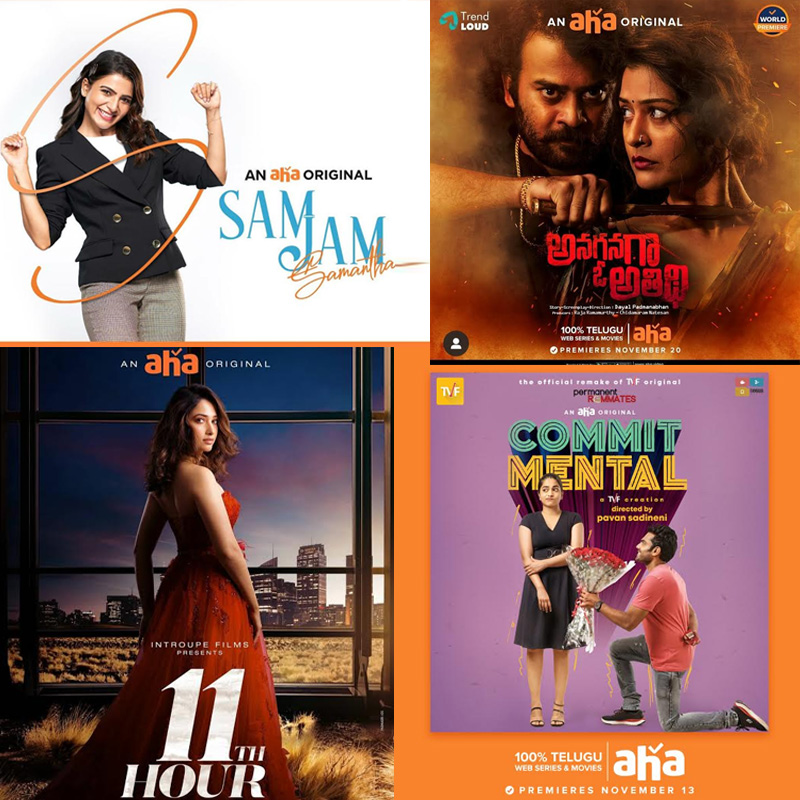
  • New Telugu OTT platform Aha bullish on its growth and expansion

    New Telugu OTT platform Aha bullish on its growth and expansion

    KOLKATA: In the sea of moody blues and ebony blacks, the orange OTT platform Aha stands out – but that alone is not enough for the fledgling brand. It is gearing up to win over audiences that are already spoiled for choice in a market saturated with streaming services. With its sights set on the Telugu regional space for now, Aha’s promoters are very bullish on its expansion plans and promise to offer local yet premium content.

    The platform entered the market in early 2020 but due to unprecedented Covid2019 crisis it had to push back some of its plans. With production resuming in September, Aha is back on track to lure one of the largest entertainment markets in India. From the beginning, it has opted for a subscription plan priced at Rs 365 per year. While the company has no plans to make the streaming service ad-based in near future, it might not overlook advertising revenue from other sources like branded content.

    It is not easy to sustain in a cash-burning business that demands huge investment but does not offer immediate profit. However, Aha management has emphasised that they will not compromise on content quality and user experience. Although the production cost may not reach the level of Hindi shows, the company claimed it is pumping money into the venture, without divulging any number.

    The market for the newly launched platform is as big as 50 million Telugu speaking internet users who are already consuming online videos, shared Aha promoter Ramu Rao Jupally. As for paying propensity, CEO Ajit Thakur said that they believe this entire market will be ready to pay in future, but 25 per cent – that’s around 12 million users – are already willing to shell out cash for premium content. Aha is owned by Arha Media & Broadcasting Private Ltd, a joint venture by Geetha Arts and My Home Group.

    The management is excited with the initial growth –  Aha has garnered five million downloads and 18 million unique visitors within a few months of the launch. Moreover, the platform has already clocked 2X subscribers compared to the target set initially.

    But in the end, content is king. Rao stated that they already have 52 shows lined up for the next one year. They plan to release five shows during the Diwali season. While production was halted during the Covid2019 crisis, the platform still offered one fresh show every week to prevent subscriber churn. Initially, they had opted for acquisition aggressively, but going forward the ratio of original and acquired will be 70:30.

    At the moment, major international and domestic players are gradually increasing investment in the regional markets which could increase the competition for the new entrant. However, Thakur appeared confident while delineating Aha’s frequency, volume of content, sharply curated content including films, best creative minds working for the platform would talk in their favour.

    “On the distribution strategy, we have been a bit conservative. We have positioned ourselves wherever the audience has touch points like LG, Sony, Roku, Firestick, Samsung. But we have not pursued aggressive partnerships with other aggregators yet. Once we do that, our organic growth will get affected. We want to test the potential of how far we can get an audience on our own. So we are available across all platforms but we have not really pursued aggregators’ strategy.”

    As for tie-ups with broadband providers, Aha has sealed the deal with ACR Fibernet only, “because we were able to do it on equal terms,” added Thakur.

    The road to profitability is a long and winding one for an OTT platform due to the high cost required for content, marketing, and product. However, Rao is optimistic Aha would be able to break even within three-four years post debut, though it’s still early days to make a definite projection.

  • BookMyShow’s new campaign marries entertainment and safety

    BookMyShow’s new campaign marries entertainment and safety

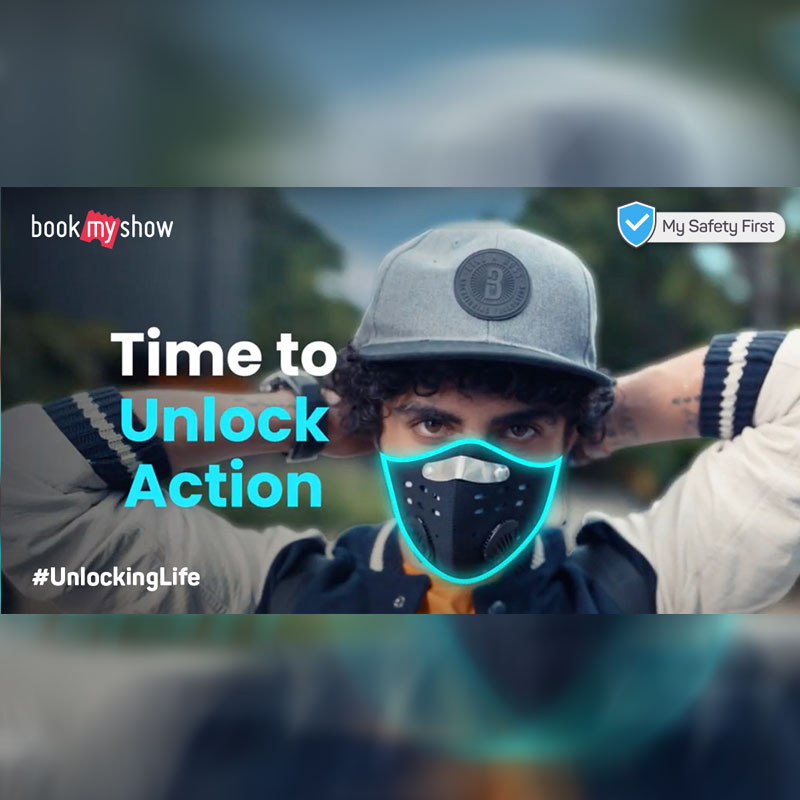
    NEW DELHI: BookMyShow has released its latest campaign film ‘Unlocking Life’ which explores the theme of people revisiting their favourite forms of out-of-home entertainment experiences in the new normal. 

    The ‘Unlocking Life’ campaign comes at a time when the entertainment sector in the country is witnessing a revival after a six month-long pause, giving millions of Indians a much needed respite from the no-show phase.

    The film highlights BookMyShow’s ‘My Safety First’ feature – the first ever safety shield tag, which helps users make an informed choice and enjoy an absolutely safe and secure entertainment experience.

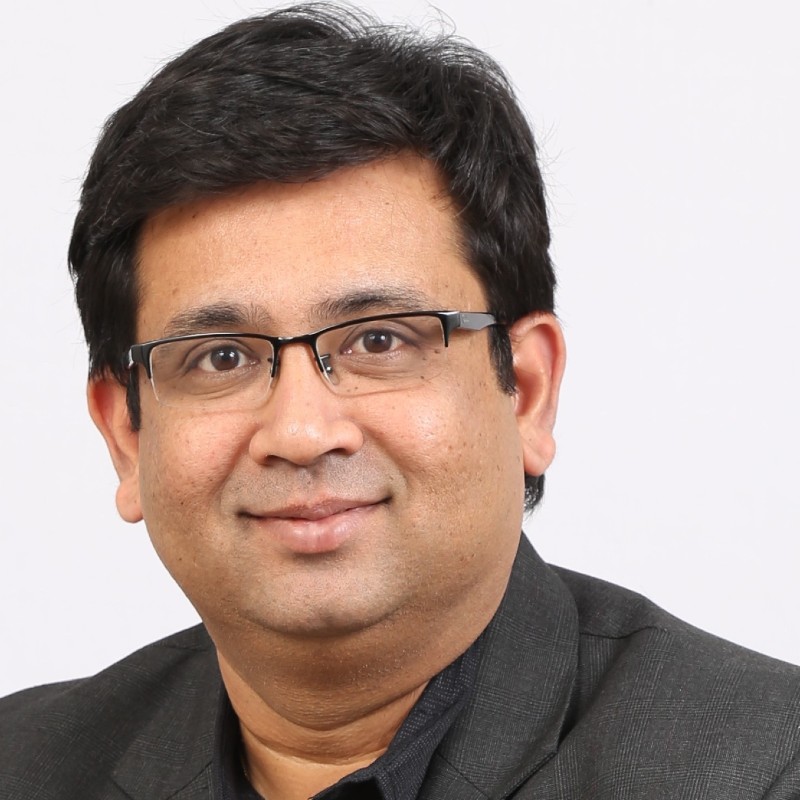
    BookMyShow COO – cinemas Ashish Saksena said, “BookMyShow is thrilled to welcome audiences to their favourite formats of out-of-home entertainment, yet again! We understand that health and safety of all stakeholders is of utmost importance, now more than ever, and will be a key driver in reviving the entertainment ecosystem in India. The ‘Unlocking Life’ campaign aims at redefining the vast array of entertainment experiences and how they will be rolled out even whilst retaining the same measure of fun and vibrancy, as audiences finally gear up to step out and make memories with their loved ones, in these extraordinary times. The ‘My Safety First’ feature on our platform further strengthens our promise of providing safe entertainment to our users, and we urge all entertainment-lovers to make an informed decision as they get ready to experience entertainment in its new avatar, like never before.”

    The ‘My Safety First’ tag will highlight various safety indicators available across all movies and events listed on the platform, such as social distancing-based seating, thermal screening, contactless security check, availability of hand sanitizers, daily temperature check for staff members, availability of packaged food & beverages, limited occupancy in restrooms, compulsory masks, sanitization before every show amongst others, enabling users to see the various safety measures employed by partners and make an informed decision before they step out to be a part of their favorite out-of-home entertainment experience.

  • IPL team sponsorship crosses ₹ 500 cr mark this year, GroupM’s ESP Properties

    IPL team sponsorship crosses ₹ 500 cr mark this year, GroupM’s ESP Properties

    NEW DELHI: ESP Properties, the entertainment, and sports division of GroupM  cited that the IPL 2020 sponsorship crossed the ₹ 500 cr mark this season. IPL finally made its comeback a little later than the usual schedule, causing a storm within the sponsors, fans, and players. Even though the pandemic has seen a direct impact on the sports sponsorship market, IPL continues to carve a niche for itself in India while also keeping its fans engaged.    

    The current position at which IPL stands is quite strong considering how the pandemic has taken a toll in India. This year ESP properties, being at the forefront, helped multiple brands in different categories close deals for IPL, some of them include; Paytm, Colgate, Myntra, Lifebuoy, Cadbury Dairy Milk, Clear Shampoo, Acko Insurance, MPL, Center Fruit and Tata Tea – Chakra Gold amongst others. IPL 2020 has showcased that it is pandemic-proof with the number of brands coming on board for sponsorship.    

    Read more news on Vinit Karnik

    GroupM ESP Properties business head  Vinit Karnik said, “Sport is a universal language that connects everyone. While Cricket in the country returned with IPL – India welcomed it with a tremendous fervour despite the games being delayed and in a ‘no-live audience’ scenario. GroupM played a pivotal role in closing central and team sponsorships deals this year which goes to show that in a pandemic like this, brands have leveraged IPL to communicate their brand stories in the best way possible. With the heartfelt connection that our country has with the IPL phenomena, the fans made sure that they loyally and virtually welcome the games making sure that COVID-19 does not impact their vibe.”    

    Despite the slowdown, backed by its growing presence IPL continues to attract strong consideration from advertisers and adds to the year-on-year growth of the sports business industry. 

  • Guest Column: TRAI needs to focus on sectoral hygiene rather than economic regulation

    Guest Column: TRAI needs to focus on sectoral hygiene rather than economic regulation

    MUMBAI: A silent crisis has been brewing in the residential segment of TV viewing sector. Even as its viewership increased during the Covid-induced lockdown, sectoral revenues took a severe hit. While Covid was termed an act of god, TV’s current state appears to be a man-made disaster. TV is an integral part of media, the fourth pillar of democracy. Therefore, it is crucial to respect and preserve it.

    TV accounts for over 40 per cent of the Indian media and entertainment ecosystem’s revenues, making it the sector’s largest contributor. As per pre-pandemic estimates, the M&E industry was slated to grow at 10 per cent CAGR to touch $34 billion by 2022. Covid’s impact has slowed down that march, particularly because advertisement revenues have shrunk, production of new entertainment programs remained suspended and the addition of new subscribers, by direct marketing, has become difficult. The alternative lies in adopting a subscription-led model.

    Broadcasters source content from content producers and manage its distribution over electronic media for viewer consumption. There are costs involved in this management such as content editing, server storage, opex for uplinking, transponder rentals and taxes. Broadcasters rely on meeting these expenses through advertisements inserted into and cheek by jowl with content.

    Besides these, distribution platform operators (DPOs) charge broadcasters a fee to carry programs and their placement in their electronic program guides (EPGs). TV players  have to pay this fee even for channels which are free for viewers. Advertisement revenue covers approximately 60 per cent of such costs. The DPOs, in turn charge subscribers for connectivity and pay content charges besides taxes.

    Read more news on Trai

    Since the nineties, business models were skewed in favour of ad-driven revenues because the amount of video content to be distributed over the  networks exceeded network capacity. Further, business practices were not transparent as broadcasters were unable to verify how many subscribers were watching their channels.

    2011 onwards, the TV digitisation process was supposed to usher in transparency and help overcome capacity constraints by relaying encoded and encrypted program streams from broadcasters to consumers via approximately 1,500 MSOs and over 60,000 cable operators. Digitisation improves picture and sound quality and allows more content to be transmitted using the same resources, thus enhancing consumer choice. Coupled with encryption, this system is called the digital addressable system (DAS), which means the facility to enable or disable program viewing selectively and remotely. Encrypted broadcasting signals can only be decoded via a set top box (STB) programmed uniquely for each consumer as per their indicated choice. Consequently, consumers can access and watch only those programs that they have chosen and pay accordingly. Empowering consumers to exercise choice was the intended first step to enable a subscription-led industry model.

    While the government claims that the entire digitisation process was over in March 2017, the truth is otherwise. MIB tracked DAS implementation using only the number of STBs reportedly shipped out of headend service providers’ warehouses. It did not consider if these STBs had been programmed to show only those channels that viewers had opted for. The STBs, therefore, functioned only as digital to analog converters that enabled viewers to watch all programs in the network’s stream. The task force to oversee DAS implementation did not seek proof to verify that ‘addressability’ had actually been implemented in the subscriber management system, which was the very essence of DAS implementation. Thus, a lot of TV subscribers do not have STBs which allow them to watch only those programs that they opt for.

    In 2017, TRAI issued a tariff order that supposedly aligns regulations with the new digital regime. However, the explanatory memorandum of the tariff order is full of contradictions, attributable to limited knowledge of ground realities.

    One possible infirmity, in TRAI’s demonstrated inability, could be that their staff consists of bureaucrats and professionals from the IT enabled services sector. Telecom generically facilitates one-to-one communication without any concern for the content it carries. The charges too cover fixed and variable levies based on usage time. With such a background, TRAI has been entrusted with regulation of broadcast, which is based on content that is intended for mass consumption.  Since 2004, they have not been able to acquire information about how broadcasters price their content.

    Read more news on broadcasters

    In the explanatory memorandum to the tariff order from March 2017, TRAI says that content pricing is a dynamic process, best understood by broadcasters. At the same time, it restricts them from deciding the price of pay programs included in bouquets. A commercial approach to determine prices requires an understanding of the expected channel viewership, and the cost of producing or acquiring content. Addressing ground realities is important to gather accurate data on channel viewership.

    One must understand that most subscribers use cable operators’ networks, which are local monopolies. Such operators get STBs issued in bulk without requisite programming and pairing them with subscriber details. These STBs enable access to all programs contained in the stream net casted from the MSO, since they are not individually programmed to cater to consumer choice. The cable operators then started charging subscribers a fixed monthly sum without any bill or receipt.

    To address this situation, multiple suggestions were made to TRAI. An important one was to incorporate broadcast expertise, which differs from telecom, into regulation. This is especially important for content handling to ensure that the deployed distribution networks meet desired addressability and content security norms. This author too has suggested that an eminent person, with broadcast video distribution experience, should conduct a demonstrative audit for all empaneled auditors. However, TRAI remains reluctant to change its telco-oriented mindset, where the concern for content has never factored in. The most glaring example is  the regulator’s latest list of auditors to audit the digitalization process. Almost all of them are charted accountants with no experience in broadcast audit. The regulations prescribe the employment of a graduate engineer in the empaneled auditors’ teams, without even mentioning his/her educational background. Finding suitable talent is also challenging, as broadcast engineering, in general, and wired line broadcasting, in particular, are yet to find a place in Indian academia. To sum up, one can’t get the TV business right without getting the number of consumers right.

    TRAI will therefore do well to pay attention to the safe and secure delivery of content, rather than economic regulation that is confined to subscription fund flow audits. As it is, the regulator’s misadventure since March 2019, has resulted in a loss of estimated 26 million subscribers, besides reported closing down of multiple video broadcast programs. It can’t and shouldn’t create a situation where more programs are forced to go off air.

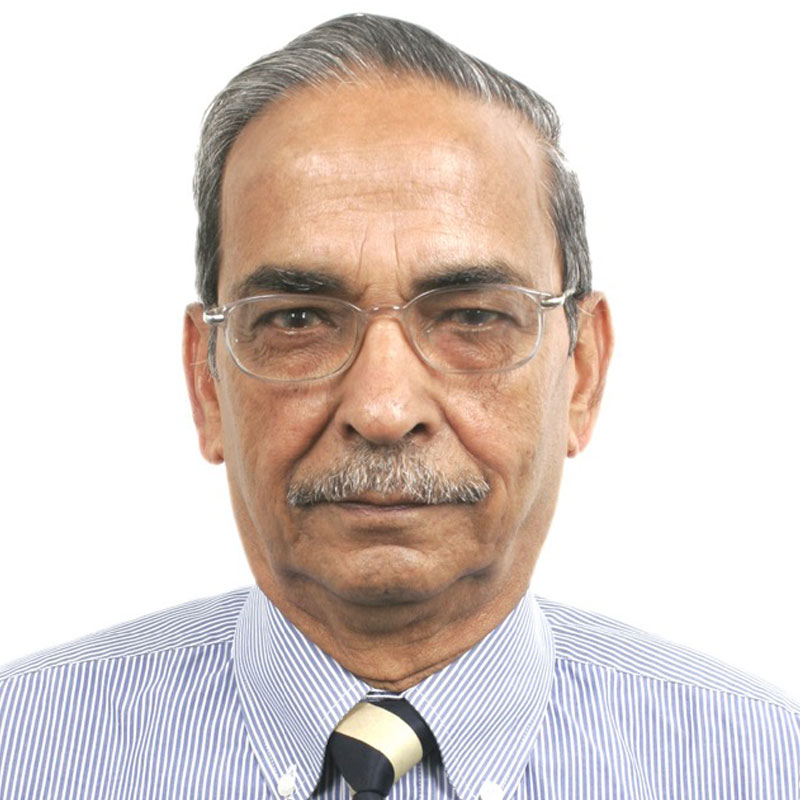
    (The author of the article is Lt. Col. V C Khare, a cable TV expert. The views are personal and Indiantelevision.com may not subscribe to them)


  • Virtual Fireside Series: Catch Eros STX Global’s Pradeep Dwivedi live on 18 Sep

    Virtual Fireside Series: Catch Eros STX Global’s Pradeep Dwivedi live on 18 Sep

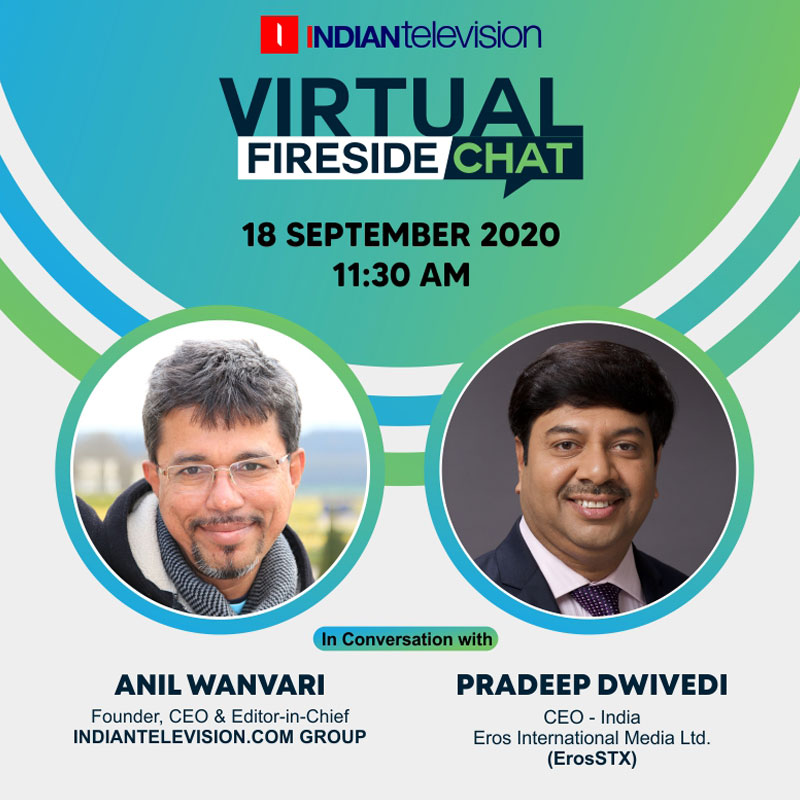
    KOLKATA: Taking ahead its virtual fireside series with eminent professionals of the media and advertising industry in India, Indiantelevision.com will be hosting Eros STX Global CEO-India Pradeep Dwivedi on Friday 18 September at 11.30 am. The session will be helmed by our founder, CEO, and editor-in-chief Anil Wanvari.

    Dwivedi is an industry veteran with nearly three decades of experience across media, marketing, publishing and advertising. He has worked at multiple brands and publishing houses in different capacities and played a key role in the growth. Dwivedi started his career with Eicher Motors, and went on to work with GE Capitals, Standard Chartered Bank, and American Express. His longest stint has been with Tata Tele Services which extended just a little over eight years. Post that he served with Dainik Bhaskar Group as chief corporate sales and marketing officer and later served in the capacity of chief executive officer with Sakal Group.   

    Watch more Virtual Fireside Chats

    Eros International recently changed its corporate name to Eros STX Global Corporation recently following the completion of rare Bollywood-Hollywood merger. The opportunities are flaring up for both sides of the business – OTT and studio segment. At this crucial juncture of the business, Pradeep Dwivedi is spearheading the Indian market of the newly merged entity.

    Read more news on Eros

    Dwivedi will be sharing his experiences of sailing through the times of pandemic, the changing landscape of the media environment, new trends and developments in the content space, merging of Bollywood and Hollywood at Eros STX Global and leadership & life lessons.

  • B4U Kadak celebrates a year full of Entertainment, Entertainment, Entertainment!

    B4U Kadak celebrates a year full of Entertainment, Entertainment, Entertainment!

    Hindi Movie Genre in the Television Space has seen an influx of South Indian movies dubbed in Hindi. With larger-than-life stories the south Indian industry has spurted to a new high in the past few years and played a major role in the content mix of all the top movie channels of the country as they have a positive power ratio over Hindi Movies and deliver better ROI.

    B4U Television Network launched a new Hindi movie channel B4U Kadak on 1st June 2019. Heralding the performance of South Indian dubbed movies on television it formed an integral part of the content mix, grabbing the eyeballs of the viewers and claimed the No. 1 spot in the Hindi movie space within weeks of the launch. The channel bestowed their audiences with 101 World television premieres, most of them being, “Original blockbusters” and “Award Winning films”.

    The vision of the channel was to ensure meaningful and mindful cinema viewing experience to the audience throughout the year and with premieres and fresh content library, B4U Kadak has been sampled by almost 500 Million Unique Viewers comprising of both Urban & Rural sections. Marking its 1st Anniversary today, B4U Kadak is showcasing entertaining Bollywood Movies featuring Shahid Kapoor, Sonu Sood, Priyanka Chopra, Ileana D’cruz etc. They also plan to go all out with the campaign ‘We Arrived, We Got The Love, We Got The Entertainment’ across multiple communication mediums.

  • Gaana launches shows and podcasts in multiple languages

    Gaana launches shows and podcasts in multiple languages

    MUMBAI: India's largest music streaming app, Gaana has announced its first batch of the platform-exclusive line-up of podcasts and shows, including ‘Ummeed’ with Zakir Khan, ‘Confessions’ with Sunny Leone and ‘Life ki Ranneeti’ with Rannvijay Singha that will go live on Gaana in Nov-Dec’19. These are a part of the brand’s overarching vision to host the country’s widest and most diverse range of original audio content by the end of FY 2021. Unveils original shows with Zakir Khan, Sunny Leone & Rannvijay Singha among others. Set to produce and launch over 50 Shows & Podcast Originals  by the end of FY21

    Commissioned by Gaana, produced by the hosts & syndicated from networks, the shows & podcasts in multiple languages span categories like Comedy, Bollywood, Devotional, News, Kids, Motivational, Astrology, Business, Lifestyle &. Culture and Self Help among others. Gaana currently hosts over 3000 diverse shows & podcasts in multiple languages including ‘Cyrus Says’, ‘The Bhagavad Gita’, ‘Stories of Akbar Birbal’, KadhaiPodcast's PonniyinSelvan and ‘Paisa Vaisa’ among others.

    Gaana CEO Prashan Agarwal said, “Shows & Podcasts have the potential to be among the most popular mainstream non-music genres in our country owing to the diversity of our audience. At Gaana, we have been investing steadily in this space, and have now taken it up a notch with our Original Shows & Podcasts  that would engage our users with interesting content that will inform, entertain and enthral them in more ways than one.” 

  • News18 Tamil Nadu announces the third edition of Magudam Awards

    News18 Tamil Nadu announces the third edition of Magudam Awards

    News18 Tamil Nadu is once again proud to present the 3rd edition of our flagship initiative the 'Magudam Awards 2019’. Magudam meaning “crown” in Tamil is an Awards platform for celebrating glory of achievement and excellence.

    Therebythe awards will be a unique platform to acknowledge and celebrate excellence in the field of Sports, Business, Arts & Literature, Entertainment, Social Service and Science & Technology. These individuals and organisations have worked relentlessly to create a difference in society and their outstanding success stories have made the state of Tamil Nadu proud.  

    The award distinguishes itself by celebrating not only exemplary individuals and their achievements but also the ideas that have inspired the state and impacted our lives.

    The awards adhere to a transparent and robust selection procedure that includes the News18 Editorial Board drawing up a list of nominees, further leading to the final selection of winners by a Jury comprising a select group of distinguished personalities.

    Juries

    Padma Shri. SudhaRagunathan, Singer

    Mr. D. Jayakumar, State Minister

    Mr. J Jeyaranjan, Economist

    Mrs. Gautami, Actress

    Mr. karupalaniappan, Orator & Director

    Mr. Suresh Mahalingam, Ex- CEO & MD, Tata AIA

    Mr. Vasanthabalan, Director

    Mr. Yugabharathi, Writter&Lyrisist

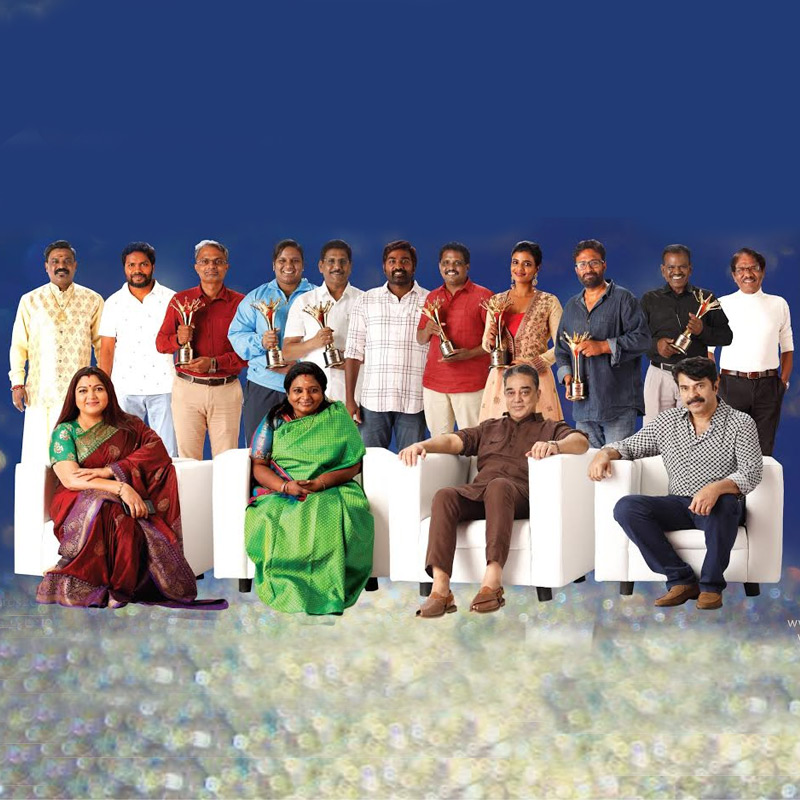
    Special Guests participated on 18th October at ITC Grand Chola

    Hon’bleDr.TamilisaiSoundararajan, Governor of Telangana

    Mr. Mamooty, Actor

    Mr. Kamal Hassan, Actor

    Mr. Nagarajan, M.D, Ramraj Cotton

    Mrs. KushbooSundar, Actor

    Mr. Vijay sethupathi, Actor

    Ms. Aiswariya Rajesh, Actor

    Mrs. Gowthami, Actress

    A K Viswanathan, IPS