Tag: entertainment tax

  • Unlicensed Pune cable TV operators get warning from entertainment department

    Unlicensed Pune cable TV operators get warning from entertainment department

    Mumbai: Pune city authorities are cracking the whip on errant cable TV operators. According to reports, the Maharashtra state entertainment department has warned cable operators to renew their annual licences with the post office within the next month. Failing this, they would be penalized and face severe action.

    The metro has about 1,000 cable TV operators serving about 500,000 subscribers. About 40 per cent of these have not renewed their licences despite being told by the authorities to do so. One of the reasons they have been delaying this, says observers, is their reluctance to pay entertainment tax.

    The additional district collector met up with the cable TV operators in Pune and its surrounding areas, following which local officers decided to get tough with them.

    Pune falls in the DAS area and cable TV operators have been mandated by government order to deliver cable TV signals to subscribers through a set top box, which would allow them to decide which channels they would like to watch. For this they would have to maintain, CAF forms as well as a list of channels that subscribers are signing up for.

  • Unlicensed Pune cable TV operators get warning from entertainment department

    Unlicensed Pune cable TV operators get warning from entertainment department

    Mumbai: Pune city authorities are cracking the whip on errant cable TV operators. According to reports, the Maharashtra state entertainment department has warned cable operators to renew their annual licences with the post office within the next month. Failing this, they would be penalized and face severe action.

    The metro has about 1,000 cable TV operators serving about 500,000 subscribers. About 40 per cent of these have not renewed their licences despite being told by the authorities to do so. One of the reasons they have been delaying this, says observers, is their reluctance to pay entertainment tax.

    The additional district collector met up with the cable TV operators in Pune and its surrounding areas, following which local officers decided to get tough with them.

    Pune falls in the DAS area and cable TV operators have been mandated by government order to deliver cable TV signals to subscribers through a set top box, which would allow them to decide which channels they would like to watch. For this they would have to maintain, CAF forms as well as a list of channels that subscribers are signing up for.

  • Assam revises entertainment tax on DTH & Cable TV

    Assam revises entertainment tax on DTH & Cable TV

    MUMBAI: Watching television is set to become very expensive in homes in Assam. Reason: the state government earlier this month revised entertainment tax that’s levied on DTH and cable TV services such as Airtel, Tata Sky, Videcond2h, Dish TV, Sun TV, Reliance Big DTH, Manthan, Sitcable among others.

    The Assam governor earlier this month issued a notification under which the rate of entertainment tax has been revised from Rs 25 per home to Rs 30 per subscriber for DTH services. That’s a 20 per cent jump in the tax rates.

    Another executive order was issued under which tax on cable TV services was revised from Rs 10 per subscriber to Rs 20 per residential subscriber. That’s a massive 100 per cent jump in tax tariffs.

    The Assam government has not touched the rate that hotels fork out per subscriber for both cable TV and DTH services. It has stayed constant at Rs 50 per subscriber.

    Will this extra burden turn viewers away from both cable & satellite TV and DTH? The jury is out, but most media watchers say that they don’t think it will have much of an impact.

  • Assam revises entertainment tax on DTH & Cable TV

    Assam revises entertainment tax on DTH & Cable TV

    MUMBAI: Watching television is set to become very expensive in homes in Assam. Reason: the state government earlier this month revised entertainment tax that’s levied on DTH and cable TV services such as Airtel, Tata Sky, Videcond2h, Dish TV, Sun TV, Reliance Big DTH, Manthan, Sitcable among others.

    The Assam governor earlier this month issued a notification under which the rate of entertainment tax has been revised from Rs 25 per home to Rs 30 per subscriber for DTH services. That’s a 20 per cent jump in the tax rates.

    Another executive order was issued under which tax on cable TV services was revised from Rs 10 per subscriber to Rs 20 per residential subscriber. That’s a massive 100 per cent jump in tax tariffs.

    The Assam government has not touched the rate that hotels fork out per subscriber for both cable TV and DTH services. It has stayed constant at Rs 50 per subscriber.

    Will this extra burden turn viewers away from both cable & satellite TV and DTH? The jury is out, but most media watchers say that they don’t think it will have much of an impact.

  • MoF assures that GST will be a game changer for M&E and subsume service tax, entertainment tax & VAT

    MoF assures that GST will be a game changer for M&E and subsume service tax, entertainment tax & VAT

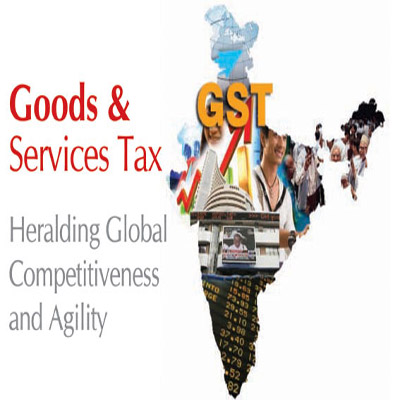
    NEW DELHI: In a major relief to the media and entertainment industry, two senior officials of the Finance Ministry assured the captains of the sector that VAT, service tax and entertainment tax would be subsumed in the proposed Goods and Services Tax.


    Terming GST as a game changer, Revenue Special Secretary Rashmi Verma said the rate was being worked out but she reiterated that it would be one and uniform for the entire country.


    Member Service Tax and GST V S Krishnan added that Infosys had been given the task of creating a special portal for GST collections and the progress was good.


    He said that three processes under way were in the public domain and the stakeholders and citizens could react. As all these were drafts, changes could still be made.


    These were the rate of taxation, the law relating to GST, and the technology. The fourth relating to returns would be put in the public domain today itself. Technology  was being taken care of by Infosys.


    He added that after GST came and the government got time to review its progress, it could be improved over time.


    They were responding to remarks made by some industry leaders on the second and final day of the two-day Big Picture summit organized by the Confederation of Indian Industry.


    Sector representatives included Farokh Balsara of Ernst and Young, Film Federation of India Vice President Ravi Kottarakara, Hinduja Ventures whole time Director Ashok Mansukhani and Zee Network’s legal expert Avnindra Mohan. A P Parigi, advisor to the Chairman of Network 18 moderated the session.


    Verma added that the problem of share of centre and states would be sorted out by the Ministry and need not worry the M and E industry which will just have to pay a single tax.


    There will be slabs, but that would be restricted to just two – higher and lower, she added.


    She said bringing the Centre and 29 states on one table had been difficult but most problems had been ironed out.


    The work of the portion of the state was being worked out but the citizens need have no doubt that he will have to pay just one tax. For the citizen, the apportioning was only of academic interest.


    She said there may be some tax levied by some local bodies in some states, but this would be between half per cent to two per cent. While ways were also being found to sort out this problem, it was clear that this would only relate to the manufacturing industry.


    She also clarified that the GST would apply both to services and goods.


    The M and E industry would benefit as the multiplicity of taxation would vanish.


    The entire information will be out on a GST portal by the third week of November, she said. The transitional problems were being worked out, she added.


    Answering a point made by one of the earlier speakers who asked whether the M &  E sector was being treated at par with sinful industries, she said this was not so. The only sinful industries for the Government were cigarettes and alcohol.


    Parigi suggested creation of a separate secretariat with representatives of industry and bodies like the CII. 

  • Delhi govt approves online entertainment tax application for ticketed events

    Delhi govt approves online entertainment tax application for ticketed events

    MUMBAI: The Delhi Govt approved the first online application for Entertainment Tax on 23 September, 2015 based on a post-event settlement, which is a major breakthrough for the events and entertainment industry.


    The approval was done online in a record time of two hours, where previously the same could take several months.


    In August this year, The Event and Entertainment Management Association (EEMA) in collaboration with the Govt. of Delhi and the Police department of Delhi took several steps to simplify licensing for events and eliminate red tape and touts. A process was put into place whereby EEMA member companies can do ticketed events in the national capital without paying entertainment tax before the event. The first achievement in this direction is the online approval for the soon-to-be-held Zubin Mehta concert in Delhi.


    The development entails a single-window approval system, which is online for all non-ticketed events. Large ticketed events are likely to make their way back to the capital as the partnership between EEMA and the Delhi government has led to an online approval system for ticketed events too with elimination of pre-payment of tax, pre-event stamping of tickets and blockage of funds for tax payments.


    EEMA president and Wizcraft International founder director Sabbas Joseph said, “We are delighted to see our enduring efforts come to life and turn into reality. This is just one door open and still a major step ahead. Alongside the path breaking steps by the Delhi government, the Maharashtra Chief Minister Mr Devendra Fadnavis too has announced that venues would have pre-approved licenses and a single–window clearance system would be implemented shortly. We hope that the efforts of the CMs  from Delhi and Maharashtra pave the way for similar moves across the country.”


    The first ticketed show under this new licensing regime would be a concert by maestro Zubin Mehta performing live in Delhi after 15 years. The approvals were given online in less than two hours on 23 September, 2015.


    The show will be produced by Showtime Events. “I could not have imagined this speed of action in my wildest dreams! It seems the Commissioner means business and is determined to change the face of entertainment in Delhi,” said Showtime Events managing director Michael Menezes. 


    Due to antiquated tax rules and strangulating licensing norms in Delhi, companies were loathe to hold events and shows in the city and instead preferred Gurgaon or Noida as locations for the event staging.


    Earlier this year, The Delhi Government was forthcoming and eager to make Delhi India’s event-friendly capital city. Following a detailed EEMA representation and persistent efforts, the Delhi government moved at a rapid pace in streamlining the licensing process in Delhi and yielding promising results for the event industry. The Delhi Govt. also appointed antiquated tax rules and strangulating licensing norms commissioner Sanjay Kumar as the nodal officer for creation of the single-window licensing process, with an eye on ease-of-doing-business.


    What’s more, the complimentary ticket scenario has also got a thumbs down. Leading the way, Kejriwal publicly declared that no minister or MLA of his party will ever ask for free tickets to any event or movie.

  • Kisan Channel wins accolades, film industry asks for entertainment tax parity

    Kisan Channel wins accolades, film industry asks for entertainment tax parity

    NEW DELHI: “This is the only channel of this kind in the whole world, which is dedicated to the farmers and their welfare. It is serving more than 65 per cent of the Indian population, which stays in villages and is in agricultural business in India.”


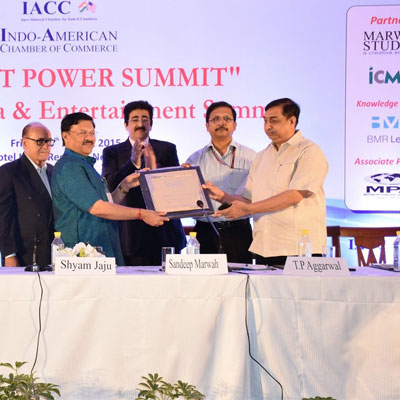
    With this citation, the International Chamber of Media and Industry presented a special Award to Doordarshan’s Kisan Channel.


    The citation was read out by ICMEI founder-president Sandeep Marwah at the inaugural function of the International Media And Entertainment Summit here. Delegates from 30 countries attended the summit.


    “We are thankful to the chamber for considering the efforts of our team to start something unusual but the most needed for the nation,” said Naresh Sirohi, who is advisor to the channel.


    “It is a great moment for the team of Kisan Channel to receive its first award. I am happy that the media and entertainment industry has understood the need of Kisan Channel, which is only of its kind in the world,” said Doordarshan ADG Ranjan Mukherjee, who heads the channel.


    The award was handed over to the officers jointly by Bharatiya Janata Party senior vice president Shyam Jaju Senior and Marwah.


    Senior advocate Lalit Bhasin, who heads the Indo American Camber of Commerce, American deputy minister counselor economic, environment, science & technology affairs Peter Kemp, Indian Motion Indian Picture Producers Association president T P Aggarwal and Film Federation of India president J.P.Chowskey were also present.


    Jaju said, “The role of media is very essential in a developing economy. But it should not cross its limits. Entertainment has a very important place in our life.”


    “Comparing Indian media and entertainment industry of the United States, Bhasin said, “We have yet to grow at the level of America, both quantity wise and quality wise. We have to be more responsible in our actions.”


    “India is the largest film producing country in the world. We make around 2000 films in a year. The turnover of the film industry is going to touch Rs 12,000 crore. The industry is surviving because the passionate people, they are deriving it to its best,” said Marwah.


    “When there is no tax on cinema and other entertainment segments downloaded from internet why should it be imposed on cinema at theatres where much more efforts are involved. Where film industry is helping so many other industries to grow simultaneously,” added Marwah.


    “Most of the films are not doing well; we very rarely get our money back. Seventy five per cent of the films are in losses. Many producers have stopped making films, as recovery is difficult. Government should understand the point of view of Producer who is the real entrepreneur,” said Chowksey.


    “Every one who is working for cinema right from actors to spot boy gets their remuneration even before the release of the film. The producer is always at the risk. We need government support in reducing entertainment tax so that large number of people can watch cinema,” added Agarwal.


    All the film organisations have joined hands to pursue with the government to reduce the tax rates and bring all India entertainment tax at par to give same rebate to producers.


    Representatives of FFI, IMPPA, Film Craft, Western India Film Producers Association, Film Makers Combine will write a joint application to the Government very soon, informed ICMEI secretary general Ashok Tyagi.


    Marwah, who is chairperson of the IACC Media and Entertainment Committee, initiated the discussion by quoting figures from the Indian media and entertainment industry. “We are one of the biggest industries and we need more synchronisation and planning in developing and promoting this industry so that we can be more helpful to the government as well as to the large audience of this country.”


    “The business may look glamorous but the hard work and investment in the entertainment business is huge. The Government has to come down to support the industry by way of reducing taxes,” said Chowskey.


    Agarwal added, “We are ready to join hands on all issues, which are for the benefit of the industry. ICMEI is a strong platform to remind the government about our concerns.”


    “The American market of media and entertainment is in the hands of private people. The demand and supply measures the quantum of business. The industry is huge and we have catered to international business for their survival,” said Kemp.


  • MSO body submits recos to GST committee; wants ET subsumed under GST

    MSO body submits recos to GST committee; wants ET subsumed under GST

    MUMBAI: The growing taxes have been of great concern to all. The recent move of the Delhi government to hike entertainment tax to Rs 40 just added to the growing woes. To address this, the newly formed multi system operator (MSO) body All India Digital Cable Federation (AIDCF) has submitted its recommendation to the select Goods and Services Tax (GST) committee.


    Through the recommendation, the association has suggested that entertainment tax (ET) be subsumed under GST.


    It can be noted that the entertainment tax, which is being submitted by MSOs, varies from state to state. So while Delhi pays Rs 40, Maharashtra pays a sum of Rs 45. What’s more, in some states like West Bengal and Kerala, even the municipality collects entertainment tax thus adding to the burden.


    “It is for this reason that we have asked the GST committee to subsume ET into GST for all the states and municipalities in India. This will also mean a uniform taxation policy where no one will have to pay separately to state governments or to municipalities,” a source close to the development tells Indiantelevision.com.


    Meanwhile, the source also suggests that a similar recommendation has been sent by the DTH Operators Association, who currently have to pay close to 40 per cent of their income in taxes. However, at the time of filing this report, DTH Operators Association president and Videocon d2h CEO Anil Khera was unavailable for comment despite repeated attempts.


    It may be recalled that in April this year, Khera had welcomed GST wholeheartedly and had said that it would only help the DTH sector to prosper. “DTH is the biggest victim of multiple taxation policy and GST will simplify that. The industry needs a uniform taxation system and the sooner it comes the better it is,” Khera had then said.

  • Cable operators urge Delhi CM Arvind Kejriwal to reduce entertainment tax

    Cable operators urge Delhi CM Arvind Kejriwal to reduce entertainment tax

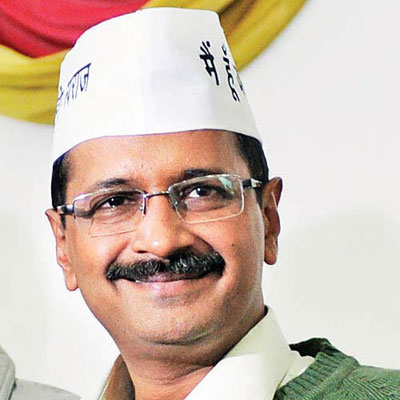
    NEW DELHI: The Cable Operators Welfare Federation (COWF) has been assured by Delhi Chief Minister Arvind Kejriwal that he would examine their grievances including the recent hike in entertainment tax by the Delhi government.


    In a meeting that lasted more than an hour, Kejriwal heard the 30-member delegation led by its president Surjeet Singh on various issues.


    COWF convenor Ramesh Zadoo later told indiantelevision.com that the meeting was “positive, fruitful and favourable for local cable operators” and the CM promised to protect the interest of cable operators.


    Kejriwal promised a study of entertainment tax within seven days and said if the demand of the LCOs of reducing the tax to Rs 20 is possible, the government will consider a roll back of the recent hike.


    COWF suggested to the CM that he could offset the loss on account of entertainment tax by increasing the tax on DTH to Rs 50 as that is aimed at the upper class. They also complained about supply of inferior Set Top Boxes by multi-system operators. They also referred to VAT & tax evasion by MSO and broadcasters. The COWF also apprised Kejriwal about the harassment and switching off STB/ disconnecting line without notice by MSOs, thus inconveniencing the public.

  • Naqvi urges Maharashtra govt to review entertainment tax policy

    Naqvi urges Maharashtra govt to review entertainment tax policy

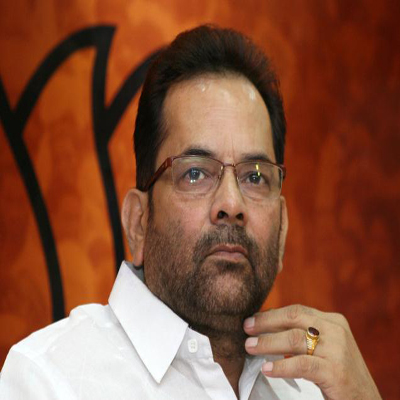
    NEW DELHI: Minister of State for Parliamentary Affairs and Minority Affairs Mukhtar Abbas Naqvi has appealed to the Maharashtra Government to review its entertainment tax structure, noting that a 40 per cent entertainment tax is levied in the state.


    A former Minister of State for Information and Broadcasting, Naqvi also stressed on the need to encourage documentary culture in India as short films and documentaries have proved to be a medium to enhance knowledge of people on different social economic and culture issues.


    He was speaking at an event in Mumbai to mark the 100 short film concept, written by him on “personalities of India” and the screening of film My Life in Mumbai over the weekend.


    He said there are significant short and documentary filmmakers and they need to be encouraged. Naqvi expressed that through short and documentary films social values, tradition and culture can be effectively showcased.


    Documentaries on issues like social, economic, political environment, human rights, education, health, gender equality, women empowerment and poverty can create an awakening in society at large.


    He added that infotainment channels in the country should have dedicated slots for showcasing short films and documentaries.