Tag: entertainment tax

  • GST relief for media industry in the offing?

    GST relief for media industry in the offing?

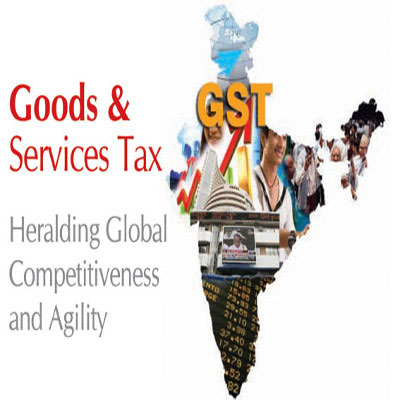
    NEW DELHI: There may be some relief for the media industry for certain segments in the offing relating to goods and services tax (GST) with the government open to reviewing certain norms.

    According to government sources, petitions from the media and entertainment industry has moved the government to review norms relating to sponsorship services by corporates and other bodies where reverse charge mechanism was not allowed.

    Reverse charge mechanism (RCM), which is one of the contentious issues raised late last year by some of the TV channels, has now been suspended until 30 June 2018 according to the sources.  The government is also looking at instituting a group of ministers (GoM) to look into RCM and its relevance in GST.

    GST, which was welcomed by most sections of the Indian business, has, however, resulted in increased paperwork and spends on manpower for most media companies.

    Earlier, it had been envisaged that GST — dubbed as one nation, one tax by the PM Modi government — would reduce the taxation burden on corporate houses and reduce multiplicity of taxes. It had also been envisaged that taxation on entertainment, cable and DTH services would come down under the GST regime as the entertainment tax levied by states would be subsumed in the GST.

    However, after GST was rolled out from April 2018, most companies,  including those in the media and entertainment sector, realised that GST compliance came with a price and, subsequently, a few states like Punjab have gone on to levy entertainment tax, which, in a way, has neutralised many of the benefits of GST.

    Also Read :

    GST: TV prod biz bemoans lack of clarity and increased paperwork

    Under GST, taxes on cable, DTH & entertainment services to come down

    GST on set-top boxes & optic fibre down to 18%

  • Punjab govt to levy entertainment tax on cable, DTH

    Punjab govt to levy entertainment tax on cable, DTH

    MUMBAI: The Punjab government is cracking down on errant cable ops by getting them to be accountable. It has added entertainment tax to cable and DTH connections. All local gram panchayats and state bodies will collect Rs 5 per month on a DTH connection and Rs 2 a month on cable TV from operators.

    The cabinet has approved the move. Once the governor gives the nod, the charges will begin from the date of notification.

    The state government aims to make Rs 9.6 crore via the DTH tax from 16 lakh connections and Rs 36.96 crore through 44 lah cable connections.

    Interestingly, no entertainment tax will be levied on other sources of entertainment such as cinemas, multiplexes, and amusement parks.

    The government is cracking down on cable mafias by getting them to clearly account their subscriber base. In the limelight is Fastway Transmission which is the mega player in the state and had the support of the previous Punjab government.

    When GST was introduced on 1 July, the power to collect entertainment tax was withdrawn from the state governments. This has now been given to the panchayats and municipalities by amending the seventh schedule of the constitution. Instead of requiring the centre to approve, The Punjab Entertainment and Amusements Taxes (Levy and collection by local bodies) Act 2017 was amended to get approval at the state level itself.

    Also read: 

    Supreme Court stays order on entertainment tax by LCOs

    M&E items get GST relief from 15 November 2017

    Entertainment tax: MSOs & LCOs must collect & pay, HC halts Delhi ‘action’

  • Punjab govt proposes law on outdoor advertising, decision to tax cable, DTH subs pending

    NEW DELHI: Not content with exploring additional local taxes on cable and DTH connections in the state of Punjab, minister Navjot Singh Sidhu now wants to bring in a policy to increase the state government’s revenue from outdoor advertising.

    Sidhu, a cricketer-turned-TV personality-turned politician who’s a minister in the Congress Party-run local government in Punjab, wants to bring a new and “potent” policy to increase the state government’s annual revenue from outdoor advertising to at least Rs 3,000 million, according to a report filed by PTI, which added that the local bodies minister blamed the previous SAD- BJP government for causing “revenue leakage” by framing a “toothless” law in this regard.

    Punjab is earning a meager amount of Rs 250 million annually from outdoor advertising and hoardings in 164 cities of the state as compared to Rs 2,000 million being earned by neighboring Haryana from its municipal areas, Sidhu told PTI.

    The flamboyant Sidhu, who also spends time on the sets of a comedy show when he’s not proposing to bring in new legislations in Punjab, told PTI that the state had suffered a loss of Rs 2,00,00 million from the cable business.

    Sidhu has proposed to levy a token amount of entertainment tax to keep a check on the “cable mafia”, which, he alleged, had “proliferated under the previous (political) dispensation”.

    He also hit out at the previous government for allegedly “looting” the state by facilitating individuals in the outdoor advertising and the cable businesses, and framing laws that benefitted “vested interests”.

    “After an inquiry, following a complaint, I came to know that the government cannot levy a penalty despite the violation of the advertisement law. They (the previous government) made toothless laws which facilitated only individuals,” PTI quoted the local minister as saying who also added that the present regime’s aim was to raise an annual revenue between Rs 250 million to Rs 3000 million from advertisements in municipal areas.

    Laws are being drafted on outdoor advertising and cable businesses in consultation with experts in order to increase the state’s revenue by 10 times, Sidhu said, adding that his department has submitted a proposal to chief minister Amrinder Singh in which a token tax of Rs 2 to Rs 3 (per cable and DTH connection) could be levied (as entertainment tax) to check malpractices in the cable TV distribution business.

    However, sources in the Punjab government told indiantelevision.com that the chief minister has not taken any decision on the proposed entertainment tax on cable and DTH connections as the levying of an additional tax over and above the recently rolled out federal government-mandated GST (goods and services tax) may complicate the tax structure. India’s finance minister Arun Jaitley, though, has clarified earlier that states can levy entertainment tax if they so wish.

    ALSO READ:

    Probe Punjab ‘cable mafia,’ demands minister, Fastway refutes charges

    Punjab govt. studying Arasu & other regulatory models on distribution 

    Retransmission law contravened: Sidhu, Fastway refutes ‘monopoly’ charge

  • FICCI-KPMG report: Rural India fuels digital consumption; FTA channels gain prominence

    MUMBAI: The ‘Bharat’ story strengthened with expansion of rural measurement in TV and 4G data price wars deepened digital consumption, which were spurred further by mobile Internet and smartphone penetration. While print and films segments were supported by growing demand from the regional markets, demonization affected advertising revenues even as consolidation in the Indian media and entertainment (M&E) industry gained momentum.

    These were amongst some of the key highlights of year 2016 as enumerated in the FICCI-KPMG Media & Entertainment Industry Report 2017 unveiled yesterday at FICCI Frames 2017.

    Amongst the other highlights were roll out of 4G services, government and private initiatives around public Wi-Fi, greater emphasis on broadband rollout by MSOs and wide ranging impact of government policies and initiatives that had inflicted some short-to-medium term damage (demonization and confusion over GST implementation) on the industry as growth in annual advertising spends got slashed by about 1.5-2.5 per cent. However the report said that the industry is expected to be a net beneficiary of GST, primarily due to availability of input credits across the board and subsuming of entertainment tax within the GST.

    According to the report, the Indian media and entertainment industry in 2016 was able to sustain a healthy growth on the back of strong economic fundamentals and steady growth in domestic consumption, coupled with growing contribution of rural markets across key segments.  These factors aided the industry to grow at 9.1 per cent on the back of advertising growth of 11.2 per cent, despite demonetization shaving off 150 to 250 basis points in terms of growth across all sub-segments at the end of the year.

    The big story in 2016 has been the evolution of FTA channels after expansion by BARC India of rural measurement in the television segment, coupled with the impact of the 4G rollout and the resulting price wars. Both these factors have resulted in media consumption penetrating deeper into India, resulting in a realignment of strategy by media companies and advertisers alike.

    Compared to 2016, the industry is projected to grow at a faster pace of 14 per cent over the period of 2017-21 with advertising revenues expected to increase at a CAGR of 15.3 per cent. The year 2017 is likely to witness a marginally slower rate of 13.1 per cent as the economy recovers from the lingering effects of demonetization and initial uncertainties arising from GST implementation.

    Commenting on the industry’s performance and way forward, FICCI M&E Committee chairman and chairman & CEO of Star India Uday Shankar said, “The industry has gulped down the bitter pill of demonetization trusting its long-term benefits and yet is set to bounce back to a steady growth, thanks to strong fundamentals.”

    He added that building solid infrastructure and continued government support will help the industry reach the “tremendous potential” it holds for employment and creating socio-economic value for the country, while a commitment towards a “quick transition to digitization” will ensure growth for all stakeholders.

    Girish Menon, director, media and entertainment, KPMG India, stated that 2016 was a “mixed bag” for the industry with digital media making its way to the centre stage rapidly from being just an additional medium. While it is compelling existing players to rethink their business models, he added, “The long-term factors driving the future growth are expected to remain positive with growing rural demand, increasing digital access and consumption and the expected culmination of the digitisation process of television distribution over the next two to three years.”

    Some of the key highlights of the FICCI-KPMG report are as follows:

    Television

    The TV industry clocked a slower growth in 2016 at 8.5 per cent, attributed to tepid growth of 7 per cent in subscription revenues and a lower than estimated 11 per cent growth in advertising revenues.

    A key theme in 2016 was the emergence of FTA channels as a key focus area following the expansion in rural measurement by BARC India and the resultant increased interest by both broadcasters and advertisers. Additionally, strong performance of sports properties and increased spending for the launch of 4G by telecom operators helped alleviate some of the pressure. The industry is expected to grow at a CAGR of 14.7 per cent over the next five years with advertising and subscription revenues projected to grow at 14.4 per cent and 14.8 per cent, respectively.

    The projections remain robust due to strong economic fundamentals, rising domestic consumption and growing contribution of rural markets, coupled with the delayed but eventual completion of digitization rollout.

    Digital advertising

    Continuing to ride on a high growth trajectory with a 28 per cent growth in 2016, digital advertising has captured 15 per cent share in the overall advertising revenues, with a minor hiccup due to demonetization. 4G rollouts and the resultant data price wars are providing further impetus to the growth as digital consumption and habits are becoming more mainstream. It is projected to grow at a CAGR of 31 per cent to reach INR 294.5 billion by 2021, contributing 27.3 per cent to the total advertising revenues. Advancement in infrastructure, evolving audience measurement technology, leading to better content and lowering data costs, will drive user habits towards greater digital consumption, driving tremendous growth for the industry.

    Animation and Visual Effects (VFX)

    The industry grew at 16.4 per cent, driven majorly by a 31 per cent growth in VFX due to increase in outsourcing work, growing use of VFX in domestic film productions and increase in demand for domestic animated content on television. The industry is estimated to grow at a CAGR of 17.2 per cent over 2017–21.

    Out of Home (OOH)

    The industry registered a slowdown in growth rate at 7 per cent majorly due to adverse impact of demonetization. OOH is projected to grow at a CAGR of 11.8 per cent primarily driven by development of regional airports, privatisation of railway stations, growth in smart cities, setting up of business and industrial centers and growing focus on digital OOH.

    Radio

    Radio recorded a 14.6 per cent growth led by volume enhancements in smaller cities, partial roll out of batch 1 stations and a marginal increase in effective advertising rates. However, weak uptake in batch 2 auctions of FM radio Phase 3 and delays in the rollout of majority of batch 1 stations, coupled with adverse impact of demonetization, dampened the overall sentiment. Nevertheless, it is expected to be the fastest growing amongst the traditional mediums at a CAGR of 16.1 per cent, arising from operationalisation of new stations in both existing and new cities, introduction of new genres and radio transitioning into a reach medium.

    Print

    The revenue growth rates of print continued to witness a slowdown at 7 per cent in 2016, as English newspapers remained under pressure. Regional language papers demonstrated strong growth, but were adversely affected by demonetization given their high dependence on local advertisers. Print is expected to grow at 7.3 per cent, largely driven by continued growth in readership in Indian languages markets and advertisers’ confidence in the medium, especially in the tier II and tier-III cities. Rise in digital content consumption poses a long-term risk to the industry.

    Films

    Films grew at a crawling pace of 3 per cent in 2016. The segment was impacted by decline in core revenue streams of domestic theatricals and satellite rights, augmented by poor box-office performance of Bollywood and Tamil films. Expansion of overseas markets, increase of depth in regional content and rise in acquisitions of digital content by over-the-top platforms are expected to be the future growth drivers that would help the segment bounce back at a forecasted CAGR of 7.7 per cent. However, factors such as dwindling screen count and inconsistent content quality could prove to be limiting factors.

    ALSO READ:

    FICCI-KPMG report projects TV sector to reach Rs 1166 bn by 2021

  • Budget 2017 Wish-list: MSOs demand industry status, rationalisation of entertainment & services taxes

    Budget 2017 Wish-list: MSOs demand industry status, rationalisation of entertainment & services taxes

    NEW DELHI: Annually various sectors of the Indian industry draw wish-list and hope that the government will grant them some relief during the presentation of the annual Budget of the country. MSOs are no exception and the All India Digital Cable Federation (AIDCF) has not only demanded an industry status, which will give it related financial incentives, but also rationalisation of various other taxes, including service and entertainment taxes.

    “Grant us infrastructure status for the (distribution) industry and remove the 8 per cent AGR applicable for MSOs offering broadband via cable,” said AIDCF Secretary-general Saharsh Damani when asked by indiantelevision.com about what the organisation would like Finance Minister Arun Jaitley to announce during his Budget presentation on February 1, 2017.

    AIDCF has also exhorted the government to grant them parity with manufacturing sector vis-a-vis u/s 2A as a disparity between the service and the manufacturing sectors is “adversely affecting” the growth and consolidation of service sector of which the MSOs are part of.

    “The tax benefits under Section 72A of the Income-tax Act, 1961 in respect of amalgamation or demerger (carry forward and set off of accumulated loss and unabsorbed depreciation allowances) are currently limited to industrial undertakings or a ship, hotel, aircraft or banking. The definition of industrial undertaking should be widened to include service industry, broadcasters and content production companies,” Damani said.

    The AIDCF, which is said to be a new and digital avatar of MSO Alliance, would also like removal of dual applicability of service and entertainment taxes on the cable TV.

    According to the apex body of MSOs, till the time GST (Goods and Services Tax) comes in place, entertainment tax paid to a state government may also be made creditable against the service tax liability of the cable TV sector. What does it mean? When a cable TV network, for example, pays an entertainment tax of Rs 100, then it should be able to adjust the same against the service tax payable and get a credit there on, AIDCF said.

    “This will be a short term measure, but will give higher declaration of entertainment tax and will bring in sufficient numbers to ensure that (overall revenue) collection of the government on service tax does not drop,” AIDCF’s Damani explained.

    Originally GST was supposed to have rolled out from April 1, 2017, but because of political wrangling and some states raising doubts on their share of the tax collected under a GST regime, Finance Minister Jaitley, according to media reports, has opined the new tax regime could be rolled out some time middle of 2017.

    Apart from that, AIDCF has also urged the government to rationalise indirect taxes like import duties on network equipment. Further, the organisation has suggested allowing use of USO (Universal Service Obligation) Funds for broadband infrastructure expansion would greatly benefit the industry.

    Also Read:

    Broadcasters bat for parity with print medium under GST

    India, US should resolve IPR issues at earliest: IACC

  • Budget 2017 Wish-list: MSOs demand industry status, rationalisation of entertainment & services taxes

    Budget 2017 Wish-list: MSOs demand industry status, rationalisation of entertainment & services taxes

    NEW DELHI: Annually various sectors of the Indian industry draw wish-list and hope that the government will grant them some relief during the presentation of the annual Budget of the country. MSOs are no exception and the All India Digital Cable Federation (AIDCF) has not only demanded an industry status, which will give it related financial incentives, but also rationalisation of various other taxes, including service and entertainment taxes.

    “Grant us infrastructure status for the (distribution) industry and remove the 8 per cent AGR applicable for MSOs offering broadband via cable,” said AIDCF Secretary-general Saharsh Damani when asked by indiantelevision.com about what the organisation would like Finance Minister Arun Jaitley to announce during his Budget presentation on February 1, 2017.

    AIDCF has also exhorted the government to grant them parity with manufacturing sector vis-a-vis u/s 2A as a disparity between the service and the manufacturing sectors is “adversely affecting” the growth and consolidation of service sector of which the MSOs are part of.

    “The tax benefits under Section 72A of the Income-tax Act, 1961 in respect of amalgamation or demerger (carry forward and set off of accumulated loss and unabsorbed depreciation allowances) are currently limited to industrial undertakings or a ship, hotel, aircraft or banking. The definition of industrial undertaking should be widened to include service industry, broadcasters and content production companies,” Damani said.

    The AIDCF, which is said to be a new and digital avatar of MSO Alliance, would also like removal of dual applicability of service and entertainment taxes on the cable TV.

    According to the apex body of MSOs, till the time GST (Goods and Services Tax) comes in place, entertainment tax paid to a state government may also be made creditable against the service tax liability of the cable TV sector. What does it mean? When a cable TV network, for example, pays an entertainment tax of Rs 100, then it should be able to adjust the same against the service tax payable and get a credit there on, AIDCF said.

    “This will be a short term measure, but will give higher declaration of entertainment tax and will bring in sufficient numbers to ensure that (overall revenue) collection of the government on service tax does not drop,” AIDCF’s Damani explained.

    Originally GST was supposed to have rolled out from April 1, 2017, but because of political wrangling and some states raising doubts on their share of the tax collected under a GST regime, Finance Minister Jaitley, according to media reports, has opined the new tax regime could be rolled out some time middle of 2017.

    Apart from that, AIDCF has also urged the government to rationalise indirect taxes like import duties on network equipment. Further, the organisation has suggested allowing use of USO (Universal Service Obligation) Funds for broadband infrastructure expansion would greatly benefit the industry.

    Also Read:

    Broadcasters bat for parity with print medium under GST

    India, US should resolve IPR issues at earliest: IACC

  • Rs 350 cr in 17-day indomitable filmy ‘Dangal’

    Rs 350 cr in 17-day indomitable filmy ‘Dangal’

    MUMBAI: There is not much in the offing except, December 23 carry forward, Dangal. There was no release on 30th since it is a norm not to fall in the shadow of a major release like Dangal as well as to avoid the year end Friday where the New Year eve celebrations affect box office collections negatively.

    The film enjoys the benefit of exemption from paying Entertainment Tax in states of Delhi, Uttar Pradesh, Uttarakhand, Haryana and Chhattisgarh,

    The first Friday also went blank as the one scheduled release, Coffee With D, could not hit the screens for whatever reasons. As it were, the first Friday is considered to be unfruitful for the box office since films released on this day usually go unnoticed.

    *In such an event, Dangal kept making the most of its overwhelming popularity and positive word of mouth. The film went on shattering record after records.

    -Dangal registered the highest first Sunday by collecting Rs 42.35 crore and crossed Rs 100 crore mark in three days to finish its opening weekend with an impressive Rs 106.95 crore.

    -The film’s first week figures stopped just short of Rs 200 crore mark at Rs 197.55 crore.

    -Again, the film had a terrific second Sunday (day 10) of Rs 31.27 crore to mark second weekend of Rs 72.93 crore to take its 10 day total to Rs 271.24 crore.

    -The collections held on well as the film finished its second week with 115.96 crore and taking its two week total past 300 milestone crore at Rs 313.51 crore.

    – With a healthy third weekend of Rs 31.89 crore, the film’s collections stand at Rs 345.4 crore in 17 days.

    *Befikre has collected about Rs 10 lakh in fourth week to take its four week tally to Rs 59.6 crore.

    *Kahaani 2 has added Rs 10 lakh in its fifth week taking its five week tally to Rs 30.8 crore.

  • Rs 350 cr in 17-day indomitable filmy ‘Dangal’

    Rs 350 cr in 17-day indomitable filmy ‘Dangal’

    MUMBAI: There is not much in the offing except, December 23 carry forward, Dangal. There was no release on 30th since it is a norm not to fall in the shadow of a major release like Dangal as well as to avoid the year end Friday where the New Year eve celebrations affect box office collections negatively.

    The film enjoys the benefit of exemption from paying Entertainment Tax in states of Delhi, Uttar Pradesh, Uttarakhand, Haryana and Chhattisgarh,

    The first Friday also went blank as the one scheduled release, Coffee With D, could not hit the screens for whatever reasons. As it were, the first Friday is considered to be unfruitful for the box office since films released on this day usually go unnoticed.

    *In such an event, Dangal kept making the most of its overwhelming popularity and positive word of mouth. The film went on shattering record after records.

    -Dangal registered the highest first Sunday by collecting Rs 42.35 crore and crossed Rs 100 crore mark in three days to finish its opening weekend with an impressive Rs 106.95 crore.

    -The film’s first week figures stopped just short of Rs 200 crore mark at Rs 197.55 crore.

    -Again, the film had a terrific second Sunday (day 10) of Rs 31.27 crore to mark second weekend of Rs 72.93 crore to take its 10 day total to Rs 271.24 crore.

    -The collections held on well as the film finished its second week with 115.96 crore and taking its two week total past 300 milestone crore at Rs 313.51 crore.

    – With a healthy third weekend of Rs 31.89 crore, the film’s collections stand at Rs 345.4 crore in 17 days.

    *Befikre has collected about Rs 10 lakh in fourth week to take its four week tally to Rs 59.6 crore.

    *Kahaani 2 has added Rs 10 lakh in its fifth week taking its five week tally to Rs 30.8 crore.

  • Bihar govt trebles cable TV entertainment tax to Rs 50

    Bihar govt trebles cable TV entertainment tax to Rs 50

    MUMBAI: Even as the government is working on subsuming entertainment and other incidental taxes into a goods and service tax (GST) which would be around 18 per cent, cable TV subscribers in Bihar are about to be delivered a blow to their wallets. A couple of days ago, the state’s cabinet stamped its approval on a proposal to hike entertainment tax from Rs 15 to Rs 50 per subscriber.

    That’s a 200-plus per cent escalation, and it places the state amongst the top entertainment tax-levying states in India. According to earlier statistics released by the Telecom Regulatory Authority of India (TRAI), Bihar accounts for about three per cent of the cable TV subscribers in India. That means the state has anywhere between two million and three million subs.

    According to data released by cable TV tracking firm Chrome Data, Bihar had achieved only 68 per cent digitization by February 2016. Additionally, TV viewers in the state had been opting for DTH, rather than cable with the DTH subscriber base, jumping 32 per cent in just one month, following the imposition of digitization. Estimates are that only the city of Patna has a 400,000 cable TV subscribers.

    Currently, TV viewers’ cable bills are anywhere between Rs 250 and Rs 350 per month for their cable TV connection. With the Rs 50 entertainment tax levy, cable TV MSOs are expecting these to rise to between Rs 300 and Rs 400.

    The Times of India has stated that the Bihar government is taking this step to plug the revenue gap that has sprung up following the imposition of prohibition. It says the government had a shortfall of Rs 5,000 crore. Additionally, the commercial taxes department has been set a tax collection target of Rs 22,000 crore for fiscal 2016-2017. And, of course, cable TV is an easy target.

    However, with disclosures from the fragmented cable TV trade being as they are, observers wonder whether the tax hike will yield the desired results.

  • Bihar govt trebles cable TV entertainment tax to Rs 50

    Bihar govt trebles cable TV entertainment tax to Rs 50

    MUMBAI: Even as the government is working on subsuming entertainment and other incidental taxes into a goods and service tax (GST) which would be around 18 per cent, cable TV subscribers in Bihar are about to be delivered a blow to their wallets. A couple of days ago, the state’s cabinet stamped its approval on a proposal to hike entertainment tax from Rs 15 to Rs 50 per subscriber.

    That’s a 200-plus per cent escalation, and it places the state amongst the top entertainment tax-levying states in India. According to earlier statistics released by the Telecom Regulatory Authority of India (TRAI), Bihar accounts for about three per cent of the cable TV subscribers in India. That means the state has anywhere between two million and three million subs.

    According to data released by cable TV tracking firm Chrome Data, Bihar had achieved only 68 per cent digitization by February 2016. Additionally, TV viewers in the state had been opting for DTH, rather than cable with the DTH subscriber base, jumping 32 per cent in just one month, following the imposition of digitization. Estimates are that only the city of Patna has a 400,000 cable TV subscribers.

    Currently, TV viewers’ cable bills are anywhere between Rs 250 and Rs 350 per month for their cable TV connection. With the Rs 50 entertainment tax levy, cable TV MSOs are expecting these to rise to between Rs 300 and Rs 400.

    The Times of India has stated that the Bihar government is taking this step to plug the revenue gap that has sprung up following the imposition of prohibition. It says the government had a shortfall of Rs 5,000 crore. Additionally, the commercial taxes department has been set a tax collection target of Rs 22,000 crore for fiscal 2016-2017. And, of course, cable TV is an easy target.

    However, with disclosures from the fragmented cable TV trade being as they are, observers wonder whether the tax hike will yield the desired results.