
Tag: EnterMedia 2001

  • Crisil develops methodology to grade TV, film productions

    Crisil develops methodology to grade TV, film productions

    MUMBAI: The mantra in the entertainment industry today is corporatisation. Another move in that direction was made with the announcement yesterday by Credit Rating and Information Services of India Ltd (Crisil) that it would grade film and television software productions to help lenders evaluate funding for upcoming entertainment projects.

    “The comprehensive and objective analytical framework would assist banks, institutions and other lenders in evaluating film and television software producers,” Crisil was quoted as saying in a statement.

    It is only recently that lending institutions, the Industrial Development Bank of India, being the most noted example, have stepped in to fund film projects based on clearly laid down norms.

    Lenders could use the framework to systematically classify risks and objectively assess various risk issues before determining their exposure levels and interest rates for the entertainment industry.

    For borrowers, who have had to source funds at exorbitant interest rates from the parallel market, the grading framework will act as a key facilitator in accessing institutional funds.

    For television software producers, which are generally constituted as corporate entities, the grade would indicate Crisil’s opinion on credit worthiness of the entity.

    Thus, the grade would reflect relative ability of the rated company to meet graded debt obligations, it said.

    In case of film producers, it would assign a grade for a specific movie indicating the rating agency’s opinion on the producer’s ability to complete a particular project and recover costs incurred.

    It is, therefore, possible that different movies of the same producer could get different grades, the statement added.

    Crisil carried out the exercise on behalf of the Confederation of Indian Industry (CII). Earlier, CII had produced the first authoritative “EnterMedia 2001” report, which determined the need for this project with Crisil.

    “While the overall analytical approach includes an assessment of business risk, financial risk and management capabilities, the methodology derives its robustness from the level of detail in incorporating entertainment industry-specific parameters and benchmarks. Crisil has held active consultations with a wide number of industry players in developing the methodology,” the statement said.
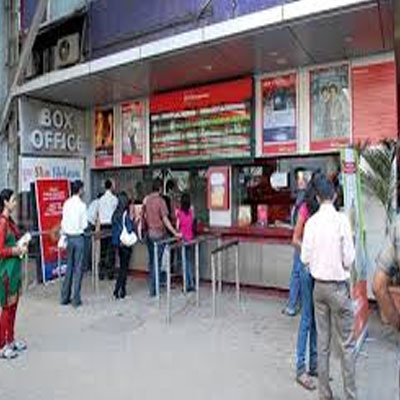
  • Maharashtra govt. waives entertainment tax on new multiplexes as sop to exhibitors

    Maharashtra govt. waives entertainment tax on new multiplexes as sop to exhibitors

    The two-day Entermedia 2001 conference was flagged off today in Mumbai by chief minister of Maharashtra Vilasrao Deshmukh who announced that the state government would not levy entertainment tax on new multiplexes that came up in Maharashtra for the first three years of their operations. Further, 75 per cent of the entertainment tax for the next two years would be waived, Deshmukh said.

    Among the issues that were covered during the first day’s session were – future opportunities for cinema in India; television broadcasting and distribution; the new age of radio; Internet and broadband and financing in the entertainment industry.

    CINEMA: The key issue that was exercising the panel was the rampant piracy witnessed in India. The matter spilled over into the next session on television broadcasting when filmstar-producer Aamir Khan said big MSOs were in fact encouraging cable piracy by refusing to clamp down on erring suboperators. The incentives announced by the government for multiplexes led to complaints from single screen theatre owners that they should also be given some benefits.

    FM RADIO: The main conclusions that came out of the discussion was that government policies and regulation mean that investments into FM radio, unlike the case abroad, are substantial. The conclusion was that only a few players with extremely deep pockets would be survive at the end of the day. A hurdle to the rollout of a range of FM services is the legislation that states that one company can only own one frequency per city.

    On the plus side, the panelists agreed that FM radio was a market opportunity waiting to be exploited. Globally, ad spend on radio has grown twice as fast as television. Further abroad radio attracted 10-12 per cent of ad spend while in India, of a total ad spend of Rs 50,000 million only 2 per cent or 1000 million was the spend on radio.

    The key advantages of radio are that it is seen as local / city-centric / dynamic.

    And the content driver for FM at least in the initial phases? Music.

    BROADBAND: The conclusion Broadband is a long way off in India for certain as some statistics show. If movies are to be shown over the Internet a download speed of a minimum of 400 kbps is required. The reality. The national average of connectivity is 1 kbps. And the television / PC ratio – 40:1.

    What is a practical possibility is that digital integration across government, corporate, media and entertainment sectors.

    FINANCING: The focus was on corporate financing in the film industry. And the conclusion. There was no way that financial institutions could finance films unless corporate structures were put in place. Consolidate or perish is the hard reality that merchant bankers offer budding filmmakers.