Tag: English

  • IBN18 Q1 standalone net loss at Rs 190 mn

    IBN18 Q1 standalone net loss at Rs 190 mn

    MUMBAI: IBN18 Broadcast has posted a standalone net loss of Rs 190 million for the three months ended 30 June, swinging away from a net profit position as it gained political advertising from the general elections in the earlier-year quarter.

    Total income dropped 9 per cent to Rs 520 million, indicating the windfall from political ads was short-lived. In the first quarter of FY’10, the company had posted a standalone net profit of Rs 170 million on a revenue of Rs 570 million.

    The standalone results constitute the financials of English and Hindi news channels CNN IBN and IBN7.

    In the quarter under review, IBN18 has reported an operating loss of Rs 70 million, up from a loss of Rs 60 million in the prior-year period.

    Expenses rose 15.68 per cent to Rs 590 million, as against Rs 510 million in the corresponding quarter of the previous fiscal.

    IBN18’s consolidated net loss stood at Rs 110 million. Total income was at Rs 1.73 billion, while expenditure stood at Rs 1.68 billion for the quarter.

  • A Question of Balance

    The public have an insatiable curiosity to know everything. Except what is worth knowing. Journalism, conscious of this, and having tradesman-like habits, supplies their demands.

    – Oscar Wilde (1854 – 1900)


    The great playwright passed away over a hundred years back, but the essence of the statement is being much debated in India. With reason.


    Over the last few months, a section of the news channels have been showcasing content that one would’ve never quite expected to see on an offering that’s supposed to air news and current affairs.

    Purists are aghast, but many in the business see nothing wrong.


    With peculiar Indian curiosity to know about the minutest detail of the lives of the others, the appetite and consumption of news is on its growling pounce. News channels – at least a section of them – satiate the curiosity which derives voyeuristic pleasure from gossip and rumours.


    Because it is this cacophony of subjects of coverage that offers something for everyone, that is driving up not just the ratings, but also revenues for Hindi news channels. And while there are those who wonder when the Hindi news engine will start to lose its steam, most are in agreement that it is not going to be any time soon.


    The statistics though are telling. The advertising revenue of the new segment in the fiscal year 2006-07 is Rs 9.8 billion. In FY 08 it has touched Rs 12 billion and expected to grow to Rs 14.5 billion by the fiscal end.


    According to industry research body Tam, in the January-June 2008 period, 54.2 per cent of the content on Hindi news channels was not news. And among English channels, the number is 38.4. This evidently seemed to help the ad volume. As per Tam Adex, ad volume growth in Hindi and English news channels which stood at 47,449 seconds in 2006 jumped to 62,173 in 2007. In the six-months period from January to June, it has already clocked 36,398 seconds.


    The share of ad volumes of news channels in the overall TV advertising pie has been growing steadily. It went up 16 per cent in 2007 from 15 per cent in 2006. Says MCCS CEO Ashok Ventaramani, “The advertising revenue of the market has been growing with a CAGR of 18 per cent since the last five years.”


    There is no doubt that advertising is the fuel that drives the satellite boom and India’s burgeoning news channels trade.


    The consumption of news too has increased. From 6.9 per cent in 2006, the Hindi news genre has surged to 7.4 per cent to end-2007 (Tam, c&s, HSM, 15+). In the first half of 2008, it is well-placed at 7 per cent as compared to 32 per cent covered by the Hindi entertainment channels (GECs).

    Rank Top Advertisers in 2007
    1 Hindustan Unilever Ltd
    2 Bharti Airtel Ltd
    3 Tata Teleservices
    4 Paras Pharmaceuticals Ltd
    5 Tata Motors Ltd
    6 Homeshop18
    7 Reliance Communications Ltd
    8 Bharat Sanchar Nigam Ltd
    9 Coca Cola India Ltd
    10 Emami Limited
    Source:Tam

    With the genre of the TV news consumption getting expanded, the advertising trend has also changed in a short span of two years. In 2006, the top advertisers rooster which was ruled by categories like car/jeep, corporate (brand image), social advertisements, suiting, hosiery and pan masala or gutkha no longer feature in it . The top categories in 2007 and 2008 have been replaced by categories like cellular services, internet and SMS services.


    In 2008, direct-to-home (DTH) service and real estate are the unique categories that feature in the top advertisers. Advertisers like Biswanath Hosiery which topped the list in 2006 have been replaced by cellular services like Reliance Communication, Vodafane Essar in 2007 and 2008. In the first half of 2008, the top five advertisers slots are filled up by cellular services.

    Rank Top Advertisers in 2008 (H1)
    1 Reliance Communications Ltd
    2 Vodafone Essar Ltd
    3 Hindustan Unilever Ltd
    4 Bharti Airtel Ltd
    5 Bharat Sanchar Nigam Ltd
    6 Reckitt Benckiser (India) Ltd
    7 British Broadcasting Corporation
    8 Life Insurance Corporation of India
    9 Tata Teleservices
    10 Idea Cellular Ltd
    Source:Tam

    The entry of a new set of viewers is attributed as the reason for newer categories of advertisers mostly targeting mostly to Sec A and Sec B. They have higher purchasing power, making them more attractive clients for advertisers. As per Tam, 51 per cent of news channels viewers are from 35+ years, 28 per cent comes from 15-24 years and the rest 22 per cent are from 25-34 years.


    What’s on the menu?


    To a large extent, revenue flows determine how content is produced, packaged and put on airwaves by news channels. This leads to a permanent tension between the journalistic and commercial imperatives of media entities and affects the very nature of news programming.


    According to Tam, from January to June in 2008, Hindi news channel have covered 45.8 per cent of news bulletin followed by reviews and reports (15.8 per cent), religious and devotional stories (9.9 per cent), cricket match (9.2), action and thriller (4.9 per cent), comedies (4.1 per cent), film based magazines (2.6 per cent).

    English news channels have covered 61.6 per cent news and bulletins, reviews and reports (8 per cent), film based magazines (7 per cent), cricket matches (6.8 per cent) and comedies (1 per cent).


    In various Hindi news channels, cricket has been featured differently in Ye Cricket Kuch Kehta Hain (Aaj Tak), Nach Le Cricket (Aaj Tak), Disco Cricket (Star News) while Khali has seen a variety of presentations like Khali Ki Khalbali, Khali Karega Khatma and Khali Sae Bali. Gods blessed the news channels in shows like Zinda Hain Rawan, Sabko Mil Gaye Ram and Kaise Dekhe Ram.


    Star News claims that in the week ending 1 March, 41 per cent of the content in its channel was news bulletin while the rest was religious, crime and cricket-centric stories. Religious stories were 8 per cent while sports reviews, comedies, business shows, crime and thrillers were 7 per cent each. Cricket-based shows grabbed 10 per cent while film shows managed 1 per cent of the entire content pie.


    Times Now editor-in-chief Arnab Goswami scoffs at the suggestion that viewers go away if channel don’t go strong on soft stories. He cites the example of the Khali episode. “Times Now did not devout a single second to Khali, yet we did not lose out on viewers and market share.”


    News channels are realising this fast enough. Recently, Zee Group chairman Subhash Chandra announced that his channel is bringing news back in its original form . With the new positioning of ‘Zara Socheye’, Zee News promises to shun stories on godmen and superstitions.


    Says Zee News CEO Barun Das, “It is high time someone realise that a news channel is meant for only news. He stresses on the fact that after the repackaging of Zee News, he has managed to make it “non-entertaining” yet “non-boring”.


    How channels stack up?


    In the Hindi news genre, from January to June 2008 six month period, long-time leader Aaj Tak still rules the roost with an average relative market share of 18.98 (Tam, c&s, HSM, 15 +) per cent, followed by Star News with 17.94 per cent. In the third spot is India TV in terms of average relative market share (14.43 per cent).


    However, a closer look on month-on-month index puts India TV on the forefront in the month of May and in June shares the top spot with Aaj Tak (19 per cent each). Aaj Tak has been almost consistent with 19 per cent market share in the six month period. Its sister concern channel Tez has averaged 5.55 per cent.


    India TV opened the year with 14 per cent to gradually move upto 19 per cent. Star News which was so far on the channel is meant for only news. He stresses on the fact that after the repackaging of Zee News, he has managed to make i t “non-entertaining” yet “non-boring”.


    The six-month average of IBN7 is 8.92 per cent while NDTV India has an average of 8.11 per cent. Samay has 4.91 per cent from January to June. Newly launched channel News24 has an average of 4.42 per cent, Live India average 3.24 per cent while public broadcaster Doordarshan managed to pull 3.14 per cent.


    The English news segment still continues with a three-way tussle. Six-month average places CNN-IBN with 29.09 per cent (Tam, c&s, All India, 15+) , NDTV 24X7 with 28.91 per cent while Times Now is at 28.58 per cent. Headlines Today stands at 13.34 per cent.


    Blame it on distribution?

    Advertising is central to privately owned news businesses across the world and in India Indian TV channels derive roughly 70 per cent of their revenues from advertising and about 30 per cent from subscriptions.


    Venkataramani says, “Depending upon the band preferences of the channel, the distribution cost of a national channel can range anything between Rs 200-800 million.”


    A large proportion of subscription revenue is consumed by cable operators and since broadcasters do not control their own distribution they can not pinpoint the exact number of viewers. Ratings therefore become vital as the currency of success.


    A senior executive at a news channel who request anonymity vehemently opposes the Tam rating system. He argues that content is mainly driven by the Tam ratings. Explaining further, he says that most of the time, the editorial is forced to do stories which categorically caters to the places or states where Tam peoplemeters are placed.


    The ratings, however do not represent all the states with a limited number of peoplementer which are absent in states like Bihar, North East and Jammu and Kashmir. This factor alone has tremendous impact on the content, programme packaging and imperative of selling airtime advertisers.


    A man hit by a bull in the streets of Delhi will get more coverage and footage than five men killed in Darjeeling or Assam. The reason is only that peoplemeters are located in Delhi and not in the hill zones.


    For a Delhiwallah, the neighbourhood report naturally gets more hits in the peoplemeter. “The content is thus decided by the geographical placement of the peoplemeter to get spikes in the ratings.


    Hence, some parts of India (where the peoplemeter is absent) and some stories are left untouched or given very little importance,” says the executive.


    Over and above this constraint, with most news channels being free-to-air and hence not making any monies from subscriptions, their dependence on advertising and hence ratings is total.


    A frequent complaint of news broadcasters is the heavy distribution cost.Broadcasters say more than half of the outlay goes in paying for reach, which cuts other costs like human resources. That is why a reporter cannot be placed in the interiors as it has its own costs. A virtual studio ultimately becomes the easy answer.


    Says IBN7 managing editor Ashutosh, “Distribution costs have gone up tremendously because of the clutter of channels. This is in fact affects quality as a lot of money from a fixed budget goes into distribution, and channels compromise on quality. If only we could be patient, a lot of difference could come in.”


    “The single biggest problem in the industry today is distribution. It is getting more and more competitive, as more and more channels come into business. The cost is enormous and growing wildly, and it is hurting every broadcaster from the biggest to the smallest, free-to-air (FTA) or pay.


    “In this battle, multi-system operator (MSO) and local cable operator (LCO) point fingers at each other, but either way it is costing the broadcaster. And money that could and should have been spent on content is getting spent on distribution instead, and it weakens the industry,” said a the broadcasting executive.


    India is the only country in the world with more than 80 24-hour TV channels broadcasting programmes on news and current affairs, barely a quarter-century after the world‘s first 24-hour TV news channel (CNN or Cable News Network) came up in 1980.


    The challenge for the news broadcasters in 2008 would be to turn the tables – lower the carriage fees and churn out revenue from subscription. Till the dependence on advertising revenue hangs on, there will be more breaking stories, exclusive stories, Amitabh Bachchan going to Shirdi, Siddhivinayak Temple et al, Salman Khan’s doings and live do or die, battle between godmen and rationalists.

    The story first appeared in Indiantelevision.com‘s The NT Magazine. The PDF of the magazine can be accessed at http://www.ntawards.tv/y2k8/nt_mag.pdf.

  • Dubbing to ride on ‘Firangi’ content

    West is best,” said Edward Said. It seems Indian broadcasters have taken a cue from Said and are ready to experiment heavily with international content in 2008.

    Sahara One Media and Entertainment Ltd, for instance, is taking the bold step of launching an entertainment channel that will fill entirely with dubbed international content. Its logic: “40 per cent of the TV viewing population continuously watch dubbed content”.

    Firangi is set to launch on 25 February, importing content from across the world -Germany, France, Spain, Argentina, Mexico and Israel.

    Firangi is not alone in this experimentation. UTV has also put a high dose of dubbed content on its youth-centric Hindi entertainment channel Bindass.

    Says Bindass GM acqusition Manasi Sapre, “Dubbed entertainment has emerged as a strong alternative to live action productions in the past few years. It allows audience to sample international content of great quality in language they understand and enjoy.”

    Sapre has research to back this up. A recent research “Understanding the Psyche of Hindi Serial Viewers,” done by Starcom India and Hansa Research, reveals that 2/5th of viewers of Star Plus and Zee TV find Hindi soaps repetitive and boring.

    What‘s more, 64 per cent of TV viewing audience prefer dubbed content as it provides a diverse palette of soaps and dramas.

    A whopping 69 per cent think that dubbed shows are very entertaining, while 70 per cent think that it is an opportunity to watch more actors. And 72 per cent watch it because it teaches a lot about the cultures of other countries.

    Though Indians still lap up localised content, some observers believe that a viewership is surfacing for pure global content dubbed in Hindi.

    Another reason for the mushrooming of international dubbed content in the TV space is its easy and low-cost model as compared to full-fledged production of shows.

    Sugar Mediaz director Darrpan Mehta, who himself is a voiceover and dubbing artist, says, “It is a wonderful low-cost model. For example, acquiring a show from various parts of the world and putting it up as a dubbed content is very cheap vis-?-vis producing the entire show. Production of a show costs lakhs, but a 30-minute dubbed content will cost around Rs 50,000.”

    Sample this: UTV‘s Bindass has four original shows – Hassley India, Shakira, Sun Yaar Chill Maar and Third Degree, while it has around six international contents which include The Benny Hill Show, Japanese Pro Wrestling Show, Gotcha, Motorrad Cops, Whacked Out Sports and Challenges of Fire.

    Even flanking Hindi GECs Zee Next and Sab TV have a portion, however small, of international dubbed content.

    Zee Next has two dubbed shows Fresh Prince of Bel-air and Different Strokes while Sab TV has a slot called International Chaska that features its internationally acquired shows dubbed in Hindi. The channel is currently showing America‘s Funniest Home Videos and will be airing Desperate Housewives, Extreme Makeover, Lost and Alias in Hindi.

    With new channel launches and more such channels in the wings, there is a huge dearth and a consequent need of good content which can work in India. With the floodgates opening for the dubbing industry, there is a rush for these post-production houses, dubbing artists and script-writers.

    Market:

    Though the dubbing industry is still at its nascent stage, it is a growing market.

    Says Sapre, “For television, the dubbing content market is pecked at Rs 150 to 200 million. But it is growing, considering the tremendous potential of this form of entertainment.”

    Over the last 5 years, the dubbed content market has grown 10 to 15 per cent per annum, and is expected to grow further. Entertainment (TV and film) has reached new territories and all this has been due to dubbing. For example, without being dubbed in Bhojpuri, Spiderman would have never reached that part of India.”

    Outside of the US, India is one of the largest markets Disney has invested in for local production. In addition, Disney Channel and Jetix have over 6,000 episodes of dubbed content (three languages included). Disney Channel India has close to 25 per cent local content on-air today.

    Disney-ABC International Television works closely with Indian broadcasters to provide dubbed content in local languages that appeal to local audiences.

    Firangi has inked deals with major content providers like Mexico-based Tellewise, Germany-based Seven One and France-based Marathon. Other providers include Dou Media and Telemundo, which is a US company that will offer content in Spanish. In addition, the channel has tied up with Brazil-based Globosat for Pages of Life and America.

    For the dubbing and the post-production work, the channel has roped in Mumbai-based Clastem Productions.

    UTV‘s dubbing department has long-term exclusive associations with channels like Hungama, National Geographic Channel, History Channel, Bindass, Bindass Movies, Nick and Disney. It does more than 1,000 hours of dubbing every year.

    Content

    A general perception percolating through the popular psyche is that dubbed content is nothing but “Angrezi Hindi” or “Anglicized Hindi.” Viewers identify dubbed content only with the tele-brands that sell peculiar products in a peculiar language.

    Says Mehta, “We are on the way to becoming a mega industry. It is a dichotomy actually; it is a booming period for volumes, but there is no focus yet on quality. If I see from an entrepreneur‘s point of view, it is a big business opportunity for a huge market coming up.”

    Agrees Sapre: “Dubbed content is no longer looked down upon. It is important not to just translate but to localise fully, using the nuances of the local language and get the soul of the content correct. Not only viewers but also international licencors are extremely happy with the treatment we have accorded to their classic shows and blockbusters on Bindass.”

    Adds Mehta: “Earlier, there used to be a verbatim translation, which really took its toll on the quality of the content. But now it is transcreated so as to do justice to the ethos of the language, culture and sensibility.”

    Cost-cutting from TV production houses is a big obstacle. Says Mehta, “Since the production houses which do dubbing always go for cost cutting, they do not place high value on a premium artist. As a whole, they compromise on the voice quality.

    A lead dubbing artist in a full-length film can earn anywhere between Rs 30-35,000 to Rs 3,00,000, depending on the amount of work he gets to do. For animated series on kids‘ channels, a character gets around Rs 3,000 to Rs 4,000 per episode.

    “Even for a theatrical release, the dubbing production houses use a premium voice but for the home video and satellite screening, a low-cost dubbing artist is used to cut costs.
    All the films are re-dubbed for TV release and the home video release.”


    Does dubbed content work only for thrill and action genre shows?

    Says Clapstem Productions promoter Girish Malik, who is also a creative consultant of Firangi: “Not really. It used to be. Actually nobody has tried drama. Shows of countries which have the same sensibility like ours have not been dubbed in India. Firangi will bring diverse stories from different countries like Israel, Latin America, Germany and Argentina to India.”

    He believes Firangi‘s model will succeed. “It is Indian mentality to be curious to know what is happening outside one‘s house. This very interest will drive viewers to see Firangi‘s dubbed content. On the subconscious level, it is a voyeuristic pleasure that many Indians have.”

    But what about the “sex and nudity” scenes immensely found in international content?

    Defends Firangi business head Rajeev Chakrabarti: “We are completely aware of the sensibility and ethos of India. We at Firangi do not just translate and lip-sync for the characters. With the exception of shooting, we do the entire post-production work, which involves scrutinising sex and nudity.”


    Licencing

    Dubbing artists in India believe that though dubbed content is cheap in India, the scene will change once broadcasters give them licencing rights.

    “If an artist lends his voice for any show in India, the broadcaster can use the voice for infinite number of times. But it is not so in countries abroad. Even India Copy Right Act 1952 guarantees copy right to any individual voice artist. Voice artists do not get any royalty in India unlike other countries,” says Mehta.

    It is only in the advertising industry that voice artists get royalty each time the voice is used. Dubbing artists are paid a flat fee and get no access to royalty.

  • Tata Indicom launch low cost Motofone F3c having Qualcomm single chip

    Tata Indicom launch low cost Motofone F3c having Qualcomm single chip

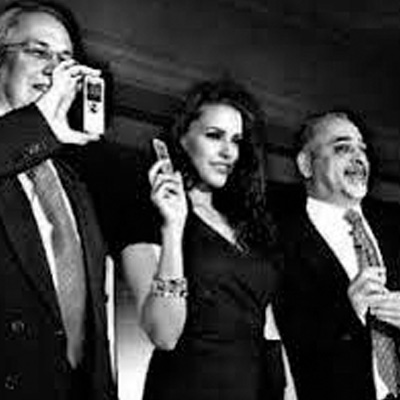
    BANGALORE: Tata Indicom today announced the national launch of the ultra slim Motofone F3c on the CDMA platform in Bangalore today based on Qualcomm’s QSC 6010 chipset. On the anvil are launches of other chipsets – 6020 and 6030 with other handset manufacturers according to Tata Teleservices (TTL) CEO Darryl Green. The Motofone F3 will be exclusive for TTL for the next six months. Bollywood actor Neha Dupia did the honours for TTL.

    TTL plans to target the ordinary man who probably gets a cell phone for the first time with the low cost stylish handset as bait. The Motofone F3c is priced at Rs.1,699/- inclusive of all taxes and charges. TTL plan to combine Motofone F3c with the benefits of their GO XTRA PACK, will enable customers to avail double talk time for the first six months with bonus talk time valid for 1 year from the date of activation. The scheme also offers free incoming calls for the first six months without recharge. Darryl is confident of selling 2 to 3 million of these handsets over the next 12 months.

     
    This was also the first global launch of the single chip by any company globally according to Qualcomm senior vp Kanwalinder Singh who avers that “QUALCOMM is committed to bringing wireless connectivity to emerging markets, and our QSC family of solutions enables compelling, affordable devices for cost-sensitive countries such as India. We are pleased to be working with Motorola and Tata in bringing the Motofone F3c, and look forward to further collaboration with the industry toward the common goal of making connectivity accessible to more people worldwide.”

    “Though many companies have announced single chip solutions, they are so far only there on paper,” added Singh.

     
    The Motofone F3c has features such as voice prompts in six local languages—English, Hindi, Tamil, Telugu, Kannada and Malayalam, the QUALCOMM Single Chip (QSC) enabled device from Motorola, MOTOFONE F3c has been specially designed to suit the needs of Indian consumers. It offers a rich vacuum metallized finish making it extremely sturdy, with polyphonic ringtones including three Indian tones, high audio, office quality speakerphone and ringtone downloads.

    TTL, which recently crossed one million subscribers in Karnataka and two million subscriptions in New Delhi, is looking to close the financial year with 18 million subscribers. They currently have 15 million subscribers.

  • Infront, HBS win Judges’ Award at IBC2006 in Amsterdam

    Infront, HBS win Judges’ Award at IBC2006 in Amsterdam

    MUMBAI: Infront Sports & Media, the company which handled the worldwide marketing and sales of the broadcast rights to 2006 Fifa World Cup and its subsidiary Host Broadcast Services (HBS) have won the Judges’ Award at the IBC show in Amsterdam.

    HBS was responsible for the host broadcast operations of the 2006 Fifa World Cup.

    The award was for New Media production at the 2006 Fifa World Cup in Germany. The tailored production services provided by HBS transformed the coverage of the event for New Media in terms of quality and content. The prospect of tailored production drove sales – this was the most widely covered sports event on the internet and on mobile phones to date. More than 100 countries were covered by 50 licensees in Mobile Telephony and World Wide Web.

    A team of 40 producers and journalists created a special New Media Content Package – tailor-made for licensees, designed for exploitation without the need for extensive editing and incorporating various innovations designed specifically for the 2006 FIFA World Cup. The near-live clips were enhanced with specific or customised match and competition summaries, graphics, background sound, music and commentary.

    The fact that this was the first FIFA World Cup covered entirely in HDTV opened the door to improved picture quality for New Media. HD video-based Pan and Scan technology was utilised, allowing the editor to zoom in and capture the core action, producing a clear picture more exciting than ever for tiny handsets.

    HBS also offered a voice-over commentary service in the language of one’s choice. A total of eight different languages were booked and produced simultaneously in the IBC during the tournament: Arabic, Dutch, English, French, German, Italian, Spanish, and Swiss German.

    The benefits for licensees were considerable – better quality production, reduction of cost per licensee through central multilateral production and HD-based content, delivering “never seen before” picture quality in small formats.

    HBS director of production Peter Angell received the Award on behalf of HBS and Infront. He said, “This award confirms that our two companies, Infront and HBS, were right in deciding to embed new media requirements in the overall production strategy, providing licensees with a level of service never experienced before. The fact that all matches of the 2006 FIFA World Cup were filmed in HDTV has transformed the quality of New Media coverage.

    ” Combined with the use of Pan and Scan technology to capture the core action in a way that is relevant for tiny handsets, it has delivered pictures of unprecedented quality. Licensees and consumers were thrilled”, he said in his acceptance speech.

    HBS CEO Francis Tellier said, “This special award acknowledges the quality of services and innovations our team has provided in the area of host broadcasting. The new media production of the 2006 Fifa World Cup has been the defining step forward and underlines our ambition, to lead the industry through innovation.”

    Infront Sports & Media president and CEO Philippe Blatter says, “We are proud that the outstanding production capabilities of the Infront Group have been recognised and we see this year’s IBC Judges’ Award as a challenge to push even further in future”.

  • Import duty on foreign content in effect in Sri Lanka; local broadcasters hit

    Import duty on foreign content in effect in Sri Lanka; local broadcasters hit

    MUMBAI: In a conscious move to boost the island nation’s slipping local entertainment industry, the Sri Lankan government has introduced strict finance regulations on foreign content.

    As per the regulations made by the president under section 8 of the Finance Act, No.11 of 2006, effective 16 July, all imports of Bollywood and Hollywood movies and television content are taxed in the country.

    As per the new regulation, for every 30 minutes or part there of tele-drama or film if dubbed in the Sri Lankan native language Sinhala or Tamil will bear an import duty of Rs 90,000. For every 30 minutes or part there of tele-drama or film not falling within the above category will have to pay Rs 75,000 in tax.

    The media tax also covers television commercials made abroad for local companies. This regulation mainly targets local firms, which have been outsourcing their promotional work to Indian advertising firms. Commercials are being charged Rs 1,000,000. This is for any number of telecasts, during the period of one year, commencing on the date of issue of the Certificate of Clearance.

    Programmes with Tamil language content are exempt from the tax as Sri Lanka produces very little Tamil programming. The tax would also not apply to documentaries, educational dramas, movies screened in theatres and children’s entertainment.

    News wire AFP has quoted market watchers as saying that, the local television stations air more than 1,500 movies, mainly English, Tamil and Hindu, each year. English content on local stations is limited to about four movies, four dramas, music programmes, adventure series, cartoons and a few sitcoms per week. Though native Hindi speakers are virtually non-existent in Sri Lanka, subtitled programmes made in Bollywood are hugely popular on local television and easily attract sponsors — unlike local productions which hardly draw any viewers.

    President Mahinda Rajapakse, who also handles the finance portfolio, has been quoted in media reports as saying that, the money would be used to develop the local film industry. According to industry sources indiantelevision.com spoke to, the government move would put a virtual ban on the import of foreign content.

    “The government wants to nurture the local entertainment industry. At present, foreign content enjoys a clear majority in local channels. For example, out of the 57 films aired on Sri Lankan TV each week, nearly 50 are foreign language ones. This is a matter of grave concern for the government as well as the local industry,” says a Tamil Nadu-based television producer, who put his plans to sell content to Sri Lankan TV on hold due to the new regulation.

    The local Sri Lankan television players agree that the business will take a hit due to the almost “impossible” taxes. They are not buying Rajapakse’s contention that the move would boost the local entertainment industry. “The only way the local industry can achieve growth is by learning from the foreign players. Before competing with the foreign players, it needs to get itself updated with the global standards of production and storytelling. Now, if the government thinks otherwise, it will only narrow down the opportunities of growth for the local broadcast industry,” states Maharaja Television (MTV) CEO Mohan Nair.

    From the Indian perspective, the new regulation will see the demand for Indian content hitting a low volume.

    The ruling has forced Zee TV, which was about to kick off a content syndication deal with a Sri Lankan TV broadcaster, to stall the process. “We were about to sell a television soap in Sri Lanka. However, now we are told by our client in Sri Lanka that there was a virtual ban in effect in the country, and the deal has been delayed,” says a Zee source close to the developments.

    However, Star India sounds least concerned by the developments. “We had completed our deals for certain television soaps such as Kahani Ghar Ghar Ki and Kasauti Zindagi Kay two years back. It will take three more years for the Sri Lankan versions of these soaps to catch up with the present storyline. So, at present, this is not a matter of concern for us,” says Star India EVP Marketing & Communication Ajay Vidyasagar.

    MTV’s Nair argues that the local broadcasters have been making attempts to nurture local talent by devoting a certain portion of their content to locally produced shows. In the case of MTV, the broadcaster has two joint ventures in effect with the Chennai-headquartered Radaan Mediaworks and the Mumbai-based Sri Adhikari Brothers Television Network Ltd (SABTNL). Vasudha, a Sinhalese soap produced by the MTV-Radaan venture Talent Factory, has been on air since the last one year. Talent Factory is now all set to launch a new soap Kaavya in August, according to Nair.

    Speaking to indiantelevision.com, SABTNL vice chairman Markand Adhikari said the company was not affected by the new regulation, since it was producing only local content. According to Adhikari, SABTNL’s JV with MTV, Broadcast Media, is presently telecasting five hours of locally produced content per week. “We are planning to take it up to seven hours,” Adhikari says.

    Nair meanwhile, is hopeful that the government will show the inclination to understand the real picture. “At present we are weighing options for our future course of action. We haven’t called off any foreign deals as yet. Both Indian and American media companies have taken up this issue and they are supporting us in this cause. We are hopeful that, the government would understand the situation and give us justice,” says Nair.

  • English entertainment channel ad revenue could rise by 25-30% should Tam introduce Elite Panel

    The lack of adequate measurement of SEC A! That is seen among media buyers as a big stumbling block for ad revenue growth in the niche English entertainment genre.This article analyses how media buyers view the genre (movies, infotainment and general entertainment) and the possibilities for more growth

    At the outset it is worth noting that the ad pie for the English entertainment genre is around Rs 2.2 billion. This represents a five to seven per cent growth from last year. Overall, growth is expected to be around eight per cent in the coming couple of years. If however Tam does introduce the elite panel these channels might see a growth of as high as 25-30 per cent.

    What will drive these numbers? According to OMS regional director Madan Mohapatra one will then be able to see more numbers among SEC A. It will thus make it easier to justify ad spends to clients who might be skeptical. Also, one will be able to slice and dice SEC A itself in different cities. Right now viewership for this genre comes mainly from Mumbai, Bangalore and Delhi. The TG mostly is C&S SEC A,B 15+.

    In the overall media plan, the niche English channels get into it to build incremental reach. Also, the affinity that a channel has with a TG that a channel has is also looked at.

    Media planner Rahul Panchal adds that the elite panel will see consolidation happening in the market. This means that not all channels will see a similar increase. Those channels that are able to show better numbers will be in a better negotiating position. Revenue will shift from one channel to its competitor. Now though, everything is a matter of perception. There is a clear segmentation of genre among the media community. This means that a Star Movies will not compete with a Zee Café. This situation will not change.

    Top 10 Advertisers in English Movie channels
    HLL
    L‘Oreal
    Pepsi
    Coca Cola
    Nestle
    Nokia
    Samsung
    Brooke Bond
    Tata Motors
    Paras Pharmaceuticals

    How the different channels are perceived: HBO and Star Movies are more or less on an even keel. The English film genre takes out around 50 per cent of the earlier mentioned Rs 2.2 billion pie. Depending on previous experience a client‘s view will favour one or the other.

    The reason why English movie channels fare better is that they are seen to be more mass compared to the infotainment and English general entertainment genres. They also offer better reach. One advantage that Star Movies and HBO have is that there are not many choices in this genre. Zee Studio is still confronting distribution issues while Pix, which recently commenced airing, has not gone to the media market as yet with this new offering. In fact planners feel that Pix should mature a bit before it can consider itself a serious player. Therefore there is less price elasticity happening in the English film genre.


    Properties like The Lord Of The Rings have helped boost HBO‘s library

    In terms of spot rates, on a comparison scale if English film channels charge Rs 100 for 10 seconds then general entertainment and infotainment charge Rs 50-60. As had been reported earlier by Indiantelevision.com, HBO has hiked its rates by 25 per cent.

    Information available with Indiantelevision.com indicates that this was possible because HBO‘s ad rates were much lower than Star Movies. When HBO moved to Turner last year the existing contracts that clients had thanks to deals negotiated by the One Alliance were cancelled. When deals were renegotiated sometime in June 2005 rates were reduced by seven to eight per cent. So the increase that HBO is now looking for is effectively around 16 per cent compared to what it was when it was with the One Alliance. Post the increase, HBO‘s effect rate per 10 seconds will stand at around Rs 85, still lower though than Star Movies price of Rs 100.


    The Oscars are high impact property for Star Movies

    As already pointed out, HBO and Star Movies are at an advantage here due to there not being many choices available. Of course, it is also true that English movie channels also need to charge more as their acquisition costs are higher and they have operated on a higher bargaining level for a longer period of time, opine industry observers.

    Star Movies‘ cause has been helped by high profile properties like the Oscar Awards. HBO, industry observers though note, has improved the quality of its library.

    For the third player Zee Studio, the biggest hurdle continues to lie in its distribution. This does not mean that cable operators are not carrying it. It is just that the band placement is poor and so too by extension the reception. The number of viewers, therefore, who are able to sample its properties like a few foreign films that one normally catches at film festivals are fewer. Not surprinsgly its rates are around 45 per cent less than what Star Movies charges.

    Top 10 Advertisers in English General Entertainment channels
    HLL
    L‘Oreal
    Coca Cola
    Nestle
    Nokia
    Pepsi
    Brooke Bond Lipton
    Titan Industries
    Tata Motors
    Ponds

    The English general entertainment segment takes out around 30 per cent of the Rs 2.2 billion ad pie. Star World is still seen as having a more upmarket image compared to Zee Café. Its rates are also around 30 per cent more. Panchal though was appreciative of Zee Café‘s efforts like its new look and feel which was done to make it appear more youthful. The fact though is that Star World is at an advantage because it, of the three channels (including AXN), has done the most to improve the variety of content it offers.


    Shows like Desperate Housewives make Star World attractive for advertisers targetting women

    This means that there will always be a trial audience for new shows which offers good visibility for advertisers. Star World is also unique in that of all the channels in the niche English entertainment space it is the only channel besides Zoom which is seen as having a few shows that will mainly appeal to women.

    A case in point is Desperate Housewives. Of course that is not say that women do not tune in to the other English channels as well. It is just that if you look at the programming skew it is slightly more towards men points out Panchal. So advertisers on the niche English channels usually target the male first.


    Local shows like Simply Style have Zee Cafe differentiate itself

    While Zee Café‘s local initiatives work both as a differentiator and a revenue generator Panchal feels that the channel needs to bear in mind the cost factor. Local shows help build a stronger identity for any channel. Of course, it is easier for Zee TV to do local stuff as its revenues are that much more. Both Zee Café and Star World are used in some measure to target the upwardly mobile youth. So its TG would mainly be 15-45. For AXN though, the perception is that men 25+ comprise its main audience. Here the reality shows like Fear Factor are perceived as being a strong draw.

    On the infotainment front, while Discovery was at one time much ahead, that gap has come down to some extent as NGC did a lot of things. Its Think Again repositioning last year helped in this regard. Discovery‘s rates though are still higher to go with their better viewership. It also started selling Animal Planet separately from last year.


    TV films like Hitler are key in history Channel‘s repositioning

    One channel that has improved perception wise is The History Channel. Observers note that previously it was a touch monotonous. However in April it shifted its positioning to being an entertainment channel. Products like Hitler, Nero mean that it can show quality films, series while sticking to its basic positioning of history. The opinion is that in the near future it could go ahead of NGC in terms of the cost of spot rates. In the near future it can also position itself as an alternative to the likes of Star World for ad revenue. October should be a good period to see the progress made since the revamp.

    Not much fluctuation: Planners feel that the English entertainment channels are not as badly affected by events like cricket to the extent that mass channels are. That gives them confidence to put money on them even during October – November 2006 when the ICC tourney is on. If a person wants to see an English film he will more likely do so compared to a Hindi soap when the Indian cricket side is playing.

    Another trend in this genre is that while the share of the English genre in the overall landscape has gone down, their ad revenue has gone up. Clients like Nokia have stayed loyal.


    MythBusters on Discovery. The channel has managed to keep itself in front of archrival NGC

    It may be that a client will shift from one channel to another. However, the number of clients available for English channels will never go down. Clients are also encouraged by the fact that appointment viewing generally is increasing. However, there is still room for improvement in this area.

    In terms of the yield per unit, the infotainment channels fare worse than movie and English general entertainment, say observers. Be that as it may, the quality of the audience is the USP of niche english entertainment channels. A Star Plus may give reach but quite a few of those viewers might not be relevant for example to an advertiser selling an expensive PDA phone. On the niche English entertainment genre there is a certain amount of passion involved and around 80 per cent of those viewers are likely to buy high end products. There is therefore a high amount of relevance translating into a good quality rating point.

    The more expensive a product is, the more likely a client will be to choose a niche English channel. Also, the fact is that while these channels may not contribute much revenue to the network kitty, they help augment the mother brand. They help the broadcaster offer a complete solution to clients, which is why Sony launched Pix after HBO moved to Turner.

    Top 10 advertisers in infotainment channels
    Nokia
    Coca Cola
    Pepsi
    HLL
    L‘Oreal
    Tata Motors
    Parle
    Lenovo
    Motorola
    Paras Pharmaceuticals

    A stronger focus: Media buyers also feel that the niche English channel sellers are more evolved and mature. There is a better focus on how their property fits in with a client‘s needs. This is imperative as these channels are selling an intangible space. They also do not have the ratings.

    So a certain amount of street smartness is key, especially when one considers the fact that clients and channels have opposite goals. The channel wants to get as much revenue as possible while the buyer wants the best (though not always the cheapest) price. The infotainment channels are clearly at a disadvantage in terms of revenue potential. There are six of them (three from the Discovery stable, two from Nat Geo and Zoom) fighting for 20 per cent of the Rs 2.2 billion pie.

    Revenues the channels will get going forward rest on four factors – how seriously they take their content, how well they time the launch of new shows and initiatives to get the most impact (it is not just a matter of quantity), how competitive the rates being offered are and how well they are promoted at both a client and consumer level.

    If a channel is not perceived to be as good as its competition then it needs to offer more customised packages. A case in point is what Zee Café did with Asian Paints on the sitcom Friends. A Friends makeover was done to emphasise the fact that red is the colour of love and friendship. Since Star World is perceived to be better in the market it does not have to go that extra mile if it chooses not to.

    It is also worth pointing out that a niche channel focusses more on chasing those clients who spend a lot of money on this genre rather than merely trying to increase the number of clients. That is because if the number of clients increase beyond a certain point they run the risk of spreading themselves too thin. So while a Sony will have around 230 clients, a niche channel will have far fewer clients, often by choice.

    At the end of the day skill and the level of negotiation are what count. Therefore, the head of the ad sales team is a crucial pivot. His/her attitude and strategy dictates to a large degree the performance and how successful a channel is in meeting targets. Zee Café and Zee Studio have benefitted from recently getting a separate sales team. Panchal notes that the need for sales people with strong persuasion skills is why there is so much poaching happening.

    Buying for the English channels is a mix of round on daypart (RODP) and key properties. However, most of them insist on a client not just paying a premium for a key property but also on increasing their outlay on the channel. Competition for ad revenue among niche English channels, Mohapatra notes, is at both a genre level and a channel level. However, usually the client first chooses the genre and then looks at the channel.

    There are times though when channels from different segments reflect the same values. For instance, AXN has a good duplication with the infotainment audience as it is aspirational. So now if a brand does not have Discovery or NGC in its plan then AXN can add value by giving incremental reach. On the other hand, if one advertises on Star World it does not necessarily mean that one can ignore AXN as the TG is different though they are in the same genre.

    Conclusion: In the months to come, this genre will see competition growing more fierce. It will get a boost should Tam introduce an Elite Panel. At the same time, better strategising both on air and on ground will be key.

  • Disney Channel series to be offered in six languages on Disneychannel.com

    Disney Channel series to be offered in six languages on Disneychannel.com

    MUMBAI: Disney Channel’s hit series for kids and tweens, That’s So Raven and The Suite Life of Zack & Cody, will be made available in six different languages, on the soon to be re-launched broadband site, DisneyChannel.com.

    The language tracks are English, Hindi, Spanish, German, French and Mandarin Chinese.

    The announcement was made today by Disney Channel Worldwide president Rich Ross and Disney ABC Television Group executive vice president digital media Albert Cheng.

    Ross said, “Disney Channel speaks to kids and kids speak many languages and now we speak to them in many of their languages. Whether it is seventh grade Spanish classes or kids who have just emigrated from India or China, we just want to continue the conversation.”

    “We are committed to offering programming to viewers no matter when, where or how they want it and this is further example of how we are accomplishing our goals,” said Cheng.

    Free of charge and on-demand, the companion DisneyChannel.com will offer select episodes of live-action and animated series, short-form content, music videos and Disney Channel Original Movie “bonus” materials. Video content will be refreshed on a weekly basis. Developed in conjunction with Disney Online, the full-length, streaming video content is advertiser-supported with adjacent customized spots and fixed display advertising.