Tag: Endemol Shine

  • Endemol Shine’s new bet on the scripted genre

    Endemol Shine’s new bet on the scripted genre

    MUMBAI: Endemol Shine, known for producing shows such as Bigg Boss, Master Chef, Khatron Ke Khiladi and Dance India among others and also known as the non-scripted format giant, has plans to play the next game in the scripted genre. After Deepak Dhar made a move from the company, Abhishek Rege filled his shoes, adding regional flavour to Bigg Boss in the Viacom18’s bouquet and web series for ALTBalaji. Now, the network is looking forward to creating original content for Netflix and Amazon Prime.

    Indiantelevision.com caught hold of Rege at the Bigg Boss 12 launch event. He said that the major chunk of programming right now on Hindi GECs is daily soaps. “It is still the staple to a large extent. This apart, talent and reality shows work well in terms of viewership. Among the talent shows, I believe that dance programs have a slight edge over singing,” said Rege.

    As per the KPMG M&E report 2018, reality shows got just 28 per cent of viewers, followed by comedy serials, family drama and serials, Hindi feature films and news/ news-based programmes garnered 34 per cent, 37 per cent, 38 per cent and 56 per cent respectively.

    Producing a show for the regional audience is costs less than the Hindi speaking market. Rege said that the cost of production will increase with inflation and other things such as the salaries of the employees, but the allocated cost of production needs to be decreased down the line. “Globally also we try out newer technologies, newer processes to follow to reduce cost without sacrificing quality. We are testing out a few technologies and hopefully in the near future we would be able to do this in India as well,” he added.

    The company’s new focus is on scripted formats. Rege doesn’t count web series as digital property but rather a scripted property meant for a different audience that consumes content on different platforms.

    As far as TV’s relevance in the digital age is concerned, Rege said that the future of TV is large even now. “Digital platforms have been offering a certain premium content that will be far and few in between because I think that Netflix doing Sacred Games has found the right spot. So we see the activity will go up and also Voot has just announced a number of shows. Similarly, Hotstar, ALTBalaji, Amazon and Netflix also have a lot coming up,” he said.

    There are a decent number of players in the market for programming and what remains to be seen is the amount of content they need to put on air to create a good library. For this year, apart from its regular diet of Bigg Boss and Fear Factor, there are investments in scripted genres. A certain book’s rights and some original ideas are under development.

    Endemol’s aim would be to retain the shows’ IPs. “While everyone thinks that it is easy to do that on web series, it will depend on how it will be monetised. If there is a clear monetisation potential, then we can take the risk of an X amount of the total cost of production. When you go ahead you know where the money is coming from and how much of it is coming to us. Unless that is completely clear it is not easy to take the risk and therefore it is still some time away, but the attempt is to keep every IP of the shows that we produce,” he said. 
  • TLC to show Masterchef Canada season 5

    TLC to show Masterchef Canada season 5

    MUMBAI: TLC, a part of Discovery, has announced the telecast of the fifth season of the culinary competition series Masterchef Canada from 26 June in India. The show is produced by Proper Television in association with CTV and co-powered by Jockey woman while Budweiser Experience has come on-board as an associate sponsor.

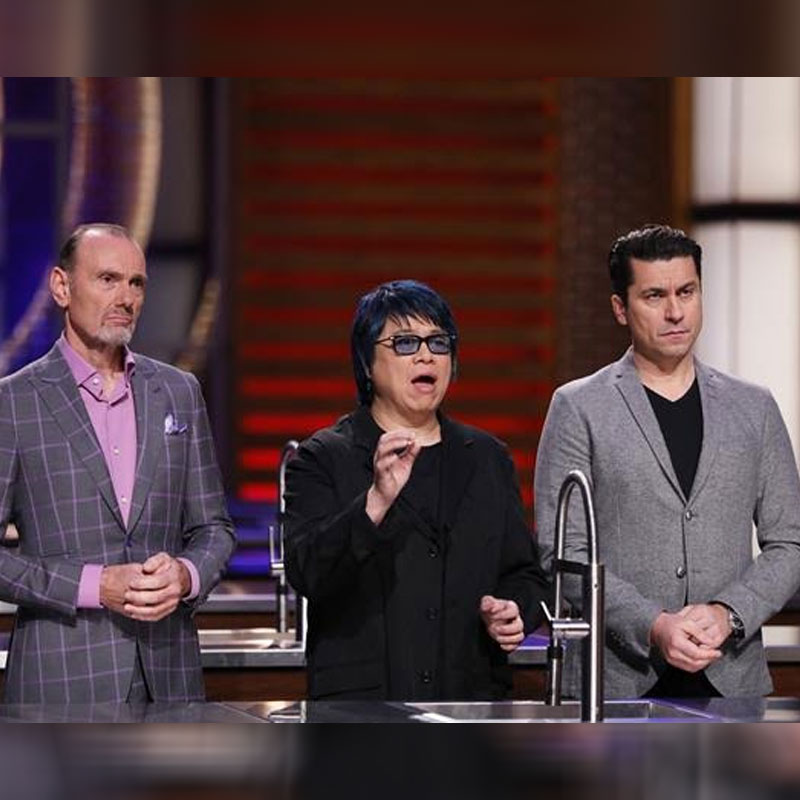
    In each episode, the home cooks are pushed to the limit in a series of mystery box challenges, team challenges, and pressure tests, with the three judges providing direction and feedback throughout the process. Each task is designed to test and hone the home cooks’ skill, knowledge, passion, and creativity. At the conclusion of each episode at least one person is eliminated until there are only two home cooks left vying for the life-changing Masterchef Canada title. The winner will get $100,000 cash prize.

    Discovery Communications India VP premium and digital networks Zulfia Waris said, “We are delighted to bring back the new season of Masterchef Canada this monsoon and welcome the next group of talented home cooks looking to make their culinary dreams a reality.  The earlier seasons of Masterchef Canada have been extremely well received by food aficionados across the country. We will play up the passion even more with this exciting new season.”

    The show’s format and finished programmes are represented internationally by Endemol Shine Group, and is based on a format originally created by Franc Roddam.

    Also Read:

    Industry optimistic about RPD technology for viewership

    The era of regional music dawns in India

    V6 News set to launch Telugu GEC

  • Inside India’s dubbing and subtitling industry

    Inside India’s dubbing and subtitling industry

    MUMBAI: The dubbing and subtitling industry in India was founded due to the television business’ need to leverage a variety of content from within different markets in the country. Indian viewers first tasted dubbed content thanks to Discovery World. In the early 90’s, dubbing was predominantly restricted to kids’ animation content by Disney. This was then picked up by private broadcasters as a fixed slot for kids that later evolved into a dedicated kids channel available in multiple languages. The first dub theatrical hit was Jurassic Park, which opened the Pandora’s box for cult South Indian films like Roja. Thus, a degree of variety and freshness was injected into Indian programming.

    Demand for localised content has grown

    Today, dubbing and subtitling is a flourishing business in India with Hollywood films, animation films and regional content at the heart of it. This wasn’t the case few years ago when only international content was dubbed for the Indian market. In India dubbing mostly happens in three Indian languages- Hindi, Tamil and Telugu. Spider-Man 3 was dubbed in Bhojpuri in addition to Hindi, Tamil and Telugu. A Good Day to Die Hard, the most recent instalment in the Die Hard franchise, was the first ever Hollywood film to receive a Punjabi language dub as well.

    In 1983, PA Krishnan founded the Dubbing Artistes Union of South India, an association for dubbing artistes. The union, which is now called South Indian Cine and Television Artistes and Dubbing Artistes Union, has over 2,000 artistes and more than 30 voice co-ordinators or dubbing agents (people who choose dubbing artistes) as its members. It is also affiliated to the Film Employees Federation of South India (FEFSI). 

    The surge and infusion of international content entering India and demand to watch it in native language has witnessed a steady rise. Serials and small-format shows from Tamil and Bengali are now being dubbed and subtitled in many Indian and foreign languages.

    Major dubbing companies have now given way to smaller players like BOL Media, Native Ninja, VSI Group, etc. UTV shut down five years back, while Crest Animation pulled the plug on its operations almost 10 years ago. In terms of corporate players only Prime Focus still exists. 

    Amazon Prime and Netflix are spending big on content localisation. They are also producing original Indian content that is being dubbed for international markets. Among the global OTT players, a major growth driver is Netflix, which launched its global video on demand (SVOD) service in January 2016. It has now 104 million paid subscribers in 190 countries and the service supports 24 languages.

    “ZEEL has a Bollywood movie pay television channel in Spanish language called ZEE Mundo. So, a lot of Indian content is travelling overseas now. Recently Aamir Khan’s movie also got dubbed in China and people over there loved it,” says BOL Media Founder and CEO Rahul Bhatia highlighting the evolution of India’s dubbing and subtitling industry.

    Economics of dubbing and subtitling industry

    The dubbing industry in India is valued anywhere between Rs 100-120 crore. Interestingly, the bigger companies are now giving way to smaller ones. The key reason behind this development has been the exodus of influential executives from major players setting up their own dubbing businesses.

    The mushrooming of smaller companies has greatly benefited broadcasters and production houses that now have access to more technical resources at pocket-friendly prices. For instance, it now costs Rs 15,000 to dub a television episode as compared to Rs 80,000 in the past. Today, a three-hour movie costs Rs. three lakh when dubbed for a television audience and around Rs. 15 lakh for the theatres.

    In the general entertainment space, dubbing and executing one episode takes four days while subtitling of one hour content takes two days. However, a movie for the television audience is dubbed in approximately 15 day while that for a theatre could need up to 30. While dubbing has become cheaper, content translation charges have witnessed a spike.

    Translators charge Rs. 1 per word for an Indian movie and Rs. 10 for a foreign film, while dubbing costs vary between Rs. 80 to Rs. 130 per minute for one movie.

    “There are very few corporate structures having an entire team of dubbing directors, sound engineers, quality controllers in house with defined SLA and workflows. Rest of the dubbing companies are owned and operated by studio owners, voice actors or dubbing producers with a niche clientele. Majority of the companies assemble the team and work on a project-to-project basis,” says Native Ninja founder Sanjeev Das.

    The road ahead

    Dubbing companies acquire customers organically. The major chunk of the business is comes from the television industry. But going forward, OTT platform could be the biggest source of business. Around 60 percent of the business comes from the television industry, 30 per cent from movies and remaining 10 per cent from OTT. In the future, OTT is likely to contribute 60 percent of the dubbing business.

    The business will be on a steady growth path due to the increased volume of content being created with a focus on localisation. Dubbing, subtitling, and closed captioning for English and major international languages could be taken over by technology such as artificial Intelligence, machine learning, automated captioning and auto-translation. However, precise and accurate translation, adaptation, interpretation and translation will always require a human touch. That’s where localisation companies need to be at the top of their game. With such advancements, the industry is bound to witness a shake up in the next five years, with only those prepared to adapt to the challenges likely to survive and thrive.
     

  • ‘Bigg Boss’ holds appeal across languages: Viacom18’s Ravish Kumar

    ‘Bigg Boss’ holds appeal across languages: Viacom18’s Ravish Kumar

    MUMBAI: Viacom18’s punt on Bigg Boss, the biggest reality show in the country, has paid off in a big way over the last ten years with an astronomical number of viewers on TV as well as the company’s digital platform Voot. After entertaining the Hindi masses, Colors launched the show in Kannada, Bengali and Marathi in order to garner regional audiences.

    “We were the first to pioneer Bigg Boss in Kannada and that expanded the franchise beyond. At that time, it was huge because we didn’t know how it would work and it was a big chunk of the budget for a market that has always shown an appetite for reality shows,” Viacom18 head of regional entertainment Ravish Kumar told Indiantelevision.com.

    While Bigg Boss Hindi usually has an hour-long episode, some of the regional slots stretch as much as an hour and a half. “The beauty of the show is, no matter what language you do it in, the moment you put new people in the house, it becomes an entirely new show,” he said.

    Colors, according to Kumar, shares a great overall working relationship with Endemol, the producer of the show, although, at times, there are creative differences. The duo has utilised its respective experience in markets effectively. “They were good in listening to us especially in the regional space, where their expertise was low and together we have built that. They, on the other hand, have a lot of learning from the other markets internationally,” he added.

    With over 331 million viewers hooked on to the show across India, the first ever edition of Bigg Boss in Marathi premiered with a grand launch event on 15 April at 7 pm. The show, anchored by actor-director-producer Mahesh Manjrekar has Dabur Red Paste as presenting sponsor.

    Prior to joining Viacom18 in 2011, Kumar was the executive VP and business head – regional channels at Star TV and a global category director at Reckitt Benckiser. He brings more than 23 years of experience in building brands, driving innovation, creating high-performance teams and delivering superlative business results across leading Fortune 500 companies in the US, the UK and India.

    In the latest episode of Indiantelevision.com’s Executive Dossier, Viacom18 head of regional entertainment Ravish Kumar spoke about the show’s success in Kannada, his experience of working with Endemol Shine and plans for other languages.

    Also Read :

    No reason for GECs to panic as IPL grabs eyeballs

    The era of dance reality shows

    Owning IP not priority for Big Synergy

  • Endemol Shine sees scripted shows as new area of growth

    Endemol Shine sees scripted shows as new area of growth

    MUMBAI: Endemol Shine India (Endemol Shine), best known for producing shows such as Bigg Boss, Master Chef, Khatron Ke Khiladi and Dance India, has a lot going for it this year. The company will produce the second season of The Test Case for Balaji Telefilms’ OTT platform ALTBalaji after tasting success in the first season. Moreover, the production house is planning a slew of originals after securing book rights from Indian authors and publishers.

    In an interaction with Indiantelevision.com, Endemol Shine CEO Abhishek Rege said that while the focus remains on unscripted shows, it is the scripted shows that will help the company grow leaps and bounds. During the conversation, Rege revealed that Endemol Shine could dabble into owning an IP for a show if there is scope for pre-selling the material to broadcasters.

    Recently, the company joined hands with the premium video-on-demand service Viu to produce a localised, ten-episode adaptation of global phenomenon The Bridge. Going forward, the production house has set its sights on producing more original shows.

    Edited excerpts:

    Tell us about your plans for 2018.

    We are discussing the next subsequent series for The Test Case with ALTBalaji. We are also looking at a lot of developments in terms of originals, based on book rights with Indian authors; I think we will be able to make an announcement by May. We have tied up with Indian authors and publishers for the same. It’s still in the development stage; it could be in the international production level as well. We have reached non-scripted shows and will continue to grow with the same format. Having said that, what will help us grow is scripted shows. We treat digital or traditional TV platforms as scripted. Those are the growth areas that we see. As a company, we want to produce more original shows. We are expecting an increase, both in terms of revenue and bottom-line.

    What is your take on production houses retaining show IPs?

    If a project comes by and if we are allowed, we could take that risk but, ideally, not right now. The story should be good enough to take it to the international markets. We could do a pre-sale because we have the backend to do that. We could flip the model a bit, but broadly the same model applies that the Indian broadcaster would be paying much lesser than the cost.

    What do you think about GEC viewership being impacted during IPL season?

    We have probably moved past that thanks to the second screen. Largely, sports and news are already consumed on the phones. At the end of the day, traditional TV still survives because it’s the mass promotion mix. Whatever you do with the IPL, you have to advertise on the screens. Every individual will have their own screen. They have sports, Olympics to watch on one screen, they will have traditional TV to watch for something else. So, Amazon and Netflix are not affected and TV is also not affected.

    What is your take on mythological shows?

    As they say ‘old is gold’, all the old songs still work. Ten to fifteen years back, 18-20 year olds also watched that. Your grandparents taught you about mythology for your understanding; some are forced to consume these shows, while some willingly watched it. For instance, take a show named Jai Malhar, grandparents forced the youth to watch this show. The youth didn’t go to watch it, it was the pre-teens and the younger lot, in the evening, after coming back from playing or school, their grandparents have the TV on with Jai Malhar.

    What is your thought on content segmentation strategy?

    I don’t think that really exists. It used to be 10 years back. The assumption was that the channel wanted to keep their viewers to them, it was never a fight about the product, it was a fight about the channel. So, the idea behind it was, no one moves to another channel as the control shifts, the housewives will take over or the grandparents will take over…that was the theory earlier as it was channel to channel. Later there were many shows on different channels. So, right now it is more of a psychological thing rather than a strategy.

    Also Read :

    History TV18 focuses on relatable local content

    Cartoon Network HD+ adds Tamil, Telugu feeds

    Sony Yay banks on originals with a slew of fresh content

    No reason for GECs to panic as IPL grabs eyeballs

  • Viu partners Endemol for localised adaptation of ”The Bridge’

    Viu partners Endemol for localised adaptation of ”The Bridge’

    MUMBAI: Video-on-demand service, Viu, has announced a collaboration with production and distribution house Endemol Shine Group to produce a localised, ten-episode adaptation of the global series The Bridge. Viu’s aim is to deliver international content formats tailored to be locally relevant along with local content.

    “Viu previously achieved success in adapting popular entertainment to emerging markets when it brought the CBS Hollywood Squares format to audiences in India, releasing Tollywood Squares. Today’s news is in that same vein and we believe that working with Endemol Shine to tell this gripping story, while also making it uniquely our own, will captivate our viewers,” Viu Malaysia country manager Kingsley Warner said.

    The Bridge is hugely popular in Europe and the US. The series is expected to shoot in July and begin airing in Malaysia and Singapore later this year. In the crime drama, a body is found on the border of two countries, forcing an investigator from each country to work together to solve the case.

    “Partnering with Viu is a natural fit for us, given it’s the leading OTT in deliver international content formats tailored to be locally relevant Asia. We expect the premium format of The Bridge to resonate strongly in this region,” Endemol Shine International chief executive Cathy Payne said.

    The Bridge (Bron/Broen) was originally created and written by Hans Rosenfeldt as a joint production of Sweden’s Filmlance International, part of Endemol Shine Group and Denmark’s Nimbus Film. The Bridge (Bron/Broen) was produced in co-production with Sveriges Television, DR, ZDF German Television network, ZDF Enterprises Gmbh, Film i Skåne, NRK, Copenhagen Film Fund, Lumiere Group, Stiftelsen Ystad Österlen Filmfond, with from Norvision and in co-operation with Malmö Stad.

    Also Read :

    Viu announces the launch of its latest Original, ‘Love, Lust and Confusion’

    Branded content drives Viu

  • Child prodigies on Colors’ ‘Chhote Miyan Dhaakad’ from 25 Mar

    MUMBAI: Bringing double bonanza of endless laughter and giggles is Colors’ newest offering, Chhote Miyan Dhaakad.

    Putting spotlight on the little laughter-whizzes of our country, this fresh take on comedy, laden with innocence, will lighten up the primetime viewing of the audiences over the weekend. Guiding these little wonders while they brighten your mood with their guileless humor will be comedy connoisseurs and judges, Neha Dhupia and Sohail Khan and anchored by Bharti Singh.

    Produced by Endemol Shine India, Chhote Miyan Dhaakad will witness the young brigade team up to generate fresh waves of laughter starting 25 March, every Saturday and Sunday at 6pm and 10pm on Colors.

    Colors programming head Manisha Sharma said, “At Colors, we have attempted different formats within the comedy genre. This time we decided to let the children take the centerstage and show their alacrity in the art of comedy. Neha and Sohail are great with kids and we found them to be a perfect fit for the show with Bharti guiding them with her enthusiasm as an anchor.”

    Chhote Miyan Dhaakad, a battlefield of comic jibes, will be waged by 12 budding laughter gurus. Using stand-up comedy as their weapon of choice, these contestants, handpicked from across the country, will show audiences why they are superior than, if not as good as, any adult comedian. Divided into three groups of four each, these young powerhouses will not only showcase group performances but also solo acts that will prove their mettle on the laughter stage. Joining the budding group of talent will be their partner-in-crime and host Bharti Singh, who will encourage the contestants to push the envelope with their performances.

    The most daunting job, though, will be that of comic buffs Neha Dhupia and Sohail Khan who will be tasked with the role of the Principals of the comedy arena as they judge the tiny tots’ attempts to set the laughter ball rolling across the country.

    Commenting on his role as judge, actor Sohail Khan said, “Chhote Miyan Dhaakad goes where no other comedy show has gone in the past; it recognizes the talent of the younger generation and gives them the platform to entertain the entire country with their antics. The rib-tickling moments that these young crusaders have been creating during the course of the shoot makes us believe that they’re the next big thing on television. I am extremely proud to be able to partake in their journey, and commend Colors for putting the spotlight on their comic prowess. These little wonders will spin their magic and take the nation by storm!”

    Adding further, Dhupia said, “Chhote Miyan Dhaakad is a format that tugs at the innocence and simplicity in humour, delivered with utmost confidence by young talent. Colors has a strong legacy in delivering interesting comic formats and content, and I am happy to be associated with this show. I especially love the fact that I got an opportunity to witness the budding talent that hold the potential to emerge as tomorrow’s comic stalwarts.”

    Ranging between 4 & 14 years of age, the up and coming comedy brigade who will compete on the Chhote Miyan Dhaakad laughter playground include Kavya Ramani (Mumbai), Agrima Dogra (Noida), Vedansh Pagare (Indore), Parth Dhamija (New Delhi), Ridhima Taneja (Ludhiana), Manav Khyali (Rajasthan), Sargam Khurana (New Delhi), Keyan Gadia (Indore), Preetjyot Singh (Ranchi), Tamanna Dipak (Assam), Divyansh Dwivedi (Ludhiana), and Tasheen Shah (Mumbai).

    Endemol Shine India MD & CEO Deepak Dhar said, “Talent comes in many forms, shapes and sizes. The most appealing one, though is that which resides in children. Chhote MIyan Dhaakad puts together 12 rip-roaringly hilarious children who only strive to entertain the viewers and the judges with their performances. They are the true USP of the show; their unexploited and unadulterated talent forming the foothold for a true-blue family entertainer. With Chhote Miyan Dhaakad, we hope to create an unparalleled viewing experience which will grab audience attention and bring a smile to their faces every weekend.”

    To promote Chhote Miyan Dhaakad, Colors has devised an extensive 360-degree integrated marketing and digital campaign whose outreach extends to various touchpoints across conventional and social media platforms.

  • MipFormats, Cannes: Demystifying India’s content formats space

    MipFormats, Cannes: Demystifying India’s content formats space

    CANNES: How do you work with India? Is it a new TV and digital formats’ paradise? These  – among others – were some of the questions raised and answered in the Producer’s Toolbox at MipFormats in Cannes on 3 April in Auditorium A in the famed Palais des Festivals.

    The session began with IndianTelevision Dot Com Group founder, CEO Anil Wanvari giving the 100 strong audience from about 25 countries a quick snapshot view of the Indian television industry.

    He estimated that the TV content creation business is about $620 million with about $500 million of this being accounted for by the Hindi General entertainment space. While soaps, drama, Bollywood films and songs account for a major chunk of the spend, around $90 million (including the format licence fee, production margins, and production and talent costs) is spent on TV formats.

    Wanvari also pointed out that almost all the European majors have set up shop in India, including Endemol Shine, Zodiak, Fremantle, BBC WorldWide productions.  And they have managed to build robust business.

    Wanvari highlighted the potential for new content ideas that has popped up courtesy the proliferation of platforms in the OTT and VOD space. The last couple of years have seen the entry of Hotstar (with about 40 million users; targeted to hit 100 million by end this year), Hooq, VuClip, Voot (from Viacom18), Ditto TV, OZee (from the Zee TV group), ErosNow, ZengaTV, and Netflix. Others like AltDigital (from Balaji Telefilms) are firming up plans for a launch. And the digital opportunity is only going to explode further with the impending launch of 4G services from the Reliance group which is investing about $22 billion on its broadband and 4G mobile play.

    CA Media-backed OML (Only Much Louder) COO Ajay Nair was pretty gung-ho about the Youtube promise. “We are about to launch six new shows – four of which are  formats –  with India’s top comedy talent with the support of brands. As most youth are on mobile devices, brands are willing to support any fruitful engagement they can have with them.”

    GoQuest Media CEO Vivek Lath announced the formation of GoQuest Formats a new company looking to acquire formats – even paper ones from all over the world to market them globally. “We are looking at travel show formats, convergence formats,” he said.

    Grey Matter Entertainment co-founder Rahul Sangari spoke about his music format The Remix which was produced in Vietnam and became the no 1 show there on VTV. “We are going into production in three weeks in China too,” he said. “We are looking forward to closing deals in 16 territories and hope  to do signups in the UK and the US too,” he said.
    Sangari was also pretty oprtimystic about a TV and app integrated show called Street Stars which focuses on street performers which is represented by Dentsu StoryLab at Mip.

    Zee TV’s Yogesh Karikurve opined that foreign companies wanting to explore the format opportunity in India would do well to explore licensing their formats, preferably before opting to set up a full fledged production operation.

    Nair emphasized that any international company needs to find a local partner to do the production and also liaise with the telecast partner, rather than just licence a format.

    Sangari’s view was that the need for an Indian partner arises because “India is a very different country; the cultural sensibilities and nuances have to be born in mind while creating, developing and selling a format in the country is concerned.”

    Lath said that music and dance shows have been rating well in India. “But formats targeting the new millenials  will have legs,” he said.

    Sangari agreed that India had yet to develop in terms of forking out large licensing fees for formats.  Lath interjected and said that should not be a worry for any large format distributor or creator. “Collectively if it is licensed on the regional language channels along with the mainline Hindi channel , then the licence pad can expand,” he stated.

    Karikurve talked about the potential for  factual entertainment  formats as that is a genre that ithe Zee TV group is investing in greatly in that genre. Nair agreed but added that ‘dating,’ extreme sports, music and comedy formats were becoming relevant. He ended the discussion  forecasting that around 40-50 international formats could make their way into India on digital and traditional television in the not too distant future as the appetite is definitely there. .


  • MipFormats, Cannes: Demystifying India’s content formats space

    MipFormats, Cannes: Demystifying India’s content formats space

    CANNES: How do you work with India? Is it a new TV and digital formats’ paradise? These  – among others – were some of the questions raised and answered in the Producer’s Toolbox at MipFormats in Cannes on 3 April in Auditorium A in the famed Palais des Festivals.

    The session began with IndianTelevision Dot Com Group founder, CEO Anil Wanvari giving the 100 strong audience from about 25 countries a quick snapshot view of the Indian television industry.

    He estimated that the TV content creation business is about $620 million with about $500 million of this being accounted for by the Hindi General entertainment space. While soaps, drama, Bollywood films and songs account for a major chunk of the spend, around $90 million (including the format licence fee, production margins, and production and talent costs) is spent on TV formats.

    Wanvari also pointed out that almost all the European majors have set up shop in India, including Endemol Shine, Zodiak, Fremantle, BBC WorldWide productions.  And they have managed to build robust business.

    Wanvari highlighted the potential for new content ideas that has popped up courtesy the proliferation of platforms in the OTT and VOD space. The last couple of years have seen the entry of Hotstar (with about 40 million users; targeted to hit 100 million by end this year), Hooq, VuClip, Voot (from Viacom18), Ditto TV, OZee (from the Zee TV group), ErosNow, ZengaTV, and Netflix. Others like AltDigital (from Balaji Telefilms) are firming up plans for a launch. And the digital opportunity is only going to explode further with the impending launch of 4G services from the Reliance group which is investing about $22 billion on its broadband and 4G mobile play.

    CA Media-backed OML (Only Much Louder) COO Ajay Nair was pretty gung-ho about the Youtube promise. “We are about to launch six new shows – four of which are  formats –  with India’s top comedy talent with the support of brands. As most youth are on mobile devices, brands are willing to support any fruitful engagement they can have with them.”

    GoQuest Media CEO Vivek Lath announced the formation of GoQuest Formats a new company looking to acquire formats – even paper ones from all over the world to market them globally. “We are looking at travel show formats, convergence formats,” he said.

    Grey Matter Entertainment co-founder Rahul Sangari spoke about his music format The Remix which was produced in Vietnam and became the no 1 show there on VTV. “We are going into production in three weeks in China too,” he said. “We are looking forward to closing deals in 16 territories and hope  to do signups in the UK and the US too,” he said.
    Sangari was also pretty oprtimystic about a TV and app integrated show called Street Stars which focuses on street performers which is represented by Dentsu StoryLab at Mip.

    Zee TV’s Yogesh Karikurve opined that foreign companies wanting to explore the format opportunity in India would do well to explore licensing their formats, preferably before opting to set up a full fledged production operation.

    Nair emphasized that any international company needs to find a local partner to do the production and also liaise with the telecast partner, rather than just licence a format.

    Sangari’s view was that the need for an Indian partner arises because “India is a very different country; the cultural sensibilities and nuances have to be born in mind while creating, developing and selling a format in the country is concerned.”

    Lath said that music and dance shows have been rating well in India. “But formats targeting the new millenials  will have legs,” he said.

    Sangari agreed that India had yet to develop in terms of forking out large licensing fees for formats.  Lath interjected and said that should not be a worry for any large format distributor or creator. “Collectively if it is licensed on the regional language channels along with the mainline Hindi channel , then the licence pad can expand,” he stated.

    Karikurve talked about the potential for  factual entertainment  formats as that is a genre that ithe Zee TV group is investing in greatly in that genre. Nair agreed but added that ‘dating,’ extreme sports, music and comedy formats were becoming relevant. He ended the discussion  forecasting that around 40-50 international formats could make their way into India on digital and traditional television in the not too distant future as the appetite is definitely there. .


  • FremantleMedia inks exclusive deal with former Endemol Shine execs

    FremantleMedia inks exclusive deal with former Endemol Shine execs

    MUMBAI: A new partnership between the top creatives behind the MasterChef phenomenon and production giant FremantleMedia has been unveiled.


    Eureka Productions, the newly formed production company from unscripted specialist producers Chris Culvenor and Paul Franklin, has formed an exclusive partnership with FremantleMedia.


    Culvenor and Franklin were most recently Endemol Shine SVP of development and EVP of programming respectively.


    The duo has worked together for a decade, including stints at FremantleMedia Australia, and are the creative force behind a vast array of unscripted hits in both the US and Australia. They’ve developed, adapted and produced franchises such as MasterChef, MasterChef Junior, The Biggest Loser, The Voice, Fake Off, The Apprentice, Restaurant Startup, The Face, Project Runway and Minute to Win It.


    Eureka opened its Los Angeles office in January and has three projects underway with top tier cable networks. Culvenor and Franklin will be opening their Sydney office in March and appointments to their creative team in both countries will be announced in coming months.


    The company will work with FremantleMedia to develop and produce projects that can be optimised through the super-indie’s international network of creatives, producers and sales teams.


    Culvenor said, “Paul and I are thrilled to be partnering with the global powerhouse FremantleMedia who have the best creative network in the business.”


    Franklin added, “At Eureka, we’re very excited to bring together the talented creative community that we have collaborated with over the last decade to create series that captivate and surprise audiences.”


    FremantleMedia director of global entertainment Rob Clark said, “Chris and Paul are two of the industry’s most highly regarded creatives. Their track records in production, development and sales complement our businesses in the US and Australia and we’re looking forward to creating and sharing ideas across our international network.”